
Seam Failure Repair in Bozeman, MT
Seam Failure Repair in Bozeman and the Gallatin Valley
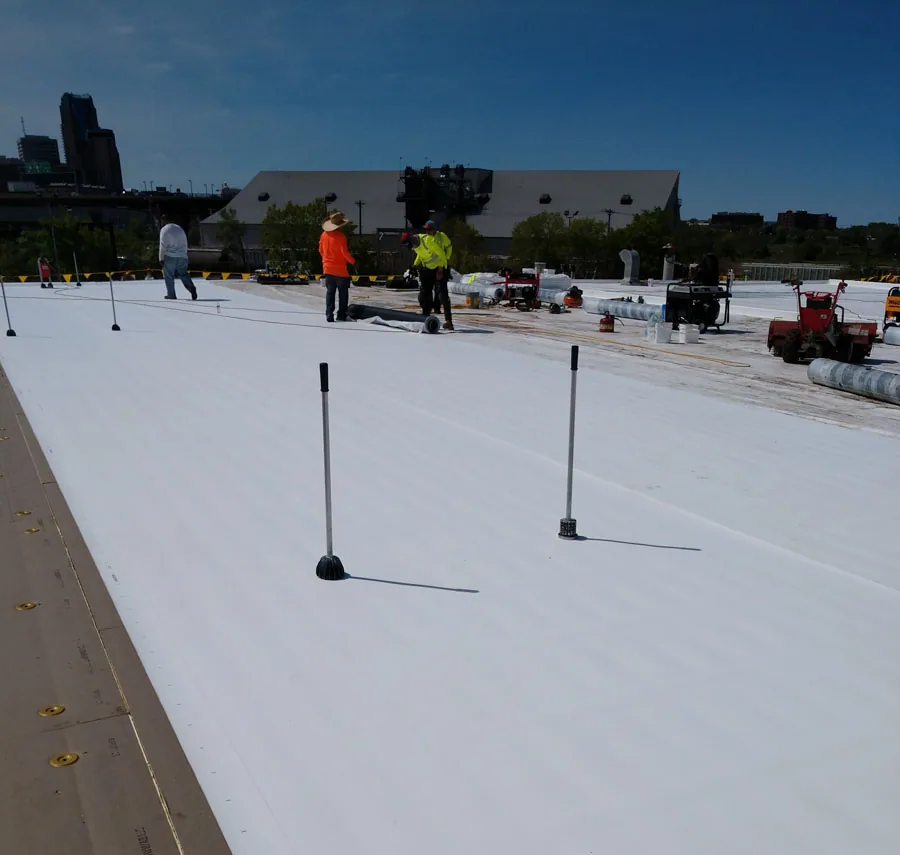
Take a flex building out toward Four Corners with a long white roof and a row of overhead doors beneath it. From the lot it looks like one continuous sheet. It is not. It is a few hundred feet of seams, each one a place where two pieces of membrane were joined and asked to stay joined through every winter since. A seam that opens a sixteenth of an inch in January will let in a cup of water by March. Which seam on your roof opened first, and was anyone on the roof to see it?
I run a probe down the seam lines before I trust any part of a membrane roof.
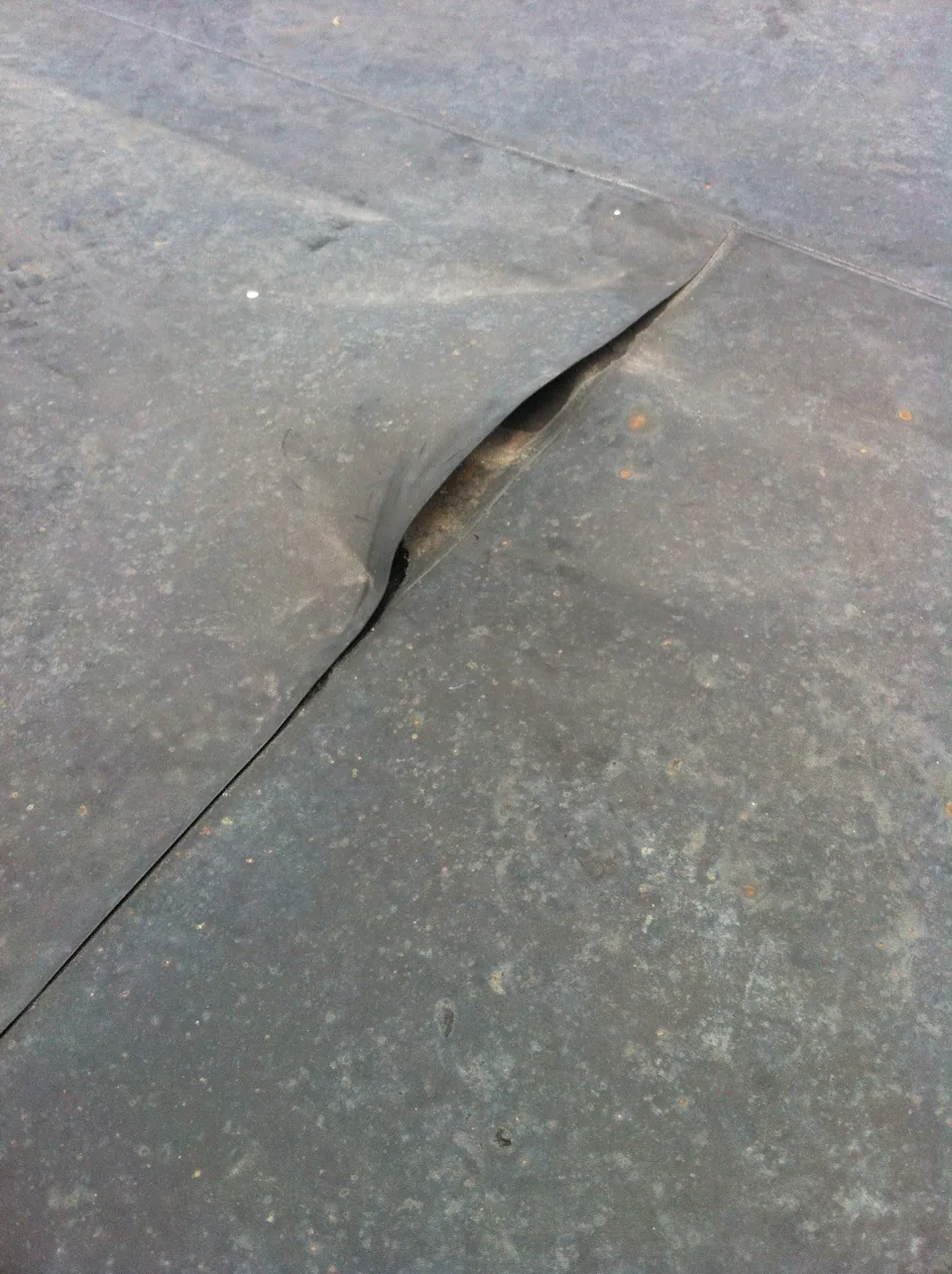
What kinds of seams does a commercial roof have?
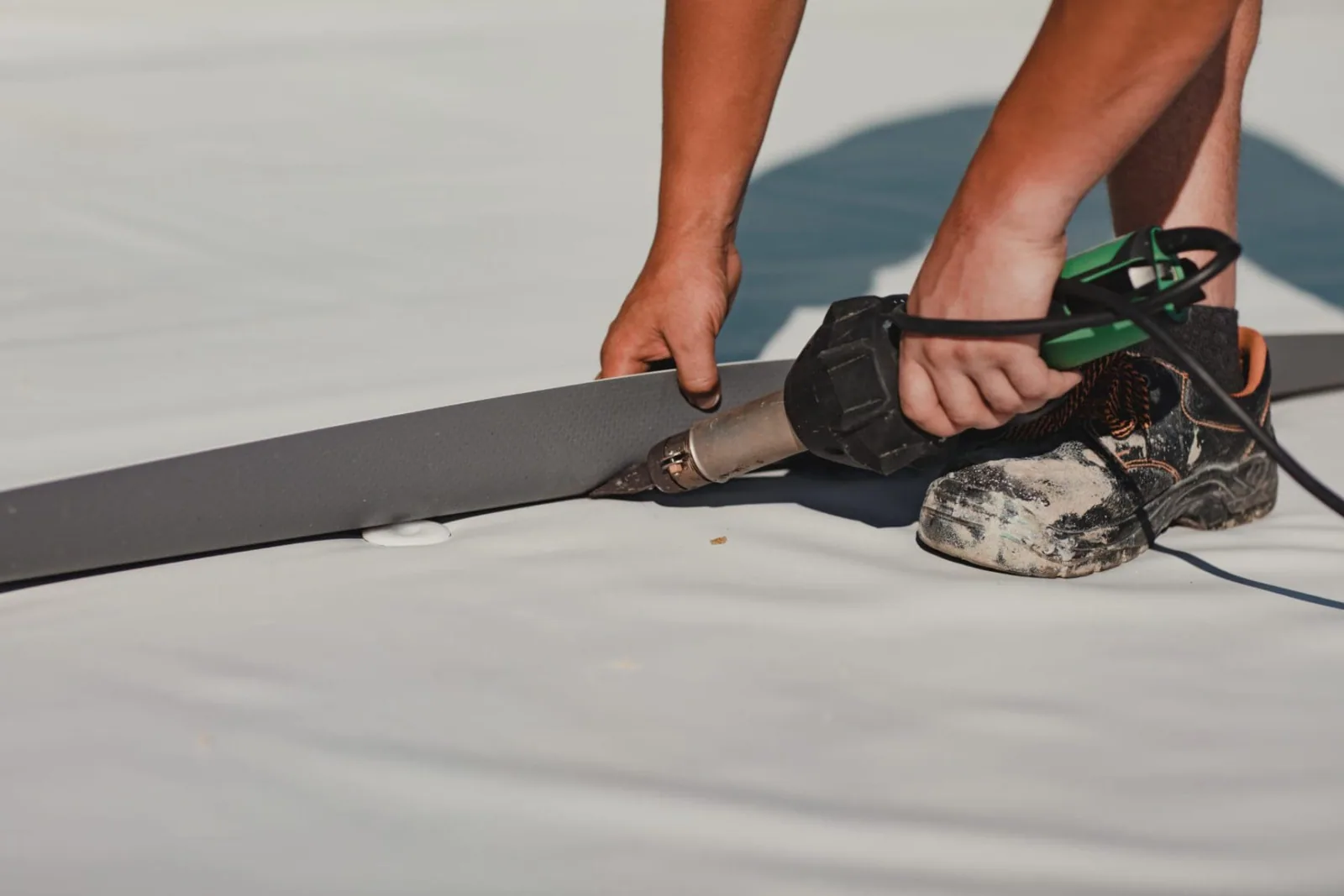
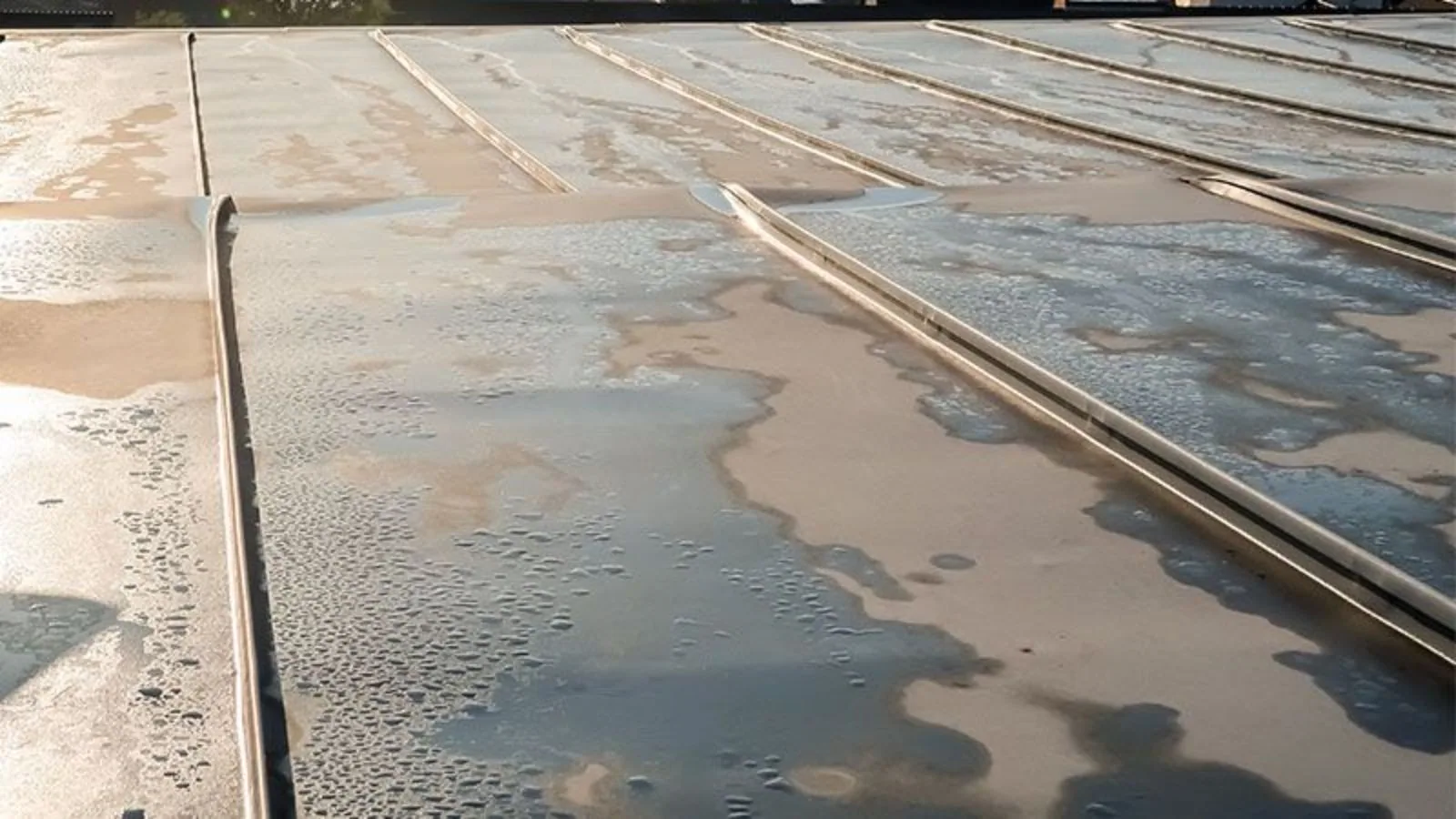
Several, and each fails its own way. Single-ply sheets such as TPO and PVC are joined with hot air, so the seam is a fused strip where the two sheets became one. Rubber sheets like EPDM are joined with splice tape or adhesive, so the seam is a bonded lap. Modified bitumen and built-up roofs are lapped and torched or mopped, and their seams are sealed with asphalt. Standing seam metal panels interlock, with a clip beneath each rib and a sealant bead in some profiles.
The distinction matters because a fused seam can be re-welded, a taped seam must be cleaned and re-covered, and a metal seam might need a new clip or a longer sealant run. Treating all of them the same is how a repair ends up failing a second time.
Why do seams open on a roof that is otherwise sound?
A seam is the thinnest part of the system and the part that moves the most. Temperature swings pull the membrane in opposite directions along each lap. Manhattan, a town in the same valley, has a humid continental climate with large seasonal swings, and Bozeman's own January lows average near 15 degrees. A sheet that shrinks in a deep freeze puts steady tension on every weld, and tension is what finds a weak spot.
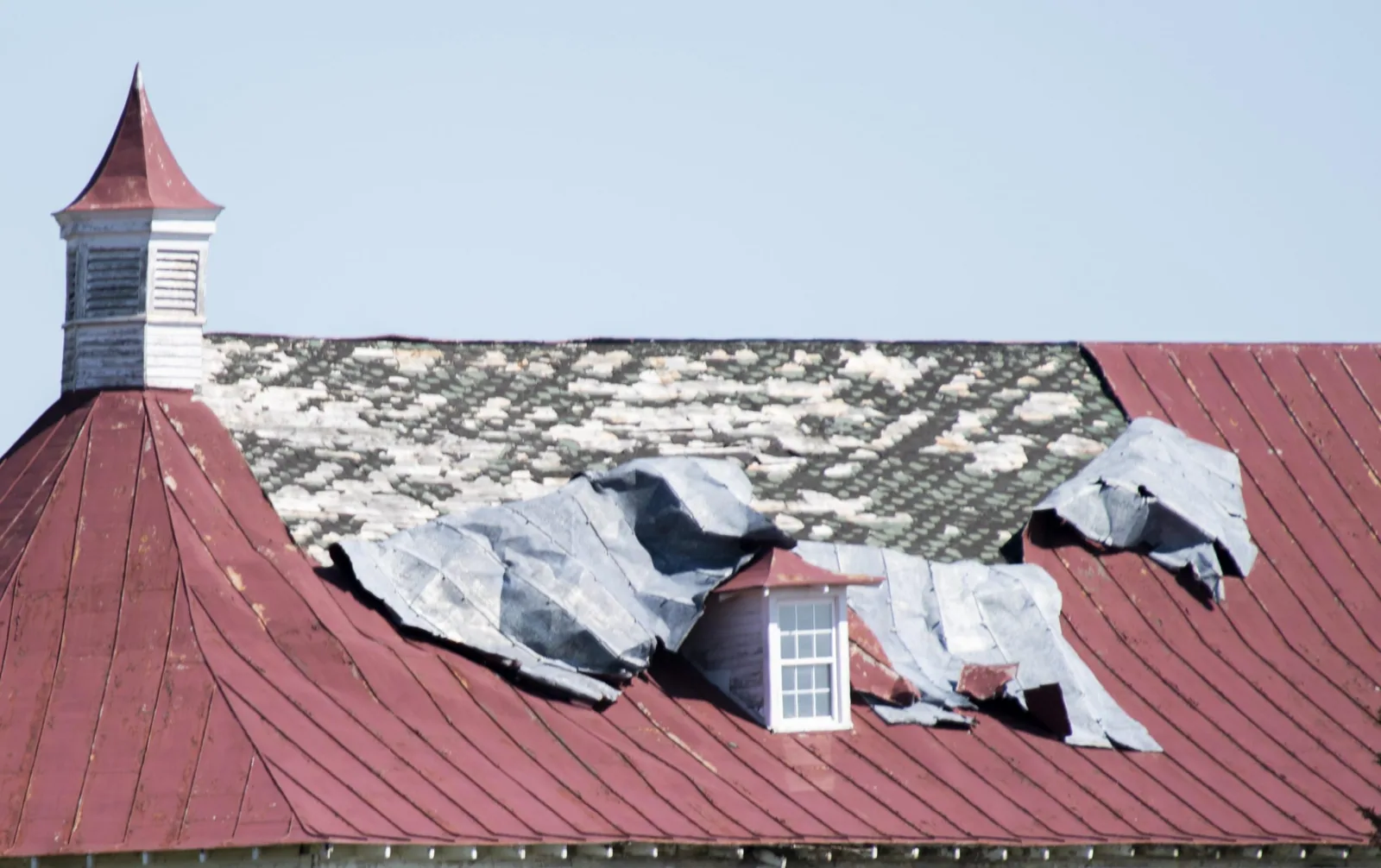
The other usual causes are contamination at the time of install, which prevents a full bond, water ponding on or beside the lap, and wind that flutters a loose edge until it peels. As a membrane ages, it can also lose flexibility and crack at the seam edge. A hail strike that fractures the sheet right beside a seam gets blamed on the seam, and we sort those out by looking at the geometry of the damage.
How do you find a failed seam before it leaks?
By probing. We walk the lap lines and run a rounded probe along the edge of each seam, pressing gently. A sound weld resists the probe. A seam that has lifted lets it slide under, and we mark it. We also look at the intersections, where three sheets meet in a T-joint and the stress is highest, and at the ends of rolls, where the cut edge can lift.
An infrared scan on a clear evening shows where moisture has already followed a bad seam into the insulation, because wet board holds heat longer than dry board. When a leak is active, we start at the stain, follow the water upstream, and then compare the apparent source against the nearest seam, since the opening is often several feet from the drip.
What does a seam repair look like?
For a welded seam, we clean the surface with the right solvent, set a cover strip of matching membrane over the opening and weld it with hot air, then probe the finished edge. For a taped or adhesive seam, we strip the old tape, clean back to bare membrane, and bond a new splice or a cover strip over the lap. For modified bitumen, we reheat and reseal the lap, or add a patch with a torch or cold-applied adhesive. For standing seam metal, we replace missing or loose clips, restore sealant, and secure the panel end.
Every repair gets probed after it cools or cures. Heat welds go down only in dry conditions with the right temperature, which is the cold-weather adhesive window in this valley. In the depths of winter, we make a temporary seal with a cold-rated material and come back for the permanent fix when the roof warms up.
Which roofs in the valley give seams the hardest time?
Long, open roofs with few interruptions: the flex and warehouse buildings that line Jackrabbit Lane and the roads near the airport, where lap lines stretch for a long distance. Livingston's airport station is second only to Guadalupe Pass, Texas, for average wind, and that wind puts every perimeter seam to the test. Roofs shaded by a taller neighbor stay colder and shrink more, and roofs under heavy drifts hold seams under load for months.
Retail roofs along North 19th Avenue add rooftop-unit traffic. Every service visit across the sheet puts foot pressure on the seams near the curbs, and those seams open sooner than the ones in the quiet middle of the field.
When is a seam repair no longer enough?
When the opening is not a one-off. If the probe turns up open seams along most of the lap lines, the problem is the membrane itself, and chasing repairs wastes money. We cut a few core samples, check whether the sheet has aged past the point where it can be welded, and lay out the choices: a recover over the existing roof if the insulation is dry, or a replacement if it is not. We put both numbers side by side.
Timing matters as much as method. A seam repaired in October gets a full season of cold to prove itself, while one left until spring sits through a thaw cycle with an open edge. We schedule the probe walk after the leaf-fall and before the first heavy snow, and we hold a short list of temporary closures ready for the roofs that cannot wait.
Related Roofing Pages
Questions About Seam Failure Repair
Why do my seams open in winter and not in summer?
Cold shrinks membrane, and the shrinkage pulls on every seam at once. A weld that was only partly bonded at install holds in warm weather and gives way in the first deep freeze. Summer heat can soften an adhesive, but winter is when a thin or contaminated lap shows its weakness, so the best time to probe is after the first hard cold.
Can seam tape or sealant from a hardware store hold a failed lap?
It may hold for a few weeks. Consumer sealants rarely bond to aged membrane and do not move with it, so the repair peels and the water returns. A proper fix uses a cleaning agent made for that membrane and a cover strip or tape of matching material. That is slower than a tube of caulk, and it lasts.
A membrane split next to a seam. Is that a seam failure or a membrane failure?
We look at where the split starts. A split that runs along the lap edge usually comes from the seam. A split that cuts across the sheet near the lap often points to the membrane, to hail or to stress concentrated by a fastener row. The cause decides whether we patch one spot or review the roof for age.
Do I need the roof dry before a seam can be welded?
The seam area has to be clean and dry, and the weather has to be above the working range of the material. A damp lap will not fuse. If the forecast has moisture or the temperature will drop below the working range overnight, we hold off and install a temporary closure instead of a weld that will not last.
How many seams are too many to repair one by one?
When the repairs begin to outnumber the sound laps, a section replacement or a recover usually costs less than the sum of the patches. We count the failed seams, map them on the roof plan and show the owner where they cluster, because clusters point to a cause that a patch will not remove.