
Commercial Roof Replacement in Bozeman, MT
Commercial Roof Replacement in Bozeman and the Gallatin Valley
A flat roof on a North 19th Avenue retail building shows its age in the second week of March. The drifts behind the parapet have melted down to bare membrane, and a stain runs from each rooftop unit to the nearest scupper. Walk that line with a probe and you learn whether the roof needs a patch or a new system. In Bozeman, MT, a replacement conversation starts on the roof, and it starts with what the building does underneath it.
A full replacement is the largest roofing decision an owner makes. The question is rarely whether the old roof has failed. It is which parts failed, which can stay, and how the new system will handle the next run of Gallatin Valley winters. The answer comes from the roof, one building type at a time.
What does the building type tell us before the tear-off starts?
Each kind of building fails in its own way. A big-box store with many rooftop units fails at the penetrations and at the wall terminations. A long warehouse of the kind going up along Jackrabbit Lane in Belgrade tends to fail at seams and at the low corners where water sits after a thaw. A residence hall or lab building at Montana State University fails where the roof meets walls, curbs and mechanical penthouses. We read those patterns before we write a scope.
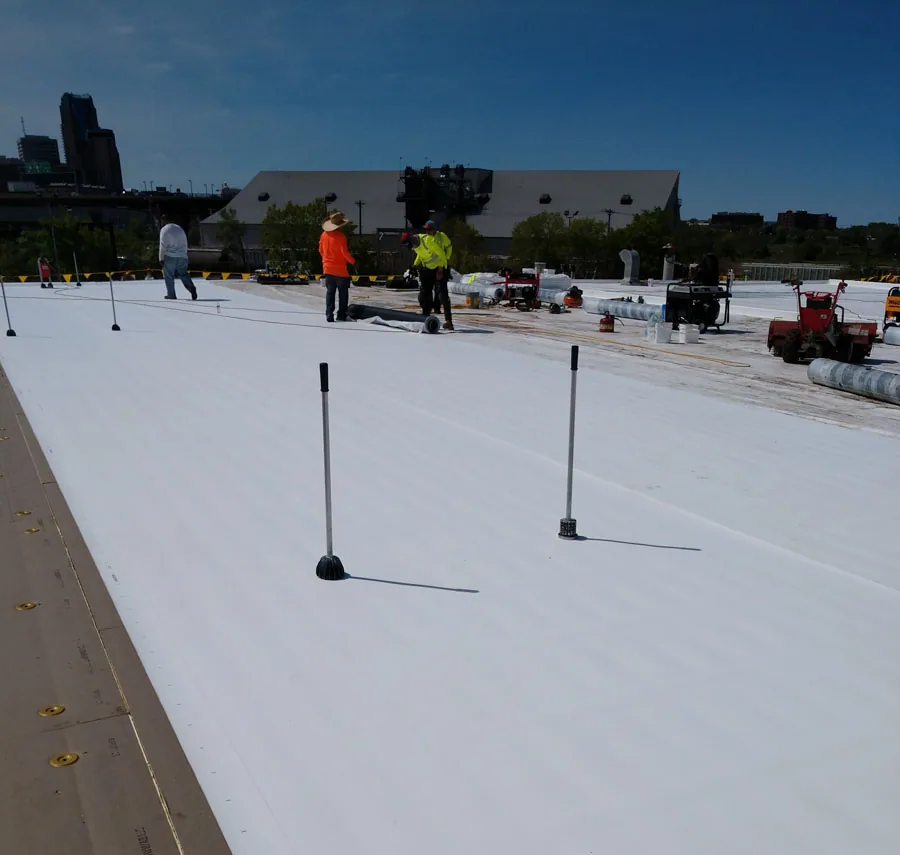
The tear-off itself is a string of decisions. We cut cores in the field and at the problem areas to see whether the insulation is dry, compressed or saturated. Wet insulation comes out. Dry, flat insulation in good shape may stay under a new cover board, which holds down cost and landfill weight. We mark each decision on the roof plan so the owner sees what is leaving the building and why.
How much snow should the new roof be ready to carry?
Bozeman averages about 91 inches of snow a year, and the mean January low is about 15 degrees F. A consultant summary of Montana design criteria lists a 50 psf ground snow load for Bozeman under the 2021 IBC and its ASCE 7-16 reference, and it points designers to the table in ARM 24.301.154, with a statewide minimum of 30 psf. The structural engineer owns that number, not the roofer.
What we own is how the roof handles snow once it is up there. Drifts build behind parapets and rooftop equipment, and those drifts weigh far more than snow lying on open field. We look at where the old roof showed distress, lay out tapered insulation so meltwater reaches the drains, and plan snow guards and edge details where sliding snow could hurt someone below. A roof that sheds water well in January has the fewest repairs in July.
What does hail change in the choice of a replacement system?
Hail is the second stress. On June 30, 2010, baseball-size hail fell east of Gallatin Field and golfball-size hail followed on Bozeman for about half an hour. In early August 2013 golf-ball hail covered Belgrade and north Bozeman with winds gusting to 89 mph. A May 2023 report logged hail of 1.50 inches that lasted several minutes along the Gallatin River.
That history pushes us toward thicker membranes, firm cover boards and fully adhered or well-fastened assemblies wherever the building can take them. A thin single-ply over soft insulation is the assembly that bruises. We lay out that tradeoff before the bid, because the lowest number on the sheet can be the roof that needs an insurance claim in a few seasons. Where a claim is likely, our claim documentation work starts at the first photo.
Which membrane suits which building?
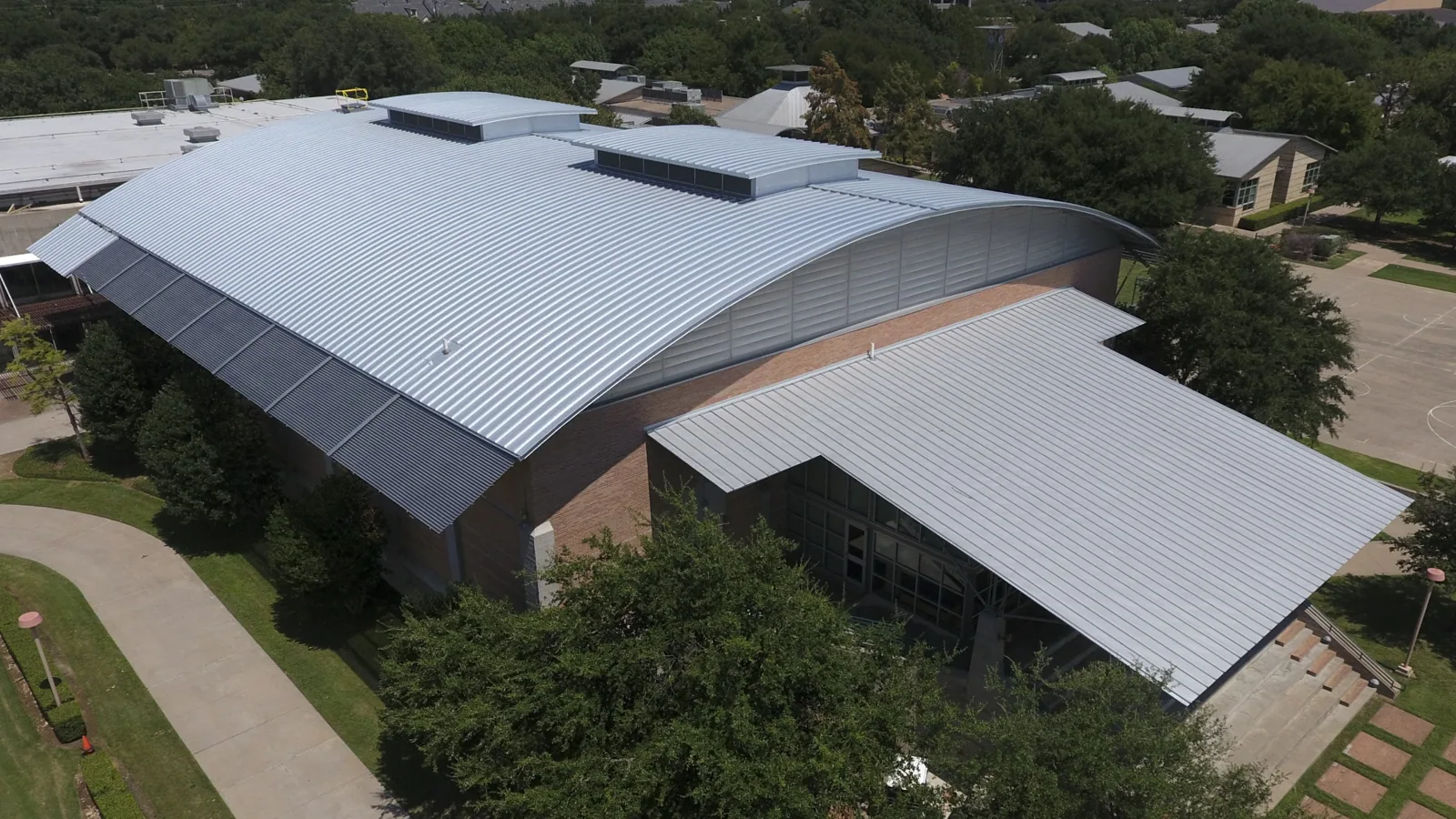
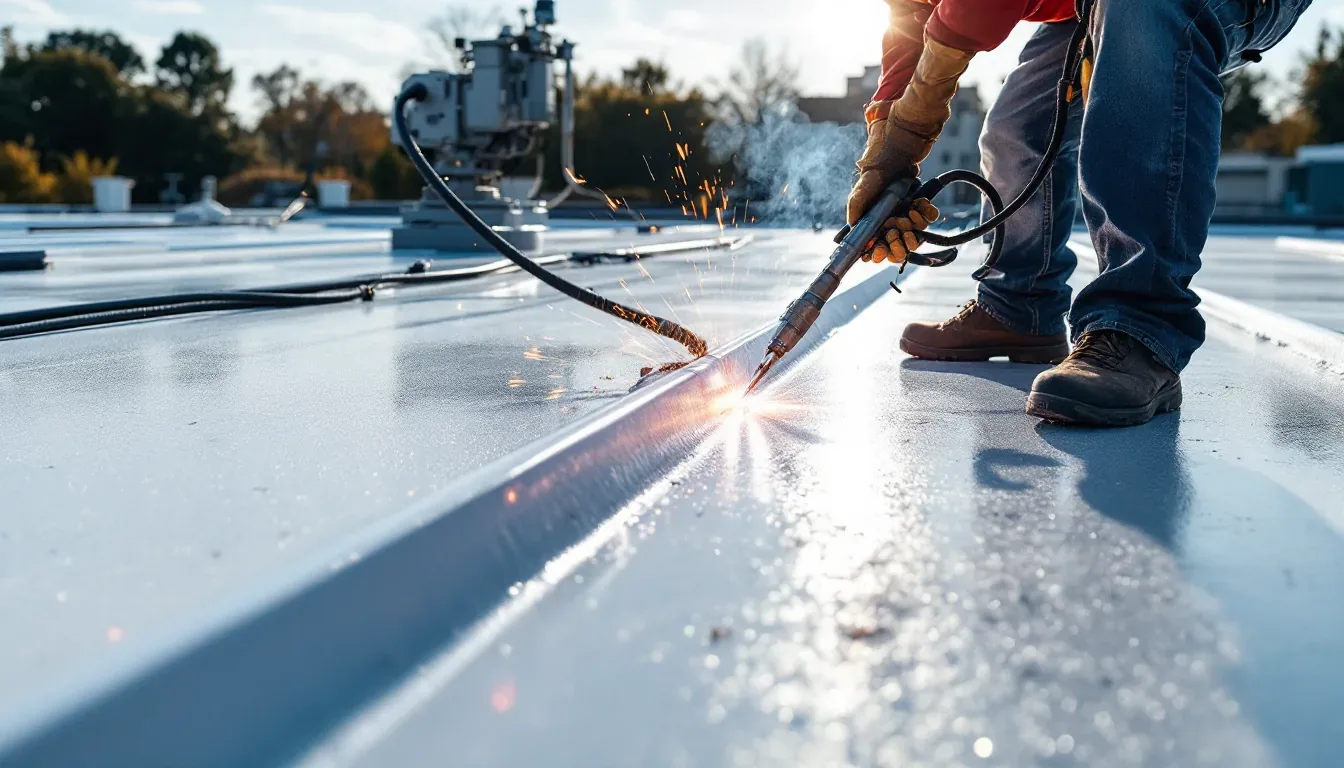
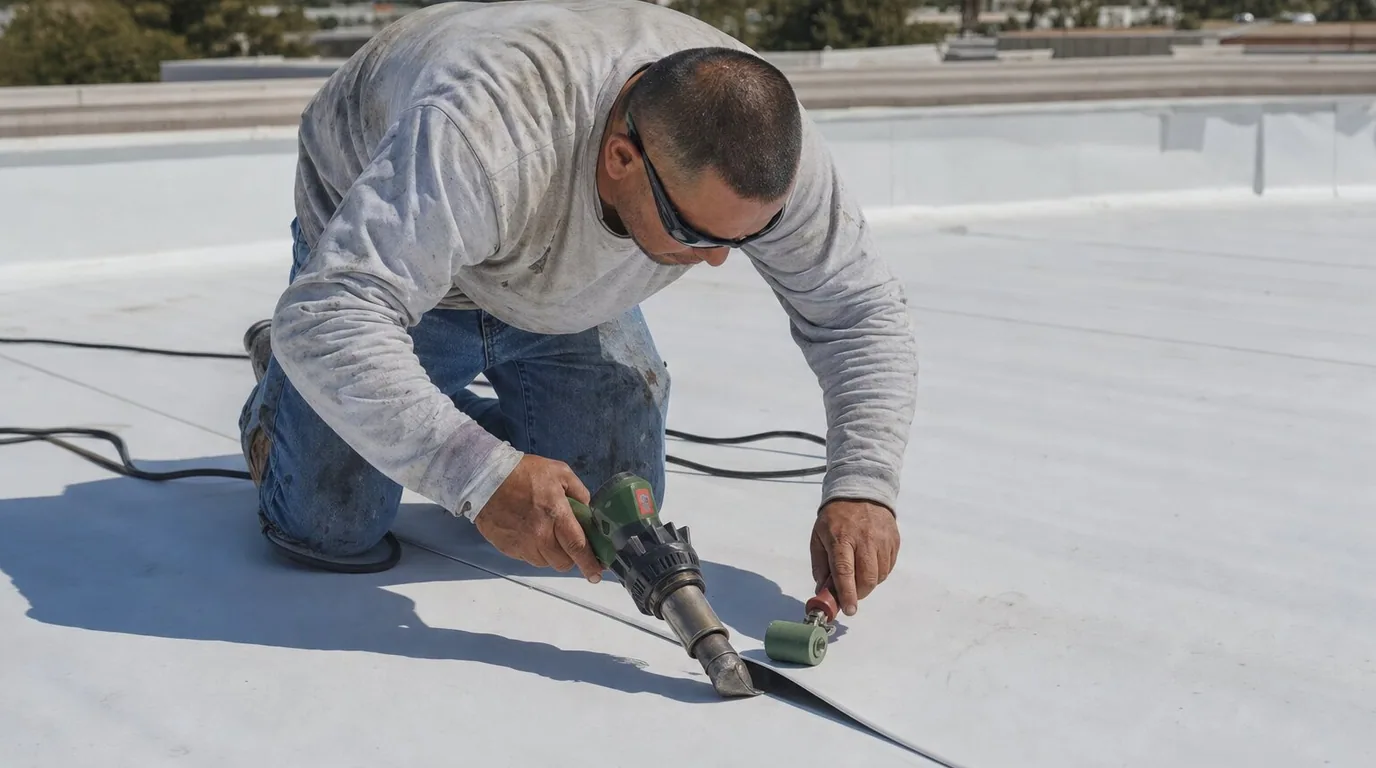
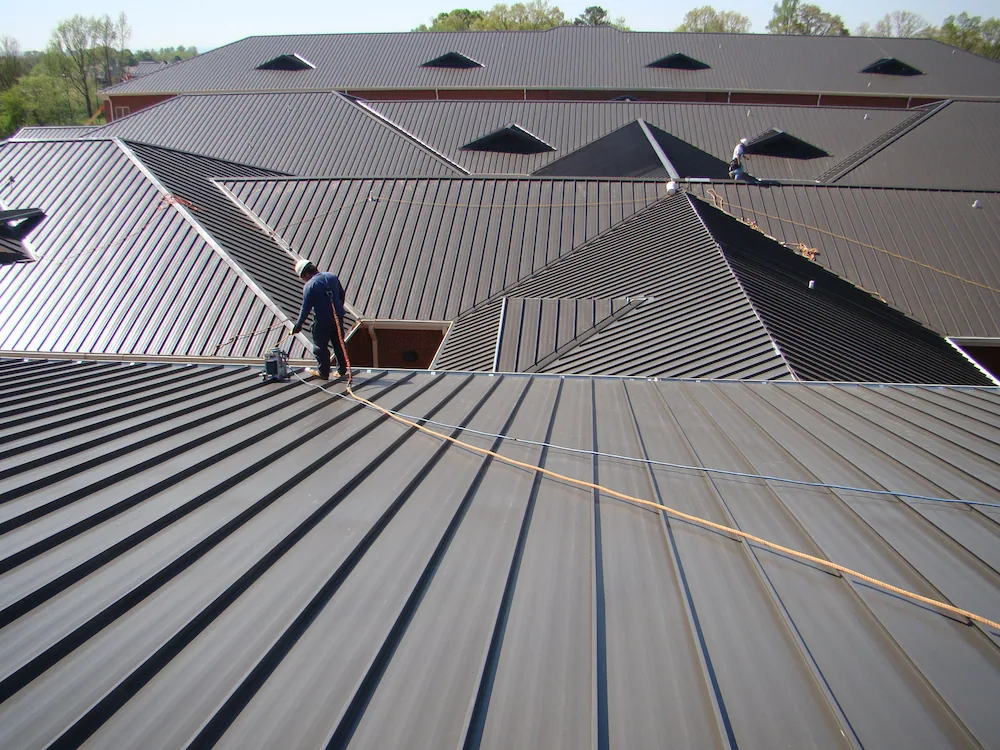
The choice follows the building. Large low-slope roofs with a lot of mechanical equipment often suit TPO or PVC with heat-welded seams, since welds hold through cold cycling and PVC resists the grease and chemical exhaust that restaurants and labs put on a roof. Buildings with many penetrations and tight geometry sometimes do better with modified bitumen, which goes down in layers and patches easily. Where a metal profile is already present, a standing seam metal system keeps snow moving and sheds it in a controlled way.
We install inside the temperature windows that adhesives, sealants and welds allow. When a detail should wait for a warmer week rather than be forced in November, we say so and reschedule it, because a termination made in the cold is the one that opens in the first thaw.
How does a replacement run over a working building?
A medical office, a school wing, a grocery or an office floor cannot close for a week. We phase the tear-off in sections so each section is dried in the day it is opened, stage materials where delivery trucks do not block loading, and schedule noisy work with the manager rather than around a rumor. The occupied building reroofing plan lists who gets a call before the crew arrives and who can stop the work if something goes wrong below.
When is repair the better answer?
Sometimes the best answer is a smaller scope. If a roof is mostly dry and sound, with failures at a few details, a planned repair or a restoration coating can carry the building another stretch of years at a fraction of the disruption. We recommend replacement when the insulation is wet over a large area, when the membrane has lost its flexibility and is cracking at seams, or when hail has bruised the field widely.
The core cuts and the moisture survey decide it. We put the findings in writing, with photos, so an owner, a lender or an insurer can follow the reasoning without being on the roof.
Questions About Commercial Roof Replacement
How long should I plan for a full replacement on a mid-size building?
The answer comes from the roof area, the number of penetrations and the weather in the month you choose, so we price and schedule only after core cuts and a walk. We recommend booking spring or early summer for large roofs, because the dry stretch between thaw and the first fall freeze gives adhesives and seams their best window. For a smaller building, a two-week sequence with a day or two of dry-in buffer is realistic. If the building houses a tenant with a seasonal peak, tell us the dates and we will plan the tear-off around them.
Do we have to remove the old insulation, or can it stay?
Wet insulation has to go, because it holds moisture against the deck and loses its thermal value. Dry insulation that is flat, firm and well attached can often stay under a new cover board. We confirm that with core cuts across the field, at drains and along walls, then mark removal areas on a roof plan. Pay for the survey before the bid, since it prevents change orders in the middle of tear-off when a buried wet section is exposed.
Can the old roof stay as a base for a new membrane?
Sometimes, and the decision comes from moisture, not appearance. A recover over a dry, flat, well-attached roof saves tear-off cost and disruption, but a recover over wet insulation traps the problem under a new surface. Start with a core and moisture survey. If the survey is clean, a recover may fit, and if it shows wet areas, we replace only those sections or the whole roof.
Which system holds up best against Bozeman hail?
No membrane is hailproof, but assembly matters more than the brand label. A thicker membrane over firm cover board takes impact better than a thin one over soft foam, and a fully adhered system distributes the blow. Where the building has seen a storm like the one in June 2010, we lean toward the thicker option and document the choice. Where a storm has already marked the roof, we photograph the damage before any work begins.
What happens if a storm hits halfway through the job?
Every section opened in a day is dried in that day with a temporary or permanent membrane, so a storm finds a closed roof. We watch the forecast and stop opening new areas when a cell approaches. Keep the tear-off area small enough for the crew to close before the weather turns.