Commercial Roofing in Midtown and North 7th Avenue, Bozeman, MT
Midtown and North 7th Avenue in Bozeman and the Gallatin Valley
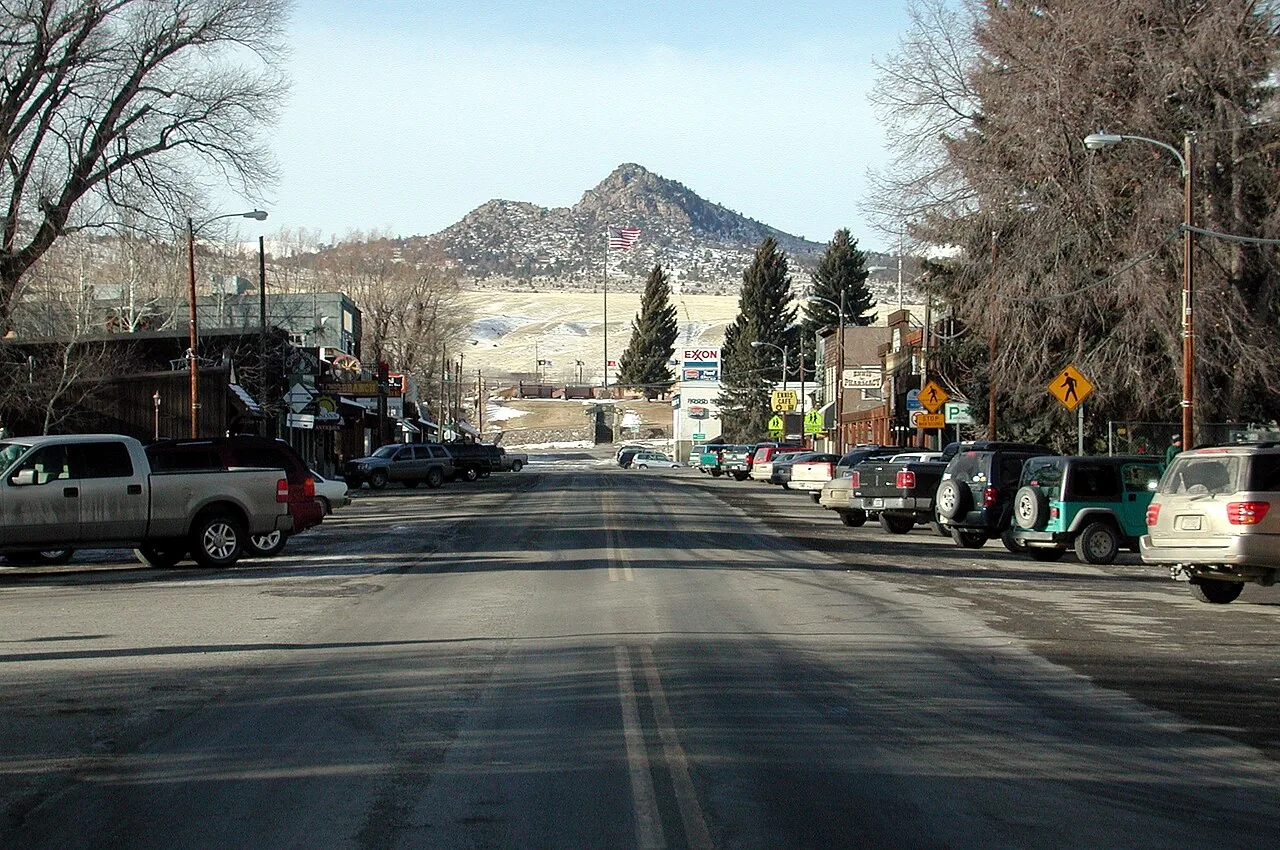
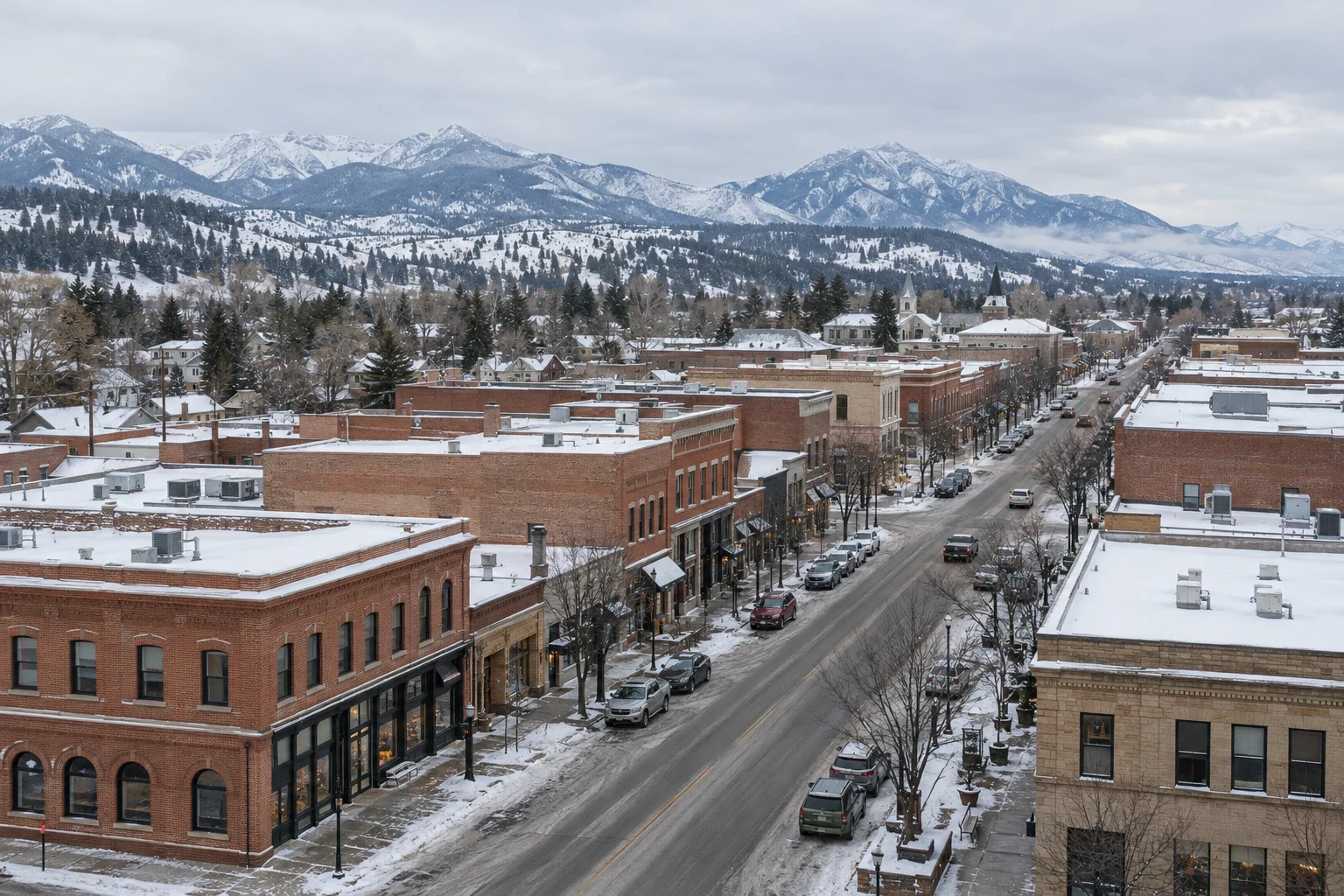
Midtown is a district where the street is being rebuilt while the roofs above it are being repaired, and the order matters. The area around North 7th Avenue in Bozeman, MT is one of the city's urban renewal districts, set up for infill, housing and retail, and the city plans sidewalk, lighting, stormwater and crossing upgrades along the avenue. Roofers working in that kind of district face a moving target: curb cuts that change, lanes that close and crane locations that exist one month and not the next. When does your block get its street work, and when does your roof get its crew?
What kinds of buildings are going up and being kept in Midtown?
The district's planned buildings include a mixed-use building of about 68,000 square feet, new entertainment venues and two new breweries. A district in the middle of redevelopment pairs new roofs with whatever roofs already stood there, so what we look for splits in two: fresh single-ply membranes on new structures, and aged, layered roofs on any older building that stays.
The older roofs are the ones most likely to leak. I look for stacked layers of roofing, patched curbs and drains that no longer sit at the low point. The new roofs have their own concerns, such as flashing details done quickly in the push to dry-in and penetrations added by tenants after turnover. Both need a first walk with a checklist and a camera.
New construction also brings a warranty clock. A roof installed during the build is often handed to the owner with paperwork that names the installer, the products and the inspection dates, and a later repair done the wrong way can complicate any claim. When I find a defect on a young roof, I photograph it, note the likely cause and tell the owner who should be notified before a patch is made.
How does street construction change a roofing job?
The city plans more than $5 million in sidewalk, lighting, stormwater and crossing work, including North 7th Avenue between Durston Road and Mendenhall Street. Construction like that closes lanes, moves curbs and parks equipment where a roofing crane might otherwise stand. A crane pick that was easy last spring may be impossible this summer.
So the first step on a Midtown roof is to check the street schedule and match it to the roofing calendar. If the avenue is torn up in front of the building, we stage from a side street, an alley or the owner's own lot, and we plan the pick for hours when the street crew is off. A conflict between two crews costs both of them a day, and the owner pays for it either way.
Foot traffic changes too. When sidewalks are rebuilt and lighting is added, more people walk past the building, and the setback for a crane or a material hoist grows. We mark the fall zone on the plan, add fencing and a spotter and keep the work zone off the new sidewalk. Dust and debris from the roof are chuted into a container, never dropped, so the new pavement and its neighbors stay clean.
What does a Gallatin Valley winter do to an infill building?
Around 91 inches of snow fall on Bozeman in a year, 16.2 of them in December, across some 54 snowy days, against a listed ground snow design of 50 psf. On an infill building with a parapet on three sides, drifts form behind the wall and the drain sump sits in the shade. The thaw cycle repeats: melt in the afternoon, freeze at the scupper by evening.
New buildings are not exempt. A drain that was set a quarter inch high or a tapered insulation board that was laid short leaves a pond, and a pond freezes and thaws all winter. I check slope with a level and a bucket of water before I trust a new roof. The fix is cheap if found in the first year and expensive in the fifth, since a seam that ponds water every day ages faster than a seam that sheds it. We also check that cover board and insulation joints are staggered and that the membrane has no wrinkles bridging a joint, because wrinkles trap water and split under thermal movement.
Why do brewery and venue roofs need a different look?
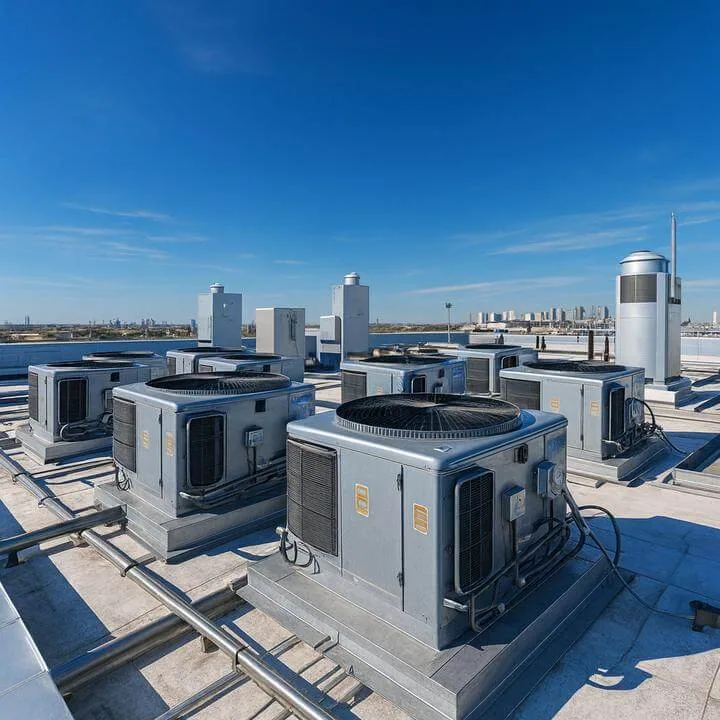
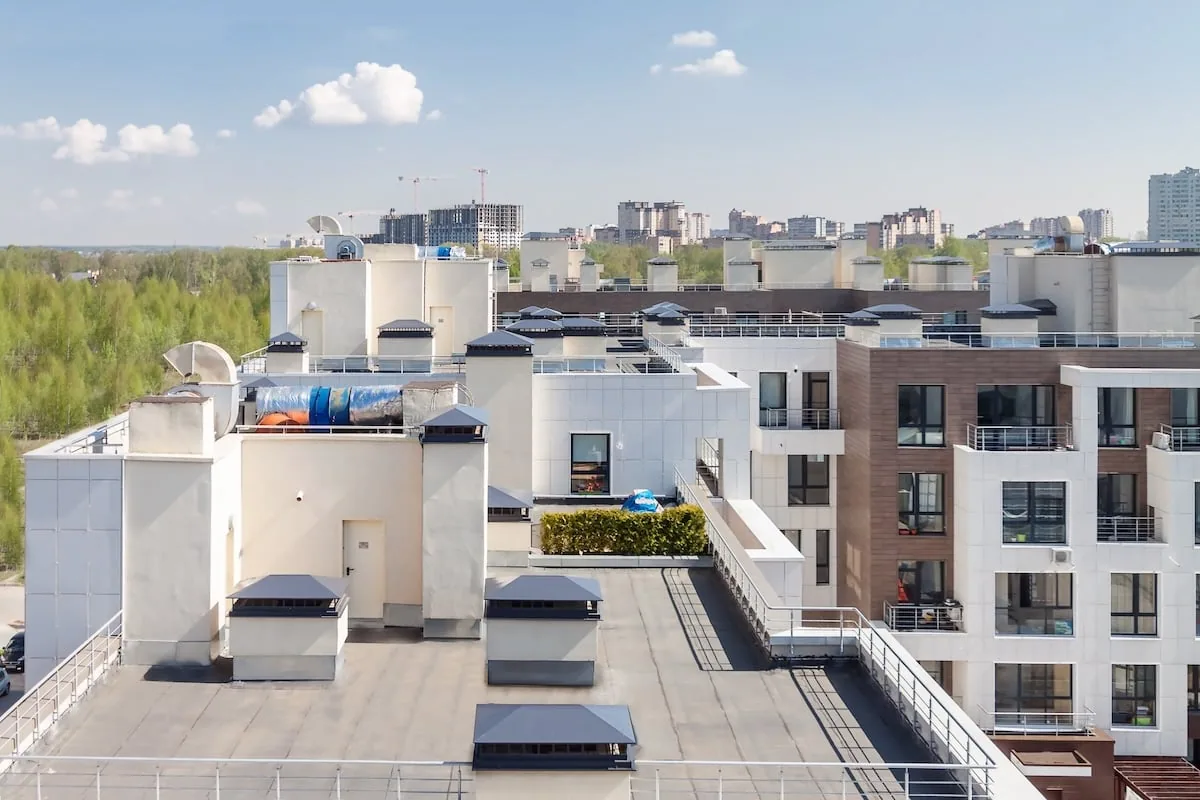
A brewery roof carries exhaust fans, boiler stacks and sometimes glycol chillers, and the air leaving those units is warm and wet. A venue adds large mechanical units to move air through a big room. Each is a heavy curb and a penetration that has to stay watertight under vibration and heat.
I check the flashing at every stack and curb, look for corrosion at the metal and probe the membrane around the exhaust for softening. Condensation inside the building can look like a roof leak, so a moisture reading and a hose test come before any repair. Our rooftop equipment curbs and supports work rebuilds a curb so the membrane laps it correctly and the unit sits on a stable base.
Can a mixed-use building keep its tenants during a reroof?
Yes, with phasing. A mixed-use roof covers retail on the ground floor and offices or apartments above, and each use has its own sensitivity. Retail wants deliveries away from peak hours, offices want quiet during the day and residents want notice and protected entries. The plan lists the work by section and by hour.
We dry in each bay daily, cover walkways under the work zone and coordinate rooftop equipment shutdowns with the building engineer. A daily summary goes to the property manager. For a district that is building up around a new street, the tenants are often new too, and a calm, predictable roof project is a good first impression for the owner. This is the working method for occupied building reroofing.
What should a Midtown owner decide first?
Whether the roof is a repair, a recover or a replacement, and when the street schedule leaves a window. Cores and moisture readings answer the first; the city calendar answers the second. An owner with several infill buildings gets the most from a ranking of which roofs to fund first.
A building in Midtown shares a valley with Downtown Bozeman and the North 19th Avenue corridor, and a single crew can serve all three on one schedule. Retail buildings behave like a shopping center roof, housing like an apartment roof, and a regular preventive roof maintenance visit keeps the new roofs in the condition they were built in.
Questions About Midtown and North 7th Avenue
The street in front of our building is being rebuilt. Can the roof still be done this year?
Usually, yes. We stage from a side street, an alley or the owner's lot, and we plan the crane pick for hours when street crews are off. We check the city's construction calendar first so the two jobs do not collide.
Our new building is two winters old and already ponds. Is that normal?
It is common, and it is worth fixing. A drain set slightly high or insulation laid short leaves a low spot that freezes and thaws all winter. We check slope with a level and water, and we correct it with tapered insulation or a new drain.
How do we separate brewery condensation from a roof leak?
With a moisture reading above the stain, a hose test at the nearest roof detail and a check of the duct insulation. Water that shows up on muggy days and never after a thaw is condensation. We trace each stain before repairing anything.
Can new tenants add rooftop units without harming the roof?
Yes, if the curb and flashing are installed correctly and the penetration is logged. We recommend a written procedure for roof access so each addition is flashed, tested and recorded.