
Wind Damage Roof Repair in Bozeman, MT
Wind Damage Roof Repair in Bozeman and the Gallatin Valley
Picture a long, low contractor building near the Belgrade airport on the morning after a gust front. The parking lot looks fine. The overhead doors look fine. Up on the roof, a ten-foot run of edge metal has peeled outward like a sardine lid, and the membrane behind it is fluttering where it used to lie flat. Gallatin Valley wind does not give a roof a second chance to be ignored. What did the gust find first on your building, and how long has that opening been taking in snowmelt?
I walk wind calls from the perimeter inward, because that is the order the wind used. The edge goes first, then the corners, then whatever is weakest in the field.
How hard does the wind blow on these roofs?
Harder than a calm parking lot suggests. In early August 2013 the same storm that dropped golf-ball hail over Belgrade also pushed gusts up to 89 mph, and the grain fields across Gallatin County showed it for weeks. A smaller event on August 29, 2023 put 65 mph gusts on two sensors along Triple Tree Road southeast of Bozeman, which is enough to test any roof that was already marginal.
East of town the numbers climb. Only Guadalupe Pass, Texas, beats Livingston's airport station for average wind, and Bozeman Pass, at 5,702 feet, sits between the two towns. Buildings at the Manhattan or Three Forks end of the valley deserve the same edge check. The roof does not need a headline storm to loosen. It needs a few seasons of ordinary gusts working on one weak termination.
Where does a roof lose its grip first?
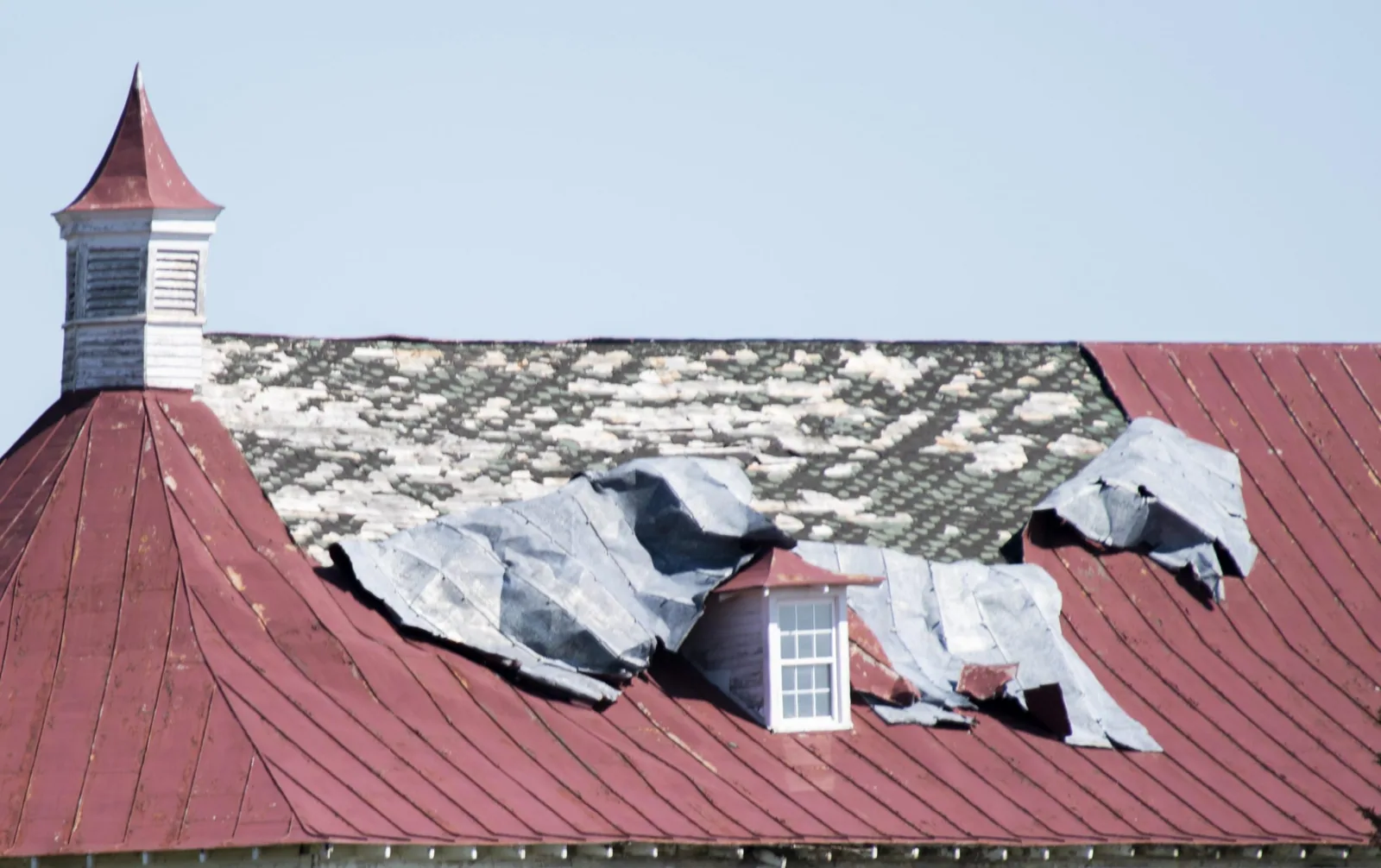
At the perimeter and the corners, where uplift pressure is highest and the roof is held by the fewest parts. Edge metal and coping are the usual victims. A coping cap or fascia that was hung on a few short fasteners into soft wood blocking will pull out of the blocking, bend, and let the wind get under the membrane edge. Once air is under the sheet, it balloons, tugs the field fasteners, and starts to peel the roof back toward the center.
The pattern up there is consistent. Fastener pull-out at the edge cleat. Dented, stretched coping sections that no longer meet at the splice. A membrane lap that was marginal in October and is open by March. In the corners I look for a field sheet that has shifted against the flashing, because a shifted sheet is a sheet that was lifted and set back down by the wind.
Does the attachment method change what the wind does?
It changes everything. A fully adhered sheet resists billowing but can delaminate in patches, and you find those patches with a hand and a probe rather than with your eyes. A mechanically attached TPO sheet flutters between fastener rows, and the plates wear into the membrane over many cycles until one tears through. A ballasted roof sheds stone. Rock that blows off the windward side leaves bare membrane that sees full sun and ice, and the stone that lands in the drain sump on the leeward side blocks the very outlet the roof needs when the thaw comes.
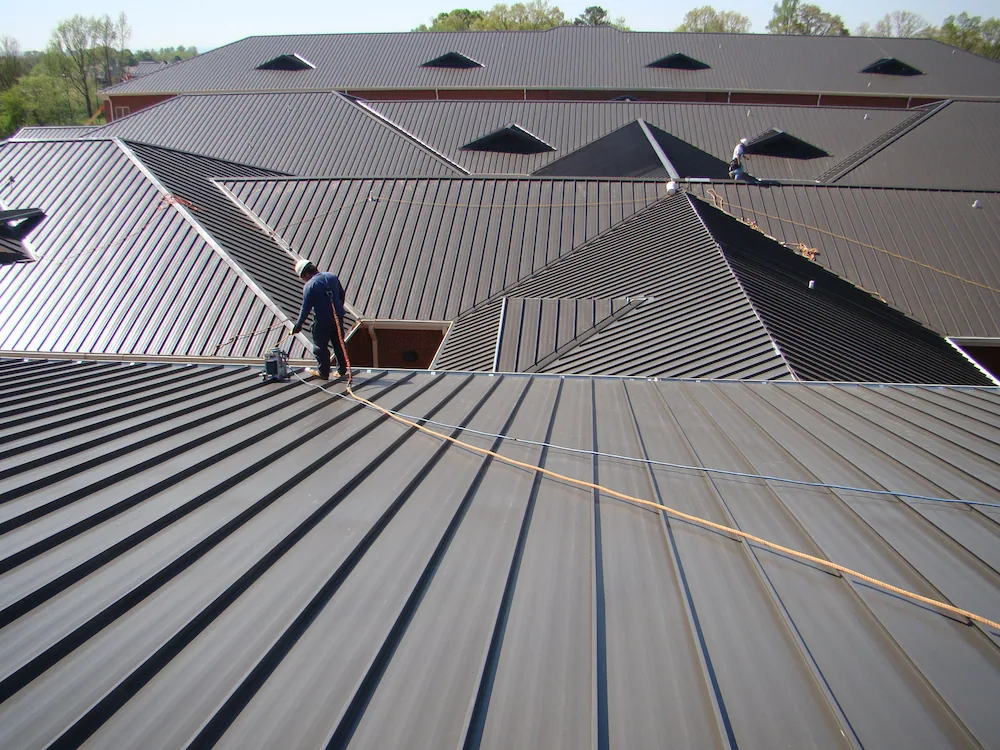
On standing seam metal, a clip that has backed out or a loose panel end lets a panel breathe, and a breathing panel works its fasteners loose. We read the system first, then decide whether the fix is a patch, a reattachment or a section replacement.
What does a wind repair actually involve?
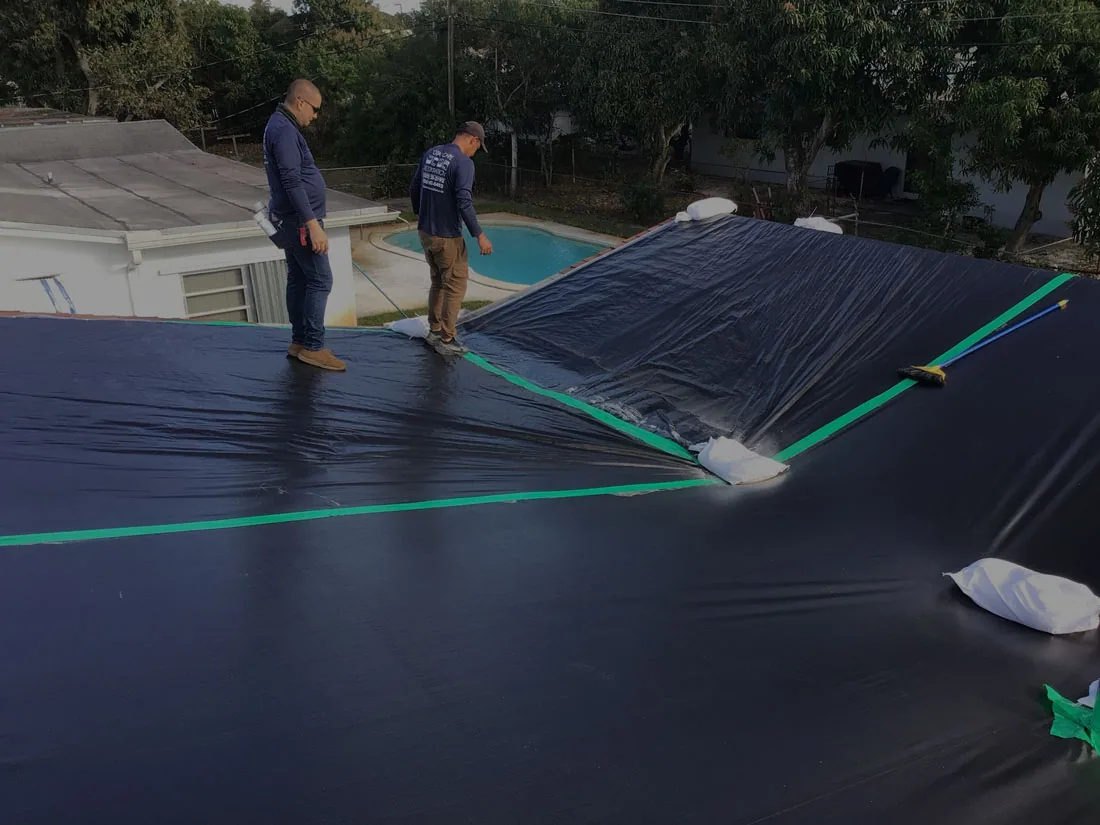
The first visit is about stopping the opening. We secure lifted membrane with temporary fasteners or tape-down, tack the edge metal back to its blocking, and tarp anything we cannot close the same day. Then we measure what the wind took. Torn sheet gets cut out and replaced with a patch lapped well beyond the damage. Lifted adhesive areas are cut, dried, re-bonded and heat-welded or sealed at the edges. Bent coping is replaced rather than hammered flat, because stretched metal does not seat again.
When the same edge has failed twice, we stop repairing the symptom. A continuous cleat and heavier edge fastening, installed to the roof's attachment schedule, ties the membrane and the metal together so one cannot lift without the other. If the roof is near the end of its life and the field is loose in several places, the talk moves from repair toward replacement, with numbers for both.
What wind speed should a Bozeman roof be built for?
A published summary of Montana design criteria lists a 110 mph basic wind speed for Bozeman under the 2021 IBC and ASCE 7-16. That is a design number for new construction, and an older roof was designed to something else. When we repair or replace edges and fields on an older building, we compare the existing attachment against what a current design would ask for in the perimeter and corner zones, and we bring the edge detail up where the budget and the roof's remaining life allow.
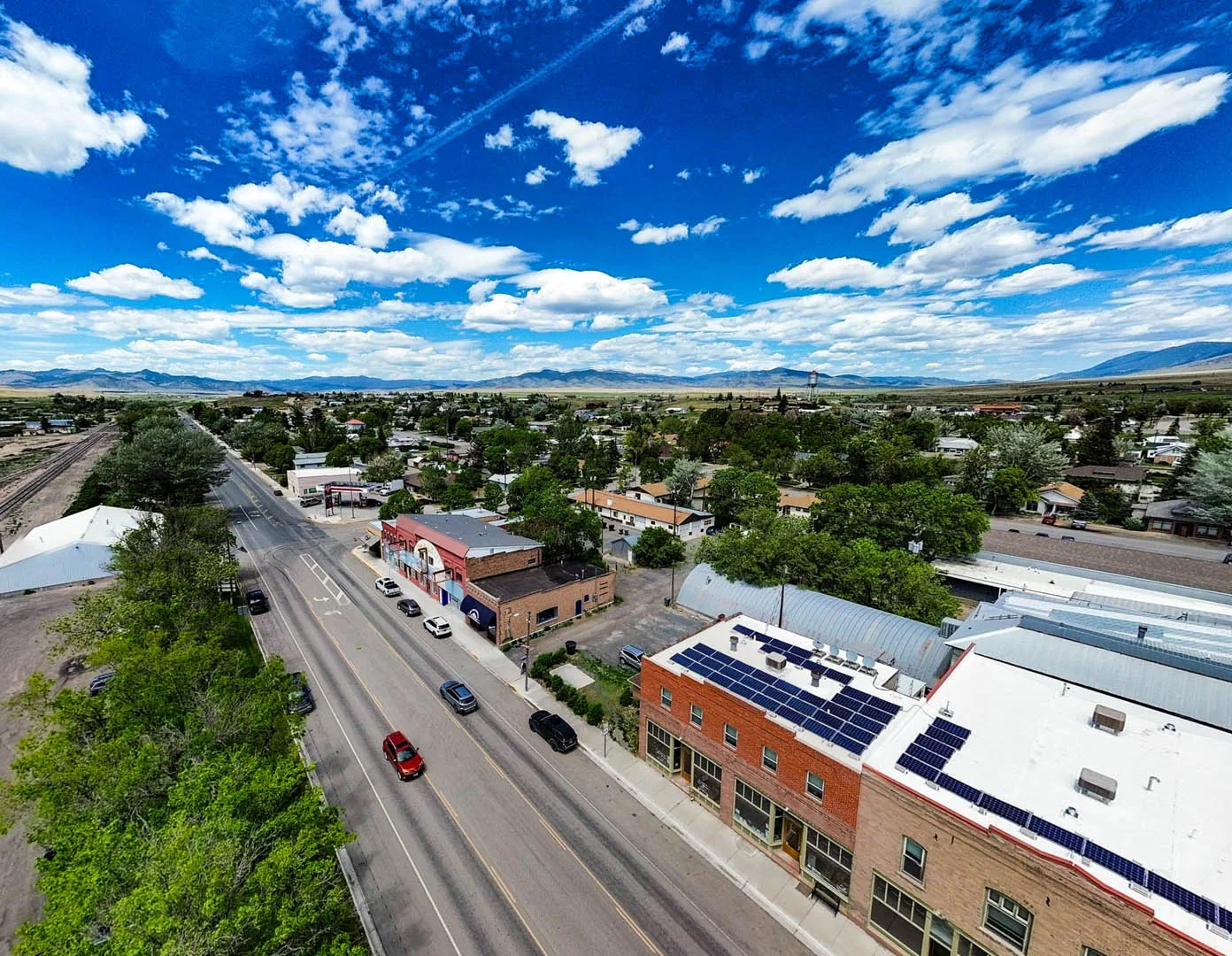
That conversation matters most for retail on North 19th Avenue, where tall parapets and rooftop units catch wind from every direction, and for Jackrabbit Lane and Copper Ranch Road buildings near the airport.
Why does a wind repair need to happen before the snow?
Because a loose edge looks minor until it holds meltwater. Snow drifts against the opened edge, melts in the afternoon, refreezes at night, and each cycle pushes the gap wider and pushes water into the insulation underneath. That is how a one-afternoon gust becomes a wet-insulation problem by spring. We schedule wind work ahead of the first heavy storm when the cold-weather adhesive window is still open, and we pair the repair with a quick moisture check around the damaged area so we do not seal wet material inside the patch. Gusts rarely arrive alone, so the same visit checks for hail bruising and for flashing the wind pried open.
Questions About Wind Damage Roof Repair
How can I tell if wind has lifted my membrane when nothing is leaking yet?
Look at the edge metal first, then the lap seams near the corners. A coping run that sits proud of the wall, a seam that shows daylight or a membrane that has rippled toward one direction are all signs that the sheet moved. We confirm with a hand walk and, on a large flat roof, a drone pass followed by an infrared check, because trapped moisture shows up long before a ceiling stain does.
My ballasted roof lost stone on one side. Is that a repair or a warning?
Treat it as both. The bare strip needs stone replaced or the membrane protected, and the stone that moved needs to come out of drain sumps and off the walkways. We also look at why that side lost ballast. If the perimeter stone was undersized or the parapet is too low to break the wind, putting the same stone back sets up the same loss next spring.
Does a warehouse near the airport face more risk than one in town?
A freestanding building near the airport takes wind straight on at its edges. Buildings tucked among taller neighbors in Midtown or downtown get some shelter, but they take turbulence off the parapets and rooftop units. Neither location is safe by default, so we judge each roof by its edge and attachment condition.
Will an insurer treat wind damage differently from hail damage?
Often yes, because wind losses are tied to a specific event and a specific gust. Dated photos of the lifted edge, the failed fasteners and the weather on that day carry the claim. We record the roof the way we find it, mark which damage is fresh and which is old wear, and hand the owner a written record to give the adjuster.
How soon should a wind-opened edge be closed?
Within days, and the same day if snow is forecast. An edge that is open and unprotected lets water in on every thaw, and the longer it stays that way the more insulation we have to cut out. A temporary closure costs far less than a section of wet roof, so call as soon as you see it and we will walk it before the next storm.