
Commercial Roofing on the Jackrabbit Lane Corridor, Belgrade, MT
Jackrabbit Lane Corridor in Bozeman and the Gallatin Valley
A contractor's building on Jackrabbit Lane has two kinds of roof wear, and you can see both from the yard. Over the shop doors, ice slides off the low eave onto the apron where trucks turn. Over the office end, the rooftop unit stands on a curb with a bead of sealant that has dried and split. Both come from a Gallatin Valley winter, and both are small enough to fix cheaply in the fall and expensive to fix in March. Which end of your building shows the damage first?
We inspect, repair and replace roofs on the small warehouse and contractor buildings of the Jackrabbit Lane corridor in Belgrade, and we describe the roof plainly before anyone prices work.
What kind of buildings sit on the corridor?
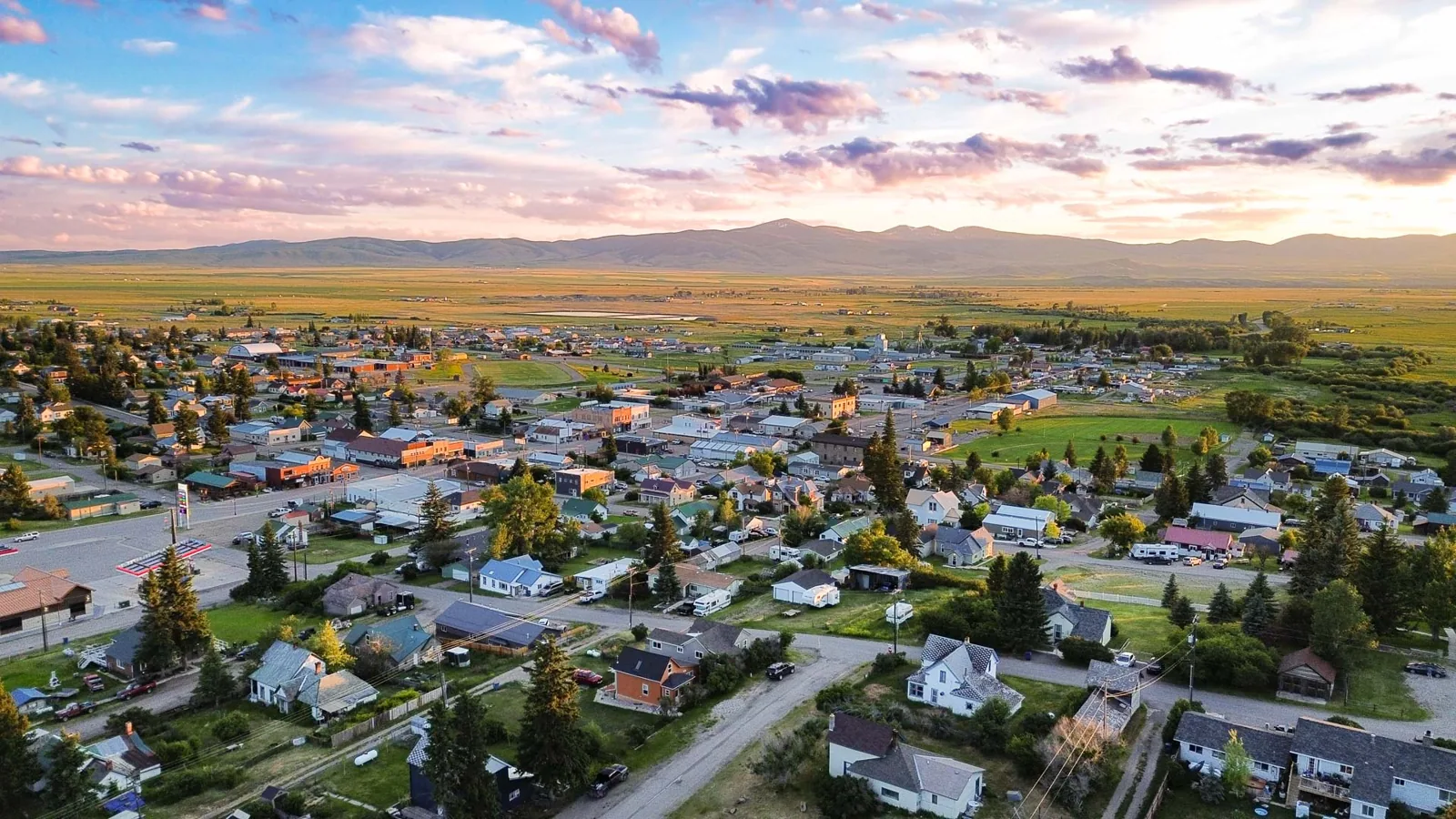
Belgrade's airport adjacency and I-90 access make the Jackrabbit Lane corridor a center for small warehouse and contractor buildings. Newer examples include an office-and-warehouse building with yard space, completed in 2022 on under two acres near the airport, and a warehouse condo building completed in 2024 close to the Jackrabbit Lane and I-90 interchange. A condo format means units can be owned one by one, and that changes who answers for the roof.
That ownership pattern shapes the roof. When several owners share one roof, a leak in one unit may start over another, and the cost of a repair has to be shared fairly. We map each unit to its roof section on the first walk, so the owners' association or the landlord can see which suite sits under which membrane, drain and curb. A roof plan on one page prevents most disputes before they start.
Why walk a new roof?
A building from 2022 or 2024 is young, and its roof is under builder responsibility for a time. That is the right moment to find defects. We walk new roofs at turnover and again before the first year ends, checking seams, flashings, drains, curbs and edges, and we photograph each detail with a date. Open items go to the builder on a punch list while the paperwork is fresh.
Young roofs fail early in a few predictable places: seams welded in cold or dusty conditions, flashing at the wall that was pulled during framing and penetrations added after the roof was finished. Each one is a small repair now. Left alone through a winter, each can wet insulation and turn into a replacement. The photographs also give the owner a baseline for the life of the roof.
The office end of an office-warehouse building deserves its own look. It usually has a different roof assembly from the shop behind it, with more insulation, more penetrations and a ceiling below that people sit under. The line where the two roofs meet is a flashing detail, and it moves as the two sections warm and cool at different rates. We probe that joint on every walk and photograph the sealant.
How does the yard change the roof plan?
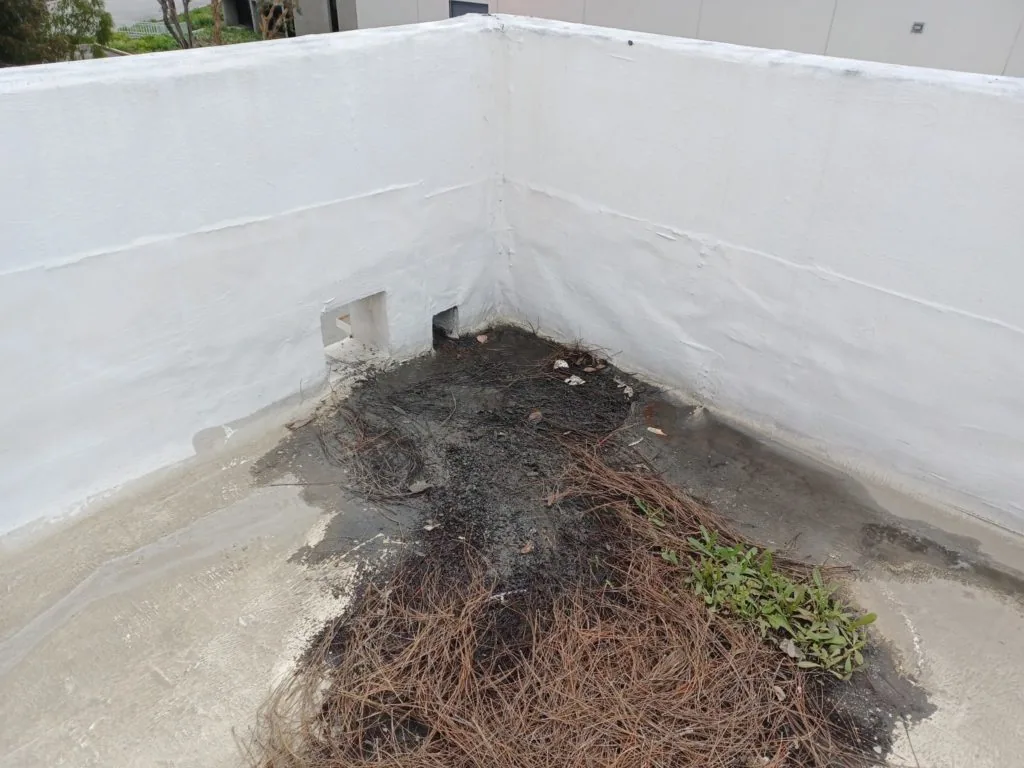
Yard space means trucks, trailers and stored equipment. Snow that slides off a roof lands in the yard, where it blocks overhead doors and drive lanes. Meltwater runs across the apron and freezes. We check the fall zone under each eave, drains and scuppers and downspout outlets, and we list where snow guards, a re-sloped edge or a longer downspout would keep water off the work area.
The corridor lies a few miles northwest of Bozeman, so Bozeman's figures are the nearest reference: about 91 inches of snow a year and a listed 50 psf ground snow design. A small building with a shed roof or a low-slope roof still gets drifts at walls and units, and the structure must carry them.
Stored materials matter on the roof too. Pallets of material, scrap and equipment parked beside the building drop debris into gutters and drains, and a drain choked with leaves or grit from the yard is the quickest way to a pond. Keeping the yard edge clean costs nothing, and we note any pile that sits within reach of a downspout.
What do wind and hail do to buildings near the airport?
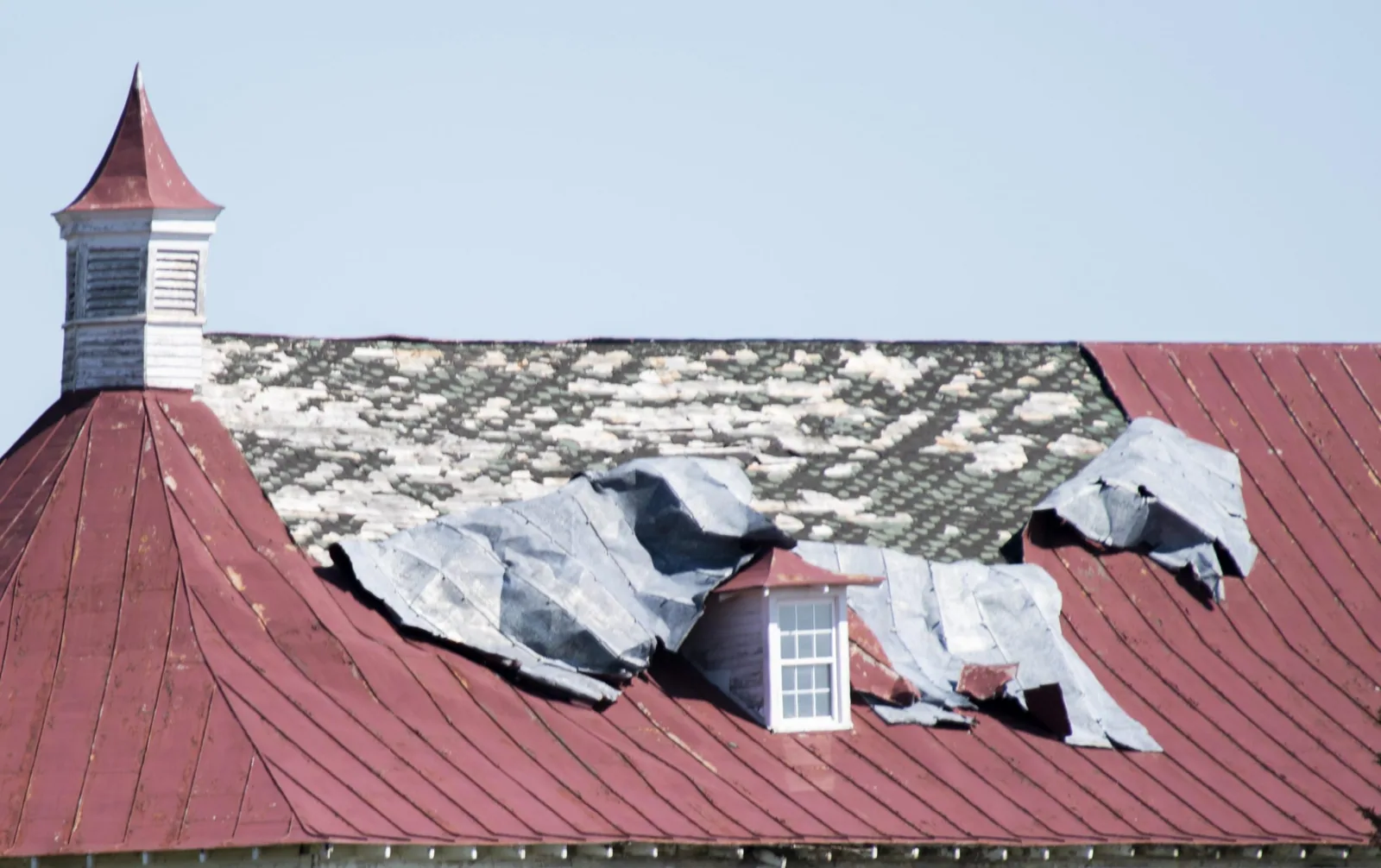
The storm of early August 2013 brought 89 mph gusts and golf-ball stones to Belgrade, and flattened grain across Gallatin County. A long, low building catches wind like that at its edges and corners. Wind damage repair begins with the perimeter: edge metal, trim, the last row of fasteners and the corner details.
After a storm we walk the roof, flag hail bruises and dents and cut a core at the deepest mark. Cosmetic marks and damage that reached the insulation go on separate lists, each photographed with a scale. An insurer sees the same evidence we do. Quick records after a storm keep the claim simple and the repair on schedule.
Which roof systems suit small-bay buildings?
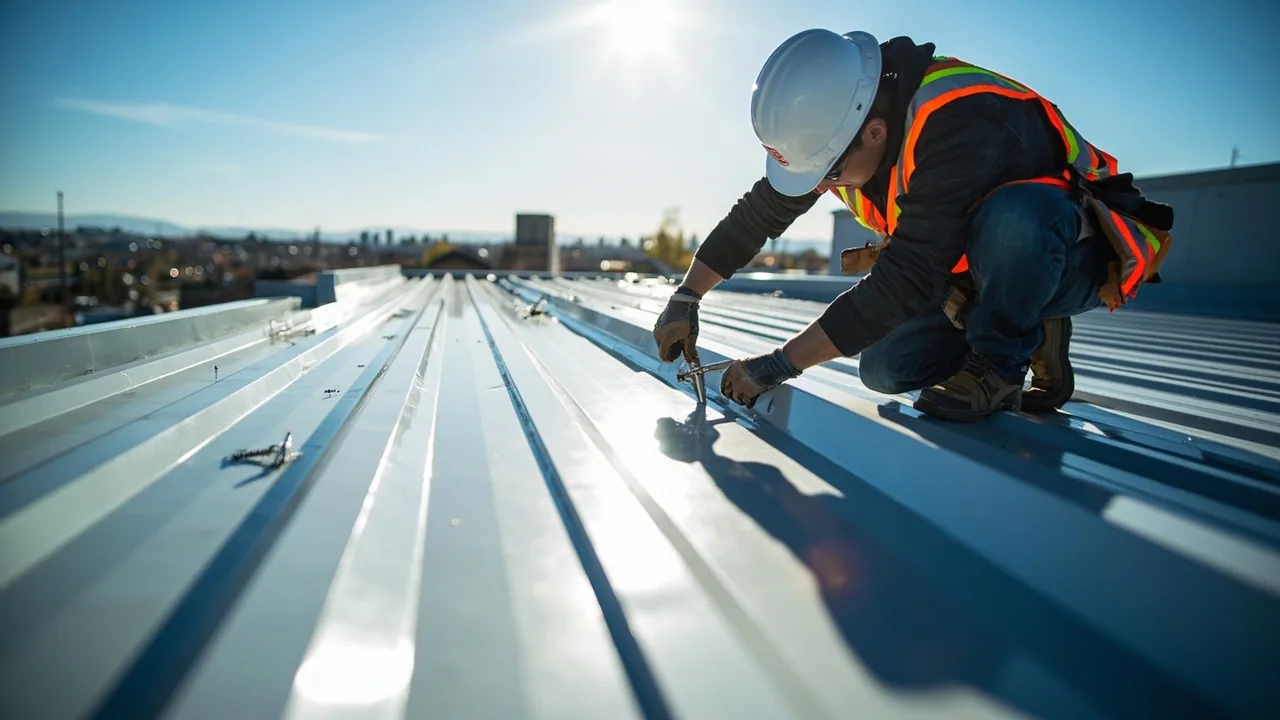
Small warehouse and flex buildings often use metal panels or a single-ply membrane. A TPO roof gives welded seams and a reflective surface. A metal roof suits steeper slopes and sheds snow, though snow guards then matter. On older buildings with exposed fasteners, a metal roof retrofit can seal the roof without a tear-off.
Each gets installed cost, expected service and a repair path in writing. A core cut and a moisture scan come first when a roof is old. For new roofs, the question is maintenance, and a short list of spring and fall tasks keeps small leaks from becoming big ones.
How do we schedule around a working yard?
A contractor's building is busy in the same months when roofing weather is best. We plan work in sections that can be dried in each day, place the crane and laydown yard away from truck lanes and give tenants notice of noisy hours. Larger scopes wait for the warm, dry stretch, with temporary repairs carrying the cold months.
Neighbors in the Copper Ranch Road business area and the rest of Belgrade use the same approach. Owners with a warehouse or a flex building can keep one roof file across several properties.
Weather windows are narrow. Late spring through early fall gives usable days, and a contractor's own busy season uses the same months. The earlier the walk, the better the chance of a booked slot before the calendar fills. A fall walk lets the owner price the work in winter and book it for the first dry week in spring.


Questions About Jackrabbit Lane Corridor
Is a roof from 2022 or later worth a walk?
Defects show early, and the builder may still be responsible. Walks at turnover and a year later document seams, flashings and drains while a punch list can still be enforced.
Who pays when several owners share one roof?
The governing documents decide. A roof plan mapping each unit to its roof section, with photographs of the leak source, gives owners the facts to apply those documents fairly.
How do I keep snow off my overhead doors?
Check what is above them. Snow guards, a re-sloped edge, a gutter or a canopy can hold or redirect slides. We walk the fall zone and recommend the simplest fix that works.
Does a small building need a drainage plan?
Yes. Even a small roof ponds if one drain is blocked. We trace each drain and outlet, test flow and note ponding after the first thaw, so the plan is based on what the roof does.
What records should I keep after a storm?
Dated photos of the roof and the yard, a note of the weather and any interior damage. We add a roof walk and core cuts to the file within days, which keeps a claim straightforward.