EPDM Roofing in Bozeman, MT
EPDM Roofing in Bozeman and the Gallatin Valley
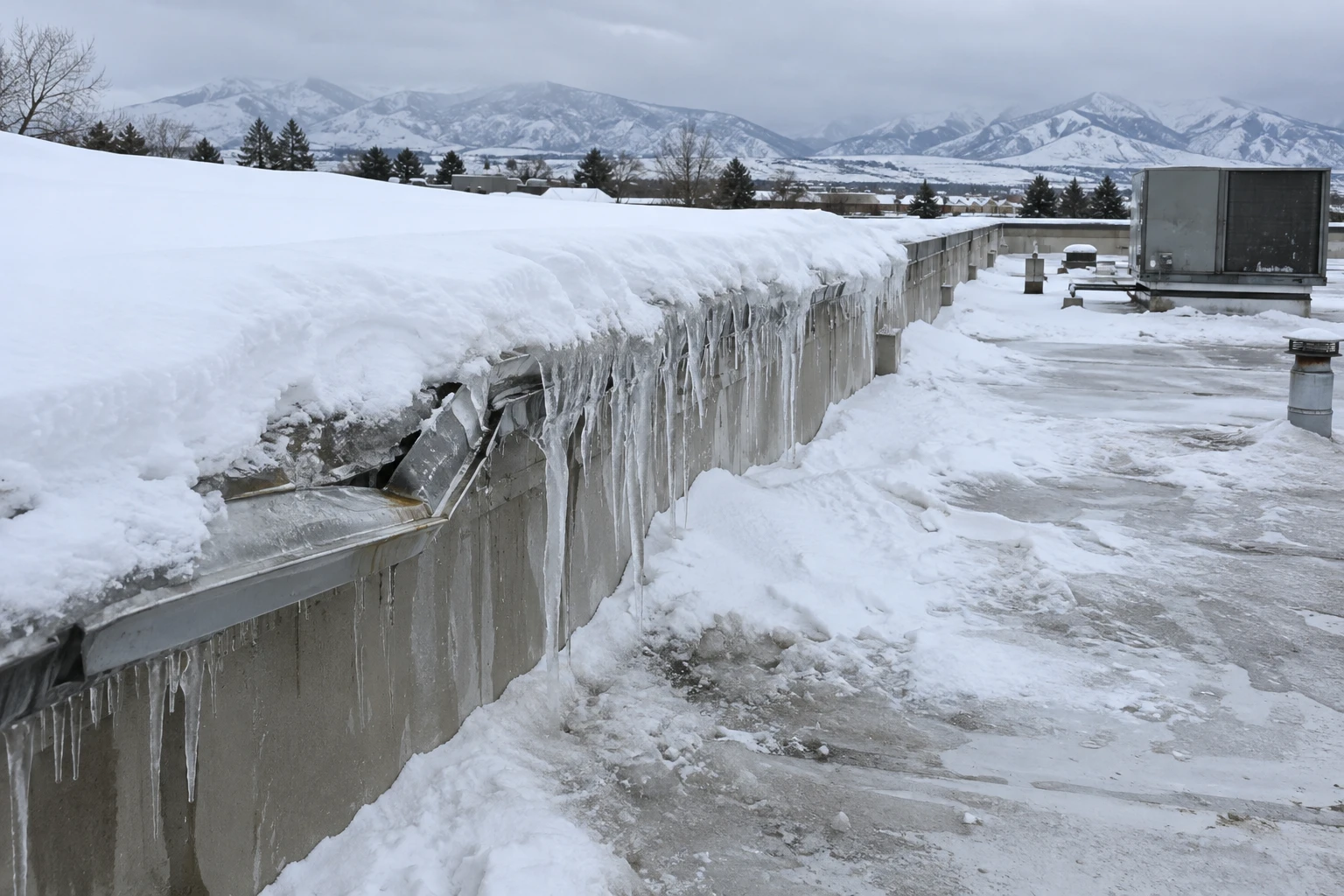
A black rubber roof on an older downtown building clears its snow faster than its neighbors, and that is both the advantage and the trouble. Dark EPDM soaks up winter sun, melts the snow on the field and sends meltwater toward the edge, where it meets cold metal and refreezes. By February a ridge of ice sits at the eave, and the water behind it looks for a way in. Bozeman, MT piles up roughly seven and a half feet of snow in a typical year, so the way an EPDM roof sheds that water decides how it ages. Where does the ice build up on your building?
We install, repair and replace EPDM membranes on commercial roofs around Bozeman, and we explain what the rubber is doing before we price anything.
What is EPDM, and where does it work well?
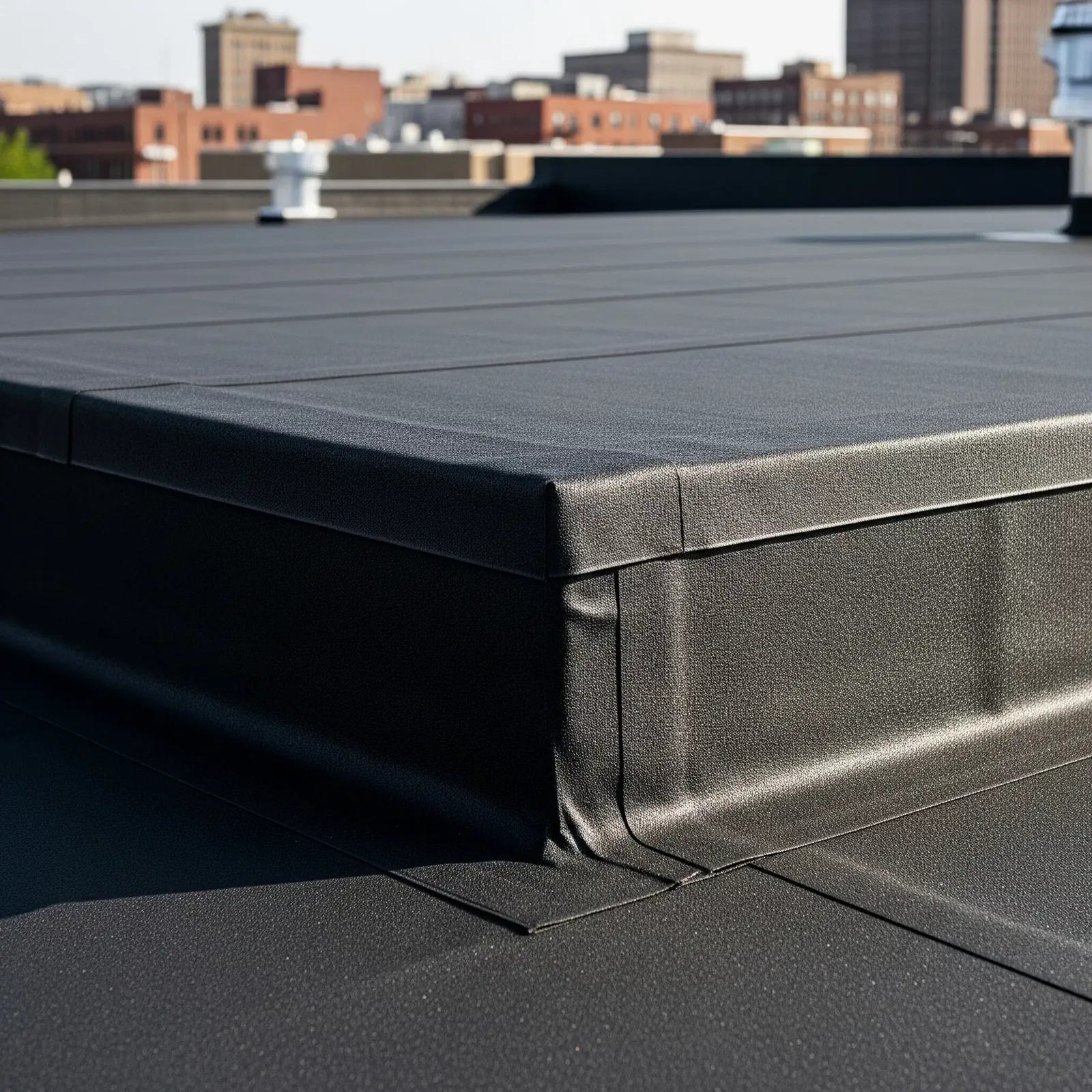
EPDM is a synthetic rubber sheet, usually black, made in wide rolls so that a large field has few seams. It is installed fully adhered, mechanically attached or ballasted with stone, and the seams are joined with tape or splice adhesive rather than heat welds. It stays flexible in deep cold, which matters in a city where the record low is minus 46 degrees F, and it tolerates thermal swing without much fuss.
It works well on low-slope roofs where the geometry is simple, where foot traffic is light and where there is no oil or grease on the surface. It is a common choice for apartments, offices and small retail, and it is a common sheet on older buildings that need a repair.
One more trait matters in this valley. EPDM absorbs impact better than many harder sheets, which helps in a hail year, though a stone large enough to cut still cuts. The August 2013 storm, which put golf-ball stones on Belgrade and north Bozeman under gusts as strong as 89 mph, is the reminder: firm board under the sheet and clean, tight terminations deserve attention before a hail season, not after it. Rubber that is cut or lifted at an edge in a wind event also needs a prompt look, since a small opening grows with each gust.
Should an EPDM roof be adhered, attached or ballasted?
Each method answers a different question. A fully adhered system suits roofs where wind uplift and a smooth finished look matter. Mechanical attachment uses plates and fasteners and is faster, but it needs attention to fastener pull-out over time. Ballast, a layer of stone or pavers that holds the sheet down by weight, is simple and forgiving, but it adds load to a structure that already carries snow.
Design values listed for Bozeman include 50 psf of ground snow and 110 mph of basic wind. Ballast adds to the first number and helps with the second, so the structure has to be checked before ballast is specified. Livingston, east over Bozeman Pass, ranks second among U.S. airport weather stations for average wind speed, a reminder that exposure varies with location. We match the method to the building, not to a habit.
What do older downtown buildings need from a rubber roof?
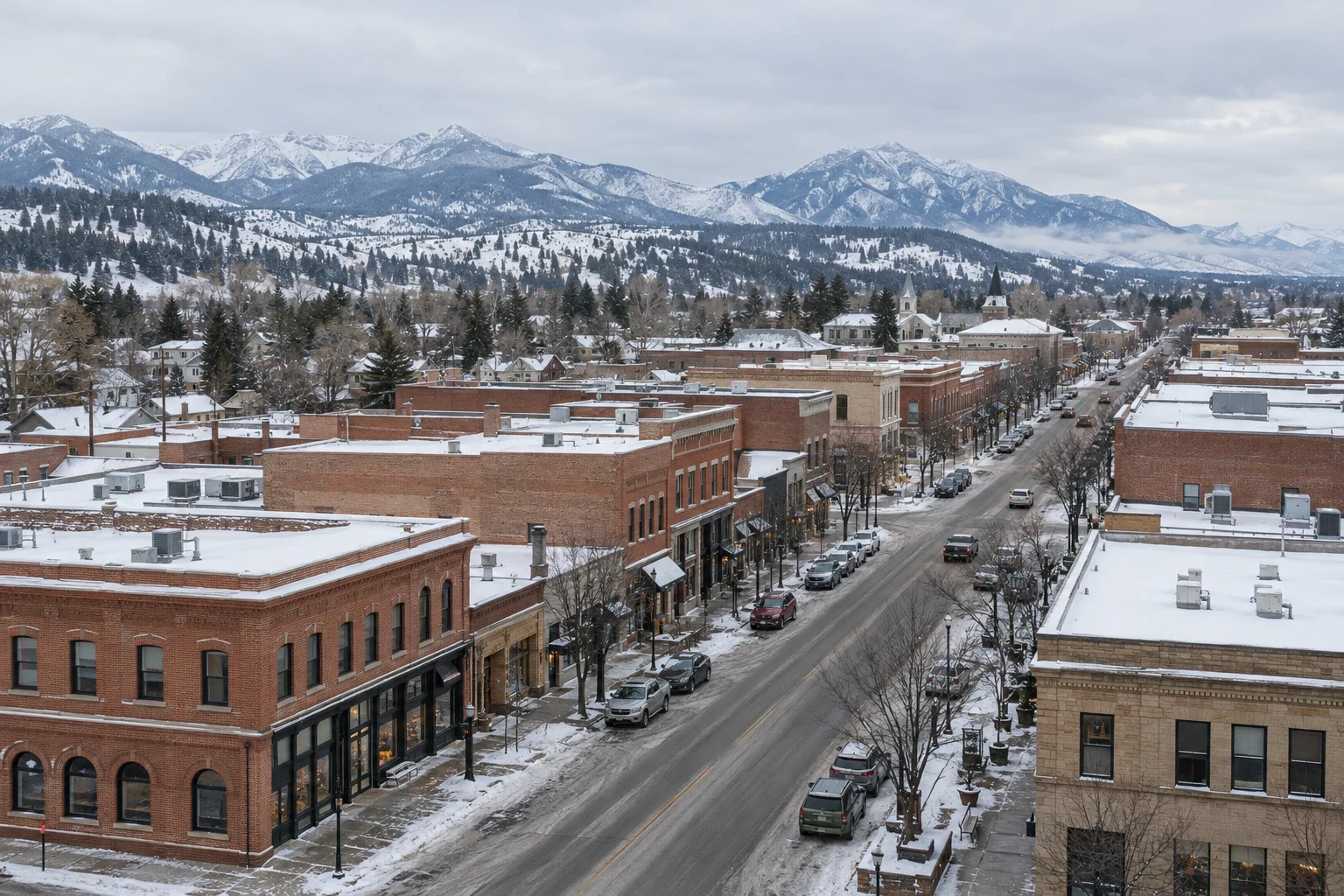
Older masonry buildings with flat roofs are common along Downtown Bozeman's Main Street, which takes in the Bozeman Brewery and Cooper Park historic districts. The June 2010 hailstorm tore up the Ellen Theatre marquee downtown, which gives a sense of what the district's roofs can take. A historic front says little about what sits on top, so the roof gets read on its own.
So we start with the parapet. We check the cap, the wall flashing and the scupper, and we look for rubber that has pulled away from the wall. These are the details where flashing failure begins. An old EPDM roof with sound field rubber and failing terminations is often a repair, not a replacement, and the work centers on the downtown Bozeman edge details.
How do I stop ice at the eave?
Ice at the eave comes from heat leaving the building through the roof, melting snow high on the deck, and the water refreezing at the cold edge. An EPDM sheet does not cause that, but a dark sheet makes the melt more visible. The fix starts inside the building: insulation, air sealing and ventilation. Outside, edge metal and gutters must be sized and sloped so that meltwater leaves the roof.
We check snow and ice damage at every eave, clear drain sumps before the first heavy storm and list the places where ice dams form. Heat cable is a patch in a few spots and not a cure. The sheet will tell us where water stands, and the interior tells us why.
Where does an EPDM roof fail first?
Seams and flashings come first. Tape or adhesive seams can open where they were applied in cold or damp conditions, and the adhesive has a cold-weather window that varies by product. A sheet that was seamed on a damp morning may look right and then lift at the first freeze. Flashings at curbs and pipes are the second weak point, because rubber flashing moves with the roof and can pull at its edges.
Punctures are the third. A dropped tool or a service visit can cut the sheet, and EPDM is a soft material. Walkway pads along the paths to rooftop units prevent most of it. We probe the seams, photograph each failure and repair with compatible material. If the failures spread across the field, we talk about a recover or replacement.
When is EPDM the right choice, and when is it not?
It is the right choice on simple, quiet roofs, particularly apartment roofs where traffic is light and the geometry is clean. It is also the right match when an existing EPDM roof needs a compatible repair. It is the wrong choice where grease, oil or chemical vapor reaches the roof, where heavy foot traffic is routine or where reflectivity matters to the cooling load.
In those cases we look at PVC or at modified bitumen, and we lay out cost, expected service and the repair path for each. A core cut tells us whether the existing insulation can stay. The decision then rests on what the roof shows rather than on what is easiest to quote.
Questions About EPDM Roofing
Does a black roof make Bozeman ice worse?
It melts snow sooner, which can make eave ice appear earlier, but the cause is heat loss and edge design. Check insulation, air sealing and eave metal before changing the membrane, and have us walk the roof to confirm.
Can ballasted EPDM carry a Bozeman snow load?
Only if the structure has been checked. We recommend a structural review before ballast is chosen, since stone adds weight on top of a 50 psf design snow load and local drifts.
How do I know if an EPDM seam has failed?
A failed seam lifts, shows a dark gap or leaves a stain below. Probe every seam each spring and photograph any lift, because small gaps are cheap to close and wide ones are not.
Is EPDM easy to repair in winter?
Temporary repairs are possible, but adhesives need a dry surface and moderate temperature. The better plan is a temporary seal in the cold months and a permanent repair in the first dry window.
Should I cover an old EPDM roof with a new sheet?
A moisture scan and core cuts come first, because a new sheet over wet insulation shortens the life of both layers. With dry insulation and a sound deck, a recover is practical and avoids the cost of tear-off.