
Commercial Roofing at the North 19th and Valley Center Road Interchange, Bozeman, MT
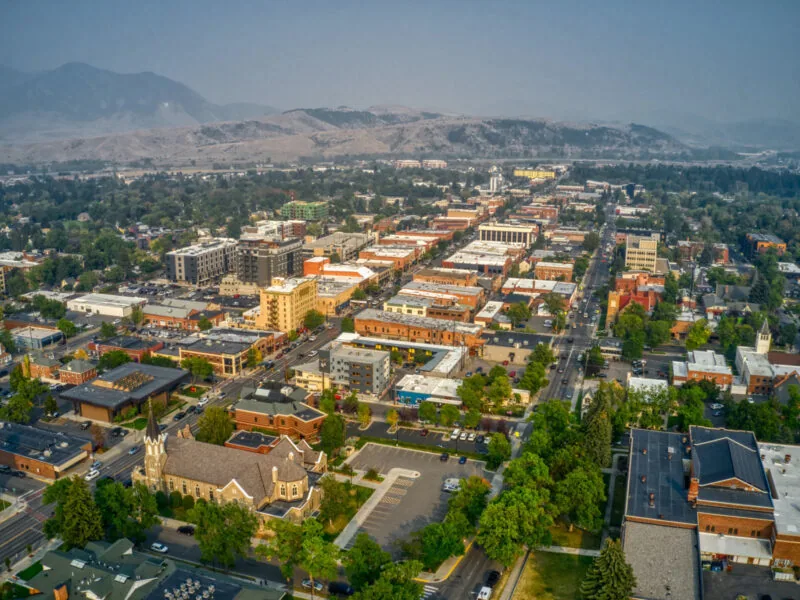
North 19th and Valley Center Road Interchange in Bozeman and the Gallatin Valley
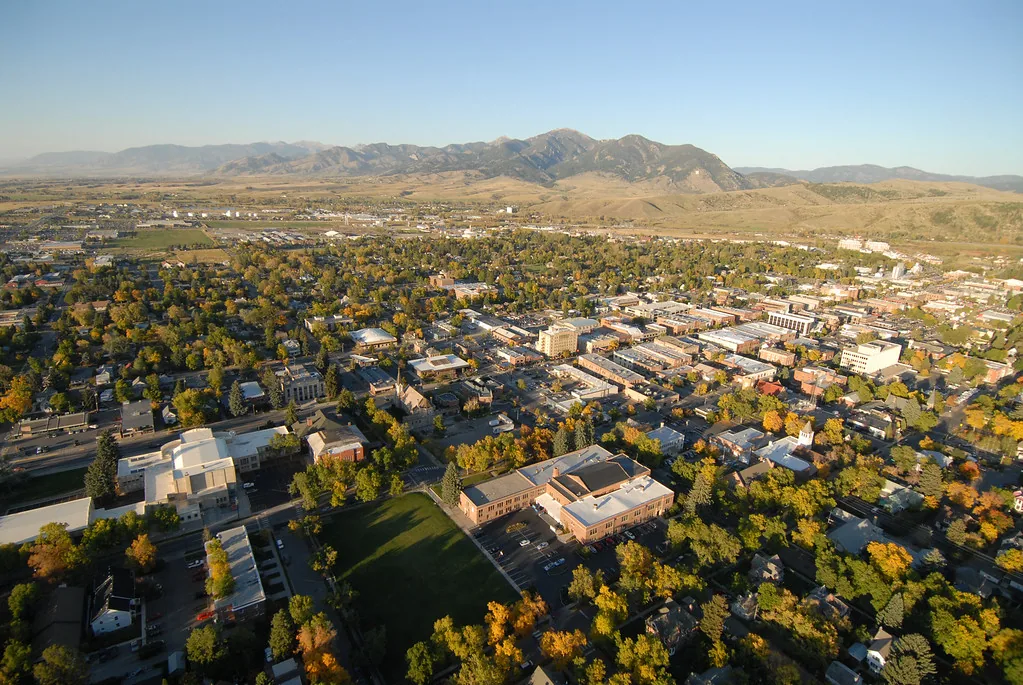
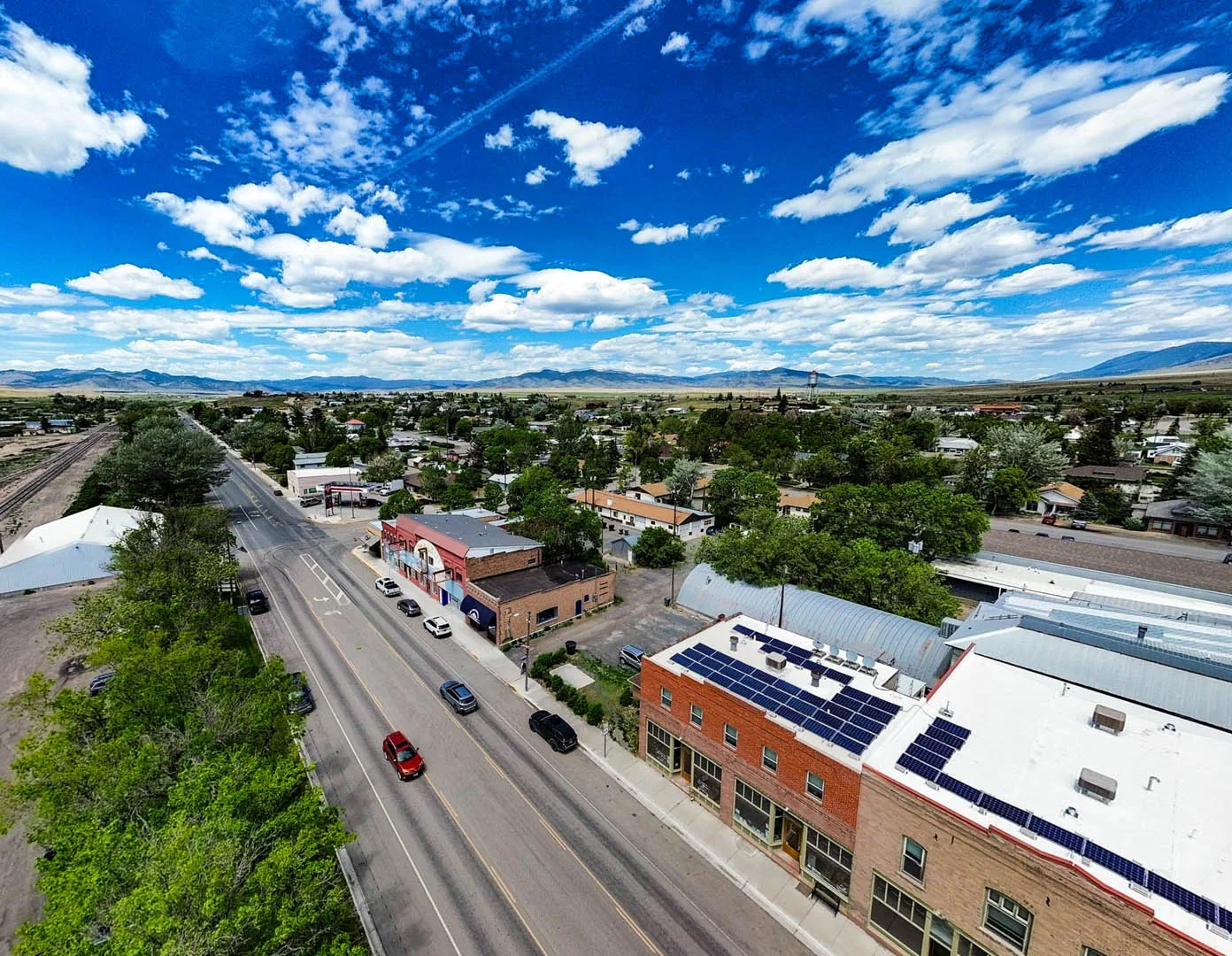
The ground where North 19th Avenue meets East Valley Center Road, just south of Interstate 90 in Bozeman, MT, is where the retail corridor reaches the interstate, and newer pad and retail buildings are what fill an interchange like this. A 10.5-acre former Montana DOT rest area there was rezoned from M-1 industrial to B-2 commercial, with two commercial buildings, including a fast-food restaurant, planned. New commercial ground has one advantage for a roof: nobody has laid a membrane on it yet. So the useful questions come before the crane: what will the roofs be, and who will make sure the details survive their first Gallatin Valley winter?
What does an interchange pad site ask of a roof?
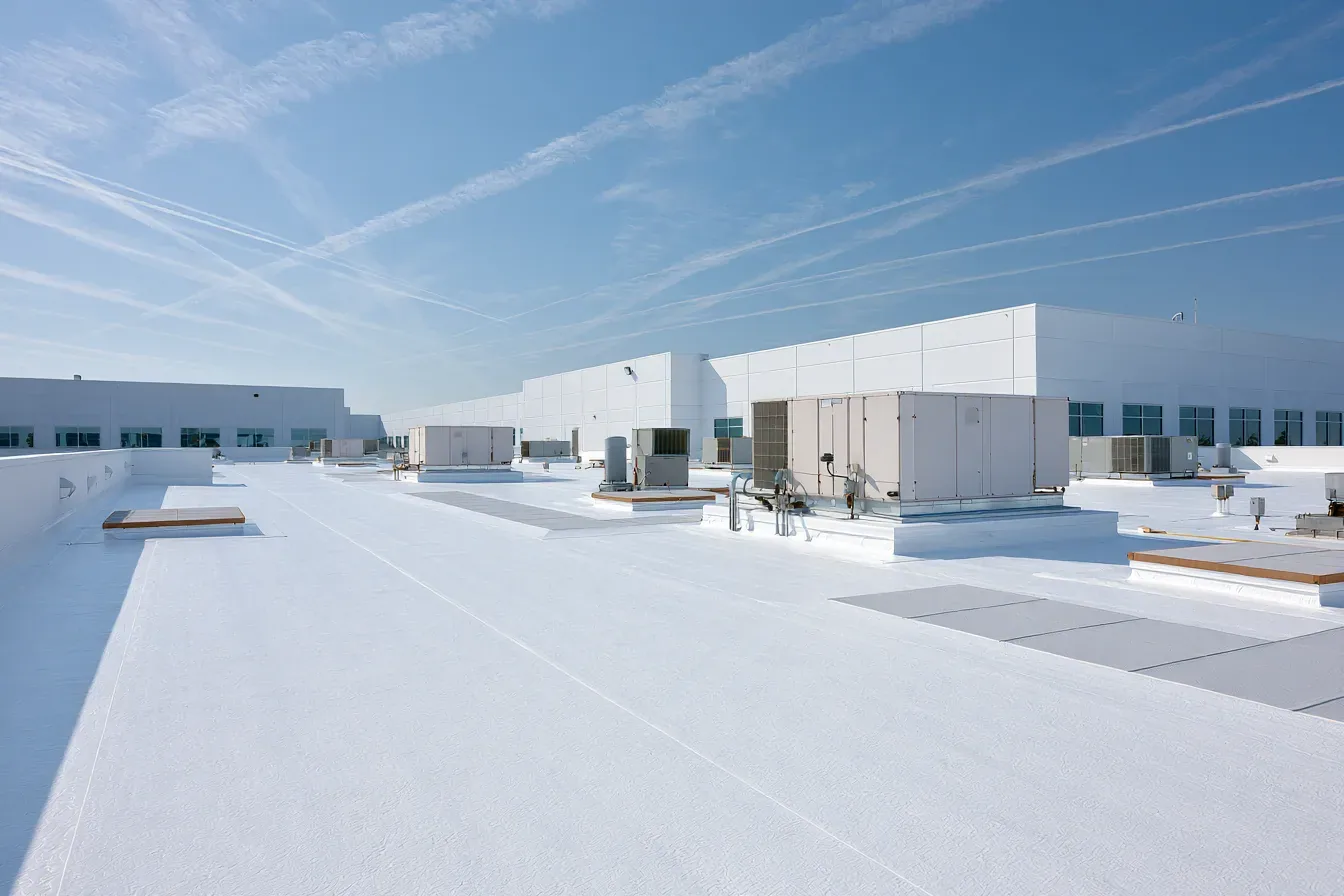
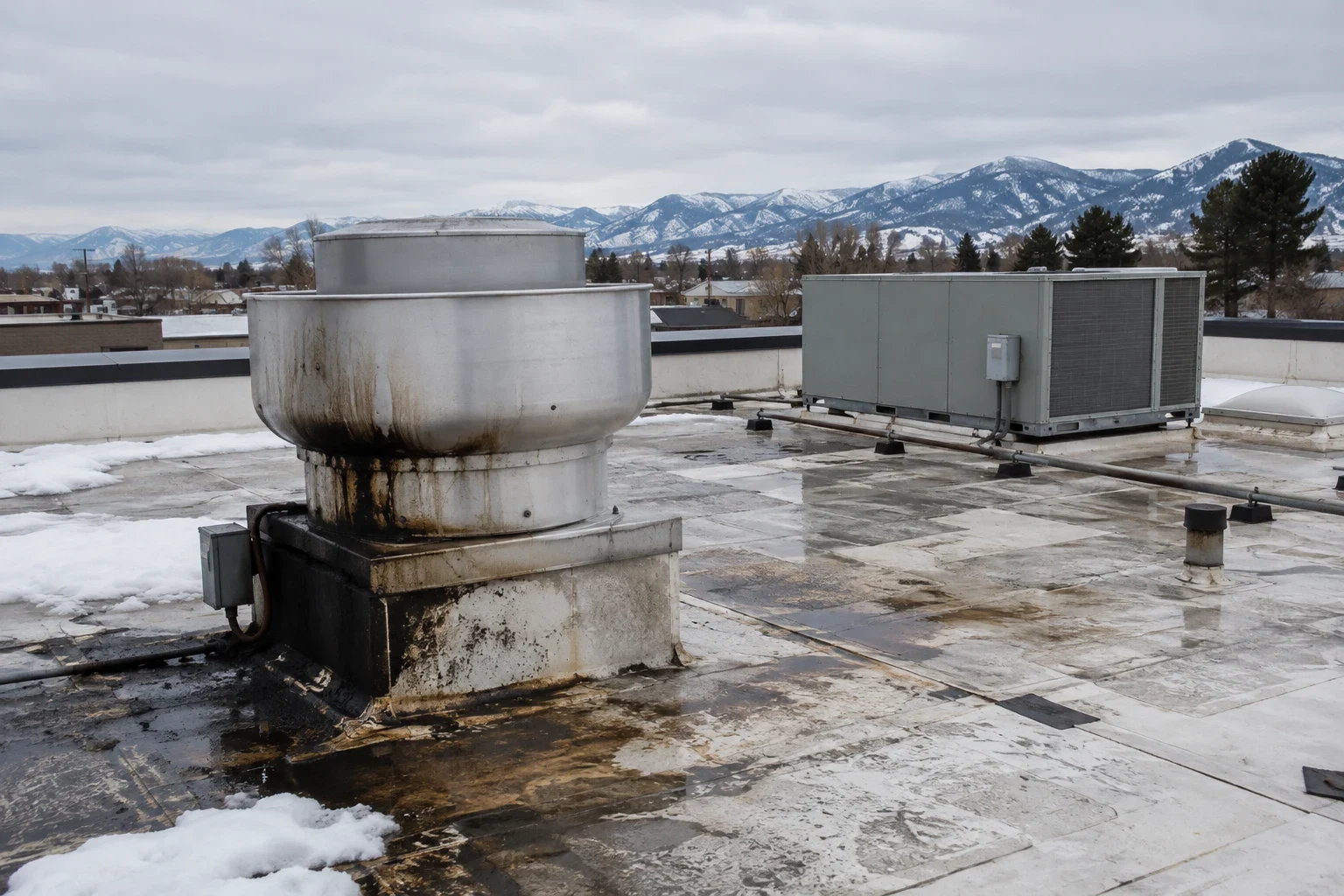
Pad buildings at an interchange are usually small, single-story and highly visible, with kitchen exhaust on the restaurants, rooftop units for heating and cooling, and parapets that hide the equipment from the road. A small roof has few drains, which means each drain has to work. A parapet turns the roof into a shallow pan, so a drain that fails ponds the whole field.
I look at three things in a plan before I look at the membrane. How many drains are there, and is there a secondary overflow? How tall are the curbs above the expected drift? And where does the exhaust sit relative to the roof edge and the nearest air intake? Those three answers decide whether the first winter is quiet or loud.
The state closed the old rest stop in 2023, so any buildings that go up on that ground will carry the first roofs it has had. That is a rare chance to specify details with no old roof to work around. There is no stack of old layers to remove, no unknown deck and no tenant to move out, only a plan and a schedule.
How does a new roof get through its first Bozeman winter?
Winter here means about 91 inches of snow, 54 snowy days and January nights near 15 degrees F, with a listed ground snow design of 50 psf. A new roof meets all of that before the sealants have fully cured and before the tenant has finished moving in.
The first winter finds mistakes. A scupper cut an inch too high, an insulation joint that was left open, a flashing that was terminated without a counterflashing. I schedule a walk after the first thaw on any new roof I can reach, with a camera and a level. A problem found in that walk is a warranty conversation for the builder. A problem found in year three is the owner's.
The walk itself is short and specific. I check each drain with a bucket of water, run a hand along every seam, look at the base of every curb and press on the membrane at each wall. I photograph the sealant lines at the edge metal. Then I write one page: what is sound, what needs a small fix now and what to look at again in autumn. The page goes to the owner, the builder and the architect together.
Why does wind matter at an exit ramp?
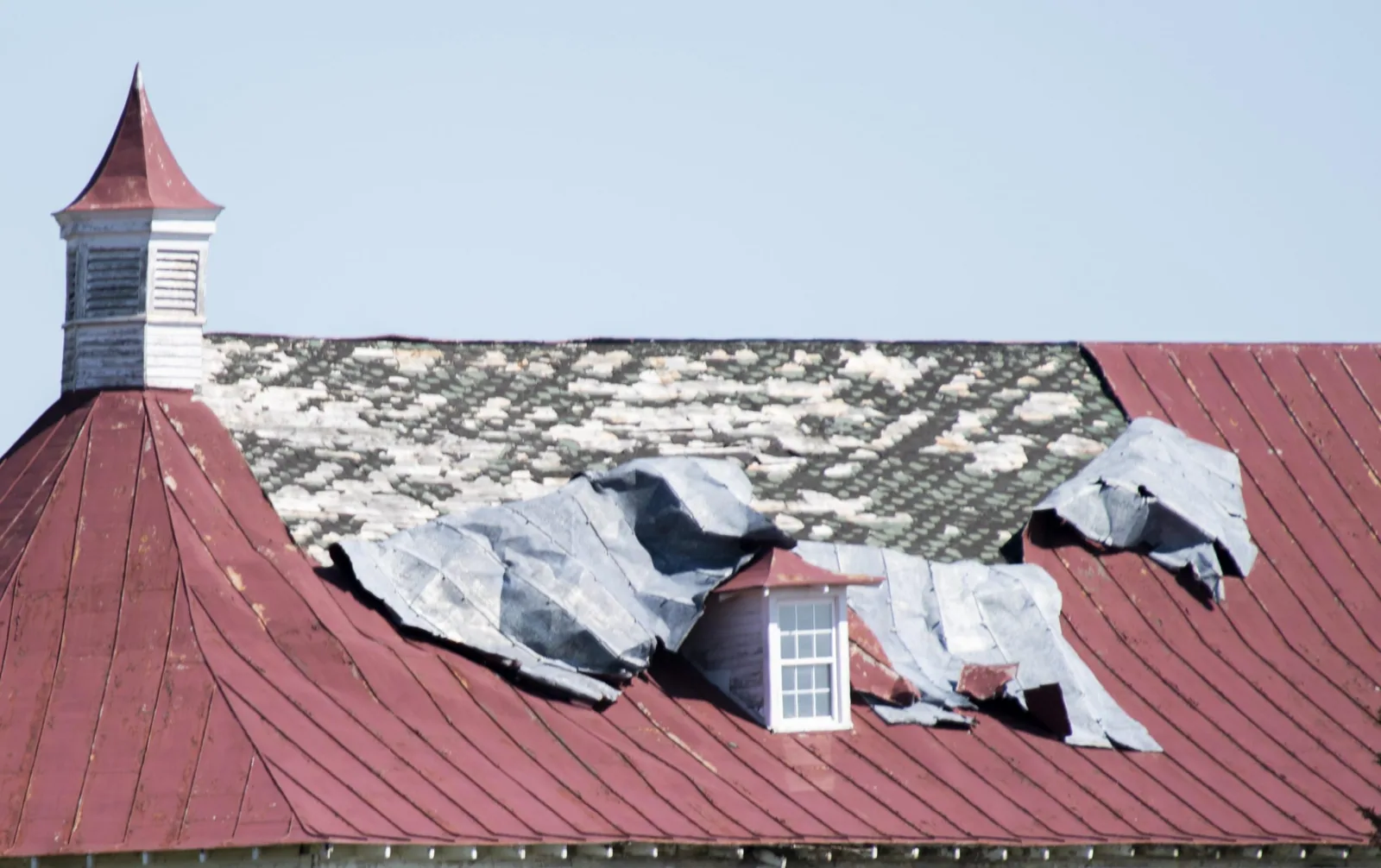
Wind is a design question at an interchange. The basic wind speed listed for Bozeman is 110 mph under ASCE 7-16, and the August 2013 storm sent 89 mph gusts over Belgrade and north Bozeman. A small building with a parapet has edges and corners where uplift is highest, and a roof that was fastened to the minimum pattern can flutter at the perimeter.
The fix is design, not repair: a tighter fastener pattern at the corners and edges, edge metal with continuous cleats and a coping system that is tested for pull-off. If I am asked to review a roof plan, these are the first pages I turn to. Skipping them is what leads to wind damage roof repair a few winters later, and the cost of getting them right at the start is small.
What happens between dry-in and turnover?
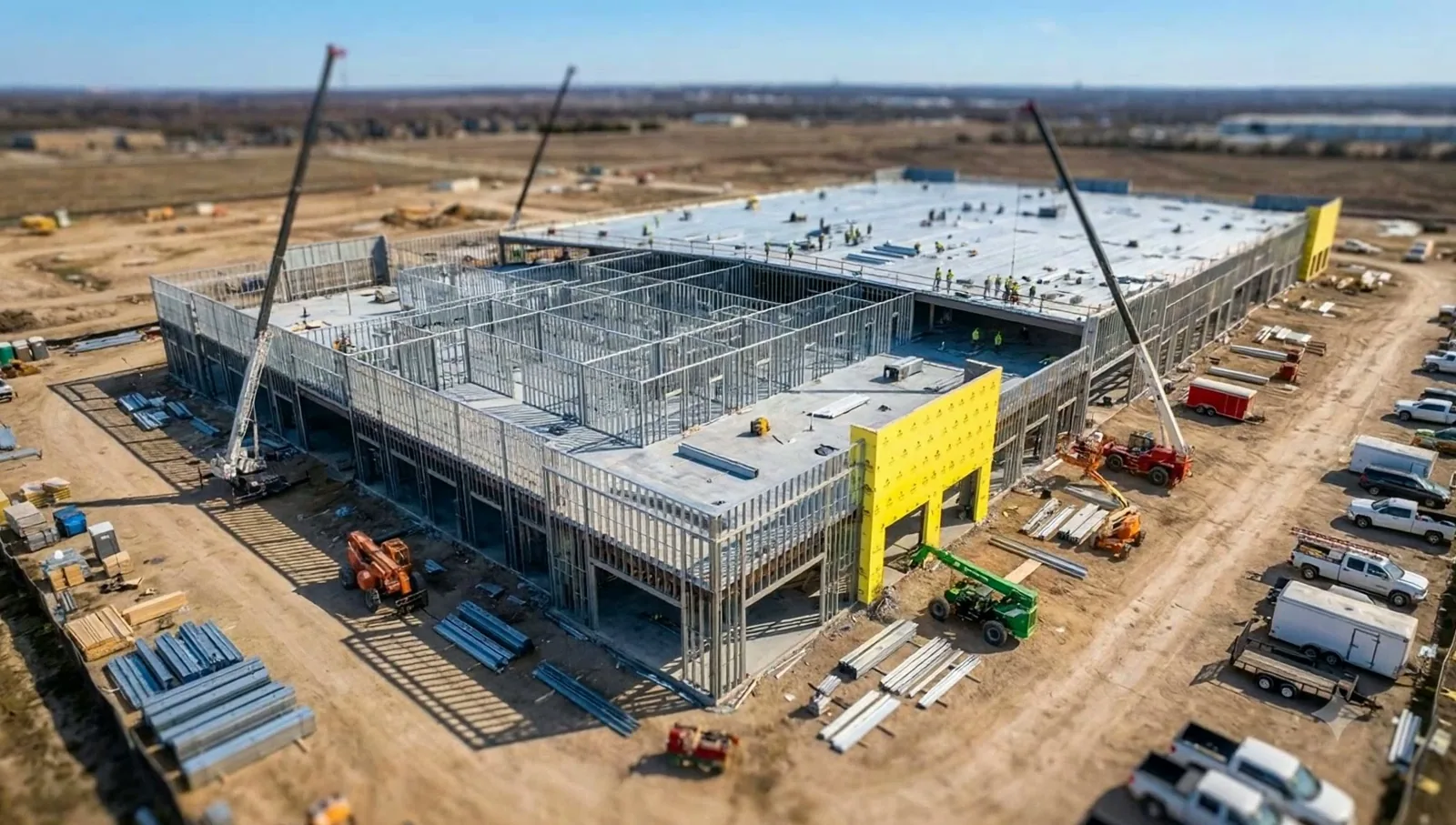
A new building passes through a sequence: structure, deck, insulation, membrane, then trades. The roof is the first thing that has to be right, and then every other trade walks on it. Mechanical contractors set units, electricians run conduit, and framers carry material. Each pass is a chance for a puncture.
I ask for walkway pads from the access hatch to each unit before the trades arrive, and a walk of the roof after the last trade leaves. Punctures from dropped tools show up as small cuts in the membrane, and a patch made that day costs almost nothing. A hot work permit, a fire watch and a rule against open flame near insulation matter on a new roof as well, since a spark in dry insulation does more damage than any storm. Commercial roof inspection at turnover documents the roof as it was handed over, which protects owner and builder both.
Who should the roofer be talking to on a new project?
The general contractor, the architect, the mechanical contractor and the owner. A roof is shared by all four, and the details where they meet are where leaks begin. The general contractor needs a dry-in date. The architect needs a detail that works on paper. The mechanical contractor needs a curb in the right place. The owner needs a roof that will last.
For general contractors, the useful help is a schedule that fits the rest of the job: the crane pick, the deck inspection, the membrane install and the final walk. A general contractor gets that sequence in writing, with a daily summary and photographs that show progress.
What should an owner ask for before signing off on a new roof?
A record: the roof plan as built, the products used, the fastener pattern, the inspection photographs and the date of the first-winter walk. With that record, any later question has an answer. Without it, the owner relies on memory.
For a restaurant or fast-food tenant, the record also names the exhaust location and the grease control, so a later kitchen change does not move a vent without a flashing detail. Owners of tenant-occupied pad buildings can hand the same record to the tenant, which keeps rooftop work on the owner's terms from the first day.
The interchange area sits where North 19th Avenue meets the interstate, and Belgrade lies along the same highway. A pad restaurant here is roofed like any restaurant roof, and a retail building like a shopping center roof. A regular preventive roof maintenance plan starts in the first spring.
Questions About North 19th and Valley Center Road Interchange
Our fast-food pad is still on paper. What should we put in the roof specification?
Specify a secondary overflow for the parapet roof, curbs tall enough to clear drifts, a tight fastener pattern at the edges and corners, walkway pads from the hatch to each unit and grease protection near the exhaust. Those five items address the usual first-winter failures.
When should a new roof be walked?
After the last trade leaves, after the first thaw and again before the end of any workmanship warranty period. Each walk takes an hour or two on a small roof and costs far less than the repairs it prevents.
Who pays for a puncture made by another trade?
That is a contract question for the owner and builder. From the roof side, we document the puncture, repair it the same day and note which trade was on the roof, so the cost can be assigned fairly.
Is wind a bigger risk near the interstate?
The listed design speed for Bozeman is 110 mph, and a roof beside an interstate exit should be detailed for it. A tighter fastener pattern at the perimeter and well-secured edge metal are the right responses.