
Repair of hail, wind, snow, ice, ponding, flashing, seam and puncture damage on commercial roofs in Bozeman, MT, with a record that supports the repair scope.
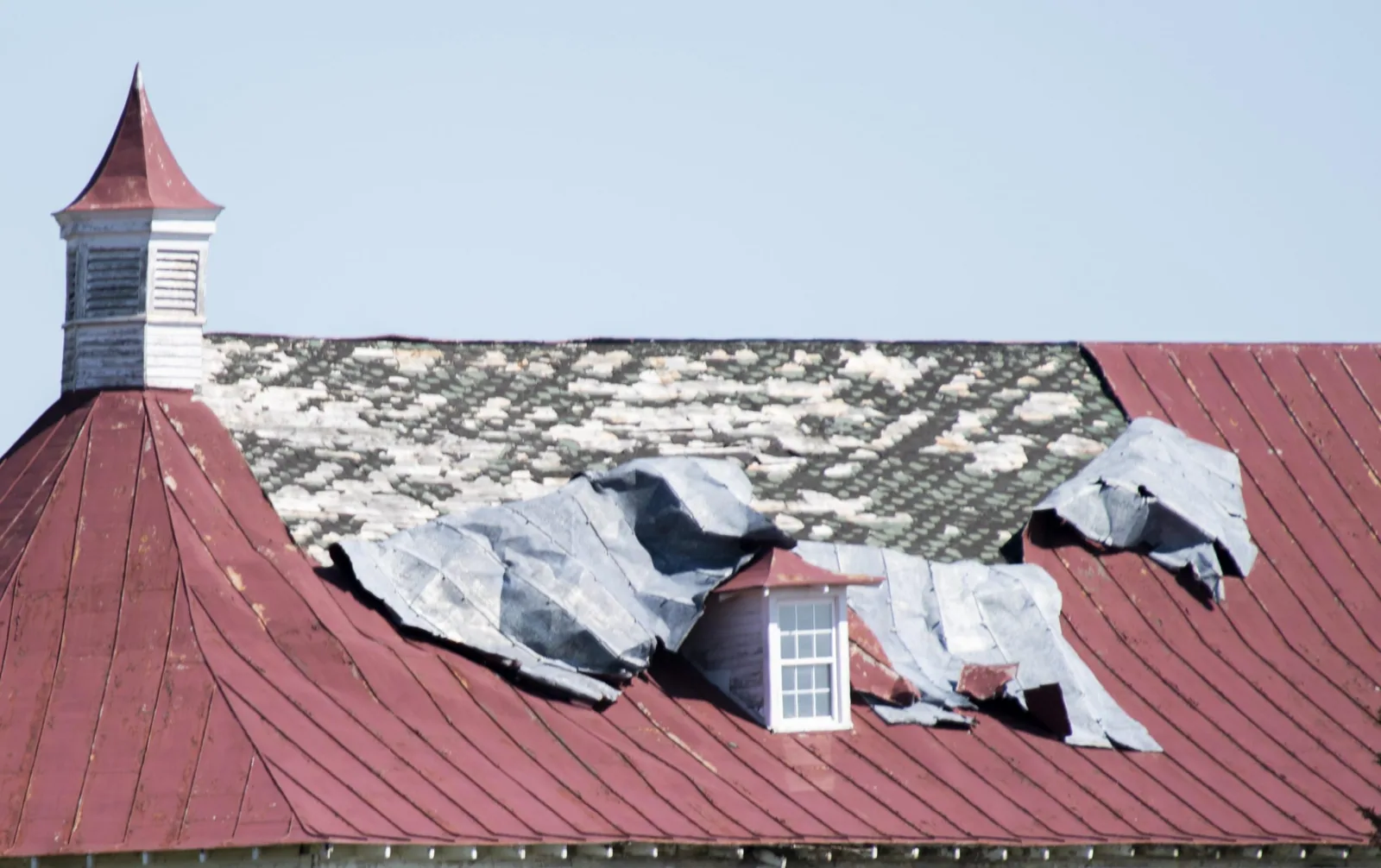
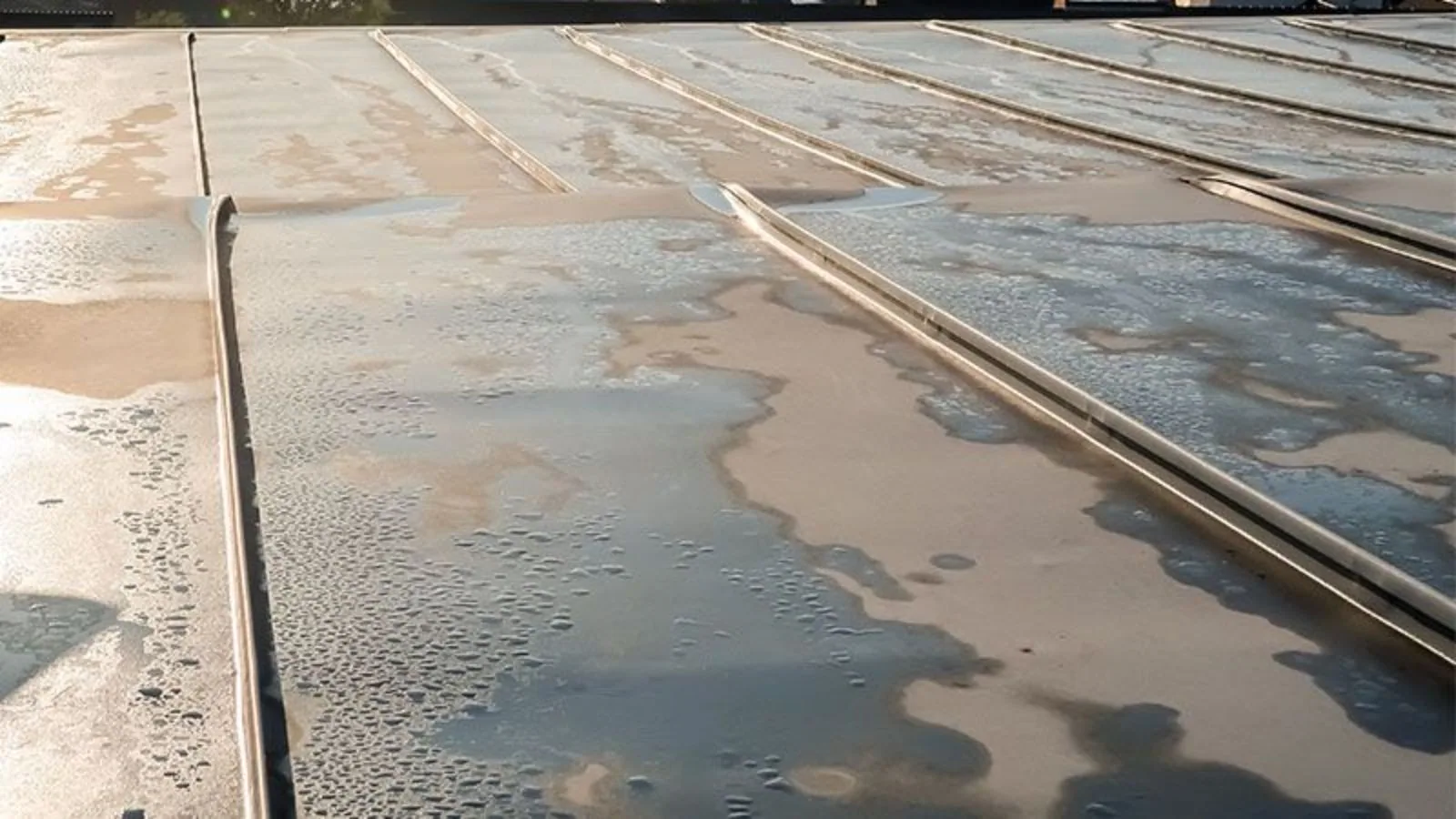
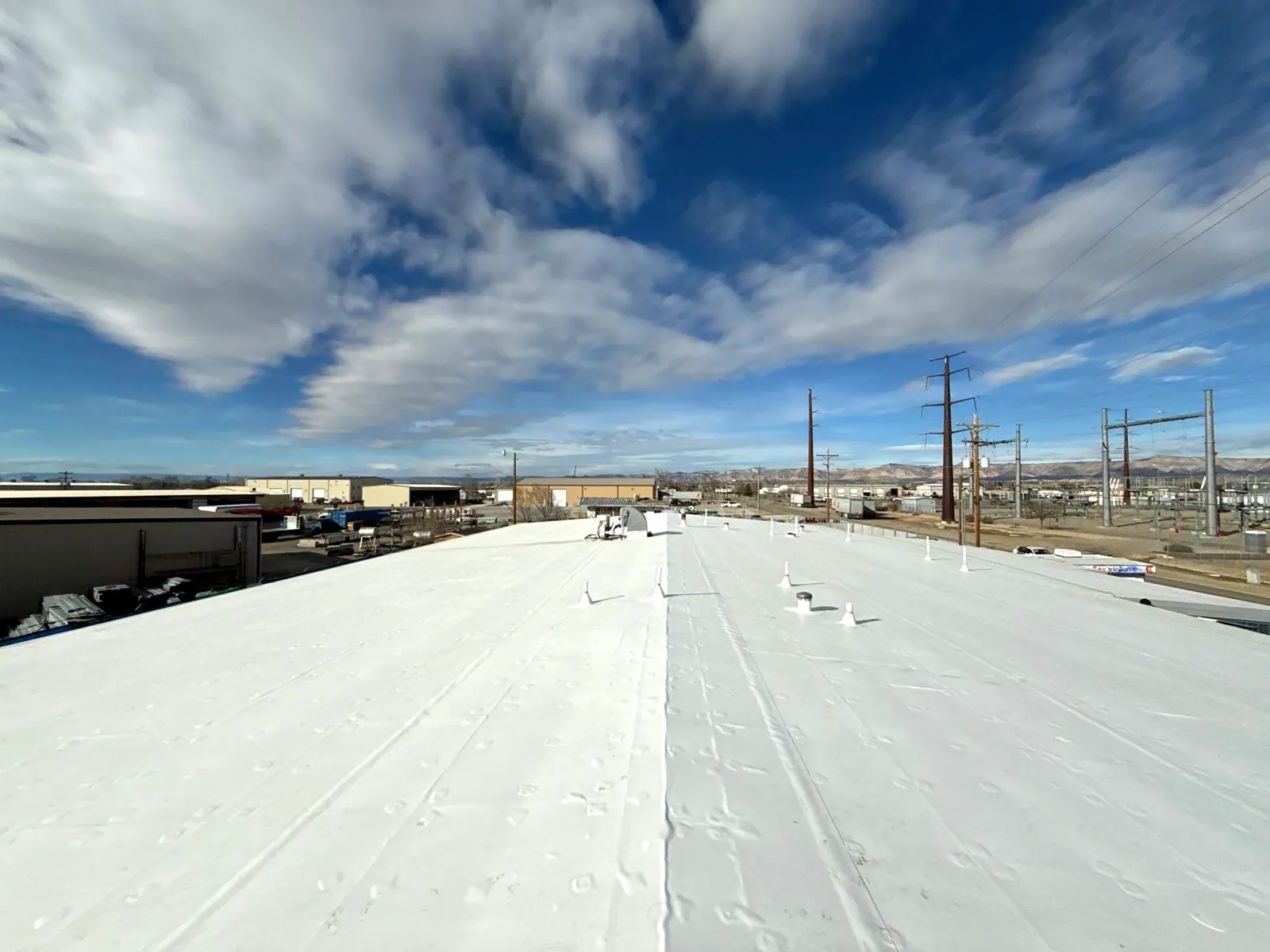
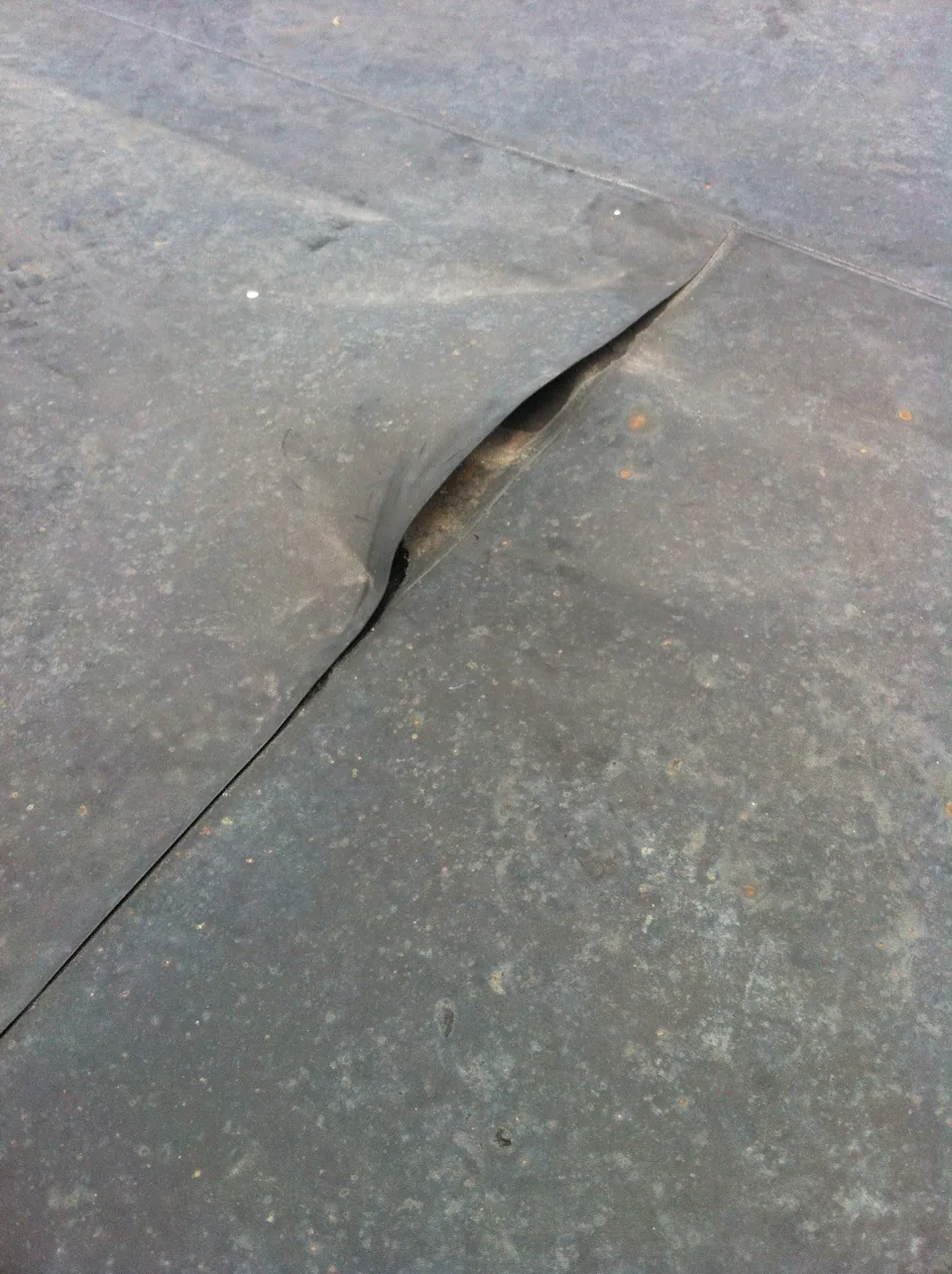

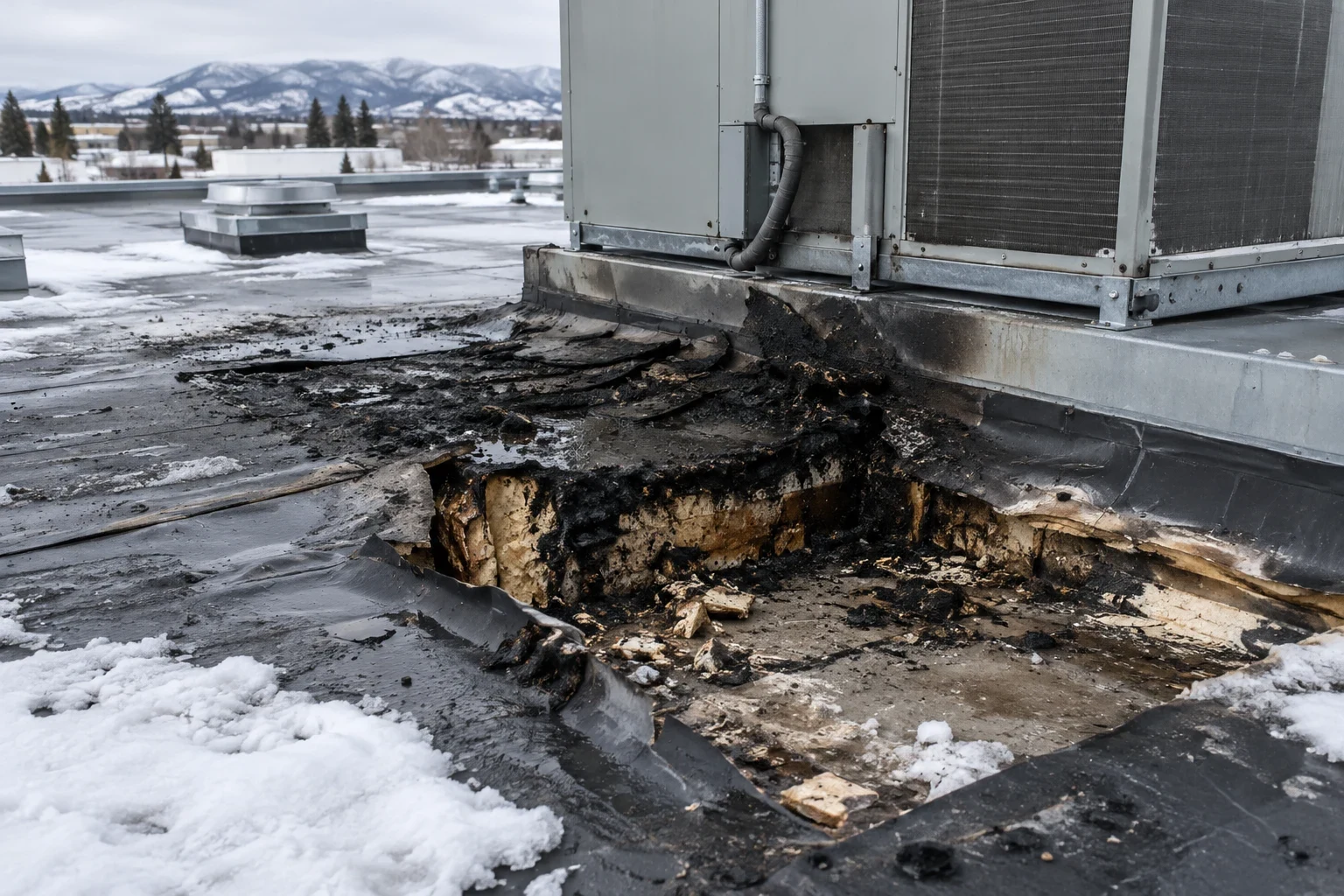
Damage on a Bozeman, MT roof usually has a season attached. Snow and thaw cycles work on terminations all winter, and hail arrives in a few hard minutes in summer. What I find up there tells me which came first, and the repair follows from that. Each kind of damage below starts with how it looks on the roof and ends with what gets fixed and what gets watched.
Hail leaves bruises that crack insulation under a sheet that looks whole. Golfball hail fell on Bozeman in June 2010, and a 1.50-inch report came from the Gallatin River area in May 2023. Wind lifts edges and tears terminations, with 89 mph gusts recorded in August 2013. Snow and ice overload sections and block drains.
The order of work follows the weather. Hail and wind get a dry-in first, then a walk of the field and the edges. Snow and ice damage waits for the thaw, since a roof cannot be read until the drifts are gone. In every case I photograph before touching a seam, so the record shows what the storm left and what was already there.
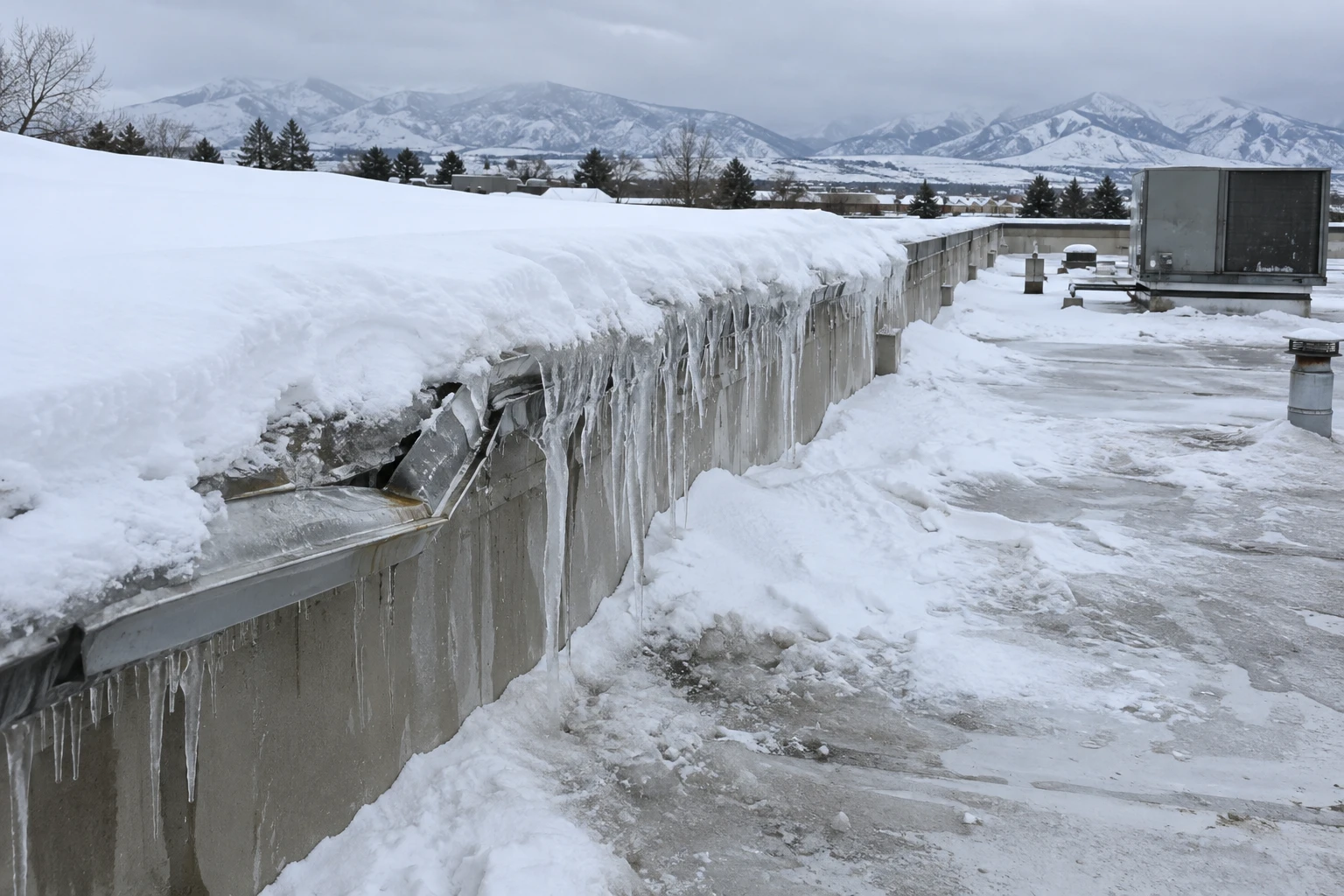
Ponding follows a clogged drain or a sagging deck. Flashing failure opens at walls and curbs, where snow drifts and refreezes. Thaw cycles pry at both, so the repair starts with a clear route for the water before any patch is laid.
Snow totals about 91 inches in a Bozeman year, and December is the snowiest month. A drift behind a parapet melts at midday, runs to a scupper and freezes again by evening, which is why flashing and drains show the first signs of trouble.
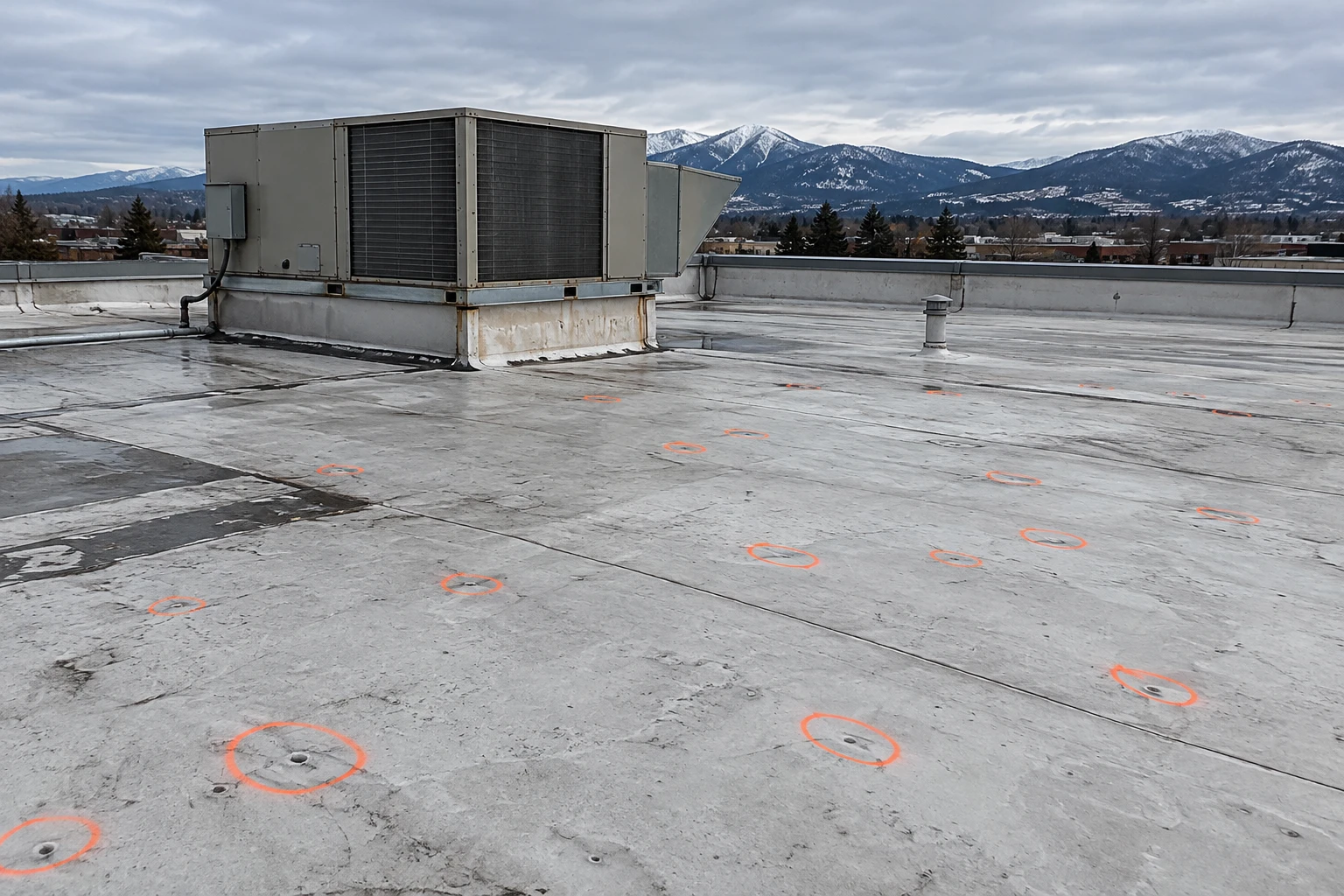
Seam failure shows as lifted laps and open welds, and a membrane puncture usually traces to foot traffic or dropped tools. Both are cheap to fix early and expensive after water reaches the insulation. A core cut tells us which case we have.
Cold changes the repair. Adhesives and sealants have minimum temperatures, and a patch laid in a freeze can look fine and fail at the edge. We hold a permanent fix for a day that lets the material cure, and we cover the opening in the meantime.
Fire damage reaches past the burn. Heat can warp a deck, melt a membrane and char insulation that looks fine, so the whole assembly is checked before any patch goes on.
The same applies after smoke and water from a neighboring unit: the deck, the insulation and the flashing each get a look before the owner signs a scope.
As soon as it is safe. Marks fade and water spreads inside the roof, so a dated record from the first days is worth the most.
Usually. Fresh damage shows clean edges and displaced material, and old wear shows weathering in a repeating pattern. We record both.
We cut cores and walk the field first. Scattered bruises get repaired, and widespread fracture points toward replacement.
It can. Send the paperwork and we will read the terms against the repair before work starts.