
Emergency Roof Repair in Bozeman, MT
Emergency Roof Repair in Bozeman and the Gallatin Valley
On August 29, 2023, two sensors along Triple Tree Road southeast of Bozeman recorded 65 mph gusts. A gust like that is enough to lift an edge, loosen a coping cap and put water in a tenant suite before morning. A storm does not wait for the next workday, and neither does the dry-in that stops the damage from spreading.
For commercial buildings in Bozeman, MT, emergency repair means one thing first: get the building dry and safe. Everything else, including the permanent fix and the insurance paperwork, follows from a roof that stopped taking water in the first hours.
What happens when you call?
A person answers, at any hour, on any day of the year including holidays. We ask for the building type, the address of the building, what you see inside and what the weather is doing now. If a life safety issue exists, such as a collapsing ceiling or a live electrical hazard, we tell you to clear the area and call emergency services before anything else.
Callers who know the roof type, the approximate age and the last repair save us time, but we do not need a perfect description. We send a crew with materials suited to the damage: heavy tarps, ballast, fasteners, temporary membrane, sealants and a few sheets of cover board. On arrival we walk the roof from a safe path, photograph everything and decide on the quickest way to dry the building in. Roof access at night in winter takes extra caution, and we stop work if ice, wind or lightning makes it unsafe.
What does a hail event look like on the ground?
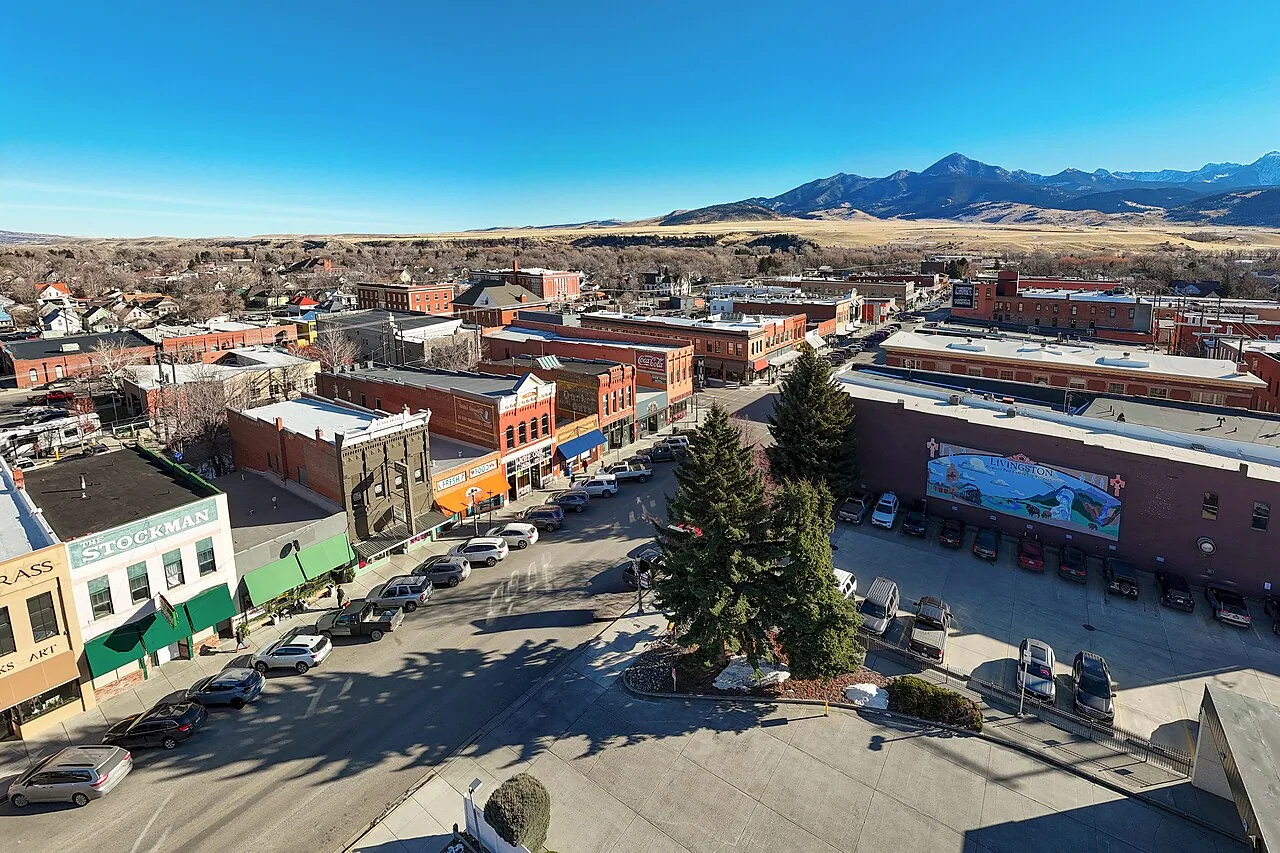
The June 2010 storm sent baseball-size stones east of Gallatin Field, then golfball-size hail over Bozeman for half an hour. The Ellen Theatre marquee came apart downtown, and the university lost dozens of windows. In the first days of August 2013, hail the size of golf balls covered Belgrade and north Bozeman as gusts reached 89 mph. A May 2023 report logged 1.50-inch hail along the Gallatin River.
After events like these, the emergency list is the same: broken skylights and windows, torn membrane at edges, lifted coping, fractured vents and flashing, and water entering at the damage. We cover openings first, then photograph every bruise and break for the hail damage record.
Why do heavy snow and ice cause emergencies?
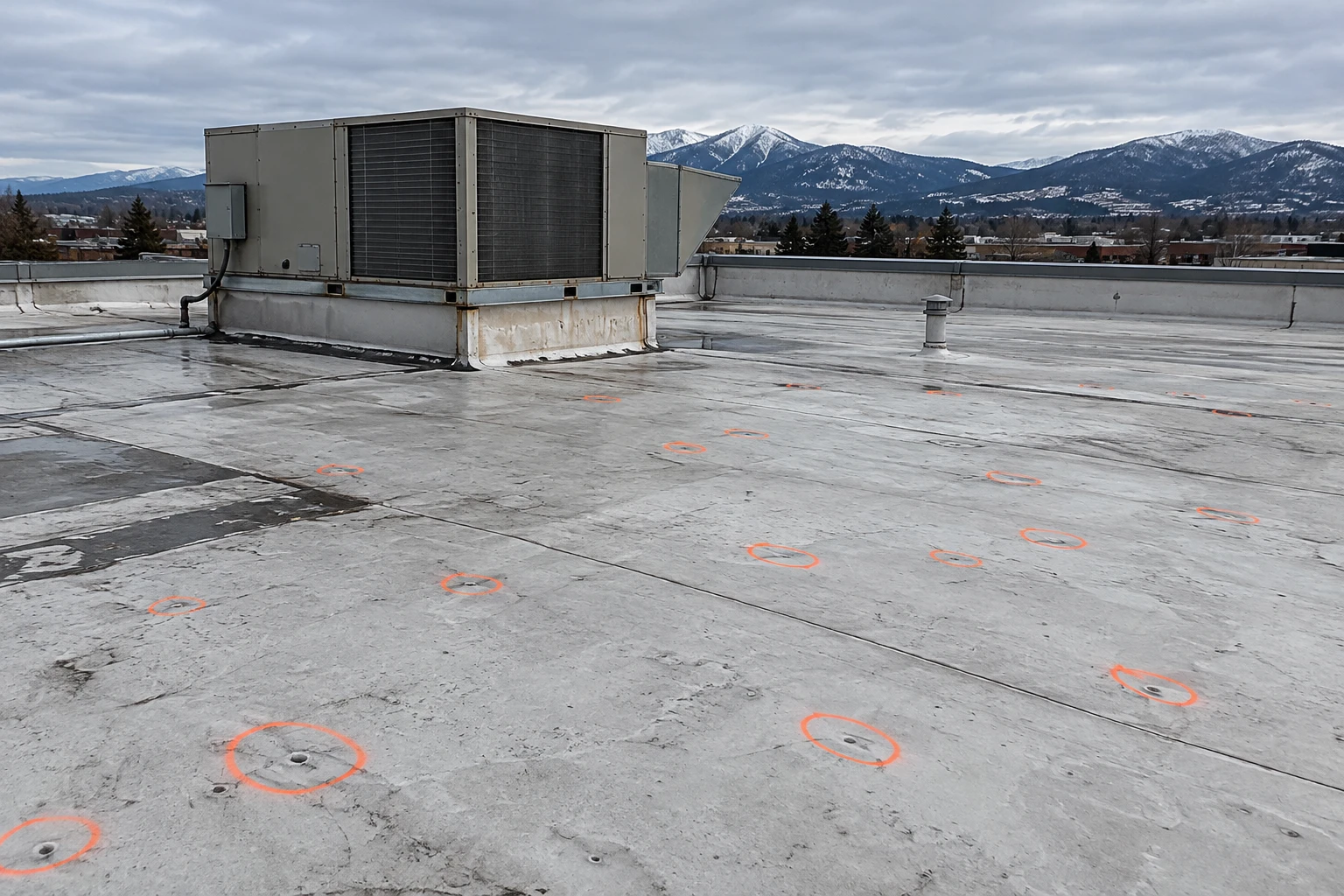
Annual snowfall in Bozeman totals about 91 inches, and December is the snowiest month at about 16 inches. A heavy, wet snow on top of drifts behind parapets and rooftop units adds weight where the roof is least ready for it. Iced drains and scuppers send meltwater into places the membrane was never meant to see. Livingston ranks second for average wind speed among U.S. airport weather stations measured from 2000 to 2010, so a lifted edge or a loose equipment cover is the first thing to check there after snow.
For an overloaded roof, we do not shovel or remove snow without a plan. We ask for an engineer where the structure is in doubt, and we coordinate snow removal with the manager so the membrane is not cut. After the load is gone, we inspect the deck, edges and flashing for damage.
What does a temporary dry-in include?
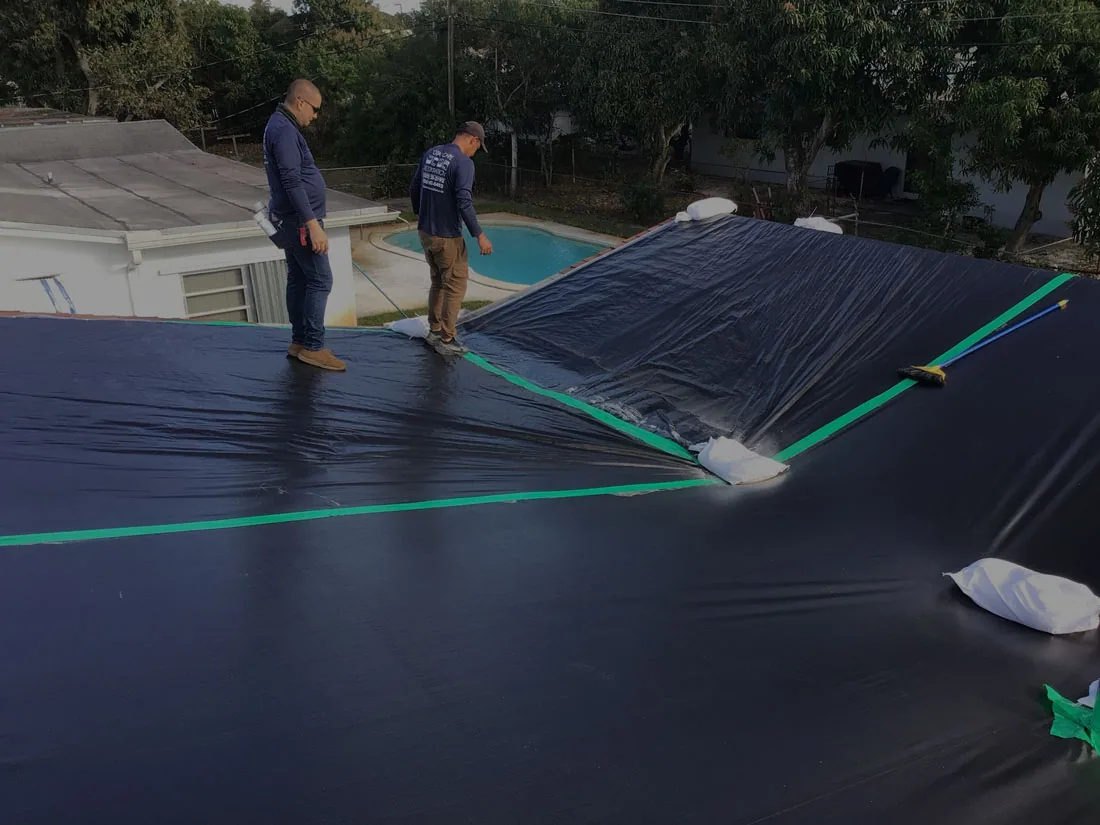
The goal is to keep water out until permanent work can proceed. That can mean a heavy tarp fastened with battens at the edges, a patch of temporary membrane over a torn section, a sealed penetration, a plywood cover over a broken skylight or a sandbag ballast on a lifted edge. The right choice depends on the roof type, the temperature and the wind.
We write down what each temporary measure can do and for how long. Tape and adhesive that work in summer fail in January, and a tarp that is not secured at every edge becomes a sail. When the weather turns, we return and check it. On a building with a metal roof, we use fasteners and sealants suited to metal, and on a membrane roof we avoid penetrating the field where a clamp or a batten can do the job. A temporary fix that creates a new hole is not a fix.
How do we help with the insurance claim?
Photographs start the file. We capture wide shots, close-ups of each damaged detail, the date and the interior damage. We write a plain description of what the roof looked like before our work, what we did and what permanent repair is needed. Our claim assistance prepares those records so the adjuster sees the same facts we do, and our storm damage repair follows once the claim is accepted.
What can an owner do before the next storm?
A little preparation shortens the next emergency. Keep the roof plan and the last inspection report in a place the manager can reach at night. Know where the roof hatch key is, and which tenant to call for access. Clear drains and scuppers before the freeze so melt has a path, and fasten loose coping and edge metal early, since a lifted edge is the first place wind gets in.
A preventive maintenance visit in fall is the cheapest emergency we never get called for. We check the drains, edges, sealants and penetrations, and we leave a list of the details most likely to fail in the next storm.
What happens after the roof is dry?
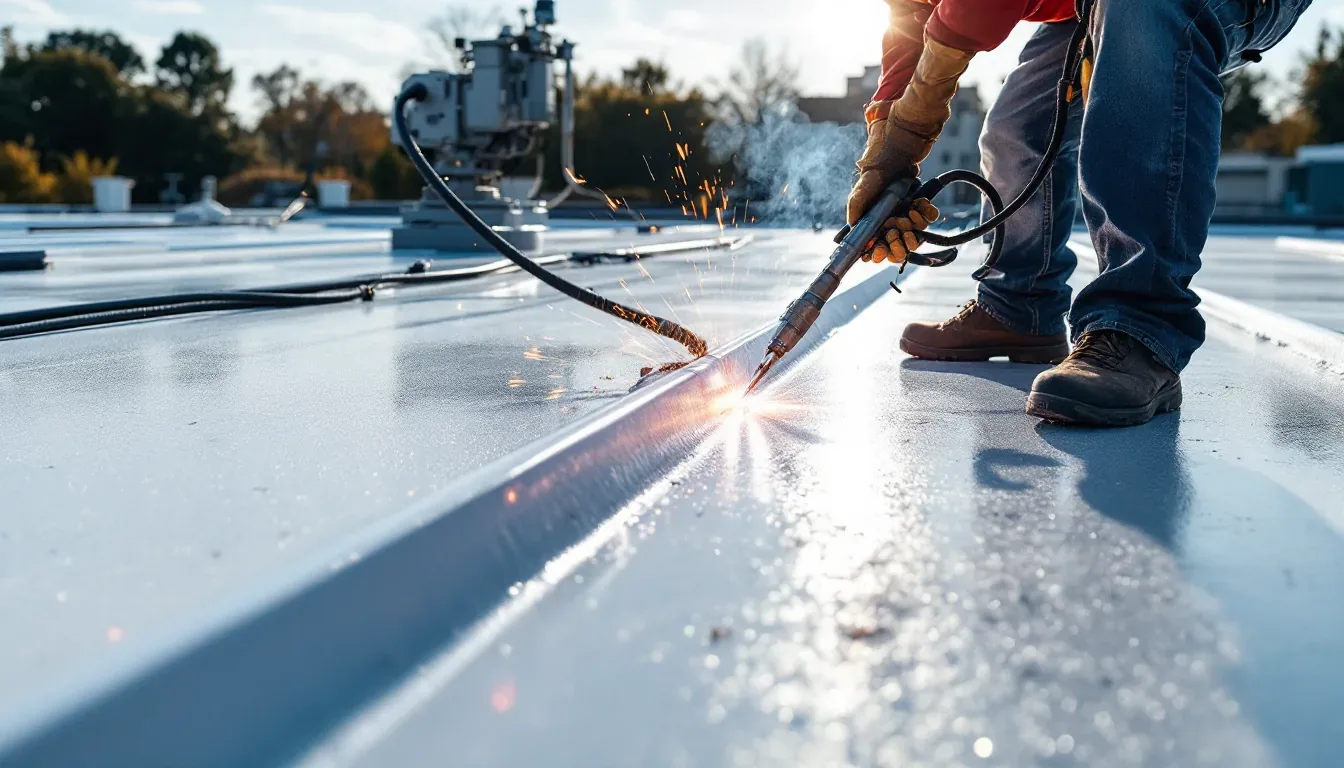
We schedule the permanent repair, replacement of damaged insulation and a check of nearby details. For a larger loss, we may recommend a full inspection to find damage that is not obvious. Owners get a written scope and an estimate for permanent work, with options for staging and budget.
Questions About Emergency Roof Repair
How quickly can a crew reach a building outside Bozeman?
Travel time depends on where the building sits, so we ask for the address on the first call and give an arrival estimate once we know the route. For towns west and north such as Belgrade and Three Forks, we plan the trip with the weather on the road in mind. We recommend that managers in outlying towns keep our number with the building file and call early, before a small opening becomes a large one.
What can a manager do while the crew is on the way?
Clear people from areas under active leaks, shut off power to wet fixtures if it is safe to do so and move valuable contents. Photograph interior damage and the date. Keep ladders and rooftop access closed until we arrive, since wet membranes and ice are slippery. These steps protect people and give the claim file a start.
Will a temporary repair satisfy the insurer?
Insurers generally expect reasonable steps to prevent further damage, and a documented temporary dry-in is one of those steps. We keep photos and receipts for the temporary work. The adjuster decides coverage, and we recommend contacting your carrier on the first business day so the claim number can be added to the file.
Can you work in the middle of a snowstorm?
We work when it is safe. Wind, ice and lightning stop us, and a building under a safe snow load may be better served by waiting until the storm clears. When water is entering and the crew can reach the roof safely, we install a temporary dry-in. Protect the interior now and schedule the roof work for the first workable window.
How do you handle a building with tenants?
We contact the manager first, choose an entry route that avoids tenant areas and keep noise to a minimum. For medical or school buildings we ask about restricted areas and active hours. When tenants are affected inside, we help the manager document damage so claims and lease issues are clear.