
Commercial Roof Leak Repair in Bozeman, MT
Commercial Roof Leak Repair in Bozeman and the Gallatin Valley
An iced scupper in January looks harmless from the parking lot. From the roof, it is a dam. Snowmelt has nowhere to go, so it backs up behind the parapet, finds a lap in the flashing and runs inside the wall. By the time a tenant sees a drip, the water has traveled along a duct, a beam and a ceiling grid. It is a common way for a Gallatin Valley leak to begin.
In Bozeman, MT, stopping a leak means following the water backward from the drip to the opening. The tracing takes patience, and the fix is usually smaller than the damage the tracing prevents.
How do we trace a leak on a flat roof?
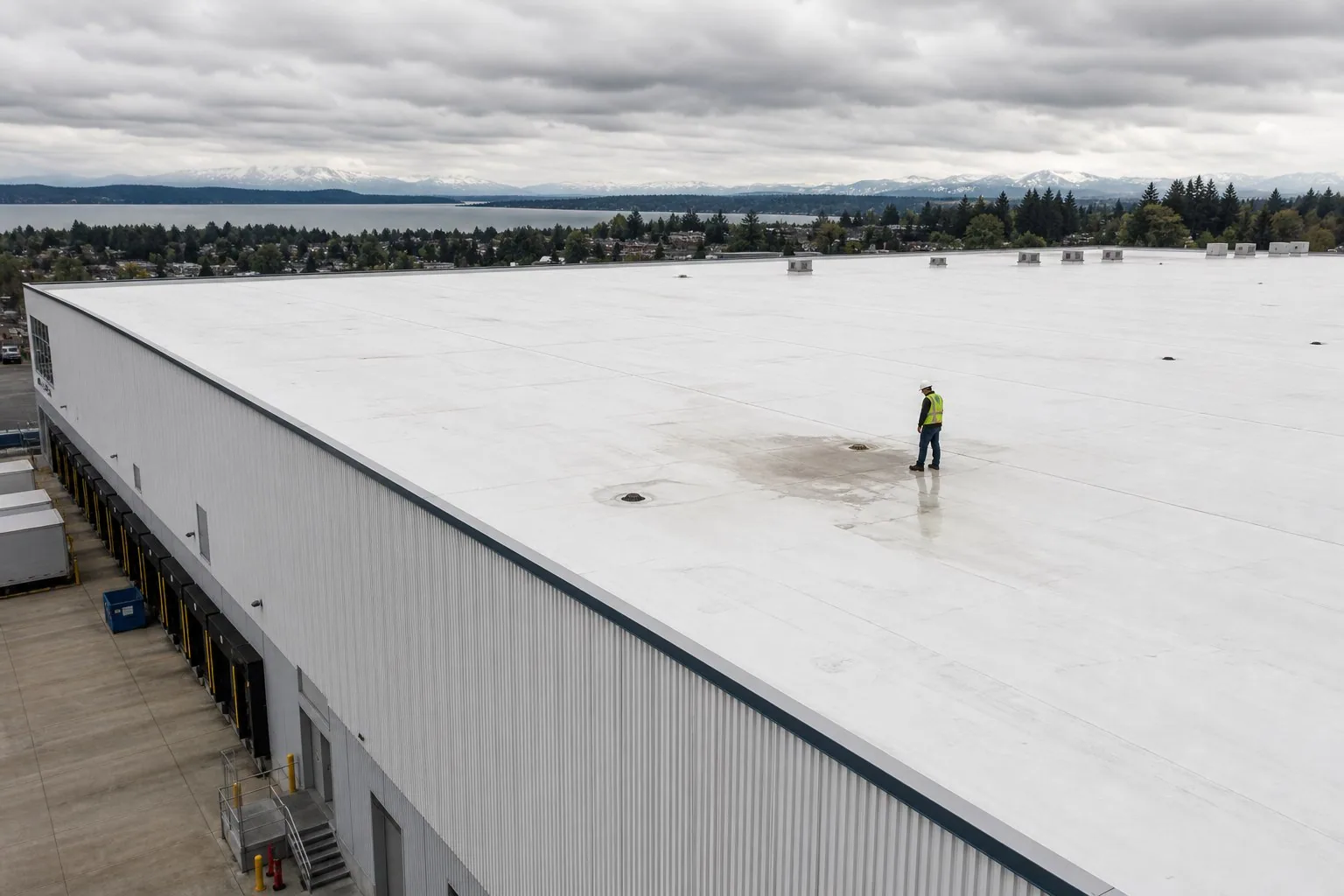
We begin inside. A moisture reading on the ceiling tile, a look at the deck from below, and a note of when the water appears tell us whether the leak follows rain, melt or a mechanical unit. Then we go up. On a low-slope roof, water can move many feet between the opening and the drip, along the underside of the membrane or through wet insulation, so we start at the high side of the stain and work toward the walls, curbs and drains.
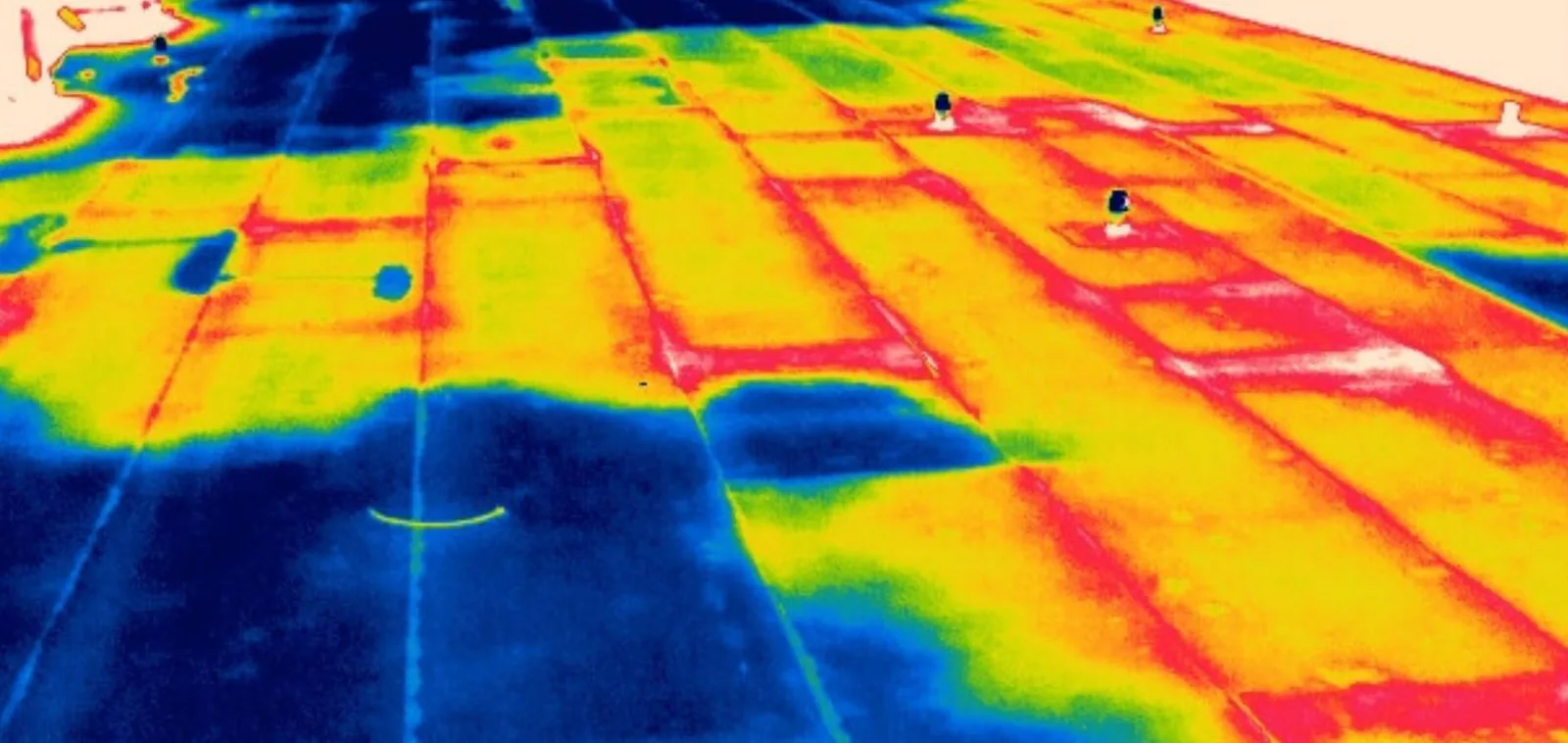
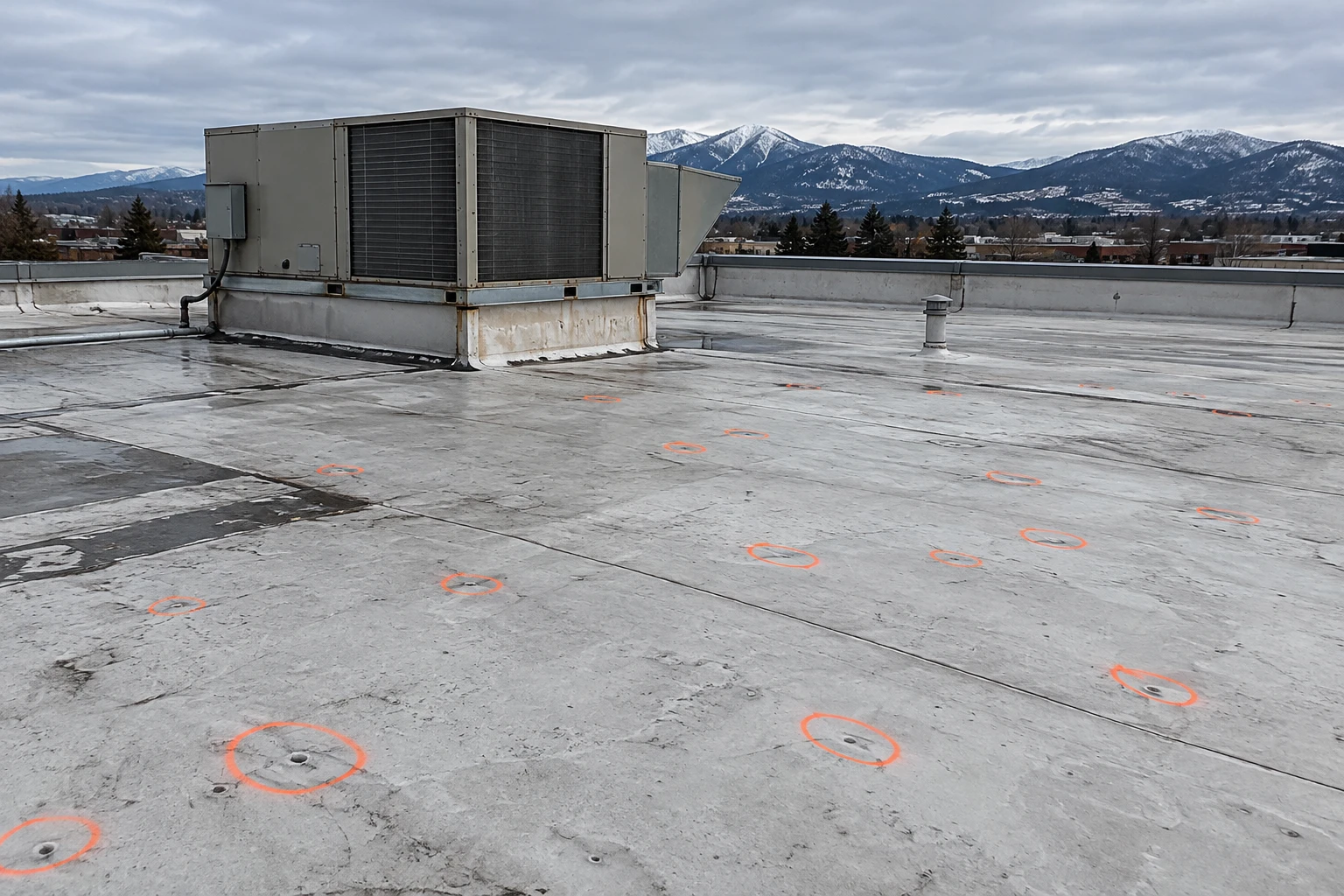
For stubborn leaks we use an infrared and core-cut moisture survey, which marks wet insulation, and a controlled water test that wets one section at a time. The test is slow and exact. It lets us say which detail leaks, not which detail looks suspicious. We also open a suspect seam or flashing with a probe, because a seam that looks sealed can be open an inch under the surface. The result is a short list of confirmed openings, ranked by how much water each admits.
Why do leaks show up in winter and early spring?
Cold works on a roof every day. Snowfall runs about 91 inches a year in Bozeman, the mean January low is near 15 degrees F, and the sun can still warm a dark membrane enough to melt snow at midday. Melt runs to the first low point, freezes at night and pushes ice into joints. Flashings pull, seams open and sealants stiffen.
A leak that shows in March may have started with a pinhole in October. Water trapped in insulation moves slowly, then drains out in a thaw. We look at the age of the stain, the number of rings, and the history in the building file to decide whether the opening is old or new. A fresh stain with a sharp edge points to a recent opening, while a faded ring with a darker center points to repeated wetting over a season or more.
Which details leak most often?
The same short list of details tends to leak on a flat roof: pipe boots, rooftop unit curbs, skylight curbs, expansion joints, wall terminations and drains. Each has its own failure mode. A boot cracks where a rubber collar meets a pipe. A curb flashing pulls from the substrate after cold cycling. A termination bar loosens and lets a gap open under the counterflashing. At the scupper, a sealant bead fails where metal meets membrane.
Retail and mixed-use roofs along North 19th Avenue and in Midtown along North 7th Avenue tend to have more of these details per square foot than a warehouse. That makes trace work longer, and it is why we write one scope for all the details together rather than chasing them one at a time.
Can hail cause a leak months later?
Yes. Hail bruises the membrane, cracks the coating and can fracture the insulation underneath. The roof may hold through a dry spell, then open under snow load or during a hard freeze. Following the June 2010 storm over Bozeman, and the August 2013 storm that dropped hail across Belgrade, a roof that looked intact could still carry a hidden fracture. We look at the field in raking light, press on suspect spots and take photographs for any claim. When the bruising is widespread, the job moves from a leak patch to hail damage repair.
What should the manager do inside the building?
Protect the people first, then the contents. Move electronics and stock away from the stain, put plastic over open shelving and keep a bucket under the drip. Do not cut open a bulging ceiling tile without a plan, since a tile can hold a lot of water. Photograph the stain, the date and the weather that day. Those three records help us match the leak to a weather event and help an insurer see when it began.
In a warehouse near the Jackrabbit Lane interchange, the leak can show over racking or a dock door, where stock matters more than ceiling finish. In an office or medical suite, the stain can reach a ceiling grid, insulation and electrical conduit. Either way, a short note from the manager about what lies under the drip lets us set the repair priority.
What happens when the leak cannot wait?
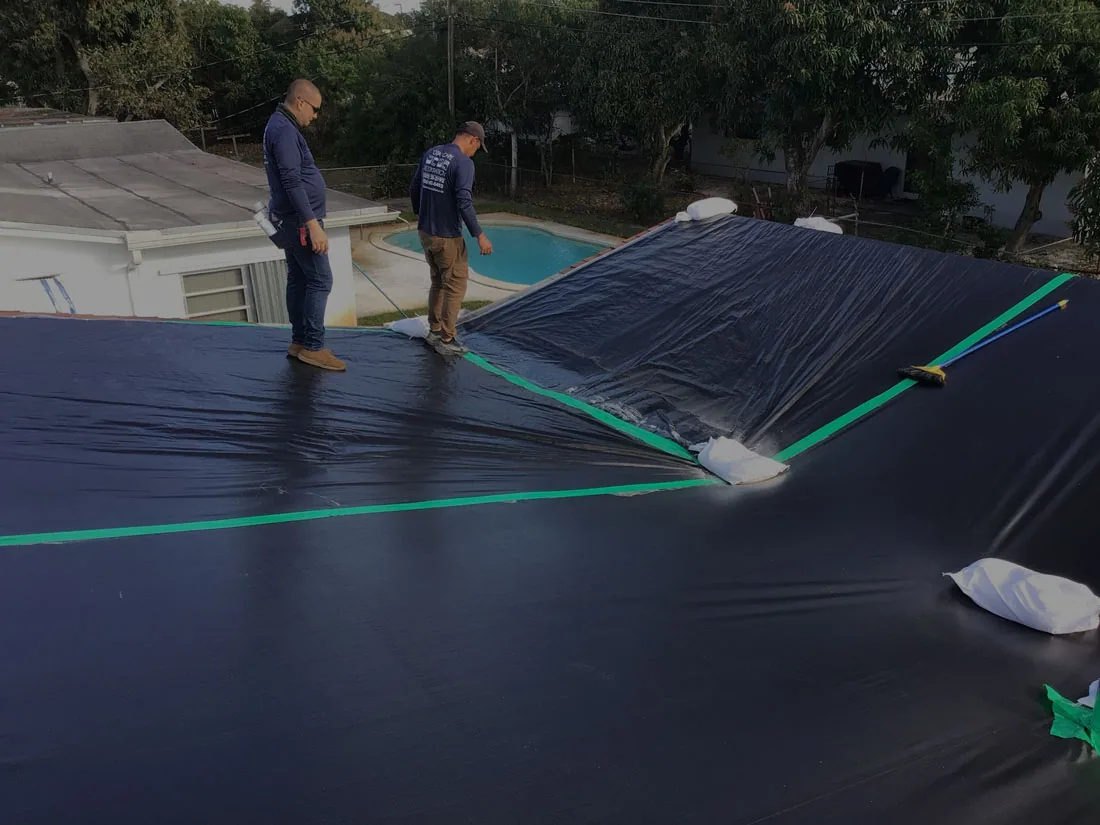
We make the roof safe first. A temporary patch, a tarp, a pitch pan or a section of dry-in membrane buys time while permanent work is scheduled. We choose the temporary measure for the temperature and the surface, since tape and adhesive that grab in July peel in January. For large events, emergency roof repair is the faster path.
Permanent work follows when the roof is dry and warm enough. We tell the owner what the temporary repair can and cannot do, and when it should be replaced.
How do we document the leak for a manager or insurer?
The file contains photographs of the interior damage, the roof plan with the opening marked, the repair method and the reason. If the leak ties to a storm, we pair it with weather dates. For claims, we work with the owner and the adjuster so the cause and the date are clear. Our claim assistance keeps the paperwork consistent across visits.


Questions About Commercial Roof Leak Repair
Can you find a leak when it is not raining?
Often yes. Interior moisture readings, infrared scans on a cool evening and core cuts can locate wet insulation without rain. For a leak that appears only during melt or high wind, we may use a controlled water test on one section at a time. We recommend scheduling the trace on a dry day after the roof has had time to dry out, since the dry baseline makes the wet areas easier to read.
How much of the roof has to be opened to fix a leak?
Usually only a small area. Once we know the opening, we cut back the damaged membrane, replace wet insulation if any, and tie the new membrane in with a welded or bonded patch that extends well beyond the repair. If the insulation under a larger area is wet, we explain the options for removing and replacing that section.
Why does the ceiling leak far from the roof opening?
Water follows the path of least resistance. On a roof it travels along the membrane underside or through insulation joints, then drops at a deck seam, a duct or a beam. The drip location says where the water exits the roof system, not where it enters. That is why we start at the high side of the stain and trace backward.
Should I tarp the roof myself?
We do not recommend unsupervised rooftop access in winter. Ice, wind and a slick membrane make falls likely, and a poorly secured tarp can tear loose and injure someone or open a larger hole. Call us, protect the interior with plastic or buckets and move valuables. If you must have a tarp, we install it with ballast or fasteners suited to the roof.
When is a leak a sign the whole roof is failing?
When leaks keep appearing in different places, when cores show wet insulation across the field or when the membrane is cracking, the roof is near the end of its service. Then repairs are a bridge to a replacement, and we say so in writing.