
Commercial Roof Repair in Bozeman, MT
Commercial Roof Repair in Bozeman and the Gallatin Valley
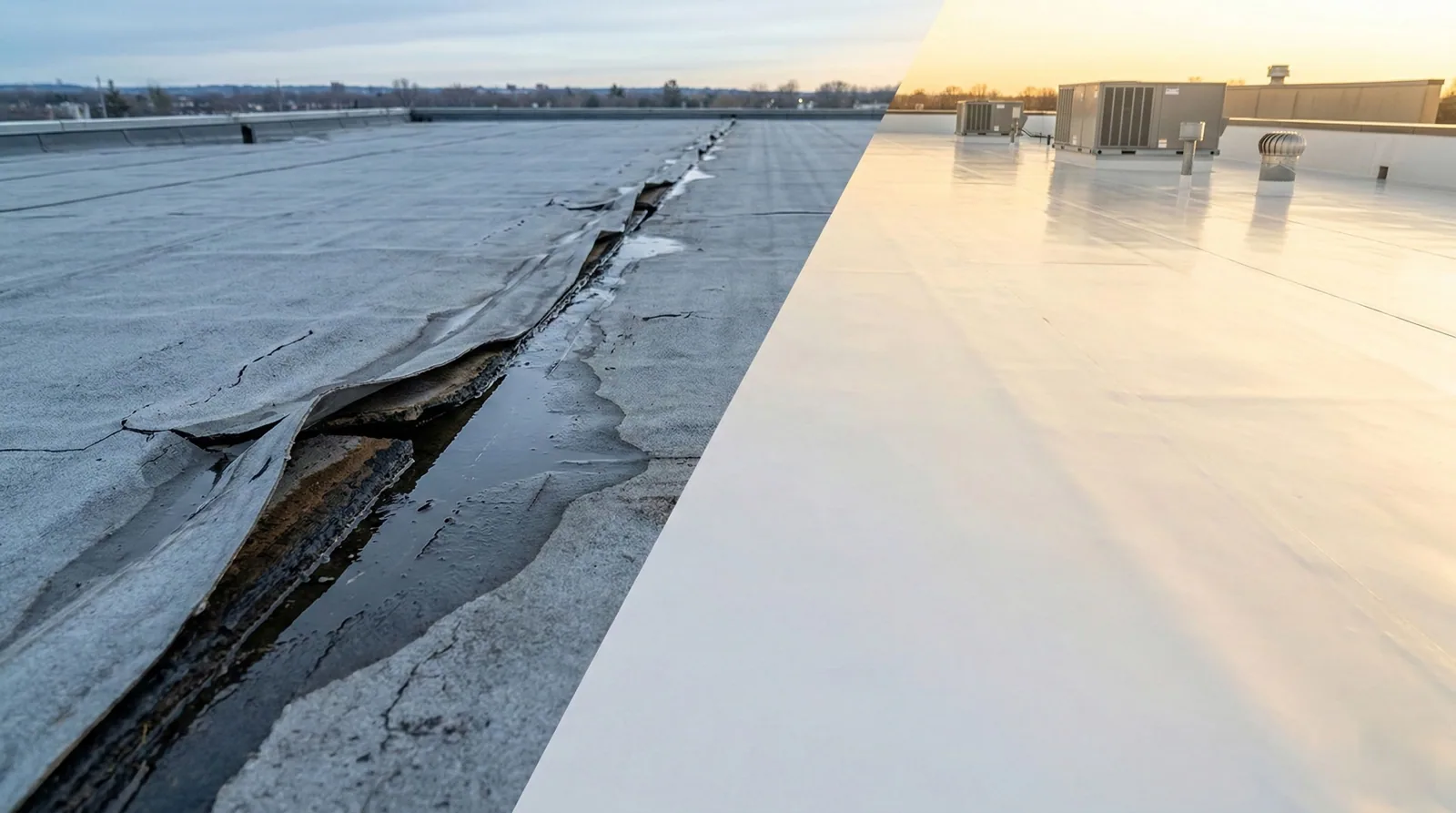
Roof repair on a Gallatin Valley building is a seasonal craft. The membrane that looked fine in October is split along a seam by February, because snow sat against the wall, melted at noon and froze again by dark. By April the owner sees a stain in a tenant suite and calls. The repair we plan is not a bucket of sealant on the stain. It is a set of fixes tied to the reason the roof moved.
In Bozeman, MT, that reason is usually one of four things: a termination that opened, a seam that pulled, a penetration that lost its seal, or a drain that stopped moving water. We find which one, we fix it, and we write down what we found.
What fails first on a retail roof?
Retail buildings along North 19th Avenue carry many rooftop units, vents and conduit runs, and each one is a hole in the membrane. The pipe boots and curb flashings at those holes crack from sun, cold and movement. A repair here means replacing the boot, not smearing over it, and welding or bonding a patch that extends well past the old repair. When the roof has several tired penetrations, we price them as a group so the owner sees a cheaper path than fixing one leak at a time.
The parapet is the other weak spot. Drifts pile behind the wall and melt toward the roof edge. If the counterflashing is loose or the termination bar has pulled, meltwater tracks behind the membrane and shows up as a ceiling stain several feet from the actual opening.
What do warehouses and flex buildings need?
Long, quiet roofs on warehouse and flex buildings, like the flex and warehouse buildings along Jackrabbit Lane in Belgrade and the Copper Ranch Road area, fail at seams and at the low points. Seams open where welds were cold or contaminated, or where thermal movement pulled them over many cold cycles. We probe seams along the suspect runs, mark open sections and re-weld or re-seal with the right method for the membrane type. If the membrane is a heat-welded single-ply, the repair is a hot-air weld with a probe check, not a caulk line.
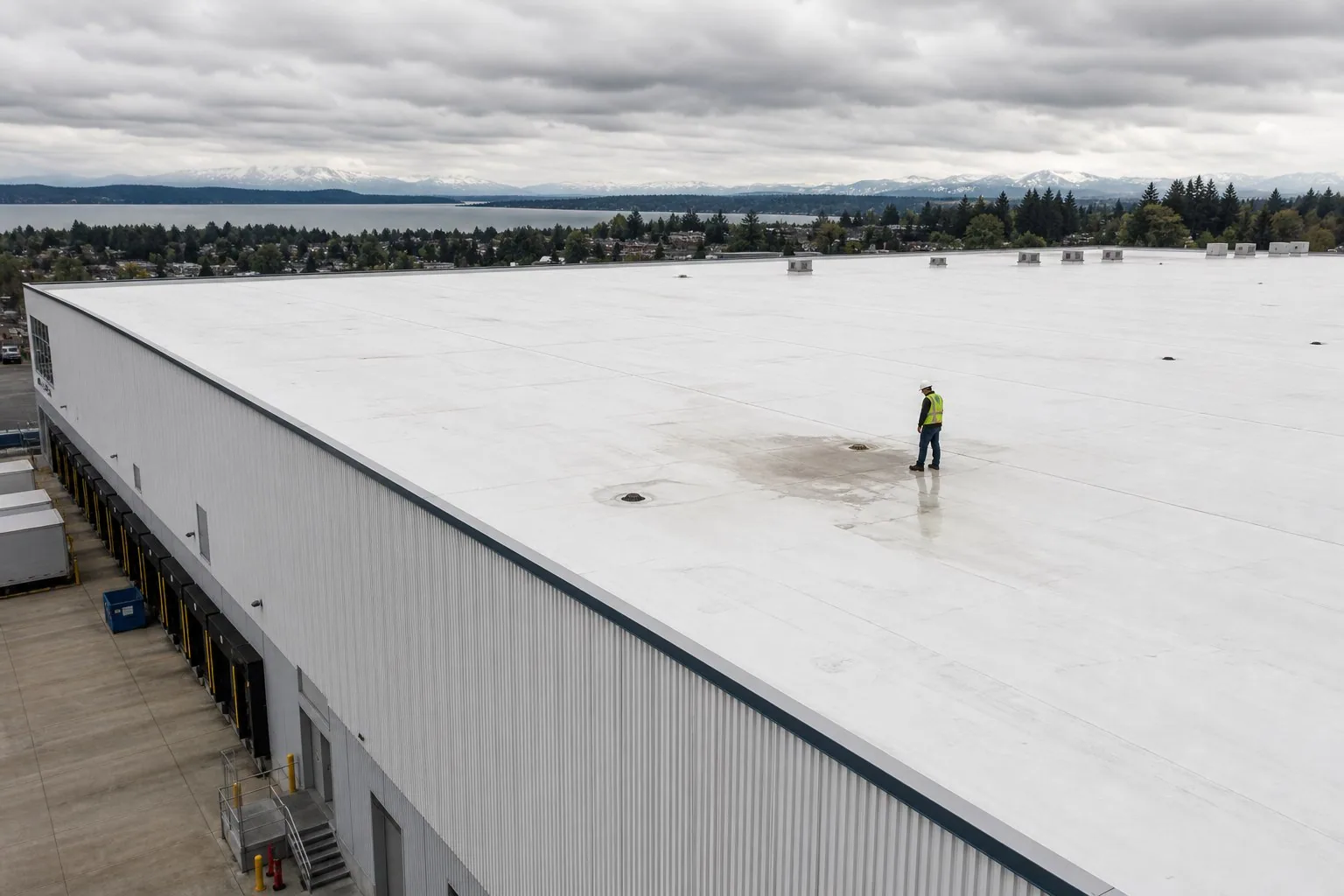
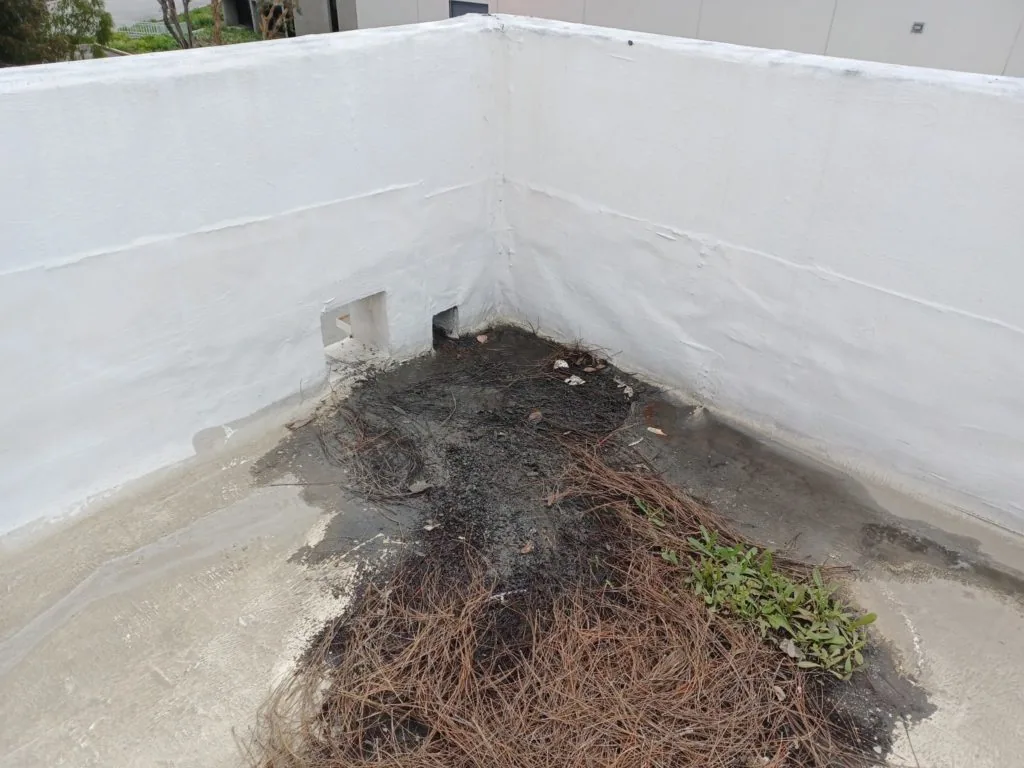
Low corners and drain areas collect water after a thaw. A repair that adds a tapered cricket or a new drain sump can solve a leak that sealant never would.
How is repair different on campus and medical buildings?
Lab and residence buildings at Montana State University and clinical buildings come with more rules around access, noise and infection control. A repair on a lab or patient area may need a work window, an escort and a containment plan. We schedule fixes for the hours the facility manager chooses and keep ladders and debris routes away from entrances. The June 2010 hailstorm broke dozens of windows at MSU in one afternoon, and that is the kind of event after which we inspect flashings, skylights and metal edges as well as the field.
What does hail leave behind that a repair must catch?
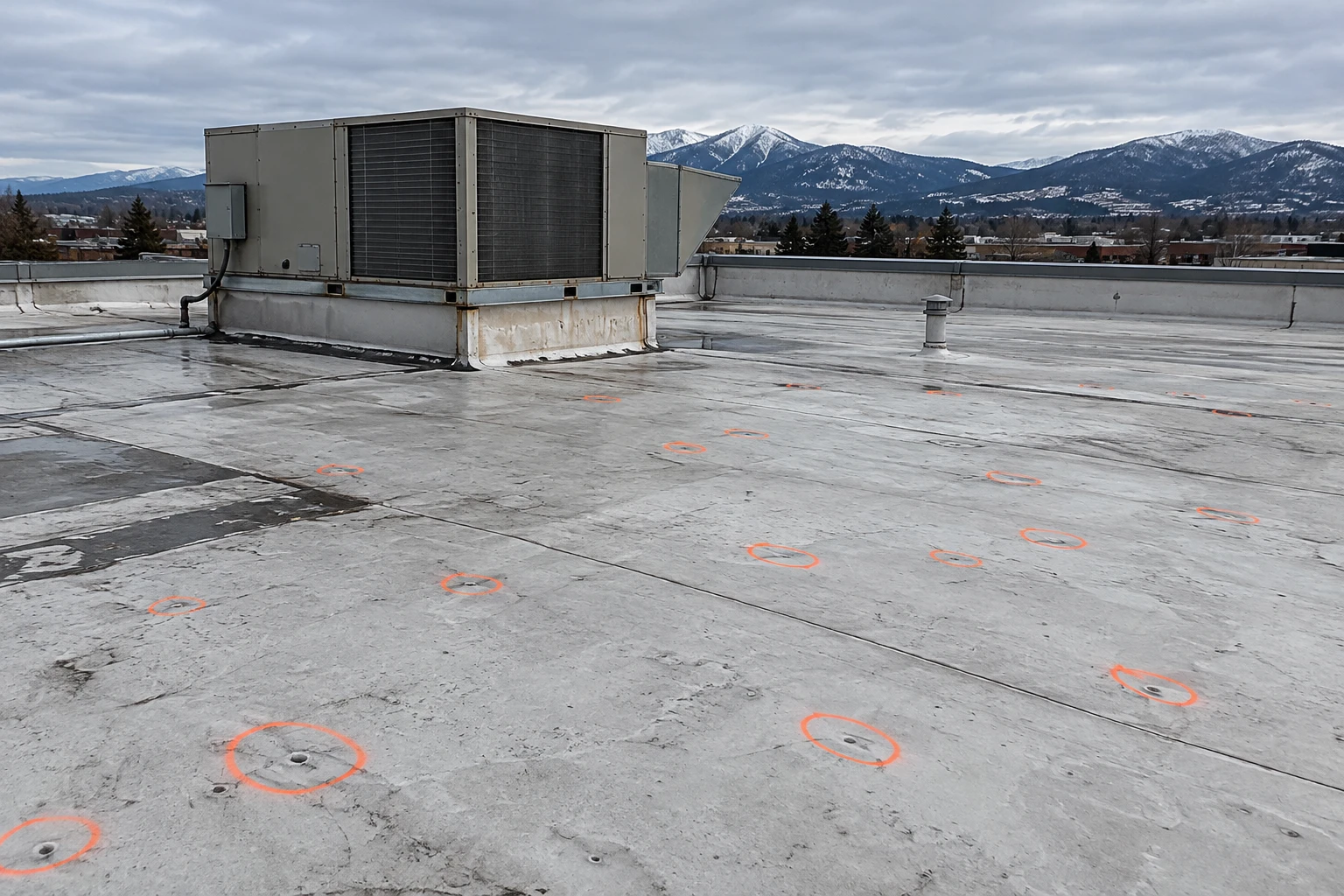
Hail leaves bruises, cracked coatings and dented metal. Golf-ball hail hit Bozeman in June 2010 and again covered Belgrade and north Bozeman in early August 2013, with gusts up to 89 mph in the same storm. A roof can leak weeks after a storm, when a bruise opens under snow load. We mark bruises with paint and photographs, and we separate repairable damage from damage that justifies a hail damage repair or an insurance claim.
How do we plan the repair itself?
We start with a walk and a moisture check, then write a scope that lists each location by number: seam, flashing, drain, curb, edge. Each item gets a method, a material and a price, so an owner can approve all of it or pick what the budget allows. For active leaks, our leak repair process starts with tracing the source before cutting.
We work in the temperature range each product permits. Cold-applied adhesives, primers and sealants have limits, and a repair in a cold snap can fail by spring. When a fix cannot wait, we use a temporary method, then return in warm weather to make it permanent.
What does the repair record look like?
Every repair ends with a record: a numbered roof plan, before and after photographs, the material used at each location and the cause we found. Owners keep that record with the building file, and it matters when a lender, buyer or insurer asks what has been done to the roof. A tenant who sees a stain also gets a clear answer about what happened and when it was fixed.
The record also shows patterns. If three leaks trace to the same wall, the problem is the wall detail, not three bad luck events. If every fix is at a penetration, the roof may need all of them rebuilt in one visit. Patterns turn repair spending into a plan, and with Bozeman's snow and the wind Livingston is known for both hard on edges, that plan keeps small problems from stacking up.
Are drains and scuppers part of repair?
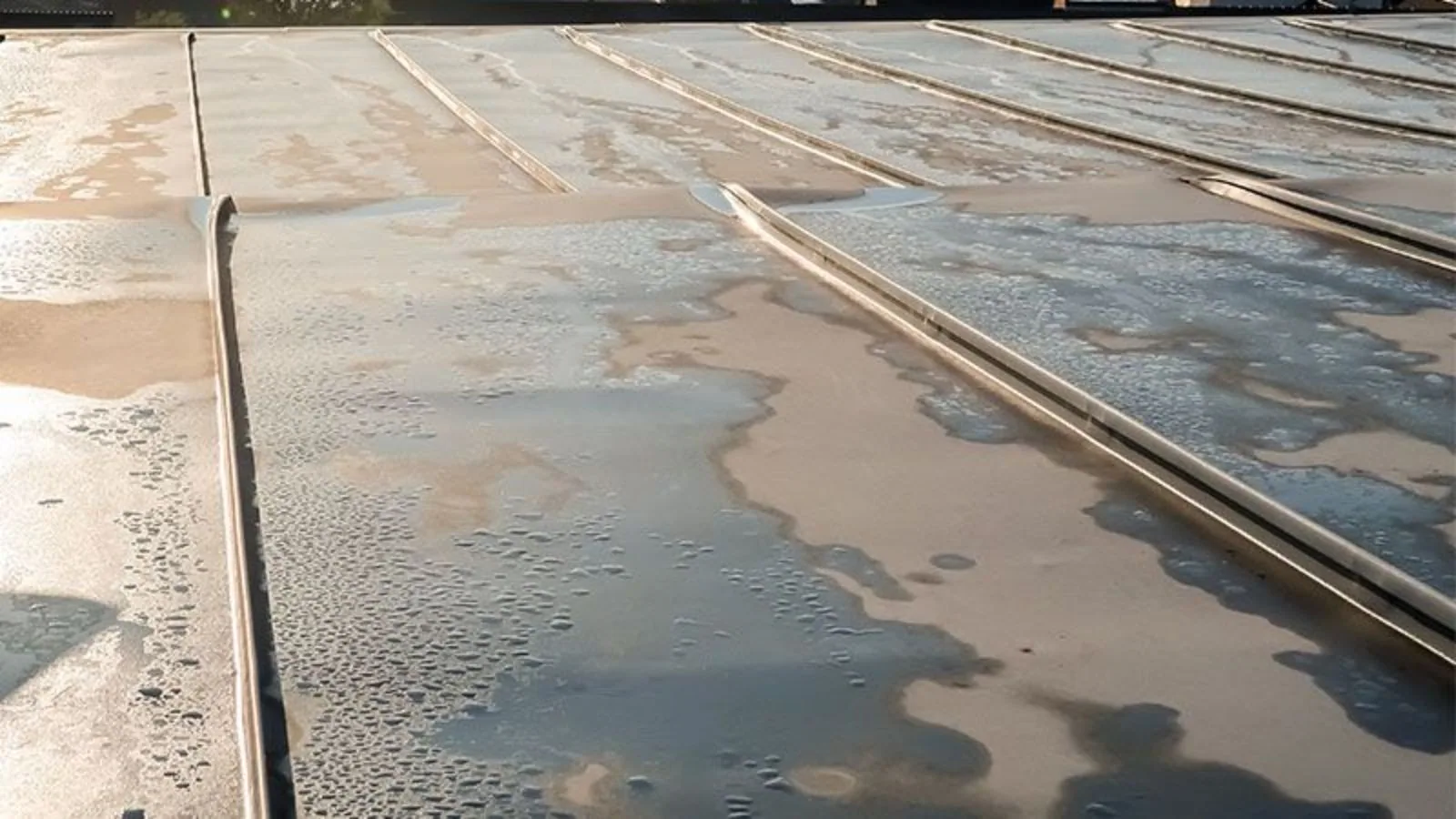
They should be. Debris, ice and sediment slow water, and a clogged scupper sends water to the parapet. We clear and test drains and scuppers, replace cracked strainers and check that slopes still lead to them. Where ponding persists, we recommend tapered insulation or a new drain location rather than another patch. Standing water that lingers a day after a thaw is a ponding water repair item of its own.
Questions About Commercial Roof Repair
How do I know if a repair is enough or if I need a new roof?
The roof tells you. If the field membrane is flexible, the insulation is dry and the failures are at details, repair is the right tool. If the insulation is wet over a large area, the membrane is cracking in the field or hail has bruised it widely, a replacement costs less per year of life. We recommend core cuts before the decision so the answer rests on evidence rather than appearance.
Why did my last repair fail?
Most failed repairs treated the stain rather than the entrance point, or used a material that did not bond to the old membrane. A patch applied over dirt, wet material or the wrong chemistry peels in the first freeze. Our approach is to clean, dry and prime the surface, match the patch to the membrane and extend it past the damaged area. Where the cause was movement, such as a seam pulled by cold cycling or a base flashing stretched by a settling curb, we fix the movement first and then close the opening, so the repair has something stable to bond to.
Can repairs be done in winter?
Some can. Mechanical fasteners, temporary dry-in, cold-weather patch products and metal work proceed in low temperatures, while hot-air welding and some adhesives need warmer, drier conditions. With a January mean low near 15 degrees F, a long list of Bozeman winter days fall outside the working range for a permanent seam repair. Our recommendation is to stabilize in winter and complete permanent repairs in the first warm window, which in the Gallatin Valley often comes in late spring.
What should the written repair scope include?
It should list each location, the method, the material, the cause and a price, plus photos of the condition. That lets a property manager approve selected items and lets an insurer or lender understand what was done. Scopes from us also state the access needs, such as lifts, roof hatches and tenant notice.
Is it worth repairing a roof near the end of its life?
Often yes, when the repair buys time for budgeting. A targeted fix to the leaking details can carry a roof through another winter or two while the owner plans a replacement. We tell you the condition of the rest of the roof so you do not spend more on repairs than a few seasons of life justifies, and we write down the expected end of the repair so it fits a capital plan.