
Roof Insulation, Tapered Systems and Cover Board in Bozeman, MT
Roof Insulation, Tapered Systems and Cover Board in Bozeman and the Gallatin Valley
On a newly built mixed-use building in Midtown, the roof assembly is a stack: deck, vapor retarder, insulation, cover board, membrane. From the street it is one gray surface. From a lift, in the week after a hailstorm, the stack tells its own story, because a board that was too soft shows every stone. Bozeman, MT gets golf-ball-size hail in some summers and about 91 inches of snow in every winter, so the layers under the membrane do real work. What is under your membrane, and was it chosen for this valley?
We answer that with a core cut, and we specify the stack for the weather it will meet.
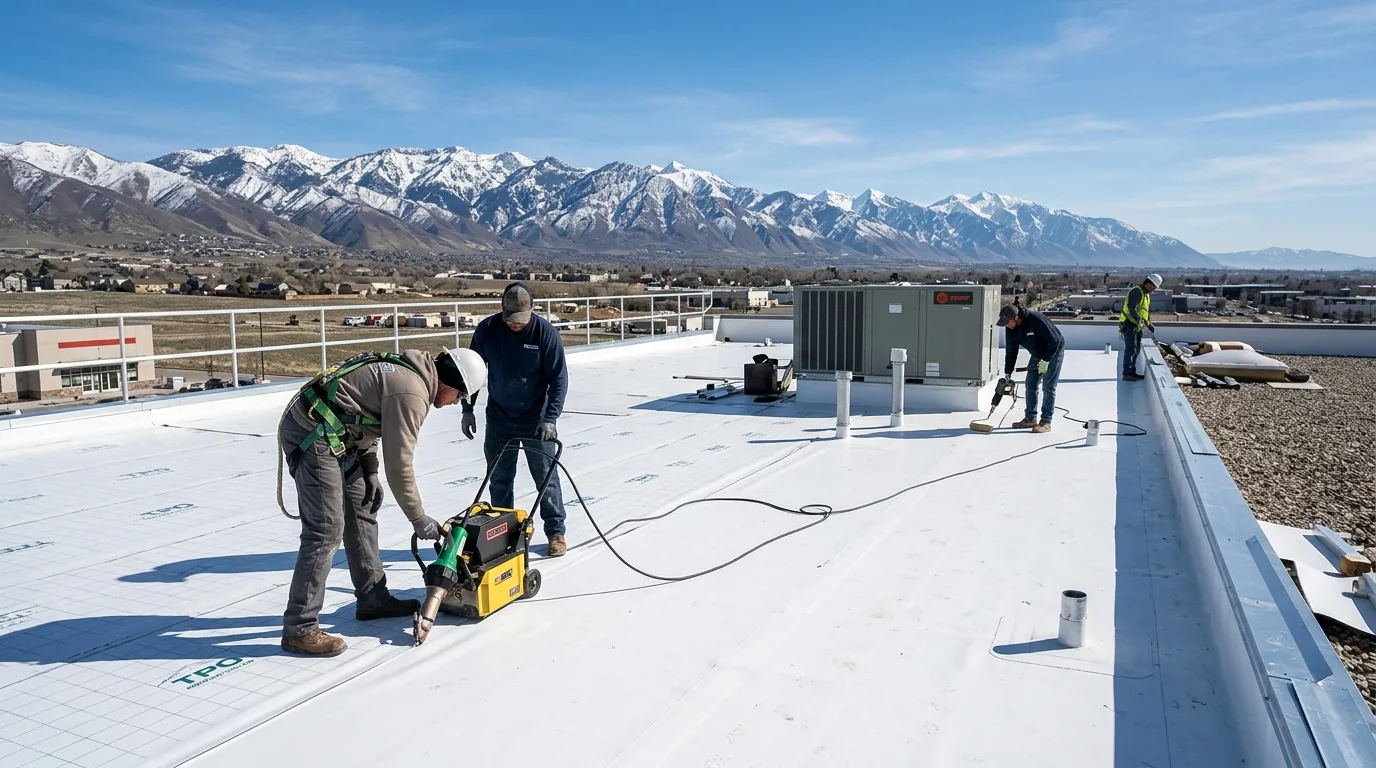
What does each layer do?
Insulation holds heat in the building and keeps the deck warm. In a place where the January mean low is 15.1 degrees F and the record low is minus 46, that matters for energy and for condensation. A cold deck under a warm room sweats, and the sweat soaks the insulation. A vapor retarder below the insulation keeps moist indoor air out of the stack.
Cover board sits between the insulation and the membrane. It gives the membrane a firm, flat base, protects soft insulation from foot traffic and hail, and adds fire and puncture resistance. Without it, a membrane over soft board can be dented through by a boot or a stone. With it, the board takes the hit and the membrane stays whole.
Tapered insulation is a third use. It builds slope into a flat deck so water reaches the drains instead of ponding.
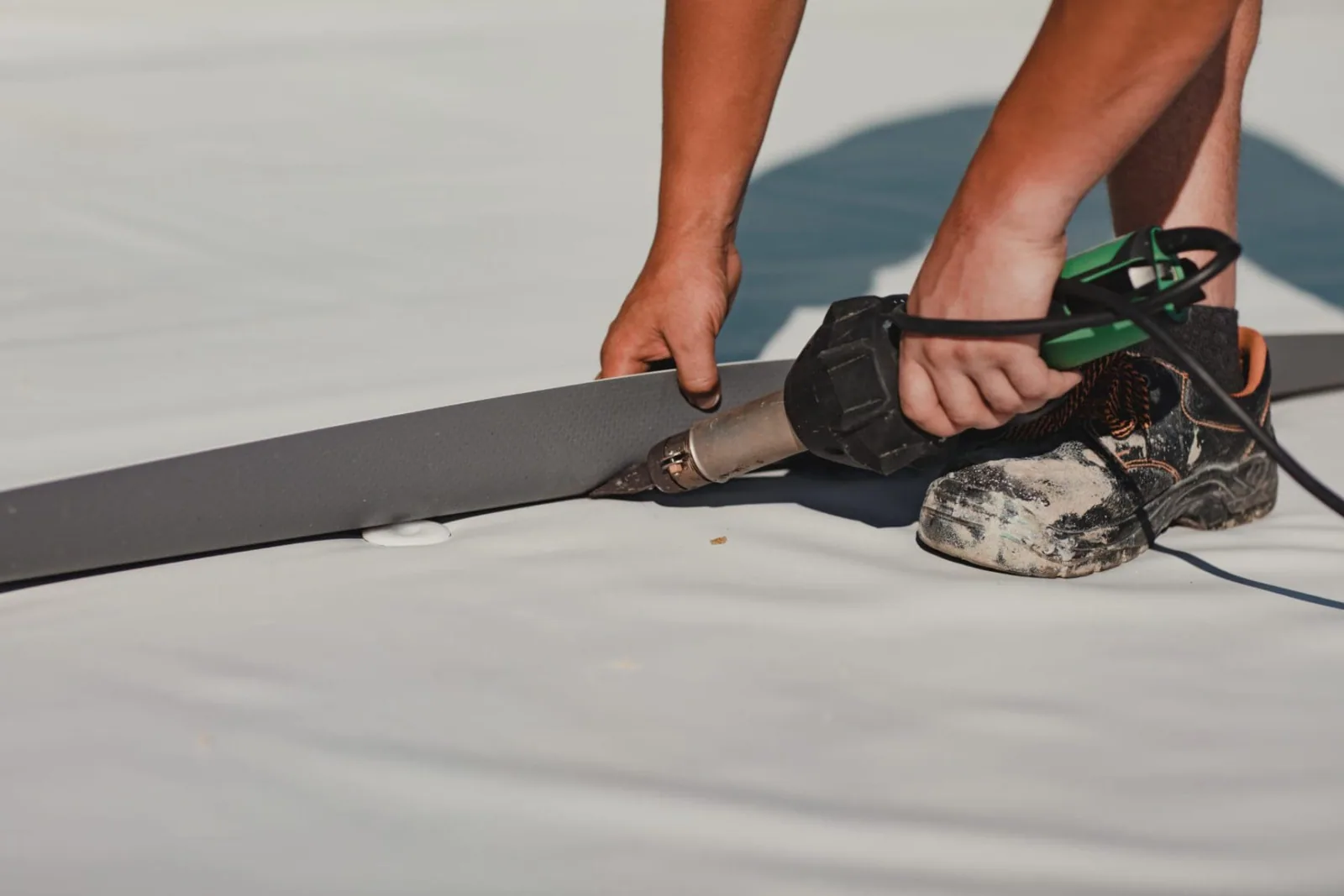
Fire rating and compatibility come last in the list, and they decide what the membrane can sit on. Some membranes need a specific board for adhesive bonding. Others restrict certain insulation types under a heat weld. The choice is made once, on the sheet, so the crew does not discover a mismatch on the roof.
How does cover board change the hail picture?
Hail damage often starts below the membrane. A stone strikes a sheet over a soft board, the board crushes, and the sheet bruises. The surface looks nearly untouched, but a crack has formed in the insulation. Water finds it at the next thaw.
Golf-ball hail pounded Bozeman for about thirty minutes on June 30, 2010, and a similar storm crossed Belgrade and the north side in early August 2013 with 89 mph gusts. In May 2023, 1.50-inch hail fell for several minutes along the Gallatin River northwest of town. A firm cover board over the insulation spreads the blow. It does not make a roof hail-proof, and a post-storm hail damage repair map is still needed, but it reduces the cracked-board problem and the number of bruises that go through.
When is tapered insulation the right correction?
Tapered insulation is the right correction when a roof is flat enough to pond and the owner wants the problem solved for good. It adds slope in a pattern: a main slope toward each drain, crickets behind units and saddles at the low points. The layout starts from the drain locations, and the board thickness at the low point sets the total build-up.
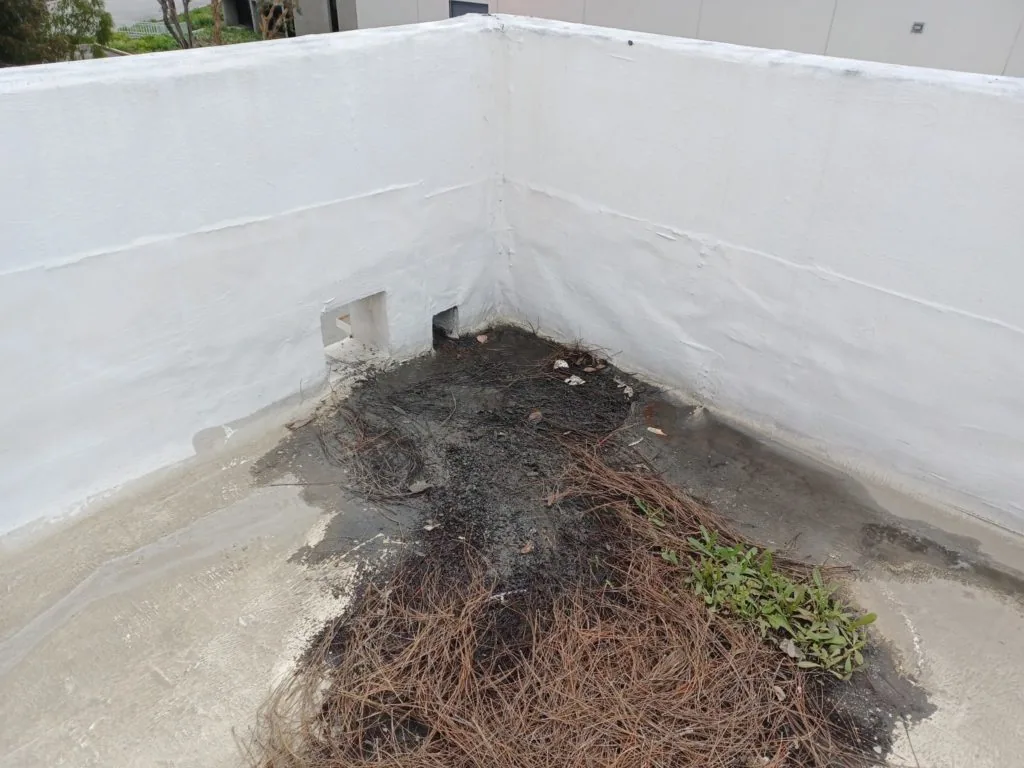
The cost rises with area and thickness, so many owners fix the worst basins with a local re-slope and leave the rest. When a roof is due for replacement anyway, building full slope into the new assembly is the cheapest time to do it. The work pairs with roof drains and scuppers, since a tapered plan that sends water to a drain that cannot take it is a pond with extra steps.
How are the layers chosen for a Bozeman roof?
Four inputs set the stack. The code: the 2021 IBC and ASCE 7-16 give Bozeman 50 psf of ground snow and a 110 mph basic wind speed. The use: a lab, a gym and a warehouse load their roofs differently. The membrane: a TPO roof, a PVC roof and a modified bitumen roof each ask for different boards and attachment. The budget: a thicker stack costs more and saves heat over its life.
Wind drives attachment. Boards are adhered or mechanically fastened at a density set by the uplift the roof will see, with a higher density at corners and edges. Livingston ranks second among U.S. airport stations for average wind speed and Belgrade saw 89 mph gusts in 2013, so we do not skimp on fasteners at the perimeter.
Condensation is the quiet failure. Cold decks and warm rooms are a constant in a place with a January mean low of 15.1 degrees, and the dew point inside the stack moves with the weather. We run a simple check on where the dew point falls in the assembly, and we place the insulation so it stays on the cold side of the vapor line. That one check prevents a slow soak that no leak survey would catch.
What if the existing insulation is already damaged?
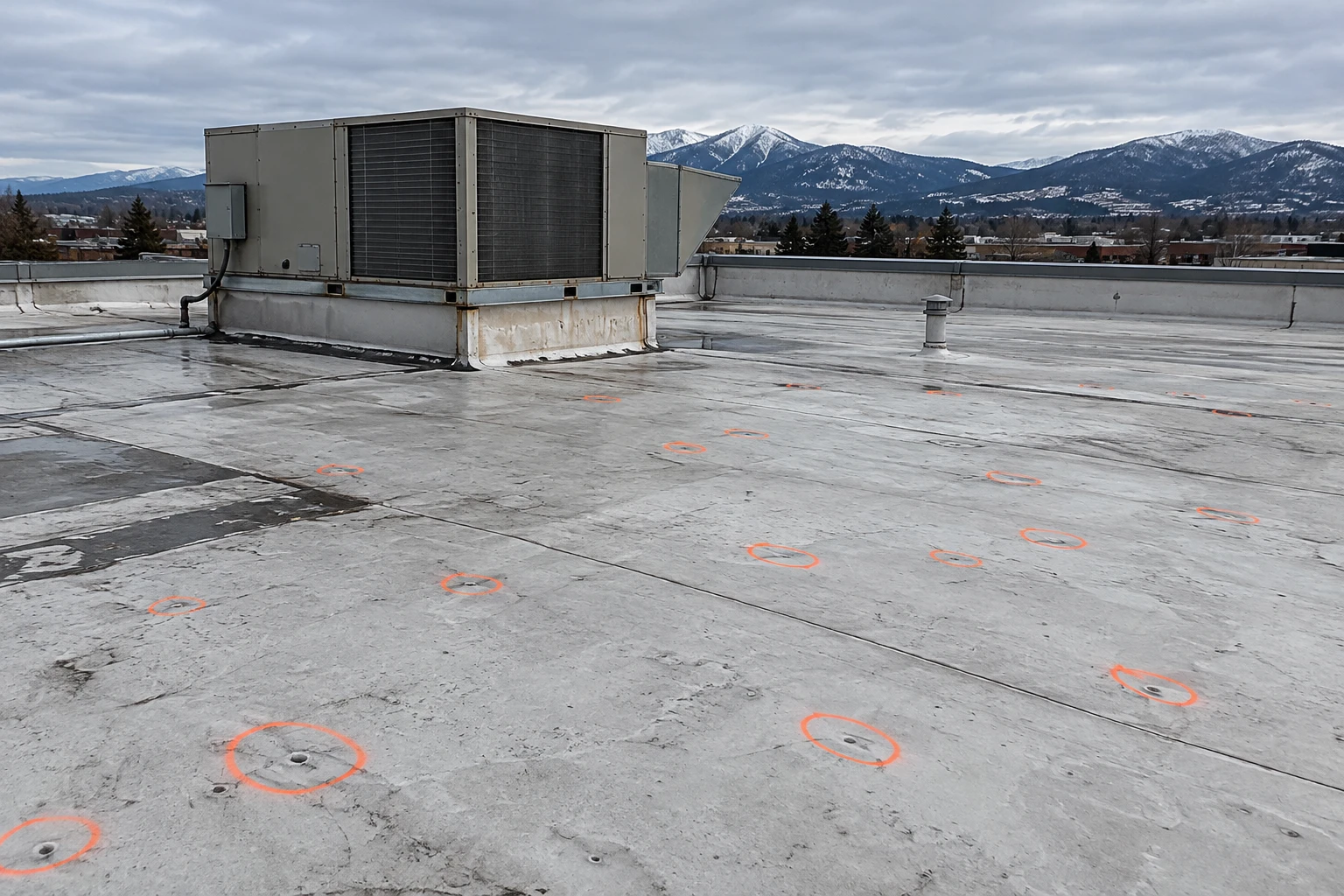
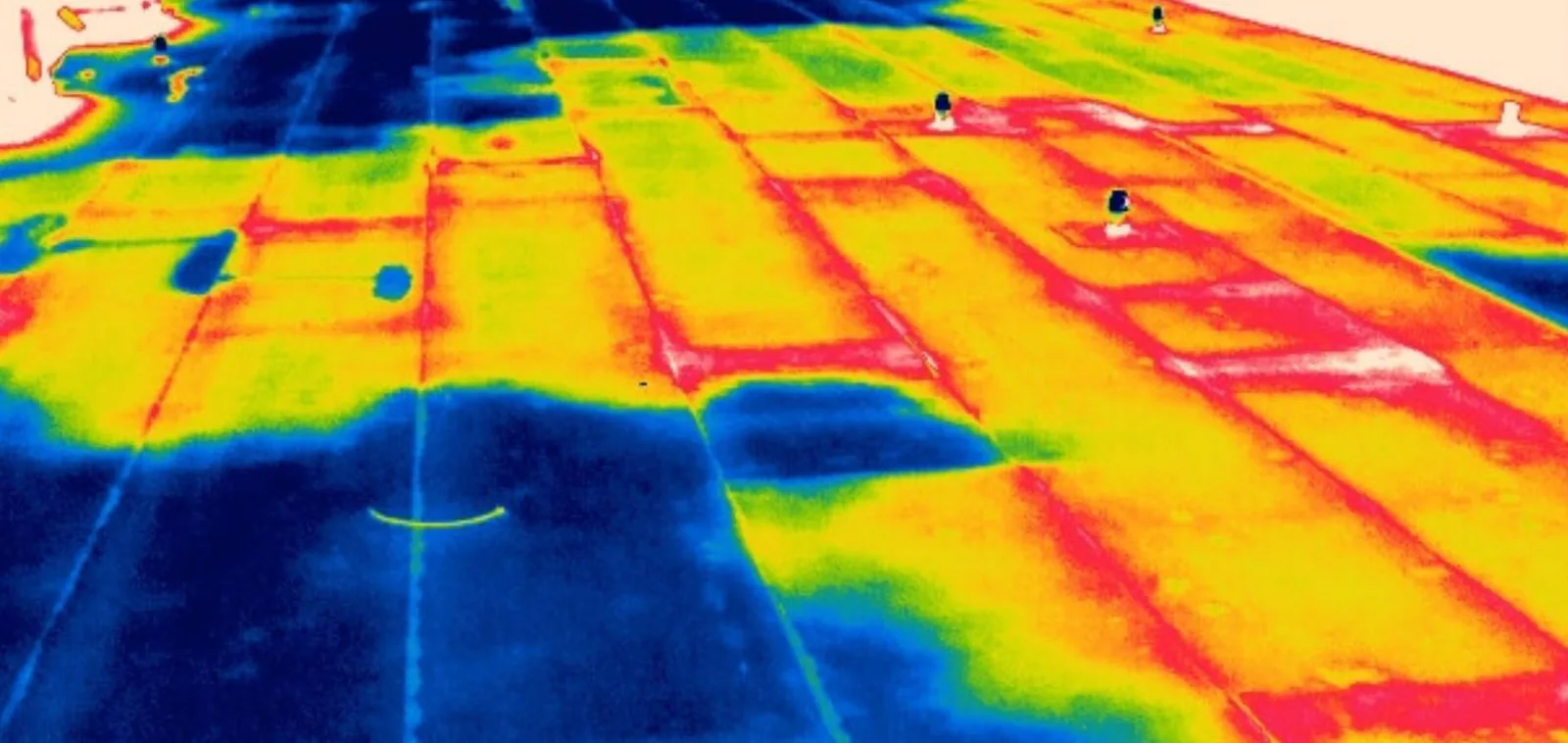
Then it comes out. Insulation that took on water does not dry in place, loses its value and adds weight to a roof already carrying a 50 psf design snow load. We find it with an infrared moisture survey and confirm it with probes and cores. A small damp patch near one penetration is cut out and replaced. A large area across the field points to a full replacement.
That is also why a roof recover is only offered over dry layers. Adding a new membrane over wet insulation traps the problem. When the layers are dry, a recover with a new cover board can save a tear-off. When they are not, the roof goes to replacement, and the new stack is built clean from the deck up.
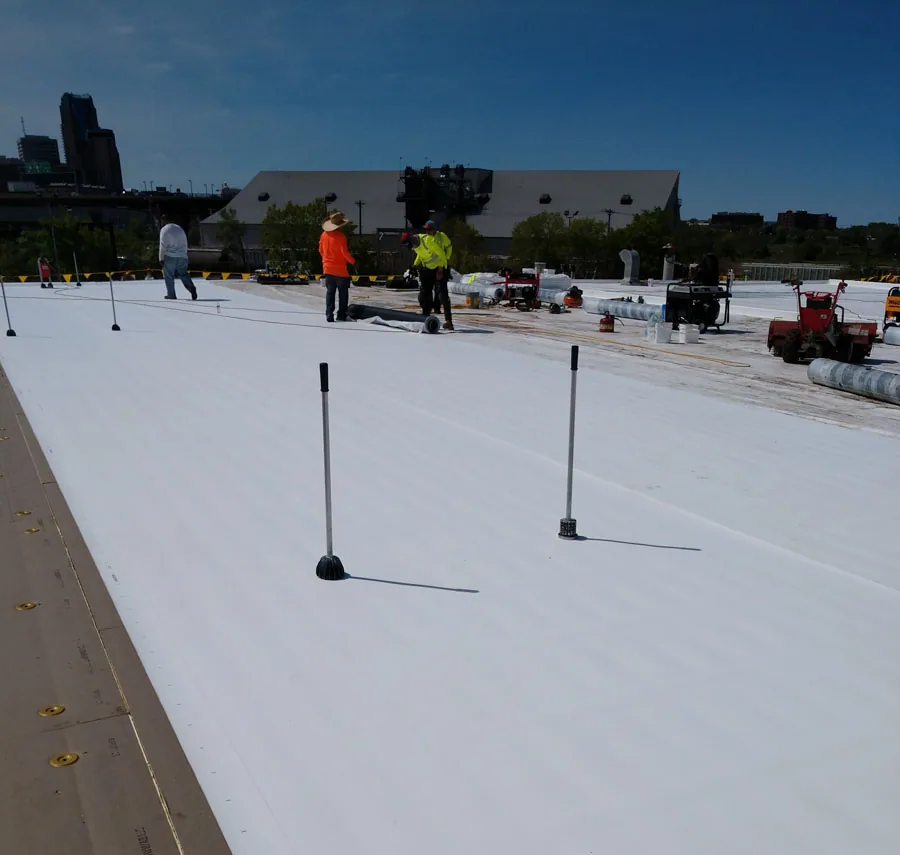
On a replacement, the order of work is fixed: tear off to the deck, inspect and repair the deck, install the vapor retarder, set the insulation in staggered layers so joints do not line up, add the cover board and then the membrane. Each opened section is closed the same day, because a half-open roof caught by a Bozeman storm does more harm than the leak that started the job.
Which buildings need a closer look at the stack?
Labs and research buildings, because equipment loads and heat make the assembly work harder. Montana State University has about 17,165 students and a research program whose lab buildings load a roof with equipment and heat. Mixed-use infill in Midtown and North 7th Avenue, where a mixed-use building of about 68,000 square feet is planned, needs a stack that carries both snow and rooftop plant.
Warehouses and flex space near Belgrade have flat roofs where slope and drains decide the stack. Cold storage and food buildings need extra attention to vapor control. We set the stack for the building, using the core and the use, and we write it on the sheet so the owner sees what is going on the roof.
Questions About Roof Insulation, Tapered Systems and Cover Board
Is cover board worth the added cost?
On roofs with foot traffic, hail exposure or soft insulation, usually yes. It extends the life of the membrane and cuts the bruise problem. We price it as a separate line so the owner can compare.
How thick should the insulation be?
The thickness comes from the code, the energy goal and the build-up the details can take. Flashing heights, curbs and doors limit how thick a stack can go. We lay it out against those limits before ordering.
Can a vapor retarder be skipped?
Not safely in a deep-cold climate with humid interior spaces, such as pools, kitchens or labs. Warm moist air that reaches a cold deck condenses. We size the retarder to the building use.
Does tapered insulation add weight?
A little, and it is counted in the load calculation with the snow. On older roofs, we ask an engineer to check the deck before a heavy taper goes on.
What is the best time to install insulation?
Late spring through early fall, when boards can be adhered and the deck is dry. A stack opened in cold or wet weather takes in moisture, so we close each section the same day.