
Roof Drains, Scuppers and Ponding Correction in Bozeman, MT
Roof Drains, Scuppers and Ponding Correction in Bozeman and the Gallatin Valley
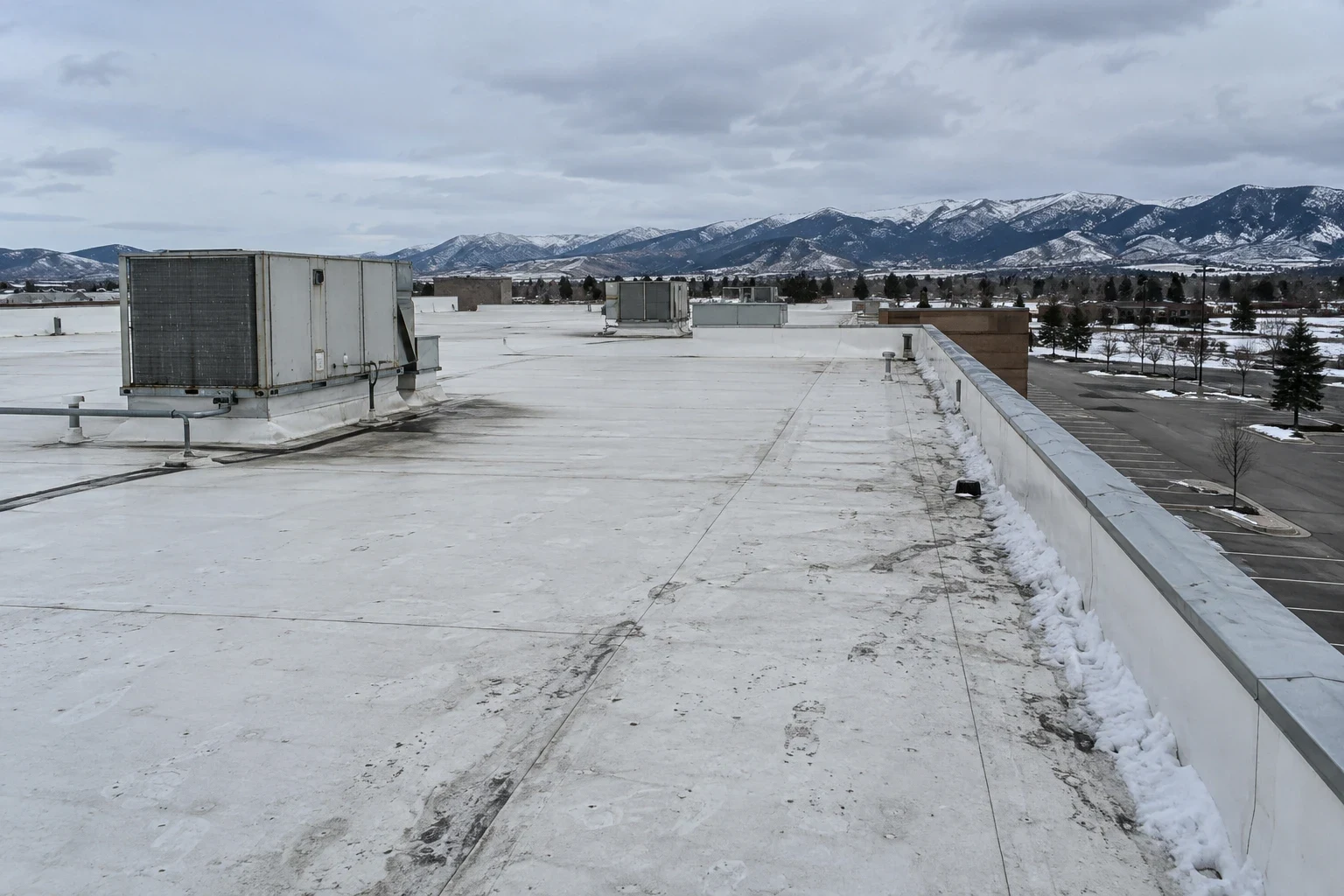
A wide flat roof on a retail building looks the same in March as it did in October, until the sun comes out. Then a drift behind the parapet starts to melt, and the water runs along the membrane to the nearest scupper. If that scupper is packed with grit, or still plugged with ice from the last cold night, the water stops. It sits against the wall, it finds the termination, and it freezes again when the sun goes behind the ridge. Bozeman, MT averages about 91 inches of snow a year on roughly 54 snowy days, and nearly all of it leaves the roof as water through one of these small openings. Which drain on your building clears first, and which one stays iced?
We find out, and we fix the one that stays iced.
How many drains does a roof need?
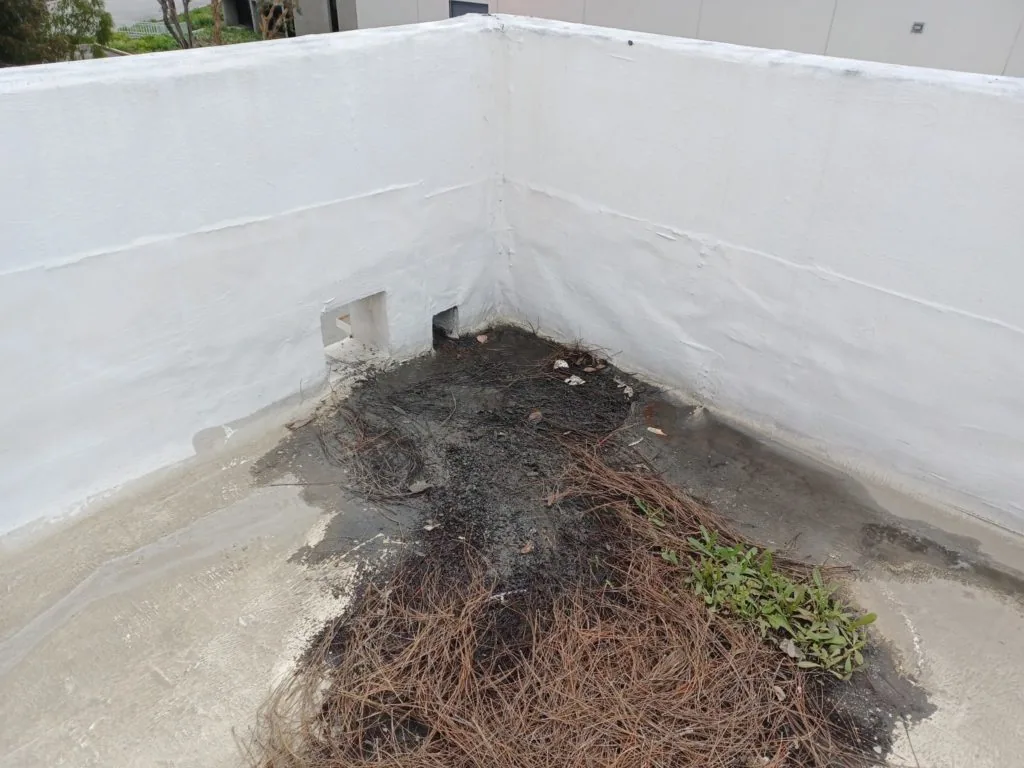
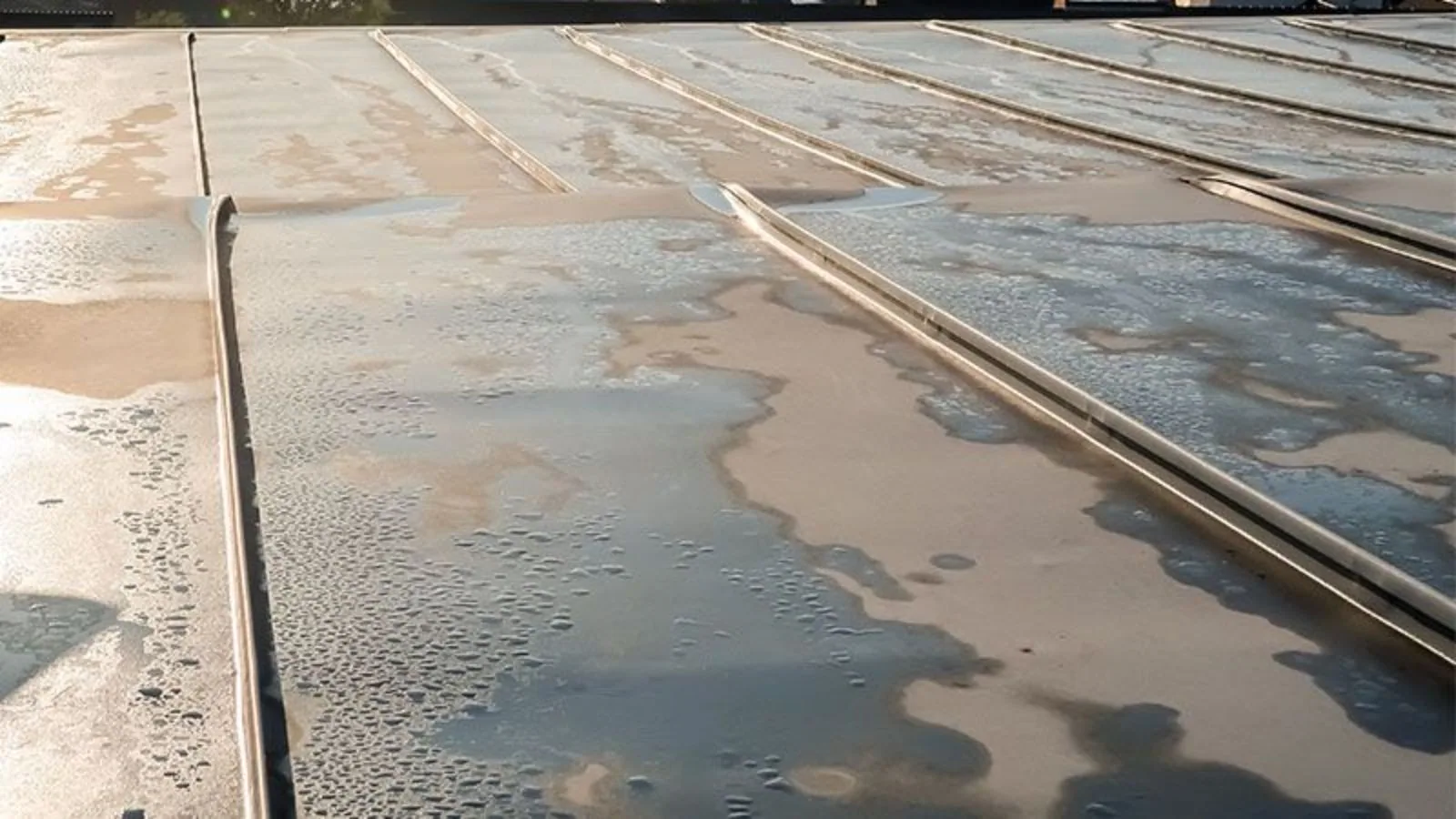
The count depends on the roof area, the slope and the rainfall design. A roof with one drain serving too much area will pond by design. A roof with drains set above the low point will pond even with a perfect membrane. We count every drain and scupper, measure the area each one serves and compare the result with the building's design. We also check whether overflow protection exists, since a primary drain that clogs with no overflow turns a roof into a basin.
Bozeman is designed for a 50 psf ground snow load under the 2021 IBC referencing ASCE 7-16, and a pond adds weight on top of the snow. That is why overflow scuppers matter here more than in a dry climate. Where a roof is missing them, adding them is a small job with a large effect.
Sumps deserve their own measurement. A sump is the low spot around a drain, and its depth and size set how well the drain draws. A sump that has silted up or been covered by a patch no longer pulls water, and the drain beside it works at half strength. We probe each one and restore the bowl to its design depth.
Why do drains freeze, and what can be done?
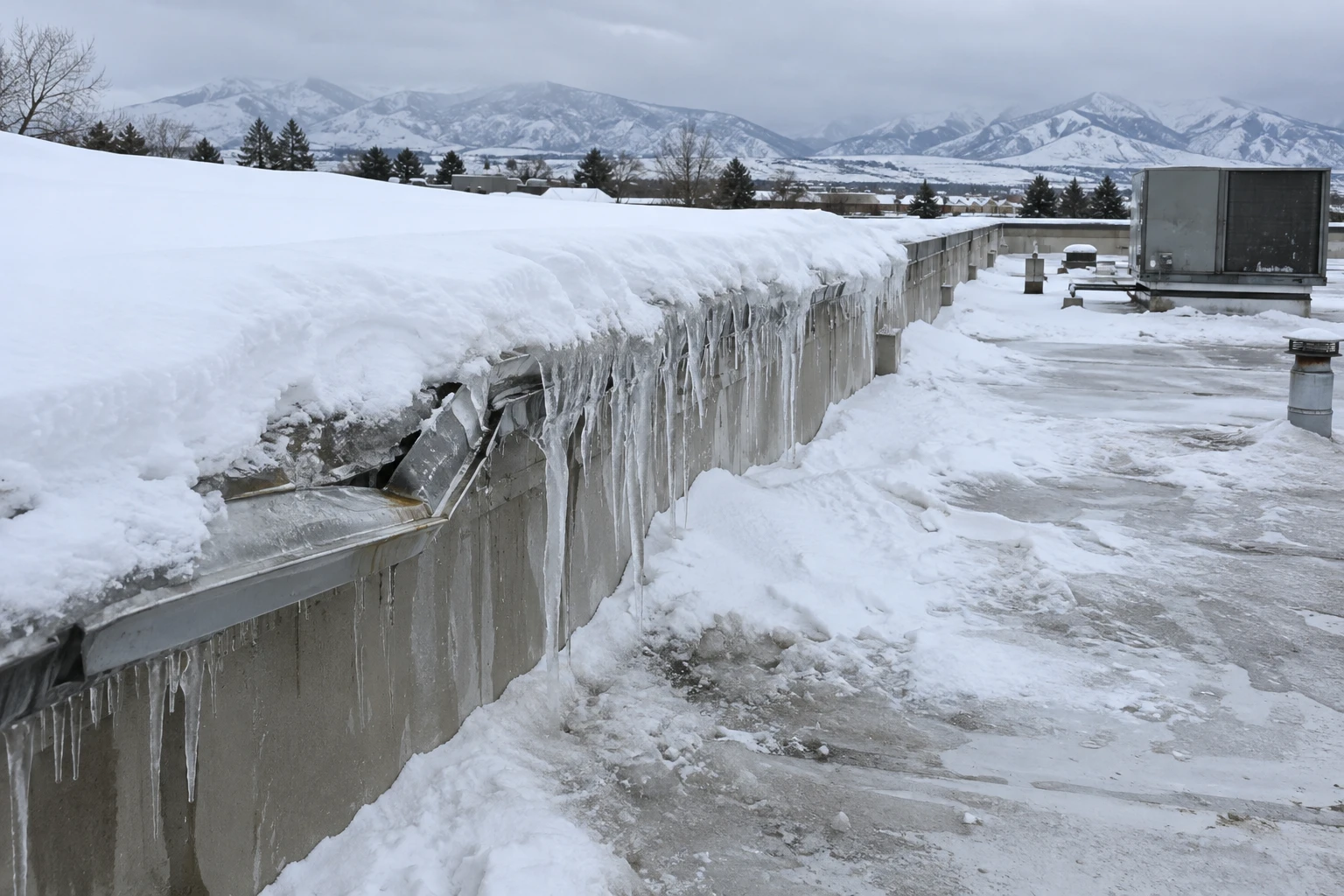
Drains freeze when meltwater reaches a cold sump and stops. The January mean low is 15.1 degrees, the record low is minus 46, and the thaw cycles of a Bozeman winter cycle water through freezing again and again. A drain at the edge of a shaded roof is the first to freeze. A drain inside the building, with warm pipe below it, usually stays open longest.
Fixes include heat tracing at the sump or scupper, moving a scupper to a warmer location, enlarging an opening so a skin of ice does not close it and adding an overflow above the primary. We also change habits: clear the screens in fall, check them in the first thaw and again after any storm. Our preventive maintenance visits do that on a schedule, and our snow and ice damage repair work handles the aftermath of a drain that failed.
What does a drain cleaning actually include?
It starts with the screen. We lift it, remove gravel, leaves and the grit that blows up from the lot, and check the strainer for damage. We then clear the bowl and the sump below it and flush the line with water to test the flow. A drain that backs up after cleaning has a blockage in the pipe, and we flag it for a plumber.
For scuppers, we check the opening for ice damage, the liner for tears and the downspout for a clear run. A scupper that spills onto a walk or an entrance gets a downspout or a splash block, because ice on a sidewalk is a liability. The cleaning goes in the roof file with a photo of each drain before and after.
Records matter here. A drain log lists each drain by number, the date it was cleaned, what was found and what was done. Over a few seasons it shows which drains clog fastest and which freeze first, and that tells us where to add overflow or move a scupper. A leak repair call can be the first time an owner learns a drain was a problem. The log lets us see the pattern before the stain.
When are crickets and slope the answer?
A cricket is a small tapered saddle that sends water around an obstruction. It belongs behind rooftop units, curbs and parapet corners, where flow stops and water pools. If a pond forms on the uphill side of a unit, a cricket cures it. If a whole bay of the roof sits flat, the cure is tapered insulation, which builds slope into the roof and sends water to the drains. The cost is higher, and it solves a design problem for good.
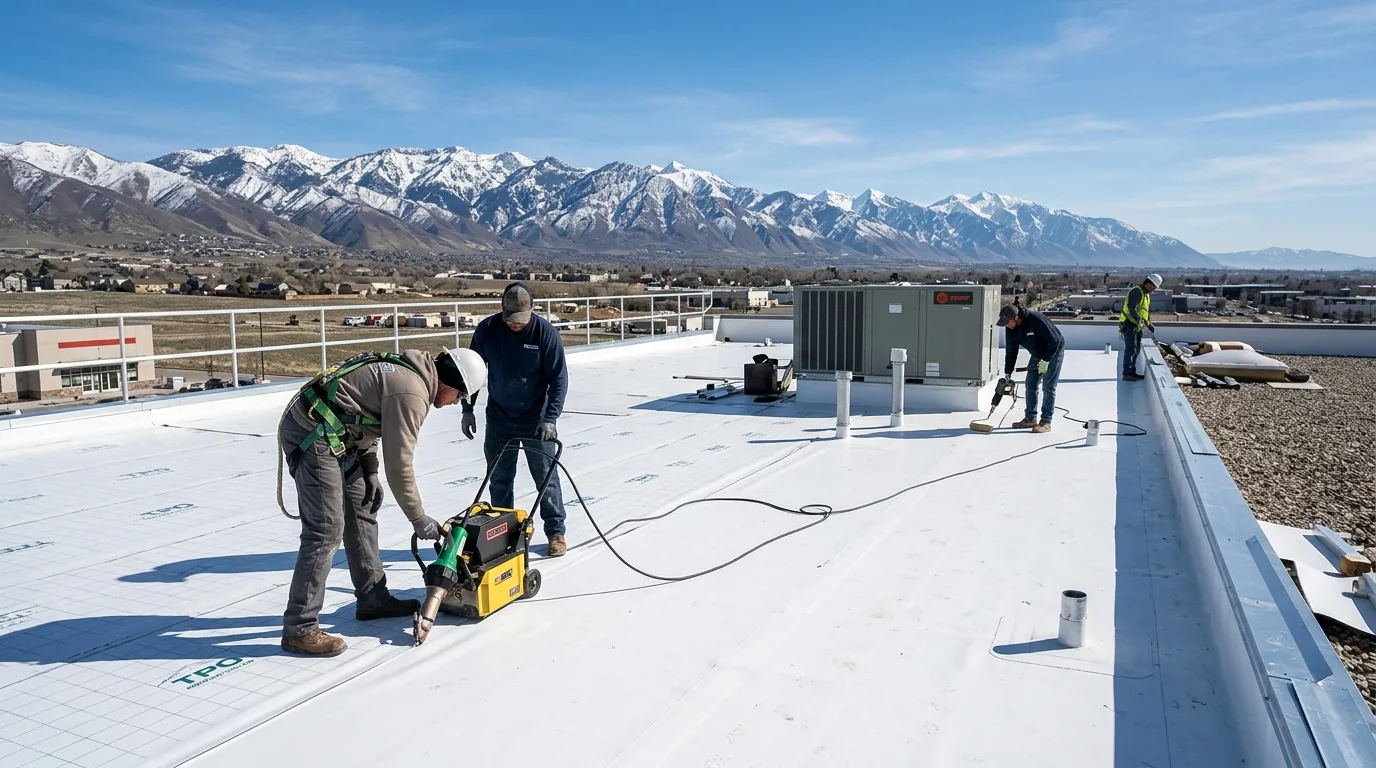
When a roof is due for replacement, slope is cheapest to add in the same pass. Tapered insulation and cover board go in as one assembly. For roofs that are not due, a local re-slope around a single basin is a reasonable middle path, and ponding water repair options come with prices.
How does the drain plan change by building?
A big-box store on North 19th Avenue has a wide roof with a few large drains, and one failure sends a lot of water to the wrong place. A big box retail roof is checked sump by sump. A downtown masonry building has a small roof with internal drains and tall parapets, and the scupper through the parapet carries all the water. In Downtown Bozeman, where older flat roofs sit inside historic districts, any change to a visible scupper is cleared with the owner first.
Large single-story retail roofs have a lot of area per drain. The West Main and Gallatin Valley Mall area is where drain capacity gets tested in a hard thaw or a hail burst.
What do hail and storms do to a drain system?
Hail packs drains with ice and grit. The June 30, 2010 storm, with golf-ball-size hail on Bozeman for about half an hour, can fill a sump with ice and grit in minutes. Hail also dents metal scuppers and cracks plastic strainers. After a storm, we clear every drain and check each for damage before we look at anything else, because the next rain or thaw will test them.
Wind adds debris. Gusts of 65 mph were logged southeast of Bozeman on August 29, 2023, and wind like that pushes leaves, grit and loose material across a roof to the nearest drain. A screen that was clean last week may not be clean now.


Questions About Roof Drains, Scuppers and Ponding Correction
How often should drains be cleaned?
At least twice a year, in fall and spring, plus after any hail or wind event. Buildings next to trees or gravel lots can use a third visit. We log each cleaning with before and after photos.
Can a frozen scupper be thawed safely?
Yes, with steam or warm water in a controlled way. We do not chop ice, which cuts the membrane and cracks seams. After thawing, we look for the reason it froze and correct it.
Does a roof need overflow scuppers?
Most flat roofs benefit. An overflow set above the primary drain protects the structure if the drain clogs. It is a small item that matters when snow load is already high.
What does it cost to add a drain?
The price depends on where the pipe runs, how thick the roof is and whether a plumber is needed inside. A new scupper through a parapet is a smaller job than a new interior drain, and we price each option on its own line.
How can I tell a drain is undersized?
Look for water still standing a day after a melt or rain, staining on the membrane around the drain and a ring of dirt that marks the pond's edge. Photograph it and send it, and we will count the area each drain serves.