
Infrared and Core-Cut Moisture Surveys in Bozeman, MT
Infrared and Core-Cut Moisture Surveys in Bozeman and the Gallatin Valley
Wet insulation does not announce itself. A roof can look sound from the parking lot, carry a clean membrane and still hold a heavy load of trapped water in the layer beneath. The first sign may be a ceiling stain months later, or a spring thaw that suddenly makes the roof feel soft underfoot. A moisture survey finds that water before it finds the tenant.
In Bozeman, MT, where snowmelt, freeze-thaw and hail all push water into roof assemblies, we use infrared scanning and core cuts together to map what is wet, what is dry and what the next step should be.
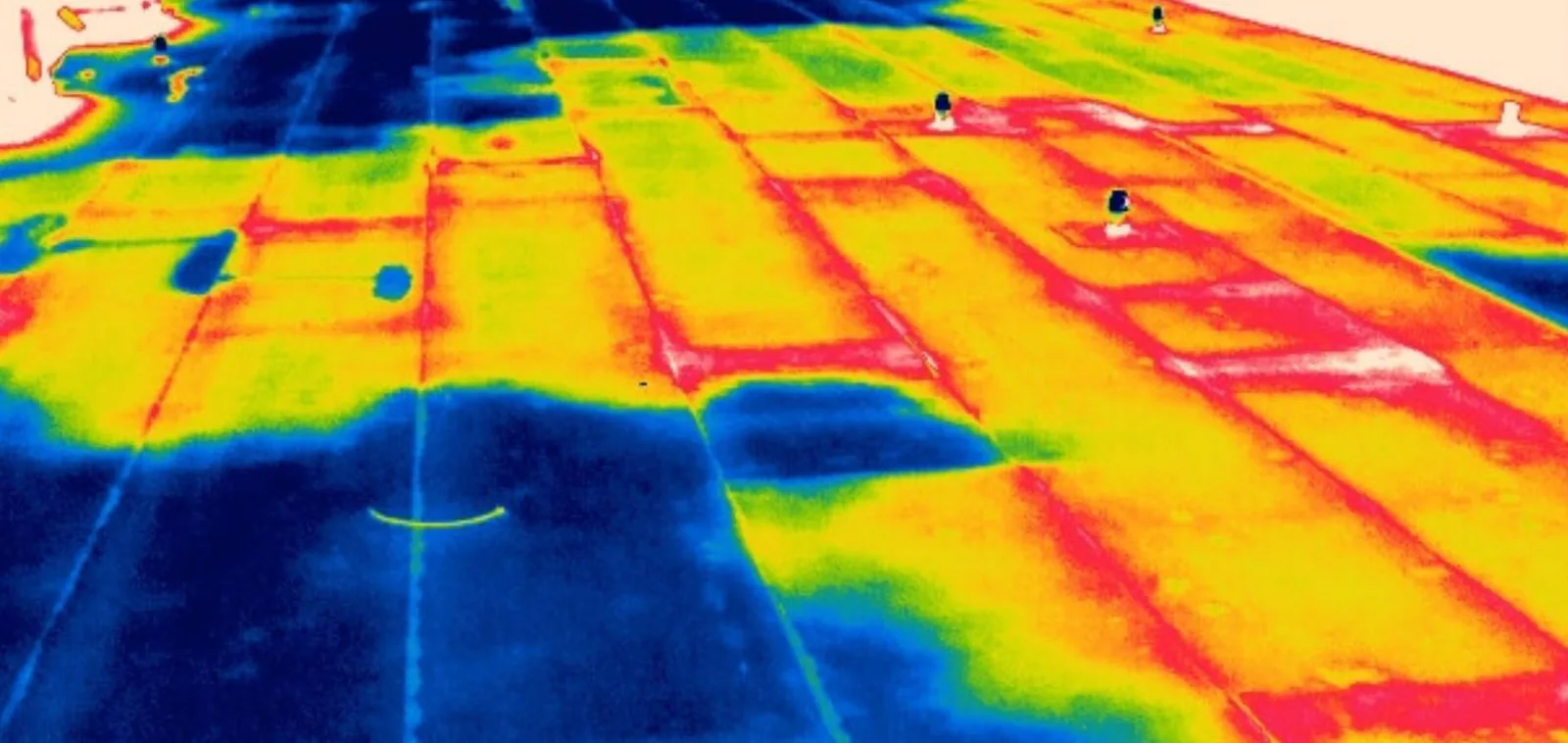
How does an infrared scan work?
Wet insulation holds heat longer than dry insulation. After a sunny day, a roof cools in the evening, and the wet areas stay warmer than the dry. An infrared camera shows those differences as patterns on the roof plan. The scan is done at dusk or after dark, on a roof that has been dry for a day or two, with little wind and clear skies. We walk or fly the roof and mark every anomaly with paint and photographs.
The scan finds likely wet zones. It does not measure moisture content. Reflective gravel, dark patches, mechanical equipment and shaded areas can create false readings, so the scan is the first half of the survey, not the whole.
Why do we still cut cores?
A core is a small round sample, usually a few inches across, cut through the membrane and insulation down to the deck. It shows how many layers are present, whether the insulation is wet, how far water has spread and whether the deck is rusting or rotting. We take cores at suspected wet zones and at control points in dry areas to calibrate the scan. We seal each core opening the same day with a patch matched to the membrane, and we record the layer thicknesses so a future designer knows what is under the surface.
The core answers questions the camera cannot. If the sample shows a dry, firm board under a stained membrane, the stain is on the surface. If it shows a saturated board with a rusted deck, the roof may need replacement in that section. The result changes the scope and the price, so we do not skip it.
What conditions in the Gallatin Valley fill insulation with water?
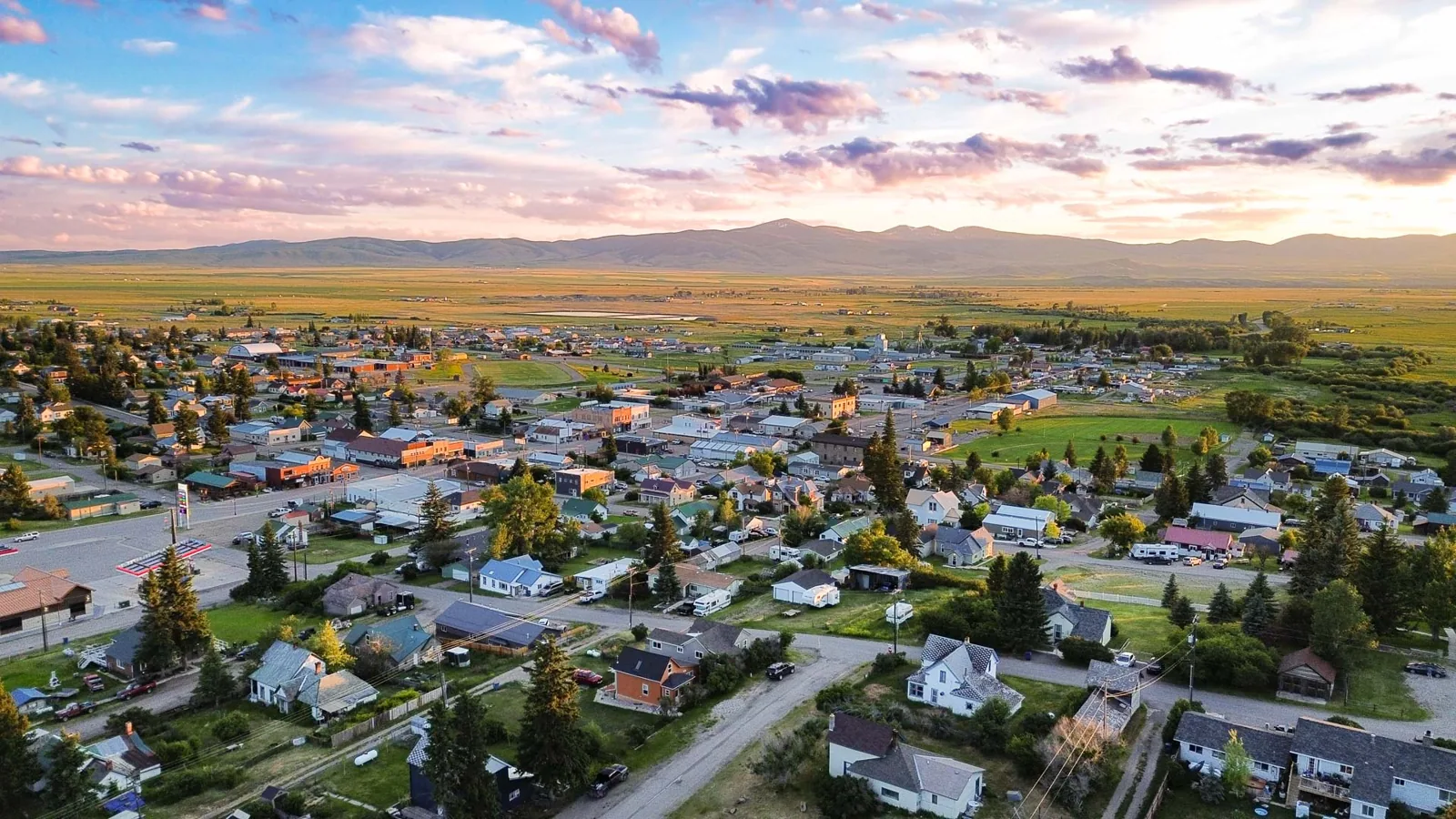
Snowmelt is the main source. With about 91 inches of snow each year in Bozeman, repeated freezing and thawing pushes water into any small opening. A seam that opens at a low corner, a termination that loosens at a parapet or a curb flashing that pulls away will let melt in through the winter. The water spreads sideways in the insulation, and it may take a season to reach a drip point.
Hail is the second source. The June 2010 storm left baseball-size stones near Gallatin Field and golfball stones over Bozeman, and a storm in early August 2013 covered Belgrade and north Bozeman. Bruised membranes and fractured cover boards let water in months after the storm. A survey after a storm can show whether a bruise has become a leak. We schedule that check once the roof has had a few dry days, because a scan right after rain reads wet everywhere and hides the real pattern. Repeating the survey a year later shows whether a repaired area stays dry, which is the evidence an owner needs to decide how long a repair can carry the building.
Which buildings benefit most?
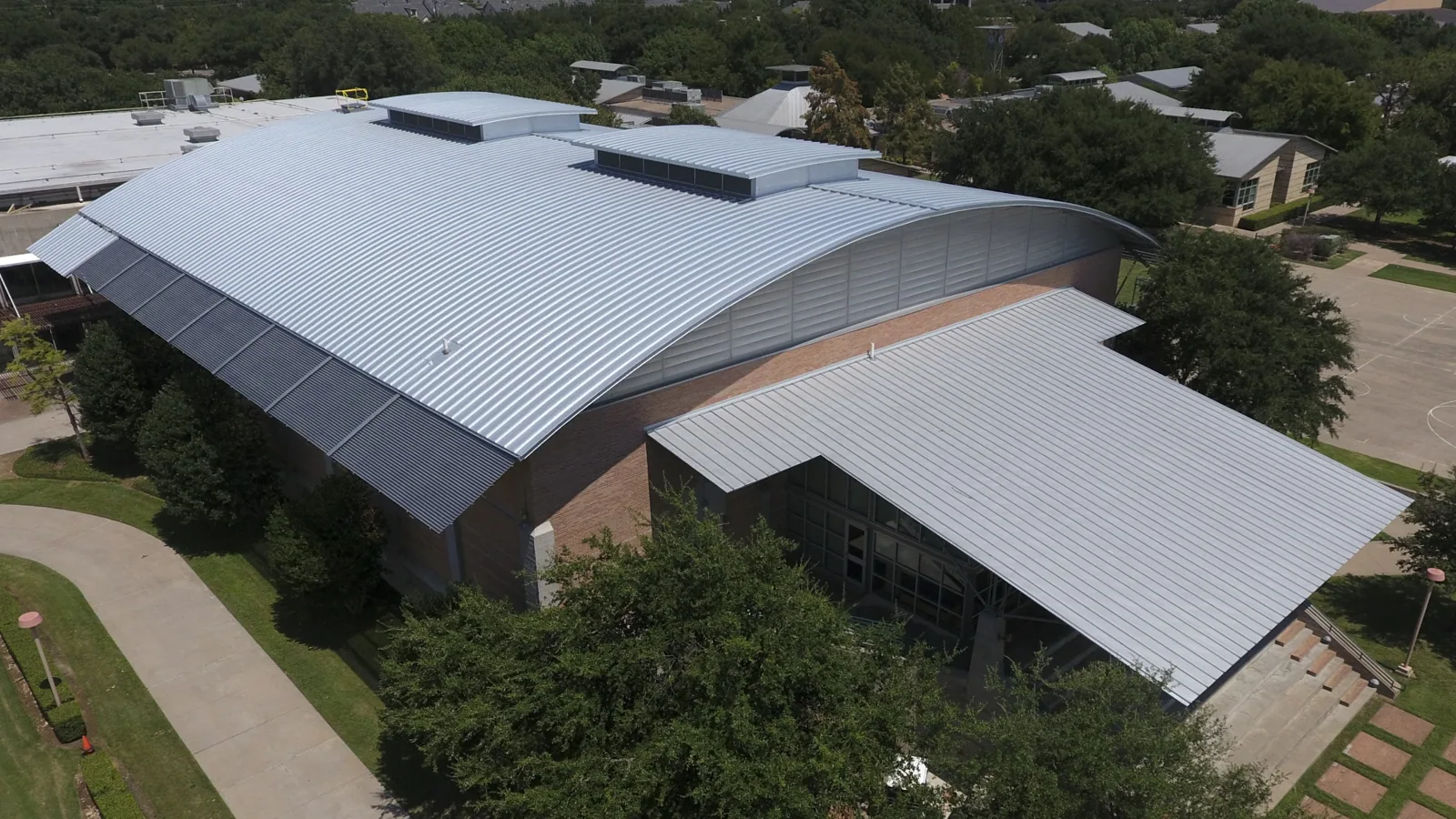
Large low-slope roofs gain the most. A warehouse in the Jackrabbit Lane corridor in Belgrade, a big-box store on North 19th Avenue or a flex building in the Copper Ranch Road area can have thousands of square feet of roof with a few small leaks. The survey shows how much of the roof is actually wet. Buildings being bought or sold also benefit, because what shows on the surface does not tell a buyer what is in the insulation.
A school or medical building, with sensitive interiors, uses the survey to confirm that a small leak is small. A multi-site owner uses it to rank buildings for the capital plan.
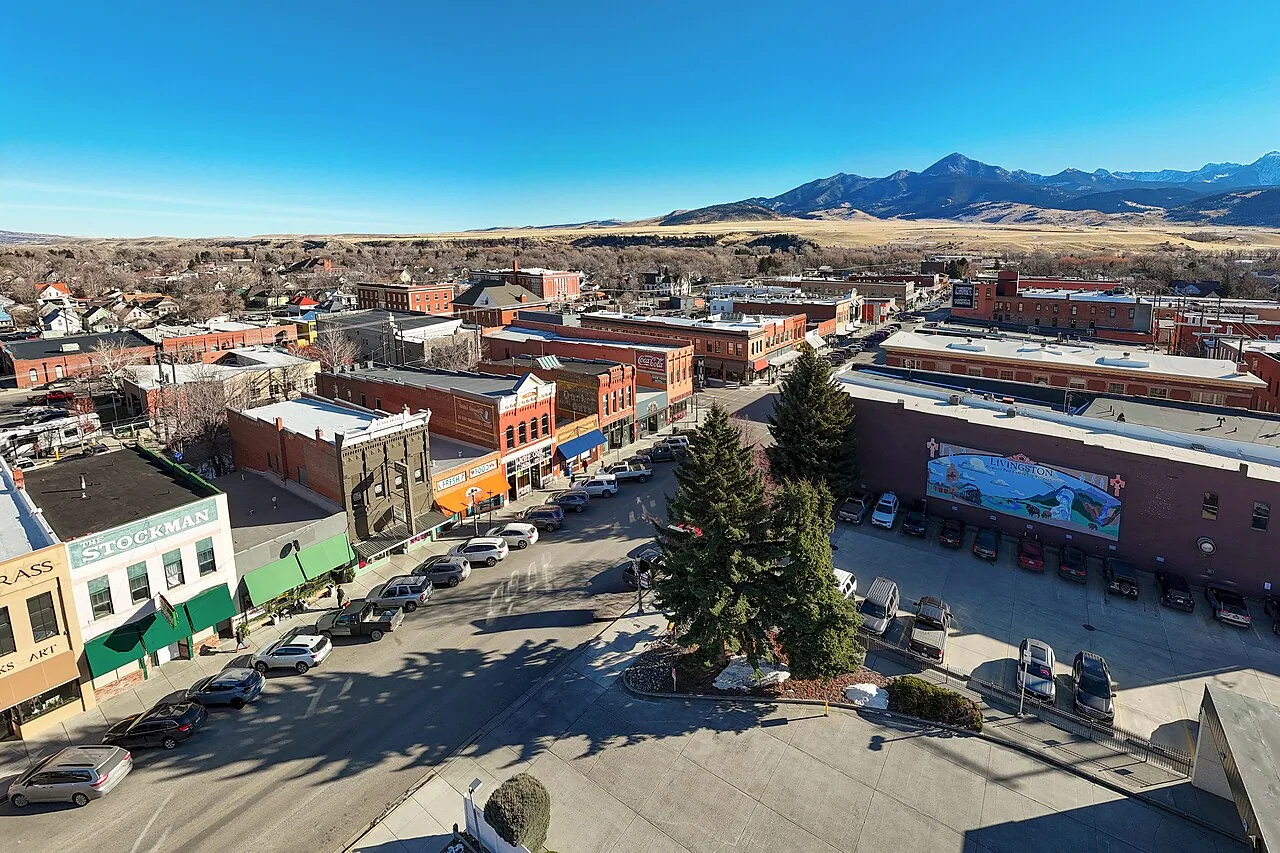
In Livingston, with about 56 inches of snow a year and strong winds, edge and parapet details take a beating, and the survey shows whether wind-driven melt has gone past them into the insulation. On a building with rooftop equipment, such as the labs and residence halls at Montana State University, the survey helps separate a roof leak from condensate dripping off a unit, since the two stains look alike from below.
What does the owner get?
The deliverable is a plan of the roof with the wet areas outlined, core locations and photographs, readings for each core and a recommendation for each zone: leave it, repair it, replace the insulation in that section or replace the roof. The report states the area of wet insulation in square feet and the portion of the roof it represents. We give the owner a budget range for each option and a recommendation based on the findings.
For roofs that need only a partial fix, the report supports a targeted repair. For roofs with widespread wet insulation, it supports a replacement decision and shows why a recover would trap the water. A survey also gives an insurer or a lender a clear record.
How do the surveys fit with other services?
We pair a survey with a roof inspection and, for large roofs, a drone flight. For buildings under purchase, a due diligence roof survey uses the same tools to give a buyer an accurate picture before closing.
Questions About Infrared and Core-Cut Moisture Surveys
When is the best time of year for an infrared scan?
The best time is a warm, dry stretch with clear skies, when the roof has absorbed heat during the day and cools quickly in the evening. In the Gallatin Valley that usually means late spring through early fall. Winter scans are limited by snow cover and cold. We recommend scheduling in the first dry days after the thaw, so winter damage shows.
Can a scan tell us how wet the insulation is?
Not by itself. The camera shows temperature differences that suggest moisture, while a core and a moisture meter measure it. We use both. The scan sets the locations and the cores give the number, so the report separates what is certain from what is suspected.
Does a core cut damage the roof?
Each core removes a small plug, and we seal the opening the same day with a patch matched to the membrane. A properly sealed core is not a weak point, and the information is worth the small repair. On roofs under warranty, we confirm the warranty requirements with the manufacturer before cutting.
How many cores do we need?
It depends on roof size and the pattern of anomalies, so we set the number after the scan. A small roof may need a handful, while a large roof needs enough to calibrate each zone. We recommend cores at every suspected wet zone, at drains, at curbs and in several dry control areas.
What if the survey finds that most of the roof is wet?
Then we say so, and the conversation turns to replacement. A roof with widespread wet insulation has lost thermal performance and often has deck damage. We recommend replacing the saturated sections or the whole roof, with tapered insulation and drains corrected at the same time.