
Modified Bitumen Roofing in Bozeman, MT
Modified Bitumen Roofing in Bozeman and the Gallatin Valley
On a mixed-use building in Midtown, the granules tell you how the roof is aging. After a Gallatin Valley winter the cap sheet near the scuppers is bare in streaks, where meltwater and ice have scoured the mineral surface down to asphalt. A bare cap sheet ages faster in the sun. Modified bitumen is a layered roof, and the top layer is the one that protects the others. Bozeman, MT sees around 91 inches of snow in a year, so a cap sheet here is tested by ice as much as by sun. Where on your roof is the surface wearing through?
We install, repair and replace modified bitumen on commercial buildings across the valley, and we describe the roof plainly before we describe a price.
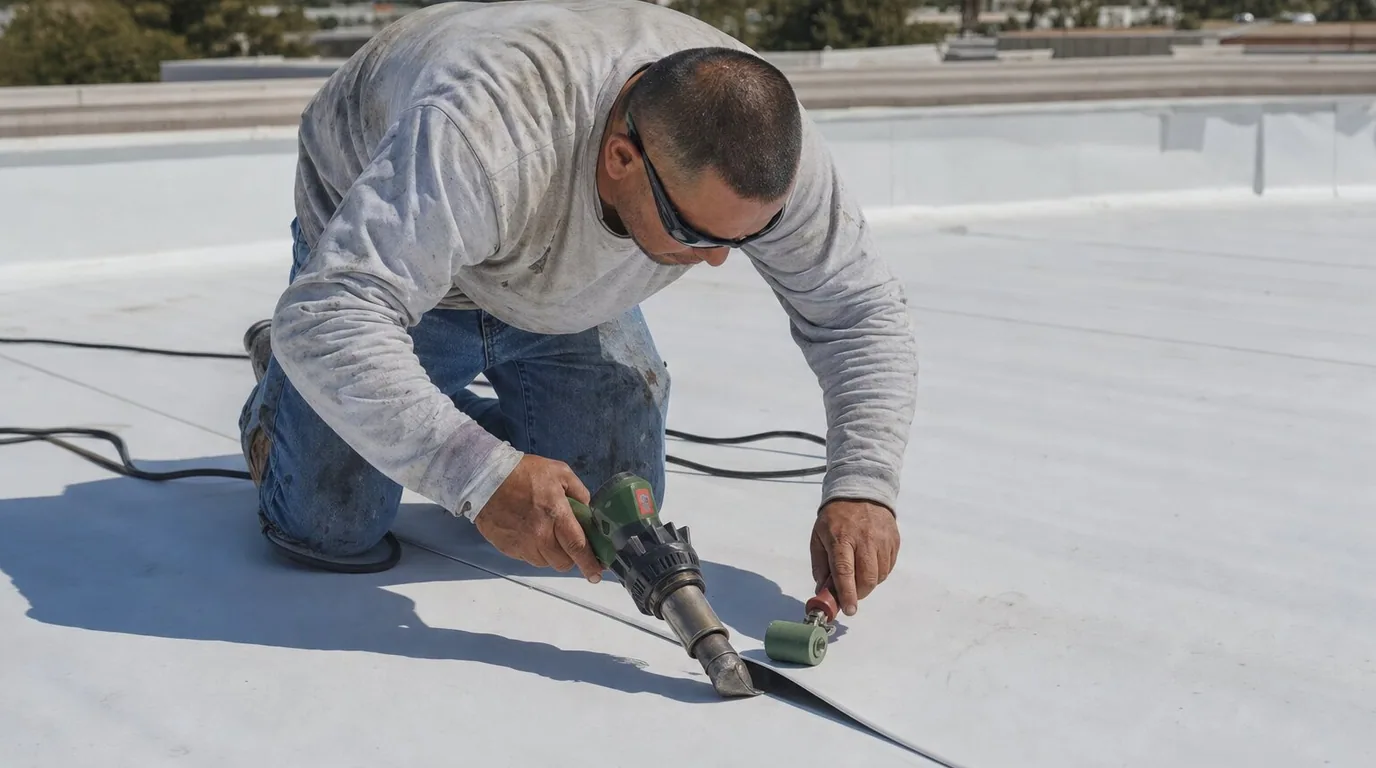
What is modified bitumen, and what is the difference between SBS and APP?
Modified bitumen is asphalt blended with a polymer and reinforced with a fabric mat, sold in rolls and installed in two or more plies. SBS, short for styrene butadiene styrene, makes the asphalt rubbery and elastic. APP, short for atactic polypropylene, makes it plastic and stable under heat. Both are topped with a granulated or coated cap sheet.
SBS is the more common choice in cold climates, because it stretches rather than cracks when temperatures drop. January nights in Bozeman average near 15 degrees F and the record is minus 46, so elasticity matters. APP resists sun and heat well and is usually installed with a torch. Each sheet has a place, and the choice depends on the building and on how the roof will be installed and repaired.
Why do owners choose a layered roof?
Two plies are two chances. A cut or a blister in the cap sheet does not necessarily reach the base ply, and the redundancy is useful on roofs that see foot traffic, equipment service or dropped tools. Where service crews walk the roof often, as on a building with many rooftop units, layered roofing forgives more of that wear.
The trade-off is weight and installation method. A layered roof weighs more than a single-ply sheet, so the deck and the structure must carry it along with snow. Montana criteria set Bozeman's ground snow load at 50 psf, and drifts behind parapets and equipment concentrate load. We confirm the structure before we propose a heavy assembly.
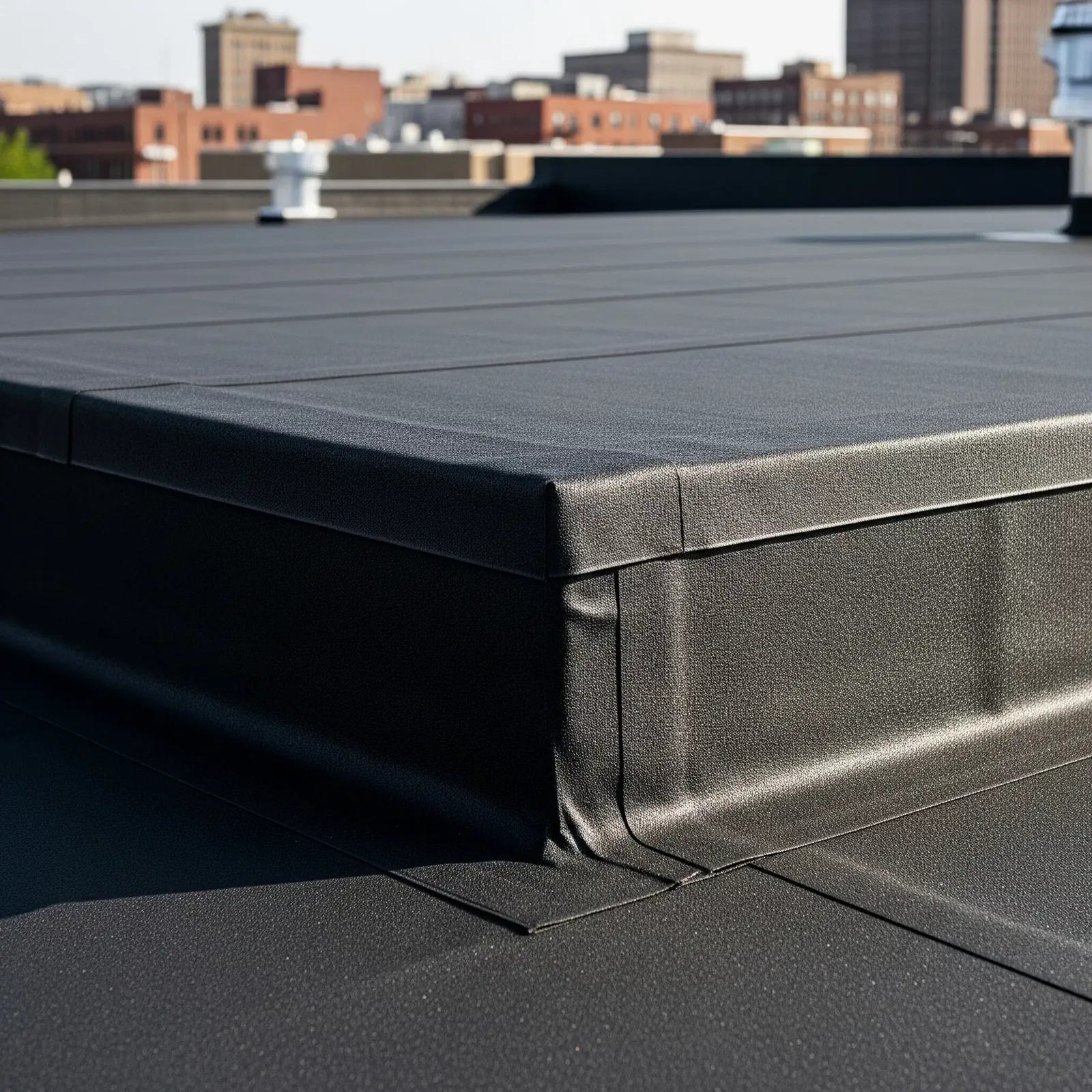
Edge and wall details matter more than the field. At a parapet, the base ply turns up the wall and the cap sheet laps over it, and the termination at the top must be sealed or counterflashed. A wall flashing that has pulled loose lets meltwater run behind it, freeze and pry it farther open. We check every wall base, every curb and every drain for that pattern before we judge the field.
How is modified bitumen installed, and what does that mean for the building?
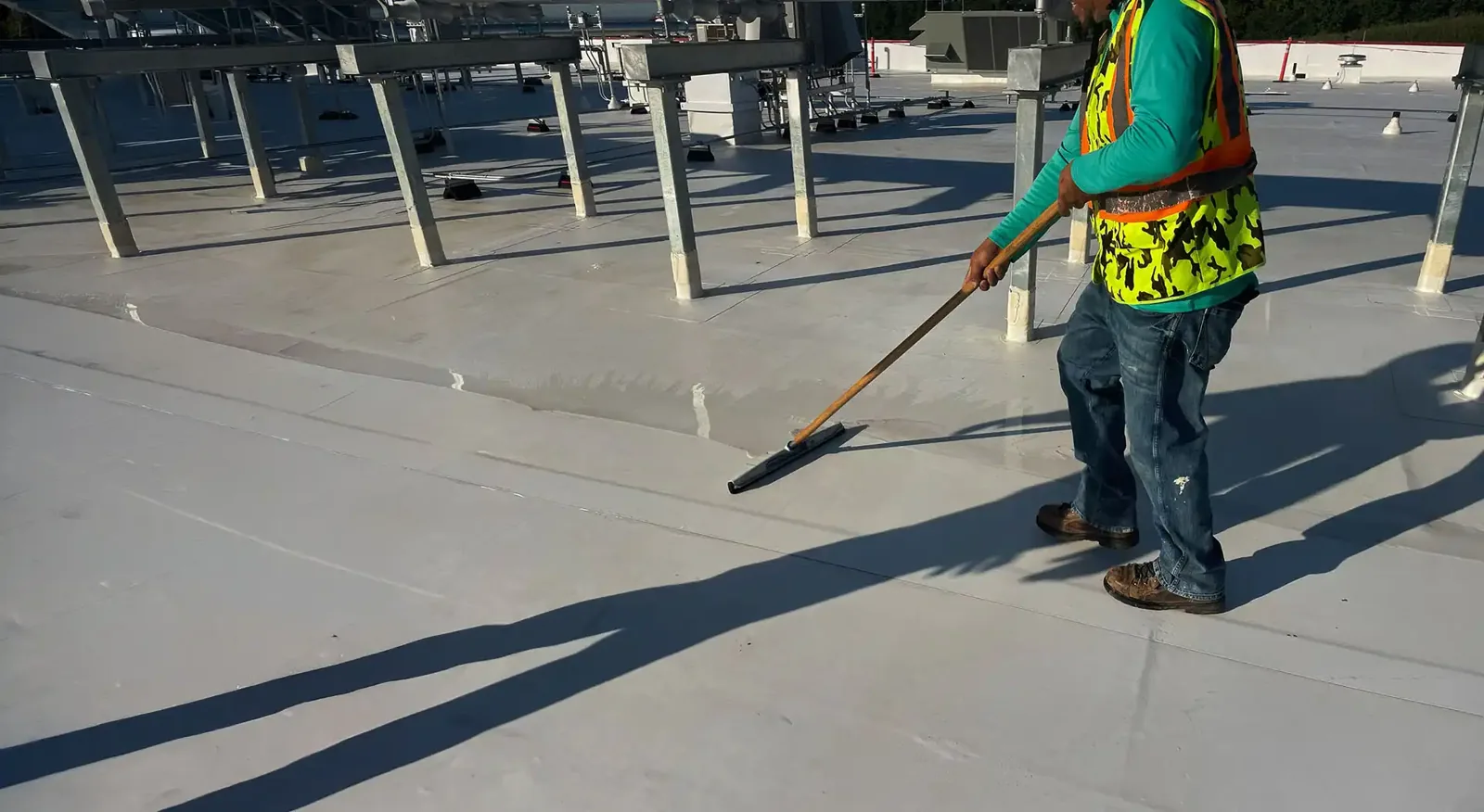
Methods include torch application, hot asphalt, cold adhesive and self-adhering sheets. Torch work uses open flame on the roof, so it needs a fire watch, a clear zone and a plan for what sits below. Cold-applied and self-adhered systems avoid open flame, but each has a temperature window for good adhesion. In Bozeman the usable window closes early in the fall, and a late start can end with a half-installed roof.
On an occupied building, we write the method into the scope. Occupied building reroofing sets noise windows, fire watch and air-intake protection, so tenants know what to expect and the work does not stop at the first complaint.
Which new and infill buildings call for it?
Bozeman's Midtown urban renewal district along North 7th Avenue is aimed at infill, housing and retail, including a planned mixed-use building of about 68,000 square feet. Mixed-use buildings often combine residential floors, retail floors and roof decks, and a roof that serves many uses benefits from layered protection.
For infill work in Midtown, we plan the roof with the general contractor early. Drains, curbs, penetrations and wall terminations are easiest to get right before the walls are closed in, and they are expensive to fix after.
How does hail treat a granulated cap sheet?
Hail knocks granules loose and bruises the layers beneath. The June 30, 2010 storm broke dozens of windows at Montana State University while golfball stones fell on Bozeman, and the early August 2013 storm brought stones the same size to Belgrade and north Bozeman along with 89 mph gusts. A cap sheet that loses granules in a storm like those has bare asphalt exposed to the sun.
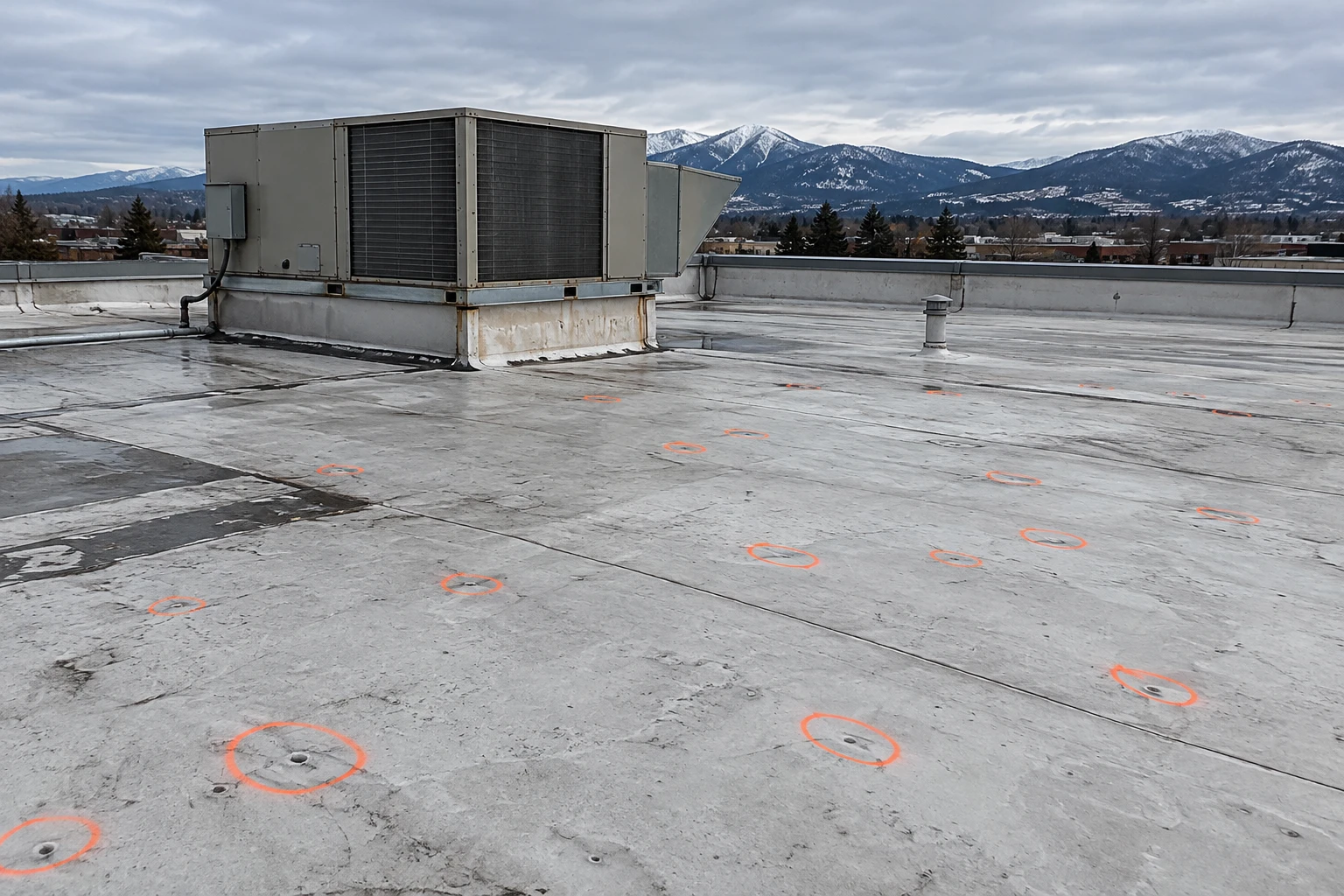
After a storm, we walk the field, mark bare patches and bruises and cut a core at the deepest. If the lower ply is intact, hail damage repair may be a granule-surfaced patch or a coating. If the insulation took the hit, the scope grows. We photograph each finding and keep it in the file.
What does maintenance look like on a layered roof?
Spring and fall walks catch most problems. We look for blisters, ridging at seams, exposed felts, failed flashings and open laps. We clear drains and scuppers, since a layered roof that ponds water ages faster at its seams. Small patches of cap sheet, set in cold adhesive or by torch where safe, extend the roof's life at low cost.
We keep a repair log by location. When the same flashing opens a third time, the log tells the owner that the detail is the problem, not the patch. A preventive maintenance plan makes the log routine, and a built-up roof follows the same habit.
Blisters deserve a note. A small blister that does not move may be left alone and watched. One that is growing, or sits near a seam, gets cut, dried and patched. We mark each on the roof plan with a date, and a photo from the next walk shows whether it changed.
When should an owner pick modified bitumen over a single-ply sheet?
Pick it when puncture resistance, redundancy and easy patching matter more than the lowest installed cost, or when an existing bituminous roof is being replaced and the assembly beneath suits another layer. Pick a single-ply sheet such as EPDM where weight, simplicity and speed are the drivers.
Either way, the roof tells us the answer. A walk, a moisture scan and a few core cuts come first, and the decision rests on what we find up there.
Questions About Modified Bitumen Roofing
Is SBS or APP better for Bozeman?
SBS is the more common choice for cold, because it stays elastic. APP suits some heat-heavy roofs and torch installs. Pick by the building, the install method and the repair path, and let a walk on the roof settle the final choice.
Do I need a fire watch for torch work?
Yes. Torch application needs a clear zone, a charged extinguisher and a watch for a period after the work stops. For many occupied buildings, cold-applied or self-adhered systems avoid the issue altogether.
Can modified bitumen be installed in winter?
Mostly no. Adhesives and heat bonds need workable temperatures and dry surfaces. Plan large work for the warm, dry window, and use cold months for temporary repairs only.
What does a bare cap sheet mean?
The mineral surface that shields the asphalt from sun has worn away. A coating or granule-surfaced patch can restore it in some cases, while widespread loss points to a larger scope.
How do I keep a layered roof from ponding?
Clear drains before every thaw, check the slope around each sump and add tapered insulation where water stands. Ponding speeds aging at the seams, so it is worth correcting early.