
Preventive Roof Maintenance in Bozeman, MT
Preventive Roof Maintenance in Bozeman and the Gallatin Valley
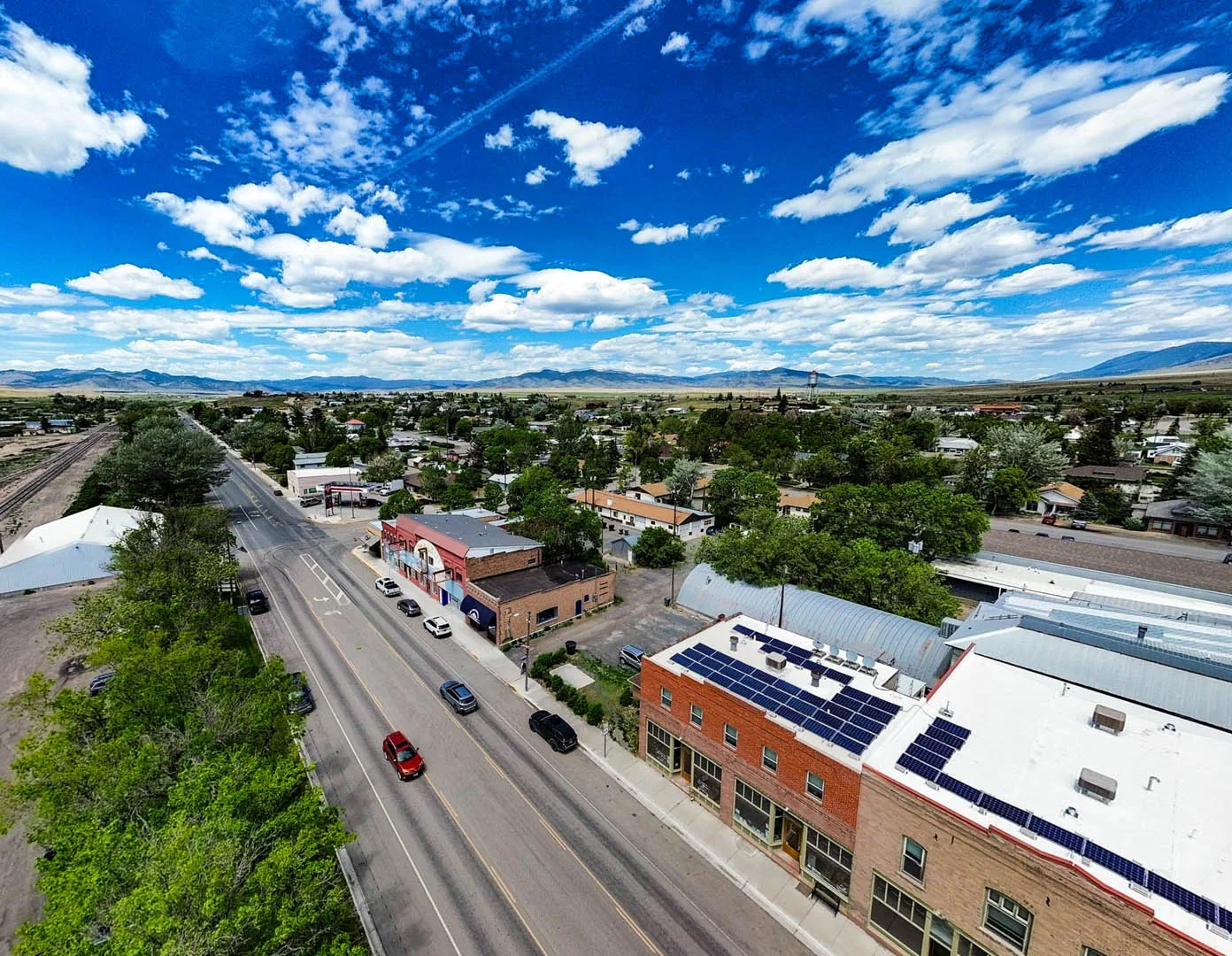
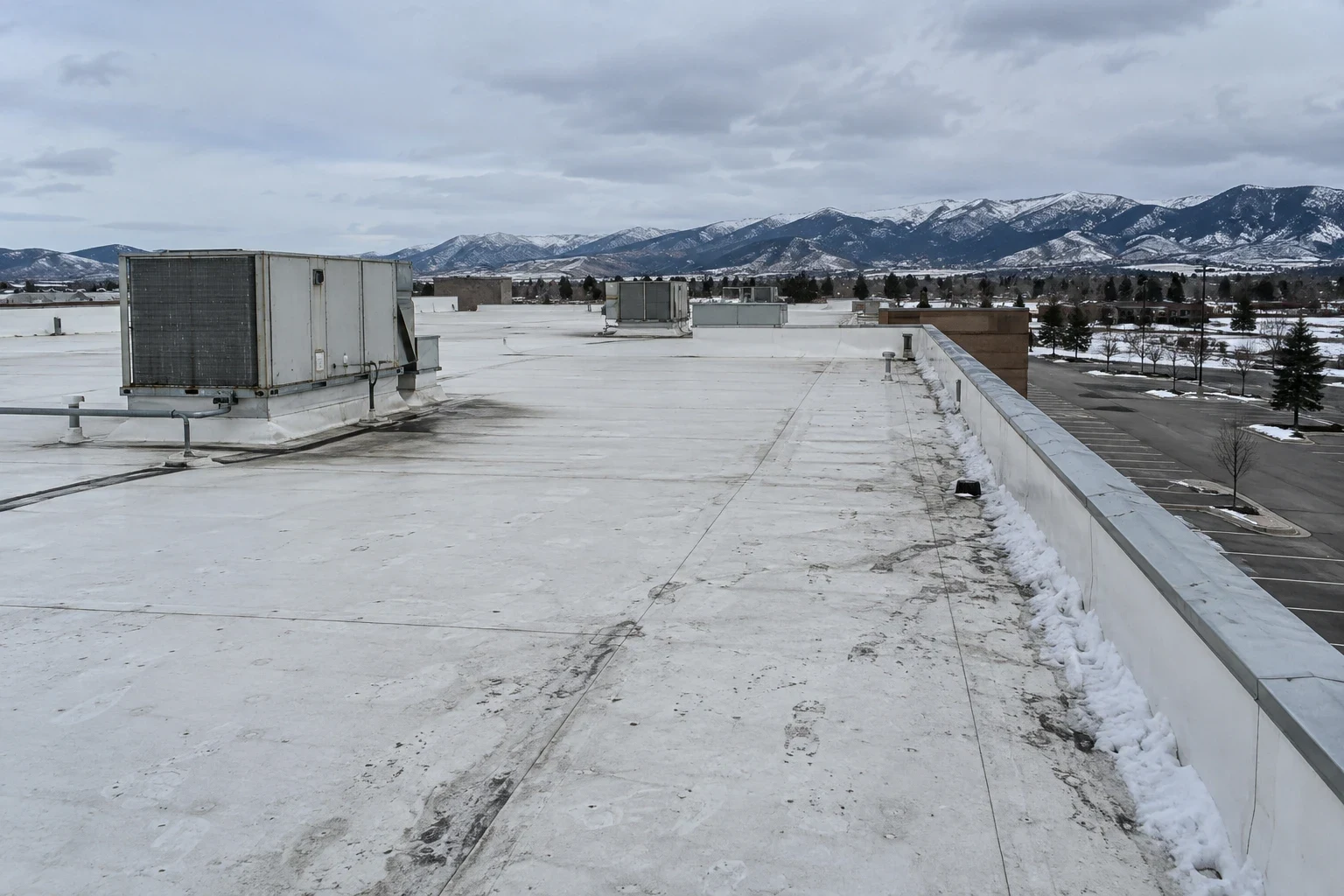
By April the snow is gone from the street, but on a flat-roofed office building with a row of rooftop units, a ridge of ice still sits along the north parapet where the sun does not reach. Behind it, a scupper is packed with grit from the winter. Nobody has been on the roof since fall. Bozeman, MT gets about 91 inches of snow a year across roughly 54 snowy days, so a roof like that goes through months of loading, thawing and refreezing between visits. Which drain on your building clears first when the sun hits, and which one stays iced?
A maintenance program answers that question twice a year, on a schedule, with photographs.
What should be checked on the roof every spring?
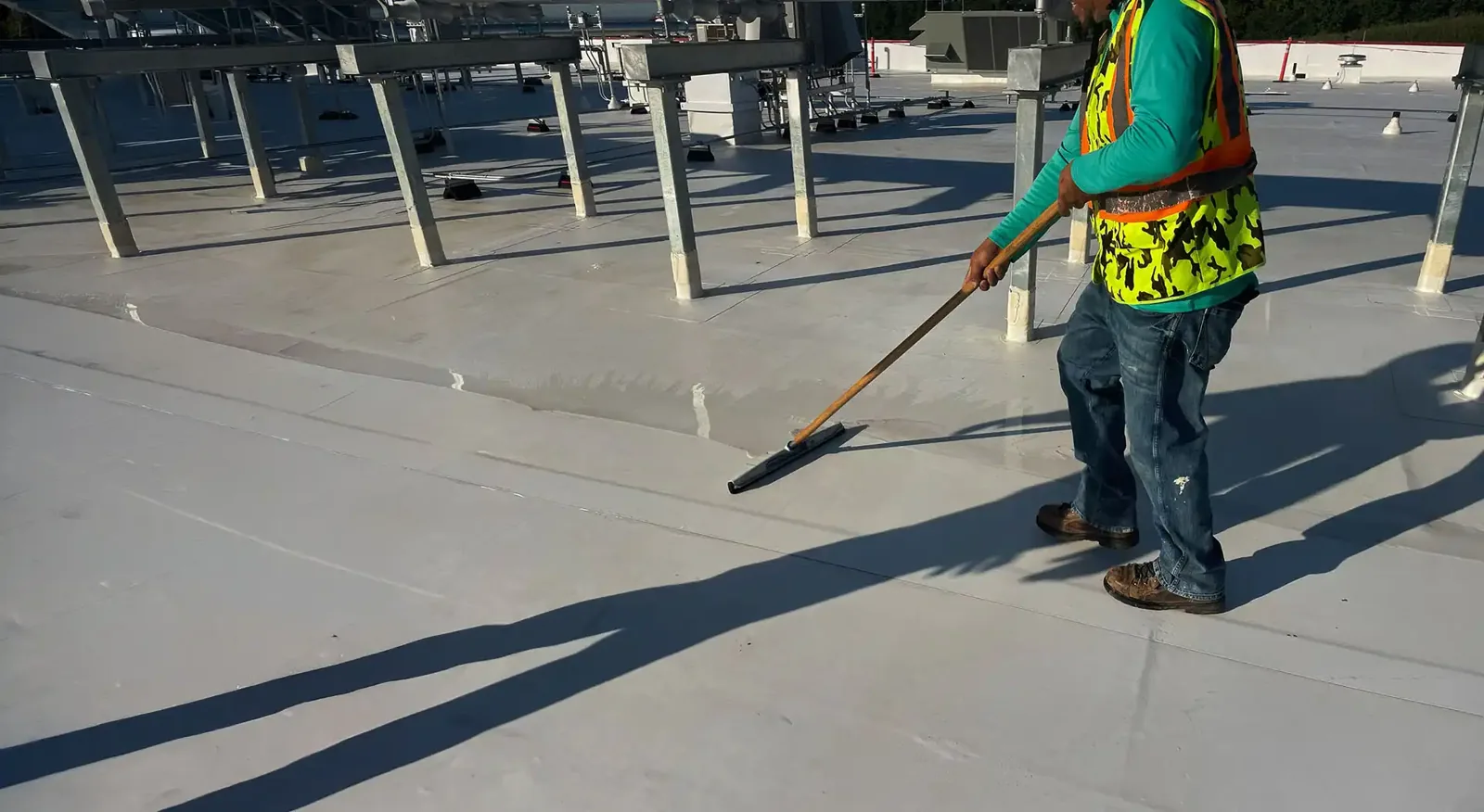
Spring is the damage survey. The snow has gone, the membrane is exposed, and the winter has left its marks. We walk the whole roof and look for what the freeze and thaw cycles did: seams that opened, flashing pulled from a wall, edge metal bent by a slide, fasteners that worked out of the deck.
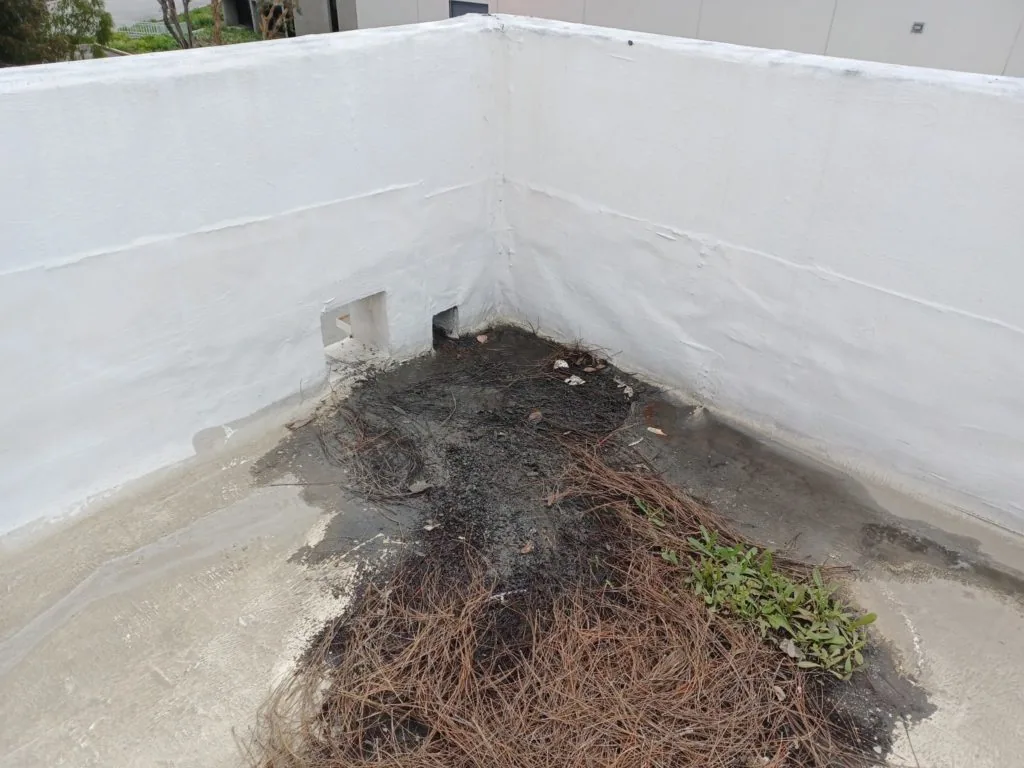
Drains come first. We clear every sump and scupper, test the flow and note any that were iced or packed. Then the details: rooftop curb seals, pipe boots, skylight curbs, parapet terminations. Each gets a photo and a note. A hail bruise from a late storm shows up now too, since the surface is dry and the light is low. Findings are sorted into repair now, repair this season and watch. The owner gets a sheet that a facilities manager can act on in an afternoon.
A visit that starts with roof drains and scuppers ends at the perimeter, where slides bend edge metal, coping and gutters, and the report covers both. The visit is also the cheapest time to catch a developing leak, because a stain that is two weeks old is a repair and one that is two years old is a ceiling.
What changes in the fall visit?
Fall is the preparation visit. The goal is to get the roof ready for 91 inches of snow and a January mean low near 15 degrees. We clear leaves and grit from drains, reseal what the summer opened, check snow guards and gutters, and confirm that anything that can shed onto a walk or an entrance is guarded.
This is also the cold-weather adhesive window question. Sealants and coatings need steady temperatures to cure, so repairs that cannot wait must happen before the first hard cold. We build a short punch list from the spring findings and finish it in September or October. A roof that goes into winter with its details sealed and its drains open is a roof that shows less damage in April.
Two more items belong on the fall list. Rooftop equipment gets a service-access check, since a crew that walks the roof in November in the cold can crack a seam. And any coating restoration planned for next summer gets a survey now, while the surface is dry and the film thickness can be measured.
Does the program differ by building type?
It does, because buildings fail in different places. A big-box store on the North 19th Avenue corridor has wide flat roofs, many rooftop units and drifts behind the parapets, so we spend the visit on terminations and scuppers. A downtown masonry building has an older flat roof and tall parapets, and the focus is on coping, internal drains and the wall joint. A campus lab has dense equipment and a research clock that cannot stop.
A big box retail roof gets the retail checklist, and an industrial building near Belgrade leans on edge metal and fasteners. We write the checklist for the building type, not for roofs in general.
What happens after a hail or wind event?
A maintenance contract includes a storm walk. Half an hour of golf-ball hail over Bozeman on June 30, 2010, cost Montana State University dozens of windows. The August 2013 storm sent the same size of stone, and 89 mph gusts, across Belgrade and the north side. Closer to now, hail of 1.50 inches was reported along the Gallatin River northwest of town in May 2023.
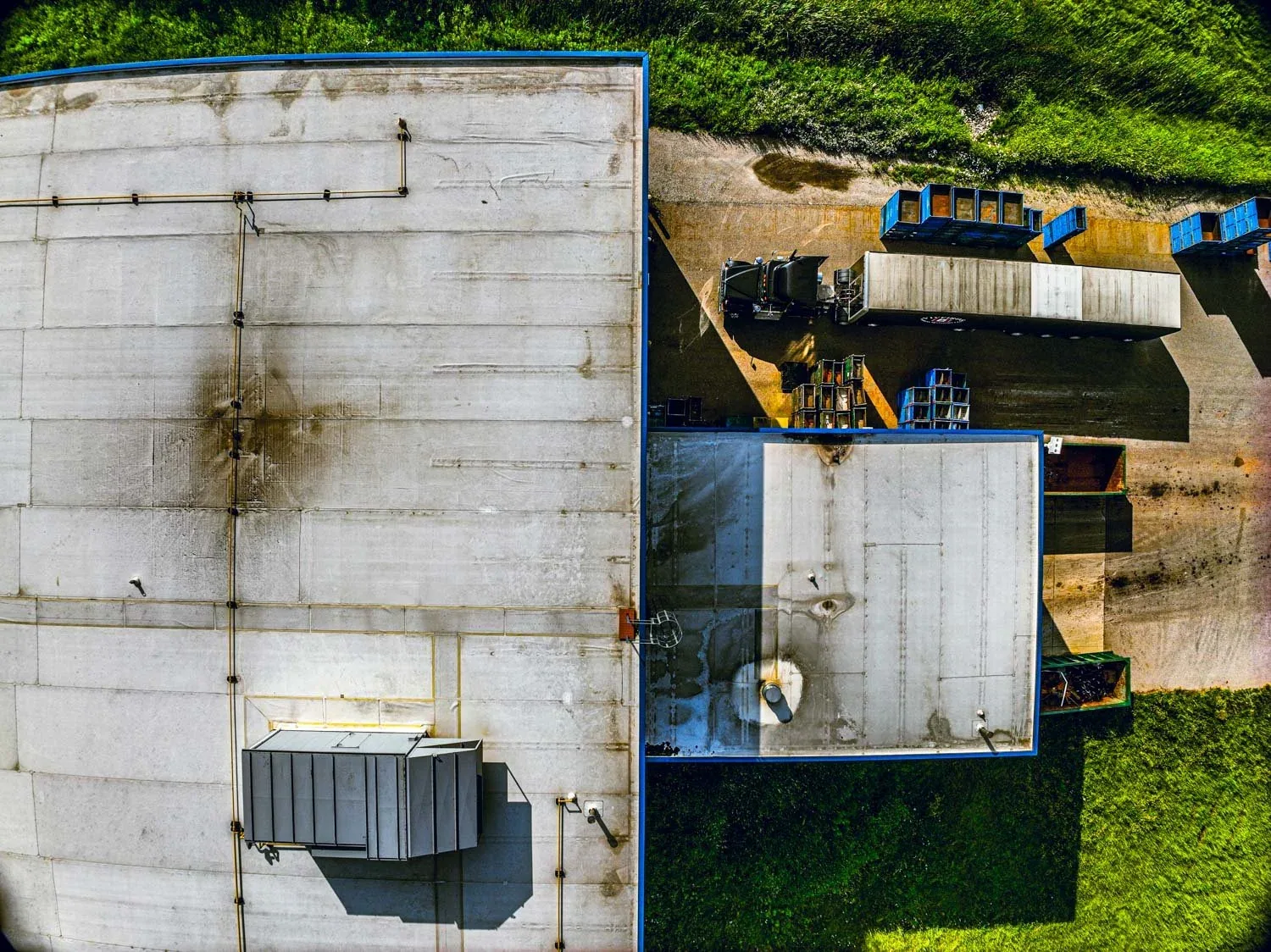
After an event like that, the roof gets a walk within days. We press on the membrane for bruises, check metal for dents, check edge metal for lifted sections and photograph what we find. The record is dated, which matters if an insurer asks. If a hit is serious, the repair moves up the list. If not, it is watched on the next visit. Our drone roof inspection is useful on large roofs after a storm, since it shows the pattern before anyone steps on a wet surface.
What does the owner get to keep?
Every visit ends with a dated photo set, a plan with each finding marked and a short list of what was done and what is next. Over a few years, that file shows the pace of aging on each roof. It also supports a warranty claim, because many manufacturers ask for proof of maintenance. The file is organized the way warranty management needs it, building by building.
The same record feeds a roof condition report, which ranks buildings for a budget. An owner with six buildings can see which one needs money this year and which can wait. A new manager can pick up the file and know the roofs on day one.
When should the visits be scheduled?
Book spring visits for late April through May, once the snow is off and before summer storms. Book fall visits for September through mid-October, before the first hard cold. Hail season runs through summer, so the storm walk is on call. A building with a history of leaks may need a mid-winter check of drains as well, because a frozen scupper is a winter problem.
We recommend putting the visits on the calendar a year ahead. Crews and weather windows are short in the Gallatin Valley, and the best days fill up. If you manage several buildings, we group them by area, so one mobilization covers more roofs. Call before the freeze, and we will set a walk.
One more point on timing. Snow stays heavy in the high country, and Big Sky averages about 162.7 inches a year. A property there needs its fall visit earlier than a Bozeman building, before the first storm closes the roof.
Questions About Preventive Roof Maintenance
How many visits a year does a commercial roof need?
Two is a good floor: one in spring after the snow and one in fall before the cold. Buildings with a leak history, heavy rooftop equipment or large drifts can use a third check in winter, limited to drains and edges.
Can maintenance extend the life of an old roof?
It can slow the decline, mostly by keeping water moving off the roof and details sealed. It cannot restore a membrane that has failed, and the report will say when a roof has moved from maintenance to a repair or replacement conversation.
What should we send before the first visit?
Send the building type, its approximate age, any roof plans and warranty papers, and a note of where ice or drips show up. We will plan the walk around those spots and bring the right materials.
Does maintenance affect the manufacturer warranty?
Often it protects it. Many warranties expect routine care and ask for records. We keep a dated file that shows what was done and when, and we follow the manufacturer's details on any repair.
What does it cost compared with repair?
A visit costs less than most single repairs, and it tends to prevent repairs that show up with interior damage attached. We price by building and by roof size, and the sheet shows what each visit covered.