
Roof Insurance Claim Assistance in Bozeman, MT
Roof Insurance Claim Assistance in Bozeman and the Gallatin Valley
A retail center on North 19th Avenue takes a hailstorm in June. By the time the adjuster arrives, three things have happened to the roof: tenants have walked it, a thaw has softened the marks and a second storm has dropped more debris. What the roof looked like on the day of the storm is the one thing the claim needs, and it is the one thing nobody wrote down. Bozeman, MT has had golf-ball-size hail in 2010 and 2013, and baseball-size hail east of Gallatin Field, so claims here involve large hail marks. Who on your team is photographing the roof the day after a storm?
We do it, and we build the file an adjuster can check line by line.

What goes into the claim file?
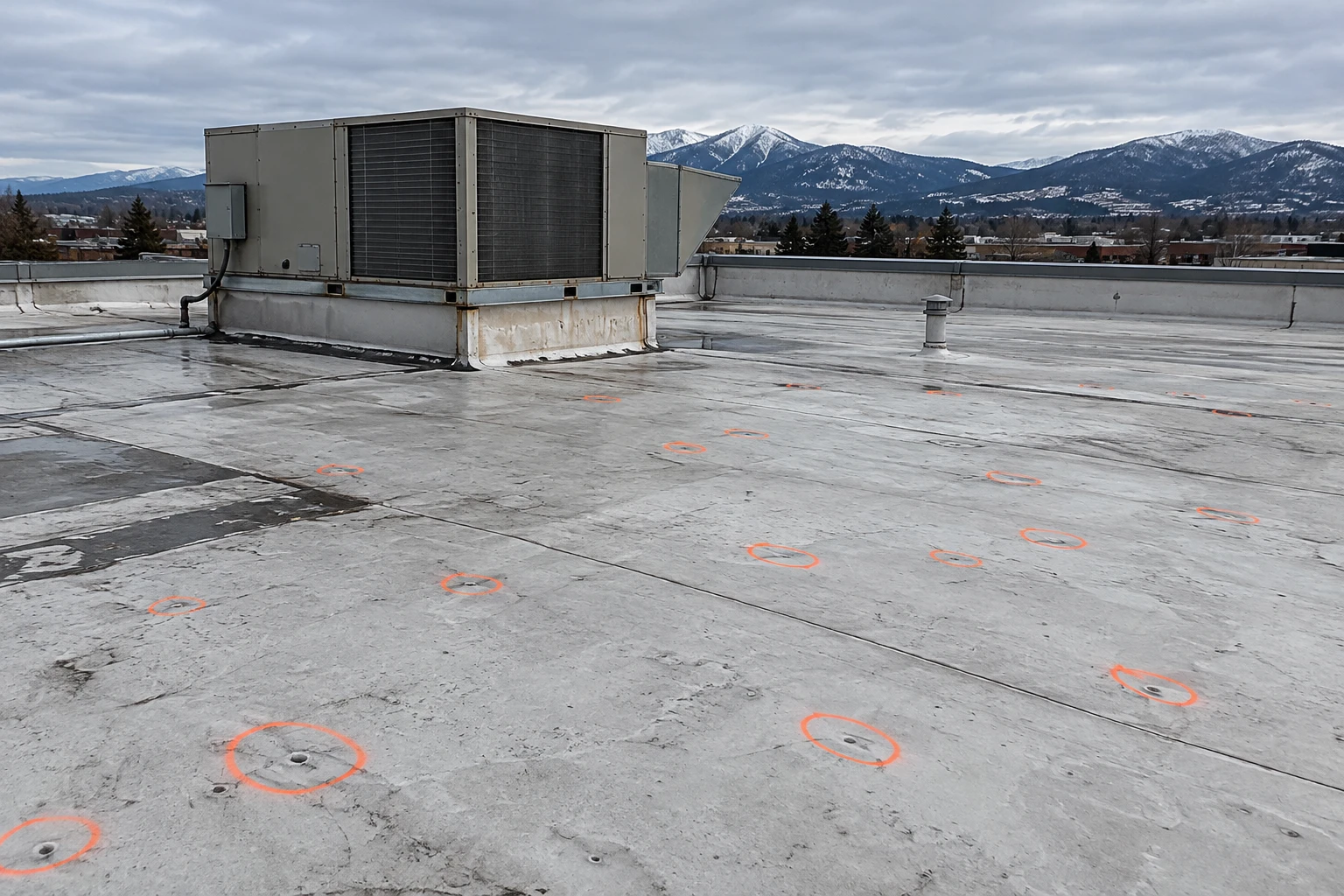
The file has five parts. A dated photo set taken before cleanup, from several distances and with a scale reference. A roof plan with each hit, tear and lifted edge marked and numbered. Test square counts that turn hail marks into a number per area. A log of emergency work with times, materials and crew. And a repair scope with quantities and unit prices, with temporary work on its own line.
Each part answers a question the adjuster will ask. When did it happen? Where is the damage? How much of the roof does it cover? What was done to stop further loss? What will the repair cost? When the answers are written down, the review goes faster and the dispute, if one comes, is about numbers and not about memory.
One extra item belongs with the file: the roof as it stood before the loss. A spring or fall walk from a maintenance program gives a dated baseline, and an owner who has one can show what changed. Without one, we build a reference from what we see and say plainly which parts we could not confirm. A claim can turn on that one distinction, and it is cheap to prepare before a storm and costly to reconstruct after.
What do we do on the first day?
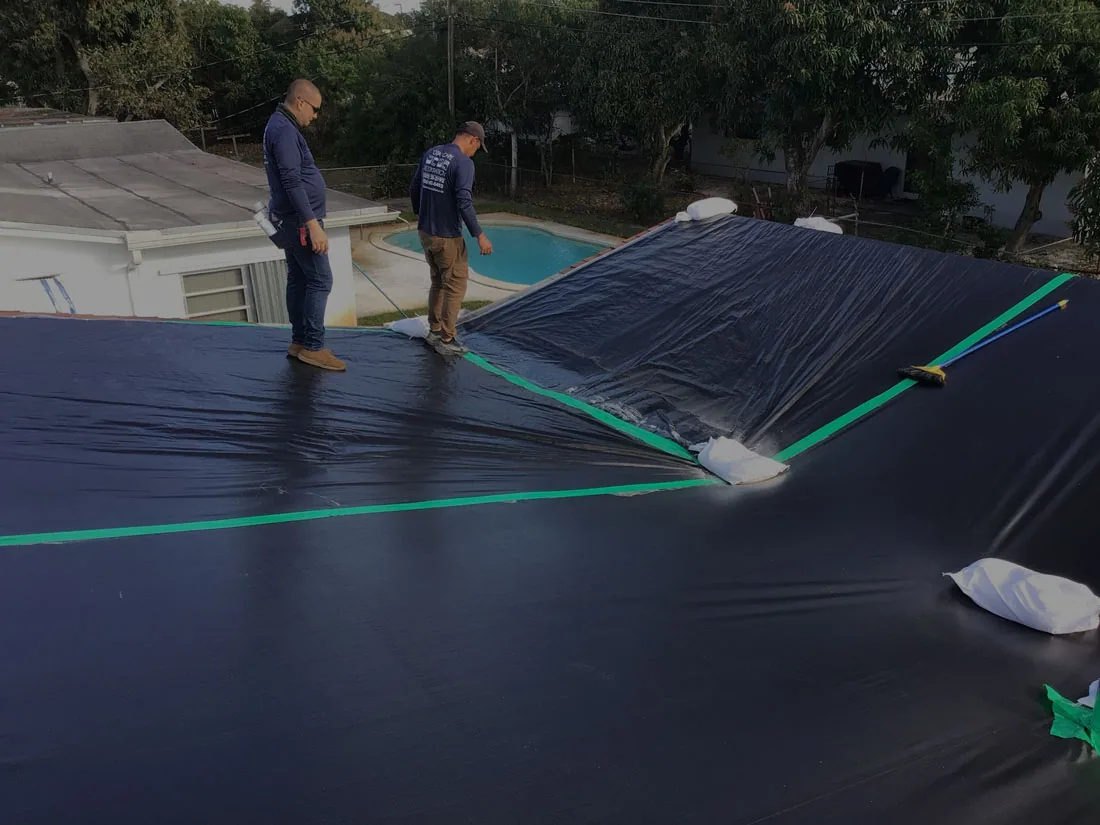
The first visit makes the roof safe, stops the water and photographs everything before it moves. We answer at any hour, and emergency roof repair starts with temporary measures. A tarp, a sealed opening and a cleared drain are mitigation, and a carrier expects the owner to limit further loss. A written log shows who did what and when.
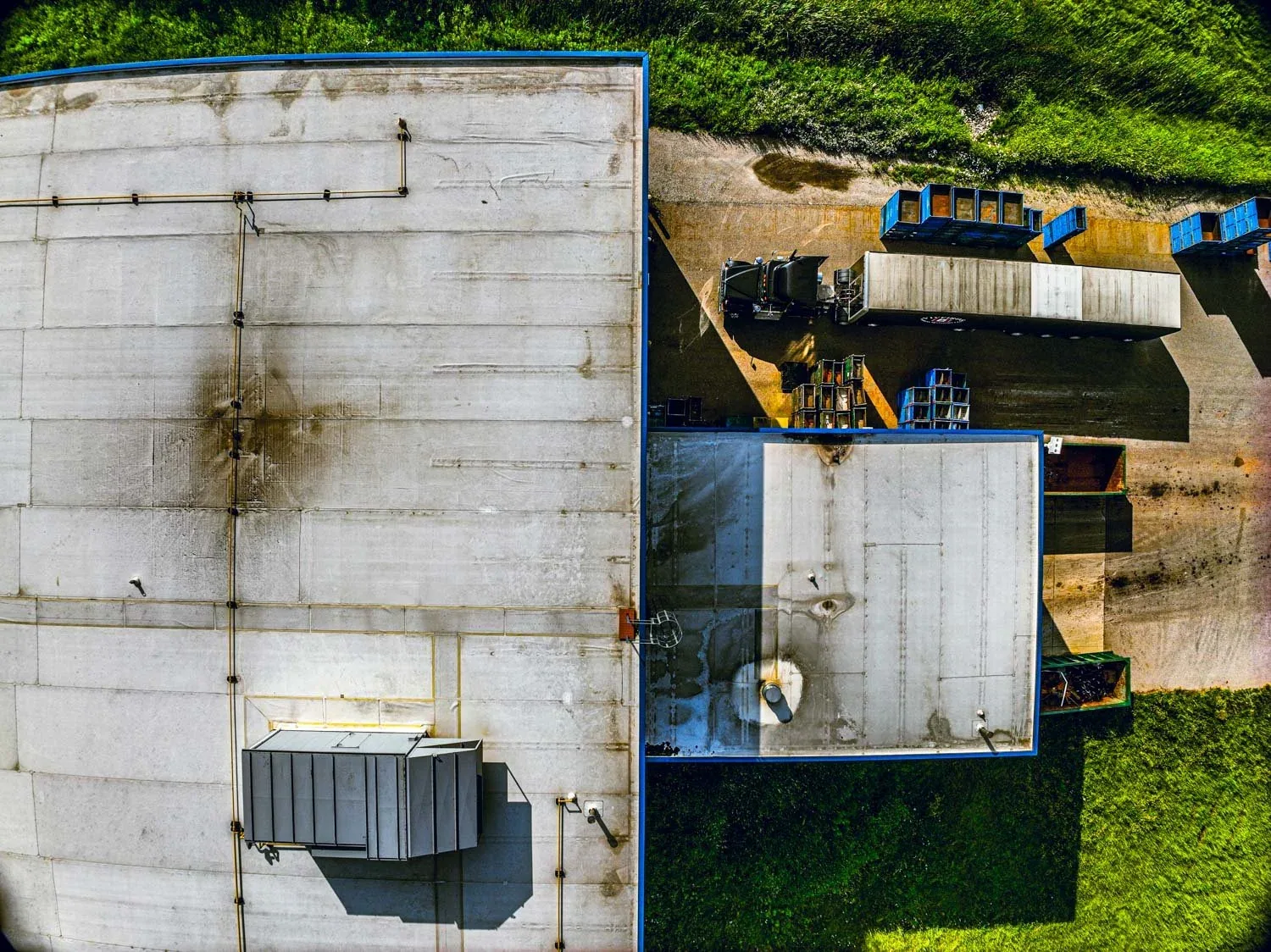
On large roofs we add a drone roof inspection. It shows the pattern of damage across the roof in minutes and keeps people off a wet surface. We then confirm the findings on foot, since a camera cannot press on a bruise. The first-day record is the baseline for everything after it.
How is storm damage separated from wear?
Carriers pay for sudden events and not for age. A Bozeman roof carries both. Between a record low of minus 46 degrees F and about 91 inches of snow a year, a Bozeman roof ages through a long run of freezing and thawing. A cracked sealant bead may be old. A fresh dent in a vent cap is not.
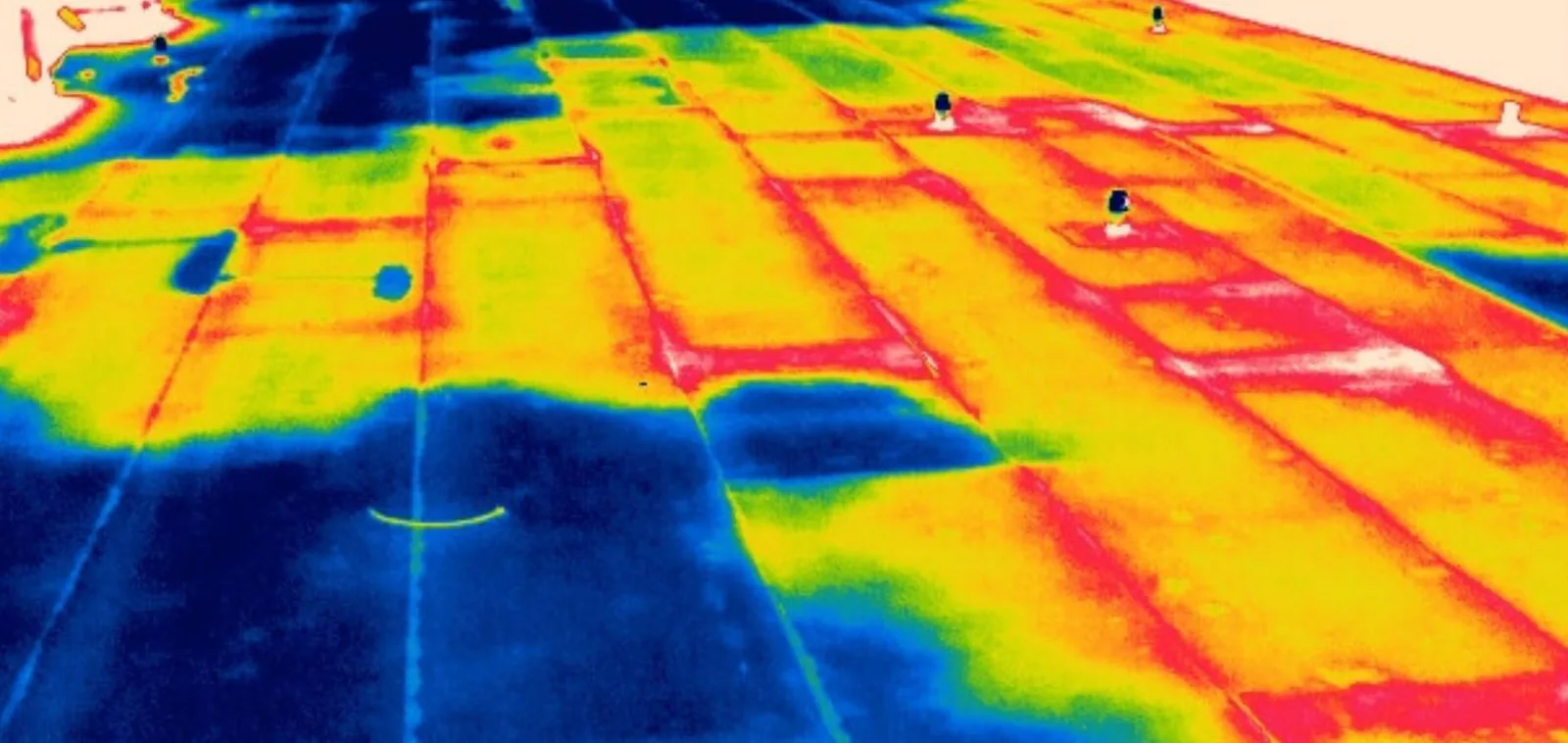
We record both and label them. Fresh hits show bright metal, clean breaks and crisp edges. Old wear shows dirt in the crack, oxidation and rust. A core cut and an infrared moisture survey show whether the layers below a hit are cracked or damp. The report tells the owner which items are in the claim and which are maintenance, and why.
What differs between hail, wind and snow claims?
Hail claims turn on counts and dates. The test square, the photos and the storm date tell the story, and the hail damage repair scope follows the map. Wind claims turn on direction and pattern. Sensors on Triple Tree Road southeast of Bozeman logged 65 mph gusts on August 29, 2023, and the 2013 hail storm carried 89 mph gusts across Belgrade and the north side. We photograph displaced material and lifted edges with their direction.
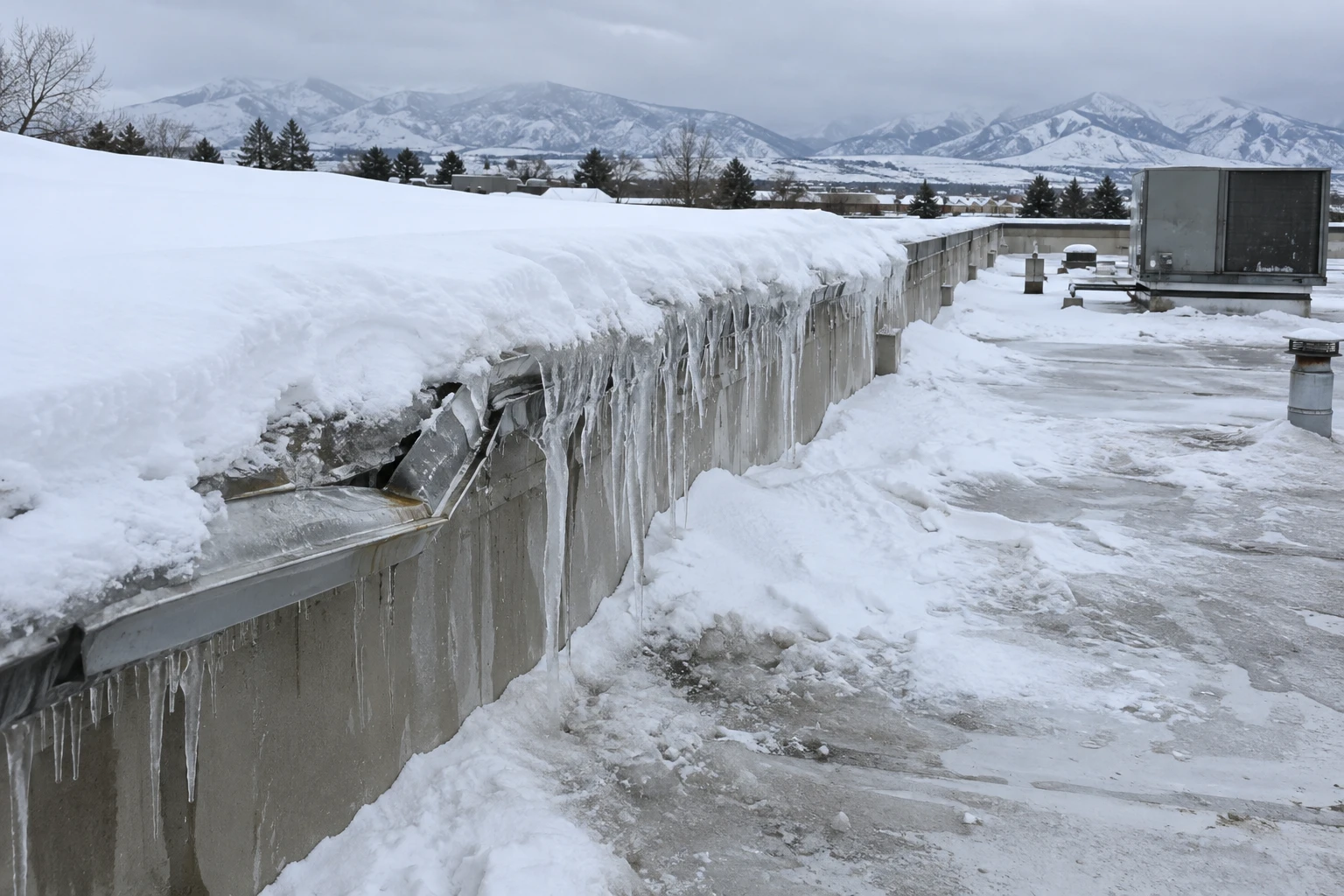
Snow claims turn on timing. Drifts melt, and the evidence goes with them. The design ground snow load listed for Bozeman is 50 psf, and we record drift depth, sag and slide damage before the thaw. The snow and ice damage repair record includes any structural concern, and we recommend an engineer where framing shows distress.
What does a scope for a carrier contain?
The scope names the roof system, the damaged areas by location and quantity, the repair method for each, the material and labor and any code or matching issue. Line items stay separate from temporary work and from maintenance, so the carrier can accept, adjust or deny each on its own terms. Where a repair needs more than the damaged area, such as when a patch would not match the surrounding age or system, the reason is in plain language with a photograph.
We offer a joint walk with the adjuster and bring the photo set so both sides start from the same record. If the carrier approves part of the repair, we give the owner a list of what is covered and what is not, with a price for each. Items that are not covered stay on the list with their prices.
Code items get their own line. Current code can change a replacement scope: the 2021 IBC sets Bozeman at 50 psf for ground snow and 110 mph for basic wind. If a new roof must meet requirements that the damaged roof did not, the scope marks that cost separately, with the reason, so the carrier can rule on it.
How does the file change by building type?
A multi-tenant retail roof on the North 19th Avenue corridor needs hit counts by tenant space, since each tenant may have its own claim. A campus roof needs counts by building. The June 2010 storm broke dozens of windows at Montana State University, mostly on west- and south-facing walls, and the roofs took the same storm.
Downtown masonry buildings with older flat roofs and tall parapets need a look at the wall joints. A warehouse near Belgrade needs a look at edge metal and fasteners. The method is the same. The checklist changes. Our roof condition reports give an owner a baseline from before a loss, which makes the next claim simpler.
What happens after the claim is paid?
The repair is scheduled into the weather window. Adhesives and coatings need steady temperatures, so permanent work goes between the thaw and the first hard freeze. The closing record, with before and after photos, material data and warranty papers, goes into the building file. Adjusters, carriers and restoration firms read that file in the same format.
The owner ends with a roof that is repaired, a record that shows it and a clear line between what the carrier paid for and what the owner chose to do.
Questions About Roof Insurance Claim Assistance
Do you decide whether a claim is covered?
No. The carrier decides coverage. We provide the record the carrier needs to evaluate the loss, and we give the owner a scope they can act on whichever way the decision goes.
Can you meet the adjuster on the roof?
Yes. We schedule a joint walk when the carrier asks for one. We bring the dated photo set and the roof plan, and we arrange access and safety gear in advance.
How long after a storm can a claim be documented?
The sooner the better. Marks soften in a thaw, debris moves and a second storm can confuse the record. Even a late walk is worth doing, and the report says what could not be confirmed.
What if the carrier approves less than the full repair?
We give the owner a written list of what is covered and what is not, with a price for each. The owner can then choose the full repair now or the covered part first.
What should we send to start?
The building type, its age, the storm date, any photographs and the carrier contact. A roof plan helps. We will plan the walk around where the damage shows.