
Membrane Puncture Repair in Bozeman, MT
Membrane Puncture Repair in Bozeman and the Gallatin Valley
A laboratory roof near the Montana State University campus has more going on above the ceiling than the building below it. Exhaust fans, chillers, a process vent, a small crew of technicians who climb up every few weeks with tools in their hands. By the end of a Gallatin Valley winter the path between the access hatch and the nearest unit is worn pale, and somewhere along it is a gouge nobody noticed. Who walks your roof, and what do they carry?
A good share of punctures come from traffic, not from weather.

What actually puts a hole in a commercial membrane?
The list is long and unglamorous. A dropped screwdriver. A ladder foot that slides. A tech who drags a toolbox across the sheet. A shovel blade that bites during snow removal. A screw that backs out of an equipment panel and points at the roof. Tree branches, trash lids, patches already thin from hail bruises, and the occasional bird or squirrel. Fasteners that work upward through the insulation can also push a bump into the sheet, and a bump under a boot becomes a cut.
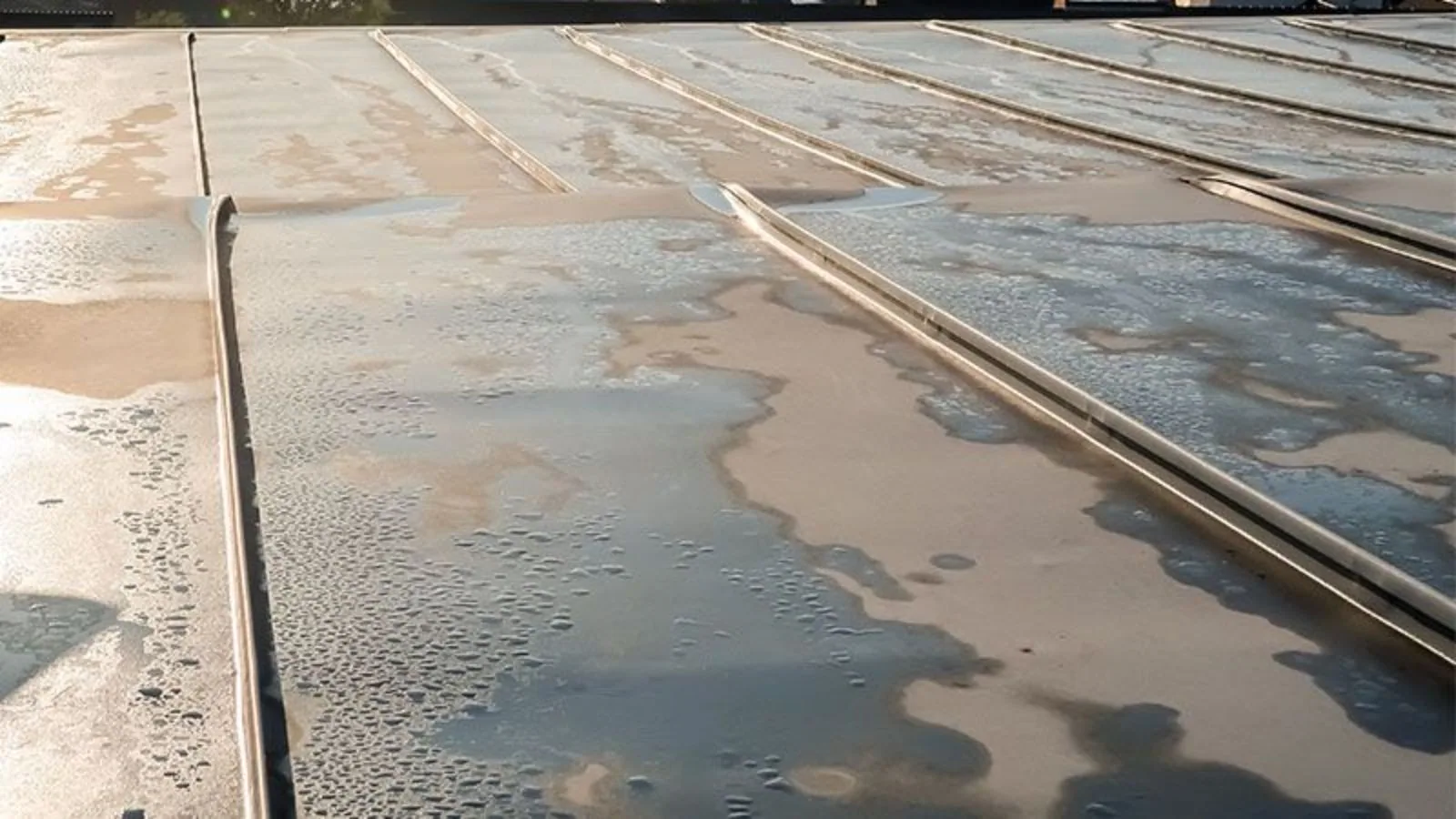
Foot traffic does damage without a single dramatic event. Repeated walking along a route wears the surface granules or coating, compresses the insulation beneath, and leaves a trough where water collects, the beginning of ponding. A ten-foot path to a rooftop unit can be the oldest part of the roof by condition even when the rest of the field is fine.
Why do punctures cluster after snow removal?
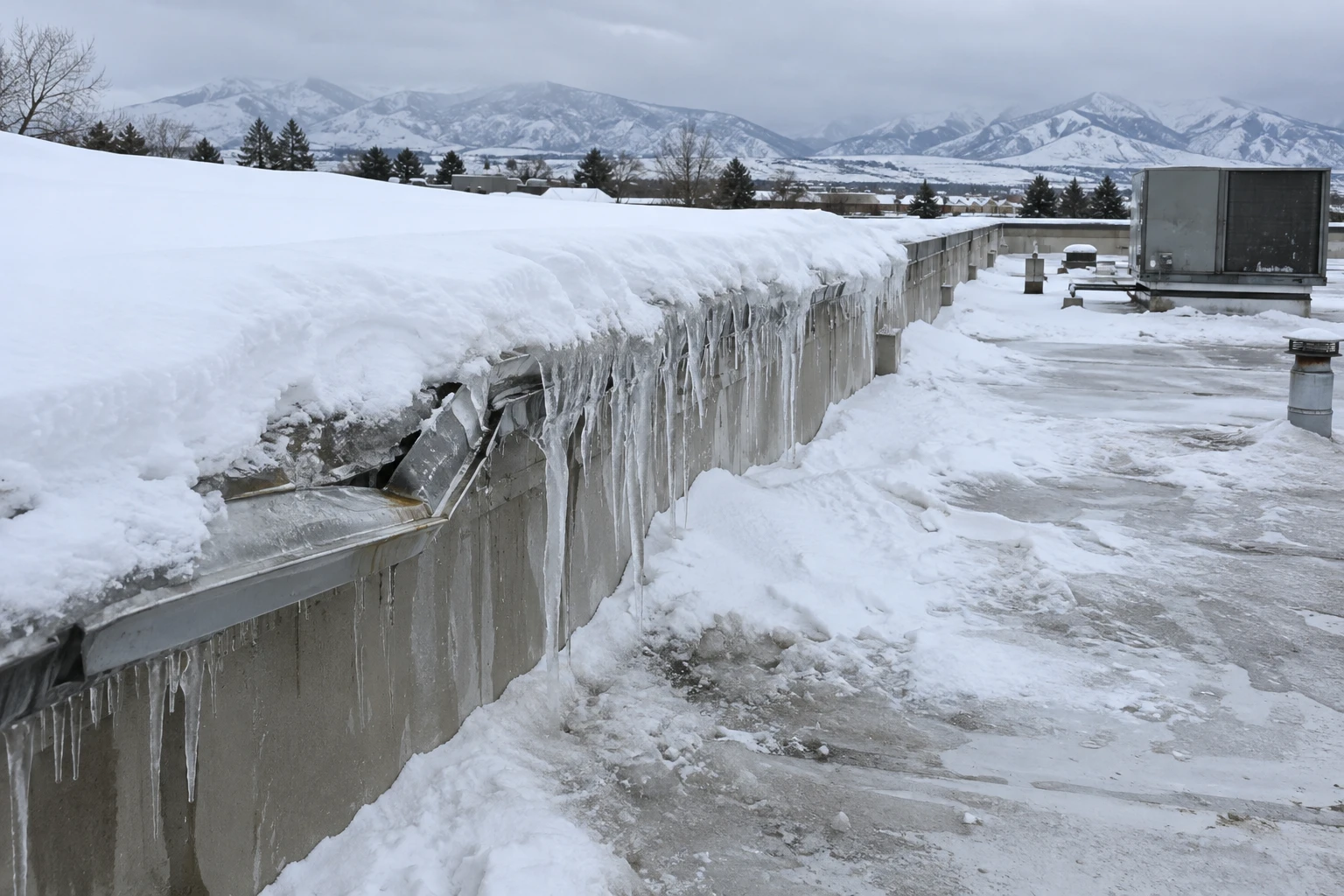
Because snow falls on roughly 54 days of a Bozeman year, and some of it is cleared off the roof by someone with a shovel. A metal blade scraped across a membrane in cold weather meets a sheet that is stiff and brittle, and the cut shows up as a thin line that only leaks when the snow melts. Ice melt, if spilled on the roof, can also attack some surfaces.
Where a roof has no clear routes or walkway pads, crews walk the shortest line and drag the shovel behind them. Heavy drifts bring snow and ice damage of a different kind. For routine clearing we recommend a plan that leaves a couple of inches on the roof, keeps metal blades away, and routes people around skylights and drain sumps.
How do you find a puncture that you cannot see?
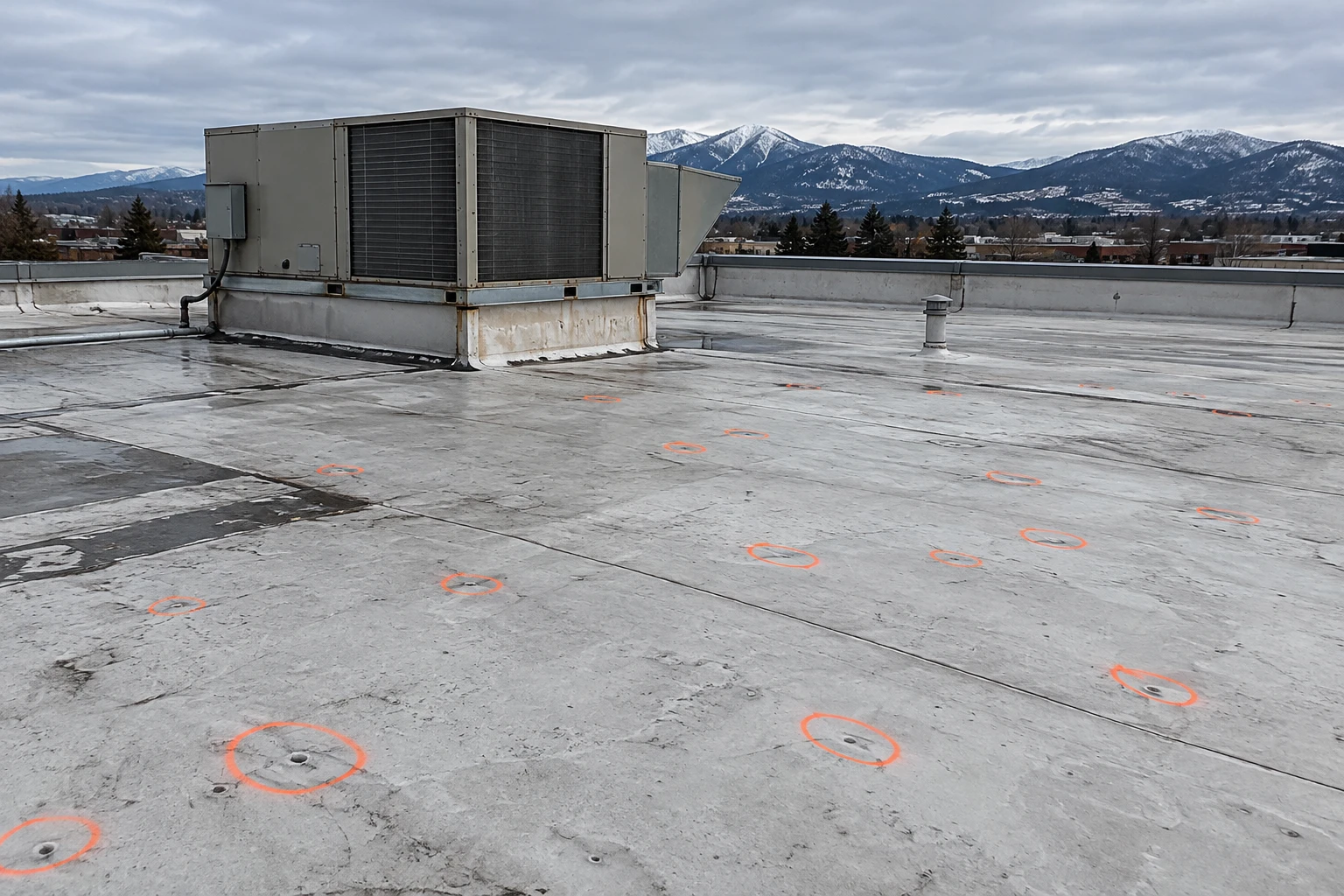
The first step is to read the water. If the stain on the ceiling sits below a rooftop unit or along an access route, we begin there. On the roof we look for punctures the way a flooring inspector looks for a nail: low-angle light across the surface, a gloved hand sliding over the sheet, and a slow walk along every route that leads to equipment.
When the hole is small or hidden under ballast, an infrared survey on a clear evening shows the cooler wet area in the insulation, and a core cut at the edge of that area confirms it. This matters most on a building like a research lab, where an unseen puncture over a sensitive room costs more than a roof repair.
How is a puncture repaired so it stays closed?
The patch is only as good as the surface under it. We cut a clean, round-cornered opening around a torn spot, remove damaged or wet insulation, fill the void with matching board, and lap a patch of the same membrane over the opening with generous overlap past every edge. On a welded system we fuse the patch with hot air and probe the edge. On a rubber system we clean, prime and bond a patch with splice adhesive or tape. On a built-up or modified bitumen roof we set a patch of matching cap sheet in cold-applied adhesive or by torch.
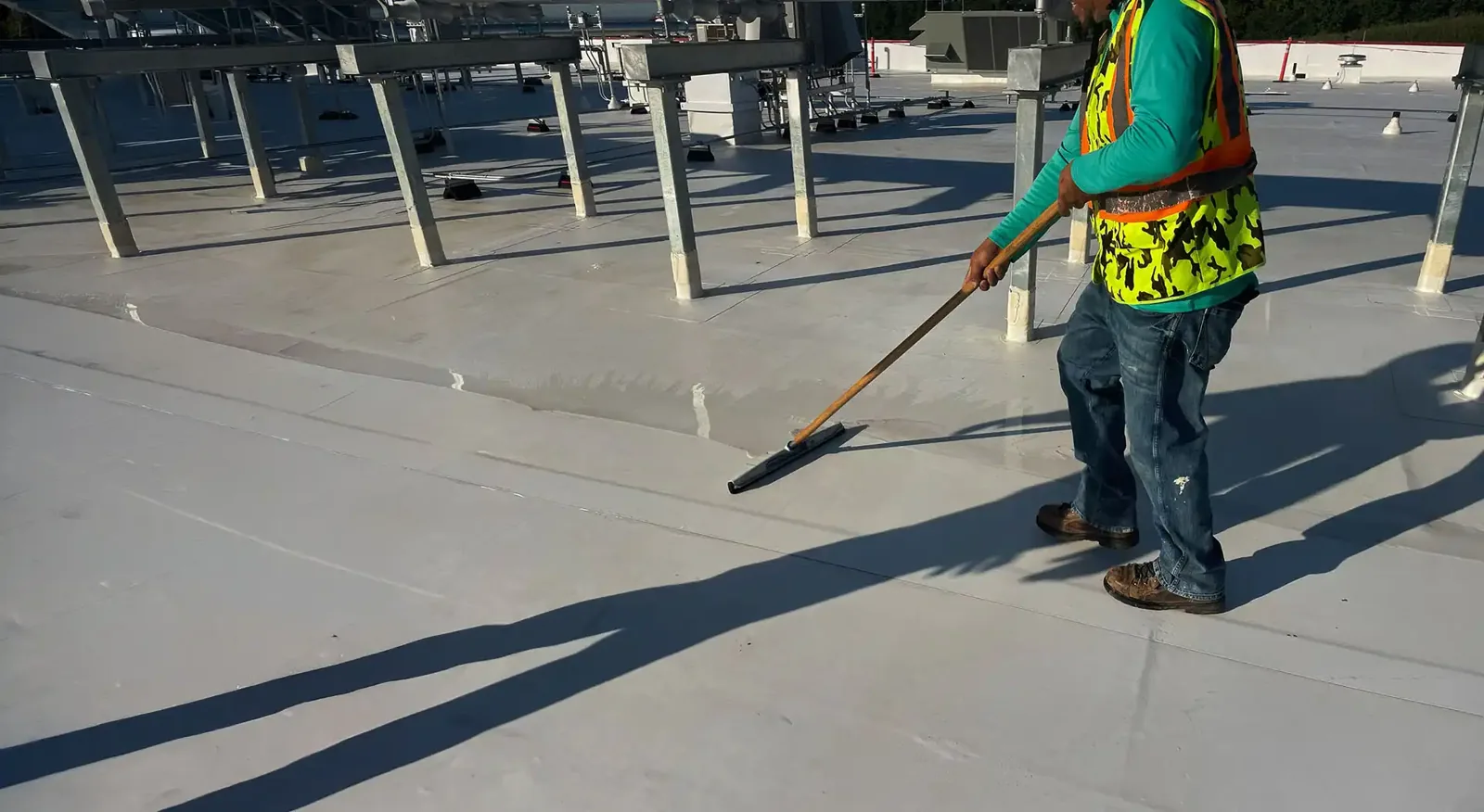
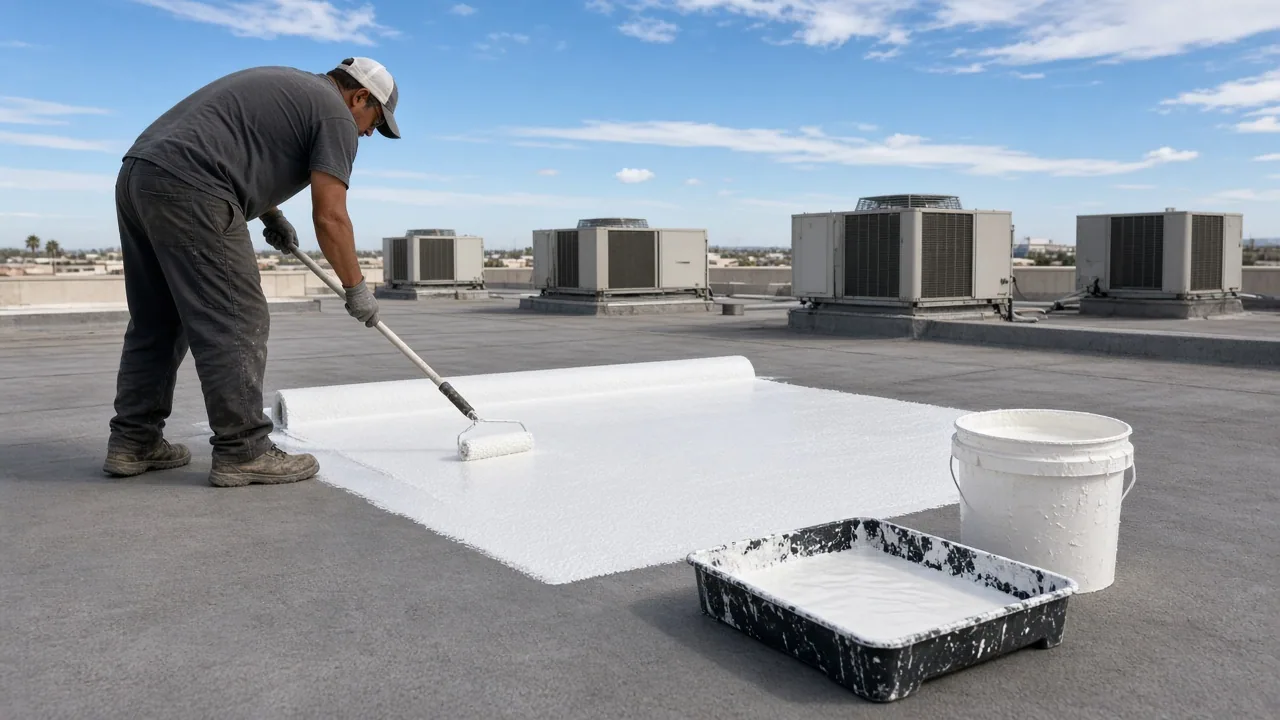
Small hairline cuts can be sealed with a liquid membrane, which flows around the damage and cures into a continuous skin. Larger gouges or worn paths are better handled by replacing the membrane in the damaged strip and adding protection. Every repair is photographed before and after, and we keep a mark on the plan so future crews can find it.
What stops the next puncture from happening?
Protection where the people walk. We install walkway pads along routes to equipment, add protection board under heavy loads, and set curb stops where ladders land. On a lab roof near the Montana State University campus, a marked walkway keeps technicians off the sheet at the points that wear fastest. Rooftop units on retail buildings along North 19th Avenue get the same treatment, since mechanical service happens there monthly. Our preventive maintenance visits keep an eye on those pads, because they wear out as well.
Where the membrane is worn but not breached, a coating can restore a protective layer. A reflective acrylic coating adds surface thickness over a pale, worn route. For a more demanding area we use a silicone system.
Who needs to know before a roof is opened up?
The people who live and work below it. Optics, laser, software and biotech firms operate in Bozeman, and rooms with precise instruments do not tolerate drips. Medical and lab tenants may need the work scheduled around testing cycles. We confirm the tenant's schedule, the location of sensitive equipment and the route of any access ladder before we cut into a roof, and a temporary cover goes on whenever the repair cannot finish in one visit.
Access is part of the plan. Rooftop work on an occupied building means ladders, hatches and sometimes a lift, and each of those can scuff a finished surface or block a tenant entrance. We lay protection along the route, stage materials where they do not cross a customer path, and clean the roof of cut scraps and loose fasteners at the end of each visit so the next storm has nothing to push into the sheet.

Questions About Membrane Puncture Repair
A technician dropped a tool on our roof. Do we need to inspect it?
Yes, the same day if you can arrange it. Check the landing spot and the path the tool took, because a gouge looks like a scuff until water gets in. A quick walk with a flashlight at a low angle usually finds the damage, and a ten-minute patch now is cheaper than a wet ceiling tile in February.
Can punctures be repaired in cold weather?
A temporary closure can, and we do those year-round. A permanent weld or adhesive repair needs the surface to be dry and above the working range of the material, so we pair a cold-rated sealant now with a permanent patch once the roof warms. Skipping the temporary step means water sits in the hole until the thaw.
How many punctures does a roof tolerate before replacement is better?
There is no set count. We look at whether the holes come from one cause, such as a heavily used route, or from an aging membrane that is thin everywhere. Scattered damage on a sound sheet is a patch job. Damage that spreads to new areas every season tells us the sheet is wearing out.
Do walkway pads void a membrane warranty?
Properly installed pads usually support a warranty, since manufacturers make and approve them for exactly this purpose. We choose pads compatible with the system on your roof and attach them the way that system calls for, then record their location so they can be replaced when worn.
Who is responsible when a contractor damages the roof?
That depends on the contract between the owner and the trade, which is why we photograph the roof before other trades begin. A dated record of the roof's condition before and after a mechanical or electrical visit gives you something to hand the other contractor. We repair the damage and keep the record.