
Snow and Ice Roof Damage Repair in Bozeman, MT
Snow and Ice Roof Damage Repair in Bozeman and the Gallatin Valley
A hotel roof in Big Sky can look magnificent in January, buried under a clean white blanket. By April the same roof may be a list of repairs: a snow guard sheared off its mount, a drain sump packed with ice, a gutter peeled from the fascia, and a long damp stain on a ceiling that had been dry all winter. Snow is not just weather on these roofs. It is a load, a freezer and a slide waiting to happen. When the snow left yours, what did it take with it?
I start the spring walk at the eave, because that is where the ice lets go.
How much weight does the snow put on a roof?
More than the number of inches suggests, because snow packs, soaks and refreezes. Bozeman logs some 54 snowy days and 91 inches a year, with December the heaviest month, and roof loads are figured from a listed 50 psf ground snow value for the city. Big Sky averages about 162.7 inches of snow, and Bridger Bowl reports around 350 inches in a season, so mountain buildings face loads far above anything in the valley floor.
Rain falling on a deep snowpack is the dangerous case, since the snow soaks up water like a sponge and gets heavier without getting deeper. Drifts add to this. Wind piles snow against a parapet, a rooftop unit or a higher wall, and the weight on that strip can double or triple. A roof built for even snow can be asked to carry something very uneven.
Where do ice dams form on a commercial roof?
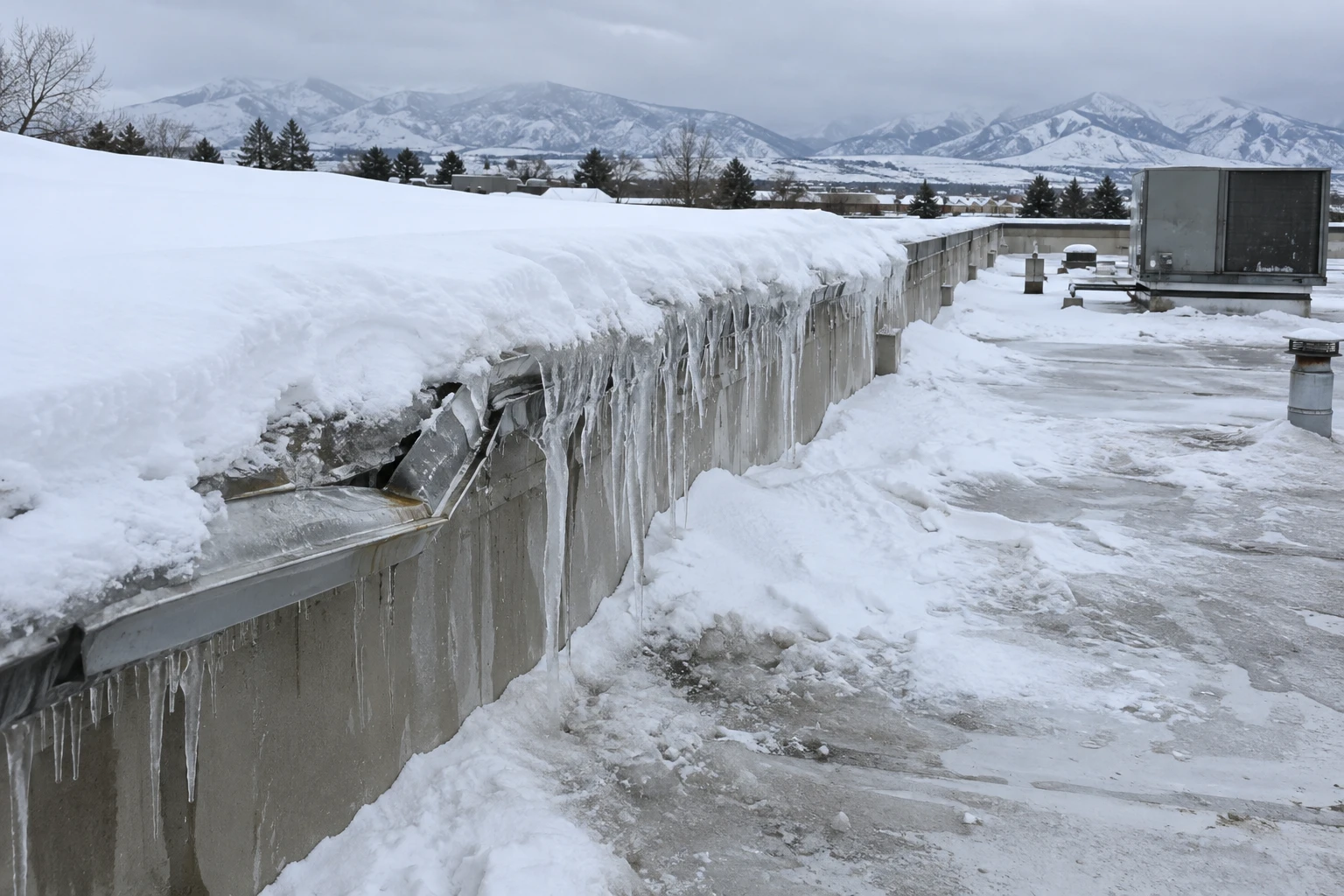
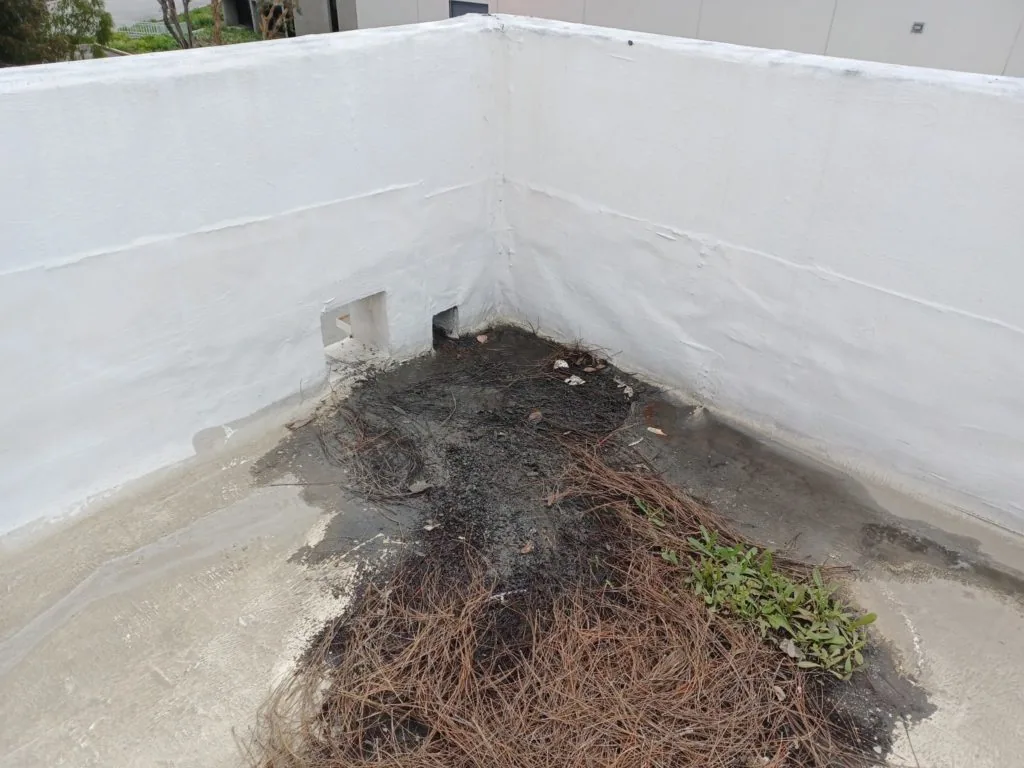
At the eave, at a drain and anywhere heat from the building warms the roof surface above the snow. Melt runs down to the cold edge, freezes into a ridge of ice at the eave and traps the next melt behind it. Water backs up under flashings, laps and seams and finds its way into the insulation. On low-slope roofs the same process occurs at scuppers and interior drains, where a plug of ice blocks the outlet and the roof starts to pond.
Poorly insulated areas and air leaks at the deck make this worse, because they heat the snow from underneath. A thaw cycle on a sunny day melts the surface, the cold night refreezes it, and each round of freeze and thaw pushes water a little deeper. By March, a lap that held in November has opened, which is the start of seam failure.
What does snow damage on a flat roof look like?
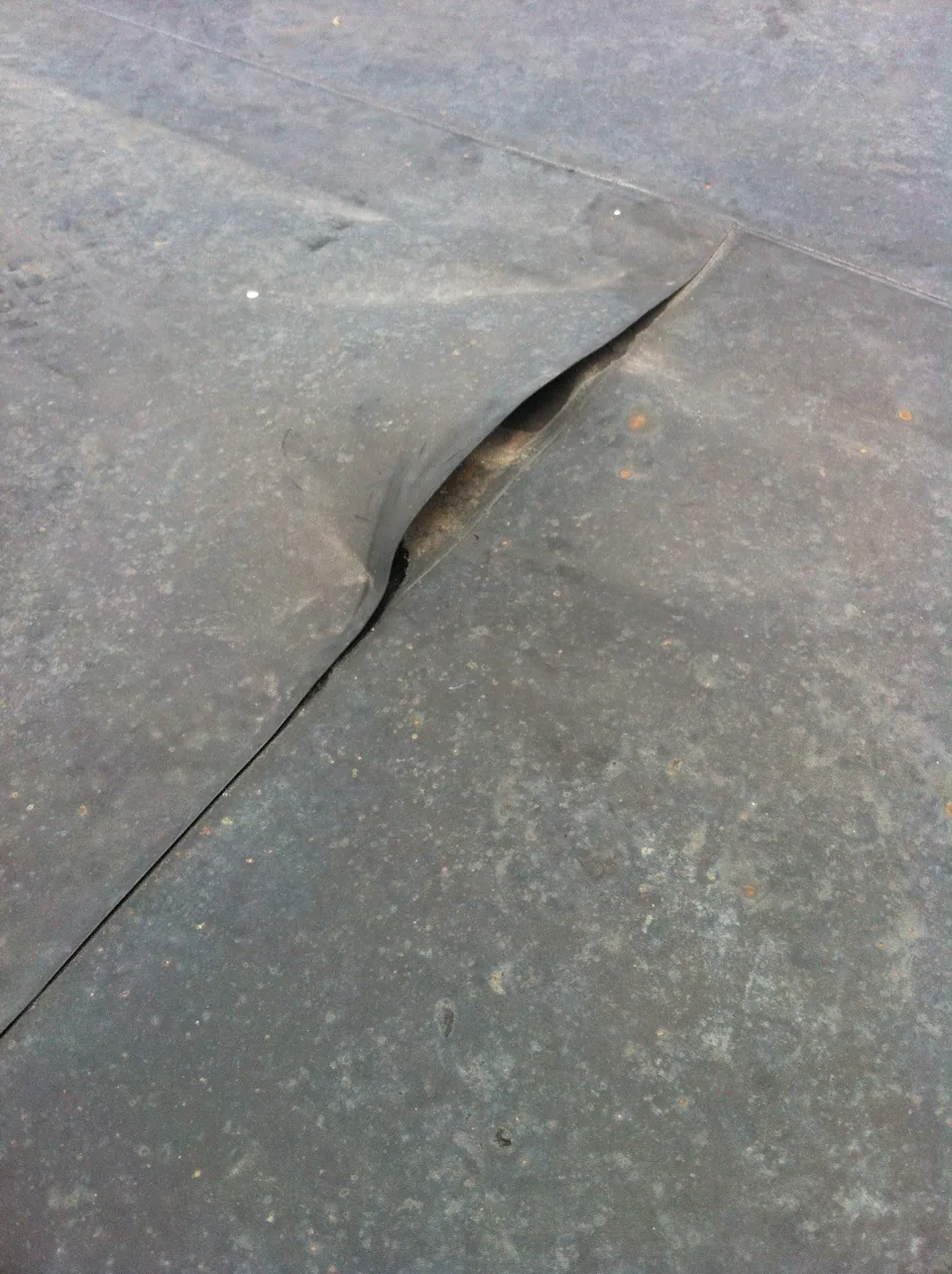
It leaves a recognizable list. Sheared snow guards and bent gutter hangers. Torn flashing where a slide hit a wall. Crushed insulation or a dished deck where drifts sat for weeks. Rooftop unit curbs pushed out of line. Split seams where the membrane was pulled tight by the cold. Cracked or lifted coping along a parapet that has held the heaviest drift. Wet ceiling tiles that show up once the thaw starts, or the edge damage that wind drives into a drift.
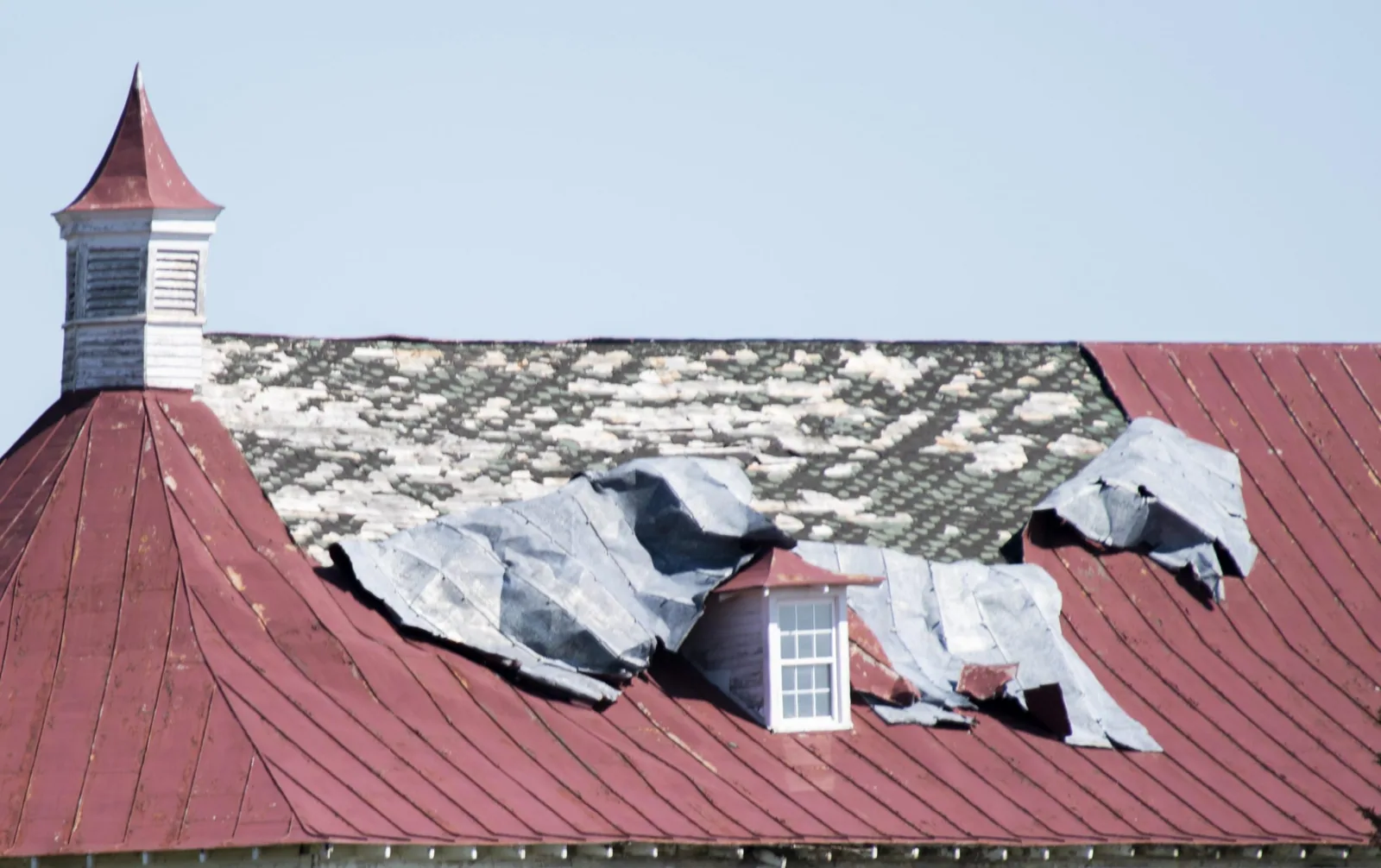
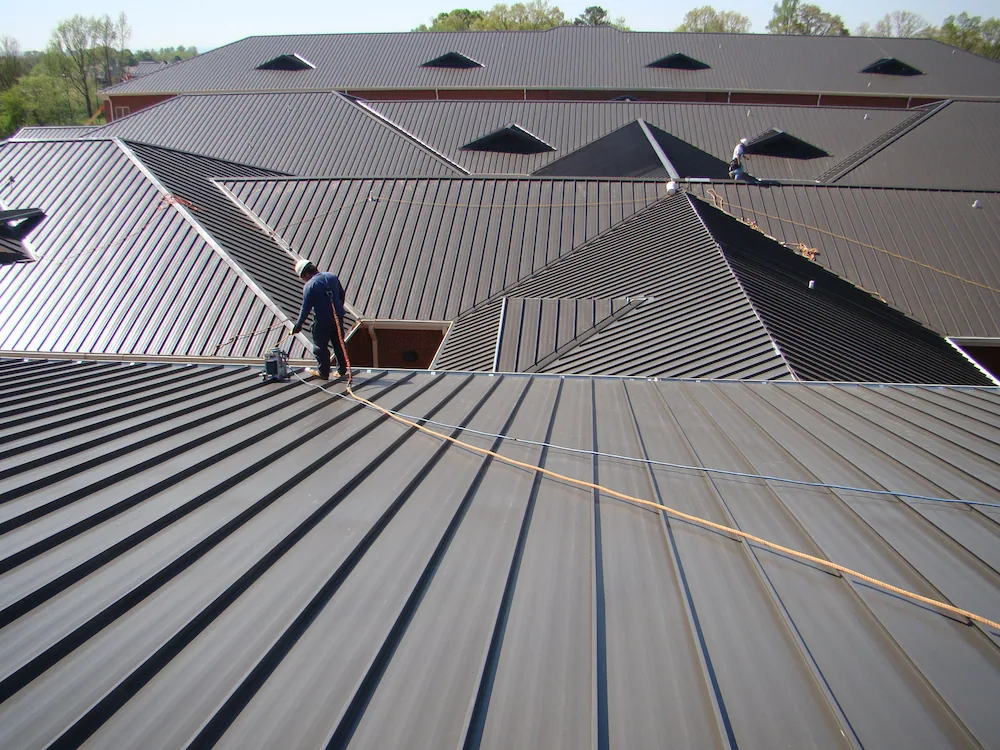
On standing seam metal, sliding snow tears off ice and snow retention parts, bends panels at the eave and strips fasteners. When a mass of snow breaks away from a metal roof and drops onto a sidewalk, it is a safety problem as well as a repair. Entrance canopies, loading docks and walkways below a roof edge need attention first.
What do we repair, and in what order?
Safety first, then water, then structure. We clear hazardous ice from the roof edge and entrances. We reopen frozen drains and scuppers. We close leaks with temporary patches so water stops entering. Then, when the roof is dry and warm enough for materials to bond, we do the permanent work: replace torn flashing, reattach coping, restore drains and scuppers, fix sheared snow guards and replace damaged sections of membrane.
If the load dished the deck or cracked the structure, we bring in an engineer before touching the roofing. When a drift always forms at the same spot, we look for a fix at the cause: a taller parapet, a drift fence, extra drains, or a heat-cable run at the eave. Repair that ignores the cause comes back every winter.
Do mountain and valley buildings need different fixes?
Yes. In Big Sky Mountain Village, where the base sits near 7,400 feet and the resort buildings include the Summit Hotel and the Village Center Complex, snow falls in every month except July and August. Roofs there need retention, heavy flashings and steep-roof details that valley flat roofs rarely require. Big Sky Meadow Village, about 6,200 feet, sits a little lower but sees the same long winters. Bridger Canyon, where the ski area base sits at 6,100 feet, also climbs well above the valley floor.
Down in the valley, downtown Bozeman sees far less snow than the mountain, and its roofs deal with repeated thaw cycles, which are harder on seams and flashings than a deep, steady freeze. Livingston, east over Bozeman Pass, gets about 56 inches of snow a year plus some of the strongest average wind of any U.S. airport station, which loads edges and exposed equipment.
What should be done before the next winter?
Clear drains and sumps before the first snow, confirm snow guards and retention are attached, and fix open flashing and loose coping. Our preventive maintenance visits cover those checks in the fall and a second walk after the first heavy melt, so damage is found while it is small.
Walk the perimeter from the ground in late October with binoculars. Look for sagging gutters, edge metal that sits proud of the wall, and drains with debris on top. Mark any rooftop unit whose curb sits close to a parapet, because that is where the next drift will pile. A twenty-minute look at that stage costs far less than a ceiling replacement in March, and it gives us a list to work through before the snow arrives.
For buildings with several roofs, such as a school or a medical campus, we rank the roofs by consequence: the areas above classrooms, patient rooms and server closets go first, and storage or garage roofs follow.
Questions About Snow and Ice Roof Damage Repair
Should snow be shoveled off our flat roof?
Only when an engineer or the building's design load calls for it. Shoveling risks cuts to the membrane and can hurt people, so we prefer to watch for drains and drifts and clear only what must go. If clearing is needed, plastic tools and a careful route protect the sheet.
What is the sign that a roof is overloaded by snow?
Doors and windows that bind, ceiling tiles that sag, new cracks in interior walls and a roof surface that looks dished are all warnings. Water ponding where there was none last year is another. If any of these appear during a heavy winter, call a structural engineer and have the roof checked after the load is reduced.
Why does our loading dock roof keep icing at one corner?
A warm airflow, a leaking dock door seal or a downspout that discharges onto the surface can feed the same corner all winter. The cure is to find the source of the water or heat. We check seals, roof penetrations and the drainage path, then fix the cause instead of chipping ice every week.
Do heat cables solve ice dams?
They help in specific places, such as a scupper, a valley or a short eave, by keeping a channel open for melt to leave. They do not replace insulation, air sealing and clear drains. They also need electric supply and maintenance, so we use them where a mechanical fix will not do.
Is it too late to repair snow damage once spring arrives?
Spring is the right time to walk the roof. Repairs made after the thaw, while the cold-weather adhesive window is open and before summer heat, give the new work the longest life. Leaks that show during melt should be closed temporarily at once, and the permanent fix scheduled for the first dry stretch.