
Roofing for Hotel Owners and Hospitality Groups in Bozeman, MT
Hotel Owners and Hospitality Groups in Bozeman and the Gallatin Valley
A hotel roof is judged by the guest in room 312. Water through a ceiling at two in the morning becomes a refund, a review and a room out of inventory, and in a valley that sees about 91 inches of snow a year in Bozeman, and far more at Big Sky, the roof is working against the calendar. Snow slides off a pitched section onto a porte-cochere, ice forms at the eave over the front door, and a flat roof over the pool or the kitchen takes meltwater from every direction.
The question for an owner or a general manager is which rooms or public spaces sit under the roof sections that fail first, and how soon after a thaw the water appears. That answer tells me where to look and in what order.
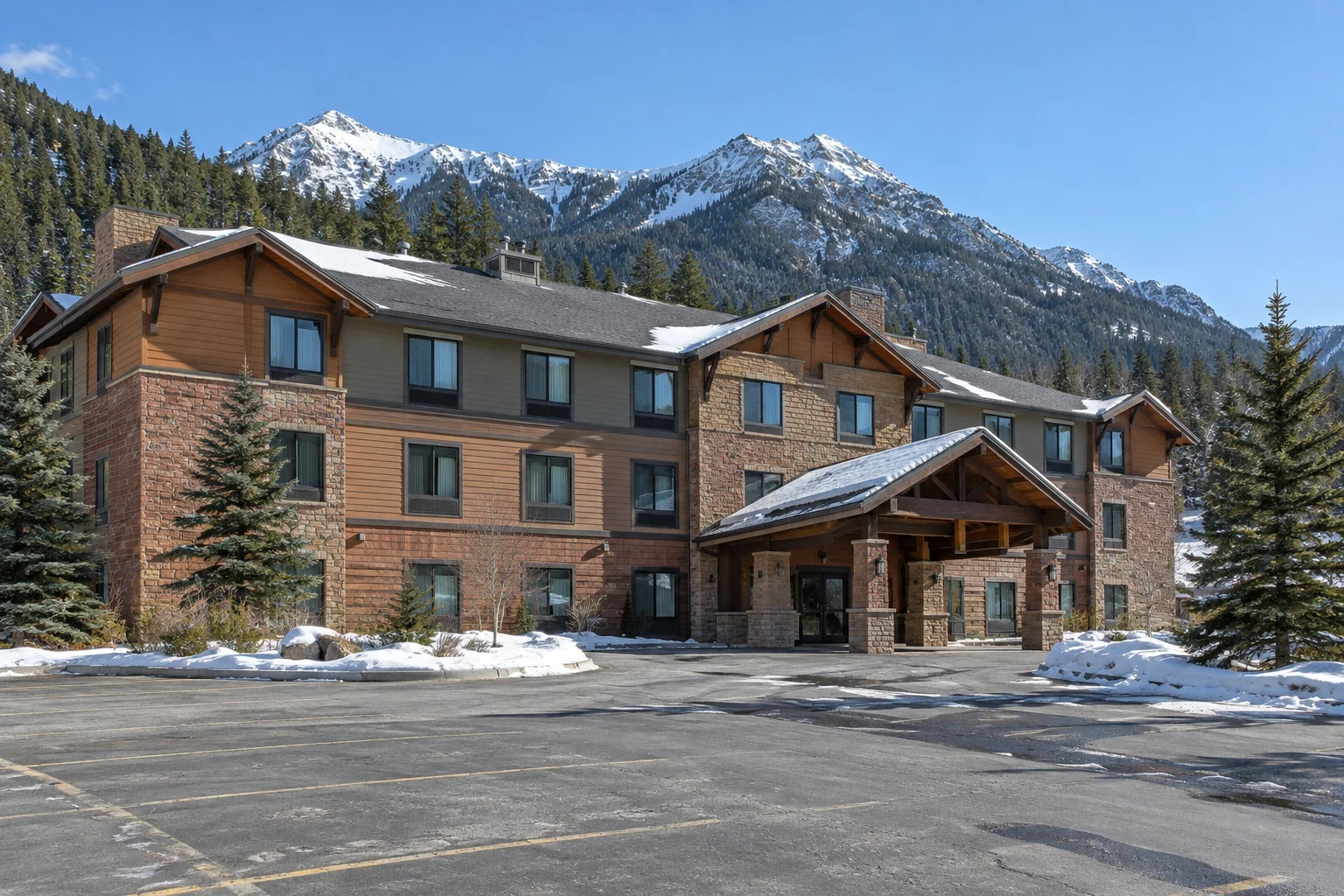
Why does one hotel carry so many roofs?
A hotel is rarely one building. A main block with guest floors, a lobby wing, a porte-cochere, a pool enclosure, a kitchen, a meeting room and mechanical penthouses each have their own roof shape. Pitched sections shed snow in sheets. Flat sections hold it, and low roofs below tall ones collect drifts. Each junction between those shapes is a flashing problem and a snow-load problem at once.
Records are usually spread across owners, brands and contractors. We take a roof-by-roof inventory, note which sections are covered by a warranty and which are not, and tell the owner where to start. A hotel owner who has to explain the roof to a brand standards team needs a clear picture, and we write the report that way.
Ownership shapes the work. A hotel held by an investment group answers to the same reporting habits as other investor-owned properties, and a hotel run by a management company needs the same roof file a property manager keeps for other buildings. We write the findings so an asset manager in another city can read them without a site visit.
What does snow shedding do to people and property?
Sliding snow is a safety issue. A sloped metal section above an entry or a walkway can drop a load that injures a guest or damages a vehicle. Snow guards and fences break up the slide and hold the snow on the roof, where it melts at a rate the drains can handle. We check guard spacing and attachment on every pitched section above a public space, and we recommend changes where the pattern shows gaps.
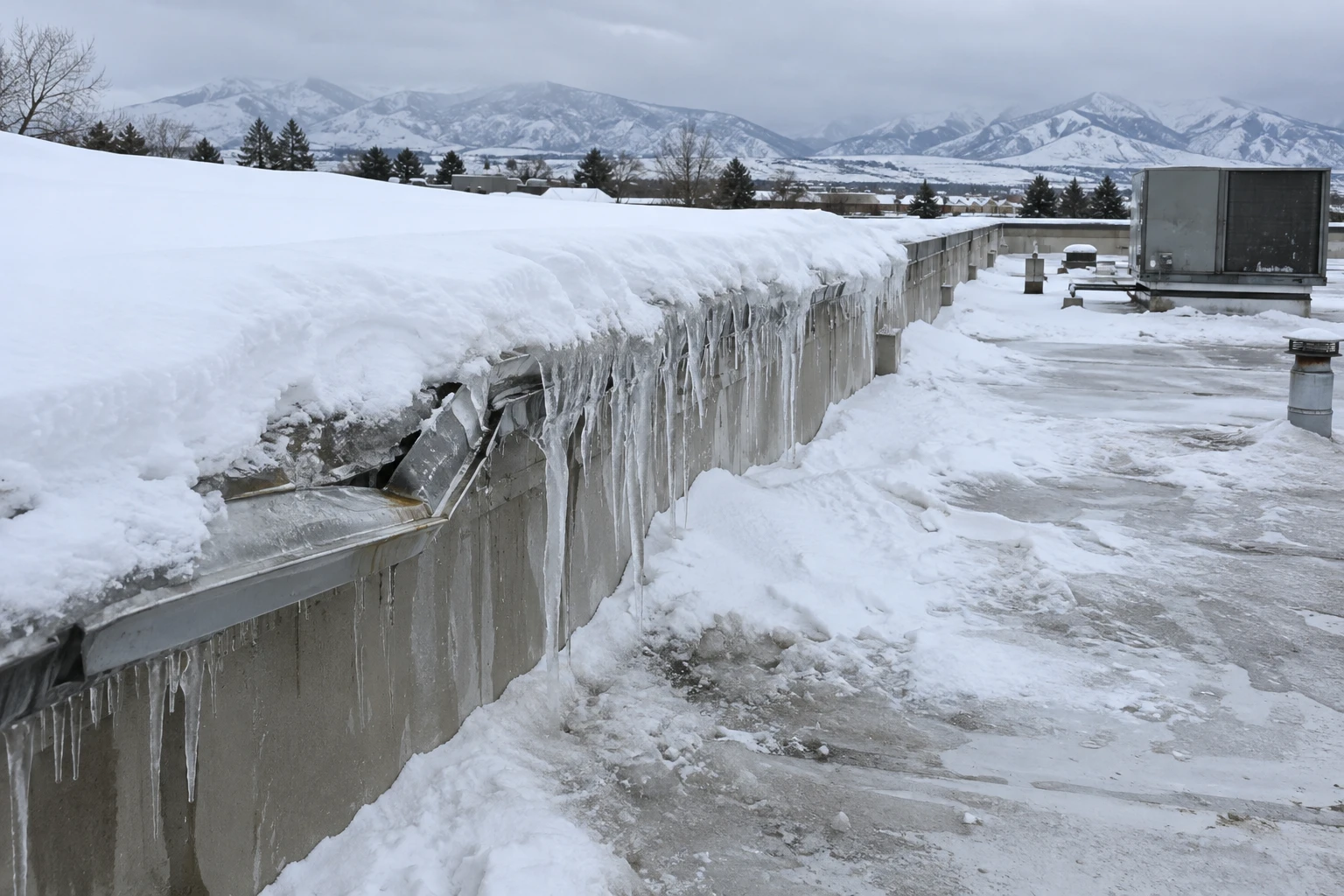
Ice at the eave is the other piece. Heat from the attic or the ceiling cavity melts snow from below, water runs to the cold edge and freezes into a dam, and meltwater backs under the shingles or panels. Snow and ice damage repair starts with ventilation, insulation and drainage at the edge, not with the surface.
Entries need a plan of their own. A canopy that sheds snow onto a drop-off lane should have a melt route that does not run across the walking surface, and a drain at the base of a roof valley should be heated or cleared before freezing weather. Guests notice an icy walk before they notice a stained ceiling, so the entry gets attention first on every walk.
Do resort-area roofs need a different plan?
Yes. Snow falls at Big Sky in every month except July and August, about 162.7 inches in a year, and its Mountain Village base sits near 7,500 feet. The Mountain Village area holds the ski resorts and buildings such as the Yellowstone Conference Center, the Summit Hotel and the Village Center Complex. Heavier snow, colder nights and longer winters change the details: stronger snow guard systems, more attention to roof drainage under deep accumulation, and access plans for a roof that may be buried.
Roofs at Big Sky Mountain Village and nearby areas start with the load: what the structure was designed for, what has accumulated and where it will slide. Snow removal itself should follow a plan that protects the membrane, because shovels and blowers can slice a sheet. Bridger Bowl, which reports about 350 inches of snow a season, is another reminder of how much weight the mountains carry.
What about older and historic lodging?
The Gallatin Gateway Inn, opened in 1927 and listed on the National Register of Historic Places in 1980, is a reminder that hospitality buildings in the valley can be old and significant. A historic property carries approvals, material limits and details that cannot change without review. Downtown Bozeman's Main Street area takes in the Bozeman Brewery and Cooper Park historic districts, where older flat-roofed masonry buildings are common.
On those buildings we match the roof details to the property: parapet copings, internal drains and roof edges are repaired in ways the building and its approvals allow. We document concealed conditions with photographs, because a historic owner may need the record for a preservation file.
Lodging in older buildings can have older roof drains and gutters. Where gutters hang on a wall below a roof edge, ice can pull them loose, and meltwater then runs down the wall into the masonry. We check hangers, downspout connections and the wall below, and we record any staining that points to a long-term leak.
When is the roof worked on a hotel that stays open?
Low season is the window, and it is narrow in a valley with two busy seasons. Summer travel runs through the airport, which handled about 2.8 million passengers in 2025, and ski season fills the mountain properties. That leaves spring and fall for roof work, with a cold-weather adhesive window that closes in October. We plan by wing, close off the rooms beneath active areas, and agree on quiet hours so guests are not woken by a tear-off.
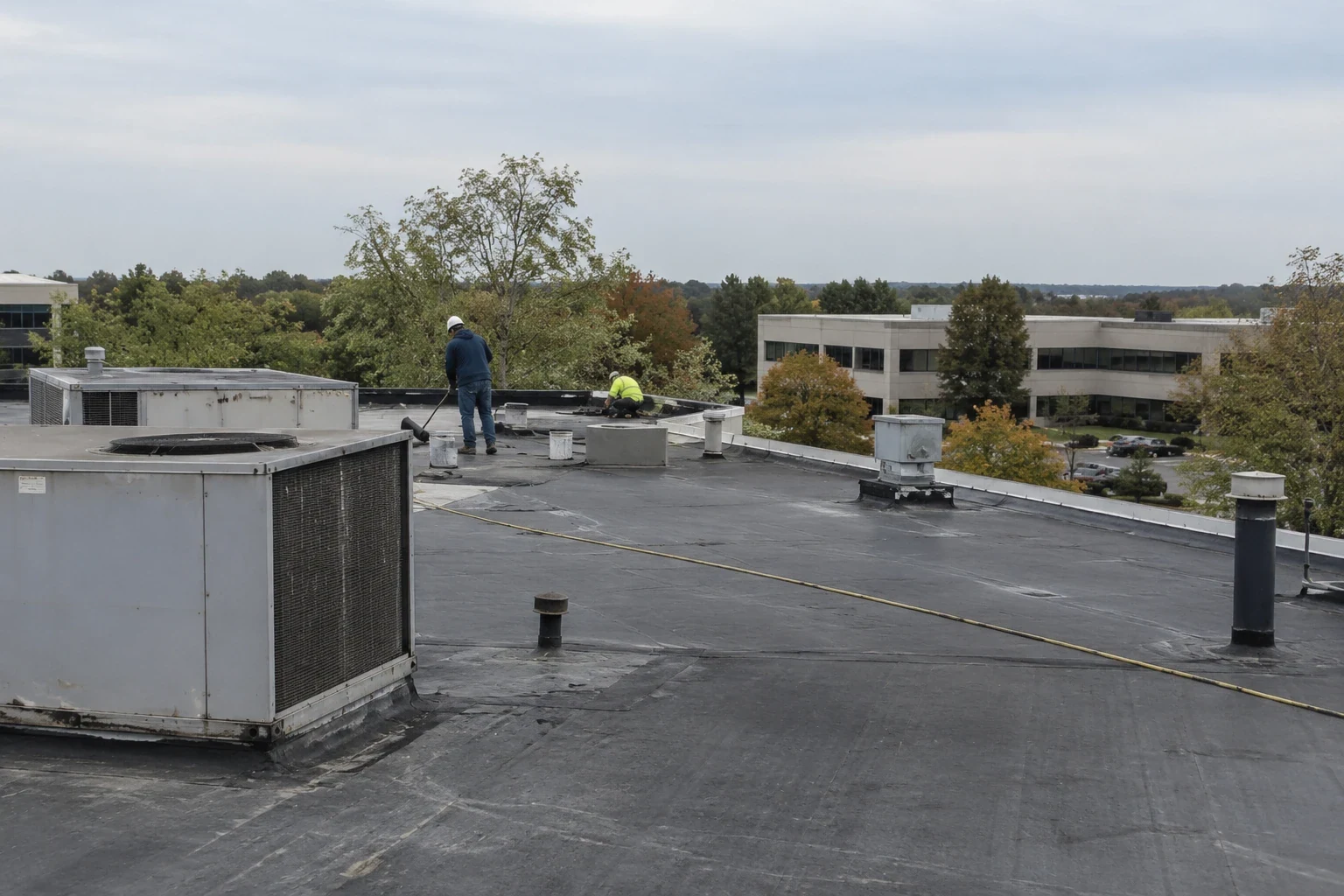
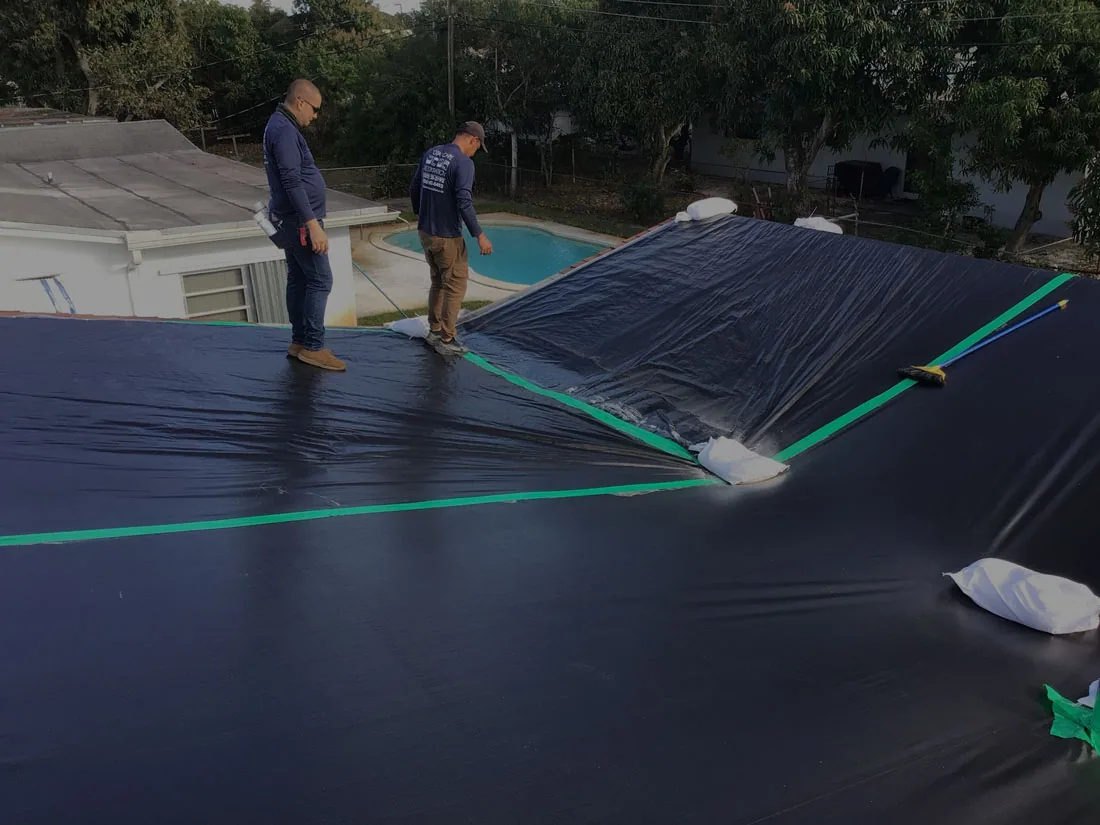
For emergencies, a dry-in goes on the same night, and emergency roof repair includes interior protection for the room below. The permanent repair is scheduled for the next quiet window. Reroofing an occupied building is mostly a scheduling problem, and the plan we write lists dates, rooms affected and who communicates with guests.
Large events and weddings affect the calendar as well. The 4,800-seat Belgrade Special Events Center is one example of how venues near the airport draw visitors, and lodging near them fills on the same dates. We ask for the event calendar when we plan and avoid scheduling noisy work on the weekends that matter most to the property.

Questions About Hotel Owners and Hospitality Groups
Which rooms should we take out of inventory during a leak?
Take out the rooms directly under the wet area and any that share the ceiling cavity. Water can travel along framing to a room several feet away. We locate the entry and map the wet area so you can return unaffected rooms to service quickly.
Our brand has roof standards. Will you follow them?
We read the brand's standards against what we find on the roof and flag any conflict, such as a membrane color, a warranty term or an insulation level that does not suit the local snow. Send the document and the property plans, and we will prepare a scope that satisfies both.
Can snow guards be added without replacing the roof?
In many cases, yes. Guards attach to the roof panels or seams in a pattern set by the slope, the material and the snow load. They need a check on the attachment method so the roof is not punctured. We design the layout and install it as a separate project.
How do we handle a pool or kitchen roof that keeps leaking?
These roofs fight heat, moisture and chemicals. Pool areas have high humidity that condenses under the deck, and kitchens produce grease. We look at ventilation and vapor control along with the membrane, because patching the surface does not stop condensation.
When should we plan a hotel reroof?
Start the survey a year ahead. That gives time for approvals, brand review, material orders and a schedule that fits the low season. A late start means a rushed job in cold weather or a postponed one with another winter of leaks.