
Commercial Roofing in Big Sky Mountain Village, MT
Big Sky Mountain Village in Bozeman and the Gallatin Valley
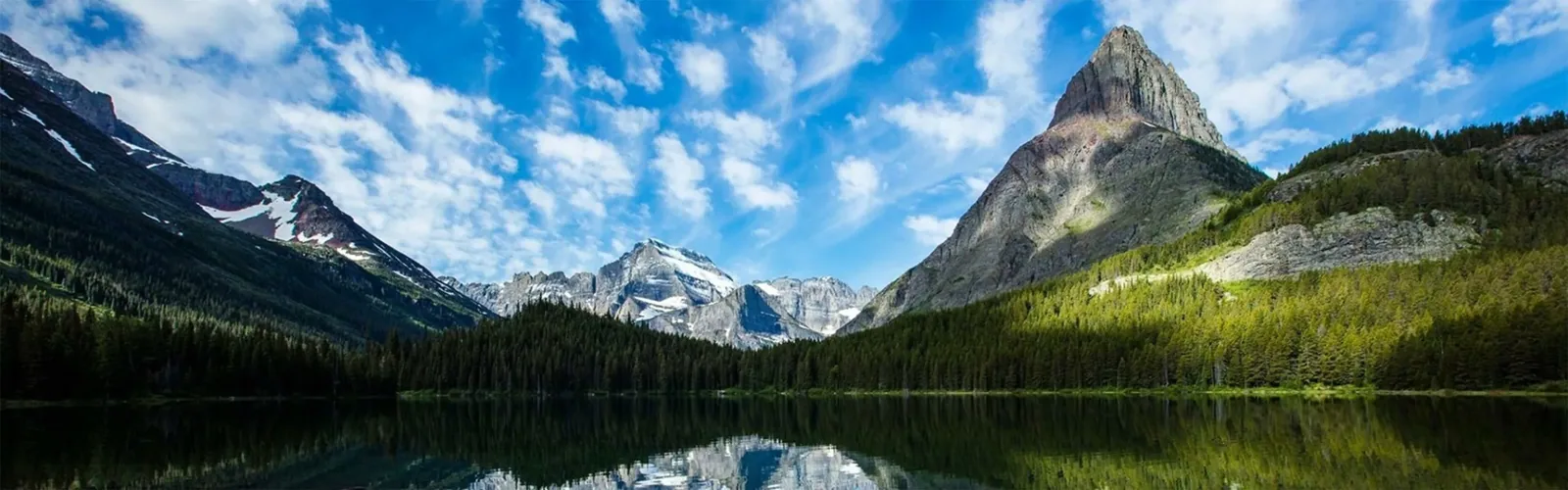
A resort base is a place where roofs share edges with plazas, and the edge decides how safe the plaza is. The Mountain area of Big Sky lies west of the Meadow and holds the ski resorts, with a base near 7,400 feet. Big Sky Resort has 5,850 skiable acres and 40 lifts, and its Mountain Village base sits at 7,500 feet. Buildings there include the Yellowstone Conference Center (1990), the Summit Hotel (2000) and the Village Center Complex (2007). Snow totals roughly 162.7 inches in a Big Sky year, and the roofs above a plaza hold a lot of it. Where does your snow go when it lets go?
We inspect, repair and replace commercial roofs in Mountain Village, and we plan the snow path and the guest path together.
What does a building's opening year tell us about its roof?
Less than it seems. A conference center opened in 1990, a hotel in 2000 and a village complex in 2007 are three different generations of building, but the roof on each may have been repaired, recovered or replaced since. The opening year gives us a window for original materials and details. It does not tell us the roof's current assembly or condition.
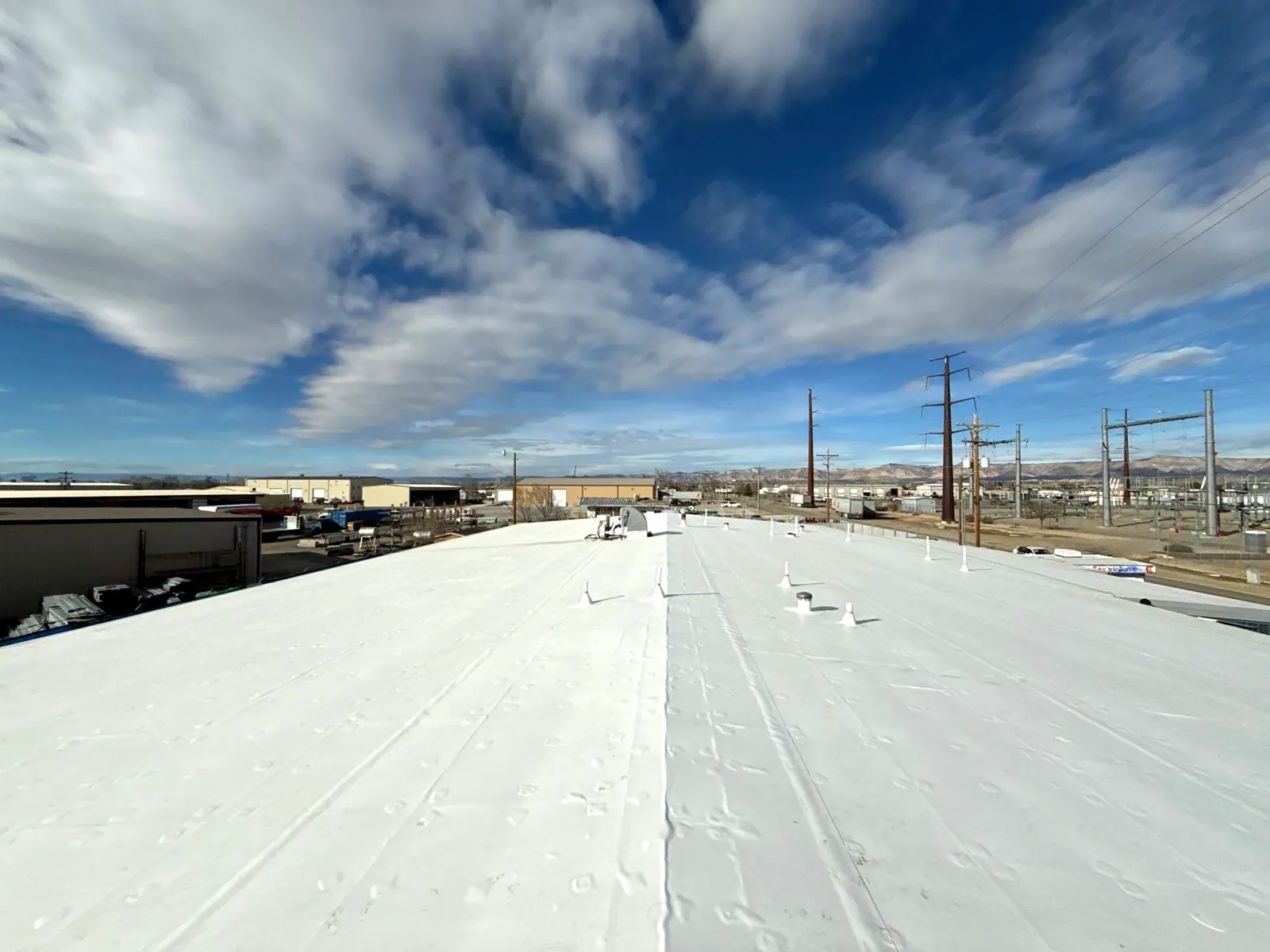
So we read each roof on site. We cut cores at several points to find the layers and the insulation, probe seams and flashings and map drains and penetrations. A resort owner with three buildings of three ages can then compare them on one page, ranked by condition and by what lies beneath, and the capital budget follows the ranking.
Records help. If original drawings, warranty papers or earlier reports exist, we read them before the walk, and we note where they disagree with the roof. A drawing that shows one assembly above a ballroom while the core shows another is a finding, and it goes on the sheet. If no records exist, our walk becomes the first, and the file begins there.
What does extreme snow do to a resort roof?
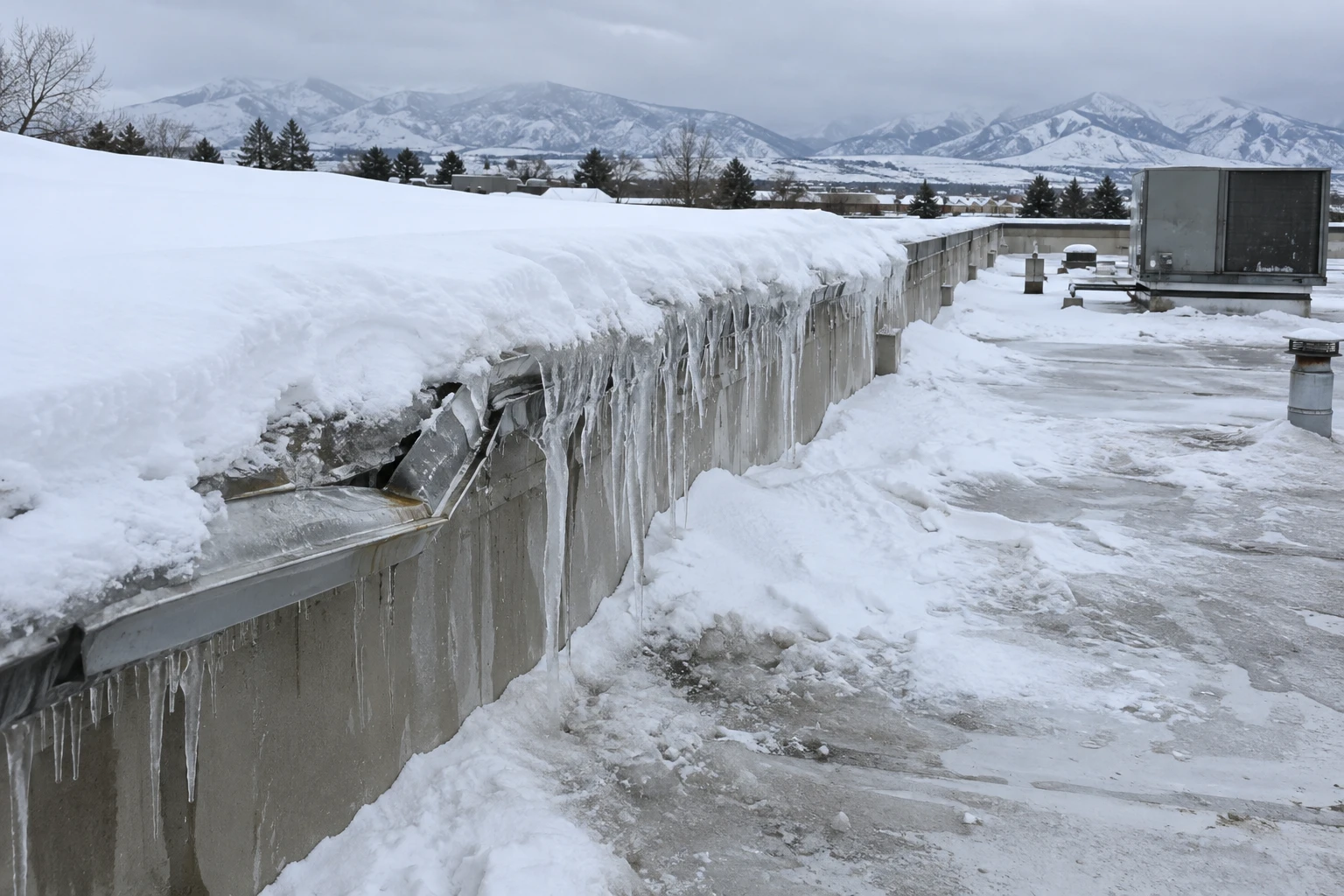
It loads it, drifts it and sheds it in unpredictable lumps. Snow falls in every month except July and August at Big Sky, and Mountain Village sits higher than the Meadow. Bozeman's 50 psf ground snow figure is a valley number, so designers at a resort site work from the state's ARM 24.301.154 values instead, which carry a 30 psf floor. A resort building needs a design load for its own site, and we check the structure against it whenever we propose added weight.
We map drifts behind parapets, in valleys and between buildings. Drains and scuppers are cleared before the first heavy snow. Snow and ice damage shows up as bent guards, torn gutters, cracked sealant and stained ceilings, and each gets a photograph and a position on the plan.
Altitude adds one more stress, the strength of the sun. At 7,400 feet, ultraviolet exposure is high in summer, and exposed sealants, coatings and membrane edges age faster. Snow reflects light back up under eaves and onto trim, so the underside of an overhang is also exposed. We inspect those surfaces and recoat or reseal where the finish has chalked.
How do we protect guests on the plaza?
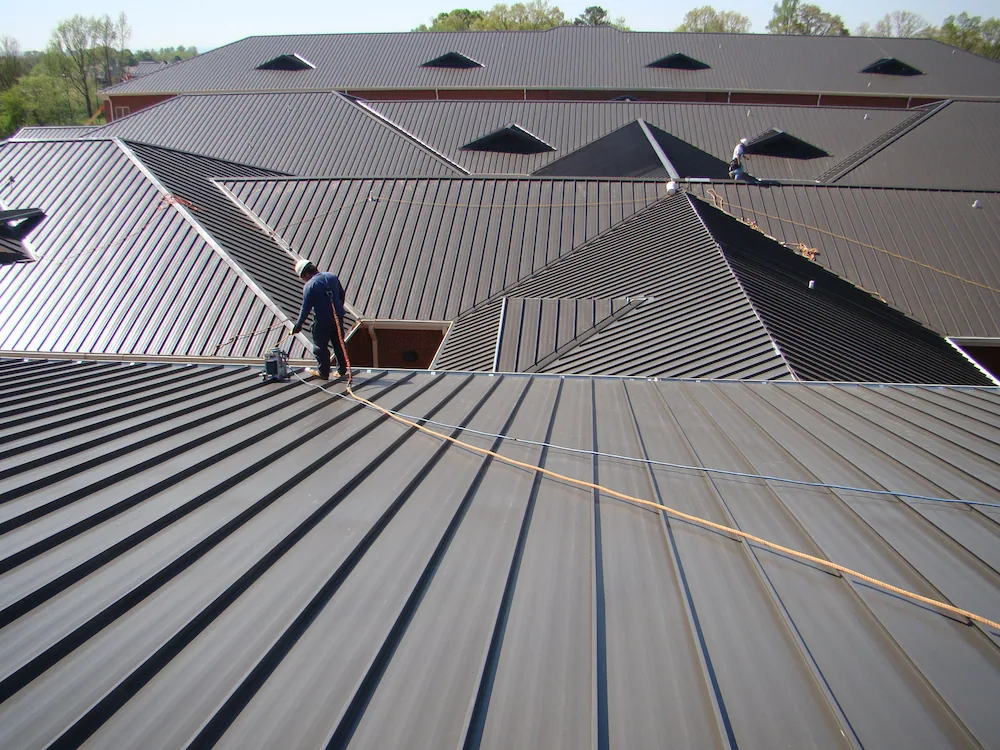
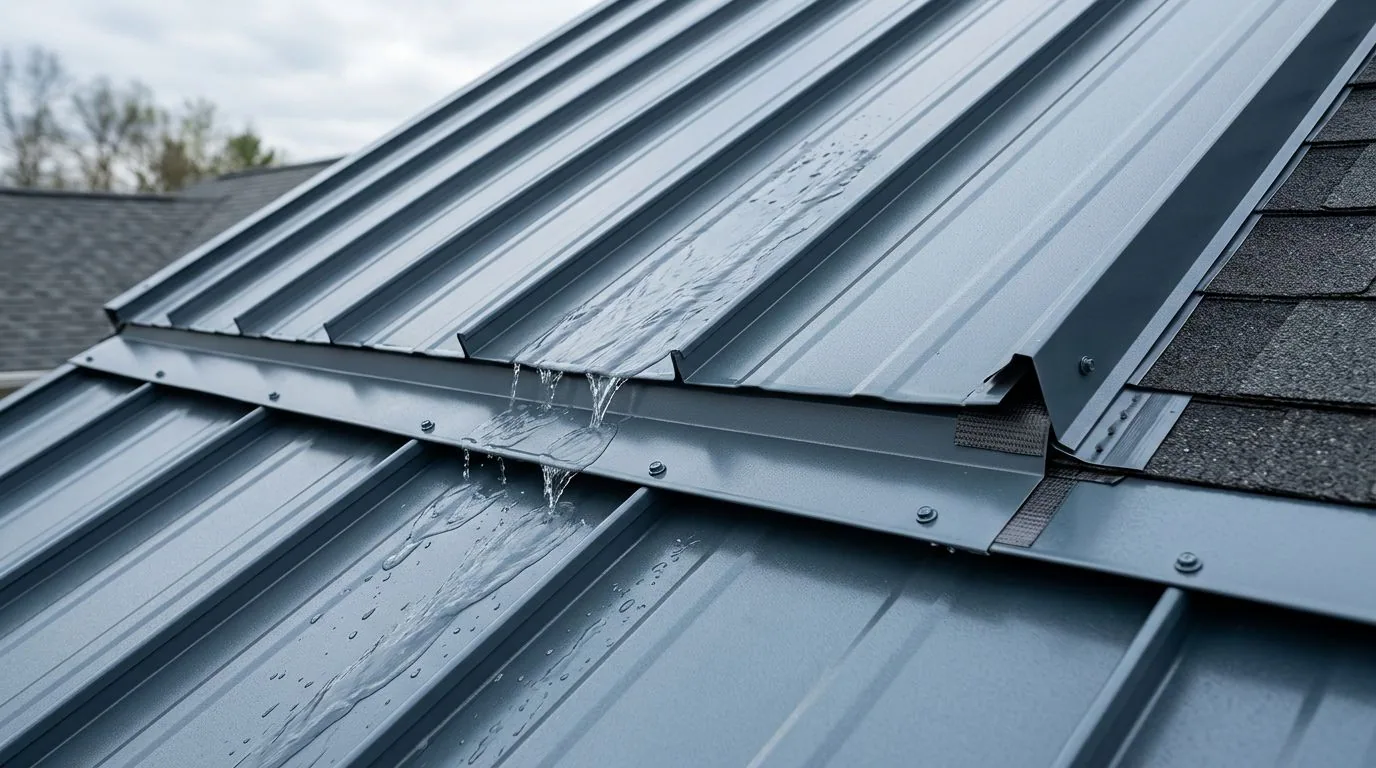
Snow guards, edge design and roof slope together decide whether a slide reaches the walk. On a smooth standing seam metal roof, guards are placed by calculation, not by habit. We map the fall zone under each edge, mark entries, plazas, lift lines and loading areas and set the guard layout to the slope and the load.
Roof work in a plaza needs protection for people. Fenced zones, spotters and scheduled quiet hours keep guests away from the work. Material hoists and cranes are placed with the resort's operations staff, who know the traffic. A closed plaza is a lost day for the business, and the plan tries to avoid it.
Heat cable and heated gutters are common in resort areas, and they need their own check. A cable with a broken run leaves a cold spot where ice builds, and a controller set wrong can run all winter for nothing. We trace each run, test it where the owner allows and note failures on the plan. A working system protects a plaza edge, and a failed one gives false comfort.
Why do wall and expansion joints leak first?
Where one roof meets another roof or a taller wall, there is a joint, and a resort base has many of them. Different buildings move at different rates, and the flashing across the gap is stretched every day. Snow load adds to the movement, and meltwater freezes in the joint. Flashing failure at those joints is a common first leak on a connected complex.
Each expansion joint and wall tie-in gets a photograph and a sealant probe, and any joint that has pulled goes on the list. The repair is a clean termination in a movement-tolerant material. Doing it in the dry season, before the load returns, costs far less than doing it in the middle of a storm.
How do we work around hotel guests and conferences?
A hotel and a conference center run on events. Rooms under the work, meeting spaces booked and arrival days are all on the calendar. Hotel roofing plans put the loud work in the middle of the day, away from the sleeping floors, and schedule the heaviest sections around the quiet shoulder seasons. Occupied building reroofing sets noise, dust and access in writing.
We ask for the resort's event calendar and fit the sections around it. Intakes are shielded. Debris is caught. Staging sits away from guest paths, and the crew finishes each day with a swept site and a dried-in section.
How does a multi-building plan work?
Resort owners run many roofs, and the money is finite. A capital plan ranks every roof by condition and consequence, assigns each a year and shows the cost of acting now versus later. Small repairs happen as found. Large scopes are phased over seasons. Neighboring districts, Meadow Village and Town Center, share the road, the weather and the season, and an owner with buildings in each can use one format across all.
The closeout file holds the roof plan, the drift map, the guard layout, photographs of every joint and a repair log. A resort that changes managers needs it. The next manager reads one folder and knows which roofs are worst, which repairs are open and when the next walk is due.

Questions About Big Sky Mountain Village
How can I tell how old my roof really is?
Core cuts show the layers and the insulation, and manufacturer markings sometimes show dates. The building's opening year is only a starting point, because roofs are often replaced between.
Do guards stop all slides?
They slow and hold snow so it sheds gradually. Heavy winters can load them hard, so we size the layout to the slope and load and check them every fall.
What if a leak starts during a conference?
We stop the water first and tell the facility team which rooms are at risk. The permanent repair waits for the event to end, and photographs support any claim.
Can roof work happen during ski season?
Only temporary repairs. Permanent work needs the warm, dry months. We book large scopes for the shoulder seasons and order materials months ahead.
How do I rank roofs across several buildings?
By condition and by consequence. A moderate roof over a ballroom ranks above a poor roof over storage. The capital plan puts both in order with dated photographs.