
Roofing for Property Management Companies in Bozeman, MT
Property Management Companies in Bozeman and the Gallatin Valley
A property manager does not own the roof, but the roof owns the manager's calendar. One building has a drift behind the parapet that melts into a tenant's ceiling every March. Another has a rooftop unit that was added by a tenant and never flashed properly. A third has a roof that nobody has walked since the last manager left. In the Gallatin Valley, February turns all of those into phone calls, and each call goes to the same person.
Across a portfolio the trouble is seldom one big failure; it is a dozen small ones, scattered across buildings with different roofs, different owners and different budgets. If your phone rings on the first warm day after a storm, which building is it most likely to be, and do you have a record of its roof?
What does a mixed portfolio look like from the roof?
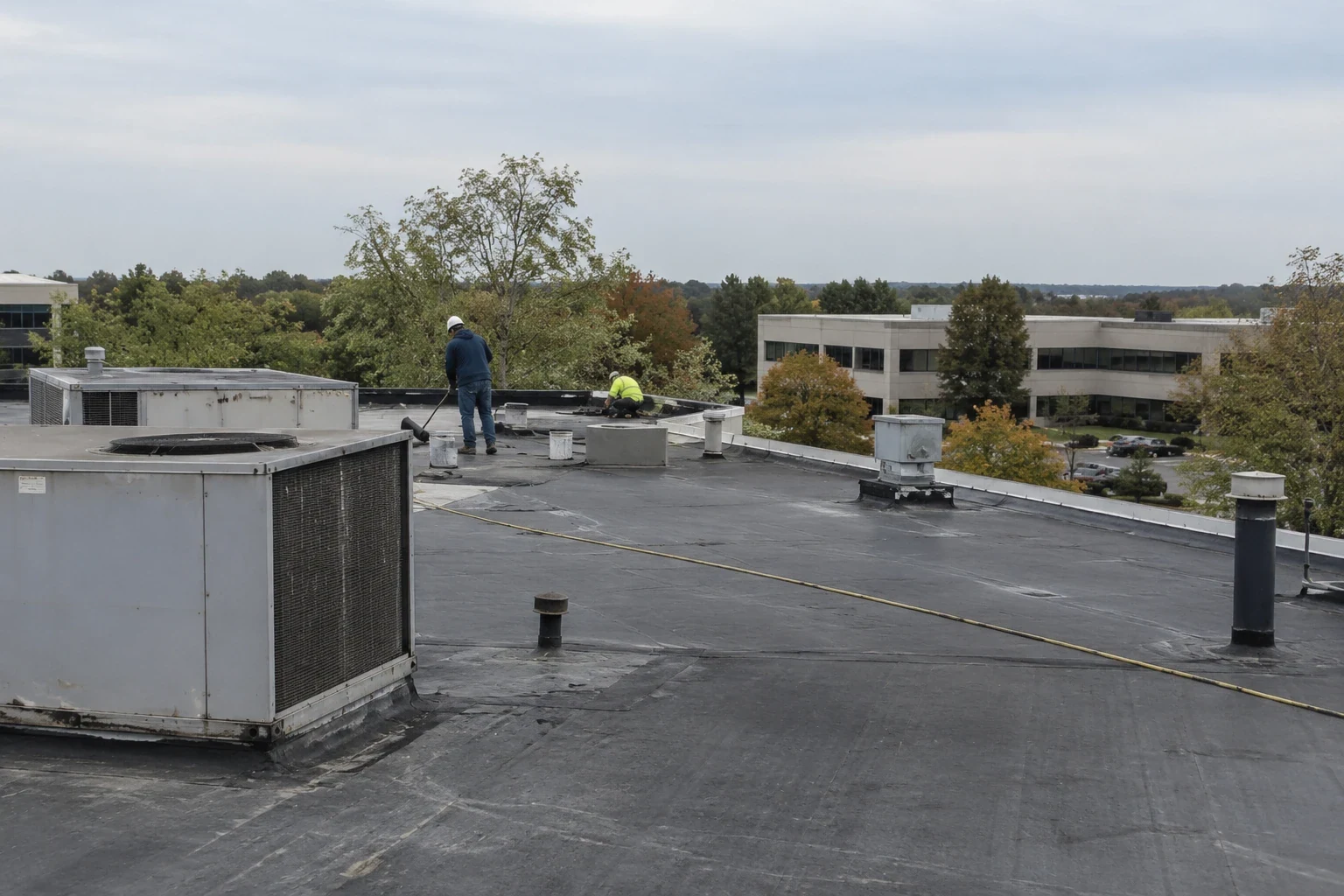
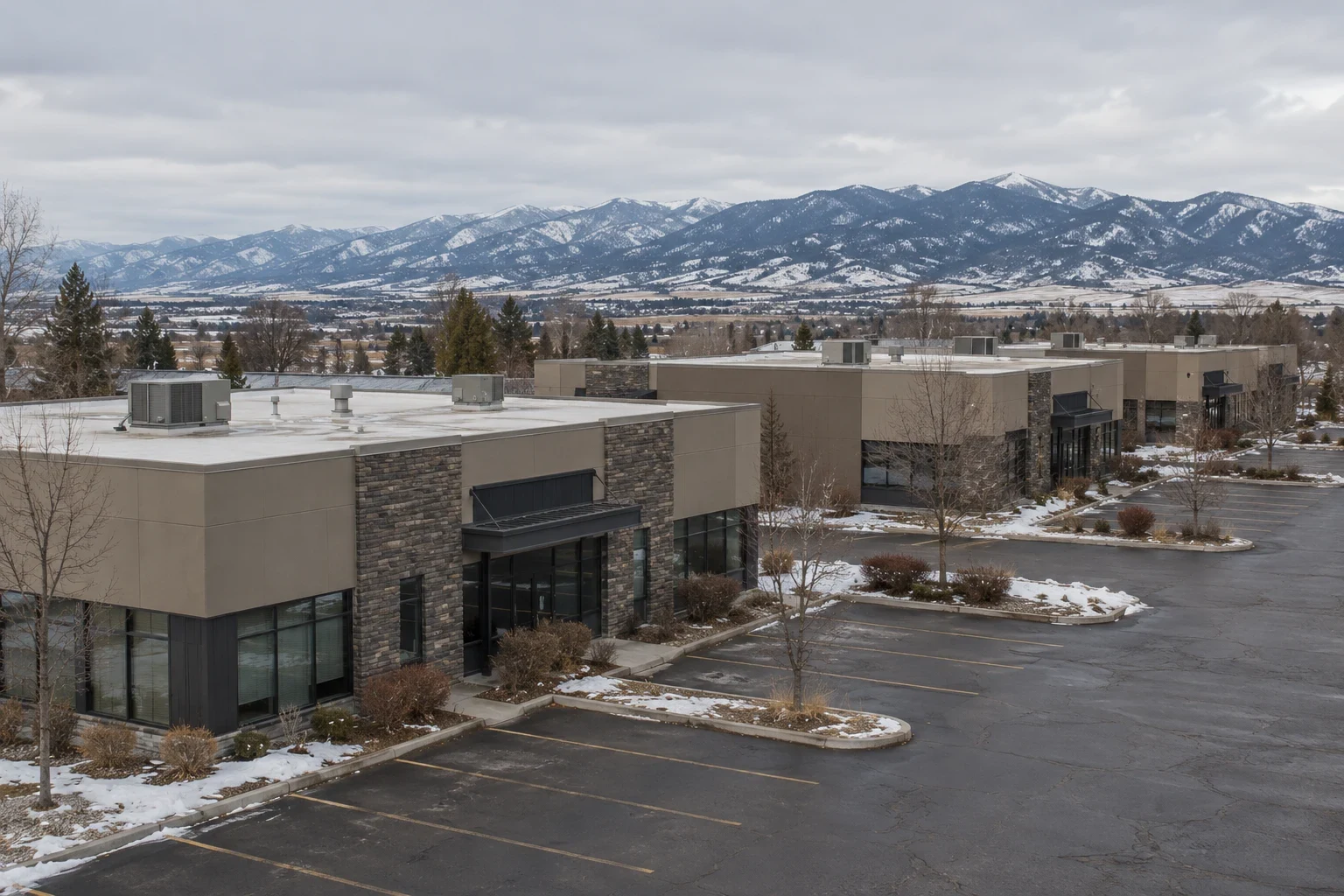
A manager with ten properties may have ten roof types. A strip of retail on North 19th Avenue with a low-slope membrane and a row of rooftop units. A Midtown mixed-use building with a parapet roof and a mechanical penthouse. An older downtown masonry building with a built-up roof and brick parapets. A warehouse with metal panels. Each reacts to snow, thaw and hail in its own way, so a single maintenance routine does not fit them all.
I start by sorting the roofs by type and by age, and by what happens beneath each one. A roof over a restaurant kitchen, a medical suite or a server room has less tolerance than a roof over storage. That sort order gives the manager a short list of buildings that need attention first, and a long list that can wait. Our multi-site roof programs are set up around that kind of ranking.
How should a manager triage tenant calls about drips?
The first call is rarely the whole story. A tenant reports a drip, the manager sends someone with a bucket, and the roof is not looked at until the next call. I ask for three things: when it dripped, what the weather did the day before, and where in the space the water appeared. A drip after a warm day following snow suggests meltwater at a drain, scupper or wall flashing. A drip during rain points to a failed seam or penetration. A drip on a cold dry morning may be condensation.
With that, I know where to look first. A good call record, with photos and a date, turns a roof call into a short visit. Keep the record in one place, because a leak that comes back in the same corner every thaw is a pattern, and a pattern is a repair scope, not a series of service calls. Our emergency roof repair response is built for the cases that cannot wait, and the written findings that come out of it help the manager explain the cause to the owner. For leaks that recur, a proper leak repair traces the water to its entry rather than patching the stain.
What belongs in a roof file for each building?
The file should answer five questions in a few minutes: how old is the roof, what is it made of, who installed it, what repairs have been done and what is the last known condition. Add the drain locations, the equipment curbs, a roof plan and dated photos from each visit. A manager who inherits a portfolio and finds none of this is working blind, and an owner who asks about replacement timing gets guesses.
We build these files as a standard part of a first visit, with a roof plan and a condition rating for each area. Our roof condition reports are written so a successor can pick them up. The file also supports an insurance conversation. After a storm like the one on June 30, 2010, when half an hour of golf-ball hail hit Bozeman, dated before-and-after photos are what separate a covered loss from an old problem.
When does the winter schedule begin?
Snow comes on roughly 54 days of a Bozeman year, about 91 inches in all, and December is the heaviest month. The work that prevents February calls is done in October: clear the drains, check the scupper liners, tighten the loose flashing, look at the snow guards and walk the roof for anything that will catch a drift. Our preventive roof maintenance visits follow that sequence, and each one ends with a note for the file.
January nights hover near 15 degrees F, and the thaw cycles of late winter do the real damage. For managers of buildings in Big Sky Town Center or other mountain locations, the snow is heavier, about 162.7 inches a year, and the schedule moves earlier. A ridge of ice at the eave in a mountain building can start early in the fall. Back in the valley, the lower buildings fall into a different rhythm: the first hard freeze in late fall, a quiet stretch in January when snow stays put, and the March thaw that tests every drain at once. A manager who books the fall visit before the freeze, and holds a slot for the March walk, has already answered most of what the spring phone calls would have asked.
How can a manager give owners a roof number they can plan on?
Owners ask when the roof will need replacing and what it will cost. The useful answer is a range tied to condition. A roof with a few years left needs a maintenance plan and a reserve. A roof near the end needs a replacement scope and a date. A roof with wet insulation needs action now. I put each building into one of those three buckets and explain why in plain words. That gives the manager a basis for the annual budget meeting and a record for the owner. Managers who report to investors and REITs often need the same three-bucket summary in a format an asset manager can paste into a quarterly report, and a manager serving a hospital group works the same buckets with healthcare systems stakes, where a leak costs more.
The roof capital planning work sorts the buildings by likely replacement year and spreads the cost so one season does not carry all of it. Apartment owners add residents to the picture, as apartment roofs show, and retail owners add the tenant mix. Whichever building type is involved, the finished file lists the roof age, last repair, next review date and the person who approves spending, so a change of manager does not reset the history.
Questions About Property Management Companies
We took over a building with no roof records. Where do we start?
With a walk and a roof plan. We photograph every area, note the penetrations and drains, probe for soft spots and mark the age signs. A first visit gives you a baseline, and every later visit adds to it.
How do we handle tenants who add rooftop equipment?
Set a rule that no one touches the roof without approval. A new unit needs its own curb, flashing and walk path. A cut made without those becomes a leak a few seasons later, and the landlord pays for it.
Can one contract cover several buildings?
Yes. A single agreement can set inspection dates, response times and reporting for every building, with one contact. The schedule covers all roofs in an order that fits the manager's calendar.
What documentation helps with an insurance claim?
Dated photos of the roof before and after a storm, a record of past repairs and a written description of the damage. The more specific the file, the easier it is for an adjuster to separate new damage from wear.