
Sika Sarnafil Roofing Systems in Bozeman, MT
Sika Sarnafil Roofing Systems in Bozeman and the Gallatin Valley
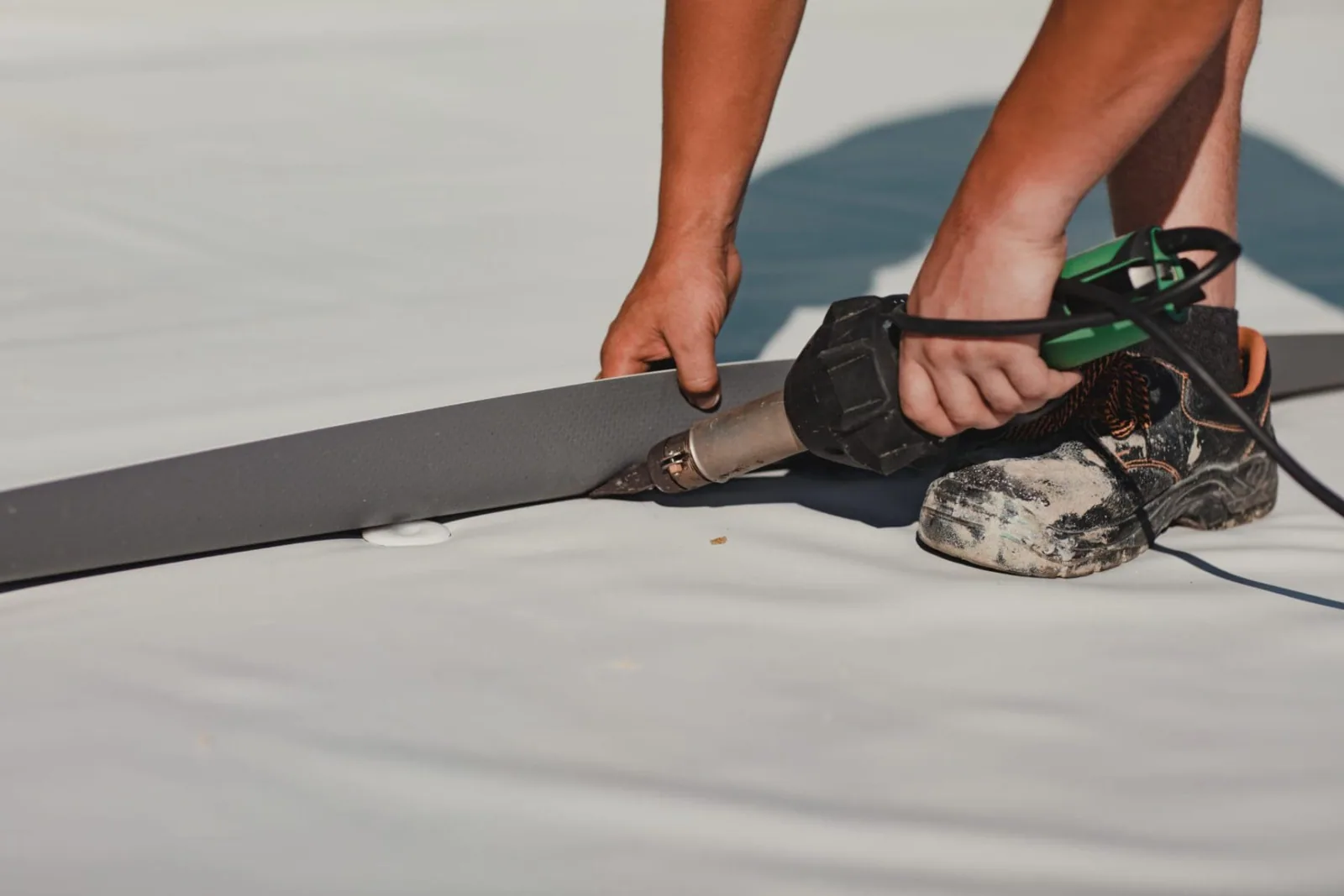
The first tool on a thermoplastic roof is a probe, and the second is a hot-air welder. Sika Sarnafil supplies thermoplastic membranes, mainly PVC-based sheets with welded seams, along with liquid-applied products used for flashings and restoration, and a welded sheet is a natural fit for a building whose exhaust is greasy or whose roof carries a lot of equipment. In Bozeman, MT the weld is what the winter tests. If a seam is going to open, a January night's temperature swing will find it. How tight is yours?
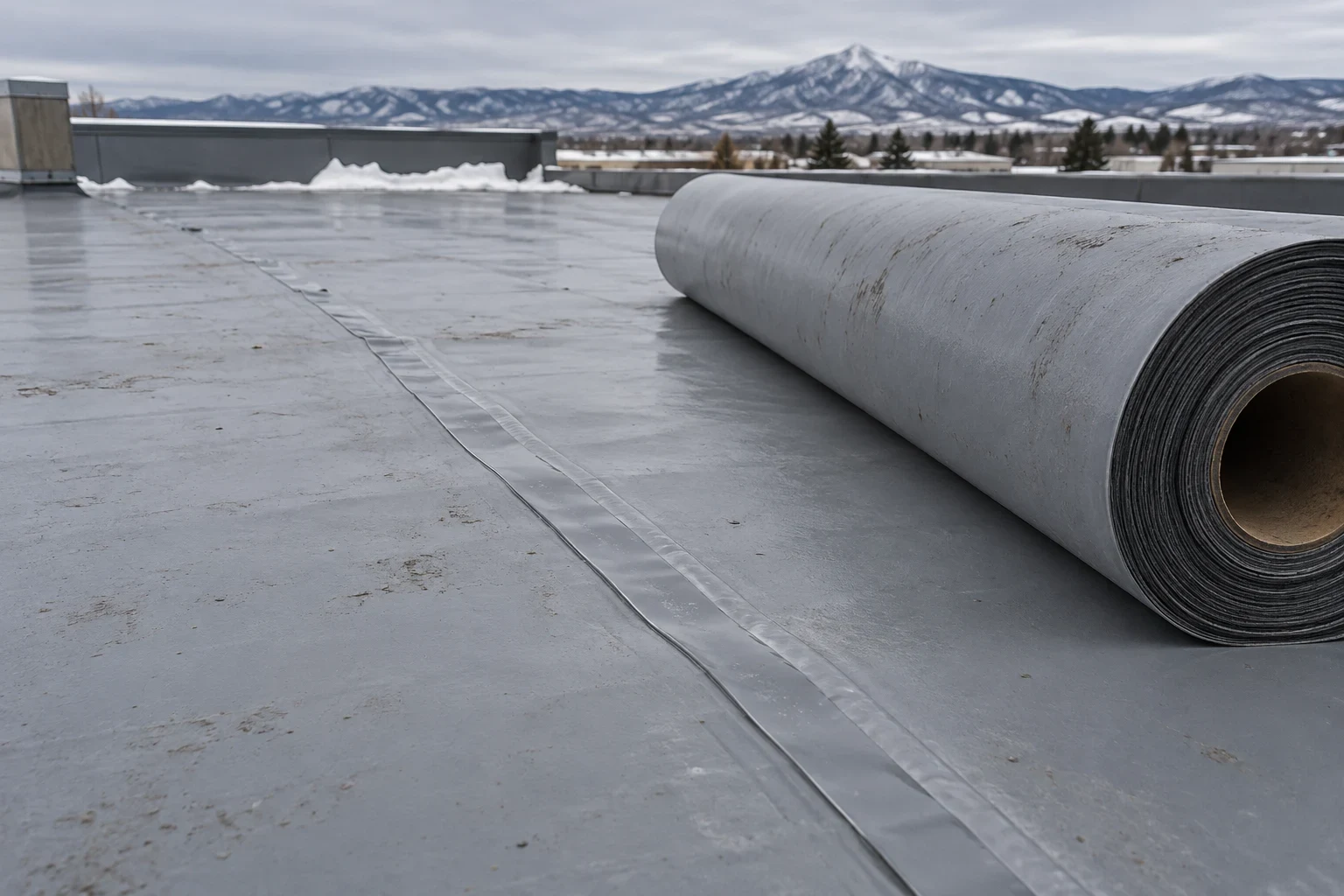
What makes a welded thermoplastic roof different?
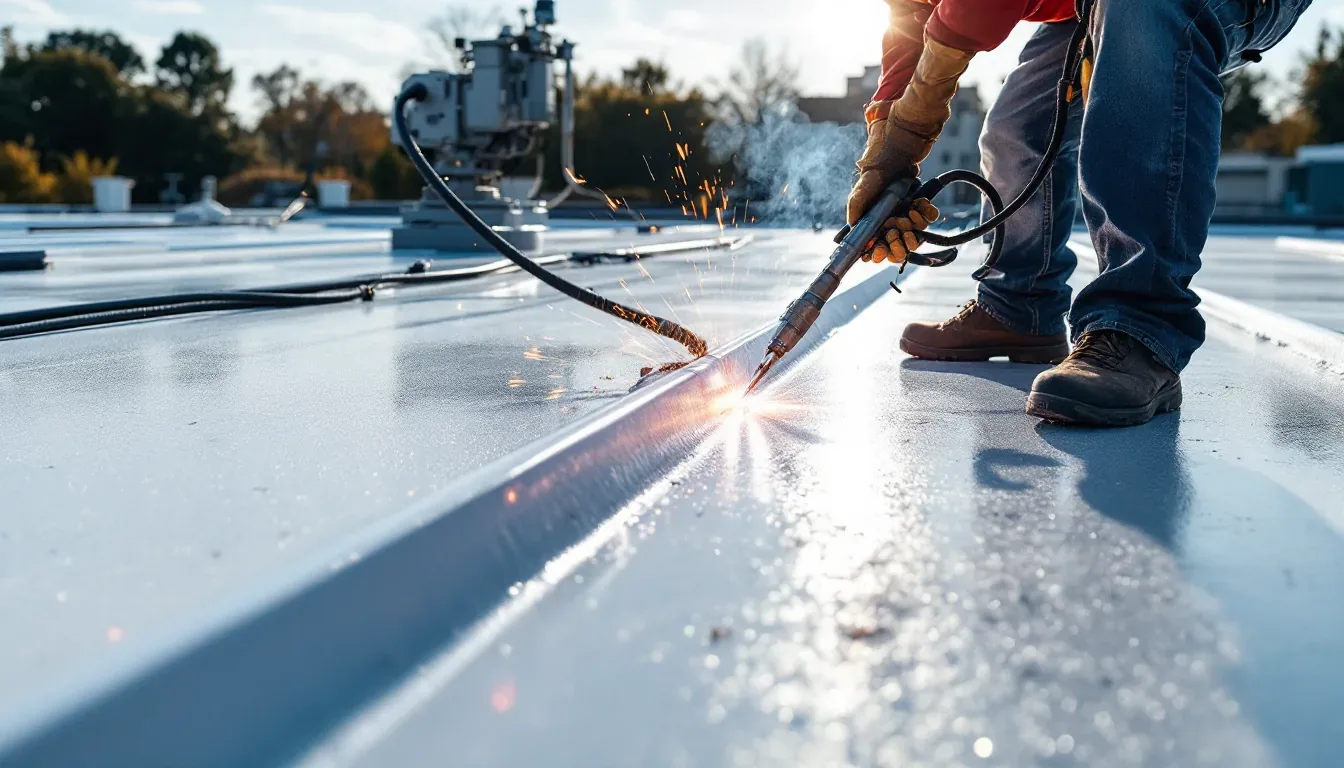
A welded seam fuses two sheets into one. Hot air softens the surface of each, a roller presses them together and the result is a single piece of material across the lap. Done properly, the seam is as strong as the sheet. Done badly, it looks fine and peels. The quality depends on temperature, speed, pressure and a clean surface.
I check the weld by running a probe along the edge of every seam, listening for the click of a void and pressing at the cross joints where three sheets meet. Those T-joints are the weakest points on any welded roof. A good installer cuts and caps each one. I also look for burn marks, which show the welder was too hot, and for cold welds, which show it was too cool or too fast. Both are repairable if found early.
The test that matters most is a pull test on a sample weld at the start of each work day. A strip of welded sheet is peeled by hand, and the sheet should tear before the weld lets go. That test takes a minute, it is recorded with a photograph and it tells us whether the welder settings suit the day's temperature and humidity. If the first test fails, the settings change and the test is repeated.
Why is a thermoplastic sheet chosen for grease and chemical exposure?
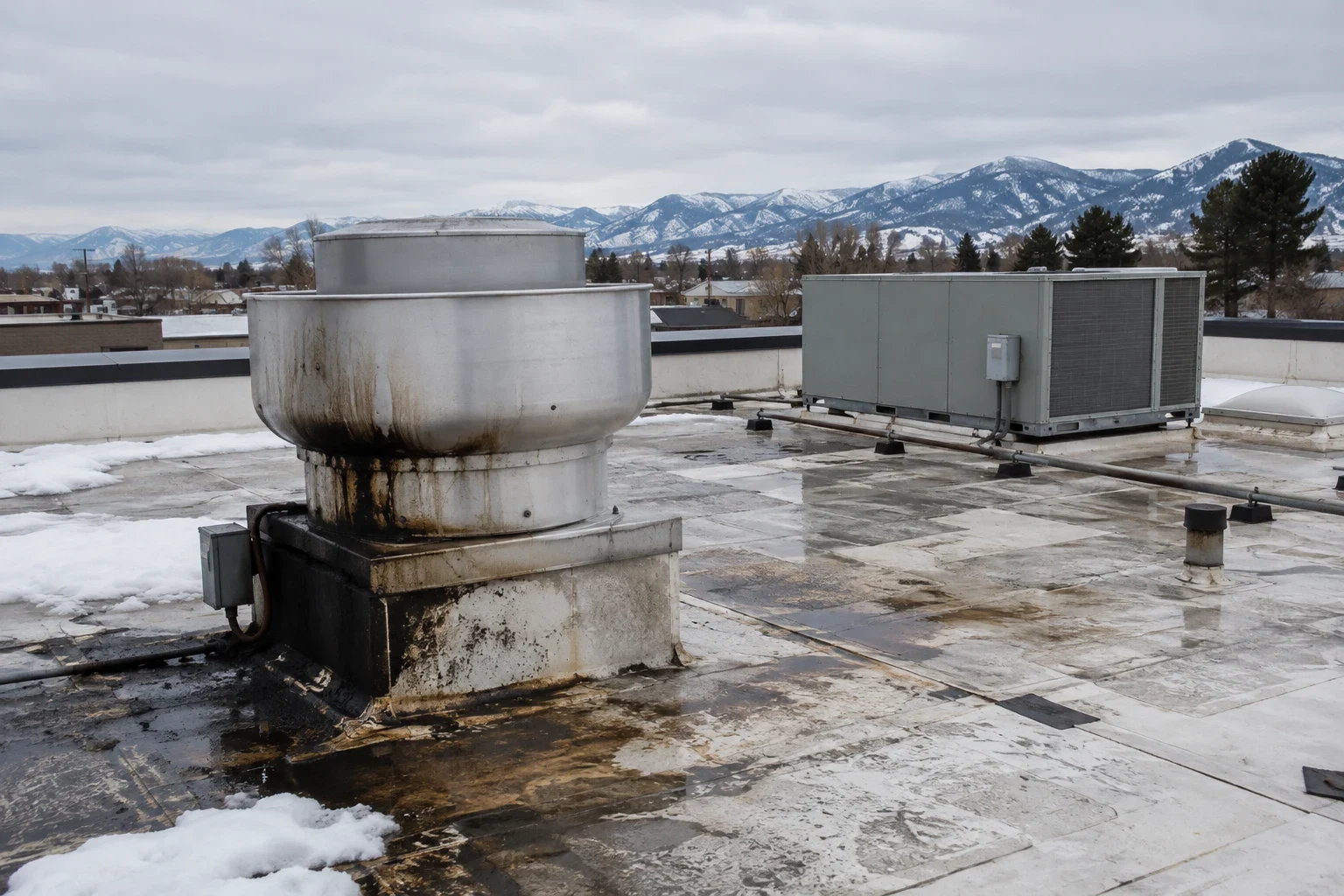
Some roofs sit under kitchen exhausts, brewery vents or process stacks, and fat or chemical vapor settles on the membrane. PVC-based sheets are often chosen for those roofs because they resist grease better than many other single-ply families, though no sheet is immune to a clogged grease tray. The right choice depends on what leaves the exhaust and how close the roof is to the stack. If the exhaust discharges straight down onto the roof, a deflector or a taller stack moves the plume away, and that change protects any membrane better than a thicker sheet would.
I look at the area around each exhaust for staining, softening and swelling. A grease tray that is full or missing is the usual cause. We replace the tray, clean the membrane and add a protective pad if needed. For restaurants, restaurant roofing deals with the kitchen side of the same question, and the fix often includes a regular clean-out schedule the kitchen staff can follow without going up on the roof.
How does Gallatin Valley cold affect welding and repair?
Cold dominates a Bozeman winter, and the record low is minus 46. Welding needs a dry, clean surface, and cold air steals heat from the weld before it sets. In deep cold, a welder runs slower and hotter, or the work waits. Moisture is the bigger issue: a damp lap will not fuse.
So permanent repairs wait for moderate, dry days, usually spring through early autumn. Winter calls get a temporary dry-in, a patch held with tape or sealant, and a photograph that shows where the permanent repair will go. In the meantime, roof drains and scuppers are cleared, because meltwater standing on a seam is the quickest way to test a weld. The permanent repair follows when the weather allows. When it does, we mark each seam with chalk, number the repairs on the roof diagram and photograph before and after, so the owner can match every repair to a location on the roof.
What does hail do to a welded PVC sheet?
The valley's record includes golf-ball stones on Bozeman in June 2010, baseball-size ones east of Gallatin Field and a second round in August 2013 that reached Belgrade with 89 mph gusts. A thermoplastic sheet takes a lot of hail, but a hard stone can bruise the sheet over soft insulation, and the bruise can crack the fabric inside it.
Once a storm passes, each hit gets marked, photographed with a scale and probed. A cover board under the sheet improves hail resistance on a replacement, and a thicker membrane gives more margin. Repairs for punctures and cracks are welded patches, cut with rounded corners and heat-welded all the way around. The scope and the photographs go into the claim file prepared through roof insurance claim assistance.
Which valley buildings suit this kind of roof?
Buildings with many penetrations, greasy exhaust or a need for a light, reflective surface. Restaurants, the breweries planned for the Midtown and North 7th Avenue district, big-box stores on North 19th Avenue and hotels and apartments with rooftop units are examples of building types where a welded sheet is a candidate.
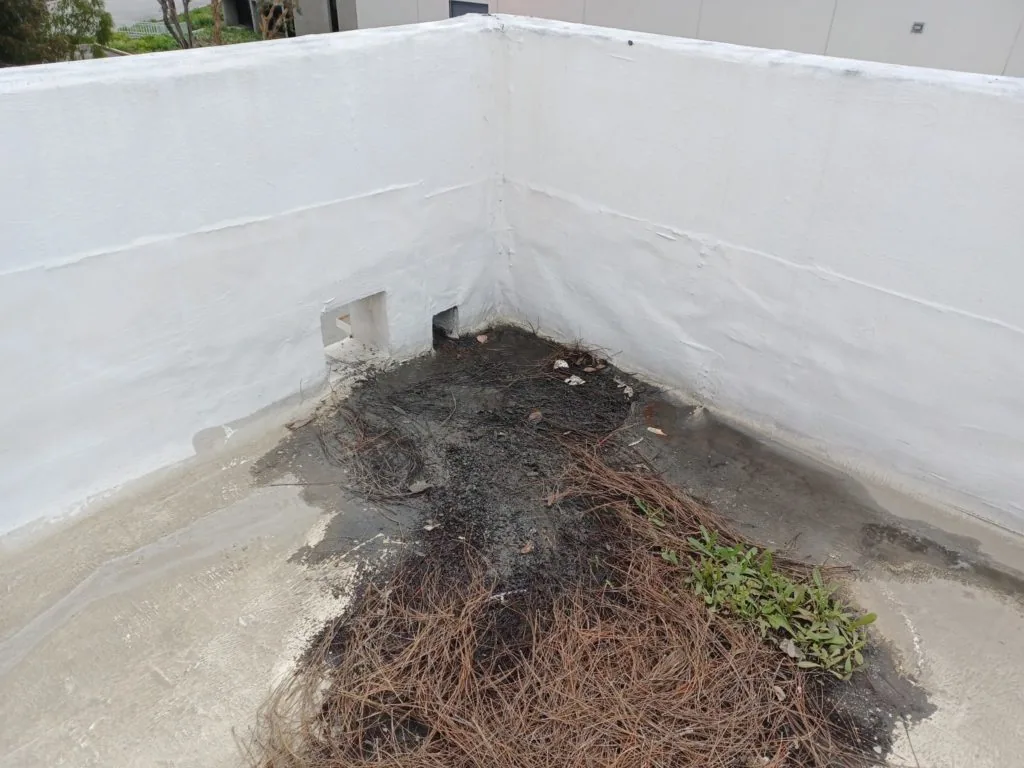
Flashing is the key, since each penetration needs a prefabricated or hand-formed boot welded to the field. I check each boot for cracks, each corner for splits and each curb flashing for loose terminations. A PVC roofing system with sound flashings and clean welds can last a long time, and one with open flashings fails early. The material at a wall is usually the first place to show it, because a sheet that has been pulled tight over a corner relaxes with age and lifts from the substrate.
What does a liquid-applied flashing add?
Liquid-applied resins are poured or brushed around awkward shapes, such as pipe clusters, irregular curbs and old patches, where a cut sheet is hard to fit. They cure into a continuous layer with no joints. They are useful for restoring a flashing without replacing the surrounding sheet, as long as the surface is clean and dry.
The catch is cure time. The resin needs a dry window and moderate temperature, and it must not see rain before it sets. We schedule these repairs for stable weather and watch the forecast. The finished flashing is photographed, and the date goes in the file. Other thermoplastic makers, such as Duro-Last and Versico, call for the same probe-first inspection.
Questions About Sika Sarnafil Roofing Systems
A seam on our roof has a small gap at a T-joint. Do we need a new roof?
Not for a T-joint gap. We clean the joint, cap it with a welded patch and probe the adjacent seams. If many T-joints are open, the original welds were poor and we recommend re-welding the lap runs. A new roof is only needed if moisture has soaked the insulation.
Can a welded roof be repaired in winter?
Only temporarily. Cold, damp surfaces will not fuse, so winter work is a dry-in with tape or sealant. The permanent welded repair waits for moderate, dry weather.
How do I know if my restaurant's roof is softening from grease?
Press the membrane near the exhaust. A soft, swollen or sticky surface points to grease absorption. We check the tray, clean the area, test for moisture below and add a pad or replace the section if the damage has gone through.
Is a liquid flashing better than a prefabricated boot?
Each has a place. A prefabricated boot is quick and consistent around a plain pipe. A liquid-applied resin suits irregular shapes. We choose by the shape of the penetration and the weather window.