
Versico Roofing Systems in Bozeman, MT
Versico Roofing Systems in Bozeman and the Gallatin Valley
Where does the water go when the snow melts off your flat roof? On a flat commercial roof in Bozeman, MT it runs toward a drain, slowly, with a pond somewhere along the way. Versico supplies single-ply roofing systems and insulation for low-slope buildings, and the first thing I look at on a Versico roof is not the sheet. It is the shape of the surface beneath it, because a membrane that is sound can still fail early if it sits in a pond every thaw.
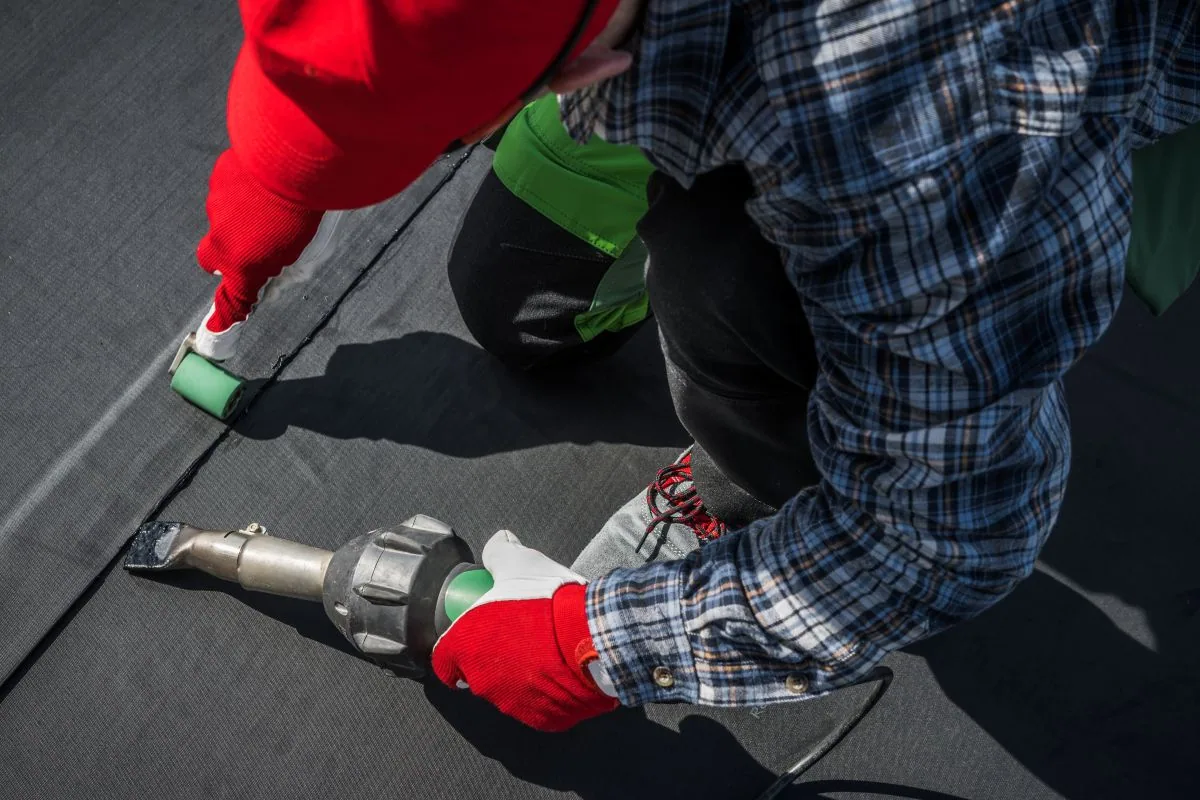
Why does a flat roof pond, and what does ponding do?
A flat roof is never perfectly flat. It is designed with a slight slope toward drains, but decks deflect, insulation compresses, drains are set slightly high and slope gets lost in the first reroof. The result is a low spot where water stays after the rest of the roof has dried.
Standing water ages a membrane faster. It holds dirt, grows algae, freezes and thaws against the seams and adds weight to the deck. In Bozeman, where freeze and thaw repeat all winter, a pond that freezes every night works the seams like a hinge. I mark ponds by chalk after a thaw, measure the depth and note how long they last. A pond that dries within a day or two is minor. One that persists is a defect.
The test is simple and cheap. After a thaw or a rain, I walk the roof with a roll of chalk and a tape, circle each pond, measure its longest side and its depth at the center and photograph it. Back at the office the circles go on the roof diagram, and the pattern shows itself: a line of ponds along one wall points to a deflected beam, a ring around a drain points to a drain set high, a single pond in an open field points to a settled deck.
How does tapered insulation fix it?
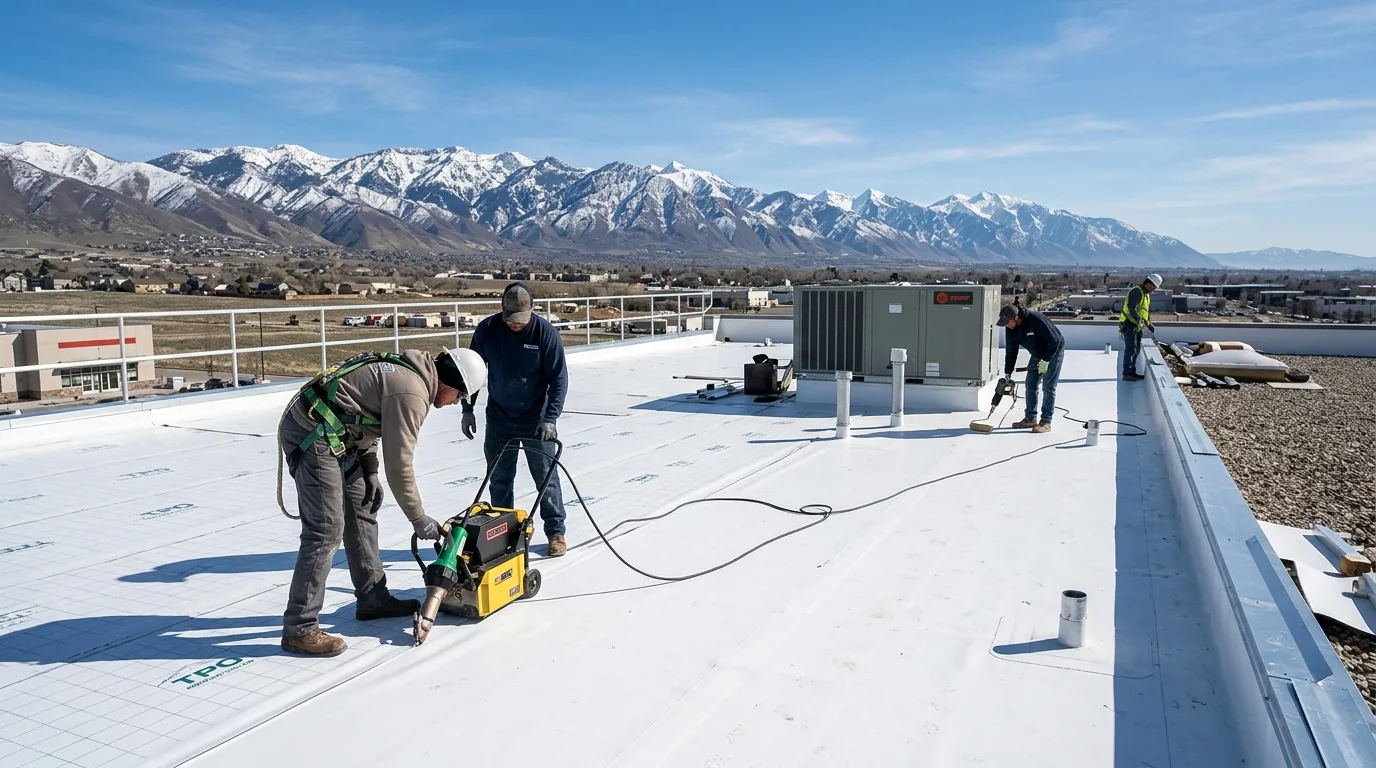
Tapered insulation is rigid board cut at a slight angle, laid in a pattern that creates slope toward the drains. A crickets-and-saddles layout steers water around curbs and parapets, and a tapered field sends it to the drain. Added during a reroof, it corrects the slope the building never had.
The design starts from a survey: low points, drain locations and the structure's capacity. We draw a layout that moves water to existing drains, or add a drain or scupper where the geometry demands one. A layout that sends water to a drain that freezes solves nothing, so we check how each drain behaves in January. The details of roof insulation and cover board follow from that drawing, and the cost is often modest next to the life it adds.
Crickets matter as much as the tapered field. A cricket is a small ridge built behind a curb or a wall that splits the flow and sends water around the obstacle. Without one, water collects on the uphill side of every large rooftop unit and sits there. Adding crickets at each curb during a reroof is a small line in the estimate, and it is one of the cheapest ways to keep the seams near the equipment dry through the winter.
Should the old roof stay under a new one?
A recover places a new membrane over the existing roof. It saves tear-off time, cuts disposal and keeps the building open. It works only when the existing roof is dry, the deck is sound and the structure can carry the added weight on top of the snow load. Bozeman's listed design ground snow load is 50 psf, so that margin is real.
Cores decide it. If the old insulation is dry and the old membrane is a compatible base, a recover with new tapered board and a fresh sheet is efficient. If water has soaked the layers, a recover traps the moisture, and a tear-off is the sounder choice. Our roof recover and overlay work starts with exactly those cores and a check of the framing.
A recover also asks a question about the edges. The new roof sits higher than the old one, so parapet flashing, curb height and drain bodies all need to be extended. If an old curb is already low, adding insulation makes it lower still, and the flashing no longer clears the drift line. We list each height change on the plan before the order goes in, and we raise curbs or extend drains where the numbers require it.
What about wind, hail and the edge?
Edges and corners see the highest uplift, so the fastener pattern and edge metal matter more there than in the field. Design wind for Bozeman is 110 mph, and August 2013 delivered 89 mph gusts over Belgrade and the north side. Hail is the other test, and the valley has taken golf-ball stones twice.
I check coping, drip edge and the first feet of membrane after any storm. A loose edge is repaired first. Hail bruises are marked, photographed and tested for moisture. The record separates storm damage from age. Where a new roof is going on, a cover board and a thicker sheet add hail resistance, and a tighter fastener pattern at the perimeter adds wind resistance.
Where in the valley does this kind of work apply?
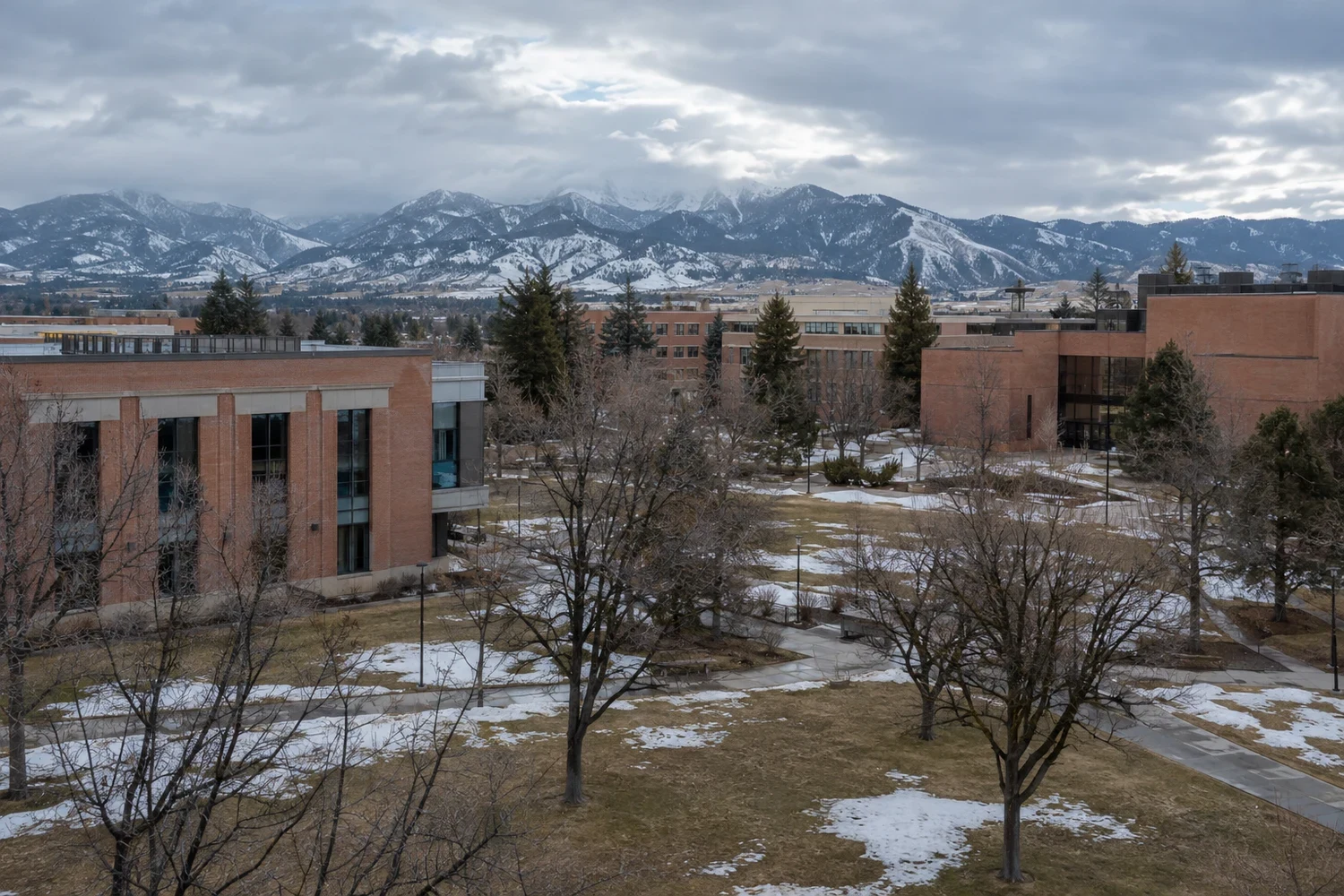
Wherever a flat roof holds water. Flex and warehouse space near Belgrade has wide fields where a small slope error becomes a long pond. Stores and strips along North 19th Avenue have parapets that trap water. Campus buildings in the Montana State University area have penthouses that create drifts and ponds on lower roofs.
In each case the plan names the pond, the cause and the fix. For tenants, occupied building reroofing practice keeps the building open, with the crane pick scheduled for a quiet hour and walkways protected below the work.
What records should follow a recover or a reroof?
The slope drawing, the insulation layout, the core results and photographs of seams, flashings and drains. A note on the attachment method and the date. The manufacturer's program terms, which vary by product, so get them in writing from the manufacturer or the installer.
The drawing matters most, because it shows later crews where the slope was built and where the drains are meant to work. Single-ply roofs from Carlisle SynTec and Sika Sarnafil call for the same pond survey. A regular preventive roof maintenance visit keeps the drains open between replacements.


Questions About Versico Roofing Systems
A pond on our roof lasts three days after rain. How serious is that?
More serious than it looks. Water standing that long ages the sheet, freezes in winter and loads the deck. We measure the depth, check the drain and plan a fix: a new drain, a tapered layout or a section of replacement.
Can tapered insulation be added without replacing the roof?
Usually it goes in at a reroof or a recover. Adding slope means lifting the membrane, so it is done when the membrane is already being replaced or recovered. For small ponds, a local fix with a patch of tapered board may be possible.
How do we know whether the structure can handle a recover?
We check framing for sag, cracked connections and deck condition, then compare the added weight against the design snow load. If there is doubt, an engineer reviews it before we proceed.
Does a drain that freezes mean the layout is wrong?
Not always. Drains in shade freeze first. Moving water toward a drain that sits in the sun, or adding an overflow scupper, gives meltwater a second way out.