
Edge Metal, Coping, Gutters and Downspouts in Bozeman, MT
Edge Metal, Coping, Gutters and Downspouts in Bozeman and the Gallatin Valley
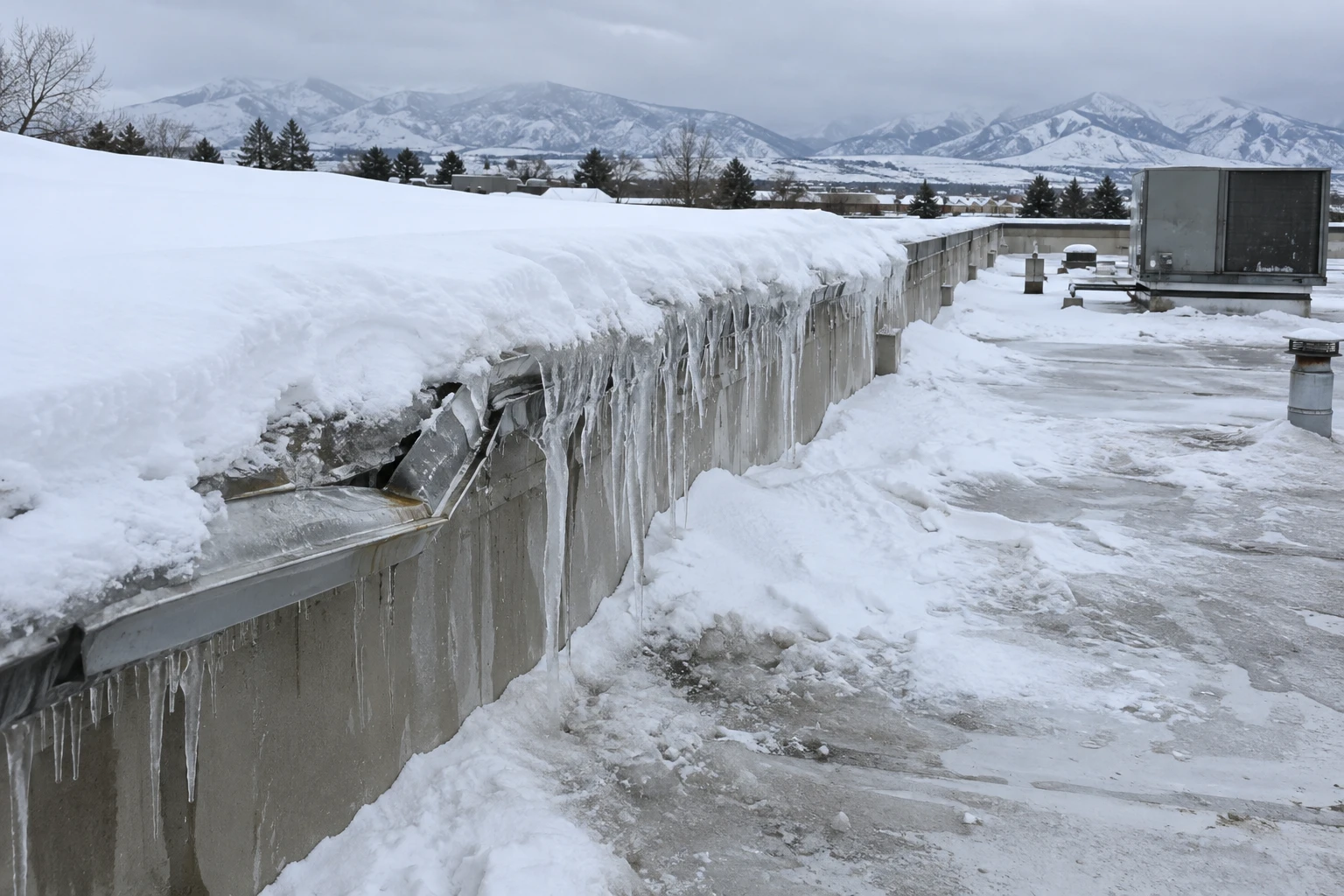
Look at the eave of a commercial building after a Bozeman, MT winter. A ridge of ice sits along the edge, and the gutter beneath it hangs a half inch lower than it did in October. A corner of coping has lifted. A downspout is bent where a slide of snow hit it. Each is a small thing. Together they are the line where the roof meets the weather, and they take every slide, every gust and every thaw cycle first. Bozeman collects about 91 inches of snow a year, and valley wind is no small thing. When did anyone last check whether the gutter is still fastened to the building?
We check the whole edge, piece by piece, and write down what we find.
What does edge metal actually do?
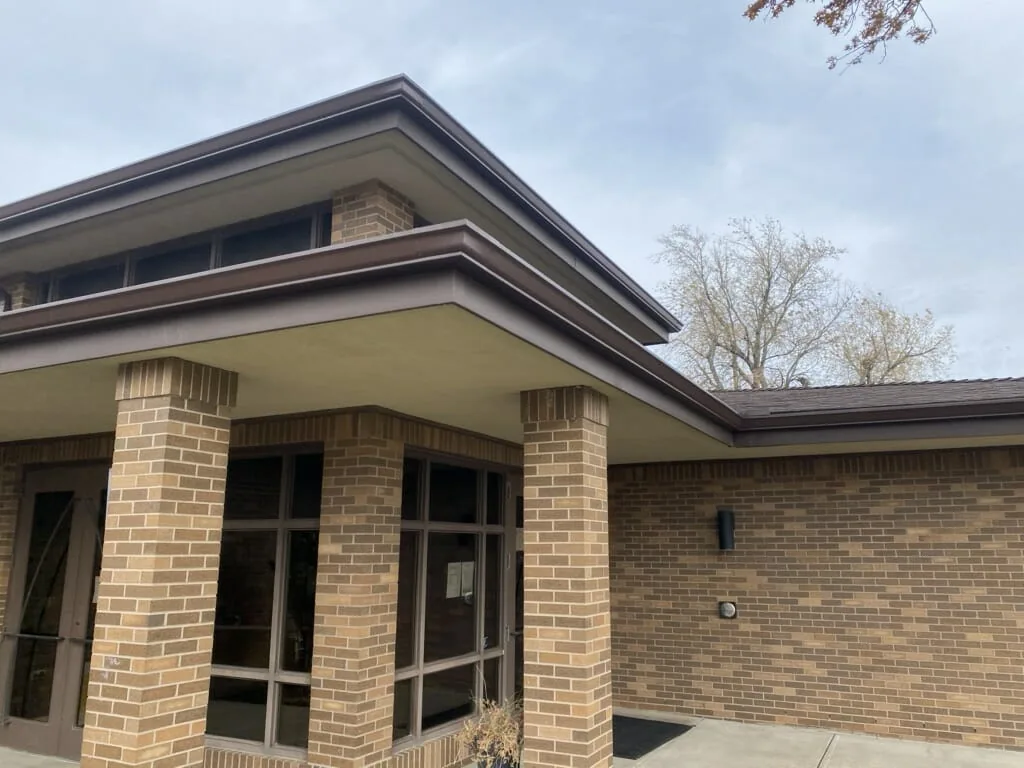
Edge metal is the finished perimeter of a flat roof. It holds the membrane edge down, sheds water away from the wall and keeps wind from getting under the sheet. Coping is the cap on a parapet, and it keeps water out of the top of the wall. Gutters and downspouts carry water off the roof and away from the foundation, the walk and the entrance.
All of it is fastened to a substrate that moves. Wood blocking shrinks and swells. Masonry shifts. Membrane edges creep. In a climate with a January mean low near 15 degrees and a record low of minus 46, the metal expands and contracts every day. Fasteners work loose, joints open and sealant cracks. A secure edge protects every repair made in the field, because a patch in the middle of a roof is wasted if the next gust lifts the perimeter.
What do snow slides and ice do to the edge?
A slide is heavy and fast. Snow that sat on a sloped section for weeks lets go in one afternoon and takes a gutter, a downspout or a length of edge metal with it. Ice at the eave adds weight and pries at the fasteners. Ice dams back water up behind the edge and under the first row of membrane.
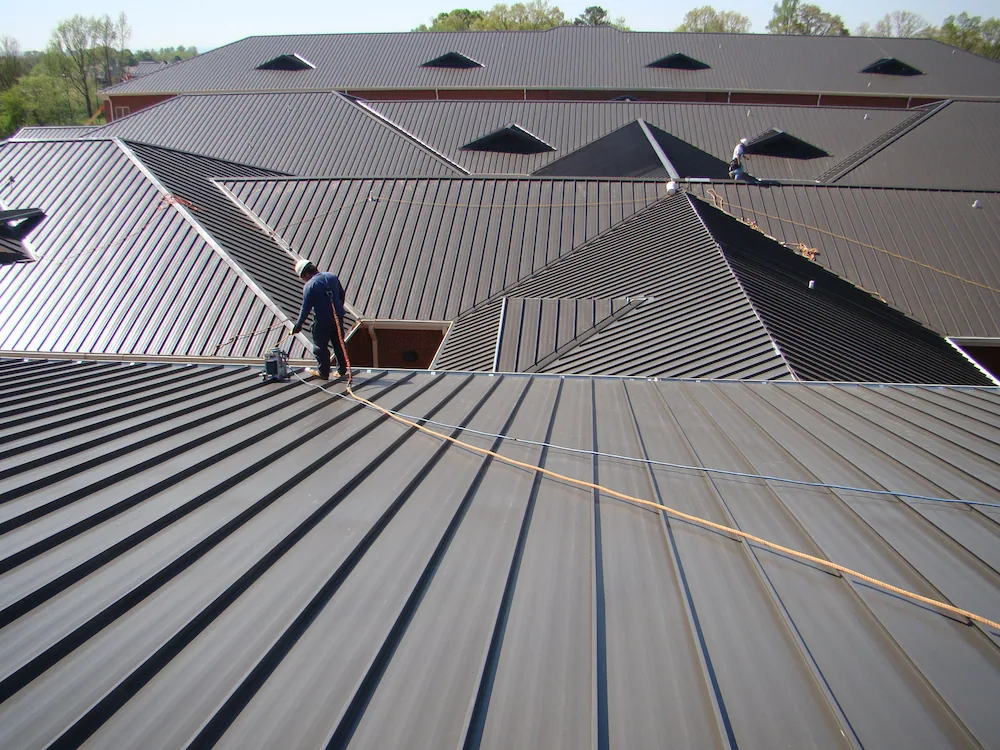
The first defense is a snow guard on any slope that can drop onto a walk, a door, a vehicle lane or a lower roof. On a standing seam metal roof, guards clamp to the seams, and clips and seams are checked first. The second defense is a gutter fastened to withstand the load, with hangers at a close spacing and a pitch that drains. The third is heat at the places where ice forms every year. After a slide has already torn something off, snow and ice damage repair follows a fixed order: safe access, drains, edges, then membrane.
How does the wind attack the perimeter?
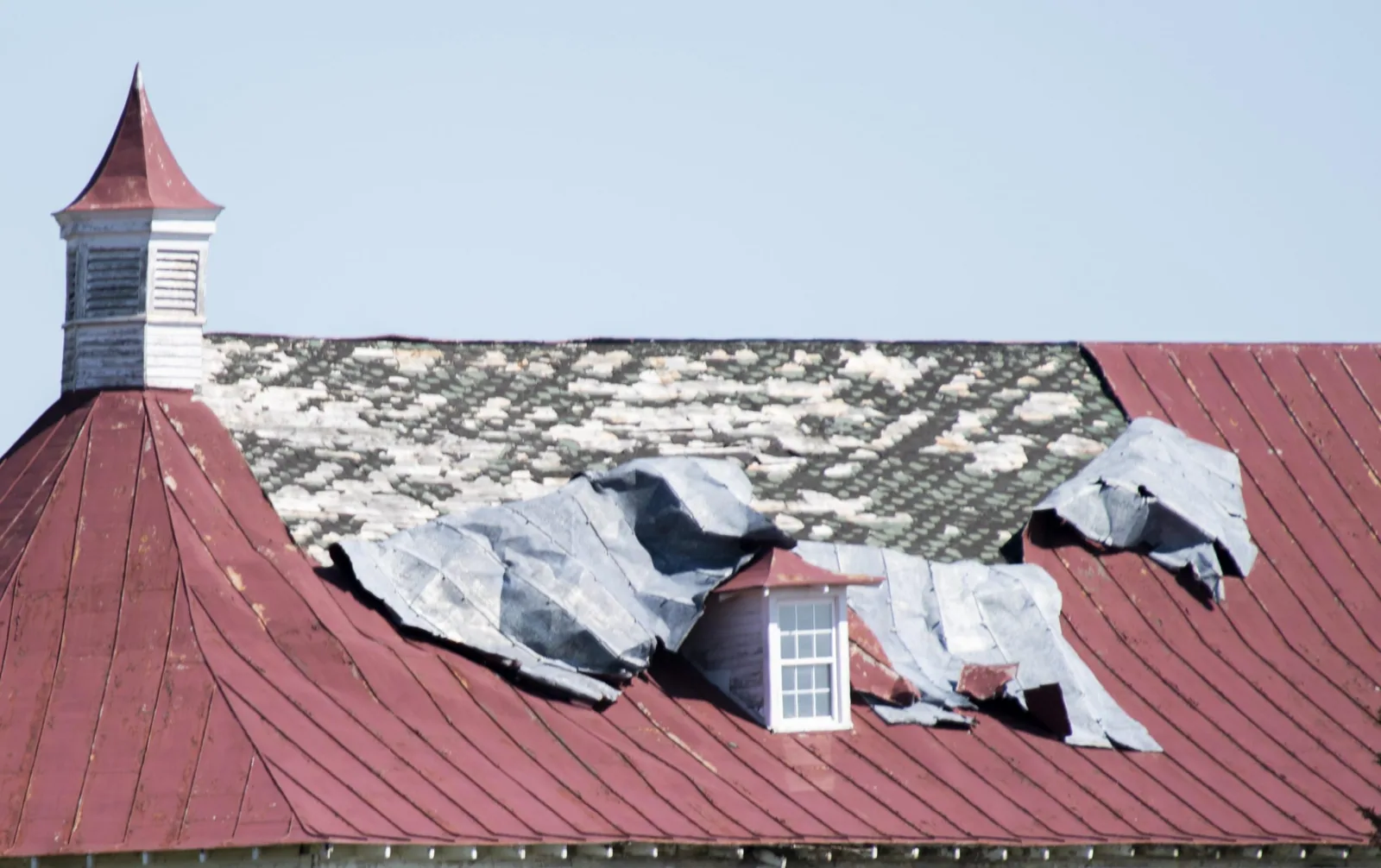
Wind finds the corners and edges, where uplift is highest. The 2021 IBC lists a 110 mph basic wind speed for Bozeman. Storm gusts recorded in the valley fall below that figure but still lift edges: 89 mph across Belgrade and north Bozeman in early August 2013, and 65 mph on Triple Tree Road southeast of town on August 29, 2023.
A loose cap or bent edge lets wind under the membrane, and the sheet peels back from the perimeter inward. We check every joint, every fastener and every end cap. We pull-test fasteners where the substrate looks soft, and replace blocking that has rotted. Our wind damage repair starts at the edge for the same reason.
What do we check on a walk of the edge?
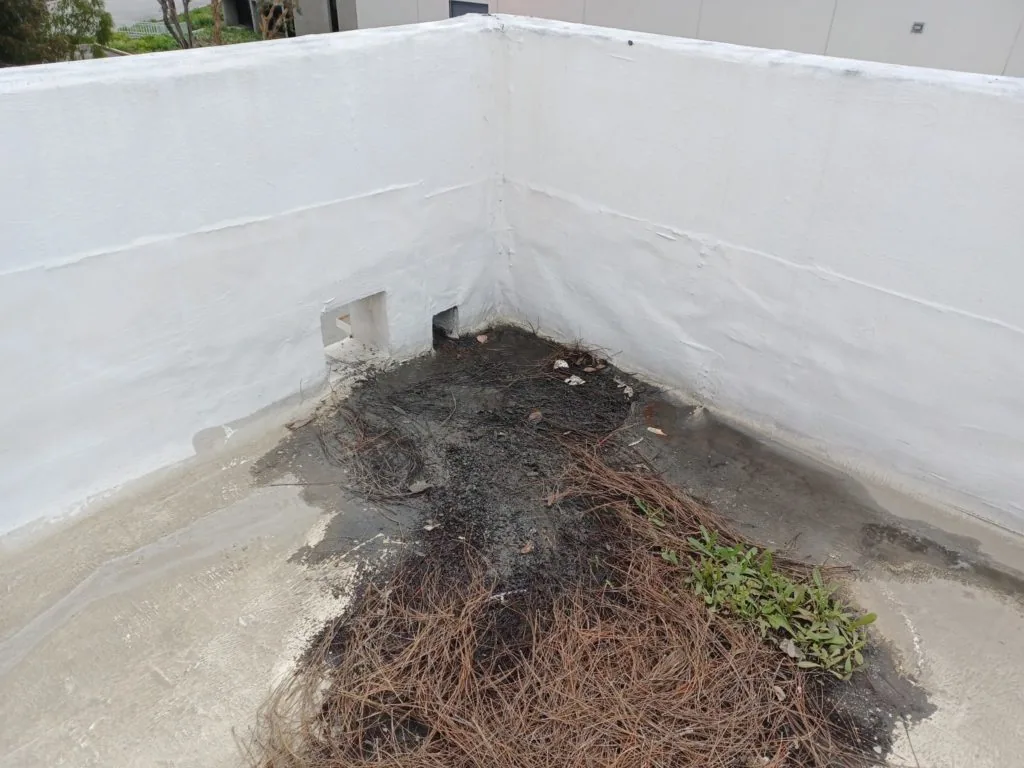
We start at one corner and go around the whole perimeter. Coping joints and end caps. Fasteners and their spacing. Sealant at laps. The gap between metal and membrane. Gutter pitch, hangers and outlets. Downspout straps and the splash at the bottom. Staining on the wall below, which points to a joint that leaks.
For each item we record a photo and a number on the roof plan. We note which pieces are original and which were replaced, because mixed ages mean mixed fasteners and mixed finishes. Where a gutter spills onto a walk, we mark the spot, since ice on a sidewalk is a liability for the owner. The edge sheet joins the building's roof file, and it is the reference we use in the next preventive maintenance visit.
Repair, replace or upgrade?
Loose fasteners and open sealant joints are repairs. Bent or corroded sections are replacements. A perimeter that has failed repeatedly is a candidate for an upgrade: heavier gauge metal, a continuous cleat that holds the edge down along its length, longer laps and mechanical fasteners at a closer spacing.
Appearance matters on some buildings. Downtown Bozeman's Main Street area includes the Bozeman Brewery Historic District and the Cooper Park Historic District, where older masonry buildings with flat roofs are common. Coping and edge profiles there may have to match the wall, so the repair uses the same profile and color, cleared with the owner before material is ordered.
On a warehouse near Belgrade or a flex building in the Four Corners area, the choice leans toward durability and cost. We price each option on its own line and show how long each is expected to last.
How do gutters tie into the drain plan?
Gutters are drains at the edge. A gutter that is undersized, pitched wrong or packed with debris spills at the worst place, over a door or along a wall. We check the outlets and downspouts, and we flush the line. Where a roof sheds to the edge, gutters carry the thaw. Where it sheds to interior drains, roof drains and scuppers do the job and the edge metal only has to hold the line.
Flashings meet edge metal at corners, penetrations and wall tie-ins. A cracked sealant at the junction of coping and a skylight curb lets water in even when both pieces are sound, which is why skylight and penetration flashing is checked on the same visit.
When is the best time to do the work?
Fall is the best time to repair the edge, before the first slide and the first hard cold. Sealants and adhesives cure in steady temperatures, and a repair done in September is ready for the snow. Spring is the second visit: it finds what the winter broke. A storm call can come any time, and edge damage from wind or hail gets a temporary fix first and a permanent one when the weather allows.
Big Sky and Bridger Canyon see far heavier snow, with Big Sky at about 162.7 inches a year and Bridger Bowl reporting about 350 inches a season. Buildings there need guards and heavier edge metal, and the work has to be done earlier in the fall.
Questions About Edge Metal, Coping, Gutters and Downspouts
How can I tell if coping is loose?
Look for gaps at the joints, daylight under the cap, staining on the wall below and metal that moves when pushed. A dated photo each season shows movement before water does.
Do gutters need to be heated?
Not all of them. Heat tracing helps where ice forms every year, usually at north eaves and valleys. We look at where the ice sits, then decide whether heat, a larger outlet or a different pitch is the cheaper fix.
Can new edge metal be installed without replacing the roof?
Yes. Edge metal is often replaced as a separate item, with the membrane edge lifted, new blocking and a new cleat installed, and the edge resealed. The work is cheaper than a roof replacement and protects it.
What gauge or finish should we choose?
Heavier gauge for exposed edges and high-wind sites, and finishes matched to the building. We price two or three options so the owner can compare the cost and the expected life.
Does edge work affect the manufacturer warranty?
It can. Many membrane warranties ask that edge details follow the manufacturer's specification. We read the paperwork first and use approved details and fasteners.