
Apartment and Multifamily Roofing in Bozeman, MT
Apartment and Multifamily Roofing in Bozeman and the Gallatin Valley
On an apartment roof, the people who feel the leak are not the people who call about it. A tenant on the top floor sees a stain, the property manager hears about it from a work order and the owner sees it a month later as a repair line. In Bozeman, MT, where snow lies on the roofs through much of the winter and thaw cycles repeat, a multifamily roof has to be read from the unit ceilings up. Which unit gets the first drip each spring, and is it the same one every year?
What kinds of roofs do apartment buildings have?
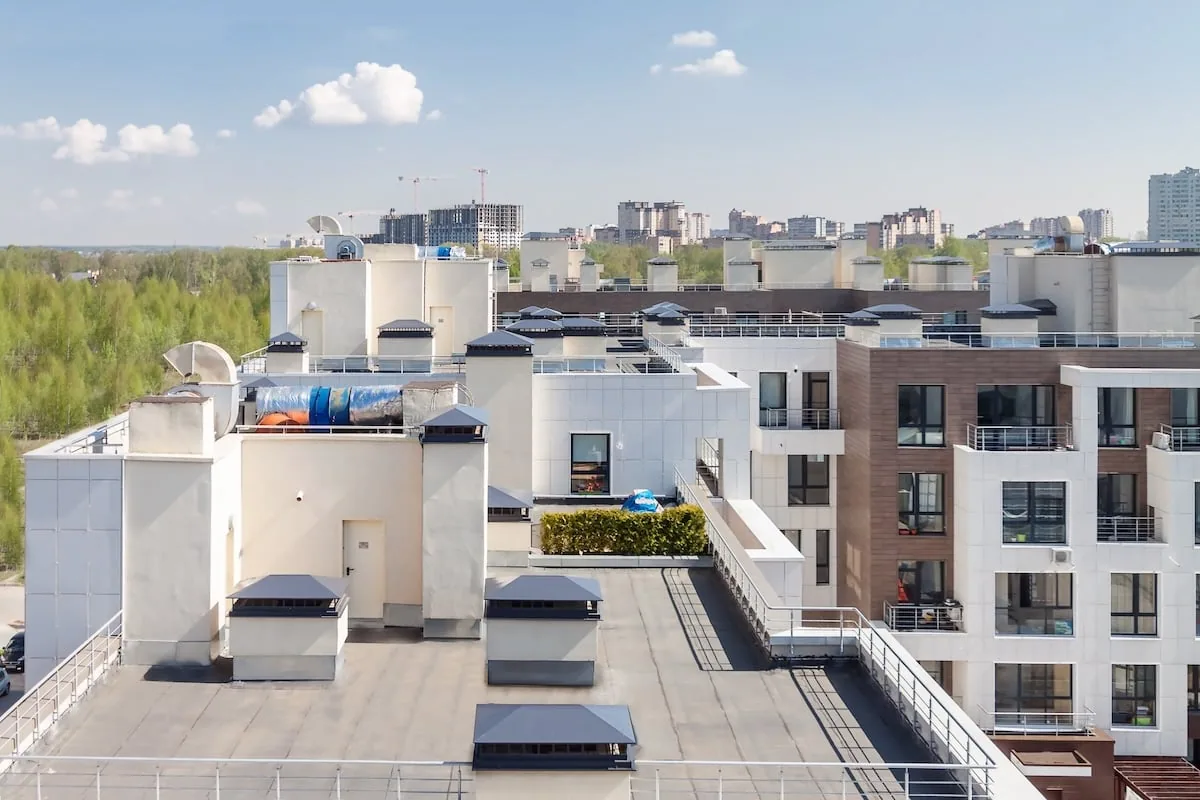
Multifamily roofs come in two families. Low-slope buildings, common on larger complexes and mixed-use blocks, have a membrane field with drains, parapets and rooftop units. Pitched buildings have panels or shingles over trusses, with valleys, dormers and balcony tie-ins. Many complexes combine both: a flat section over the corridor and pitched sections over the units.
Each type fails in its own way. Low-slope roofs fail at drains, seams and penetrations. Pitched roofs fail at valleys, where two slopes shed into one line, and at the eave, where ice builds. I walk the building by roof type and match each to a checklist, then count the penetrations, which on an apartment building include bath fans, plumbing vents and dryer exhausts.
Bath fan and dryer exhaust penetrations deserve a second look, because a duct that ends short of its cap dumps warm, wet air into the attic. The moisture condenses on the underside of the deck, freezes in winter and drips on the first warm day, which looks like a roof leak from the unit below. We trace the duct to its termination and check the cap before reaching for the sealant.
How does Bozeman snow behave on a residential roof?
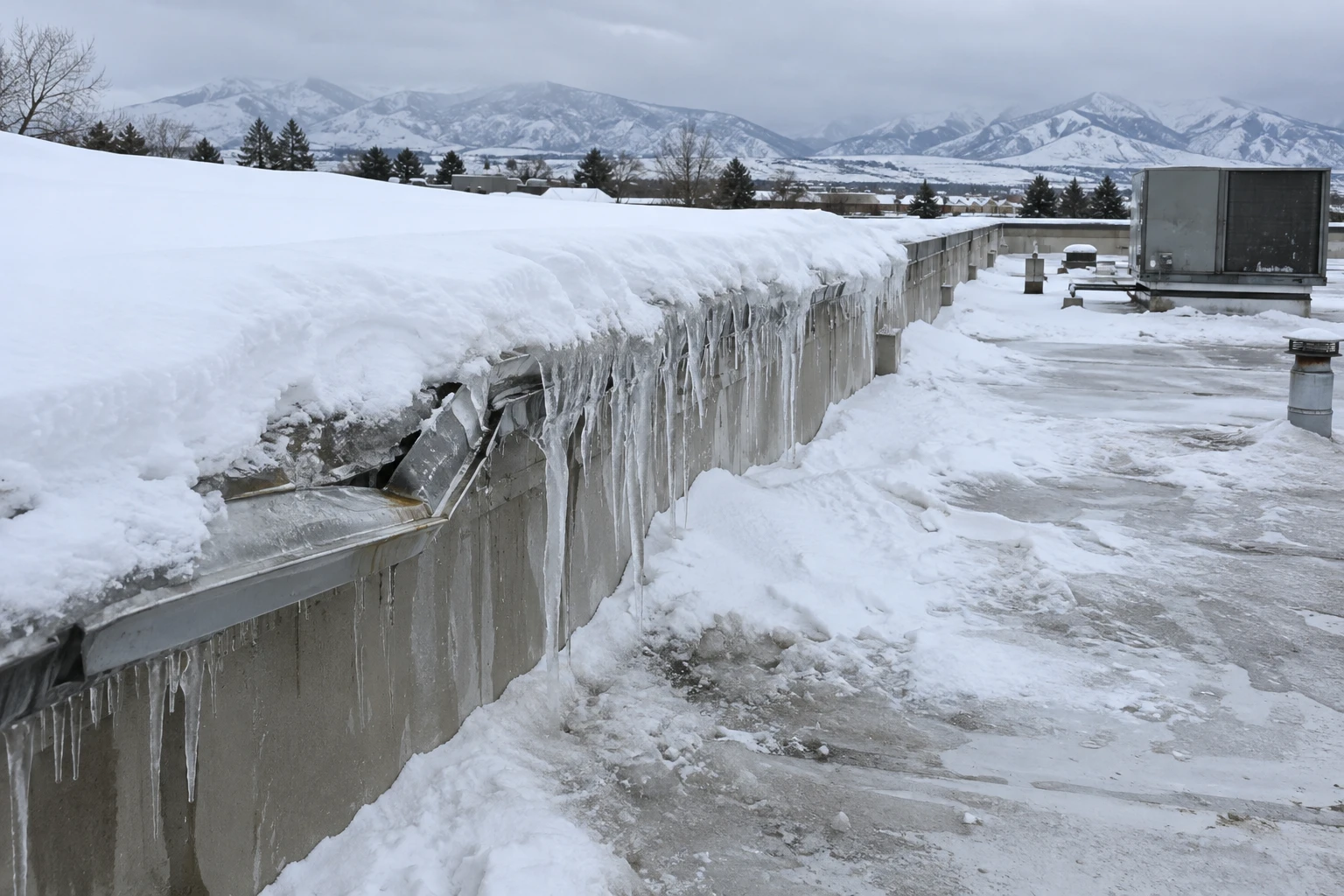
December brings 16.2 inches of Bozeman's roughly 91-inch year, spread over about 54 snowy days, and the city is designed for 50 psf of ground snow. On a multifamily building, snow loads the roof, and heat from the units below melts it from underneath. That meltwater runs to the eave and refreezes, building a ridge of ice that blocks the next melt and pushes water under the roofing.
The cure sits partly inside the attic: air sealing at the ceiling, insulation depth and ventilation at the eave. On the roof, we check edge metal, underlayment at the first courses and the path of falling snow over entries and balconies. Our snow and ice roof damage repair follows that sequence from the inside out.
Why do residents' complaints help the roofer?
They are the best map of the roof. A cluster of work orders over the same stairwell, a recurring stain beside a bath fan, a drip at the same balcony door after every thaw. Each points to a detail. Property managers who keep a simple log of work orders by unit give us weeks of diagnosis for free.
I ask for the log before the first walk. Then I match it to the roof, looking at the flashing above the balcony, the vent boot above the bathroom and the drain closest to the stairwell. Often one detail accounts for several complaints. Fixing it first is the fastest way to lower the number of calls the manager gets, and the log gives us a before-and-after measure: if the same unit stops calling in, the fix worked. Commercial roof repair of that kind is frequently the right first step before any larger plan.
What did hail and wind do to multifamily roofs?
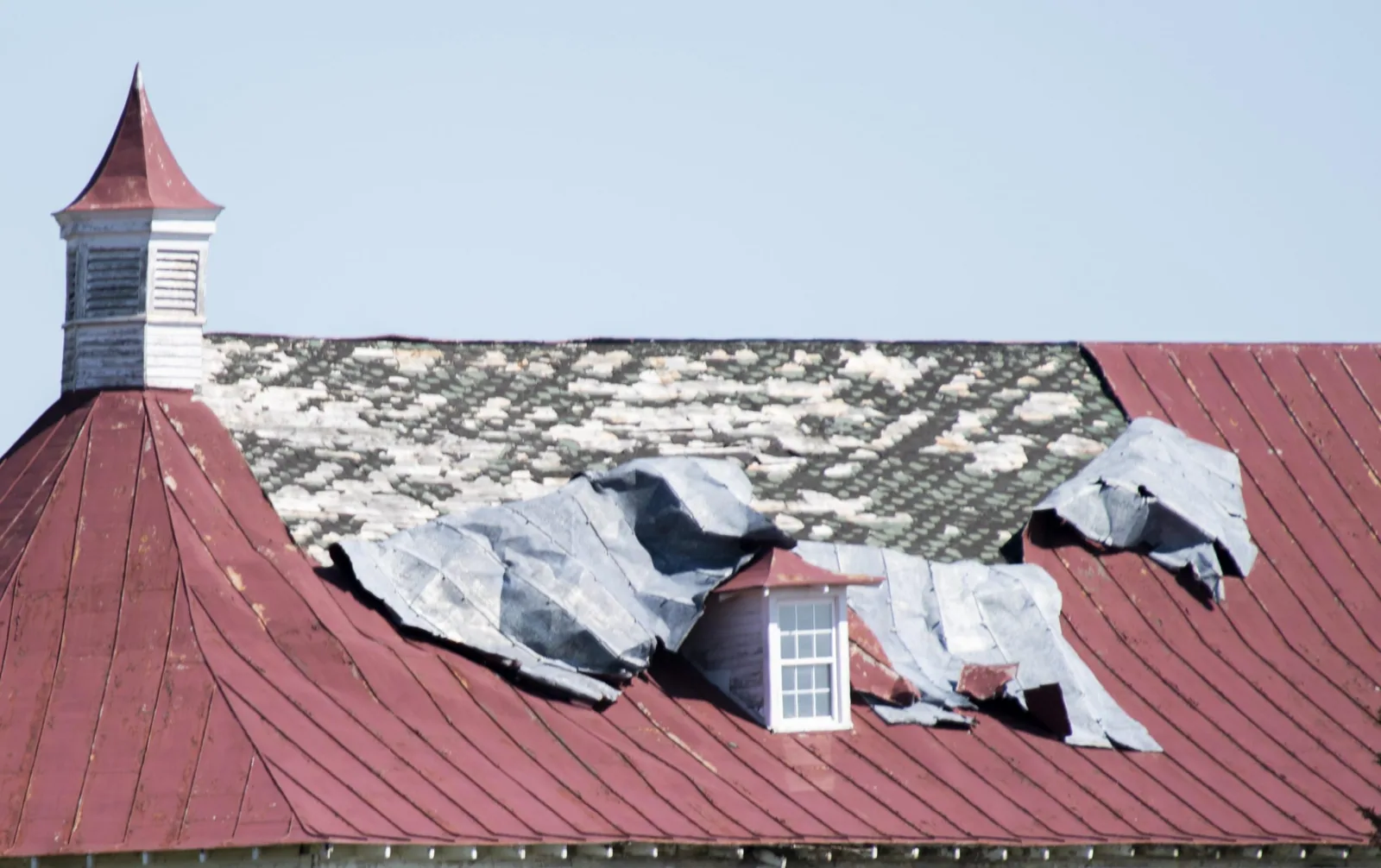
Golf-ball stones hit Bozeman for roughly half an hour in June 2010, and the August 2013 storm spread them over much of Belgrade and north Bozeman under gusts up to 89 mph. A large apartment complex can have dozens of roof sections, and a storm hits all of them at once. Damage shows up as bruised membrane, dented panels, cracked vents and lifted edges.
The first task after a storm is a systematic walk of every section, with a diagram that numbers each one and notes the damage. Separating storm damage from age is what keeps an insurance claim clean, and a section-by-section file avoids missed areas. We prepare it with the property manager so residents' reports and the roof record line up. Edges and fasteners get repaired in the order used for wind damage roof repair.
How do you reroof around people's homes?
With notice, in sections and with the entry paths protected. A letter to residents goes out before work begins, listing the dates, the hours and the areas affected. The crane and the staging area sit in a service lot, and parking is not blocked. Work proceeds building by building or wing by wing, so residents live with it for days and not weeks.
Noise is scheduled for daytime hours when most residents are at work, and balconies and entries below the work zone are closed for the day with signs posted. Debris is chuted into a container, and the site is swept at the end of each shift. Residents with medical equipment, night-shift schedules or pets get a direct phone call from the manager before their building starts, so the first morning of work is not their first notice. These are the working habits of occupied building reroofing in a place where people sleep.
Repair, recover or replace an apartment roof?
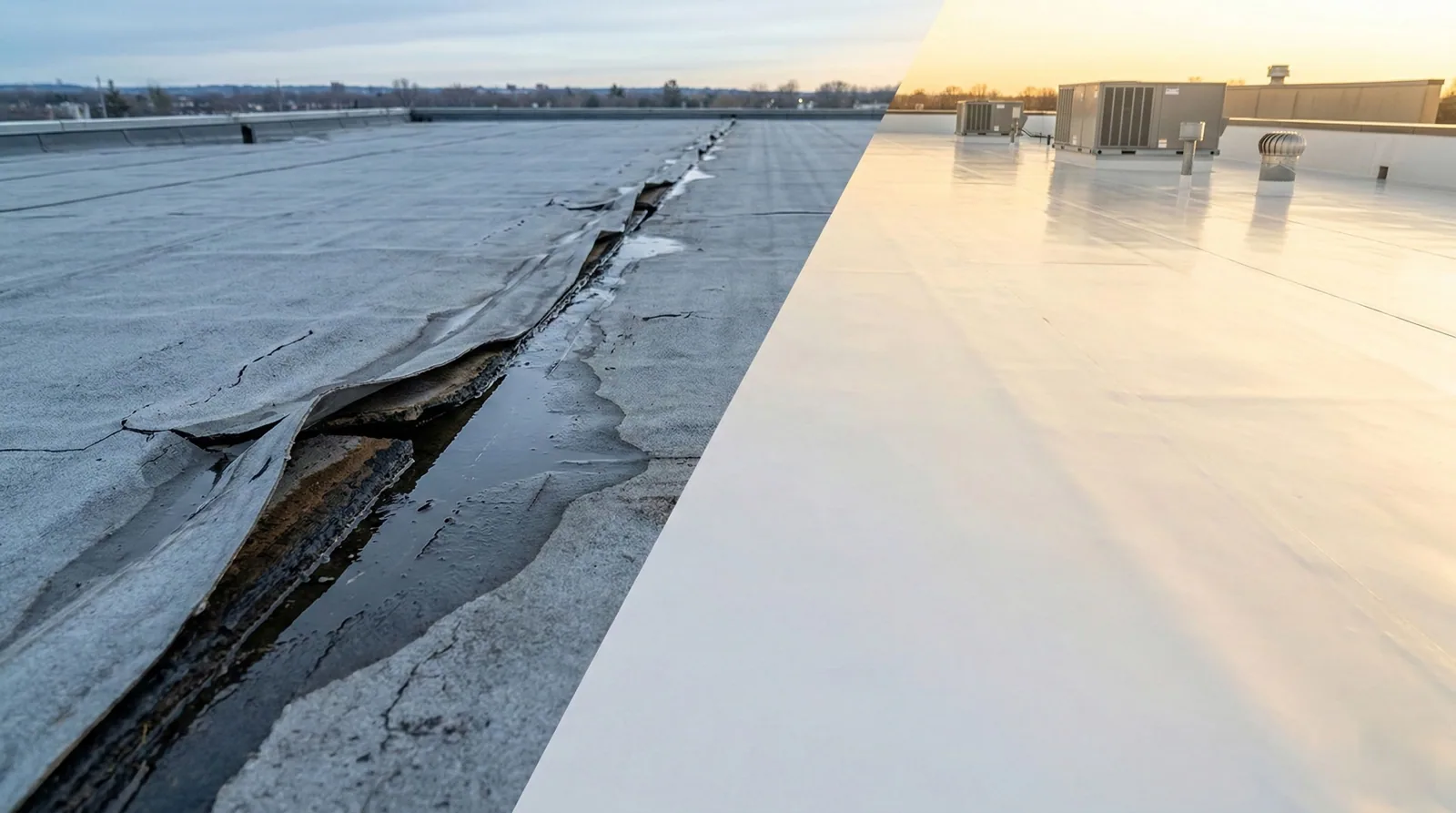
The answer comes from cores, moisture readings and a count of repairs per year. If one building shows repeated repairs and wet insulation, it is a candidate for replacement now, while the others can wait. A portfolio plan ranks the buildings and spreads the work across years, so the owner replaces the worst roof now and the next worst when the budget allows. Each building gets a condition grade, a remaining-life estimate and a cost range.
Infill housing is the aim of the Midtown urban renewal district along North 7th Avenue, which includes a planned 68,000 square foot mixed-use building, and a roof on a building like that serves residents and businesses at once. Buildings in Midtown along North 7th Avenue raise the same questions, and roofs over sleeping occupants call for the resident protections used on a senior living roof or a hotel roof. A multi-site roof program keeps the schedule consistent across buildings.


Questions About Apartment and Multifamily Roofing
The same unit gets a stain every spring. Is the roof or the unit above at fault?
Start with the roof directly above and the nearest vent, drain or wall flashing. A recurring spring stain usually means meltwater finds a weak detail after a thaw. We take a moisture reading, run a hose test and look at the attic. If the roof is dry, the plumbing in that chase is next.
How much notice should residents get?
A written notice at least a week before the work, listing dates, hours, areas affected and a contact number. A reminder goes out the day before each phase. The notice is part of the project plan, not an afterthought.
Do pitched apartment roofs need snow guards?
Often, above entries, walkways and parking. Snow sliding off a pitched roof can hit a resident or a car, so guards are placed over those areas and spaced for the pitch and the expected snow depth.
Can repairs be done in winter?
Temporary repairs can, and emergency calls are answered around the clock. Permanent work waits for a dry, moderate stretch because adhesives and sealants cure poorly in a hard freeze.