
Flashing Failure Repair in Bozeman, MT
Flashing Failure Repair in Bozeman and the Gallatin Valley
Where a roof meets a wall, the building changes materials, and that is where I look first after a Gallatin Valley winter. A research lab with three mechanical room curbs and a parapet on two sides has a dozen places where membrane turns upward and ends. Each one is held by a bar, a sealant joint and a bit of metal. The field of the roof can be sound while the edges are not. Which wall on your building holds the snow longest, and has anyone looked at the flashing behind that drift?
The membrane in the middle of the sheet rarely gives the first sign. The edges do.
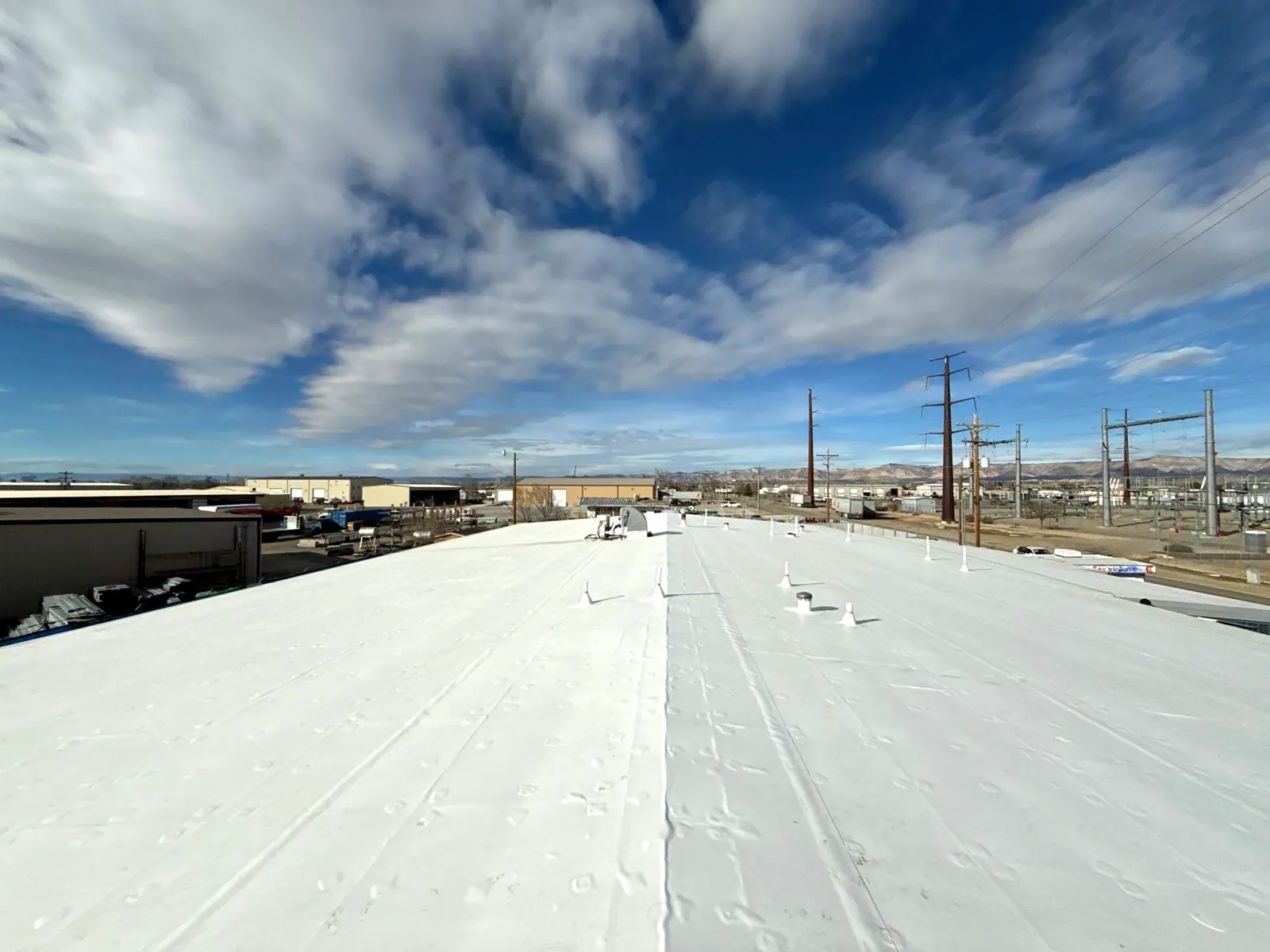
Where does flashing fail first on a flat roof?
At the terminations. The top edge of a wall flashing is where the membrane stops, and if that edge is not clamped and sealed, water runs behind it every time snow melts against the wall. The next weak point is the inside corner, where the sheet has to fold without stretching. After that come penetrations: pipe boots, conduit supports, the base of a vent, the collar around a hood. Each of these has a joint that moves with the temperature, and the sealant in that joint is the part that hardens, cracks and pulls away first.
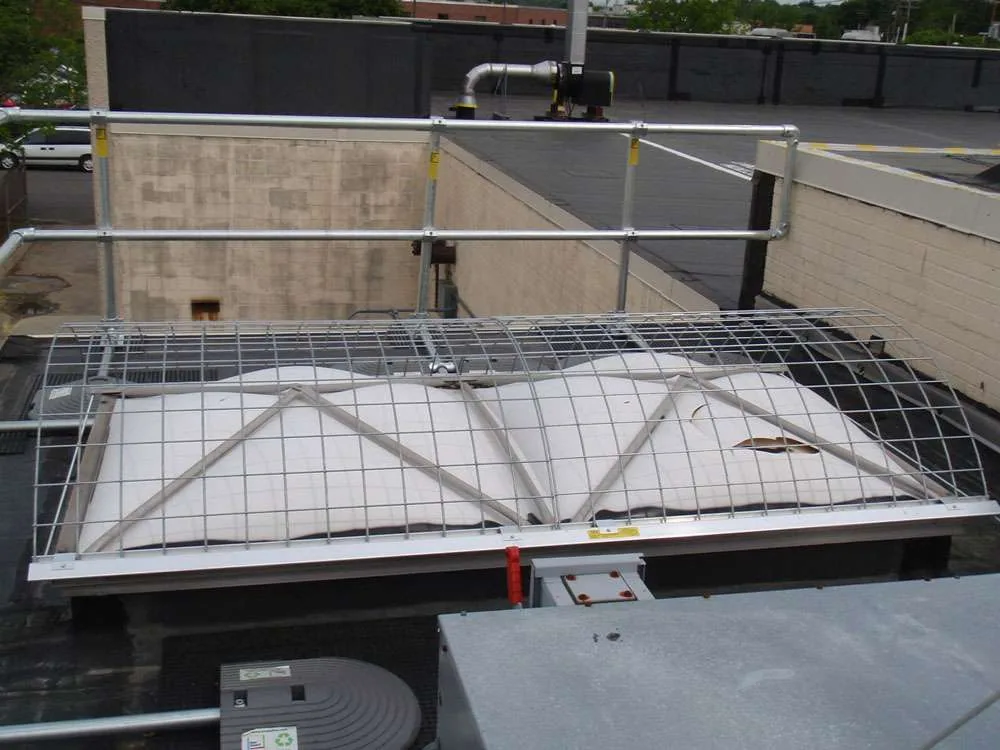
Skylights and hatches follow. Hail in June 2010 damaged a skylight at Fire Station 2 on North 19th Avenue, a reminder that curb flashing around glazing takes impact as well as weather, and storm-bruised curbs belong with hail damage repair.
What does the cold do to a flashing joint?
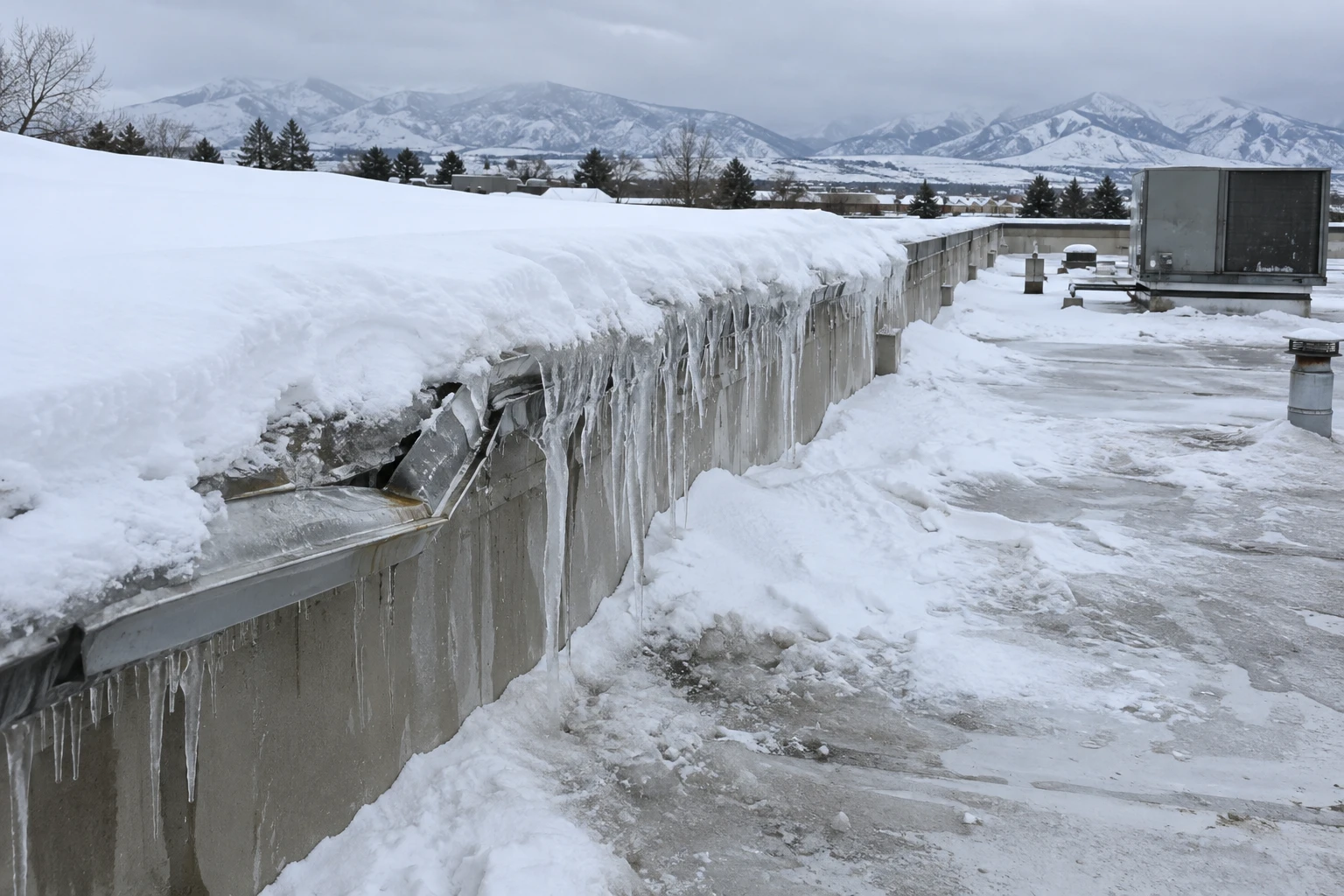
It tests it every night. Bozeman's January mean low is near 15 degrees, the record is minus 46, and a metal counterflashing can swing through a wide temperature range in a single day. Metal expands and contracts faster than the membrane it sits on. A bead of sealant that was soft in September becomes brittle in a cold snap, and the gap between metal and wall opens just enough to let in meltwater. That water then freezes in the joint and widens it.
Snow adds its own load, and the heavier winters are covered by snow and ice damage repair. A drift behind a parapet or a rooftop unit presses against the flashing for weeks, melts at the surface on warm afternoons, and drains along the wall. If the flashing top is open, the water goes behind it and into the wall cavity or down into the insulation.
How do you trace a leak back to the flashing?
By following the water upstream and then checking the obvious suspects with a hand on the surface. A stain on the ceiling directly below a wall is a strong hint, but the water may have traveled along a deck rib or a duct before it dripped. We look at the base flashing for splits, at the lap where it meets the field membrane, at the termination bar for loose fasteners and gaps, and at the counterflashing for lifted metal.
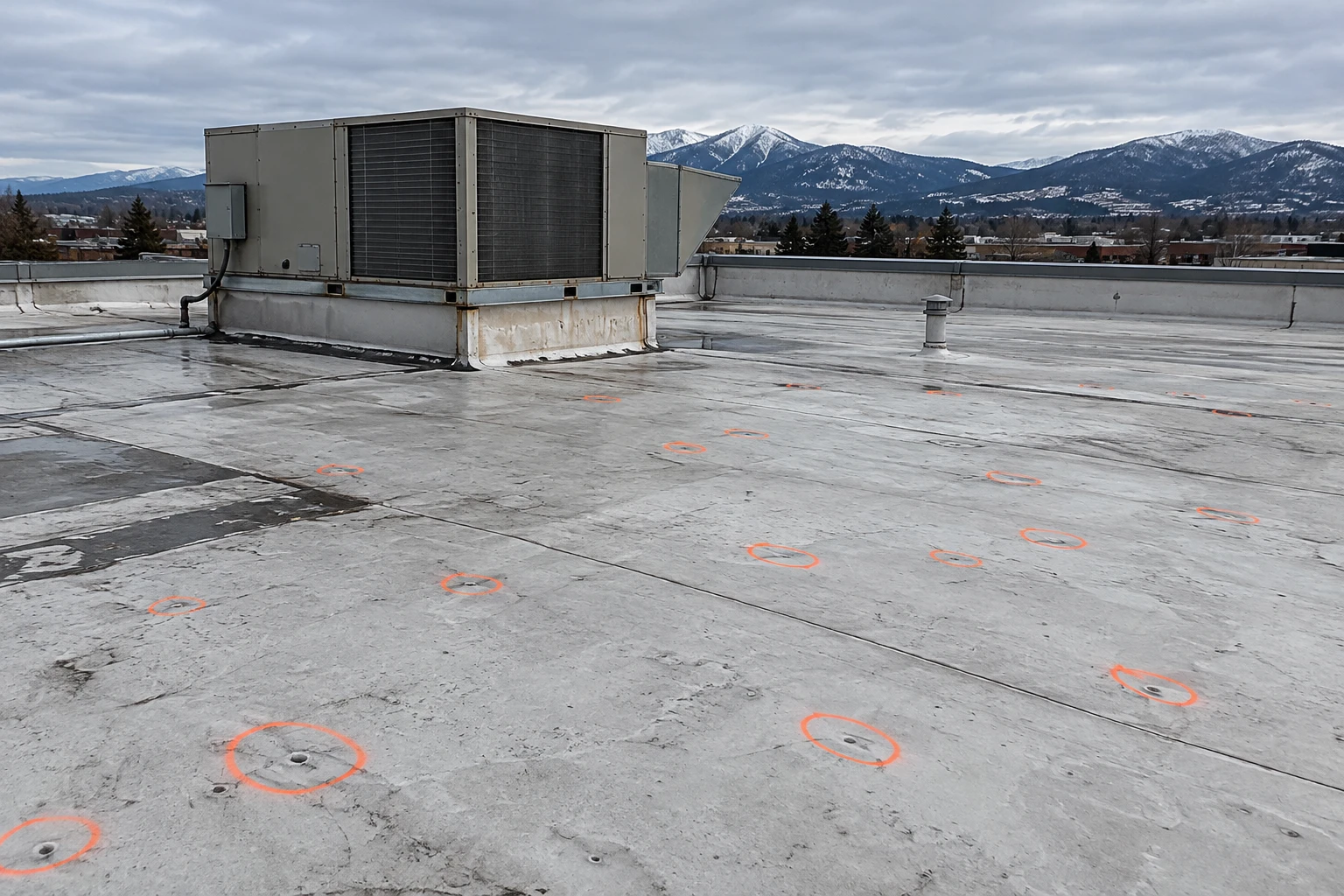
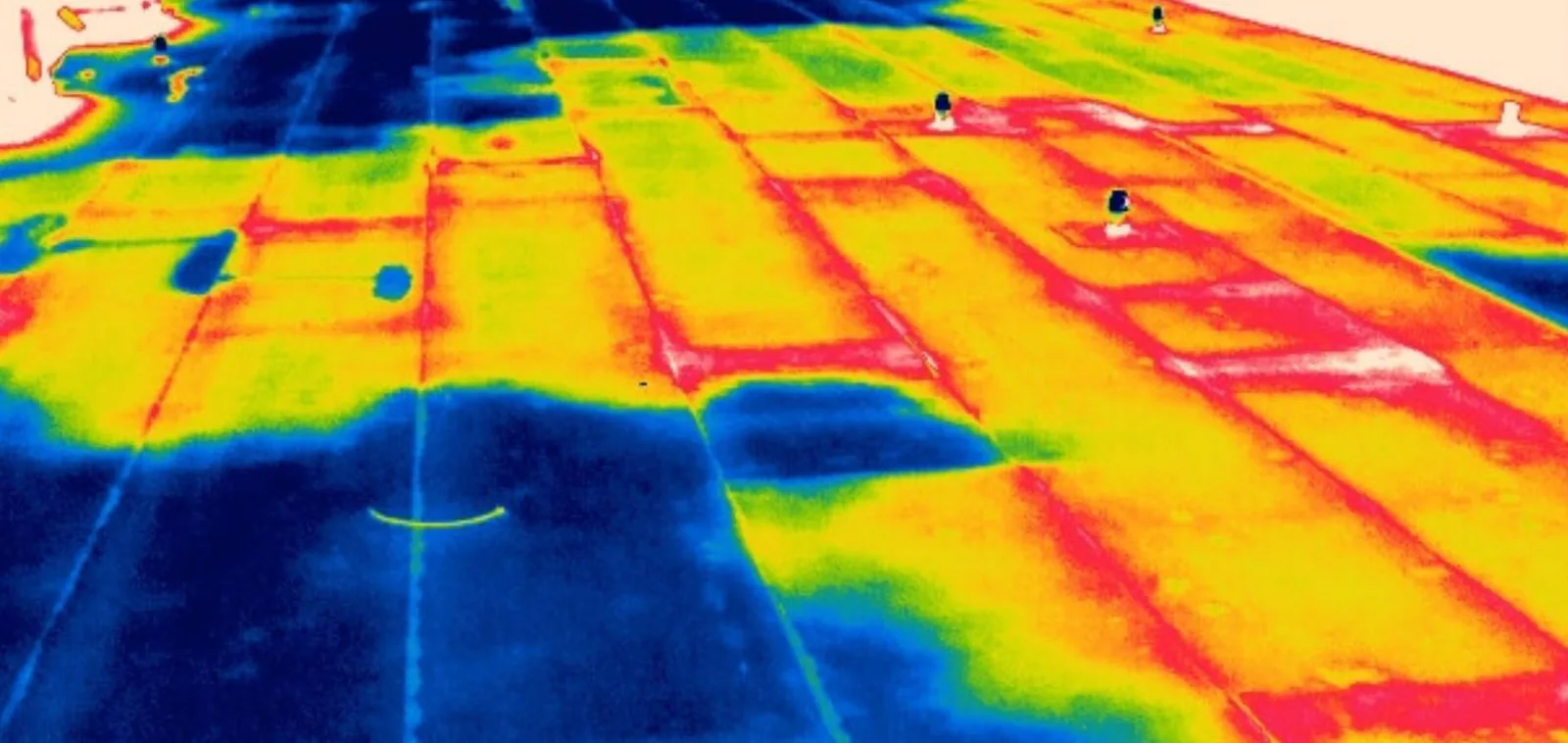
On a larger roof we use an infrared moisture survey to find wet insulation around the suspected flashing, because wet insulation tells us the leak has been running long enough to matter. A dry scan means the problem is probably recent and a patch will hold. A wet scan means the repair has to include cutting out damaged material.
What does a proper flashing repair involve?
It starts with taking apart what failed. We remove old mastic and cracked sealant, lift loose counterflashing, and clean the substrate until a new bond will take. Then we install new membrane flashing that is compatible with the field sheet, mechanically terminate it at the top with a bar or a continuous clamp, and finish with a sealant matched to the joint movement. Coping and edge metal go back on with a continuous cleat. Where a wall is masonry, we cut a reglet and set the counterflashing into it instead of surface-gluing it.
Complex shapes call for a liquid-applied flashing resin. It cures around odd pipe clusters and equipment bases that a pre-cut boot cannot fit. We pull-test the finished detail, then photograph it so the owner can see what is now behind the metal.
Which buildings in the valley have the most flashing to watch?
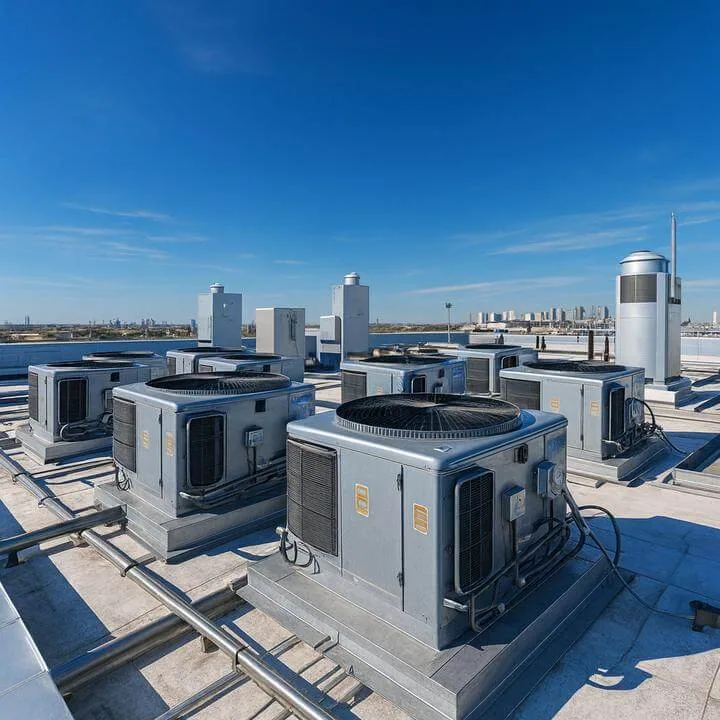
Buildings with many penetrations per square foot. Lab buildings on the Montana State University campus, on the south side of town, tend to carry exhaust stacks and equipment curbs that all need sealed terminations. The retail centers along North 19th Avenue have rooftop units on curbs, and a tall parapet to catch drifts. Older masonry in downtown Bozeman has flashing set in mortar joints that have weathered, and a reglet that has pulled loose will let water behind the whole run.
In Big Sky, where about 162.7 inches of snow falls in a year, flashing sits buried for months under a snowpack and then meets a rapid melt. A termination that holds in Bozeman can fail there.
When should flashing work be done?
Before the snow lands, and while the temperature is high enough for sealant and adhesive to cure. Cold-weather adhesive windows are short, and a sealant applied below its minimum temperature never reaches full strength. If a leak forces a winter repair, we use cold-rated products and treat it as temporary until the thaw allows a permanent fix.
A seam that has opened at the base of a wall is a related repair, handled the way seam failure repair is, and the two often get fixed on the same day. We also check the drain sump nearest the wall, since a blocked outlet puts water against the flashing for longer than the detail was ever meant to see it. The order of work is simple: dry the area, strip what failed, rebuild the termination, test it, and photograph it before the metal goes back on.
Questions About Flashing Failure Repair
Why does the same wall flashing keep leaking after we caulk it?
Caulk is a stopgap that fails where metal moves. If the termination bar is loose, the counterflashing has lifted or the membrane has split below the bead, new sealant covers the opening without closing it. We remove the old bead, rebuild the termination, and use sealant only where the joint truly needs it.
A parapet drain and a wall flashing meet on one corner of my roof. Who fixes which?
We handle both as one repair. A scupper or drain at a parapet is flashed into the wall, and if the flashing fails the drain leaks as well. We rebuild the sump, set the drain, and turn the membrane up into a new termination so the water has one clear way out and no seam sitting in the flow.
How can I tell flashing damage from hail damage on a skylight curb?
Hail leaves bruises, cracked glazing or dents in the curb metal, usually on the side that faced the storm. Flashing failure shows as opened laps, lifted sealant or staining that runs down from the top edge. We photograph both and mark which damage belongs to the storm, which helps if an insurance claim follows.
Does it make sense to repair flashing on a roof that is near replacement?
Yes, if the field of the roof still has life. A flashing repair is a small cost next to the damage a leak does to a ceiling and a wall. If the field has already failed, we say so and put the money toward a recover or a replacement where the flashing is rebuilt as part of the new roof.
Will flashing repair disrupt tenants in an occupied building?
Rarely. The work happens on the roof edge and at penetrations, so tenants usually notice nothing but some noise. We schedule loud work such as cutting masonry reglets around the quiet hours of a medical or office building, and we keep equipment away from air intakes.