
Shopping Center Roofing in Bozeman, MT
Shopping Center Roofing in Bozeman and the Gallatin Valley
A strip center in a Gallatin Valley February tells its story in the ceiling tiles. The nail salon at one end has a bucket, the shoe store in the middle has a brown ring, and the landlord has one roof and eight tenants, each convinced the leak is next door. After a winter in Bozeman, MT, what the roof of a multi-tenant center needs most is a map: which tenant sits under which drain, which unit sits on which curb, and where the water actually crossed the line. Who holds that map for your center?
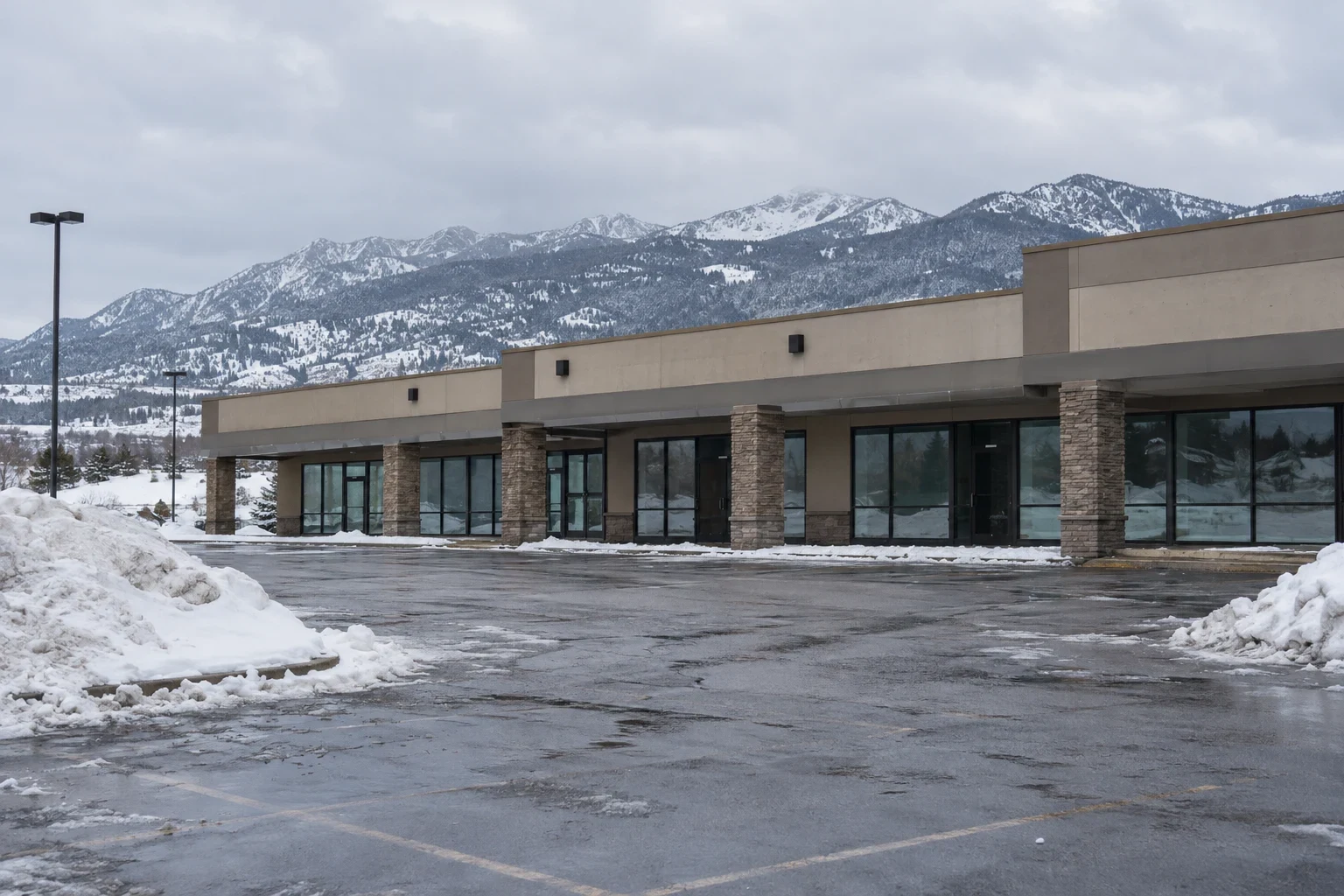
Why is a shopping center roof harder to read than a single store?
A single-tenant building has one owner, one set of rooftop units and one story about the leak. A shopping center has many. Each tenant may have added a unit, cut a vent or run a line through the membrane over the years, and each of those penetrations is a place where the roof was cut and sealed by someone, at some point, with some product.
The roof is also one continuous surface, so water that enters over unit three may travel along the deck and show up above unit six. I start by drawing the roof from above, numbering every penetration and marking each drain. Then I match the drawing to the tenant list. Once that exists, the stained tiles stop being an argument and become data. A moisture meter along the line between two units, a hose test at the suspect curb and a look at the underside of the deck usually settle where the water crossed. The drawing then travels with the center, so a new property manager inherits the answer instead of repeating the search.
What does snow do to a long, low retail roof?
Roughly 54 days of snow and a yearly total near 91 inches mean a long strip roof in Bozeman sits under white for much of winter, with December the heaviest month. A long strip roof has a tall front parapet or a canopy, and snow drifts behind it all winter. The drift sits against the wall through repeated thaw cycles, and the water works its way under the flashing and refreezes at the scupper.
Against a listed design ground snow load of 50 psf, a drift can exceed the average load on the roof around it. I look at the parapet flashing, the scupper openings and the field just behind the wall. A dished membrane after a thaw means water stood there and the deck below may be flexing. Where the front of the roof meets a decorative canopy or a sign structure, the junction is another place I check, since sealant there dries out and splits after a few freeze cycles. Clearing and enlarging roof drains and scuppers keeps that drift from becoming a pond.
How do tenants' rooftop units change the roof?
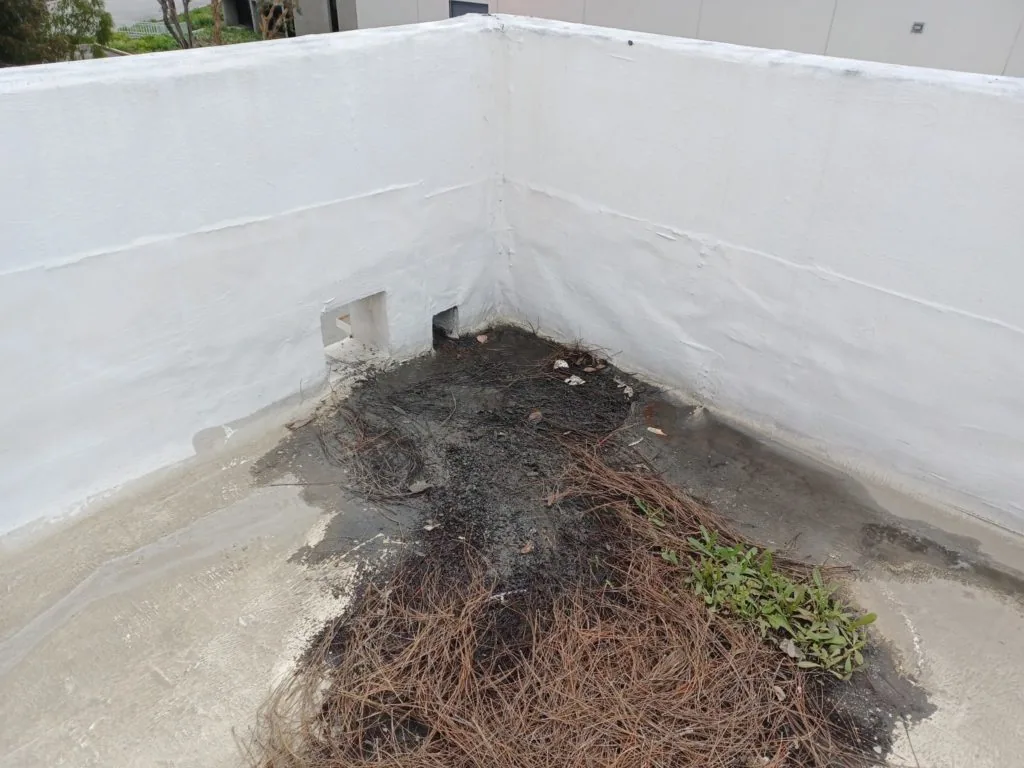
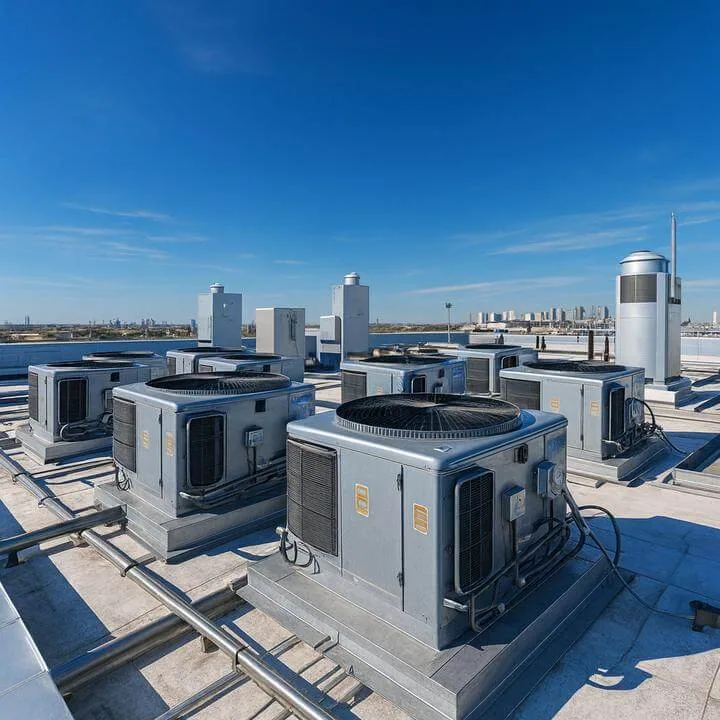
Every rooftop unit sits on a curb or a support, and every curb is a flashing detail. When a tenant replaces a unit, the new curb may not match the old one, and the flashing can end up patched instead of rebuilt. Condensate lines, gas lines and conduit add penetrations. Over a decade, the roof can accumulate a dozen small repairs, each a possible leak.
We inventory the units, check the flashing at each curb and note which ones need new supports or sleepers. Rebuilding a curb so the membrane laps correctly is part of the work on rooftop equipment curbs and supports. A lease clause that requires tenants to notify the landlord before cutting the roof prevents most future damage, and a short written procedure for roof access, with a log of who went up and why, keeps foot traffic from wearing paths into the membrane. Walkway pads placed between units and the access hatch protect the routes service technicians already use.
What did the hail storms mean for retail roofs?
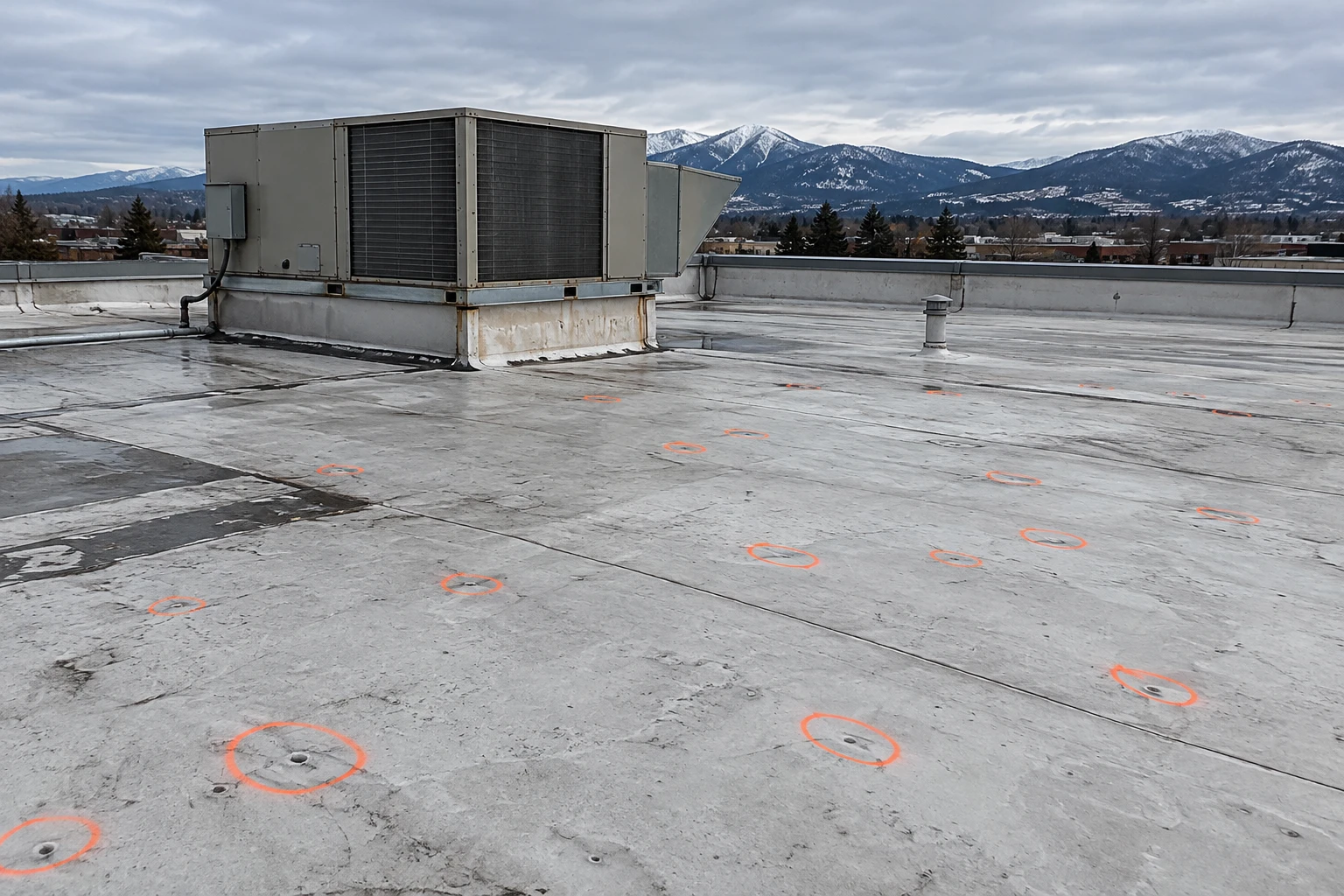
Golf-ball stones hit Bozeman for roughly thirty minutes in June 2010, and a second storm carried them over much of Belgrade and north Bozeman in early August 2013 behind gusts as strong as 89 mph. A shopping center has a large roof area and a lot of exposed membrane, which means a lot of surface to bruise. Hail marks show only when you walk the field.
After a storm, we walk the entire roof, photograph each bruise with a scale reference and test the worst for moisture beneath. The report separates bruises that let water in from cosmetic marks, so the owner can bring a clean file to the carrier. A scoped hail damage roof repair follows the same record.
How do you reroof a center that cannot close?
You work around the shoppers. The staging area goes in a corner of the parking lot, fenced and lit, with the crane pick scheduled for early morning before the stores open. The tear-off moves in bays, each dried in before the crew leaves. Walkways under the work are covered, and the front entrances stay open.
Timing matters as much as sequence. Retail has a busy season, and a roofing crew in the lot during the weeks before the holidays costs the tenants real money. We book centers for late spring through early autumn and finish before the holiday traffic. Deliveries are timed so trucks never block fire lanes or loading docks, and the dumpster sits where tenants' own trash service cannot be blocked. A daily note to the property manager lists the day's work, the closed areas and the next day's plan, which is the routine for occupied building reroofing.
Should the owner repair, recover or replace?
Cores and a moisture survey settle it. Where the insulation is dry and the membrane has years left, repairs at the curbs and parapets can carry the roof. A recover makes sense when the deck is sound and the old roof is mostly dry. It saves tear-off time and keeps tenants undisturbed, but it adds weight to a deck that already carries drifts, so the framing is checked first. Replacement is right when wet insulation runs across the roof.
Owners with other properties along North 19th Avenue or near Four Corners can compare centers on one ranked list. A large junior tenant's roof behaves like a big-box retail roof, a grocery tenant adds the refrigeration load seen on a grocery store roof, and a pad restaurant brings the kitchen exhaust of a restaurant roof.

Questions About Shopping Center Roofing
Two tenants blame each other for a leak. How do you find the real source?
I map every penetration, drain and seam on a roof drawing, then compare it with the stains. Water-test the suspect curb or flashing with a hose while someone watches from inside, and take a moisture reading along the line between the two units. The source almost always sits at a penetration, not where the stain appears.
Should the landlord or the tenant pay for a rooftop unit's flashing?
That depends on the lease, which is a conversation for the owner and counsel. From the roof side, we document who installed each unit, the condition of the curb and the cost of a correct repair, so the decision rests on facts instead of guesses.
Can the center stay open during a full replacement?
Yes. Work moves in bays, each dried in daily, and the front entrances stay open. Deliveries and noisy phases avoid peak shopping hours, and a daily note goes to the manager.
How soon after a hailstorm should the roof be walked?
Within days, before the next rain, so any breach can be dried in and documented. Waiting weeks lets water soak insulation and complicates the claim, because age and storm damage blur together.