
Rooftop Equipment Curbs and Supports in Bozeman, MT
Rooftop Equipment Curbs and Supports in Bozeman and the Gallatin Valley
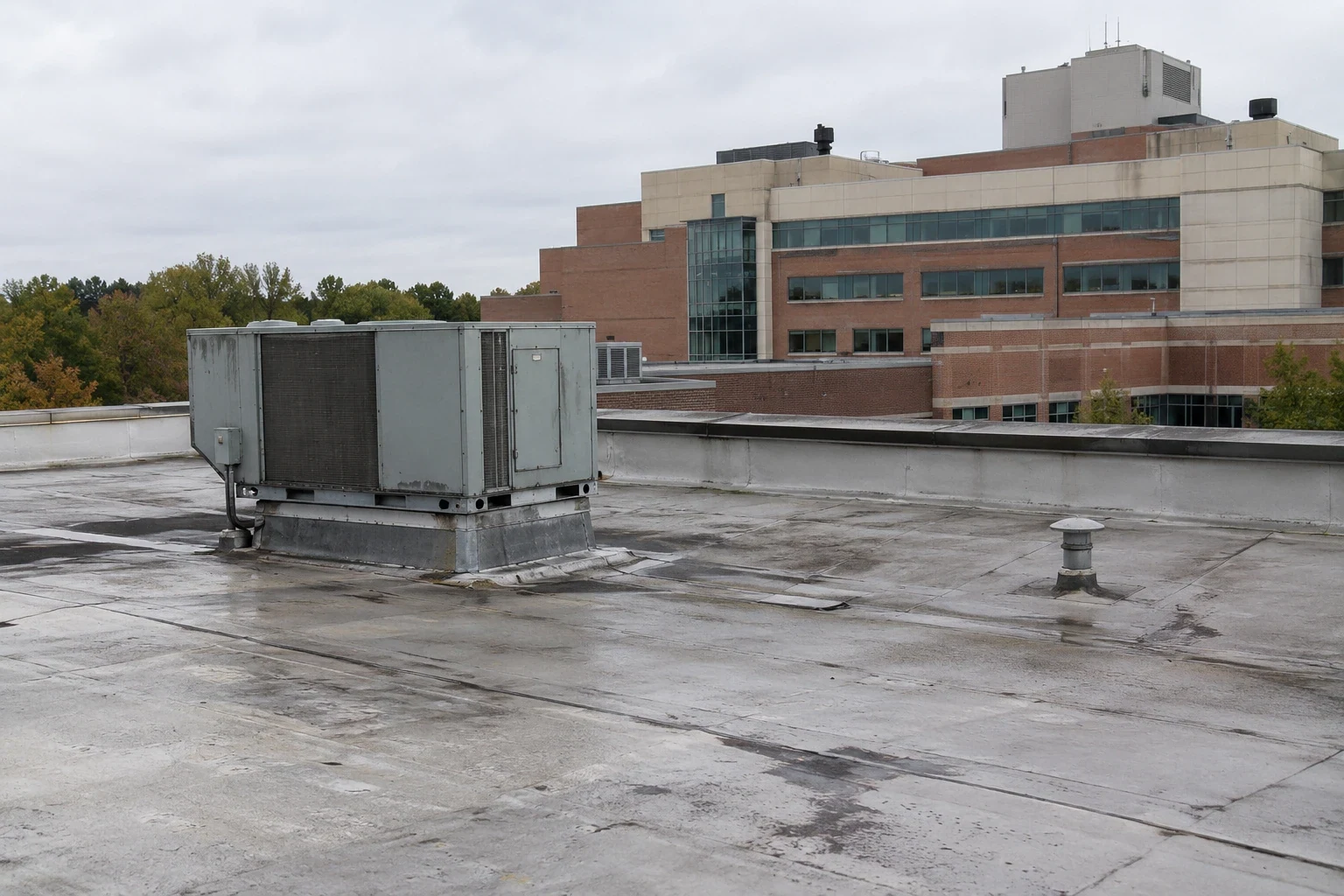
A mechanical room curb on a lab roof is a box that sits on the deck with a unit on top and flashing around its base. After a Bozeman, MT winter, the base of that box is where a drift sat for three months, where meltwater ran down the unit's cabinet and where a technician stood with a heavy filter in January. Bozeman gets roughly 91 inches of snow a year, and drifts build against anything tall enough to stop the wind. If a ceiling stain shows up under a rooftop unit, which side of the curb is the water coming in on?
We answer that from the roof, curb by curb.
What goes on the equipment inventory?
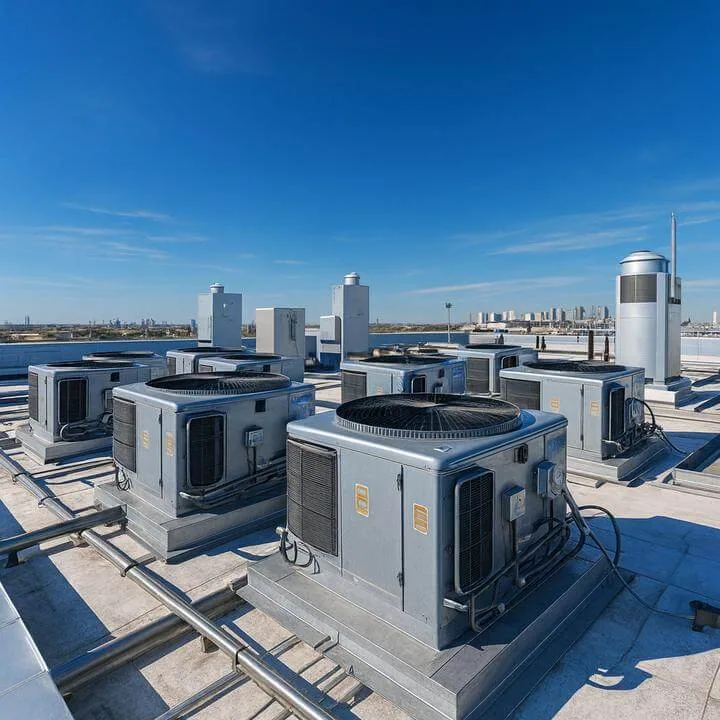
Every curb, stand and support gets a line. We record the type: a full curb under a unit, a rail support, a stand for a fan or a pipe support for refrigerant or gas lines. We note the height above the membrane, the flashing material, the termination, the fasteners and the condition. A photo goes with it, and a number goes on the roof plan.
Height matters most. A curb needs to rise above the expected drift and above the water level of a thaw. We measure the likely drift line behind parapets and walls and compare it to each curb's height. A curb set low in a drift zone will leak every spring, no matter how well it was flashed. The inventory ends up as a sheet that a mechanical contractor, a facilities lead and a roofer can all use.
The sheet has one more column that owners find useful: who owns the equipment. A tenant unit, a landlord unit and a shared unit each fall under a different part of the lease, and the roof file settles who repairs the seal when it fails.
Where do curbs and supports fail first?
At the corners and at the base. Flashing at an inside corner is the hardest detail to make, and it is where a crack starts. At the base, the termination bar loosens and sealant dries. On a unit that vibrates, the seal between the cabinet and the curb opens, and rain runs inside the curb and into the building. Supports for pipes fail differently: the pad under a pipe crushes the membrane, and the pipe rubs through.
Ice adds a cycle. Water that gets behind the flashing freezes, expands and widens the gap. Bozeman's January mean low is 15.1 degrees and the record low is minus 46, so the cycle is repeated through winter. A curb that was sealed in fall can open by February. We look for staining on the unit, on the curb face and below, because the stain marks the entry.
How is a curb repaired or rebuilt?
The repair depends on what is wrong. A cracked sealant bead is resealed. A loose termination bar is refastened with new sealant. A damaged flashing is cut out and replaced with new membrane, proper height and mechanical termination. A curb that is too low is extended, or the unit is raised on a taller curb. A curb that has rotted, rusted or shifted is rebuilt from the deck up.
Units have to be lifted for a full rebuild, which means a mechanical contractor and a crane. We coordinate the sequence: shut down the unit, disconnect, lift, rebuild, reset, reconnect, and seal. A rooftop unit is often the heating and cooling of a tenant space, so we plan the shutdown with the tenant and keep it short. Skylight and penetration flashing follows the same steps on a smaller scale.
Occupied buildings change the rules. A rooftop unit over a tenant space cannot sit open overnight, so the lift is planned for a window when the space can go without heat or cooling, and the curb is rebuilt and the unit reset the same day when the work allows. The occupied building reroofing sequence, with each opened section dried in before the crew leaves, applies to every curb job.
What do technicians do to the roof around equipment?
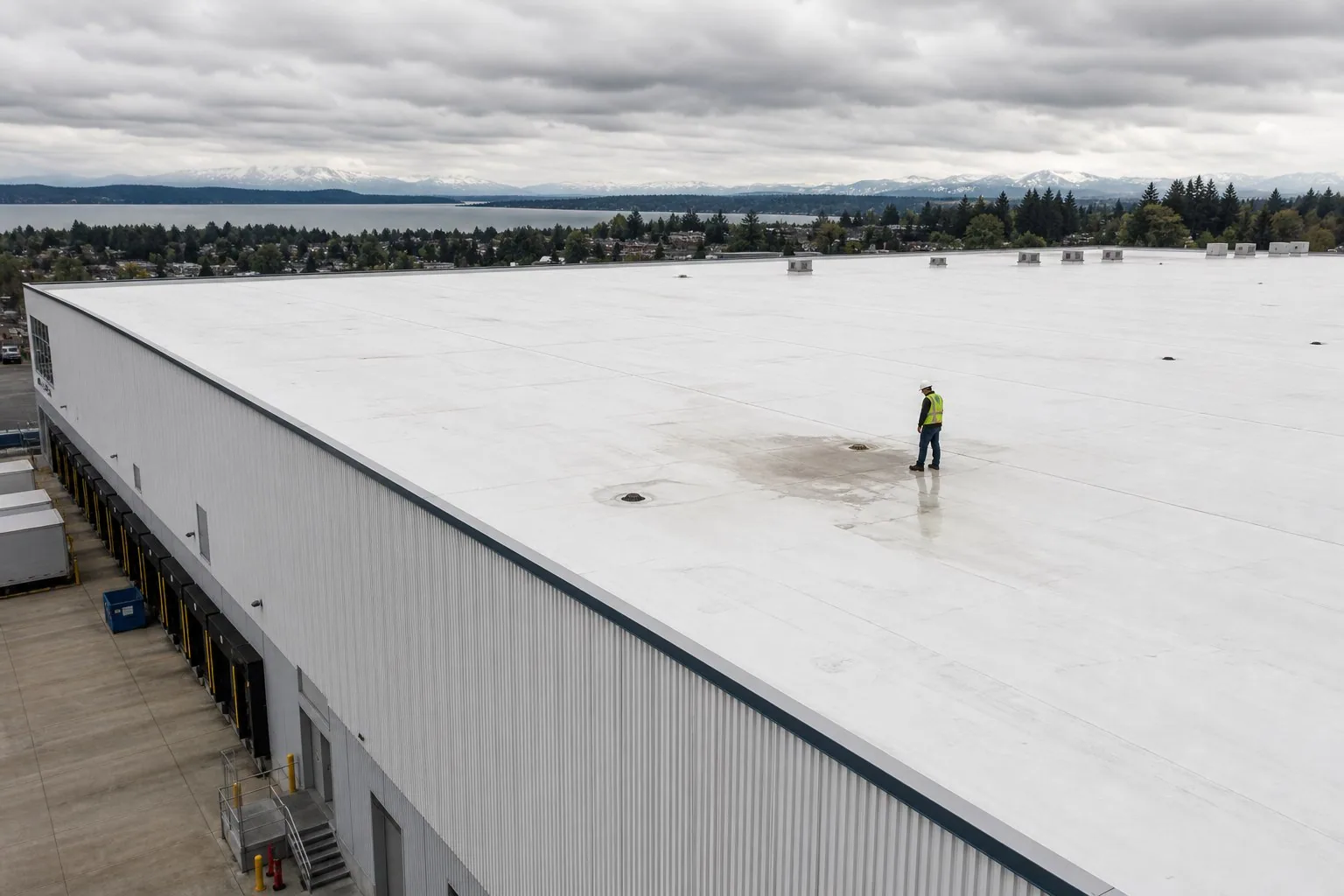
They walk it, kneel on it and carry heavy parts across it. Filters, belts, coils and compressors all weigh something, and every trip across the membrane wears a path. We find those paths on the inventory and mark them. A walk pad along the route and a platform at the unit cost far less than patching, and they give the technician a defined place to stand.
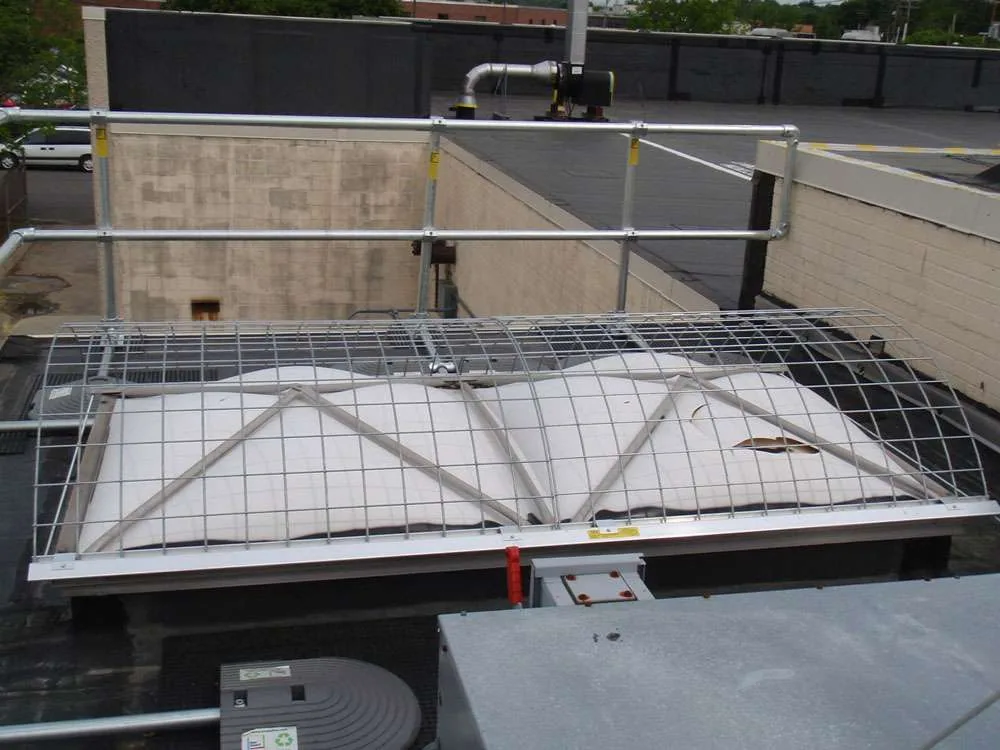
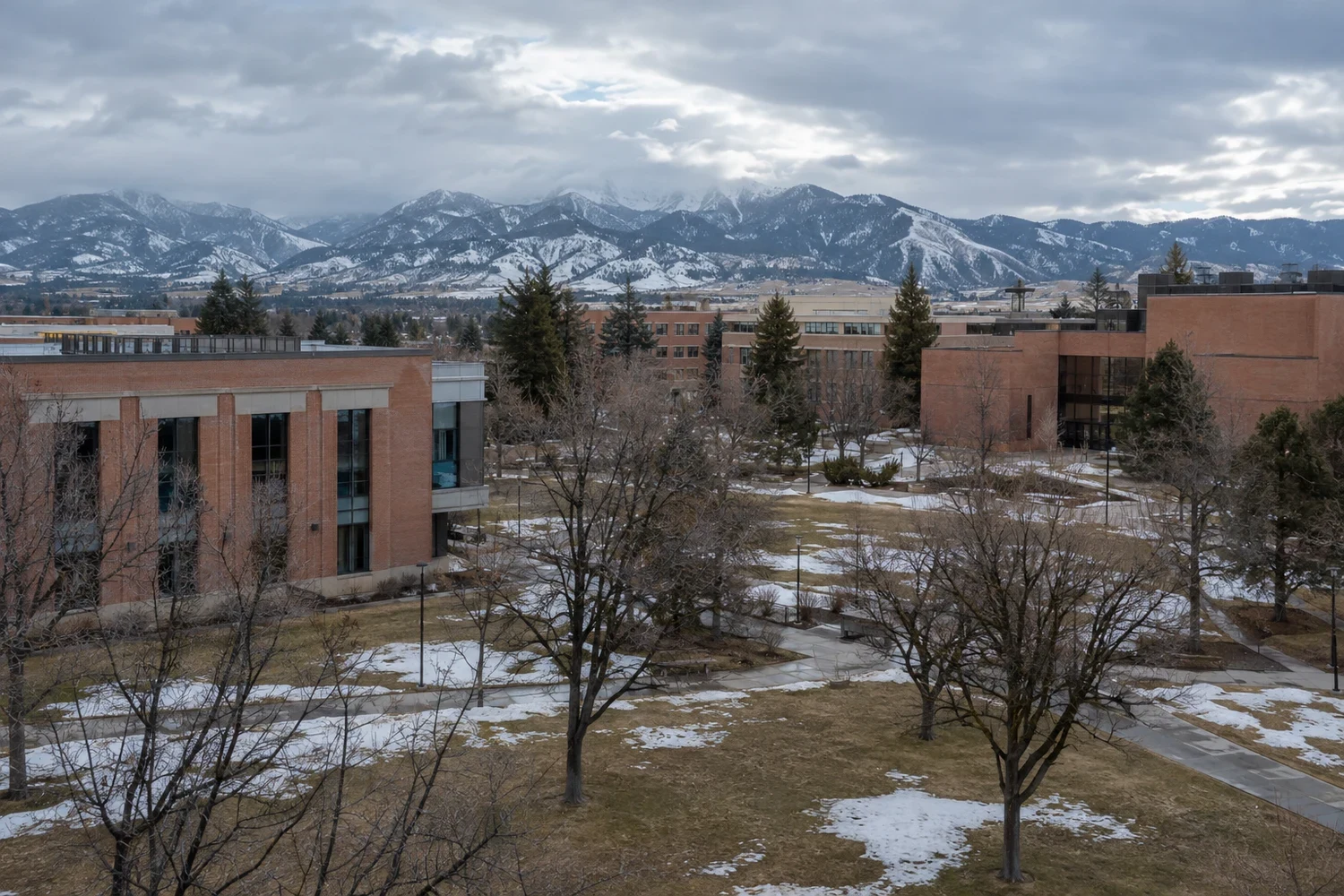
Access matters. A ladder that lands on a thin membrane punches through it. A hatch that sticks encourages a shortcut. We check the access path from hatch to unit and recommend fixes: a ladder pad, a handrail, a clear walk. For campus buildings in the Montana State University area, where lab and research buildings sit on the campus, the access plan is part of the roof file.
What do hail and wind do to equipment?
Hail dents cabinets, bends fins and cracks plastic housings. It also hits the flashing around a unit. A walk of the equipment after the June 30, 2010 storm, when golf-ball stones fell on Bozeman for half an hour, is how an owner learns which units took hits. The August 2013 storm repeated the lesson across Belgrade and the north side, with stones the same size and gusts up to 89 mph. Wind moves units on loose curbs, loosens panels and lifts light covers.
We check every unit after a storm of that size. We look for shifted curbs, bent supports, torn flashing and panels that moved. The mechanical contractor checks the unit. We check the roof around it. The two reports go into the same file. The leak repair work that follows a storm starts with the equipment, because a unit curb is one of the likelier openings above a ceiling stain.
Which buildings have the most to protect?
Retail on North 19th Avenue has many units and many tenants, and each tenant's unit may be serviced by a different vendor. Medical buildings add gas lines, exhaust and critical cooling, and a hospital roof or a medical office roof treats each curb as a critical item.
New construction brings its own risk. Mixed-use infill in Midtown, such as the planned building of about 68,000 square feet, is the kind of project where several trades set units and flash curbs at once, and a walk at turnover catches the details that were rushed. Future panels are another factor: solar-ready roofing plans should locate arrays so they do not shade or crowd existing curbs.

Questions About Rooftop Equipment Curbs and Supports
Can a unit be replaced without replacing its curb?
Sometimes. If the existing curb is sound, the right height and matches the new unit's footprint, it can stay. If the new unit is larger or the curb is damaged, it is cheaper to replace the curb during the same crane lift.
How high should a curb be?
High enough to clear the expected drift and the thaw water level, and high enough for the flashing to be formed correctly. We measure on site. A curb set low behind a parapet in Bozeman is likely to leak in spring.
What causes leaks at a unit's base?
Dried sealant, a loose termination, a damaged corner or a gap between the cabinet and the curb. Vibration works on all of them. Ice makes it worse. The stain's location tells us where to start.
Do pipe supports need flashing?
The support pad protects the membrane and the pipe may need a boot where it passes through. We use pads that spread the load and are compatible with the membrane, and we seal any penetration properly.
When should curb work be done?
Late spring through early fall, when adhesives and sealants can cure. Units come offline for the lift, so we plan it with the tenant and avoid the hottest and coldest weeks.