
Commercial Roofing on West Main and Around Gallatin Valley Mall
West Main and Around Gallatin Valley Mall in Bozeman and the Gallatin Valley
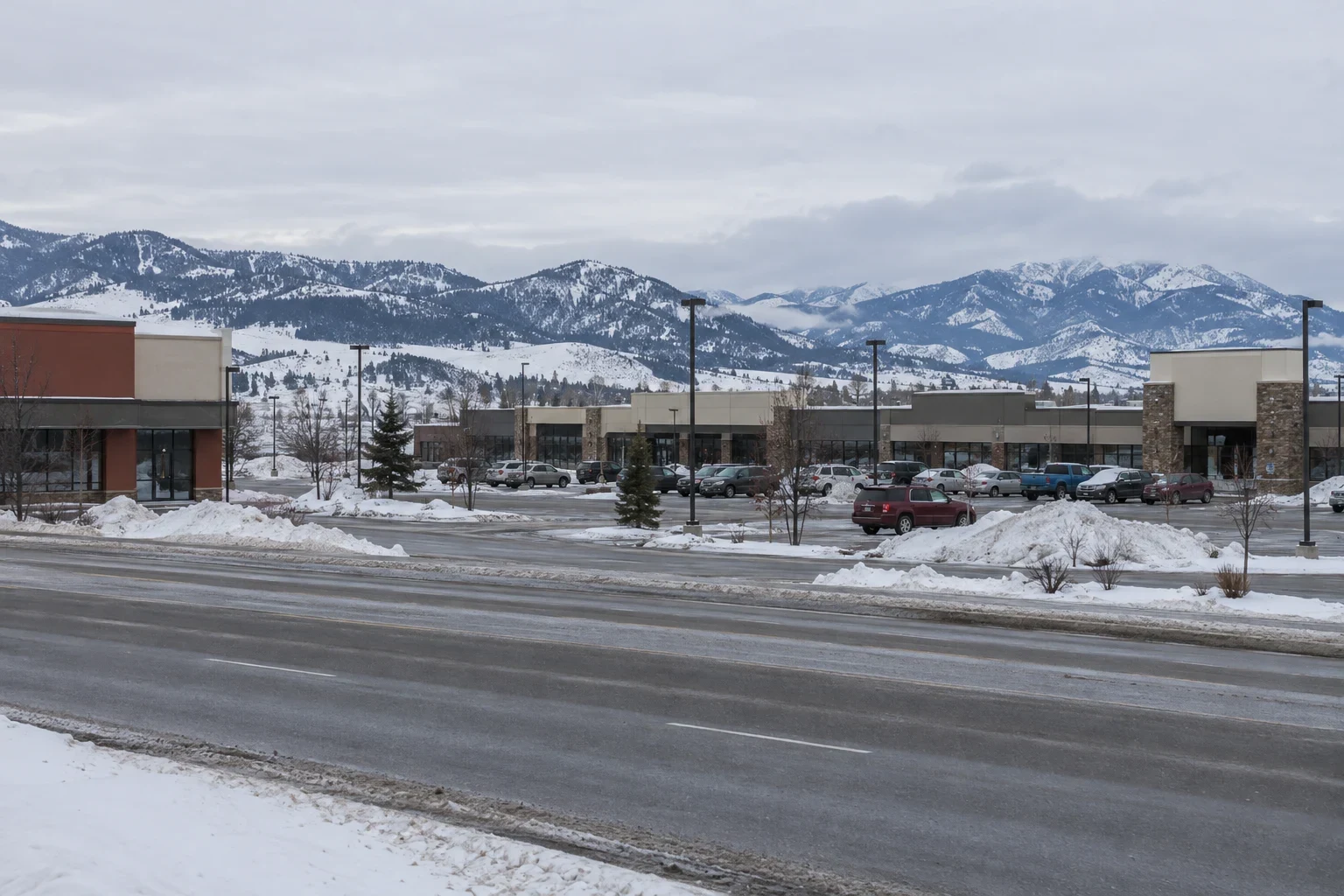
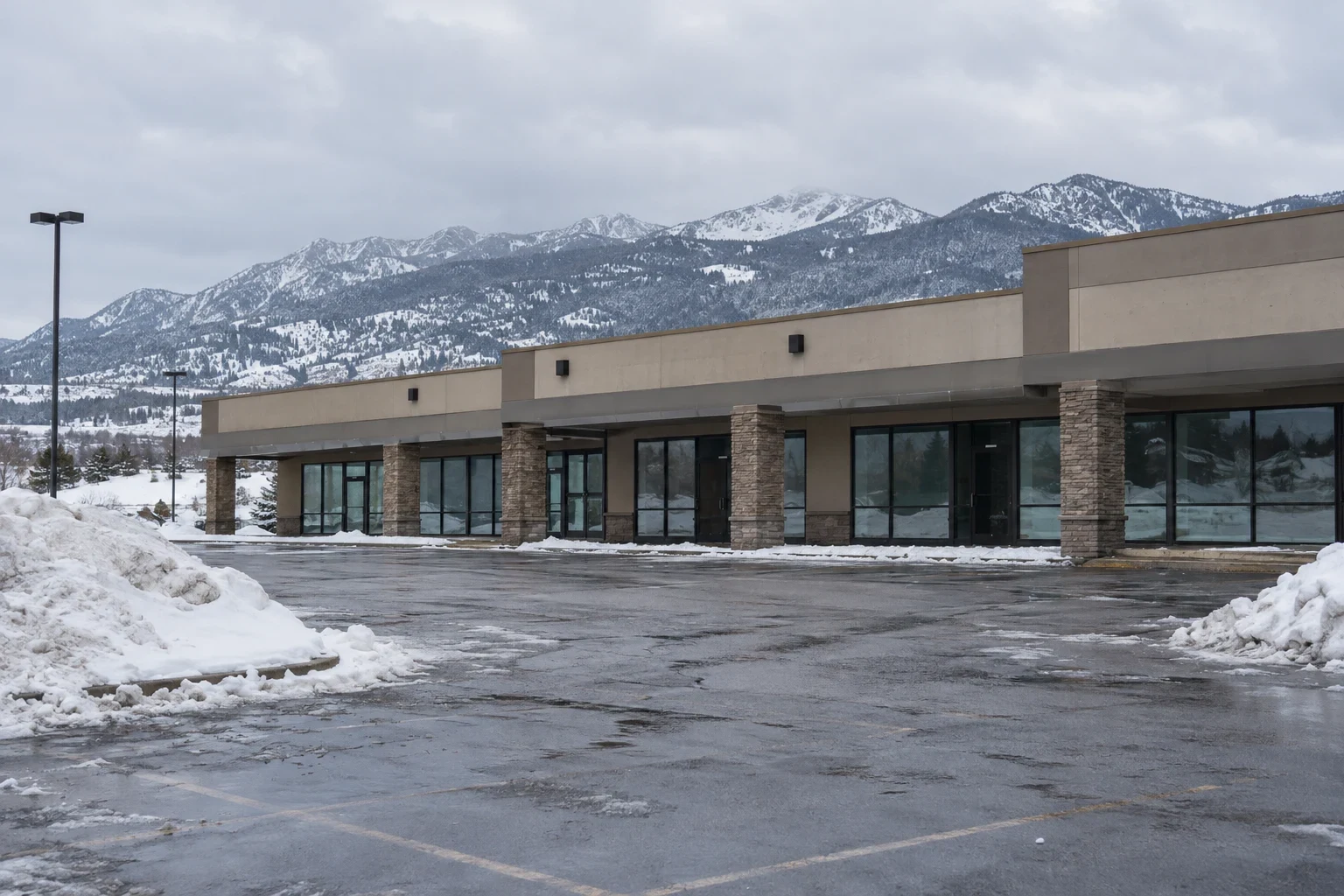
A single-story retail building with a wide flat roof keeps its secrets well. From the parking lot you see a clean parapet and a few rooftop units. From the roof you see the drifts that formed behind every unit, the ring of ice around each drain and the patches that have been stacked on the oldest seams. The West Main district around Gallatin Valley Mall, a mall that opened in 1980 as Main Mall, is the kind of retail district with long, low, flat buildings, which means a lot of roof and few places for the water to go.
Retail roofs show their trouble in winter because of what snow does to a wide flat surface. If your tenants reported a drip last March, which drain was closest to it, and did it clear that week?
What kinds of roofs sit along West Main?
The district centers on a single-story mall of about 65 stores, and large single-story retail like that is best thought of as one wide plane with sections tied together by parapets, expansion joints and roof drains. Retail and service buildings around a mall like this commonly carry their own flat or low-slope roofs.
A retail roof typically has rooftop units for each tenant, a drain or two per roof section and a parapet wall around the edge. Where several owners or tenants answer for different roof sections, I walk the whole roof system, not just the section that reported a leak, and I mark the boundaries on a plan so everyone sees where the work stops.
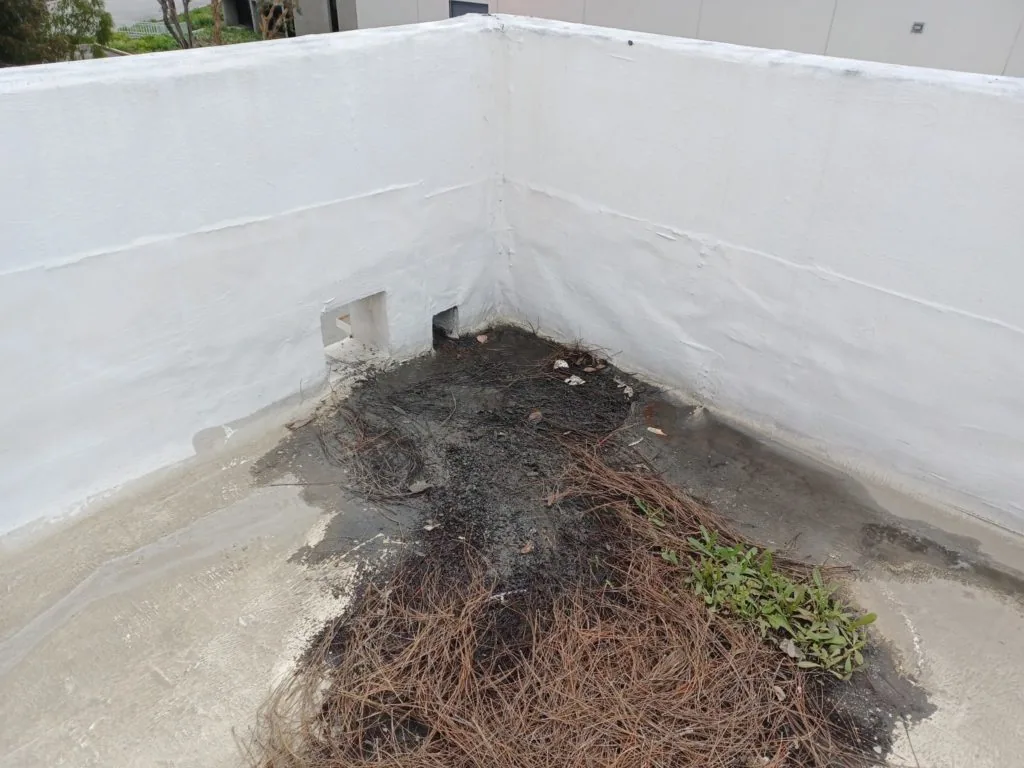
Parapets and expansion joints deserve their own look on a roof this wide. A parapet cap that has opened lets meltwater run behind the wall, and an expansion joint that has hardened tears when the building moves in the cold. With January nights near 15 degrees F, a long roof changes length enough over a winter to work every joint on it. I look for cracked sealant, split cover strips and flashing that has pulled from the wall, and I fix those before they feed the drain problems below.
Why do drains decide the winter on a big flat roof?
A wide flat roof sheds water to a few points. About 16 of Bozeman's 91 inches of snow arrive in December alone, and all of it has to melt and reach a drain or a scupper before it can leave the roof. If a drain is packed with grit or frozen into a sump, water backs up across the field and sits against the parapet, adding weight to a deck designed for 50 psf of ground snow.
I check each drain for a clear strainer, a clean bowl and a sump that is the right depth. I check scuppers for ice damage and for a clear downspout. I walk the roof for low spots where water stands for two days after rain. The roof drains and scuppers work often comes first on a big flat roof, because correcting a pond is cheaper than replacing the membrane the pond has damaged.
What do rooftop units do to a retail membrane?
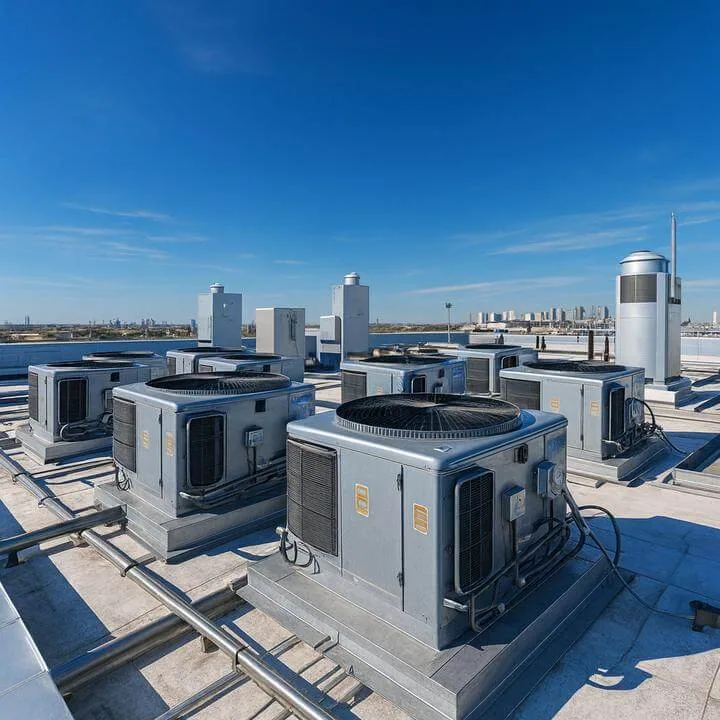
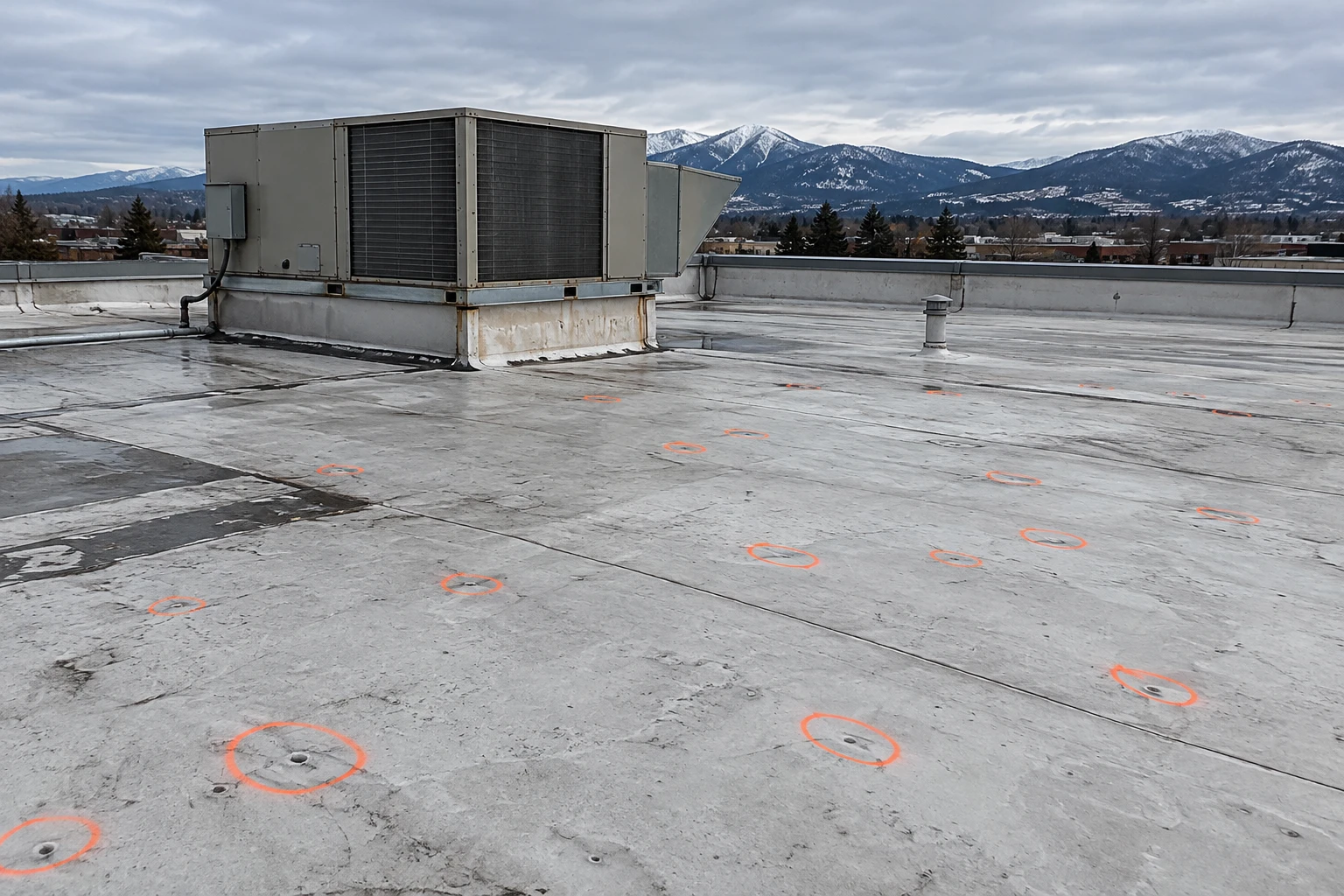
A retail roof carries a unit for almost every tenant space, and each is a curb with flashing, a set of refrigerant lines, a condensate drain and a service path. Tenants change, and every change can mean a new unit, a moved unit or a cut that was never flashed properly. Snow drifts behind each unit, and the lee side holds meltwater against the curb through the thaw cycles of late winter.
I check the flashing at every curb, the sealant at every line and the membrane around each unit for wear from foot traffic. Walk pads along the technician's route protect the field. Condensate lines that discharge onto the membrane are another quiet problem: a steady drip over one spot softens the surface, grows algae and wears through in a few seasons, so a line is extended to a drain or to a splash pad. Our rooftop equipment curbs and supports work re-flashes the weak ones and adds supports so lines do not rest on the membrane. The other big retail strip, North 19th Avenue, has the same pattern of units and curbs.
What did the 2010 hailstorm mean for a flat roof?
The June 30, 2010 hailstorm put golf-ball stones on Bozeman for roughly thirty minutes, took out dozens of Montana State University windows and tore up the Ellen Theatre marquee downtown. A flat membrane roof under hail like that can carry bruises, fractured membrane or crushed insulation that feels soft underfoot, and a bruise may not leak until the next thaw.
After a major hail event, I walk the field in a grid, press on suspect spots and mark them with chalk and photographs. Skylights, rooftop unit housings and metal flashing show dents first. A hail damage repair scope separates bruises that need repair from marks that are only cosmetic. For an owner with several tenants, that record also shows which sections were affected and which were not, which keeps an insurance discussion focused. The same walk helps when a flat roof has stood for decades: a photo set with chalk marks shows the age pattern of the membrane, where the oldest seams are and which patches have been stacked, and it lets the owner plan sections one at a time rather than facing the whole roof at once.
How do we work on a roof over open stores?
Retail does not close for a roof. Tenants open at ten, deliveries arrive early, and a leak during business hours loses sales. We schedule noisy work before opening and after closing, stage materials away from entrances and delivery docks, and dry in every section the same day. Fall protection and safe access are set up before work begins, and the crew uses a route that avoids the main entry. A long roof is also long to walk, so we set up several hoist points and keep the crew spread across sections, which shortens the time any one tenant sees activity above them.
The choice between repair, recover and replace follows the core results. Dry insulation under a sound membrane allows repair or a recoat. Trapped moisture means the wet insulation comes out. Failed seams across a section call for replacement, with a membrane such as TPO a common choice. A shopping center roof or a big-box retail roof in this district follows the same logic, and Midtown and downtown bring their own roof types.

Questions About West Main and Around Gallatin Valley Mall
Which tenant is responsible when a roof leaks over several stores?
That depends on the lease, and the landlord usually holds the roof. We map the leak and the roof sections, so the owner can see where the water entered and which section it came from.
Why does my retail space leak when it thaws, not when it rains?
Snow melt reaches the roof edge and the drains slowly, and any iced drain or scupper sends water back across the roof. Rain moves faster and often clears the drain. Thaw leaks point to drainage, flashing at the parapet or seams under a drift.
Can a roof be recoated while stores are open?
Often yes, if the membrane is sound and dry. Coating work goes on from the top, with low odor products near intakes. We confirm with core samples before recommending it.
How should we handle tenant rooftop equipment?
Require approval before any unit is added or moved. Each new unit needs a curb, flashing, a walk path and a line on the roof plan, so the roof stays tight and the record stays accurate.