
Big-Box Retail Roofing in Bozeman, MT
Big-Box Retail Roofing in Bozeman and the Gallatin Valley
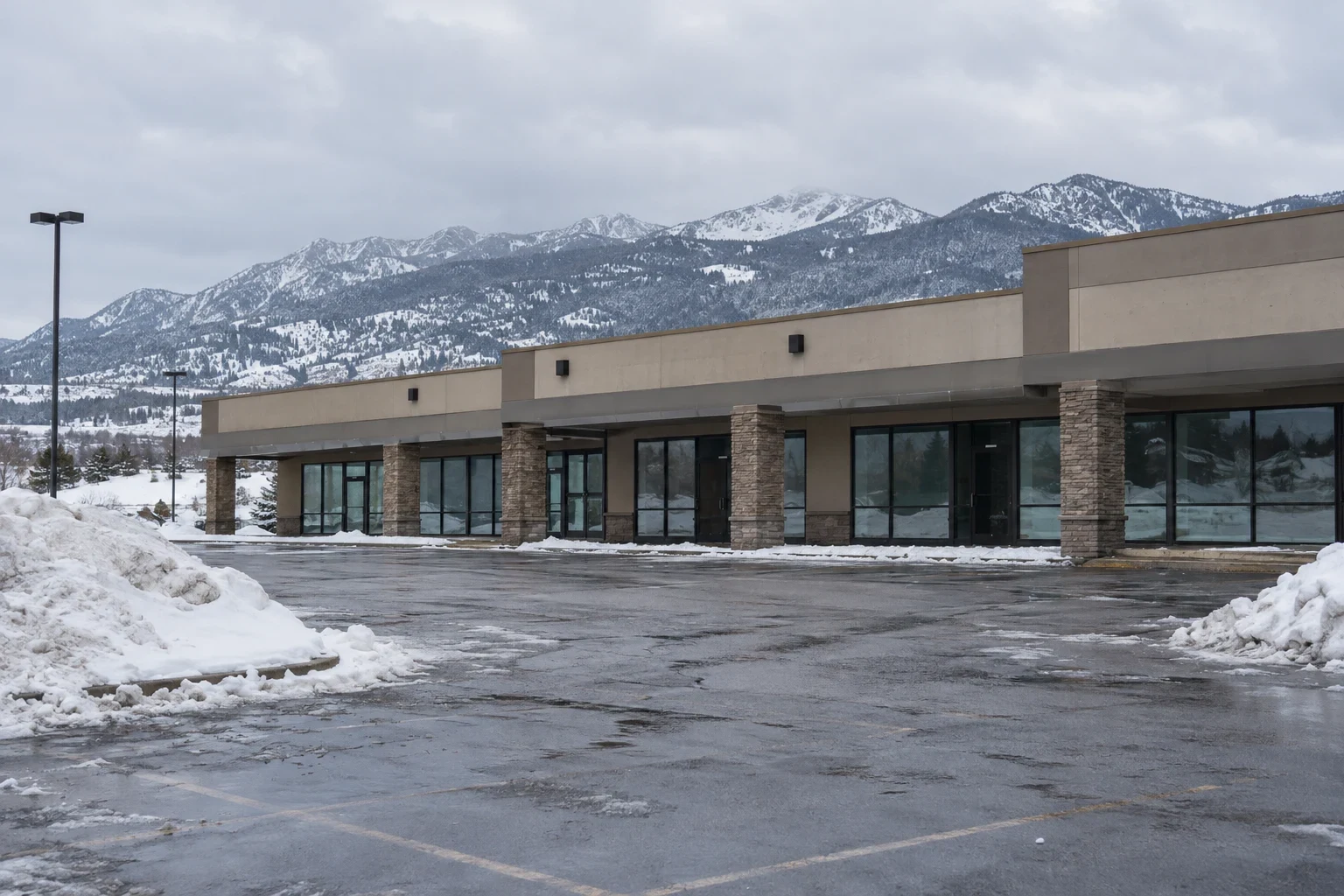
Count the rooftop units first. On a big-box store like those near North 19th Avenue in Bozeman, MT, the field of the roof is a very large expanse of membrane broken up by a dozen or more curbs, a row of exhaust fans and a scatter of conduit, and a leak often starts at one of them. The question I ask a store manager is not how old the roof is. It is which ceiling tile gets replaced after every thaw, because that tile sits under the first detail that failed.
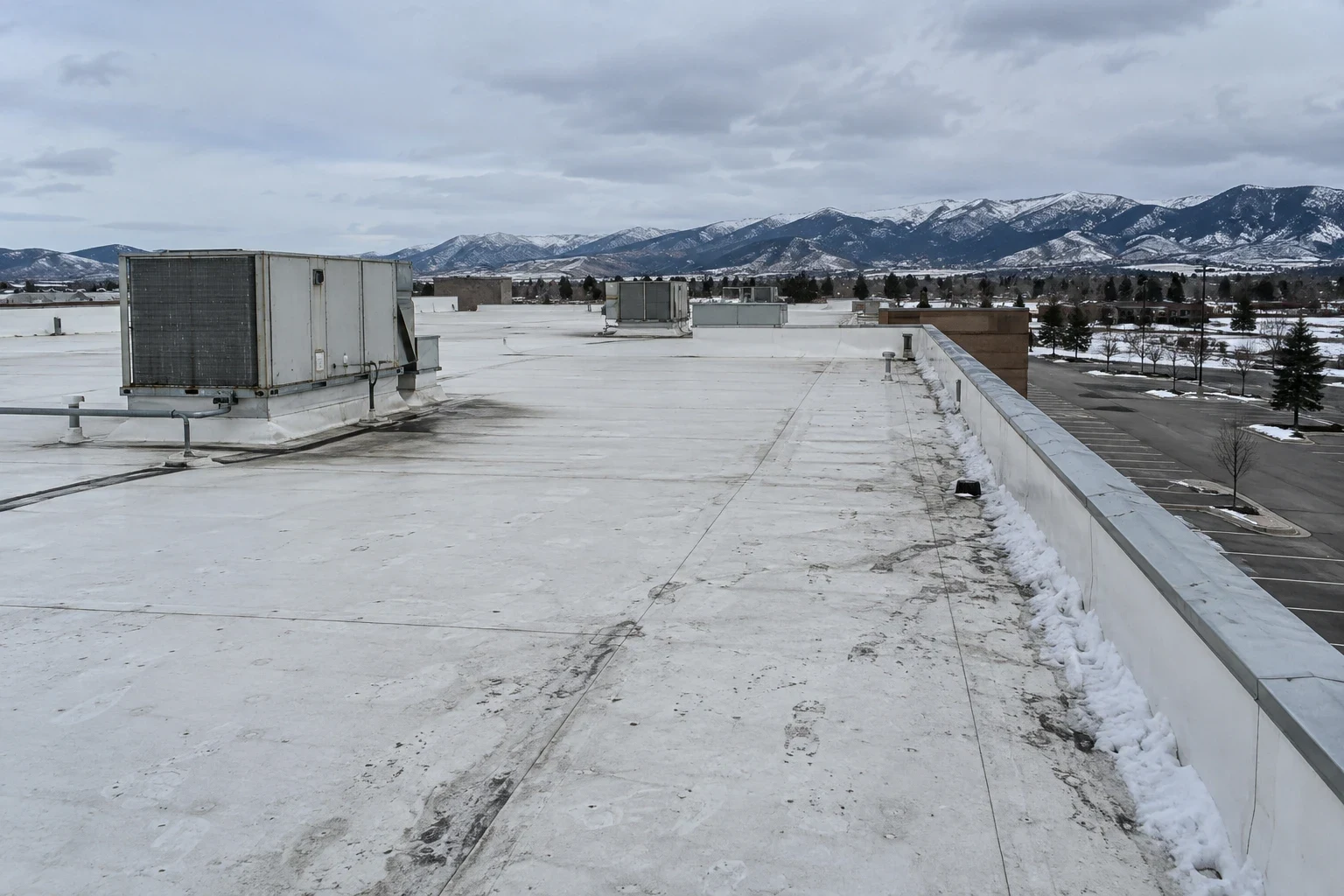
What does a big-box roof look like from the top?
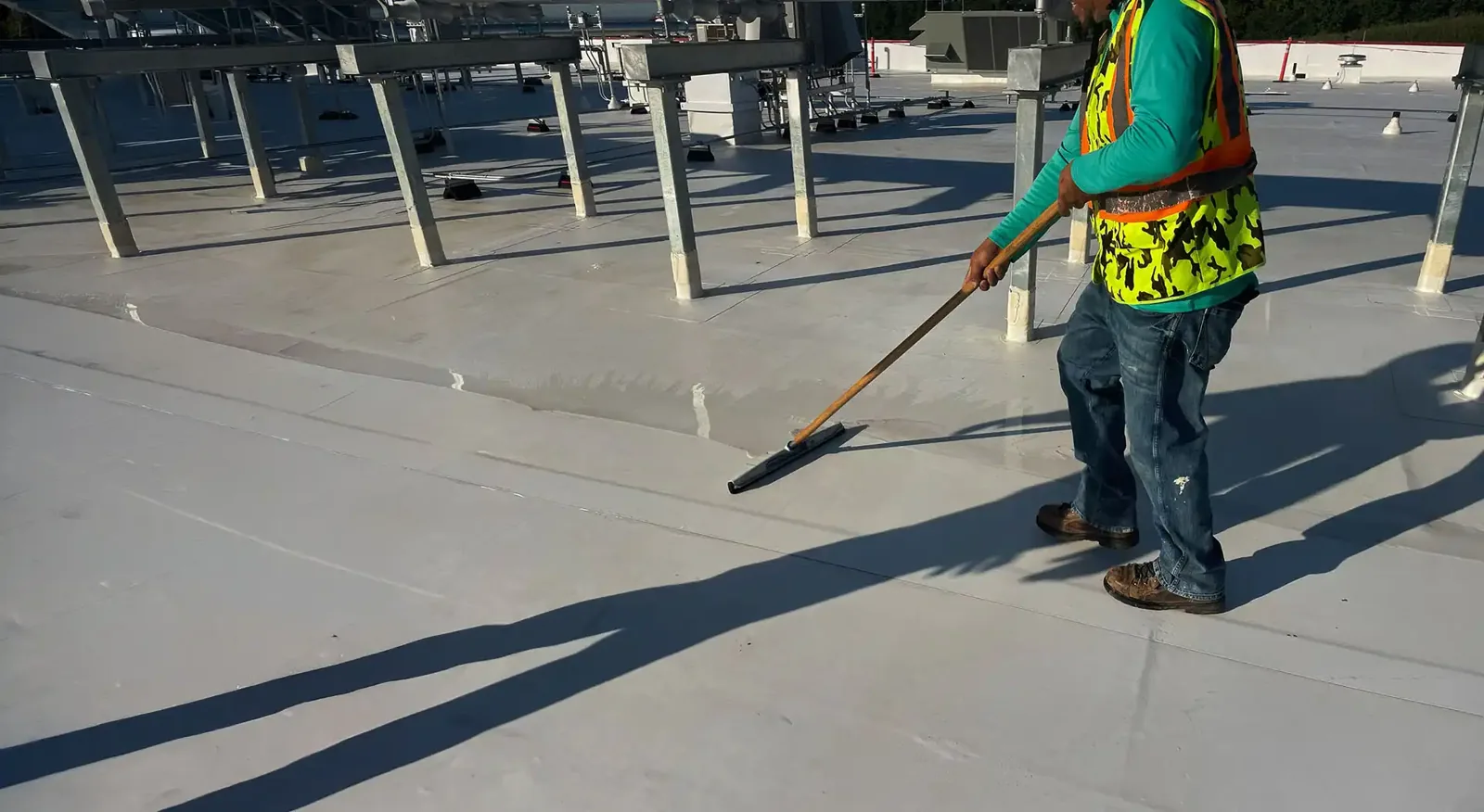
Seen from above, a big-box roof is typically a very large, flat field with a tall parapet around the edge, a handful of drains set well apart and rooftop units placed to serve the sales floor. The membrane is often a single-ply sheet, mechanically attached or fully adhered, with long seams that run the width of the building. Between the drains, the surface slopes only slightly, so water has a long way to travel.
That geometry shapes everything. The drain count and spacing are worth checking against the roof area, because a field with too few drains for its size will pond after any heavy melt, and adding a drain or tapered crickets between the existing ones can fix a problem that no amount of patching will. A small error in slope becomes a pond hundreds of feet from the nearest drain, and a drain that freezes leaves the whole field waiting for the sun. The corridor along North 19th Avenue carries about 37,160 vehicles a day past Target, Ross, Costco and the other stores nearby.
How does snow behave on an acre of flat roof?
Bozeman's snowfall runs near 91 inches a year, and December alone brings 16.2. On a big flat roof, snow does not slide. It stays, it drifts behind the parapets and against every rooftop unit, and it melts first where heat escapes around the units.
The result is a pattern of meltwater that runs toward the drains while the sump itself is frozen. A roof drain sump that sits in shade can hold ice for days after the field has thawed. I look at each sump and the scupper beside it, and I check the field for the dished spots that show where water stood after the last thaw. The design ground snow load of 50 psf listed for Bozeman is the number the structure answers to, and any recover has to fit inside it.
Why does wind find the edge of a big-box roof?
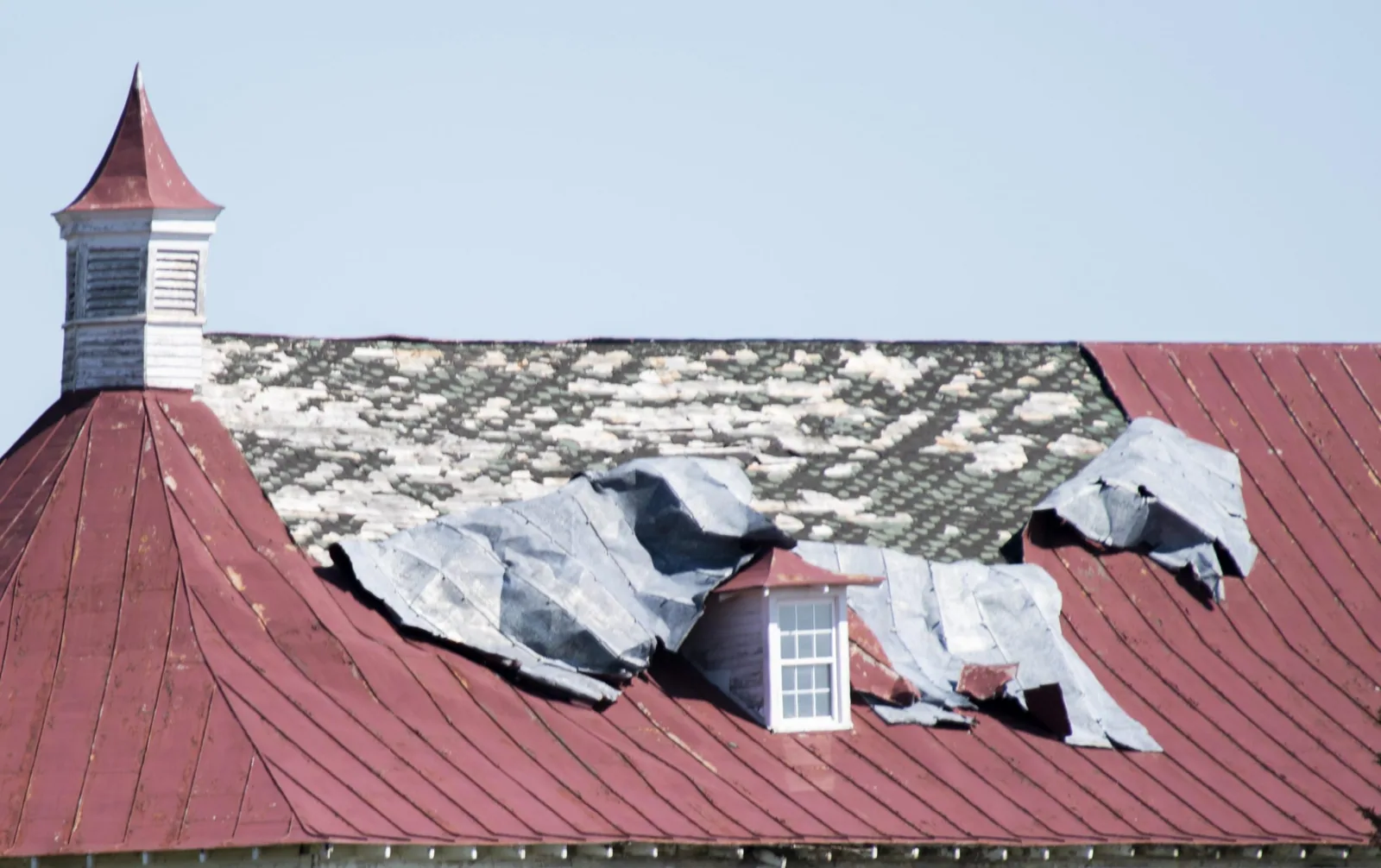
A building this large catches a lot of wind, and wind pulls hardest at the edges and corners. Bozeman is listed with a 110 mph basic wind speed, and gusts reached 89 mph over Belgrade and north Bozeman in August 2013. A membrane attached with a thin fastener pattern at the perimeter will flutter, and a flutter pulls fasteners out of the deck one at a time.
Fastener pull-out is easy to find if you look for it. Back-out screws lift the membrane in small bumps, and the lifted areas collect dirt and water. The repair is to add fasteners at the perimeter and corners, replace damaged edge metal and re-seal the laps. Our work on wind damage roof repair follows that edge-first order, because a loose edge can peel a whole field in one gust.
What did hail do to roofs this size?
The June 2010 storms put golf-ball hail on Bozeman for about half an hour, with baseball-size stones east of Gallatin Field. A big-box roof has a great deal of exposed surface, so it takes a lot of hits. Hail bruises on a single-ply membrane are soft spots where the reinforcement has cracked, and they leak months later.
After a storm, we split the roof into grids and walk each one, marking bruises with chalk and photographing them with a scale. A core cut at the worst bruise shows whether the insulation is wet, and a second cut a few feet away shows how far the moisture spread. The patch over each core is welded or adhered the same day, so the sample itself never becomes a new leak. The grid map becomes the claim file, and the owner sees what is damaged and what is only marked. We prepare the roof insurance claim assistance package from that map.
How do you reroof a store that stays open?
In sections, from the back of the building toward the front, with the sales floor protected below. The crane pick is planned for early morning, material is staged along the receiving side and tear-off proceeds in bays that can be dried in before the day ends. Fire lanes and customer entrances stay clear, and the loading dock keeps working.
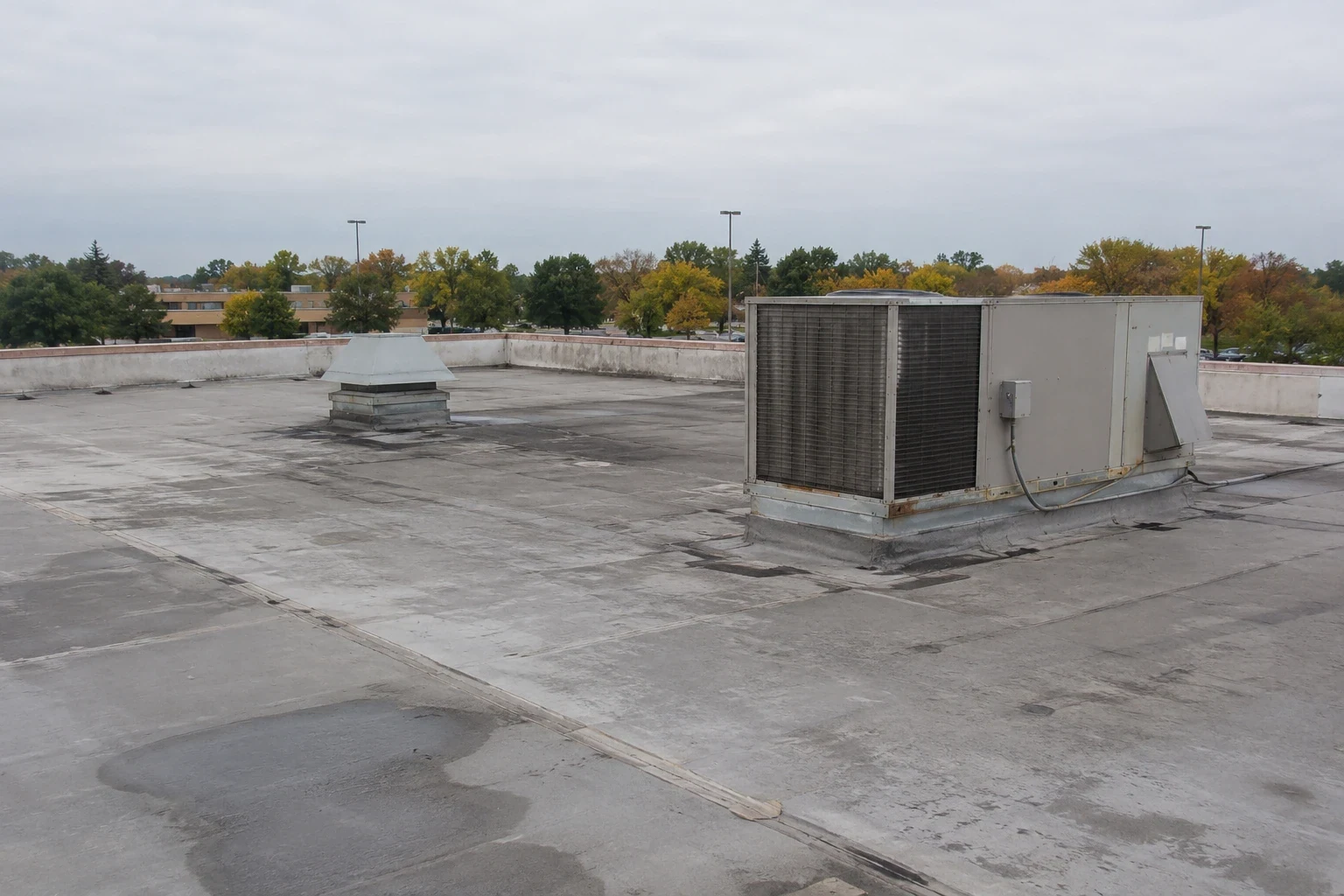
Rooftop units are the hard part. Each one has to be disconnected, lifted or lifted around, flashed and reconnected, and the store cannot lose cooling in July or heat in December for long. We schedule unit work with the store's mechanical contractor and plan each shutdown to the hour. Gas lines, condensate drains and electrical whips get labeled before disconnection, and a photograph of every connection goes in the file so reassembly matches the original. The approach is the same one used for any occupied building reroofing, scaled to a much larger roof.
When is a recover enough, and when is replacement the answer?
A recover saves time and keeps the store open, and it is possible when the deck is sound, the old insulation is dry and the structure can carry the weight. Cores answer the question, not appearances. If water has soaked a large share of the insulation, replacement is the sounder choice, because trapped moisture will shorten the life of any new membrane laid over it.
Retailers with several stores can compare roofs across the group and schedule replacements store by store. Smaller centers on the same corridor follow a similar path, as with shopping center roofing, and grocery formats add refrigeration load, as with grocery store roofing. A preventive roof maintenance plan between replacements keeps the drains open and the curbs sealed, and stores along North 19th Avenue can be put on one schedule.


Questions About Big-Box Retail Roofing
A ceiling tile in the stockroom stains after every thaw. Where do I look?
Look up the line of the nearest rooftop unit and the drain closest to it. Meltwater often runs to a frozen sump or leaks at a curb flashing. We trace the stain to the source with a moisture meter, a hose test and a look under the deck, then repair the detail and clear the drain path.
Is it worth coating a big-box roof instead of replacing it?
Sometimes. If cores show dry insulation and the membrane is sound beneath the surface wear, a coating restores the surface for far less than replacement. If cores show wet insulation, a coating only hides the problem. We take the cores first and let the results decide.
How do you handle a refrigeration or kitchen exhaust in the middle of the roof?
Each exhaust gets its own curb detail, with flashing rebuilt to the new membrane and grease control where needed. We coordinate shutoffs with the store's mechanical contractor and schedule the work for off-peak hours.
What should a regional manager ask for before approving a roof budget?
Ask for a ranked list of stores with core results, moisture readings, age and repair history, plus a price for repair, recover and replacement at each. With that list, the budget follows the roofs that need it most.