
Commercial Roofing in Livingston, MT
Livingston in Bozeman and the Gallatin Valley
The first thing a superintendent checks on a Livingston roof is the edge, because the wind gets there first. Livingston's airport weather station ranked second to Guadalupe Pass, Texas, for average wind from 2000 to 2010, and snow there totals about 56 inches in a year. A commercial roof in the Park County seat spends its whole life in moving air, and the failures that matter start where the sheet is held down: the perimeter, the corners, the flashing at walls and the fasteners along the edge. When did someone last tug your edge metal by hand?
We inspect, repair and replace commercial roofs in Livingston, and we describe what the wind is doing to each one before we describe a price.
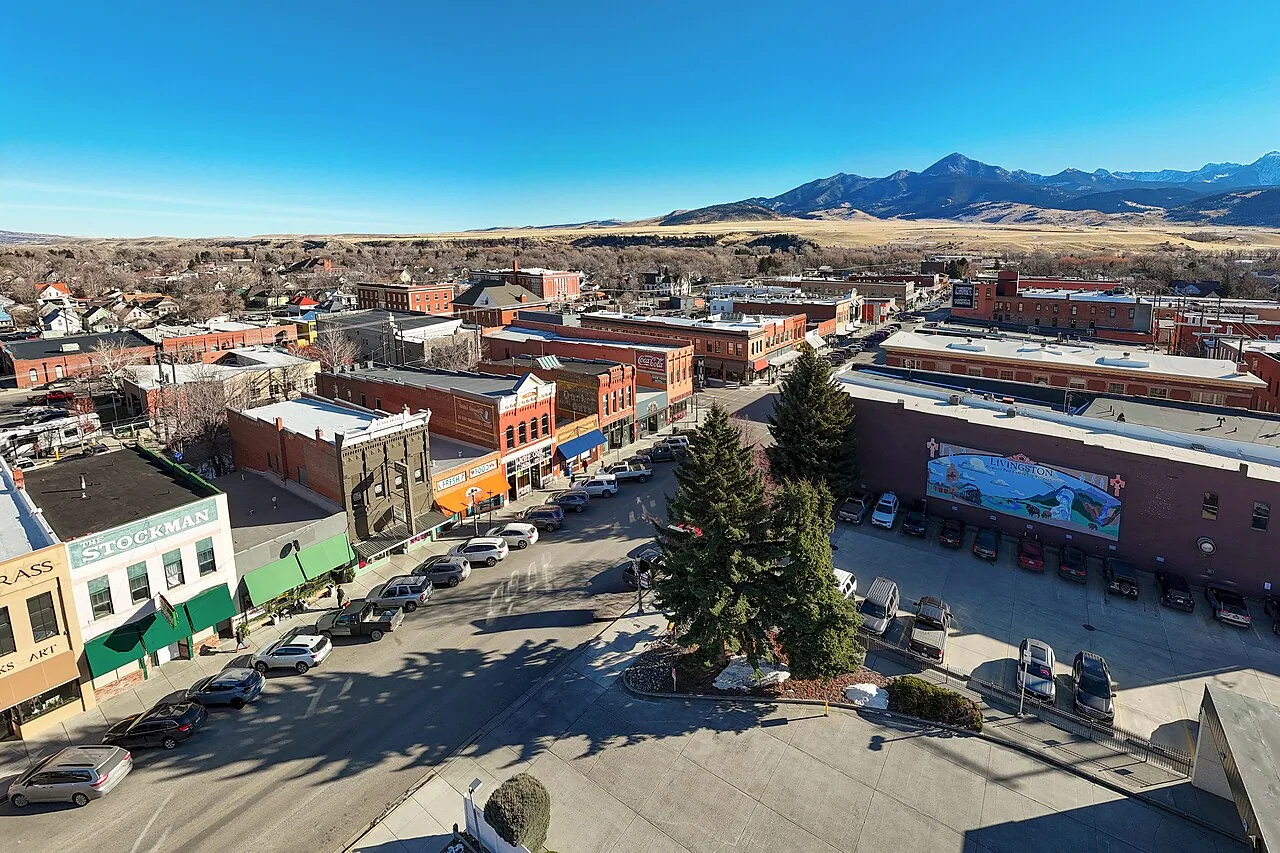
What kinds of buildings does a railroad town carry?
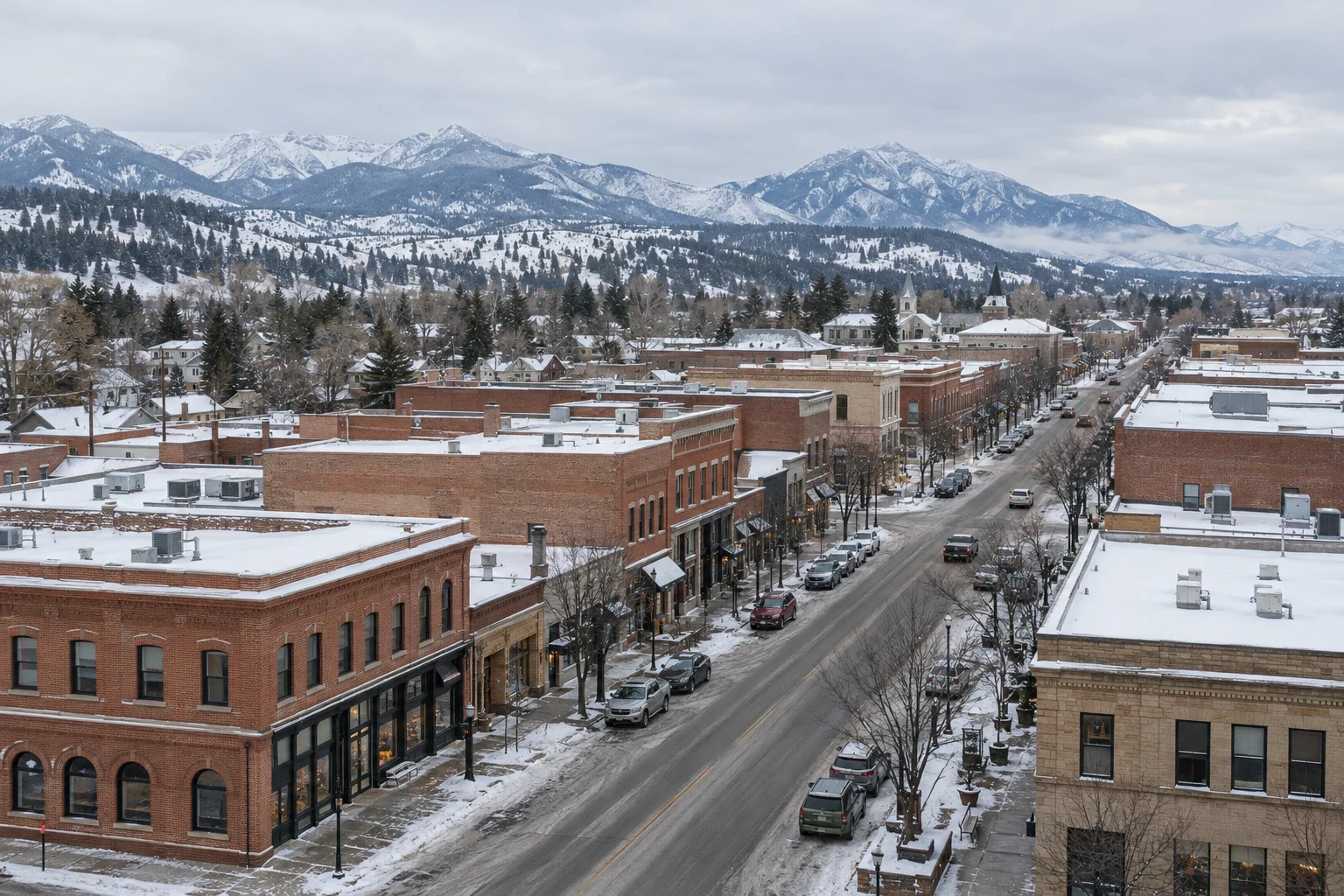
Livingston is the Park County seat with 8,040 residents. It was founded as a Northern Pacific Railway town, and its 1902 depot is now a railroad museum.A grain-handling structure stands along the railroad tracks. Top private employers include Xanterra Parks & Resorts, Livingston HealthCare, Albertsons, Express Color Printing, Sun Mountain Lumber and Town & Country Foods.
That list points to a mix: older downtown commercial blocks, a healthcare building, grocery and food buildings, printing and lumber operations, and industrial space near the tracks. A building's age or trade says little about its assembly, so each one gets walked and the roof read as it is.
Industrial and rail-side sites add their own demands. Buildings by the tracks live with vibration, dust and trucks, and their roofs collect grit that clogs drains. A seasonal clean-out and a drain flush are as important there as any membrane repair.
How does constant wind change what we check?
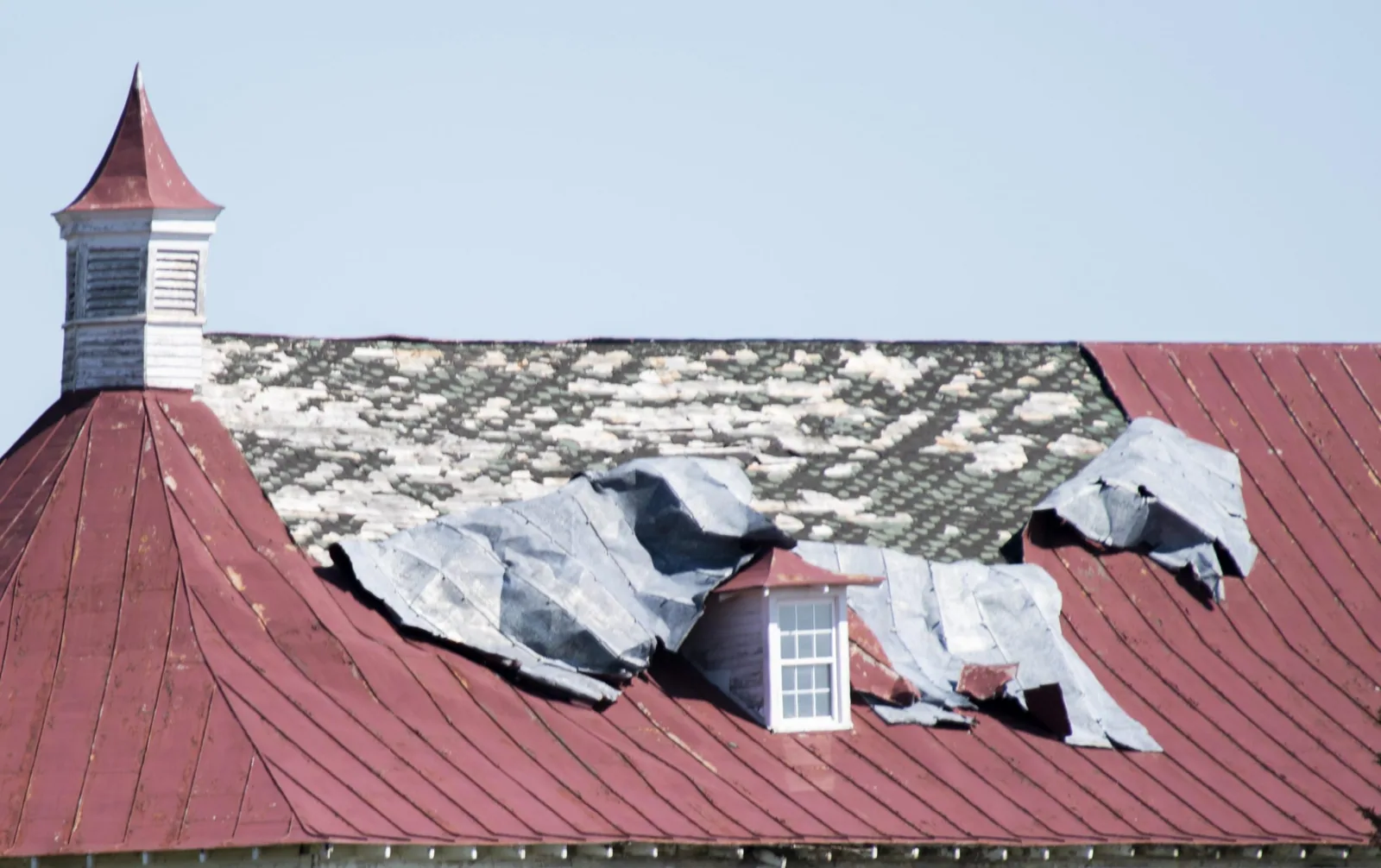
Wind lifts edges first. A membrane roof fails by peeling from a corner or a perimeter, and a metal roof fails by pulling fasteners or lifting panels at the eave. We inspect the perimeter first on every Livingston walk: coping, edge metal, the first rows of fasteners or adhesive, wall flashings and rooftop equipment tie-downs. Each loose item gets a mark, a photograph and a count.
Bozeman's values under the 2021 IBC are a 110 mph basic wind speed and 50 psf of ground snow, and Livingston, over Bozeman Pass, has the stronger wind record. Wind damage repair here means sealing a lifted edge first and then working out how far the lift travelled under the field. Edge metal and coping is often the cheapest repair and the one that prevents the biggest failure.
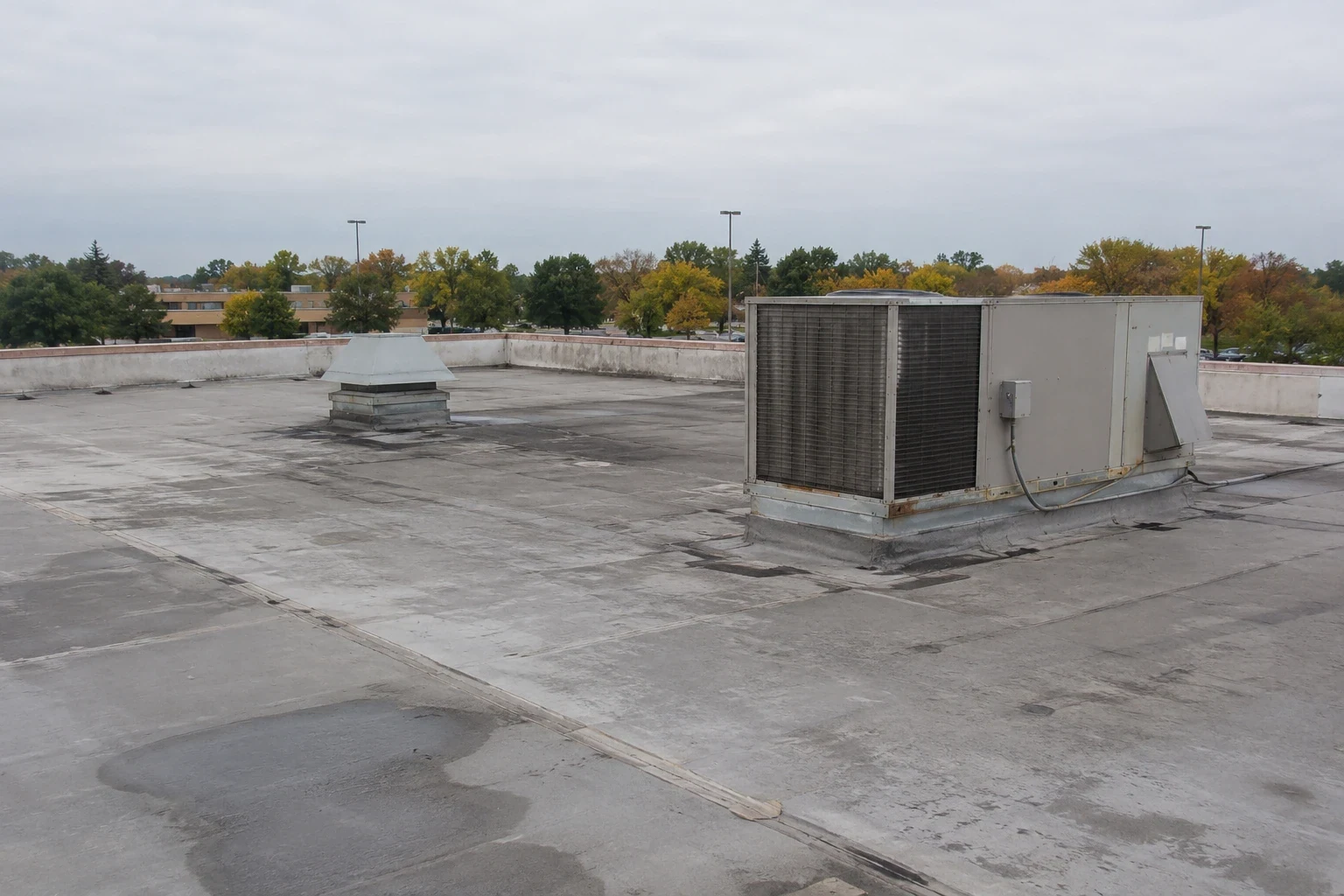
Rooftop equipment needs the same scrutiny. A unit strapped down poorly can shift in a gust and tear the curb flashing around it. We check straps, curbs and sealant on every unit, and we photograph each from two angles. Any equipment that has moved gets a note on the sheet and a fix on the repair list.
Why do metal roofs need extra attention in this wind?
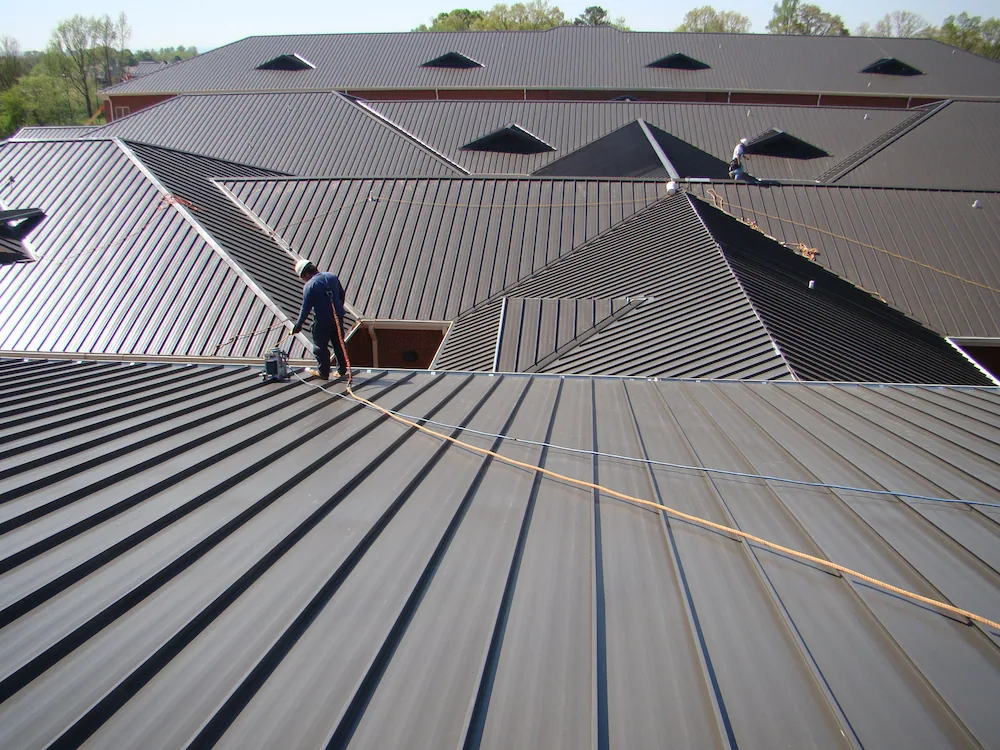
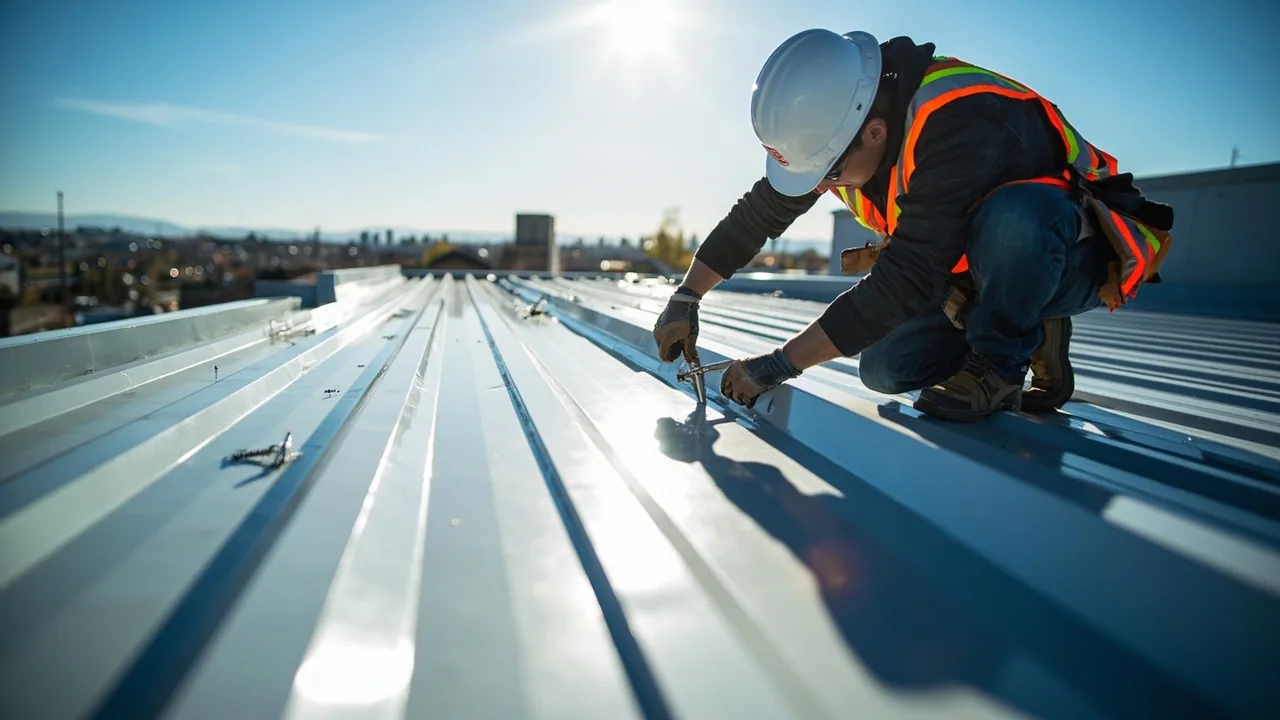
Wind works every panel, clip and screw. On an exposed-fastener roof, heads back out and washers split, and a loose screw line lets rain in sideways. On a standing seam roof, clips and trim have to hold against uplift while allowing for movement. We walk the panels, check clip spacing where visible, probe laps and photograph trim at the eave and ridge.
Where an older roof is failing, a metal roof retrofit or a restoration can add years, but the edge row must be re-fastened first. A coating over a loose edge only hides the movement. The fix starts with the fasteners and the trim, and the coating follows.
What about older downtown buildings?
Older commercial blocks, like those in Downtown Bozeman, may have parapets, shared walls and rooftops modified over time. The parapet cap, the wall flashing and the scupper are the first checks. Wind can lift a loose cap, and a cap with open joints sends water into the wall. We photograph each joint and list repairs by urgency.
Access is part of the plan. A roof on a downtown block may be reached through a shared stair or a ladder, and staging may use a street lane or an alley. We confirm access, permits and tenant notice before the crew arrives. Work near the tracks can add its own rules, and we plan around any that apply.
Records matter on older buildings because the roof's history is often unknown. We start the file on the first walk: sheet type if it can be read, layer count from cores, drains and penetrations mapped, and every repair dated. Over a few seasons that file replaces guesswork, and a new owner or lender can read it in a sitting.
How do grocery, healthcare and printing buildings differ?
A grocery store roof carries refrigeration condensers and exhaust, and it cannot close for repairs. A healthcare roof adds infection control, noise limits and intake protection. A printing plant adds ink, solvent and paper handling, and moisture is its enemy. Each needs a roof plan that starts with what happens beneath.
We ask about the interior first, then walk the roof. Units, vents and stacks are counted and mapped. The sheet near exhaust is checked for softening or crazing. A leak over stock or presses is stopped first and traced second, and the permanent repair follows the evidence, not the stain.
Food buildings add sanitation rules and cold chain. A roof job over a food-handling area is planned with the operator, with covers below the work, intake protection and a clean-up routine at the end of each day. The schedule and the cleanliness plan are part of the scope, not extras.
What does about 56 inches of snow do over a windy roof?
Wind packs snow into drifts against parapets and equipment, so local loads exceed the average. Meltwater then runs to the nearest drain and refreezes at the cold edge. Ice at an eave over a sidewalk or a loading dock is a safety problem and a roof problem. Drains and scuppers get cleared before the first heavy snow, the fall zones are mapped and the list marks where guards or a re-sloped edge would help.
Travel is part of the schedule. Livingston sits east of Bozeman, with I-90 crossing Bozeman Pass at 5,702 feet between the two. A Bozeman Pass storm can close the road, and we plan crew days with that in mind, keeping a backup date for any scope that depends on the drive.
Questions About Livingston
What is the first thing to check on a roof in constant wind?
The perimeter. Edge metal, coping, corner details and the last row of fasteners take the highest uplift. A hand test on each length finds the loose ones, and a count goes on the sheet.
Can wind damage be repaired in winter?
Temporary repairs can, to stop water and secure a lifted edge. Permanent repairs need dry surfaces and workable temperatures. We seal, photograph and schedule the permanent fix for the first workable window.
How do I know if screws on a metal roof are backing out?
Raised heads, split washers and rust streaks at screw lines are the signs. A walk with a hand tool finds the rest. A count turns the problem into a repair order that can be priced.
What records help after a windstorm?
Dated photos of the roof and ground debris, a note of the wind event and any interior damage. A roof walk within days adds evidence, and the file supports an insurance claim.
Is a crew available when the pass is closed?
Emergency calls are taken day and night. When the pass is closed, the first visit depends on the route, and we state a travel time at booking and keep the owner updated.