
Cool Roof Installation in Bozeman, MT
Cool Roof Installation in Bozeman and the Gallatin Valley
A reflective roof is easy to sell in a hot market and harder to justify in a place where snow covers the roof for months. Walk onto a white membrane on a distribution building in Bozeman, MT in July, and the surface is cooler than a dark one beside it. Come back in January, with snow on the roof and a mean low of 15 degrees, and the color does nothing at all. Bozeman averages about 91 inches of snow a year, so a cool roof in this valley is a summer tool in a winter town. Is the cooling load in your building large enough to be worth it?
We help an owner answer that with readings from the roof, not from a brochure.
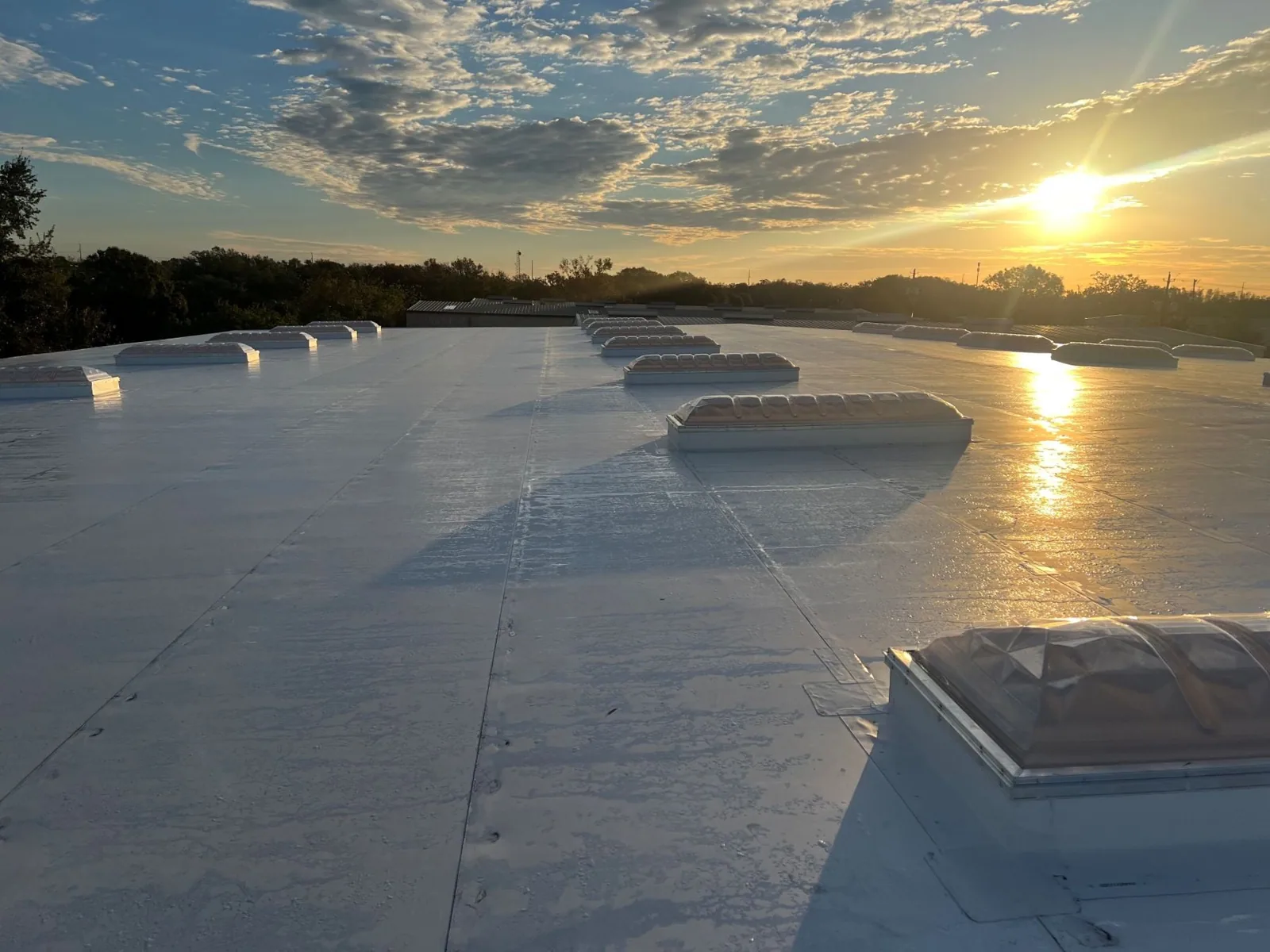
What makes a roof cool?
Two properties: reflectance and emittance. Reflectance is the share of sunlight the surface bounces back. Emittance is how readily it gives off heat it has absorbed. A white or light membrane scores high on both. A dark one scores low. The difference shows up as surface temperature, and it shows up inside as a lower load on the building's cooling.
The effect depends on the roof. A building with conditioned space under the roof, a lot of roof area compared to wall area and a long cooling season benefits most. A building with a short cooling season gains less. Because a reflective surface also reflects in winter, there is a heating penalty on the days the sun would have helped. In Bozeman that penalty is partly offset by snow cover, which hides the surface anyway.
Slope and shading change the picture. A roof shaded by a taller neighbor, or one that holds a drift behind the parapet, spends little time in direct sun, and the reflective gain on those sections is small. We mark them on the plan and price a reflective surface where the sun actually reaches, not across the whole roof by default.
Which buildings in the valley get the most from it?
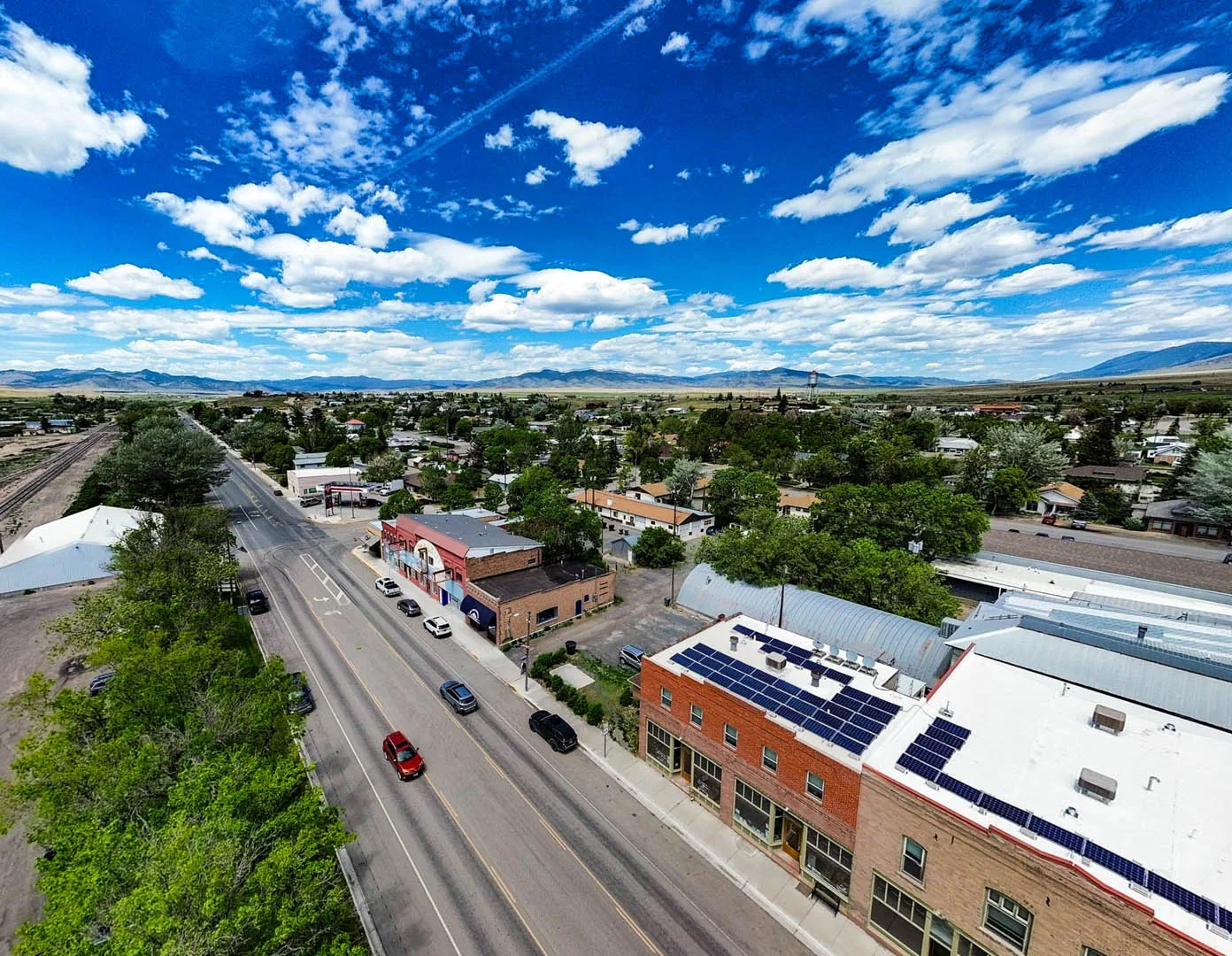
Buildings with large roofs and internal heat gain. A big-box store on North 19th Avenue, with lighting, refrigeration and crowds under a single flat roof, produces more cooling demand than a similar-sized warehouse with little occupancy. A lab or a data room produces heat all year, and Montana State University has lab buildings. A grocery or a restaurant adds refrigeration and kitchen load.
Warehouses and flex space near Belgrade, including the multi-unit buildings around the Copper Ranch Road business area, may have little air conditioning, and where that is true a cool roof does little. For those, the reason to choose a light surface is usually the roof system itself: a white single-ply membrane is simply what that system is. We tell owners where the savings are and where they are not, and we show the numbers from a pair of surface readings.
Which products make a roof reflective?
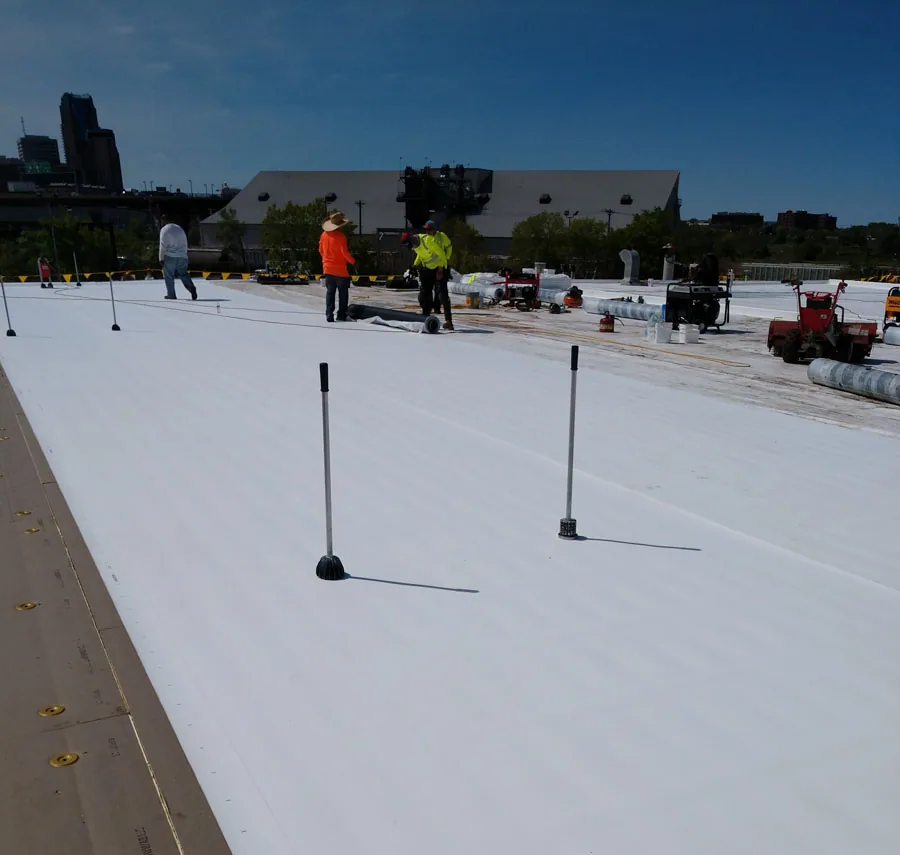
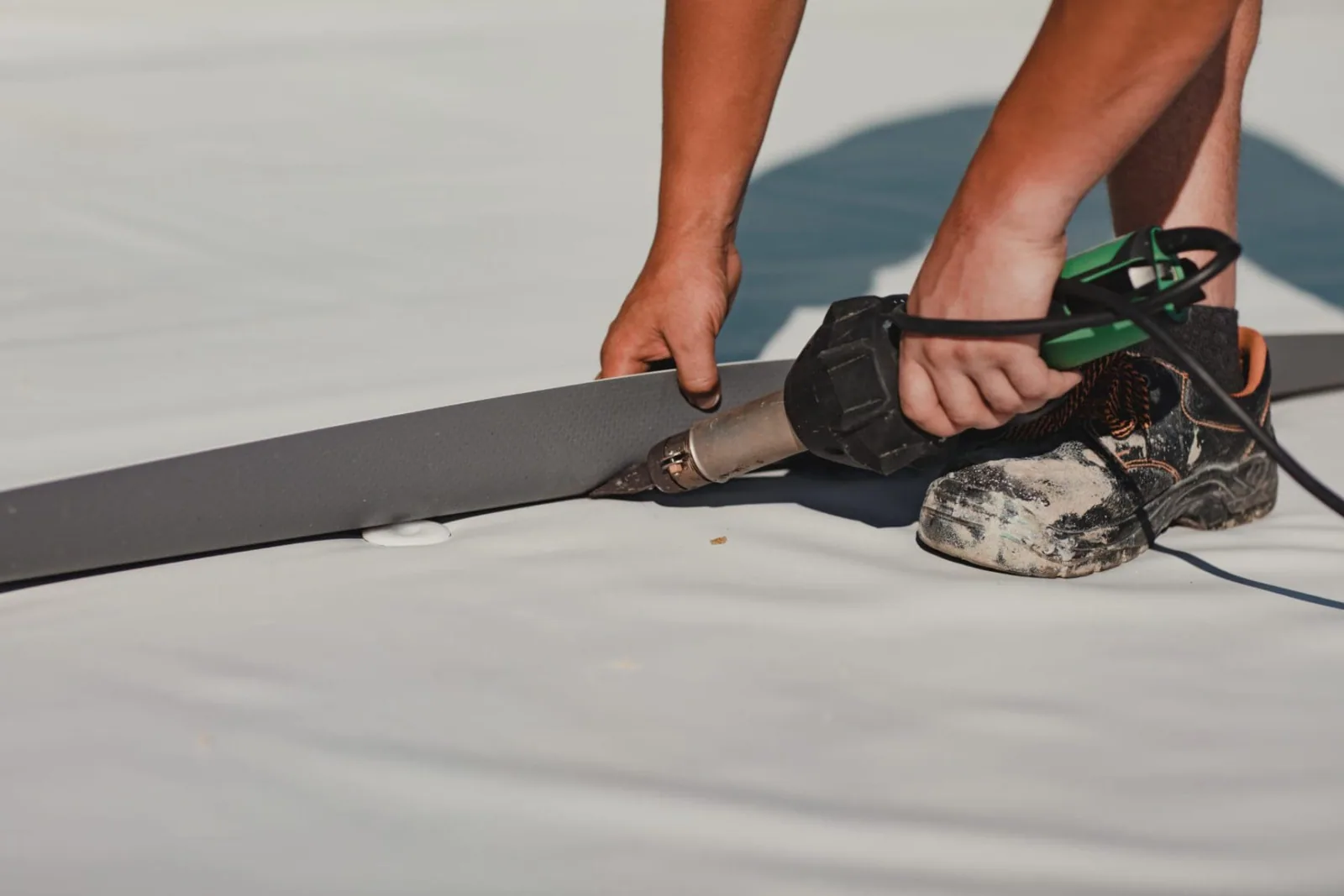
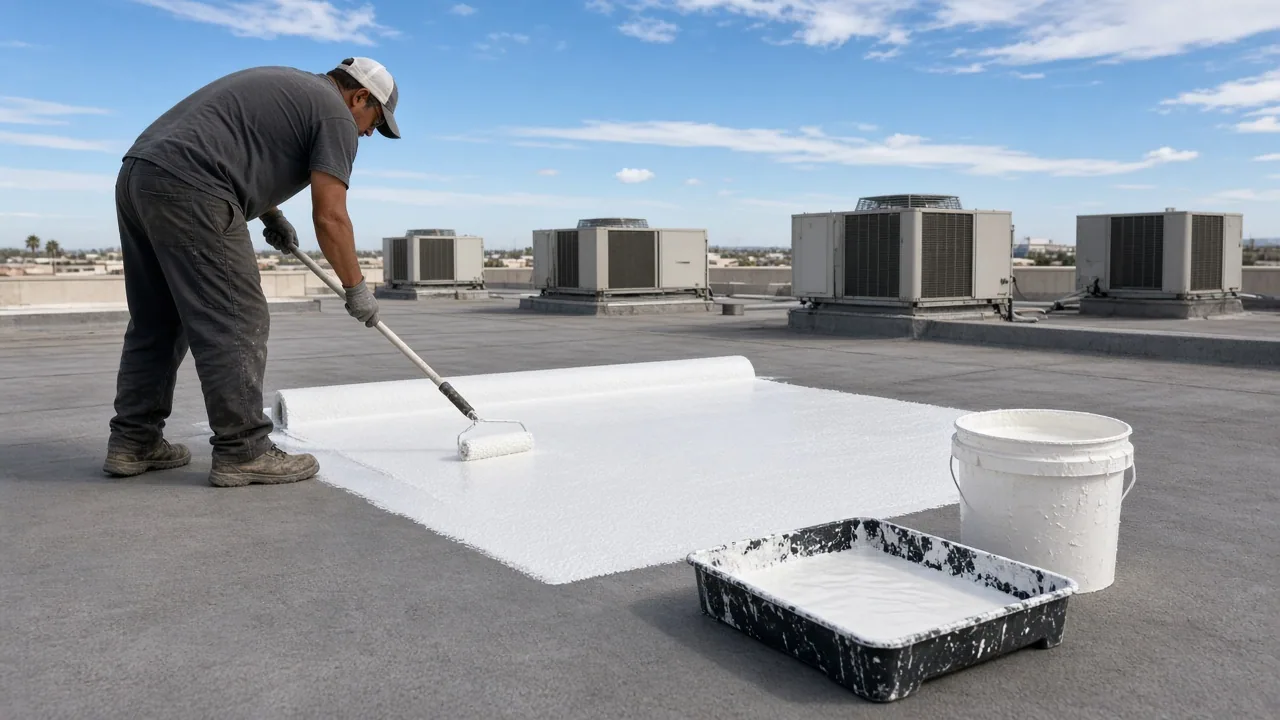
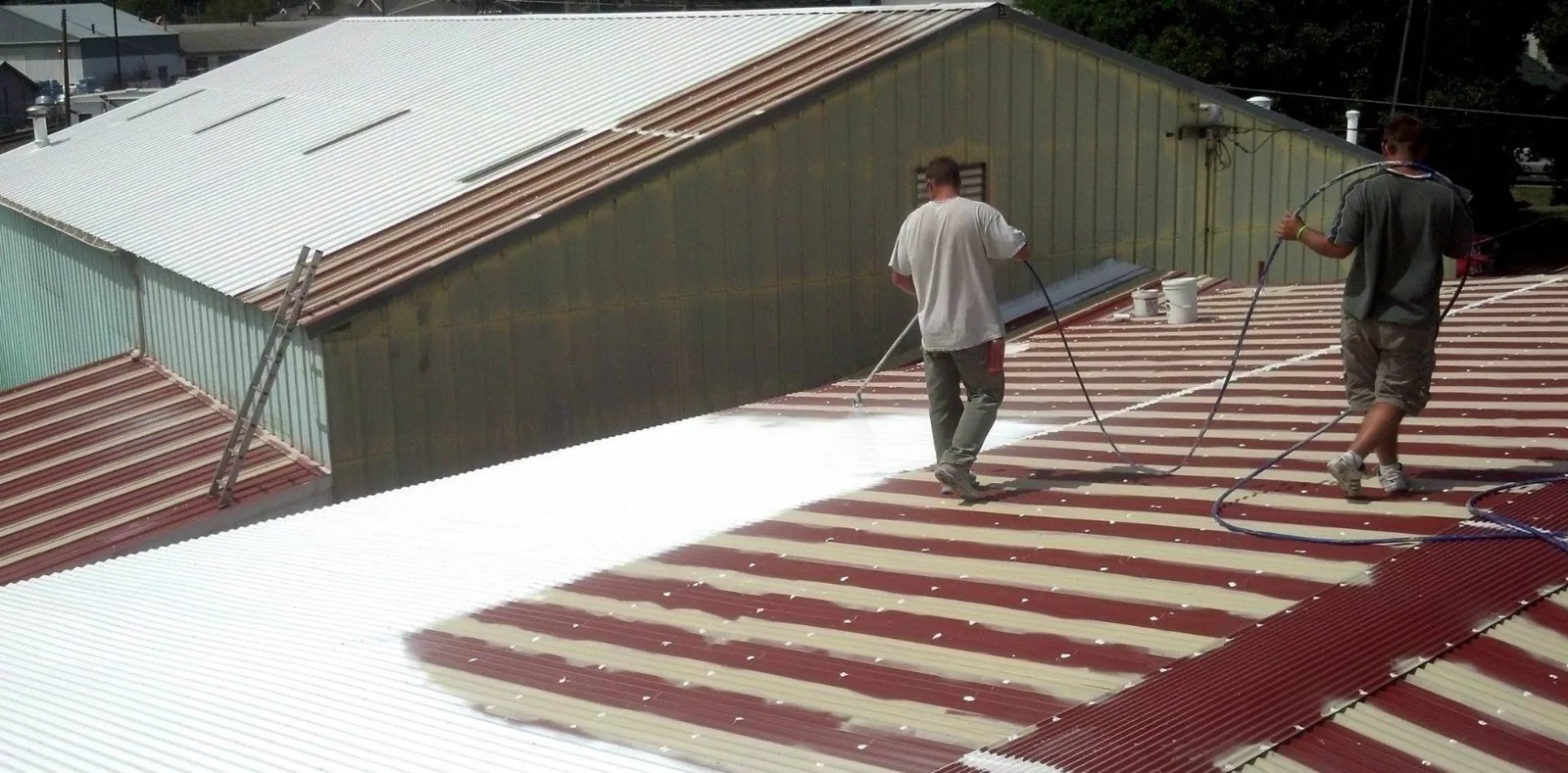
Three routes. A new white or light TPO roof or PVC roof comes reflective from the factory. A reflective coating goes over an existing sound roof: a silicone roof coating handles ponding and keeps its reflectance, and an acrylic roof coating costs less and suits roofs that drain well. Metal roofs can take a reflective finish.
The coating route doubles as a restoration. A roof in decent shape, with dry insulation and bonded membrane, can be restored and made reflective at the same time. Roof coating restoration depends on a sound base, a prepared surface and a cure window. A roof with saturated insulation is not a candidate, and the reflective question comes up again with the replacement.
Edges and details matter as much as the field. A cool membrane that meets a dark flashing, a dark curb or a dark walk pad shows a hot ring around each. The cost of matching those pieces is small and the readings improve.
What does a cool roof do in a Bozeman winter?
Very little, and not much harm. Snow covers the surface on many winter days. Bozeman has about 54 snowy days a year, with December the snowiest month at 16.2 inches. When the roof is clear and the sun is low, a light surface absorbs less of the sun's heat than a dark one, and the building's heating runs slightly more. The penalty is smaller than the summer saving in a building with real cooling load, and larger in a building with none.
Insulation matters more than color here. A well-insulated roof loses little heat to the air, and a cool surface changes the result by a small amount. Where the roof is being replaced anyway, insulation and cover board are the first decision, and the surface color is the second. We lay out both and give the owner a side-by-side.
How do hail and wear affect a reflective surface?
A reflective surface keeps its value only while it is clean and intact. Dirt and algae lower reflectance over time, and hail bruises and punctures let water in. Golf-ball-size hail fell on Bozeman on June 30, 2010, and again across Belgrade and north Bozeman in early August 2013. After a storm like that, we check the surface for damage before we talk about color.
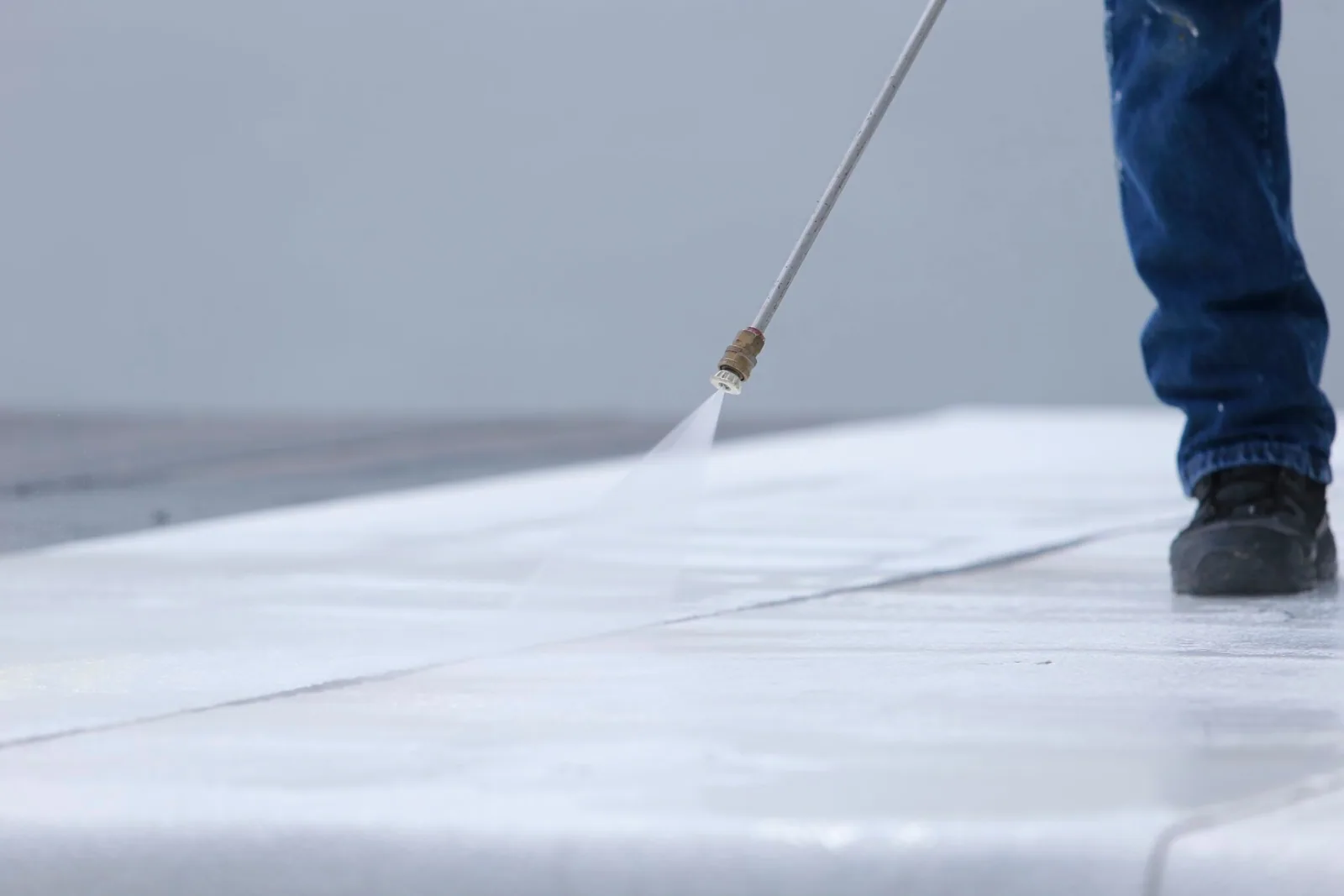
A coating also needs recoating on a schedule, because the film wears. We measure film thickness and reflectance at sample points and record them. A drop in reflectance tells us when the surface needs washing or recoating. Walk pads along service routes protect the surface from the foot traffic that leaves dark scuffs and cuts.
How is the decision made and scheduled?
We take surface temperature readings on the existing roof in July or August, record the cooling system's size and age, and compare the roof's area to the building's load. We then price two or three options: keep the surface and repair, restore with a reflective coating, or replace with a reflective membrane. The sheet shows the cost of each and a rough view of how long each is expected to last.
Installation goes in late spring through early fall, in the cold-weather adhesive window. A reflective coating needs several dry days to cure, and a membrane needs steady temperatures for welds and adhesives. If an owner wants arrays on the roof later, solar-ready roofing goes in the same plan, since a reflective surface under a panel changes how much of the panel's lower side gets light.
Questions About Cool Roof Installation
Does a cool roof pay back in Bozeman?
It depends on how much cooling the building uses. A building with a large air conditioning load sees a clear benefit in summer. A building with little cooling sees little. We measure surface temperature and review the cooling system before we recommend it.
Will a white roof raise my heating bill?
Slightly, on clear winter days with a bare roof. Snow cover and good insulation reduce the effect. We show the owner both sides before a decision.
How long does the reflectance last?
Dirt and weather lower it over time. A wash and a recoat bring it back. We record readings at install and each spring so the owner can see the change.
Can an existing dark roof be made reflective?
If it is sound and dry, yes, with a coating. If it is saturated or failing, the answer is a new membrane. A core cut and a moisture scan decide.
Do cool roofs qualify for incentives?
Programs change and vary by utility and building type. We can document the product, the area and the readings in the form a program asks for. The owner or the utility decides eligibility.