
Solar-Ready Roofing in Bozeman, MT
Solar-Ready Roofing in Bozeman and the Gallatin Valley
A warehouse roof near Belgrade with a ballasted array on it looks tidy in October. By February, the snow has slid off the panels in sheets and stacked at the lower edge. The ballast blocks have shifted a few inches. A drift behind the array has held meltwater against the membrane for a month. Bozeman, MT takes roughly 91 inches of snow in a year, and panels change how snow moves across a roof. If you plan to put an array on your roof, or already have one, which part of the roof carries the extra snow?
We answer that before the first rail is set, and we protect the membrane under every attachment.
What makes a roof solar-ready?
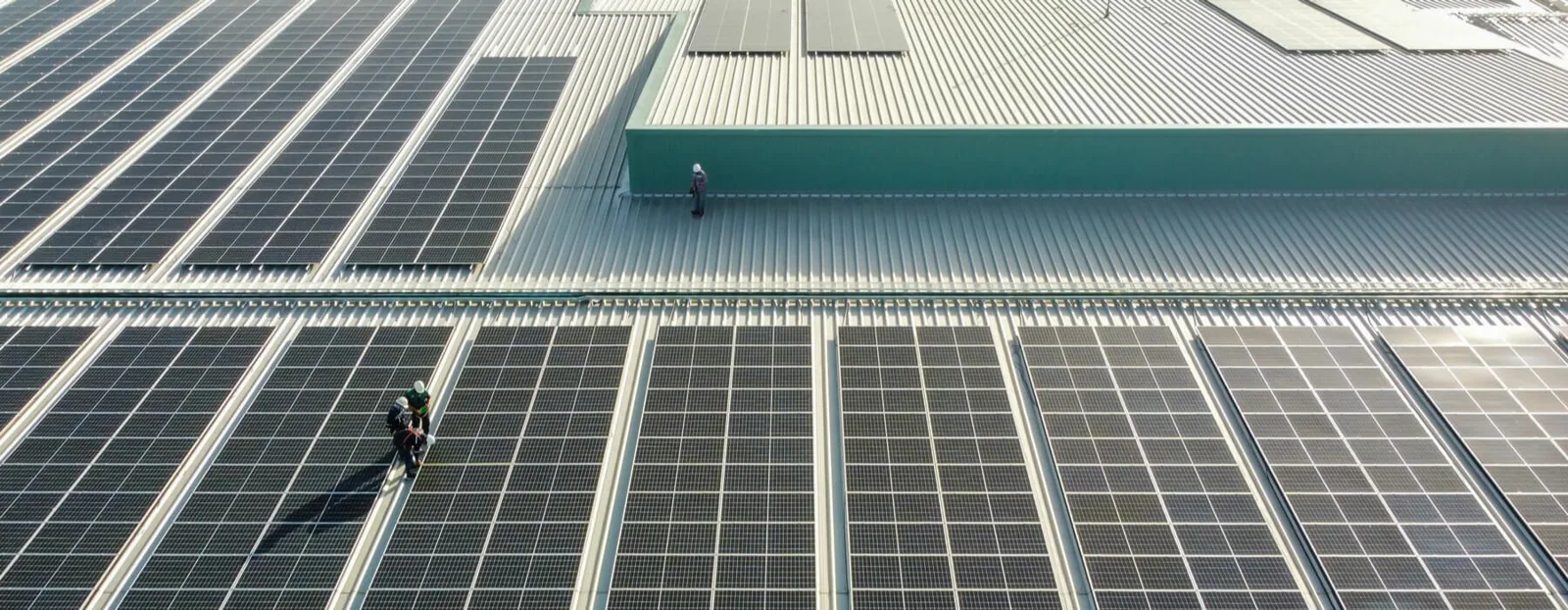
Four things. The membrane has enough life left to outlast the array, since removing panels to replace a roof costs more than doing the roof first. The deck and framing can carry the added dead load and the redistributed snow. The drainage works with the array in place. And the attachment method is chosen to match the roof, the wind and the snow.
Remaining life is easy to skip. A roof with ten years of life left under a twenty-five-year array is a roof that will be torn up while the panels are still working. We measure remaining life with a core cut, a moisture scan and a review of seams and flashing. If the roof is not ready, we recommend a repair, a recover or a full replacement first, with the array layout planned in the same drawing set.
Exposure shapes the review. A roof among taller neighbors collects drifts and wind eddies, and a roof with open sides takes the wind straight on. We note the exposure for each roof, whether it sits in Bozeman or near Belgrade and the Jackrabbit Lane corridor, and pass it to the engineer, because the same array behaves differently in each spot.
What does the extra weight and snow do?
Bozeman's listed design values are a 50 psf ground snow load and a 110 mph basic wind speed under the 2021 IBC referencing ASCE 7-16. An array adds dead load, from panels, racking and ballast. It also changes the snow pattern. Snow slides off tilted panels and piles at the low edge, creating a drift that can exceed the load the roof was designed for in that spot.
We ask an engineer to review the framing and the layout. Our role is to map drift lines, mark where snow will land, check the membrane in those zones and recommend the protection: walk pads, a heavier membrane, a cover board, a gap at the low edge. Deck condition matters too. A roof with sag or ponding lines needs correction first. The ballast question belongs to the engineer, and we pass along what we find on the roof.
How is an array attached without wrecking the roof?
There are three ways. Ballasted systems sit on the membrane, held by weight, with protection pads under every contact point. Mechanically attached systems fasten through the membrane into the deck, and each fastener is a penetration that needs flashing. Adhered or clamped systems attach to a standing seam roof without penetrations.
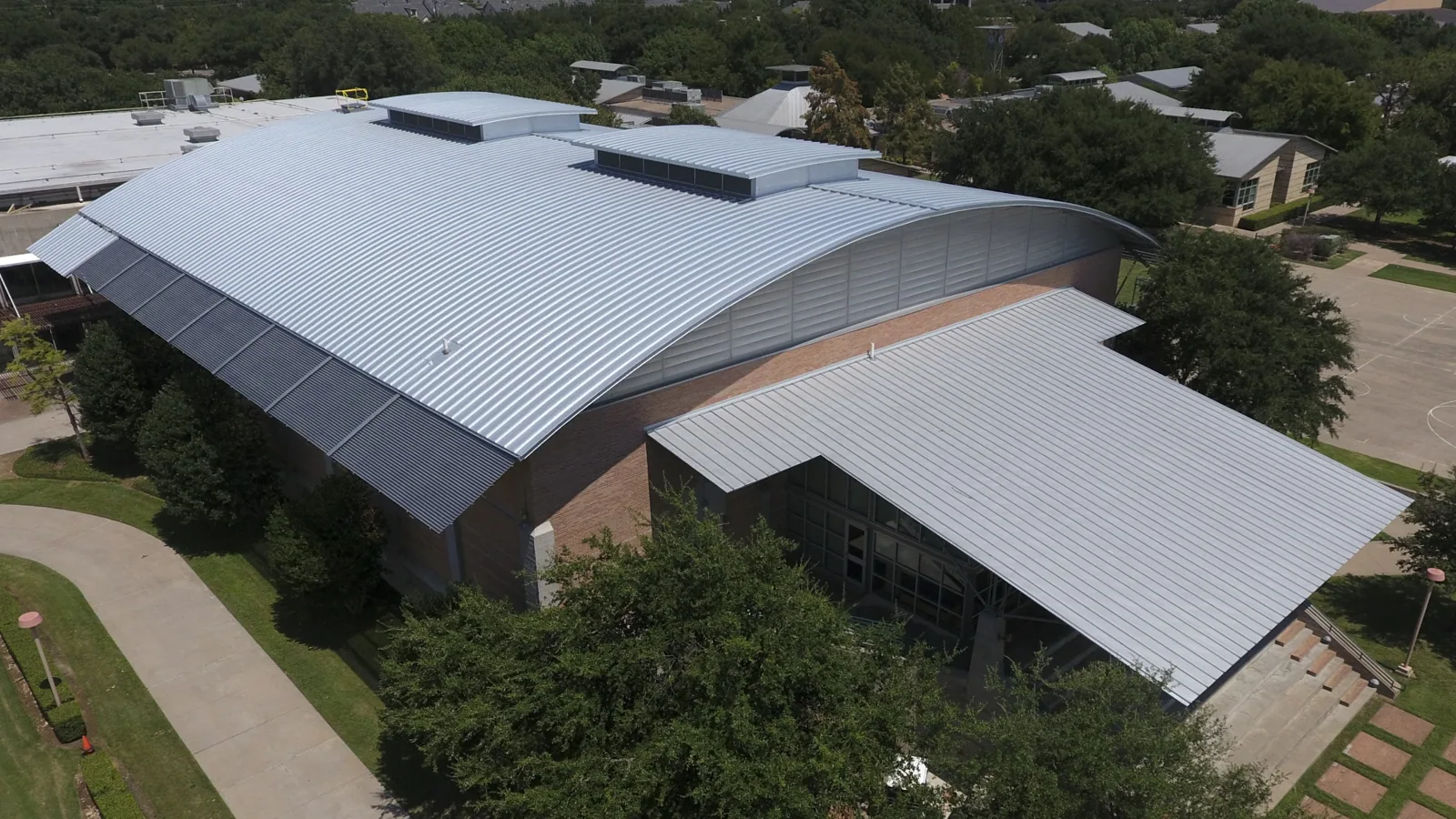
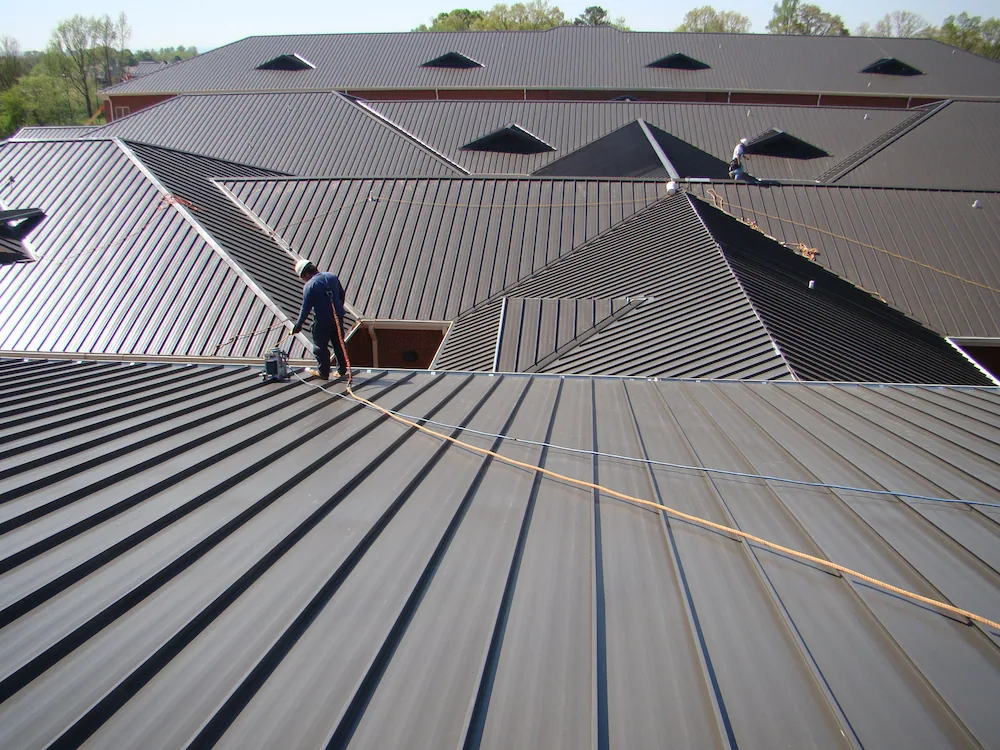
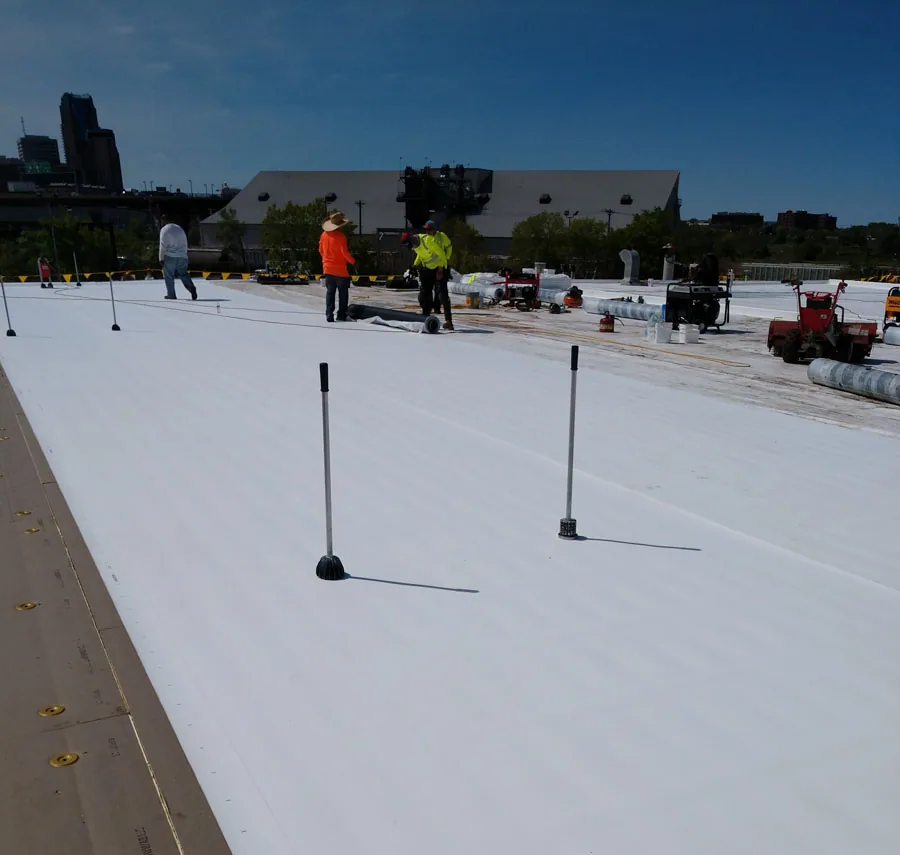
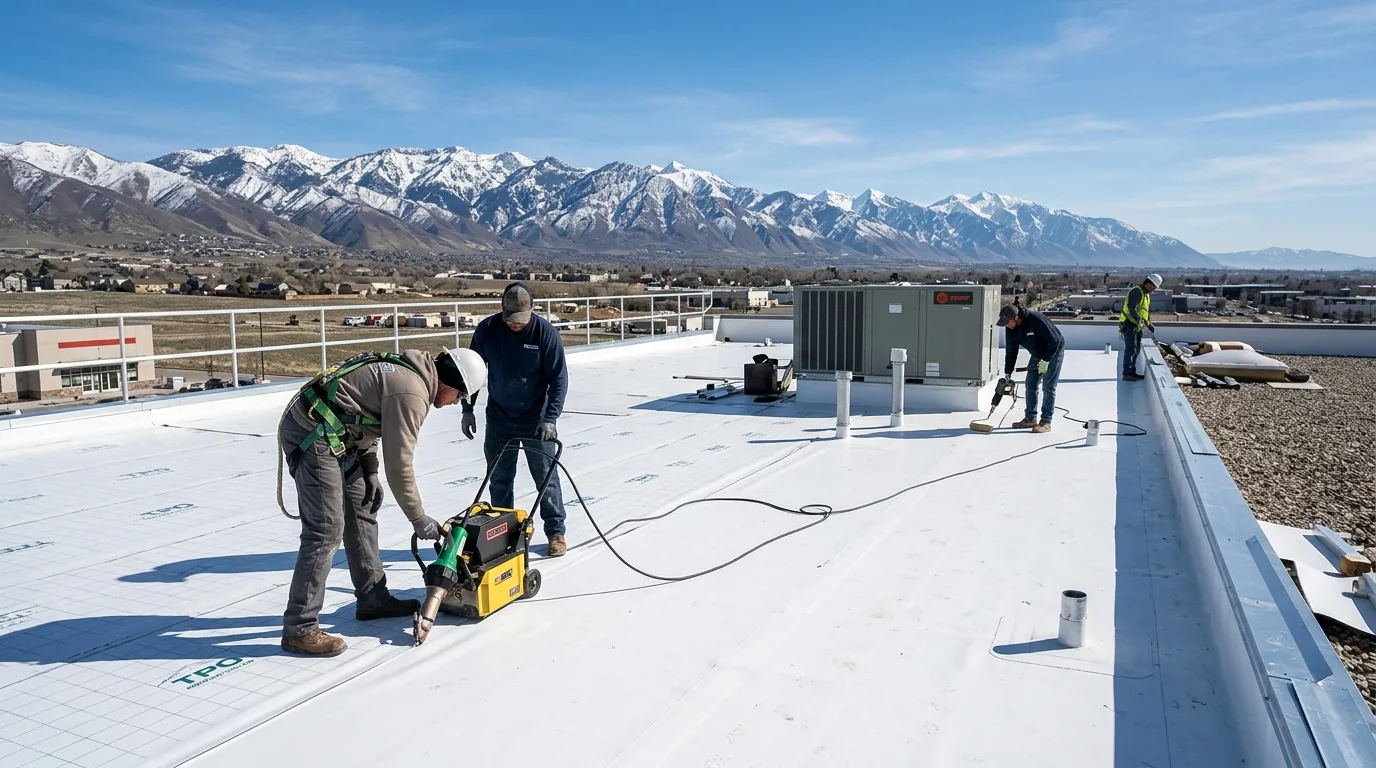
On a standing seam metal roof, clamps grip the seam and leave the panel intact, which is the lowest-risk option for the roof. On a membrane roof like TPO, a ballasted system needs pads and a smooth surface, and a fastened system needs boots or pitch pockets at each post. Wind sets the density of attachment. Livingston's long wind record and the 89 mph gusts Belgrade saw in 2013 are reasons to leave margin at the edges of the layout.
What does hail mean for panels and for the roof beneath?
Hail hits both. Golf-ball stones hit Bozeman on June 30, 2010, and returned over Belgrade and north Bozeman in August 2013. Panels are rated for hail, but frames bend and glass can crack, and stones that miss the panels land on the roof around them.
Under an array, the membrane is shaded and protected from some hail, but not from all. The edges of the array and the walk lanes are exposed. After any hail event, we walk the whole roof, including under the panels where access allows, and photograph hits. The record separates damage to panels from damage to the roof, since different insurers and different warranties are involved.
Cable and conduit run across the roof and are walked on during maintenance. Each is a trip hazard and a puncture source. We route conduit on supports, not directly on the membrane, and we mark walk lanes so the technicians who service the array stay on protected paths.
How do we work around an existing array?
Panels have to move for a roof to be repaired or replaced. The solar provider removes and resets them under its own contract, and the roofer works in the gap. The order is set in advance: remove panels in rows, repair or replace the roof beneath, install protection, reset panels. Dates are agreed so the roof is not left open between steps.
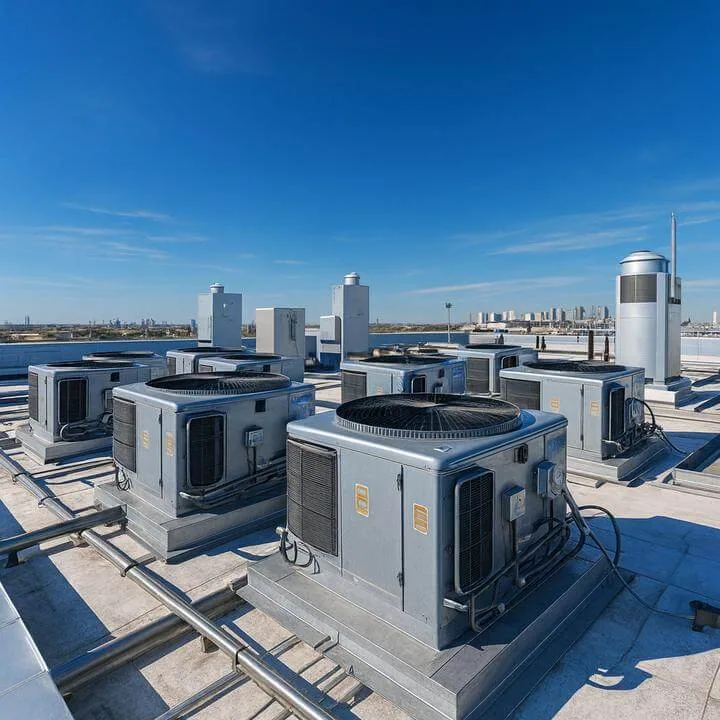
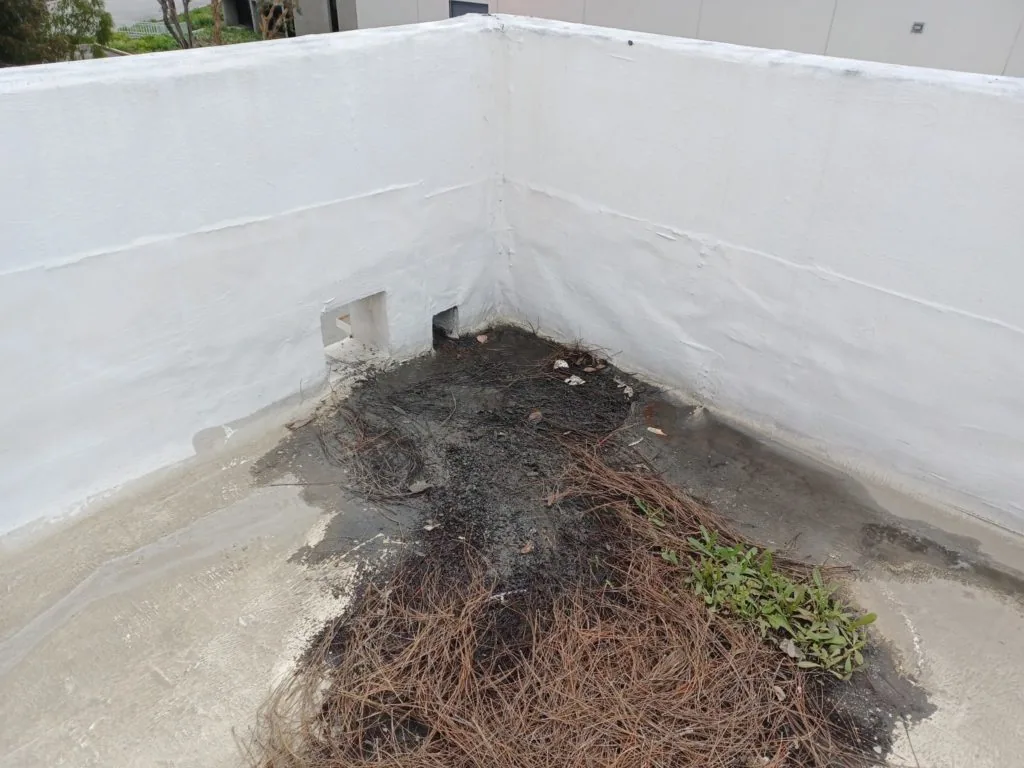
Penetrations under an array are a common source of leaks. Posts, conduit and combiner boxes each have a boot or a seal, and each ages. We inventory them the same way we do rooftop equipment curbs and supports, with a number, a photo and a condition note. Drains under and around the array matter too, and roof drains and scuppers are checked so the array does not block their flow.
How do we plan a solar-ready roof from the start?
On a new roof or a replacement, we plan for the array in the first drawing. That means a deck that carries the load, a cover board that spreads point loads, walk lanes marked and protected, blocking in the deck where posts will land and a layout that keeps arrays clear of drains, curbs and drift zones. Roof color matters too, and a cool roof beneath an array changes the light the panels see.
Warranties need coordination. A manufacturer's warranty may require approved attachment details and approved installers. We read the paperwork, and warranty management keeps the file. Light industrial and flex space near Belgrade is a likely place for a future array, and planning for it costs little at the start.
Questions About Solar-Ready Roofing
Can any roof carry a solar array?
No. The framing, the deck and the membrane all have limits, and snow adds to the load. An engineer reviews the structure, and we report on the membrane and drainage. If the roof needs work first, the array waits.
Does an array void a roof warranty?
Not necessarily, but it can if the attachment or the installer is not approved. We read the paperwork and coordinate with the solar provider so the details match.
What happens to the roof under the panels?
It ages more slowly where it is shaded, but it still needs inspection. Leaks under an array are hard to trace, so we map penetrations and drains before panels go on.
Who removes the panels for a re-roof?
The solar provider, under its own contract. We coordinate dates so the roof is open for the shortest time and protection goes down before panels are reset.
Is a ballasted array safer for the roof?
It avoids penetrations but adds weight and can shift in wind or snow slides. The choice depends on the roof, the engineer's review and the wind exposure. We provide the roof condition and the engineer decides.