
Silicone Roof Coatings in Bozeman, MT
Silicone Roof Coatings in Bozeman and the Gallatin Valley
A low-slope retail roof can hold water in the same low corners every spring. The ponds are shallow, they sit for days after the drifts melt and they dry to a ring of dirt that marks their edge. A coating that cannot stand in water has a hard time on a roof like that. Silicone can. In Bozeman, MT, where roughly 91 inches of snow a year turn to meltwater, silicone is the coating to weigh first when a sound roof ponds. Where on your roof does the water stand?
We apply silicone roof coatings on commercial buildings across the Gallatin Valley, and we say what the roof needs before we say what the coating costs.
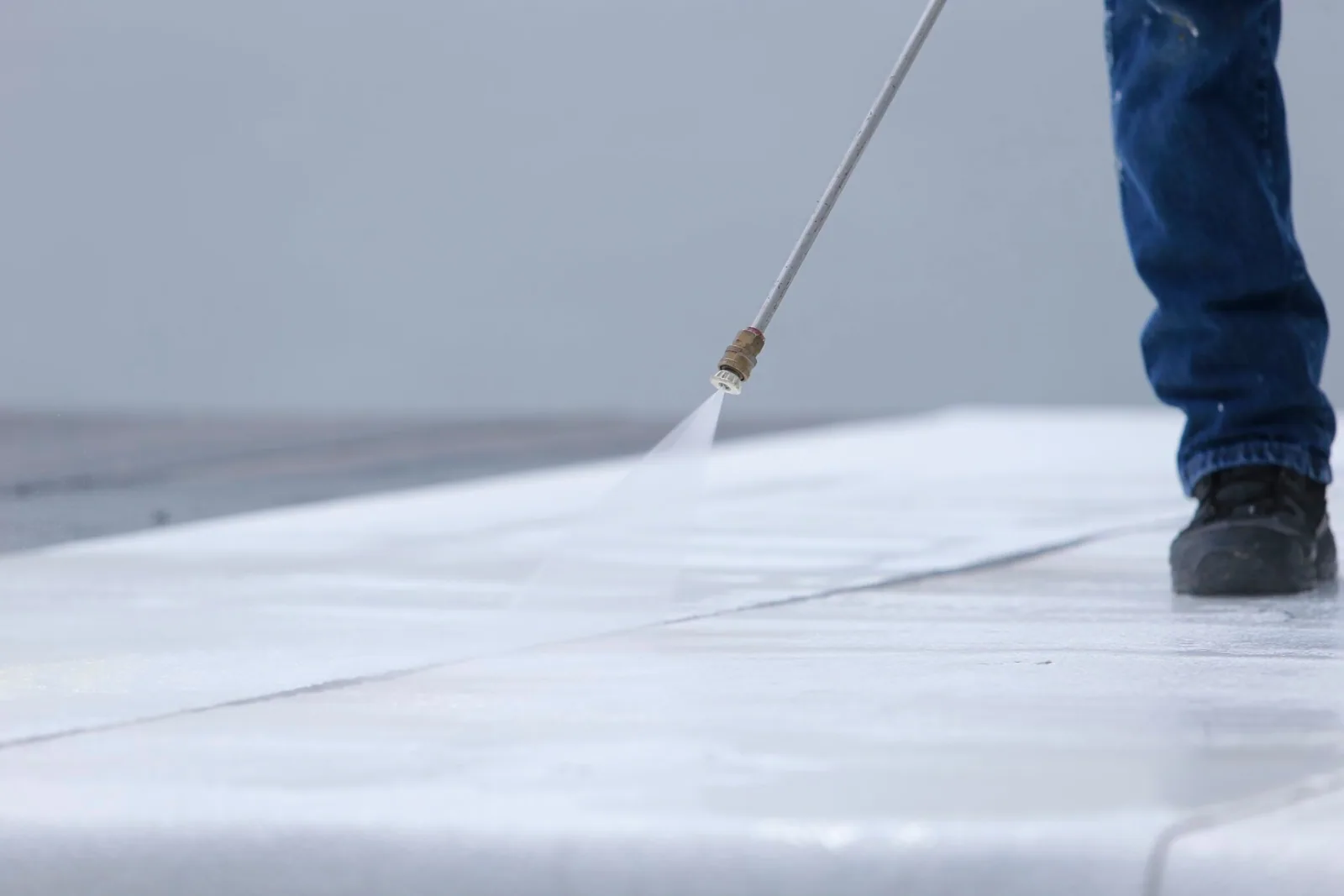
What is a silicone roof coating, and what does it do?
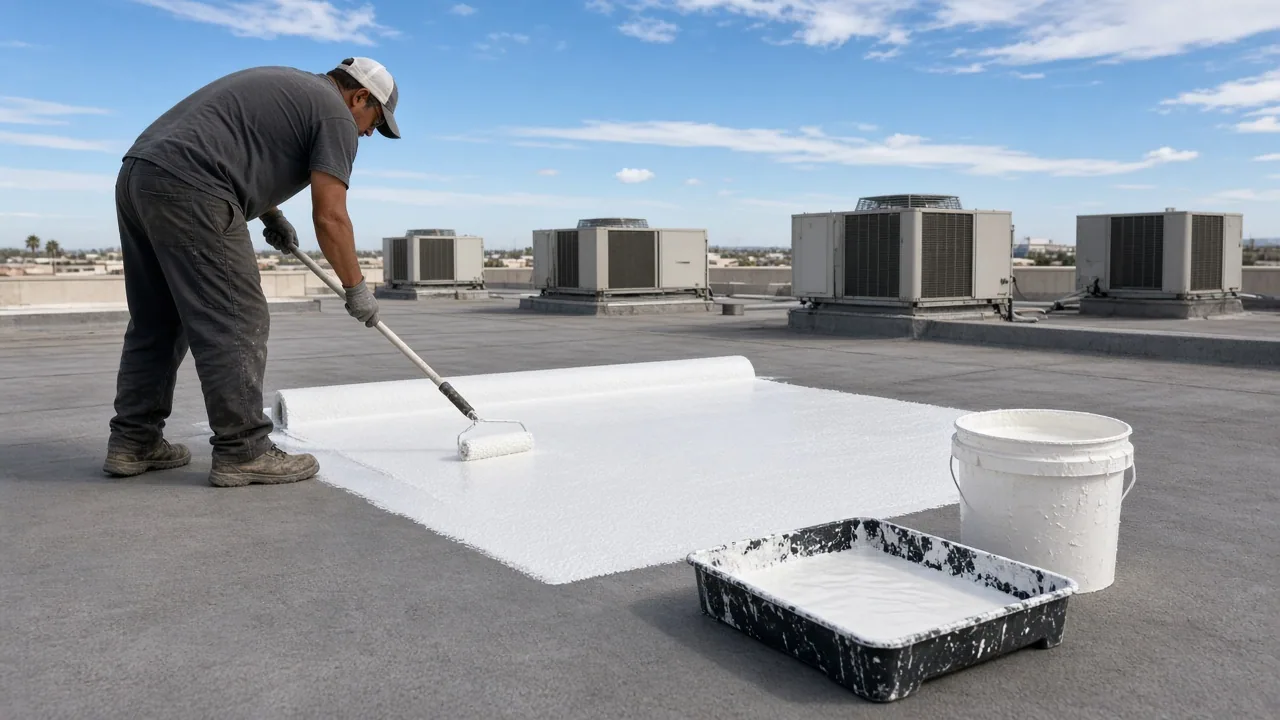
A silicone coating is a liquid-applied, moisture-cured membrane that is rolled or sprayed onto a clean roof and cures into a flexible, waterproof skin. It resists ultraviolet light, does not need to dry out before it sheds water and can tolerate standing water for long periods. It is used on single-ply membranes, built-up roofs, modified bitumen, spray foam and metal, when the substrate is suitable.
It does not make a failed roof sound. A coating seals the surface, extends the life of a roof that is dry and intact and adds reflectivity. Where insulation is wet or the deck is rotten, a coating hides a problem that is still growing underneath. That is why we scan and core before we coat.
How much of the job is surface preparation?
Most of it. A silicone coating bonds to a clean, dry, sound surface and fails on a dirty or chalky one. We wash the roof, repair seams and flashings, fill cracks and treat rust, and then we run an adhesion test on a small patch before committing the whole roof. Some substrates need a primer, and some old coatings cannot be recoated with silicone at all.
The coating's thickness decides its life, so we measure it. We mark off a set area, calculate the material required and check the applied film with a gauge. Photographs of the wet film at each stage go into the file. A coating applied thin looks the same on day one and fails years sooner. The gauge readings go into the file beside the product data.
When can silicone be applied in Bozeman?
Silicone needs dry weather, a surface above the dew point and temperatures in the range the manufacturer allows. With January nights near 15 degrees F and a record of minus 46, Bozeman's cold months are closed to coating. The application window runs through the warm, dry stretch, and a morning of dew or an afternoon thunderstorm can end a day's work.
We schedule coating jobs with backup dates and size each day's work to what can be applied and cured before weather closes in. If a roof must be sealed in the cold, we use temporary repairs and plan the coating for the first workable week. An owner who knows this early can fold the coating into the capital plan instead of reacting to a leak.
Weather can differ between the valley floor and the high ground, since Interstate 90 crosses Bozeman Pass at 5,702 feet between Bozeman and Livingston. We watch the forecast for the roof site, not for the region, and we confirm the surface is dry with a meter before any material is opened.
How does silicone deal with ponding water?
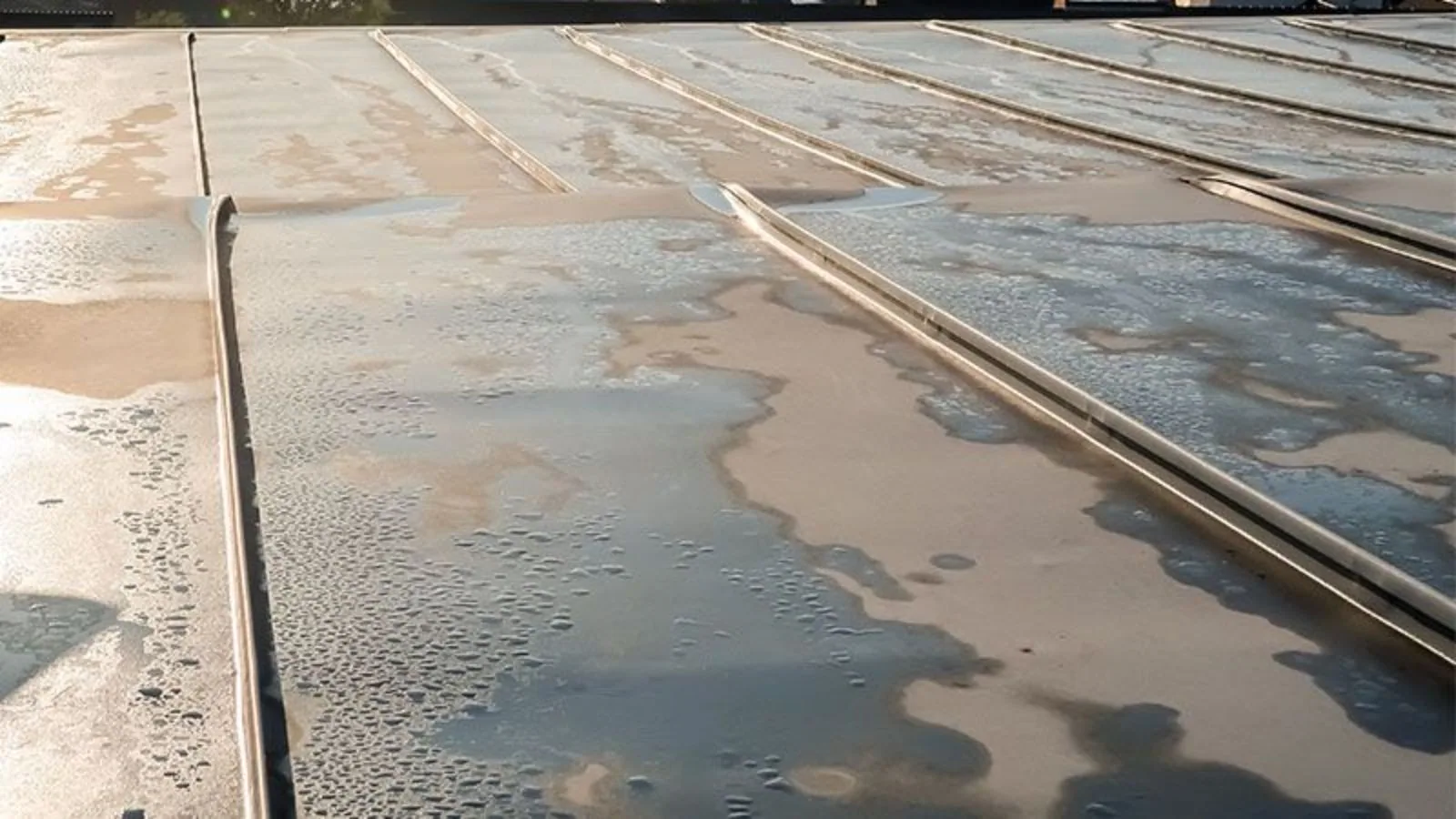
It tolerates it. That is its main advantage over acrylic. A roof that holds water after a thaw or a storm can still carry a silicone coating, where an acrylic would soften and fail. But tolerance is not a cure. Standing water adds weight, collects dirt and ages the roof underneath, so the better fix is to repair the ponding by clearing drains, adding drains or tapering insulation.
Silicone also attracts dirt. A dark ring at the edge of a pond is common, and it reduces reflectivity. Washing the roof in the fall keeps the coating clean. We note the ponding depth on the plan and revisit it after the first thaw to see whether the coating and the drains are doing their job.
A roof along the Belgrade side of the valley and a roof near downtown Bozeman may pond for different reasons, one from a sagging deck, the other from a clogged scupper. The repair differs even when the coating is the same, so the diagnosis comes first.
Which buildings are good candidates?
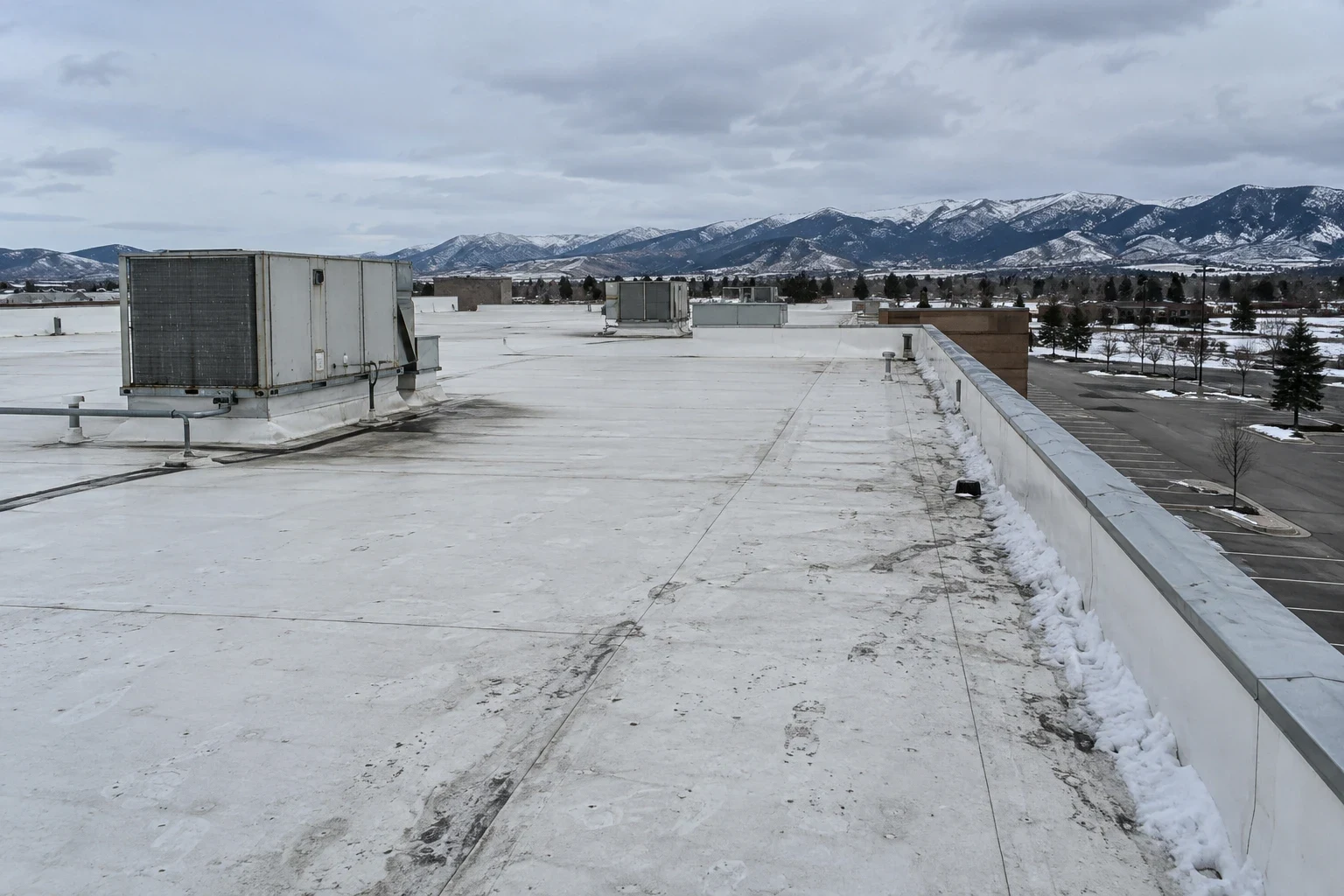
North 19th Avenue is Bozeman's primary retail corridor at about 37,160 vehicles a day, with Target, Ross, Bob Ward's, WinCo Foods, Best Buy, Staples, PetSmart and Costco nearby. Retail roofs on that corridor, like big-box roofs elsewhere, can be large, low-slope and exposed to the same thaw cycles. A walk and a core cut settle what any one building has on top.
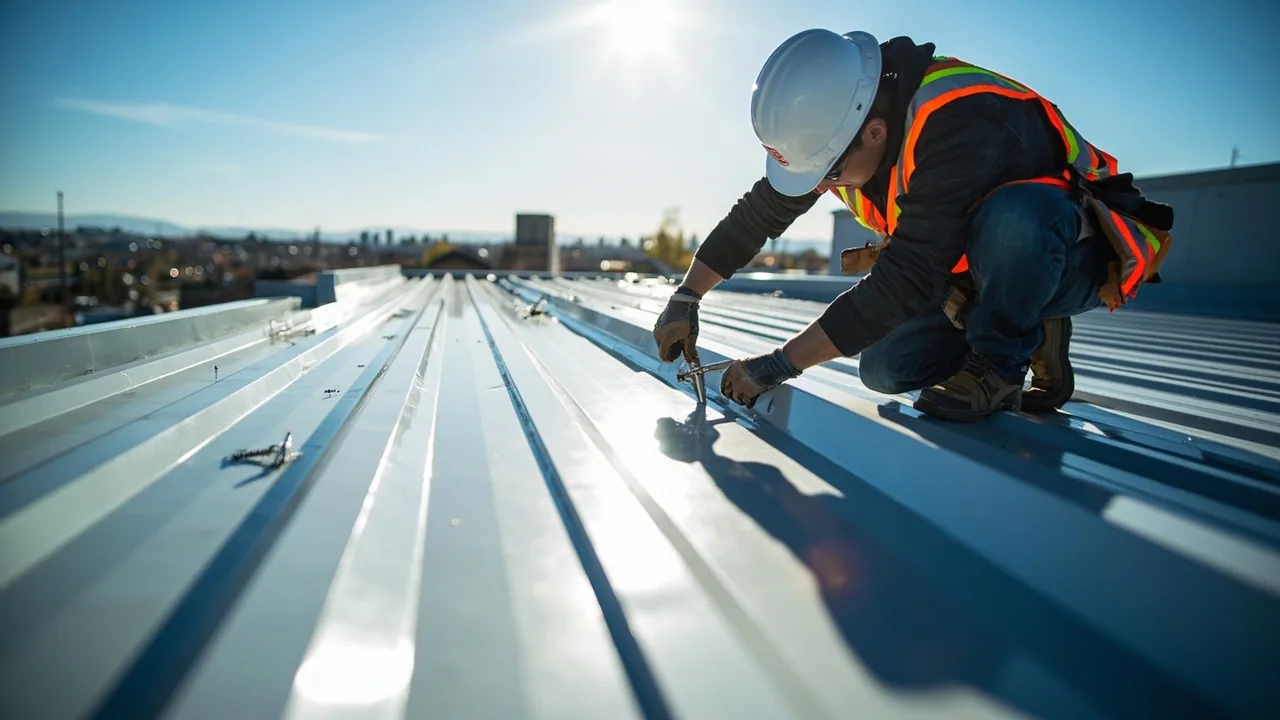
Good candidates are roofs with sound membranes and dry insulation, where cracking, chalking or UV wear is the main concern. Metal roofs that need a seal over fasteners and laps are candidates too, as in a metal roof retrofit. An owner on the North 19th Avenue corridor can weigh coating, repair and replacement against each other.
What do hail and wind do to a coated roof?
A coating adds a little protection against UV and water, but it does not stop large hail. Golfball stones took Bozeman on June 30, 2010, and in May 2023 hail of 1.50 inches lasted several minutes along the Gallatin River. After a storm we look for cracks, thin spots and bruises in the coating, and we cut a core where needed.
Wind carries debris that scours a surface. Gusts of 65 mph were logged southeast of Bozeman along Triple Tree Road in late August 2023. Scoured areas show up as dull patches, and we log them for a touch-up. The warranty file should hold the coating data sheet, the thickness readings and the date of each touch-up, since a manufacturer may ask for all three.
How do I decide between silicone, acrylic and foam?
Choose silicone when the roof ponds or when the substrate suits it. Choose acrylic when the roof drains well and cost matters. Choose spray foam when the building needs new insulation and a tight envelope. Roof coating restoration begins with an infrared moisture survey, because the survey decides whether a coating can be used at all.

Questions About Silicone Roof Coatings
Can silicone go over any old roof?
No. Some substrates need primer and some old coatings block adhesion. A test patch and a pull test, before the whole roof is coated, show whether the bond will hold.
Does a silicone coating make a roof waterproof?
It seals the surface and the seams it covers. It does not fix wet insulation or a damaged deck. A moisture survey and core cuts should come first so the coating goes over a sound roof.
How thick should the coating be?
As thick as the manufacturer's specification requires for the warranty and the substrate. We measure the wet film and the cured film, and we record both in the file.
Why does silicone collect dirt?
The surface stays slightly tacky, so dust and pollen stick. Washing in the fall restores reflectivity and keeps the coating from carrying a dark film.
What if a leak starts after the coating goes on?
Call right away. The cause may be a flashing, a fastener or a cut, not the coating itself. A walk and a water check find it, and spot repairs usually fix it.