
Due Diligence Roof Surveys in Bozeman, MT
Due Diligence Roof Surveys in Bozeman and the Gallatin Valley
A twelve-unit warehouse building near the Belgrade airport changes hands, and the buyer has a short inspection window, a lender with a checklist and a seller who says the roof is fine. Everything else in the deal has a report: the title, the environmental, the survey, the mechanical. The roof is the biggest single exterior system on the building and often the only one nobody has measured. What is the roof worth in the price you are about to pay?
I answer that on the roof, with a probe and a camera, in time for the inspection period to matter.
What does a roof survey for a purchase cover?
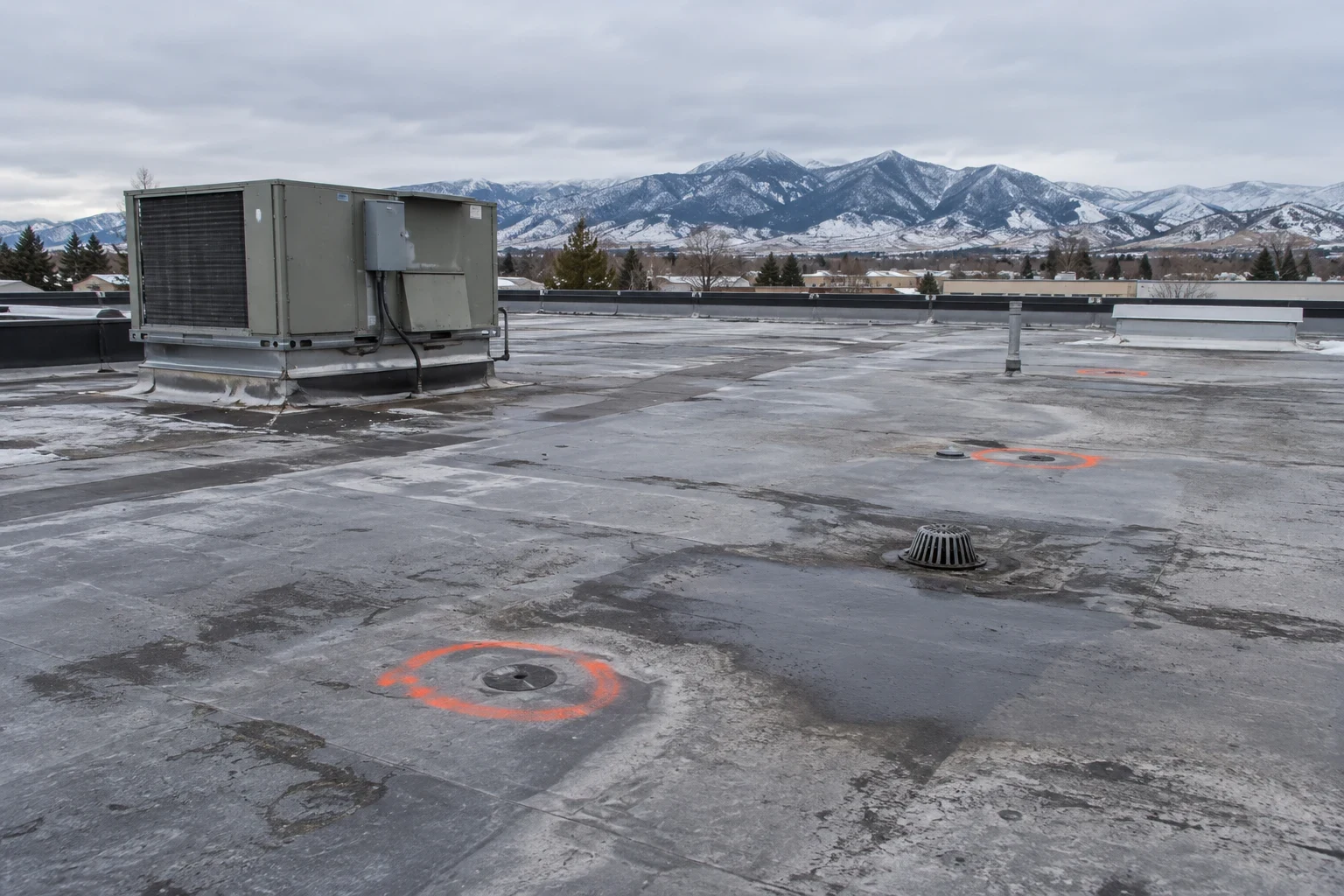
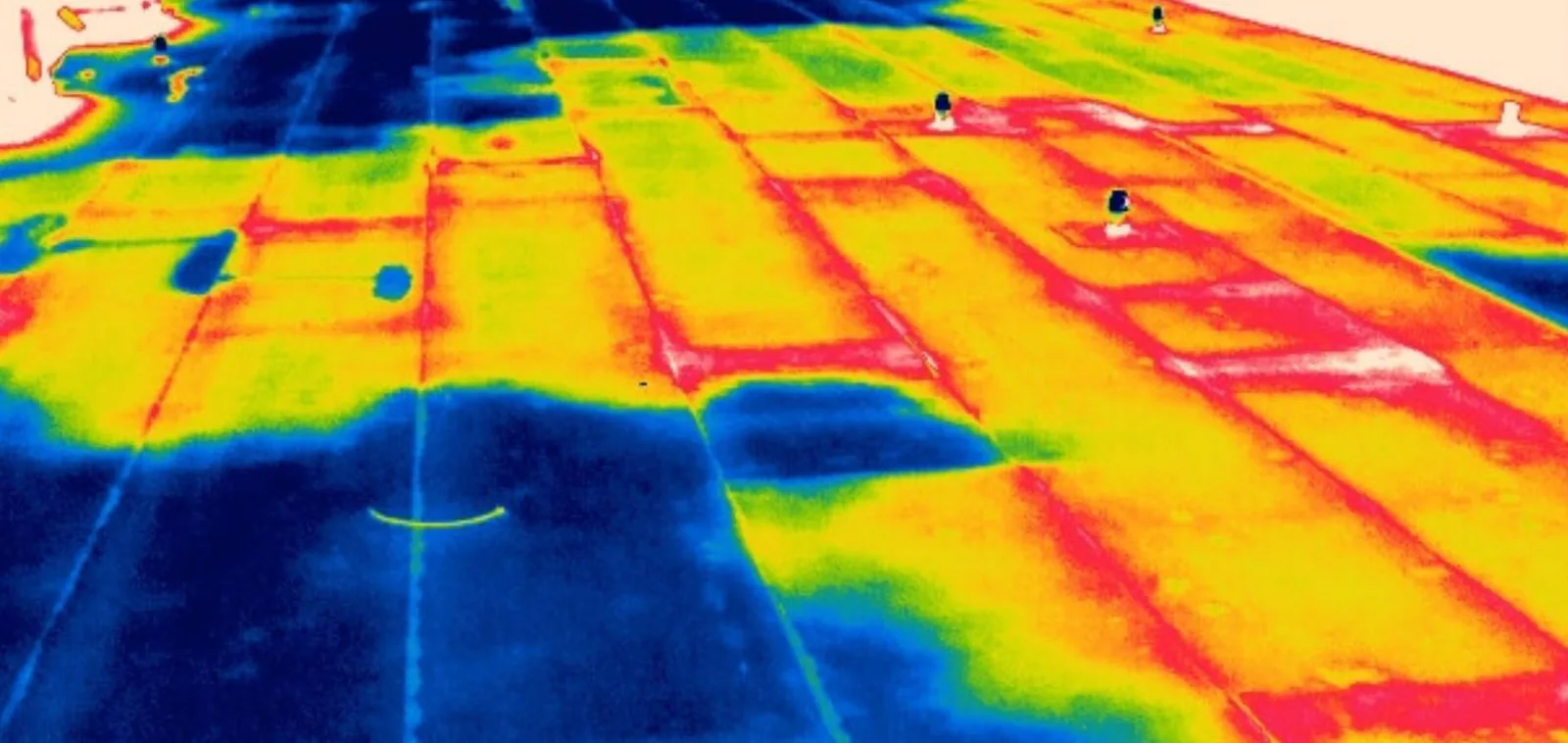
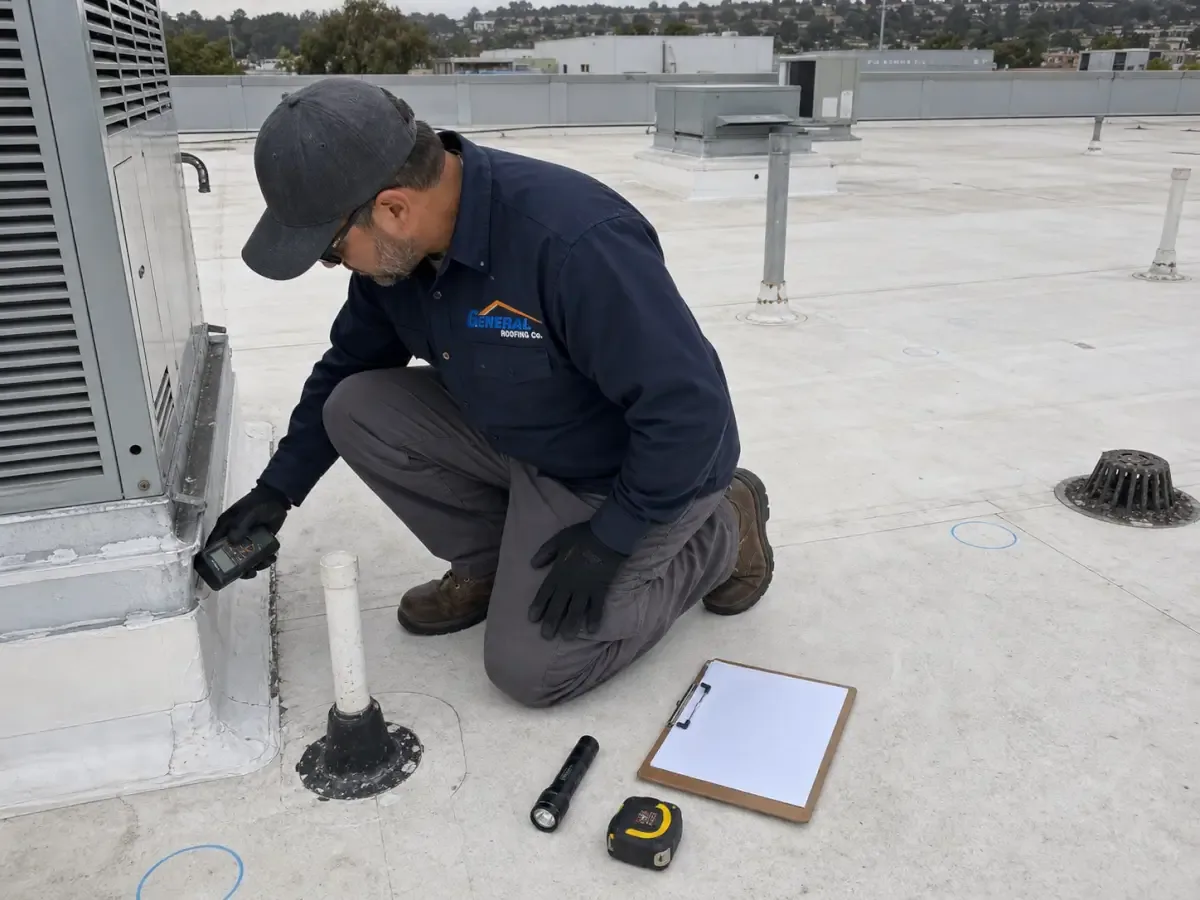
The same things a good condition report covers, trimmed to the questions a buyer needs answered. We identify the roof system and the number of layers. We walk the field, the seams, the flashings, the edges and the drains. We check the rooftop equipment and the curbs. We look for ponding and for signs of past leaks. Where the access and the weather allow, we run an infrared moisture scan and cut a few cores to find wet insulation.
Then we turn findings into three numbers a buyer can use. The cost of repairs that should happen right away. The expected remaining service life of the roof as it stands. The reserve the owner should plan for replacement. Those numbers become part of the price conversation, or the loan underwriting, or both.
The survey also records what a buyer will inherit in the form of equipment and access. Rooftop units, exhaust fans, satellite dishes and antenna mounts each leave a penetration, and tenants sometimes add them without the owner knowing. We count them, check how each base is flashed and note any that block drainage. Fall protection, hatches and ladders get a note too, because a roof that cannot be reached safely will not be maintained.
Does a newer building still need a roof survey?
Often yes, though the questions are different. Light industrial and flex buildings are going up around Belgrade, including a dozen-unit warehouse project in the Copper Ranch Road business area, and others near the Jackrabbit Lane interchange, including an office and warehouse building built in 2022 and a warehouse condo building finished in 2024. A young roof should be free of age wear, so we look for installation defects: seams that never bonded, flashings that were rushed, drains set too high, penetrations sealed poorly.
Those problems show up in the first few winters, and a buyer who finds them early has a seller or a builder who is still reachable. A warranty may still be in force, and the survey can confirm that the roof was built the way the warranty requires.
What about older buildings downtown and in Midtown?
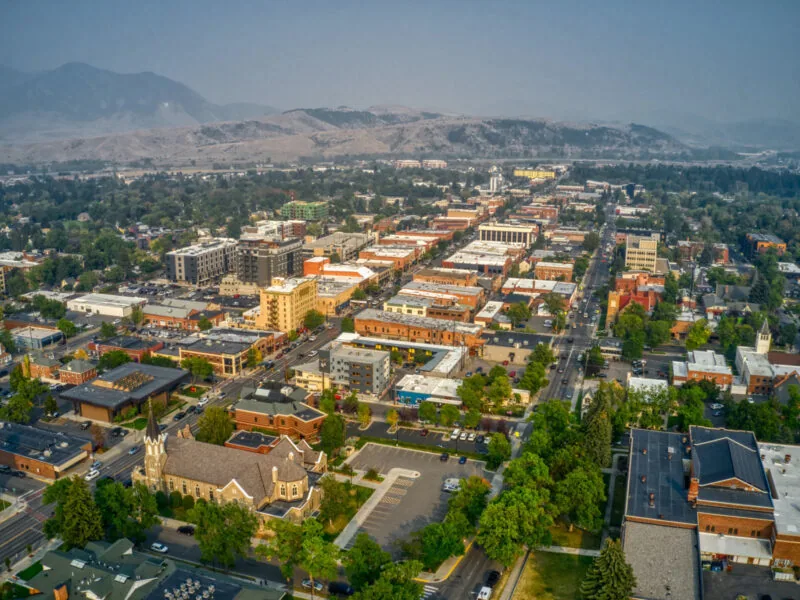
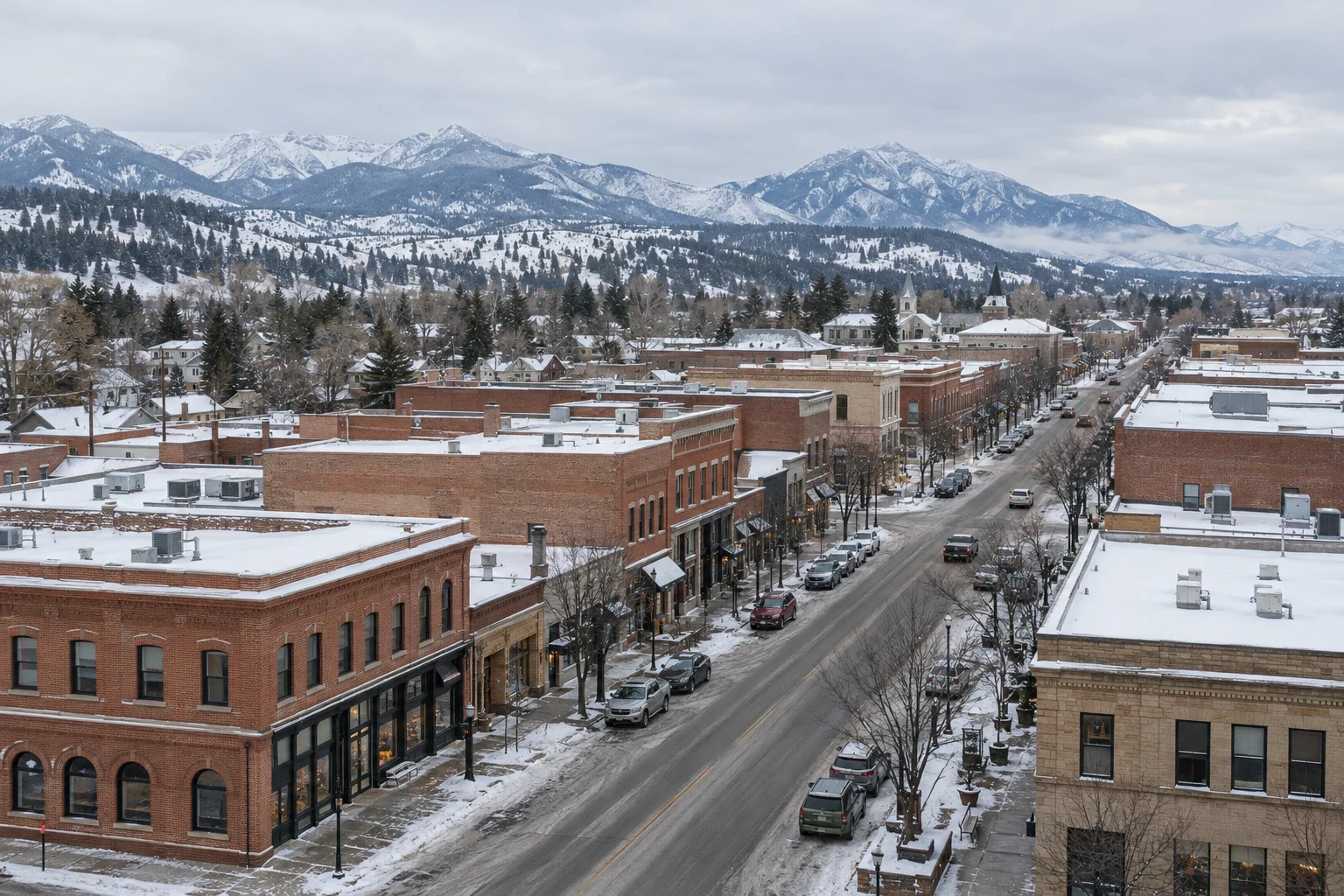
They need the deepest look. Downtown Bozeman's Main Street area includes two historic districts, and older masonry buildings with flat roofs are common there. These roofs may carry several repair campaigns, mixed materials and a deck whose condition is hard to see. Core cuts and a moisture scan matter more here, and so does a look at the parapet, the coping and the masonry joints that carry the flashing.
Midtown is in the middle of an urban renewal push along North 7th Avenue, with infill, housing and retail on the way and a large mixed-use building planned. Buyers moving on older properties in that district should know what roof they are inheriting before the neighborhood around it changes.
How does winter change the survey?
It narrows what we can see. Bozeman averages about 91 inches of snow a year with about 54 snowy days, and a roof under a snowpack hides its seams, its ponding and its flashing. If your inspection period falls in winter, we tell you what a snow-covered survey can and cannot establish. We can read the edges, the drains, the interior ceilings and the visible penetrations, run a drone pass where it helps, and flag items that need a second look after the melt.
A buyer can often negotiate a condition that allows a follow-up walk when the snow clears. We write the findings with the limits stated, so nobody mistakes a partial look for a full one.
How is a refinancing survey different?
The reader is the lender, and the question is risk. Lenders want to know that the roof will not need a large unplanned outlay during the loan term, and that the owner has a plan for what it does need. The survey leads with the remaining life, the repair list and the reserve, and it supports them with photographs and a moisture map. For owners with several loans, the reports can be arranged by property so each lender receives only its own building. The same record feeds roof asset management and capital planning when the owner keeps the property.
Timing differs from a purchase. A refinancing usually has a longer runway than a sale, which gives room to survey in the right season, fix urgent items before the lender's inspector looks, and present a roof with its repair list already underway. An owner who arrives with a completed repair and a dated photograph of the result is in a stronger position than one who arrives with a promise.
What do you receive, and how fast?
A written roof condition report with the roof plan, photographs and ranked findings, and the three buyer numbers on the first page. We confirm the delivery date when the engagement starts so it fits the inspection clock, and we call out any finding that could change the deal as soon as we see it. A buyer who learns about wet insulation on day three has more options than one who learns on day twelve.
Where a deal includes the roof warranty, we add a note on whether the paperwork matches the roof, since warranty management questions often decide how much a buyer will pay.
Questions About Due Diligence Roof Surveys
The seller offers a roof report from three years ago. Can we rely on it?
Use it as a starting point. A roof changes with every winter, so we compare the old photographs with the roof as it stands, check what was repaired afterward, and update the findings. If the earlier report was thorough, our survey is quicker and the comparison is useful.
Can the survey be done without disturbing the tenants?
Usually. Most of the work is on the roof, and core cuts are patched on the same visit. We coordinate access with the seller or manager, avoid air intakes and entrances, and keep noise down in occupied suites. A simple notice to tenants covers it.
Do you give a replacement price in the survey?
We give a cost range for repairs and for the replacement reserve, with the main cost drivers listed: roof size, insulation condition, deck repairs, access and building use. A fixed replacement price comes after a full scope, which a buyer may request once the deal is moving.
What if the roof fails the survey?
Then the buyer has a negotiating tool. The report shows what is wrong, what it costs and how urgent it is, and that supports a price adjustment, a seller repair credit or an escrow for repairs. The buyer then decides whether the deal still works.
How do you handle a portfolio purchase of several buildings?
We sequence the visits by size and risk, report each roof separately and add a summary ranking across the group. That lets the buyer see which buildings carry the highest roof exposure and plan the first year's spending.