
Roof Asset Management in Bozeman, MT
Roof Asset Management in Bozeman and the Gallatin Valley
A facilities office that looks after dozens of roofs holds a portfolio where each one has its own personality. A residence hall with a ballasted roof and a drift behind every parapet. A lab with a pile of rooftop equipment and a curb that has never quite sealed. A flat section over a loading dock that ices at one corner every January. Someone in that office carries all of it in their head, and that person will not be there forever. If you manage more than one building, where does the record of each roof actually live?
I build that record on the roof, one building at a time, so it matches what is up there.
What does it mean to manage a roof as an asset?
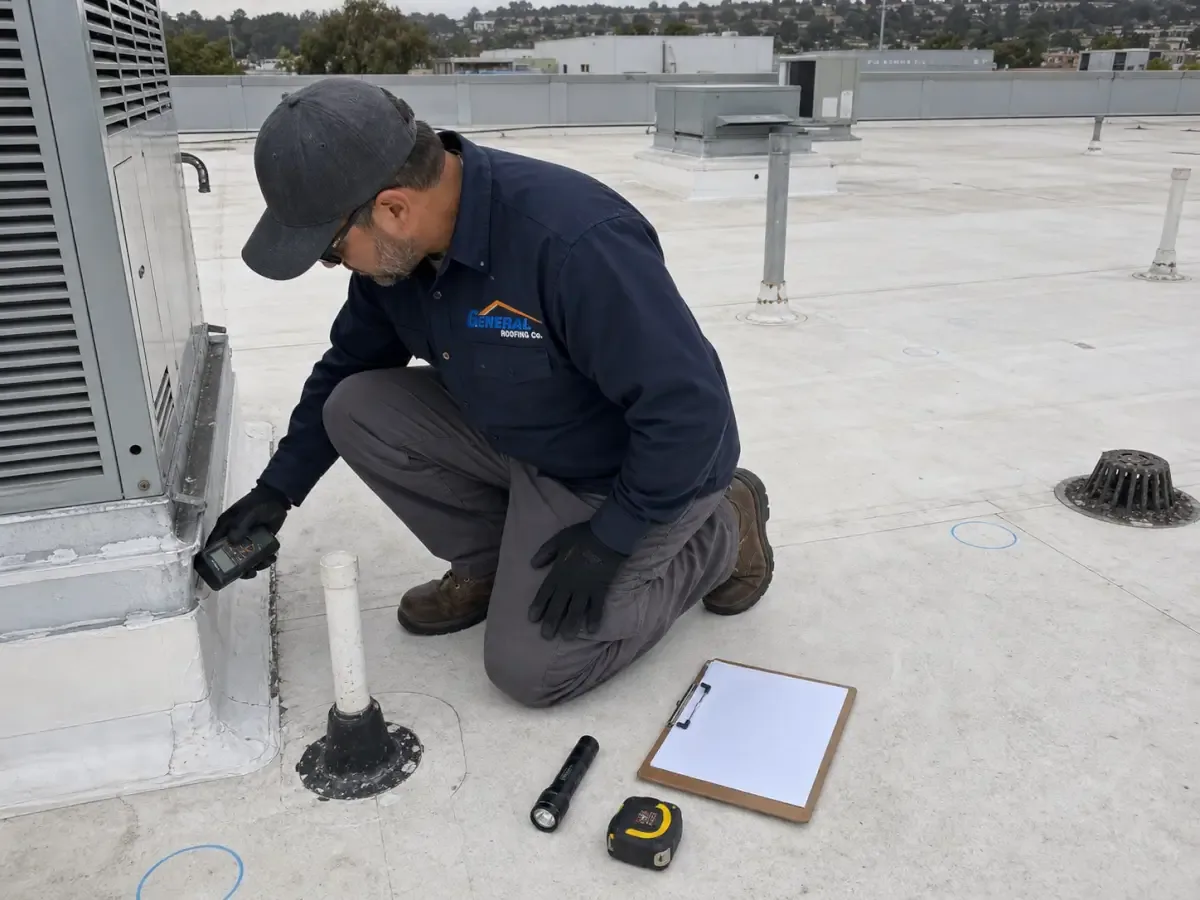
It means treating the roof as something with an age, a condition and a remaining life, instead of as a cost that shows up when the ceiling stains. For each building we record the system type, the approximate install date where the owner can tell us, the number of layers, the attachment method, the drainage layout, the penetrations and the repair history. Then we add what we see: seam condition, flashing condition, surface wear, ponding, drain health and any areas where infrared or a core cut found moisture.
The result is a record owners can sort. Which roofs are sound and can be left alone. Which need a repair this fall. Which are heading toward replacement in a few years, and what that does to the budget. A portfolio with that record makes decisions on evidence, and it turns a surprise leak into a scheduled repair.
The record also protects the owner in a dispute. When a contractor, a tenant or an insurer asks what condition a roof was in on a given date, photographs and ratings answer the question, and nobody has to rely on memory or a stained ceiling tile.
What do we collect on the roof?
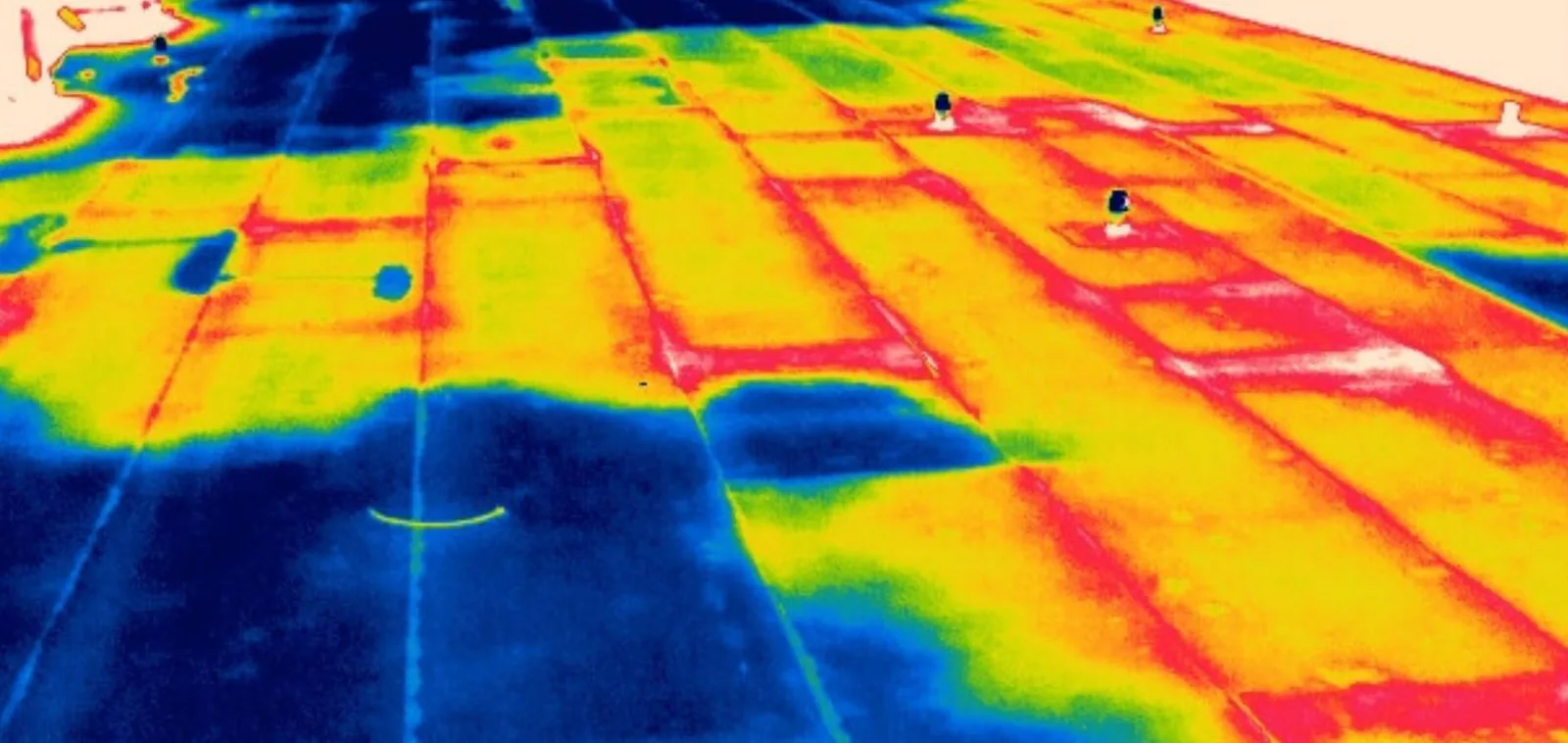
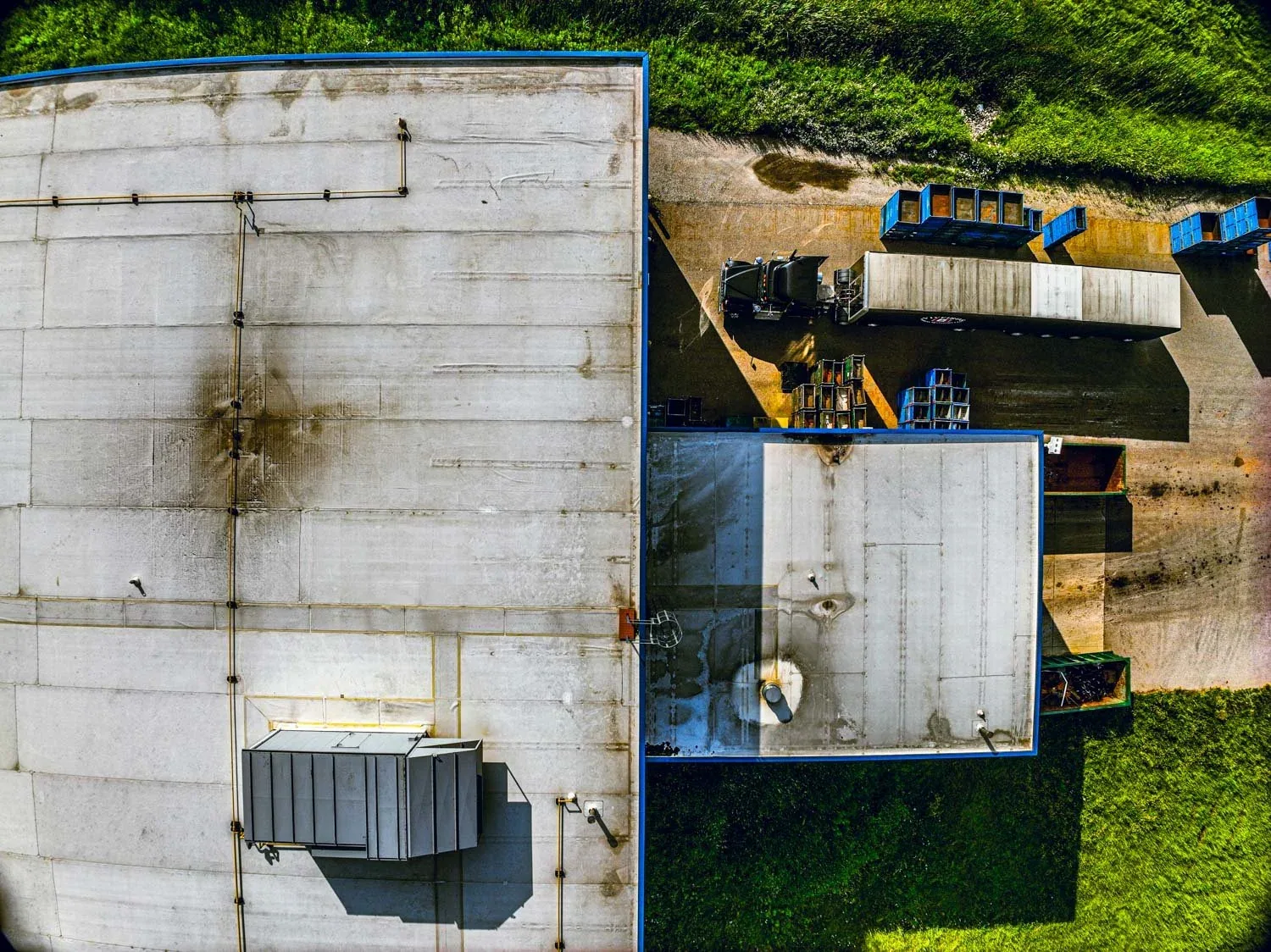
Facts you can check by standing there. We walk the roof, photograph each condition we find, and mark it on a plan: open seams, cracked flashing, lifted edge metal, blocked drains, crushed insulation, dished decks and mechanical equipment with failing curbs. On roofs where moisture is likely, an infrared moisture survey and a few core cuts show what is happening below the membrane. A drone pass covers large, steep or hard-to-reach roofs quickly and safely.
We give each roof a plain condition rating and a short list of actions in priority order. We also note things the owner can use: where the access hatch is, which unit blocks the walk path, and which drain collects debris from a neighboring roof.
Equipment gets its own line. Rooftop units, exhaust fans, antennas and solar mounts each sit on a curb or a support, and each curb is a place where the roof can fail. We count them, check how the membrane meets each base, and flag the ones that block drainage. When a mechanical contractor adds a new unit, the record shows where it went, what it replaced and whether anyone sealed the old opening.
How does Bozeman weather change a roof record?
It adds a storm and snow history to each building. Snow totals about 91 inches in a Bozeman year, and hail has struck the valley hard more than once: the June 2010 storm cost Montana State University dozens of windows and shredded the Ellen Theatre marquee downtown, and golf-ball stones came down over Belgrade and north Bozeman in August 2013. A roof that was under those storms carries that history, whether or not a leak followed.
We log known storm dates against each building so a future hail bruise or a recurring leak can be compared with what the roof has already been through. That log is the difference between saying a roof is old and saying it has taken two heavy hail events and many winters of drifting snow at the same parapet.
Which portfolios benefit most?
The ones with variety. A hospital system with a medical office building, a clinic and a parking structure. A school district with an older elementary school and a newer middle school. A property manager with retail along North 19th Avenue, a flex building near Belgrade and an office in Midtown. A public agency with a fire station, a library and a maintenance yard. In each, no two roofs age at the same rate, and a single record keeps the oldest ones from being forgotten.
An owner with a large property, such as the Gallatin Airport Authority with its 2,481 acres, needs one shared way to track roofs. Multi-site roof programs take the same record and turn it into a schedule.
How does the record turn into decisions?
We sort roofs into three groups. The first group needs nothing but the next scheduled look. The second needs repair or preventive maintenance to reach the end of its life. The third is heading toward replacement or a recover and needs budget planning. For owners who budget annually, this keeps replacement from landing in one year as a surprise, and it feeds roof capital planning.
Where a warranty is involved, the record also keeps track of the repairs and inspections the warranty requires, and that is the file roof warranty management works from.
Priorities shift when the building does. A roof over a clinic that adds an imaging suite moves up the list, and a roof over a building slated for demolition drops to emergency repairs only.
How often does the record get updated?
After every storm that hits the valley, after any repair, and at least once a year on a scheduled walk. A roof record that sits untouched for three years describes a different roof from the one overhead. We update ratings, mark completed repairs, add new photographs, and note anything that changed between visits.
Owners who change hands or change managers keep the thread this way. A new property manager inherits a set of photographs, a plan and a repair log, so the first conversation about a roof starts with facts about that roof.
Questions About Roof Asset Management
We have no records on our older roofs. Where do we start?
On the roof. We walk each building, identify the system type, count the layers where we can, and use core cuts to see what is underneath. Install dates can come from permits, invoices or the building's age, and where nothing exists we estimate a range. A rough record of ten roofs beats a perfect record of two.
Does a condition rating tell me when to replace?
It tells you where each roof sits relative to the others and what the next three years probably look like. Replacement timing also depends on moisture in the insulation, the cost of repeated repairs and the owner's plans for the building. We pair the rating with those facts so the recommendation fits the building.
Can one record cover buildings in Big Sky and in Bozeman?
Yes, and the two should be read differently. Snow at Big Sky totals about 162.7 inches in a year, against roughly 91 in Bozeman, so the same membrane works harder at elevation. We record each building's setting along with its condition, and we adjust inspection timing to the snow season where the building sits.
Who owns the roof record, us or the roofer?
The owner. Photographs, plans, ratings and repair logs belong to you, whether or not you keep working with us. A record held by a roofer who leaves becomes an orphaned file, so we hand over the full set and update it with you.
How soon after a storm should the record be updated?
Within days. Photographs taken right after hail or wind show the freshest damage, and that makes the difference between a covered claim and an argument about age. We add the storm date, the observed damage and the repairs to the record for every roof we walked.