
Roof Warranty Management in Bozeman, MT
Roof Warranty Management in Bozeman and the Gallatin Valley
A newer warehouse out toward the airport at Belgrade may have a roof that came with a manufacturer warranty, and the paper for it can live in a drawer or a shared folder that nobody has opened in years. Then a hailstorm crosses the valley, or a tenant sends a ceiling photo, and the first question is whether the warranty still stands. The answer depends on what the document says and on what has been done to the roof since. What does yours require of you, and has anyone been keeping up with it?
I read the warranty before I touch the roof.

What does a manufacturer warranty actually cover?
A narrow set of things, written in specific terms. A typical commercial roof warranty covers defects in the manufacturer's materials and, in some forms, the workmanship of the installation. It says nothing about damage from outside forces. Hail, wind above a stated speed, fire, ponding water beyond a stated depth, foot traffic, punctures from other trades and structural movement are the usual exclusions, though each manufacturer words them differently.
Warranty terms also carry conditions: the roof must be maintained, repairs must follow the manufacturer's methods, and certain events must be reported within a set time. The wording decides the question, and it changes between systems and years, so we read the actual document before we say what it covers.
How do snow, wind and hail bear on a warranty?
They are where claims get complicated. Snow load and wind speed both bear on a warranty, and the design numbers listed for Bozeman are 50 psf and 110 mph. Warranty wind limits are written in miles per hour, and the August 2013 storm that dropped golf-ball hail over Belgrade also carried gusts up to 89 mph. A roof damaged in that kind of event may fall under an exclusion or under a wind rider, depending on what was purchased.
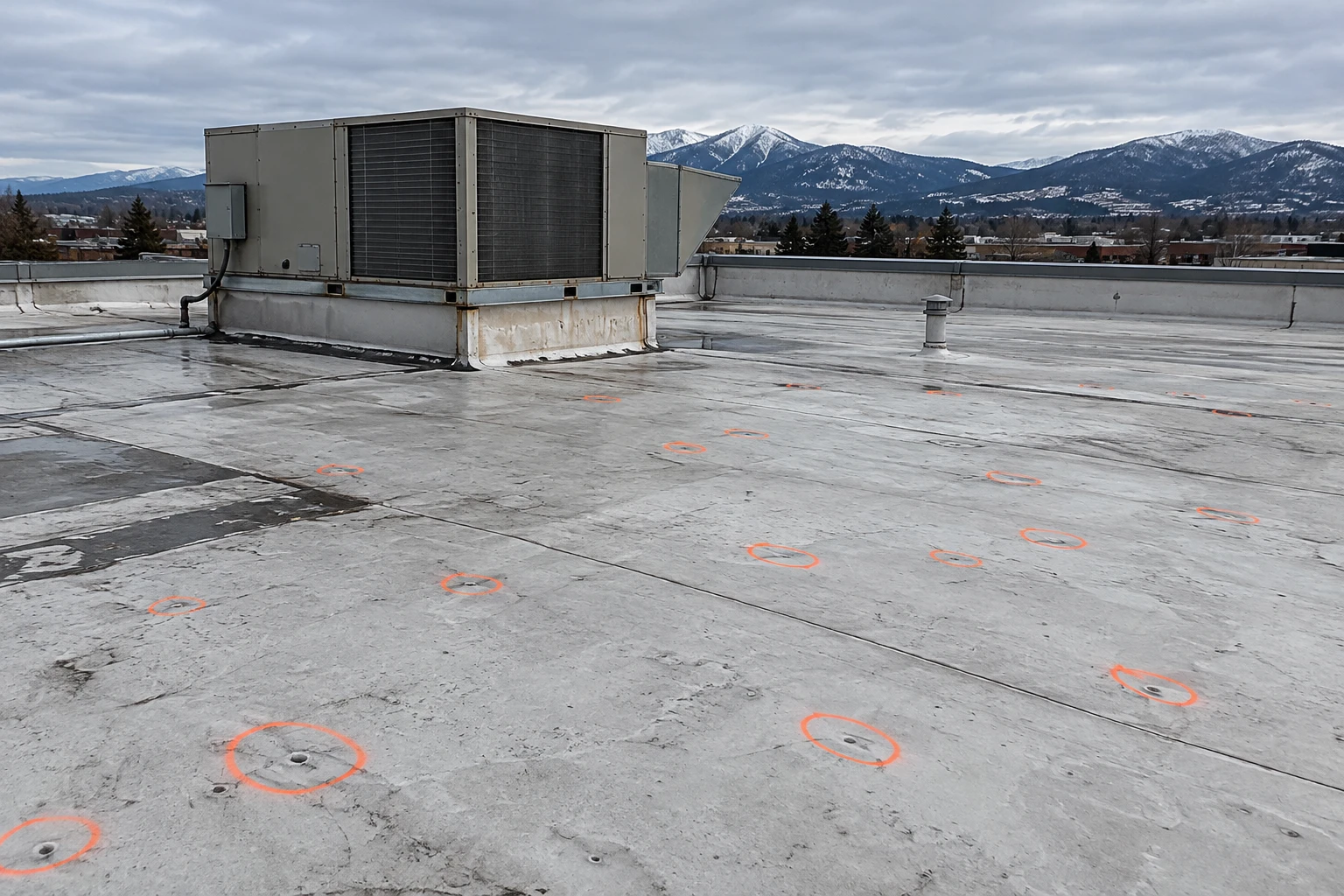
Hail is usually excluded outright, which is why a roof with a warranty still needs an insurance claim after a hailstorm like June 2010, and the roof itself is assessed the way hail damage repair does it, with cores and photographs. Livingston, past Bozeman Pass, sits among the highest average wind speeds of any U.S. airport station, and a building there should have its warranty wind rating checked against the exposure, not just filed.
What keeps a warranty valid?
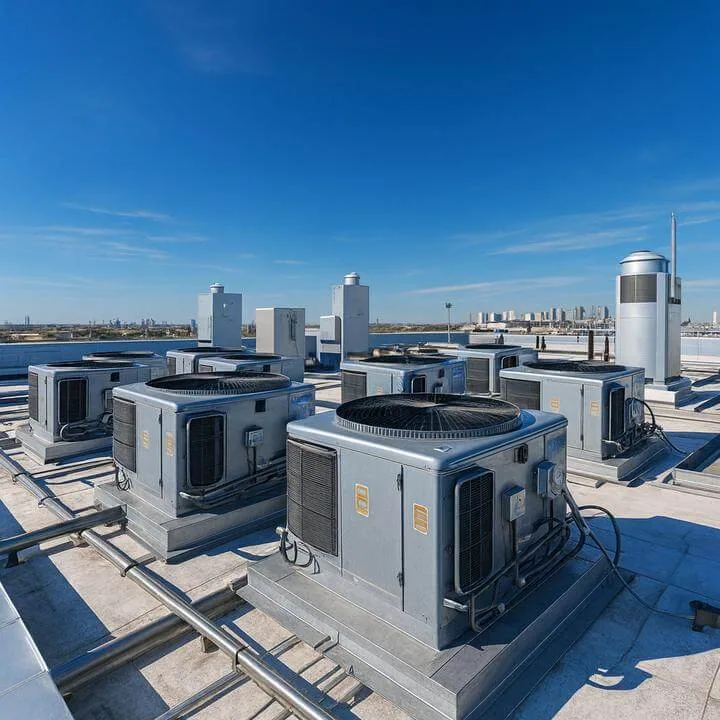
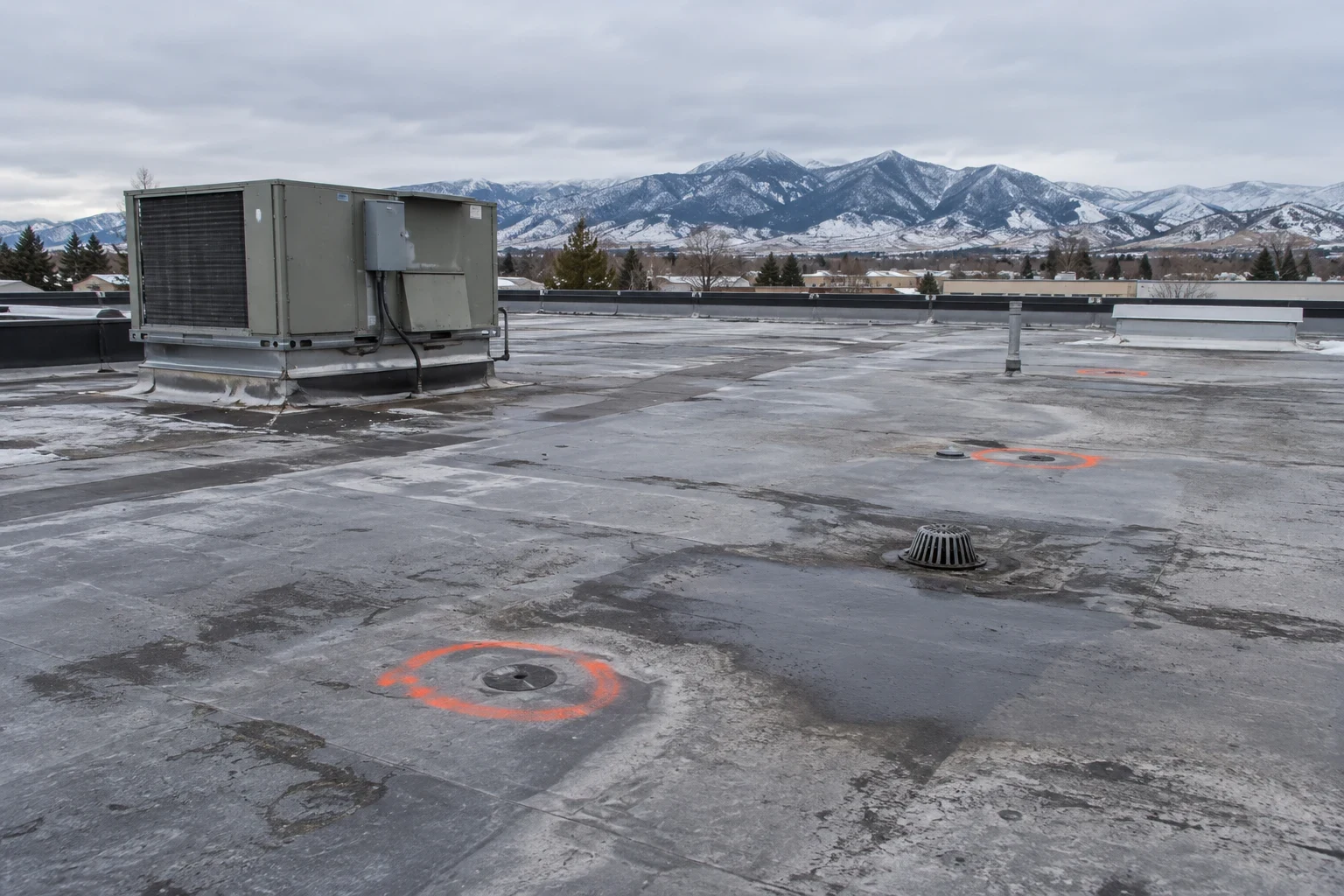
Regular care and good paperwork. Most warranties ask for periodic inspections, prompt repair of leaks and damage, drains kept clear, and no unauthorized penetrations or alterations. Rooftop equipment installed by another trade, along with its curbs and supports, is a common problem: a mechanical contractor sets a new unit, cuts a new penetration, seals it the wrong way, and the warranty is compromised without anyone telling the owner.
We protect against that by walking the roof on a schedule, photographing the condition, and logging every repair with its date, location and method. Our preventive maintenance program is built to make that log. When a claim day arrives, the owner can show the manufacturer a roof that was looked after, with evidence.
Who can repair a roof that is under warranty?
It depends on the warranty. Some require that repairs be made by the installing contractor or by an applicator the manufacturer approves. Others allow any competent roofer using compatible materials and approved details. The wording matters, and we read it before agreeing to a repair. If the warranty requires the original installer, we say so, document the problem and help the owner notify the right party.
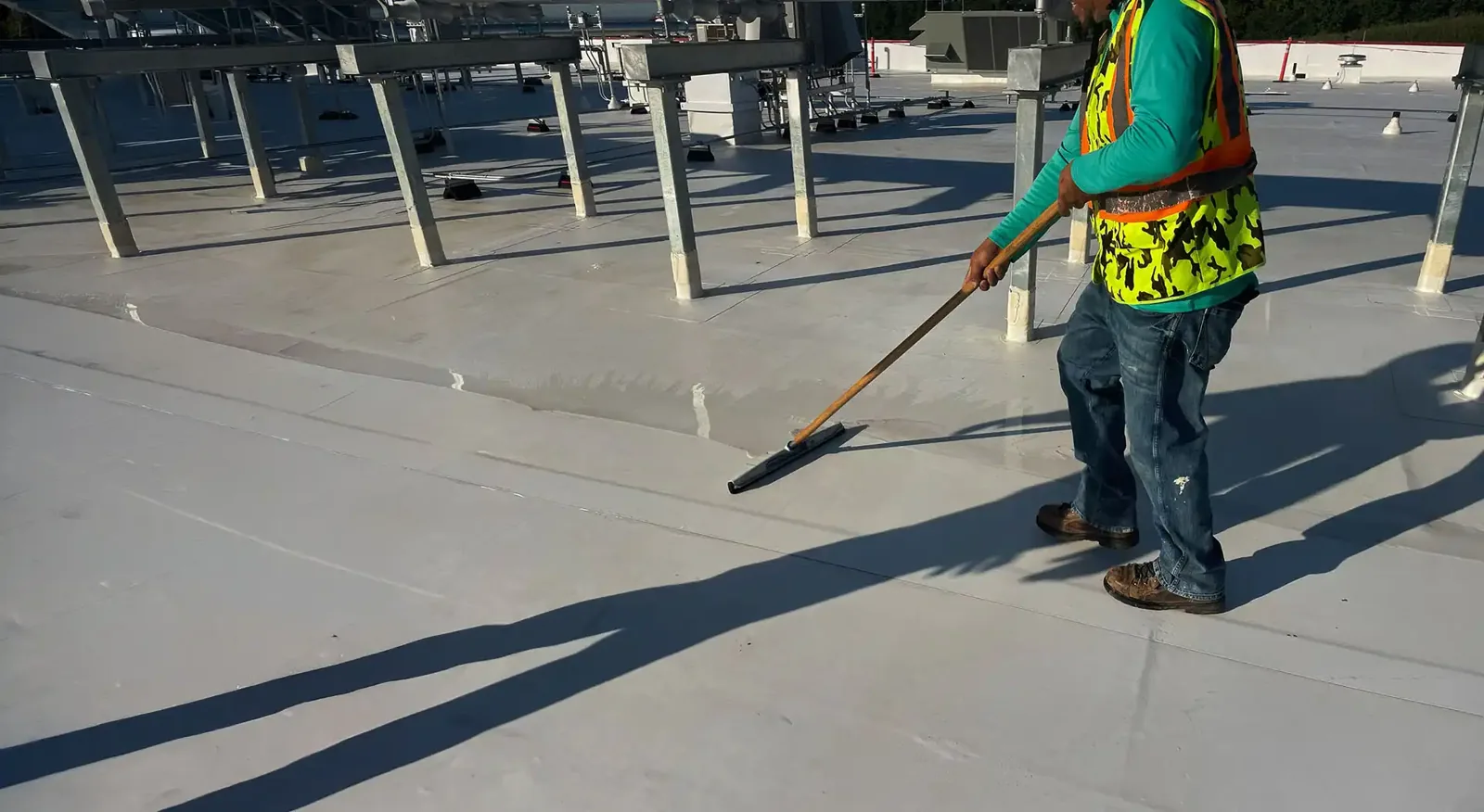
When the warranty allows it, we make repairs with materials compatible with the system and follow the manufacturer's published methods for welding, bonding, flashing and sealing. We record the work, the product used and the weather conditions, since a cold-weather repair outside the material's working range can raise questions later. Commercial roof repair that respects the warranty costs a little more attention and saves a lot of arguments.
One more habit protects the warranty: we repair the cause as well as the symptom. A patch over a leak at a drain does not help if the drain is set too high and ponds. We flag the cause in the log, because a manufacturer reviewing a claim will ask whether the owner knew about the condition and acted on it.
What do we do when a leak appears on a warranted roof?
First we make the building safe and stop the water, since owners are expected to limit further damage. Then we document the leak with photographs, moisture readings and a map. We check the warranty's notice requirements, which often set a deadline, and help the owner submit a claim with evidence. If the manufacturer sends an inspector, we walk the roof with them and share what we found.
Not every leak is a warranty matter. A drain clogged by debris, an edge lifted by wind or a puncture from a service visit is likely maintenance or an outside cause. We sort cause from defect, because a claim that is not supported by the roof wastes the owner's time and credibility.
What happens to the warranty when the building sells?
Many warranties can be transferred, for a fee and within a window, and some cannot. A buyer doing due diligence on a building near the Jackrabbit Lane corridor or on a downtown property should ask for the warranty, the maintenance log and the repair records at the same time. We help sellers assemble that package and help buyers read it. A roof with a clean paper trail is easier to sell and to finance. The same records feed an owner's long-term roof asset record.
Lenders read the same file. A lender asking about a refinance wants to know whether the roof is covered, for how much longer, and what the owner has done to keep it that way. A short summary of the warranty term, the last inspection date and the open repairs answers most of those questions in one page.

Questions About Roof Warranty Management
We cannot find our roof warranty. What can we do?
Start with the original installer and the building's closing or construction file, then the manufacturer, who often keeps warranty records by address or job number. If nothing turns up, we identify the roof system on site and inspect it as an unwarranted roof until the paperwork surfaces. That way no decision waits on a document that may not exist.
Did a tenant's rooftop unit void our warranty?
Possibly, if the unit was added without notice to the manufacturer or if the curb and flashing were not detailed to the system. We inspect the curb and the penetration, document how it was installed, and tell you whether it matches the manufacturer's details. If it does not, we correct it and record the repair.
Does hail damage fall under the warranty or the insurance policy?
Most manufacturer warranties exclude hail, so the insurance policy is the usual route. We document the storm damage with photographs and core cuts, and the owner takes that record to the insurer. If the warranty has a hail rider, we point that out and follow its notice rules.
How often do warranty terms require an inspection?
Some call for annual inspections, some for inspections after major weather and some leave it to the owner. We read the terms and set our visit schedule to meet them. Even where inspections are optional, a spring walk after the thaw and a fall walk before snow catch most problems early.
Can a coating or a recover be applied without ending the warranty?
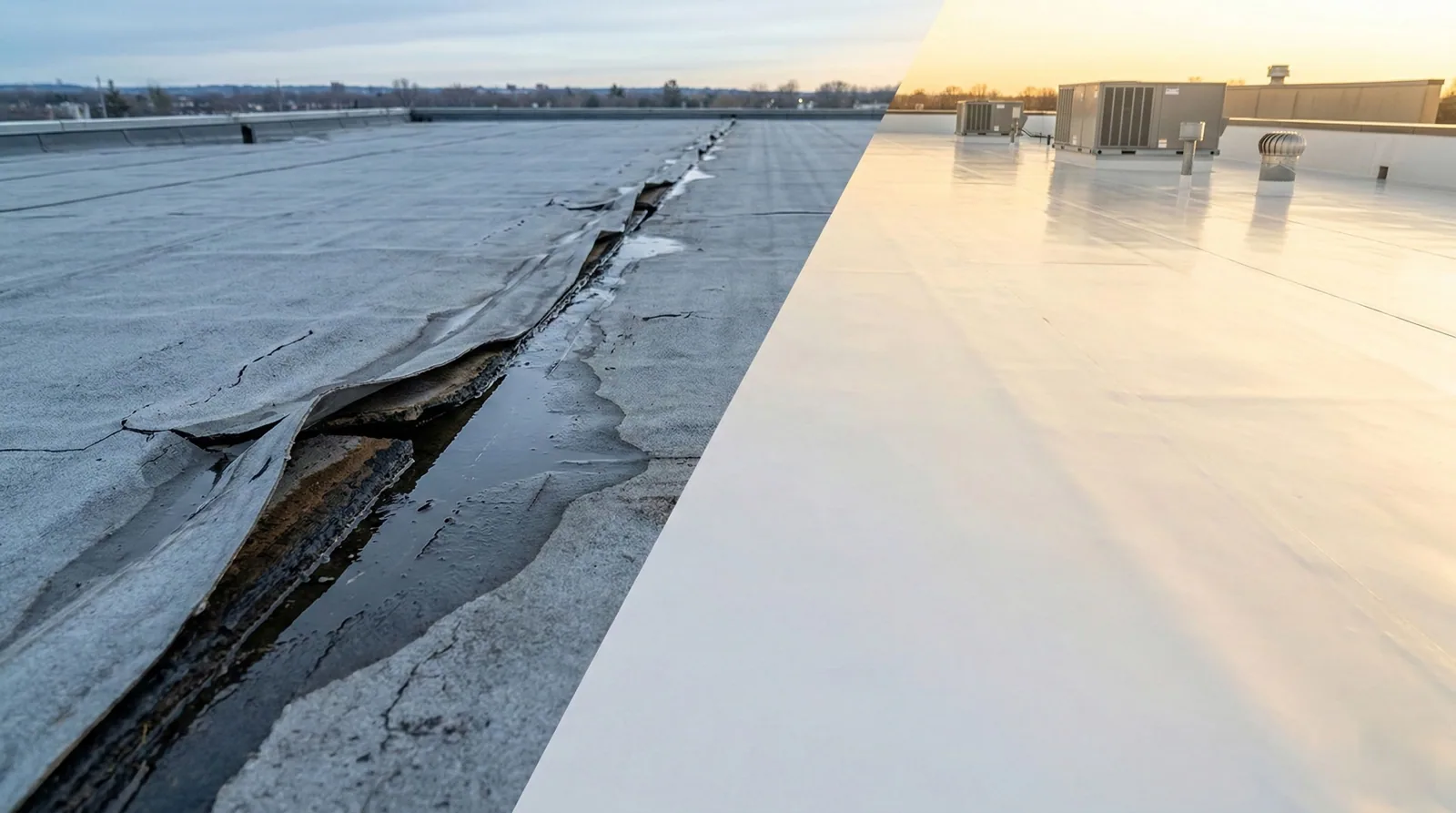
Only if the warranty allows it. Some manufacturers require written approval before a coating or an overlay, and some will issue a new warranty for the added system. We check before proposing either and put the answer in the scope, so the owner knows what happens to the old paper before work begins.