
Roof Condition Reports in Bozeman, MT
Roof Condition Reports in Bozeman and the Gallatin Valley
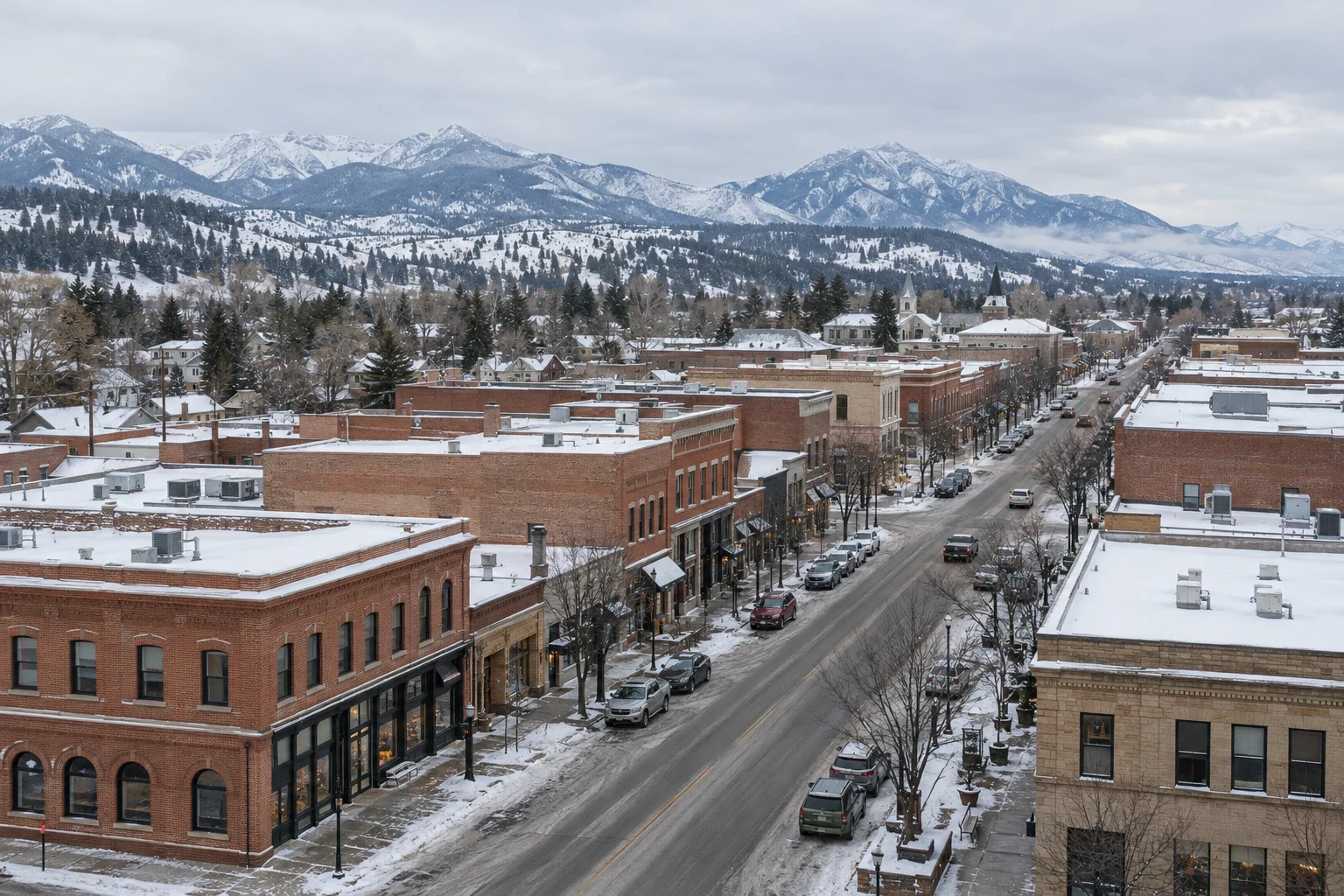
The flat roof over an older Main Street building in downtown Bozeman does not look like much from the sidewalk. Behind the parapet there is a membrane of uncertain age, two drains, a rooftop vent and a long line of patches that were added by different people in different years. The owner has a ceiling stain and a lender asking questions. What is up there, how much of it is still working, and what does it need first? A written report answers those three questions in a form someone else can read without climbing the ladder.
I write it for the person who will never see the roof.
What is inside a condition report?
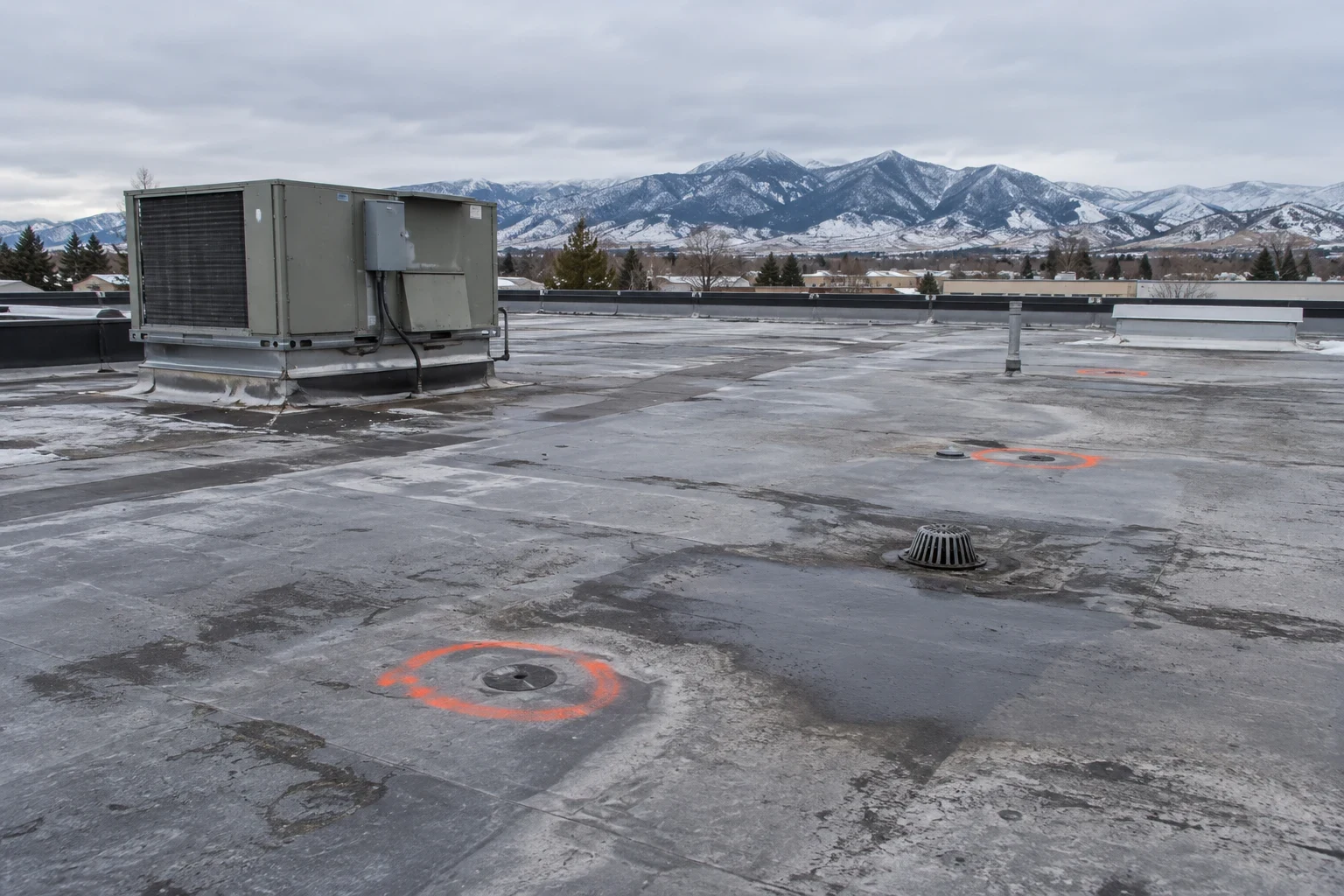
A roof plan with every finding marked on it, a set of dated photographs keyed to that plan, and a written description of the roof as we found it. The description covers the membrane type and layers where we can tell, the surface condition, the seams, the flashings, the edge metal, the drains and scuppers, the penetrations and the equipment curbs. Each finding gets a note on what it is, how serious it is and what should be done.
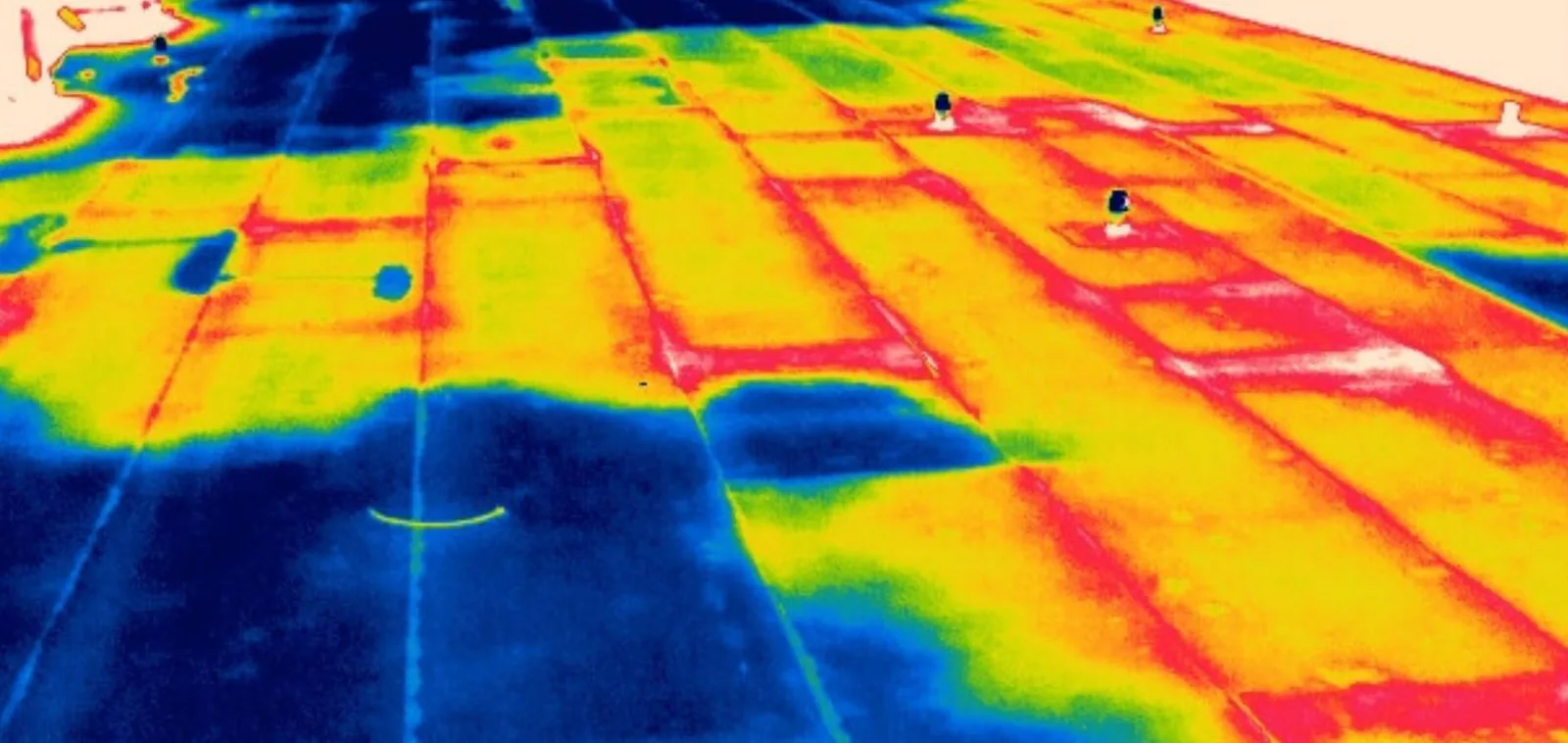
Where it matters, the report adds moisture findings. An infrared scan and a handful of core cuts show whether the insulation is dry, damp or saturated, and the report marks the wet zones on the plan so everyone can see how far the problem reaches. A report that says only that the roof is fair has told the owner nothing. A report with a map of wet insulation tells the owner where to spend money.
The report closes with a short summary page: the overall condition of the roof, the three actions that matter most, and the approximate window for each. Owners who read nothing else read that page, and it is written to stand alone.
How do we gather what goes into the report?
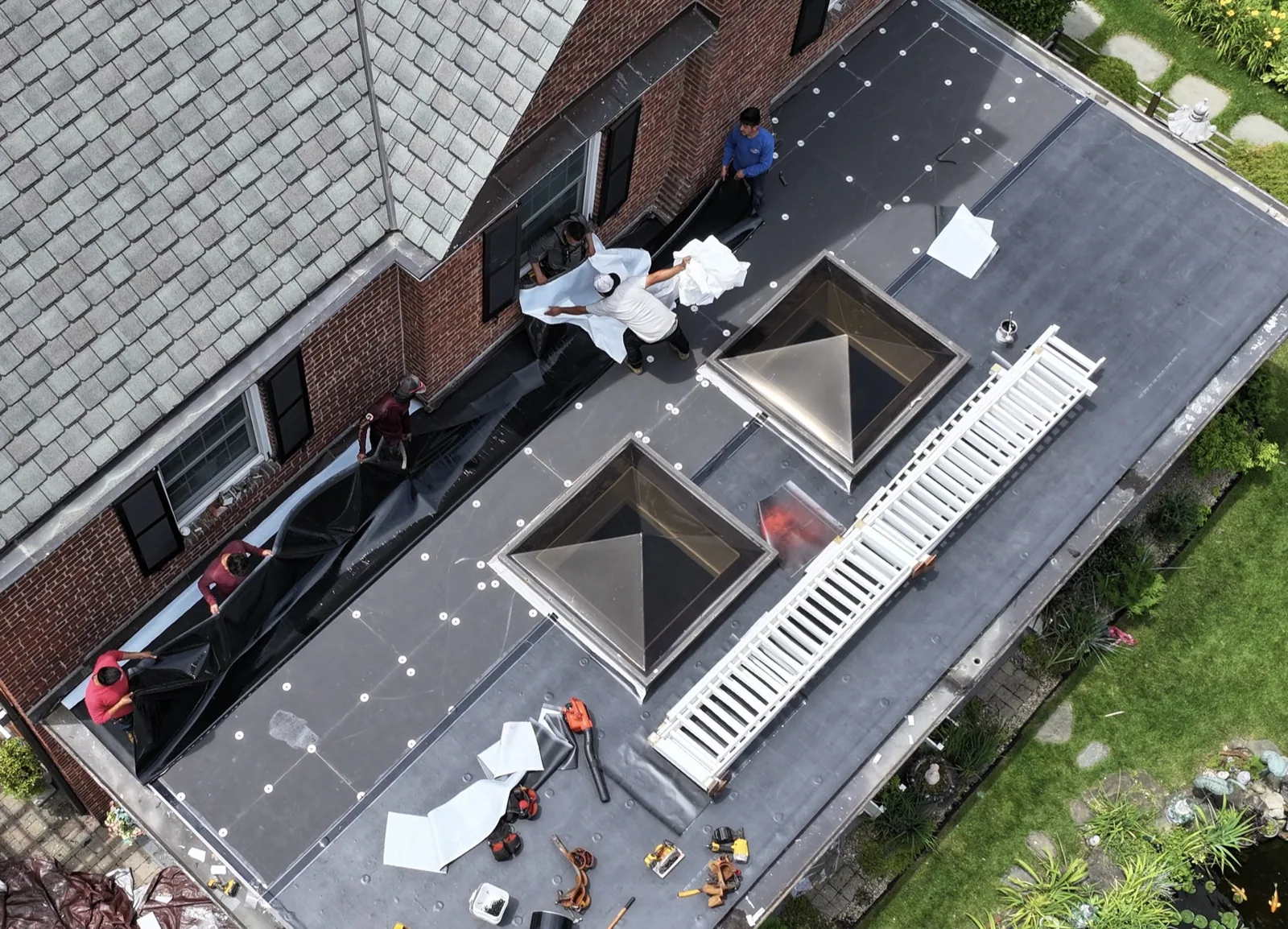
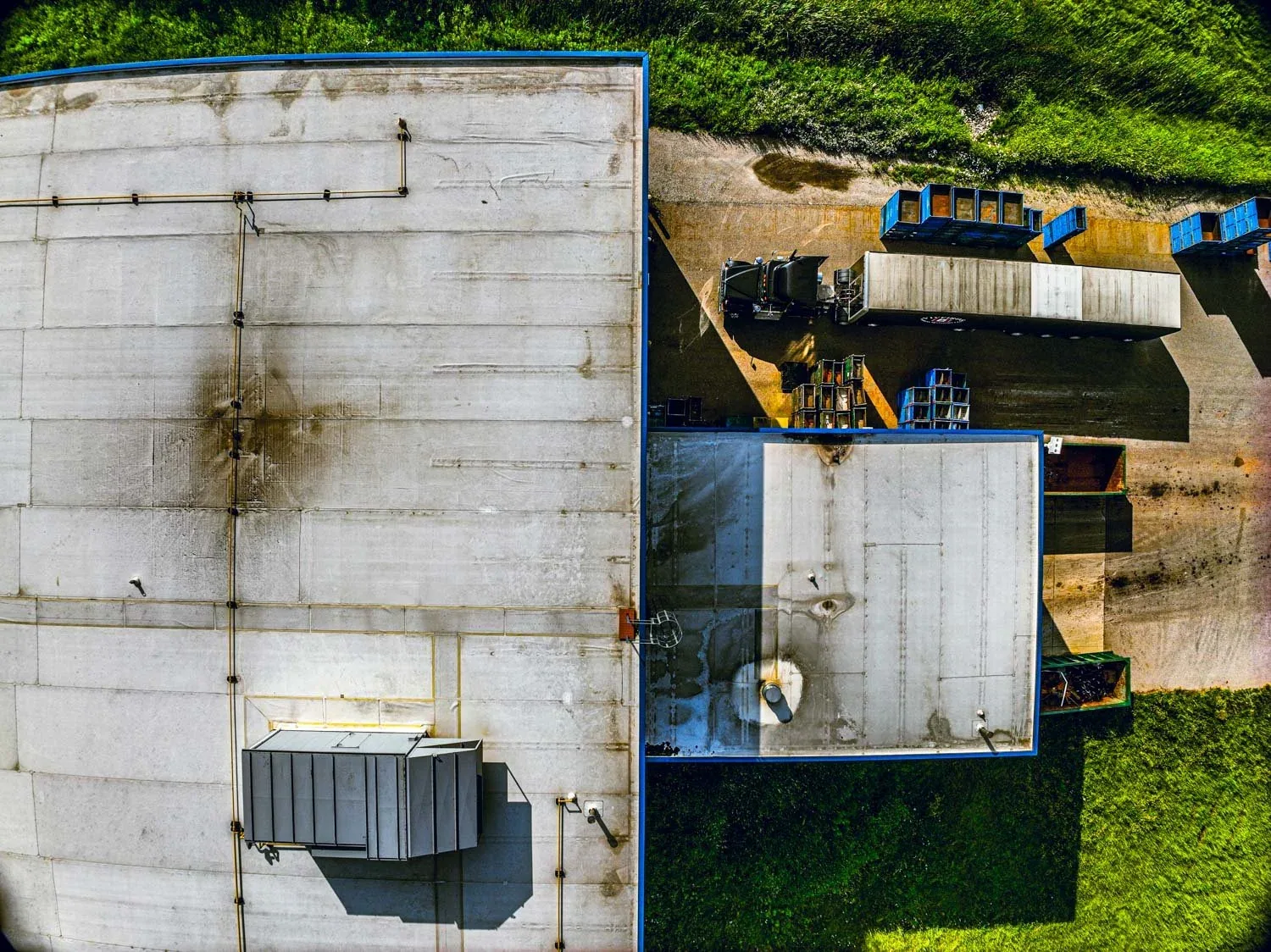
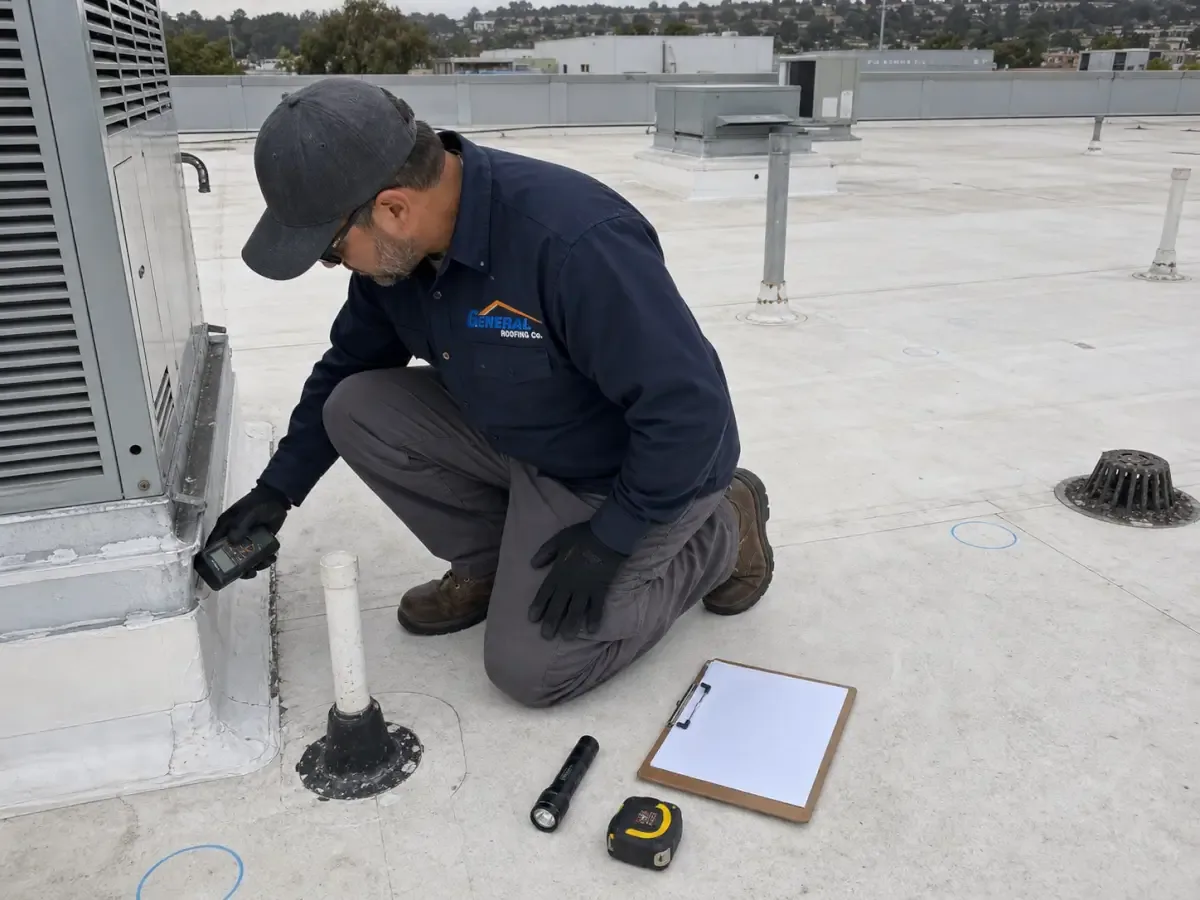
With our feet on the roof. A hands-on roof inspection walk finds the soft spots, the open laps and the hail bruises that a photograph from the air will miss. A drone inspection adds an overview of the whole roof, and it reaches areas that are steep, fragile or covered in ice. An infrared moisture survey at dusk reveals wet insulation by temperature. Together they give a fuller picture than any one method alone.
For a roof with a long history, we also ask the owner for what exists: permits, past invoices, warranty papers and the names of earlier repairs. None of it is required. When nothing exists, the report says what we could determine on site, and it marks what we could not.
How are findings ranked?
By consequence and timing. Urgent items are the ones that are leaking now or will leak with the next storm: an open seam, a lifted edge, a plugged drain. Near-term items are repairs that should happen this season or next, such as worn flashing and cracked sealant. Long-term items are conditions that will need attention in a few years, such as a membrane that is aging evenly or a coating that has lost its reflectivity. Each item carries a plain description and the action we would take.
We keep the language simple on purpose. A property manager, a board member and a lender should all be able to read a page of the report and agree on what it says. Technical terms are explained where they appear, and photographs show the condition that the words describe.
Where a finding could go either way, the report says so and states what would settle it. A seam that probes tight today but sits under a persistent pond may be listed as near-term, with a note to recheck after the next thaw. A coating that looks chalky but passes an adhesion test may be listed as long-term. The owner sees the reasoning and not only the grade, which makes it easier to defend the budget decision later.
How does the report account for Bozeman weather?
It reads the roof as a product of its winters. Bozeman averages about 91 inches of snow a year, the January low averages near 15 degrees, and the repeated thaw cycles that follow a sunny afternoon are hard on seams and sealant. We look for the signs: drift marks at parapets, ice damage at eaves, flashing pulled loose by freeze and thaw, and ponding where snowmelt collects.
We also note storm history where the owner can tell us when it happened. The June 2010 hail on Bozeman and the August 2013 hail over Belgrade and north Bozeman left marks on roofs across the valley, and a roof that was in the path of either one gets a closer look for old bruises that may have turned into active leaks. A May 2023 hail report along the Gallatin River gets the same treatment for buildings on that side of the valley.
Who reads a roof condition report?
More people than the owner. A lender reads it before a refinance. A buyer reads it during due diligence. An insurer reads it after a storm. A tenant reads it when negotiating repairs. A board or a council reads it when approving a budget. We write each report so it can serve all of them, with an opening summary for the quick reader and detail pages for the one who wants to see every photograph.
For buildings that change hands, a due diligence roof survey follows the same format with a view toward the sale. For owners who track roofs over time, the same report feeds a long-term asset record and informs capital planning.
What happens after the report?
The owner decides, and repair follows the ranked list when the owner wants it. Some owners take the urgent list and have us fix it. Some take the report to another contractor for a second price. Some file it and use it at the next budget meeting. We deliver the report either way, and the repair scope inside it is detailed enough that any qualified roofer could price it. When the owner wants us to do the work, we start with the urgent items and schedule the rest around the seasons.
Questions About Roof Condition Reports
Can a condition report be done in winter with snow on the roof?
Partly. A drone pass and a ground walk can read the edges, drains and visible flashing, and snow cover tells its own story about drifts. Full detail, such as seam probing and moisture mapping, needs a clear roof, so for a snow-covered building we deliver a limited report now and schedule the complete walk after the melt.
How long does it take to receive the report?
For a single building, the walk takes part of a day, and the written report follows after we review the photographs and any scan results. Larger roofs or several buildings take longer, and we agree on a delivery date before we start. Urgent findings are called in as soon as we see them, ahead of the report.
Will the report tell me to replace the roof?
Only if the evidence points that way. Many reports recommend repair, maintenance or a coating. When the roof is past repair, the report shows why with photographs, moisture results and core samples, so the recommendation can be checked against the roof itself.
What does a hospital or school need that a warehouse does not?
Priority by consequence. A leak over a classroom, a clinic room or a server closet matters more than a leak over storage, and the report ranks findings with that in mind. It also records access limits, such as quiet hours, infection control rules and secure areas, so repair work can be planned around them.
Can you update an old report instead of starting over?
Yes, if the earlier report was photographic and mapped. We walk the roof again, compare the new conditions with the earlier ones, and record what changed. A trend over two or three reports shows how fast a roof is aging, which is more useful than any single visit.