Fire Damage Roof Repair in Bozeman, MT
Fire Damage Roof Repair in Bozeman and the Gallatin Valley
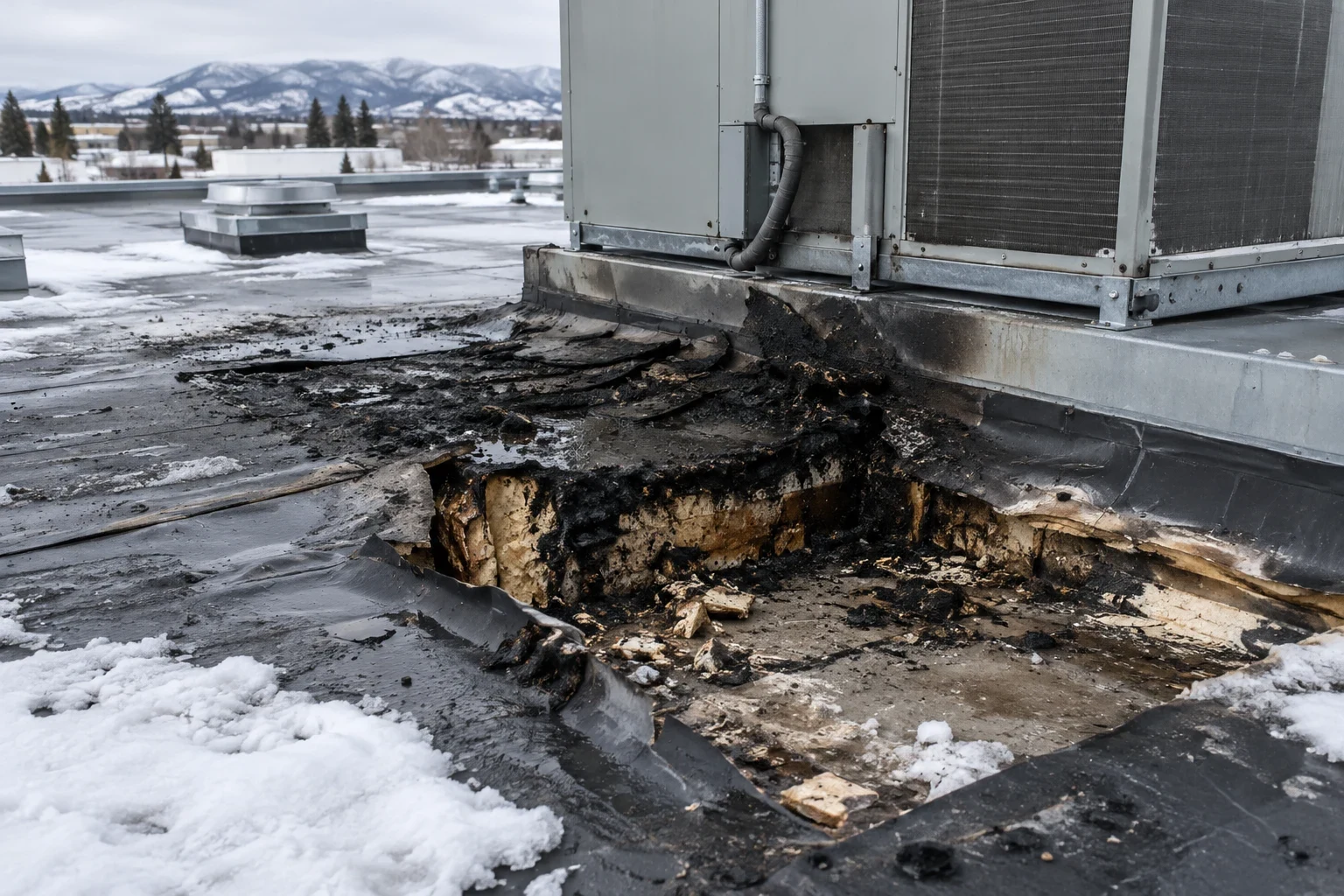
A restaurant roof after a kitchen fire is a strange sight in the first morning light. The membrane near the exhaust hood has blistered and run. The insulation beneath it is black in one place and soaked in another, because the fire department put out the flames with water and the water went somewhere. A diner or a taproom in Bozeman, MT has a grease duct, a hood and a fan sitting on one small curb, and when that curb burns, the roof burns with it. Where did the heat travel, and where did the hose water settle?
The answer decides whether you patch, cut out a section, or replace the roof.
How does fire reach a flat roof?
From above and from below. The usual source on a commercial building is the equipment on the roof itself: an exhaust fan with a grease buildup, a rooftop unit with an electrical fault, a transformer or a conduit run. Hot work during repairs, such as torch-applied roofing or a welder cutting steel, is another source, along with lightning and the wiring or panels from a solar array. Fire can also come up from the occupied floor below, through a duct chase or a shaft, and attack the underside of the deck.
On a roof that has been through a fire, there is rarely only one kind of damage. There is heat damage, where membrane shrinks, melts or burns away. There is smoke and soot that coat surfaces. And there is water, either from sprinklers and hoses or from the rain and snow that arrive once the membrane is open.
Can the deck still carry the snow?
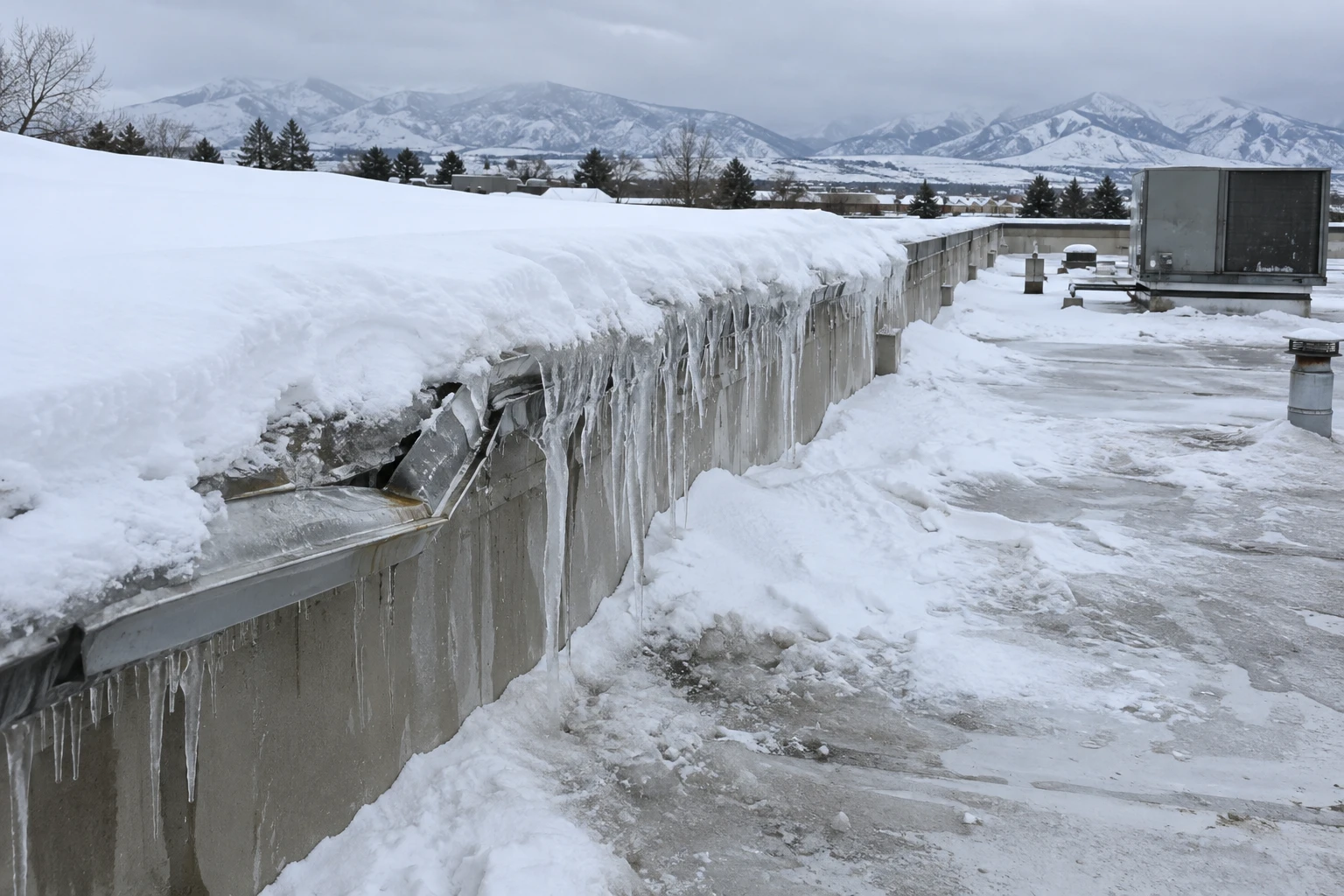
That is the question I ask before anything else. The ground snow load listed for Bozeman is 50 psf, and a roof is expected to carry that weight with a margin. A steel deck that has been heated enough to warp, or a wood deck that has charred, may have lost strength that cannot be seen from above. With roughly 91 inches of snow in a Bozeman year, a weakened deck gets tested within a few months, and the drift loading behind snow and ice damage arrives quickly.
We do not guess. A structural engineer evaluates the deck and the framing below any heavily burned area. Until that review is complete, we keep people and equipment off the damaged zone, and we may recommend shoring. Roofing work on a weak deck is wasted money, since the new membrane will only be as good as what it sits on.
What do we do in the first few days?
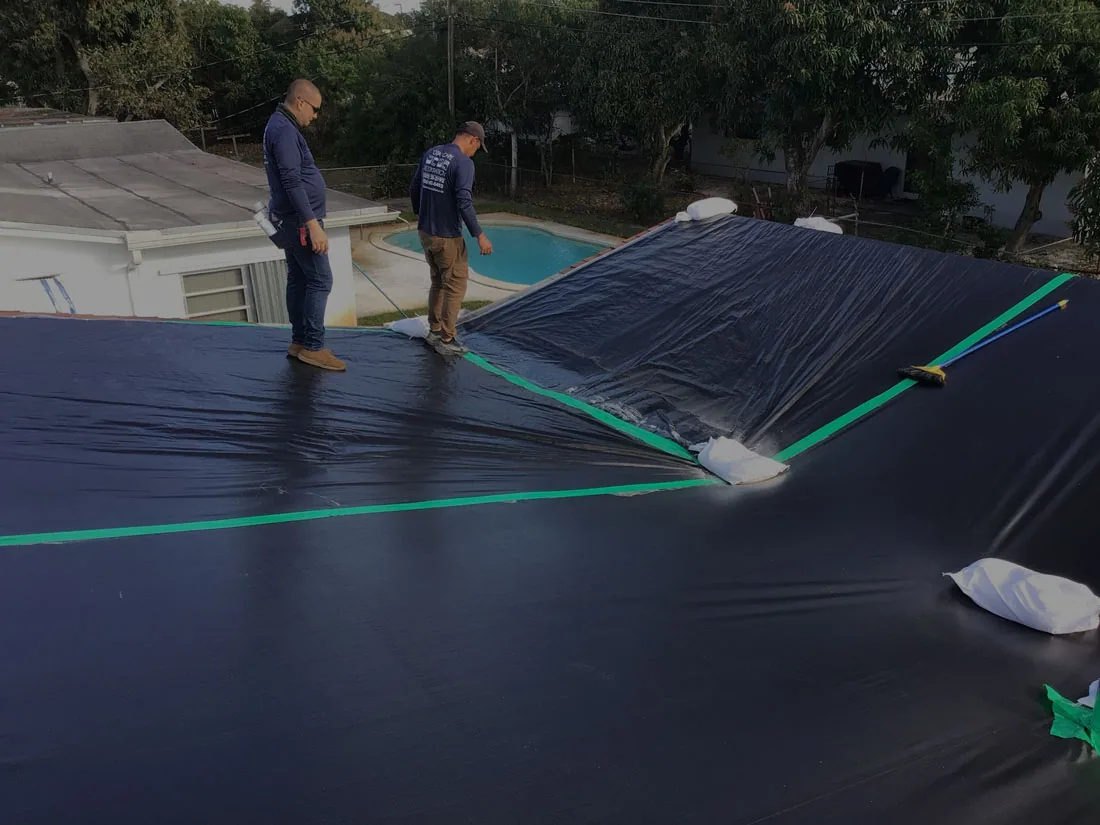
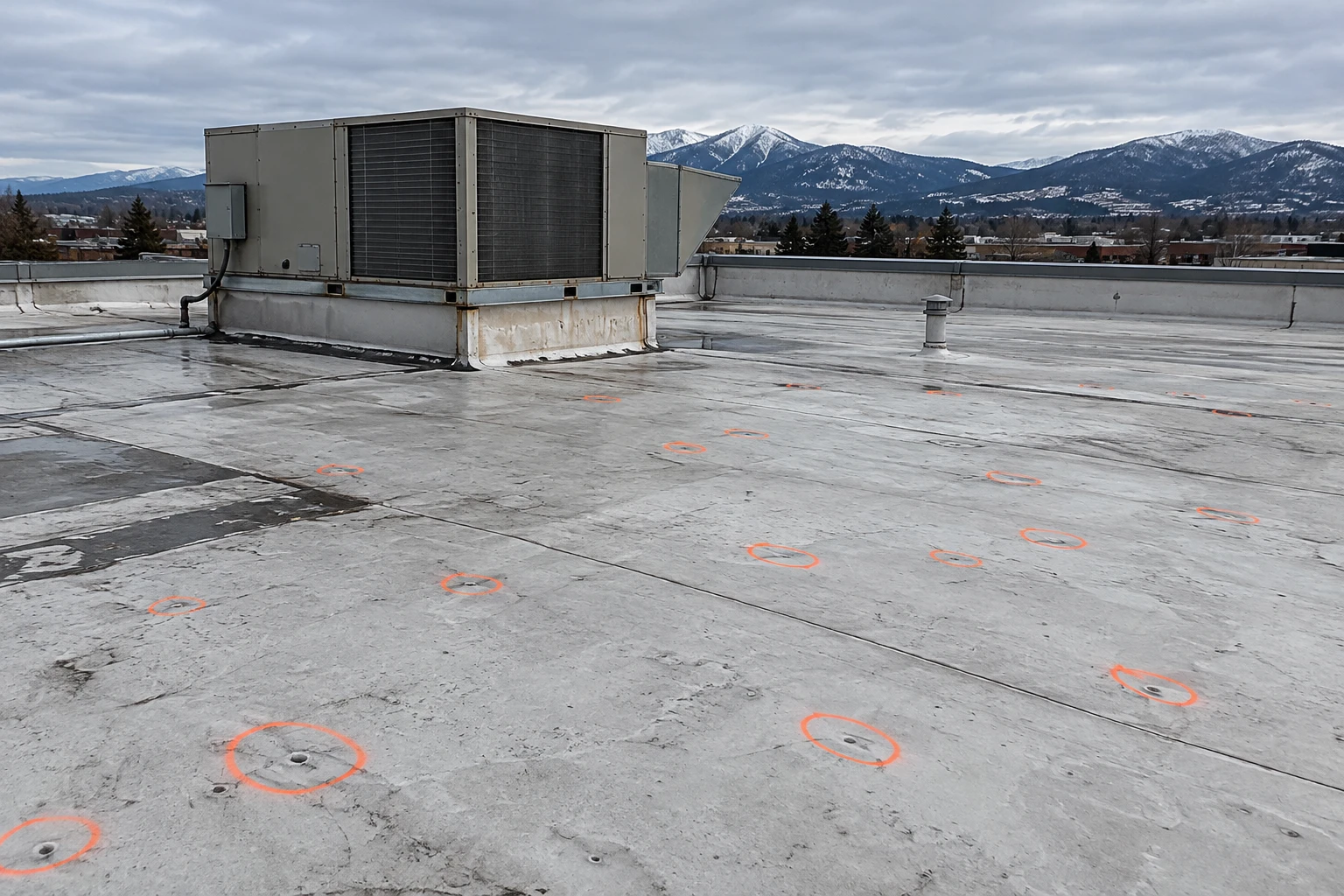
Dry the building in. We tarp or cover the burned area with temporary membrane, clear loose debris, and block any openings where snow or rain can enter. We photograph everything before touching it, since the condition of the roof on arrival matters to the claim. We also cut test cores in the area around the damage to find how far wet insulation runs. Foam insulation can melt and shrink, mineral and fibrous boards can soak, and any of them hold water against the deck.
Do not wait for the adjuster before the roof is covered. Insurers expect owners to protect the building from further loss, and the cost of temporary protection often becomes part of the claim. Our emergency roof repair crews work through nights and holidays for this reason.
What gets replaced and what can stay?
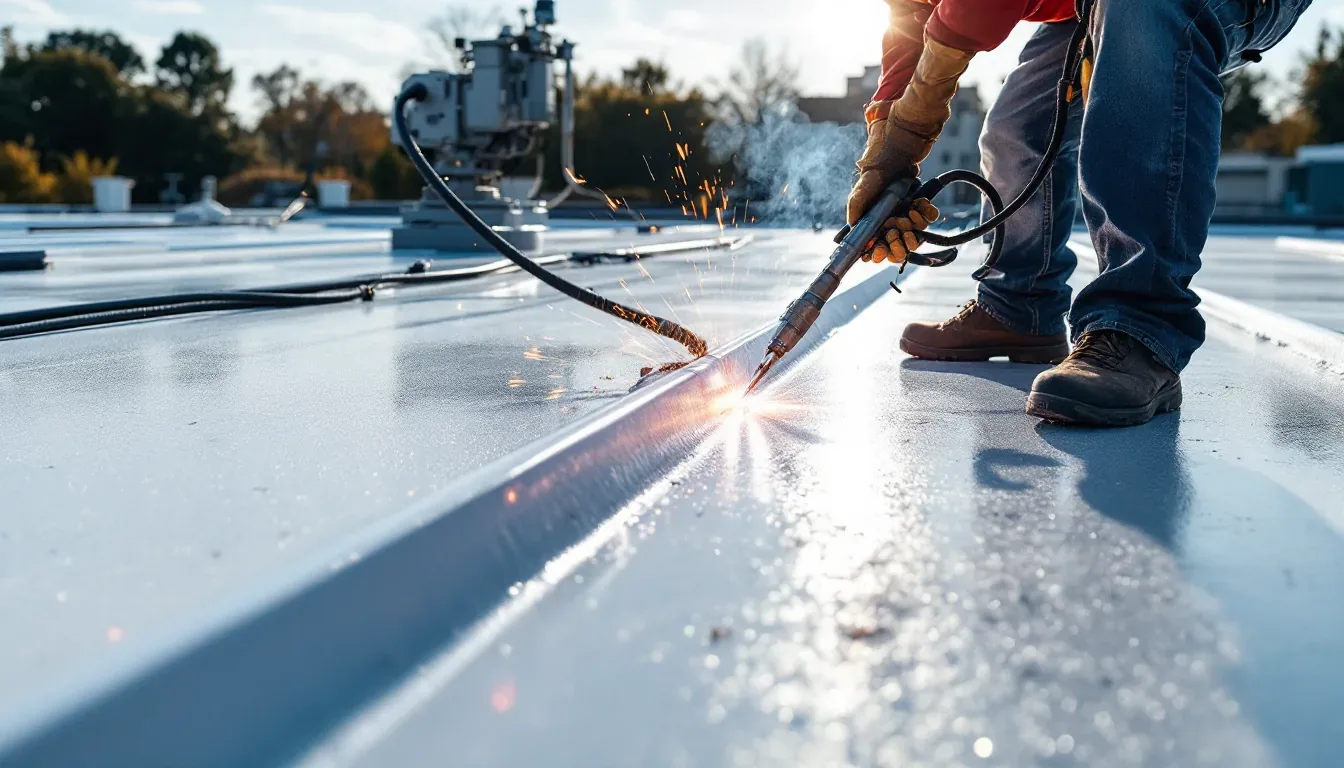
The fire sets the limits. Membrane that melted or blistered comes off, along with any insulation that was burned, soaked or compressed. Deck sections that are charred or warped are replaced or reinforced under an engineer's direction. Flashing, curbs and edge metal around the damaged area are inspected, since heat can loosen sealants and soften adhesives well beyond the visible burn.
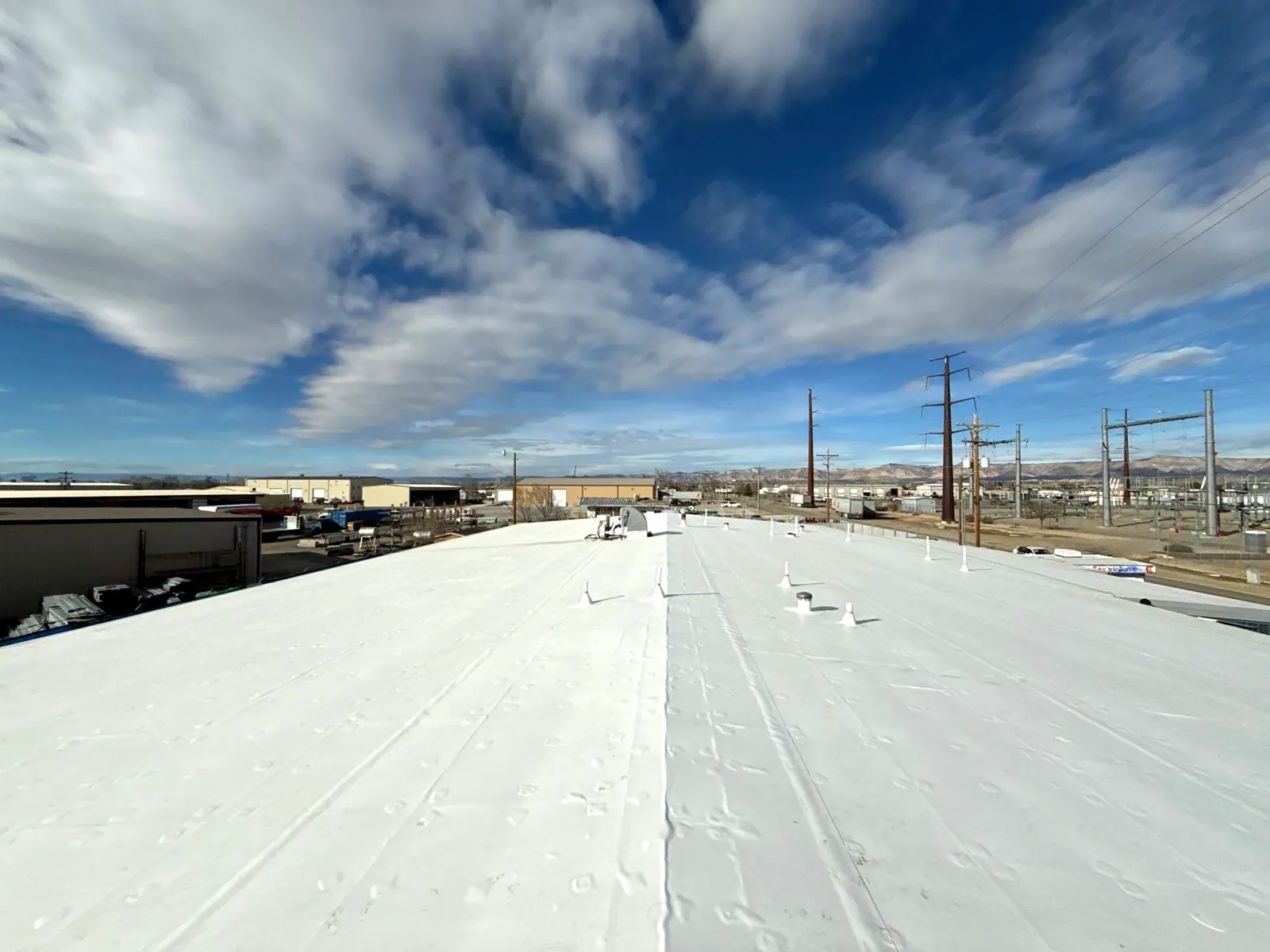
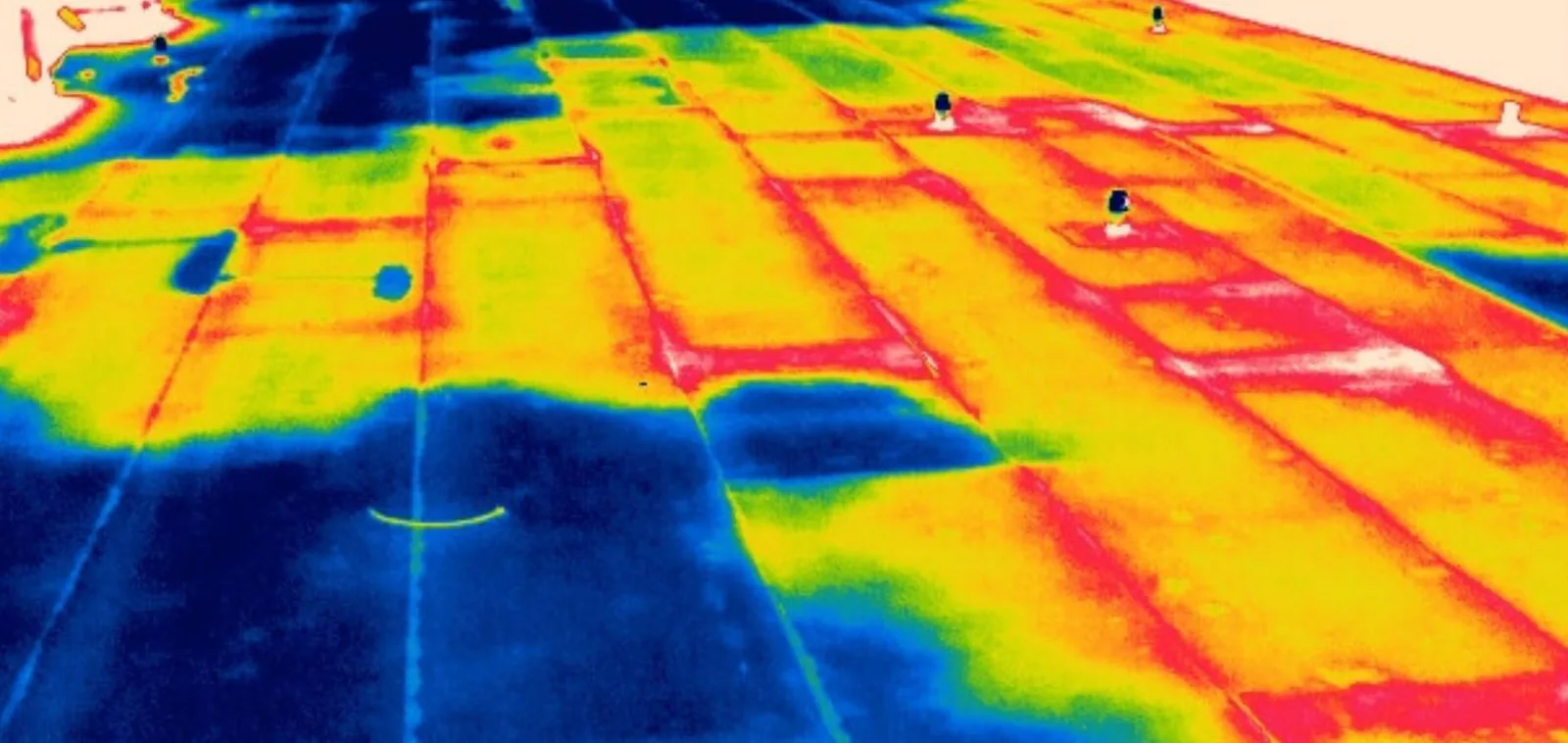
Beyond the burn zone, the roof may be sound. We probe the seams, check the adhesion and run an infrared moisture survey across the rest of the roof to find hidden water that the hoses pushed outward. If the surrounding membrane is well bonded and dry, we tie a new section into it with proper laps. If the heat or the water has reached too far, a full replacement can be the better path, and we lay out both options so the owner and insurer can choose.
How does the insurance paperwork work?
With evidence. We document the roof with dated photographs, core cuts, measurements and a written scope that separates fire damage from age and wear. An adjuster will look for what the fire caused, and a clear record helps the owner show it. We list the work in the order it will be done, with the temporary protection broken out. Our claim assistance follows the same process we use after hail or other storms.
Soot and smoke can stain and, on some surfaces, interfere with adhesion. We clean surfaces before bonding anything new. If a coating is part of the plan, the substrate has to be clean and tested for adhesion before application.
Where does fire risk concentrate?
Where there are cooking exhausts, heavy equipment and tight roofs. The restaurants and food retailers along North 19th Avenue have kitchen exhaust, and the breweries and entertainment venues planned in Midtown will add more. Three-story mixed-use buildings on Town Center Avenue in Big Sky Town Center put several uses under one roof, and a fire that starts below can climb to the roof deck. Older masonry in downtown Bozeman has flat roofs behind brick parapets, which makes a problem there harder to see from the street.
Whatever the building, the first walk is about the same. I check the curb and duct penetrations nearest the burn, look for heat-distorted flashing and edge metal, and sight along the surface for dips that mean the deck has moved. A fire on a Belgrade warehouse or a Four Corners flex building leaves the same questions as one downtown: how far did the heat go, and is the insulation under the surrounding membrane dry?
Questions About Fire Damage Roof Repair
How soon can roofing work start after the fire department leaves?
Temporary protection can start the same day, once the building is declared safe and the investigators release the roof. Permanent repairs wait for the structural review and the claim scope. We cover the opening quickly, since each day of exposure adds water to the building, and we plan the rebuild as soon as the evaluation allows.
Does smoke damage to a roof matter if the membrane looks fine?
It can. Soot on a membrane may interfere with adhesion for coatings and sealants, and heat that did not melt the surface may still have dried out the plasticizers in a single-ply sheet. We test adhesion on a small patch and probe seams in the smoke zone before we say the membrane is sound.
A rooftop unit caught fire, but the damage looks local. Can we just patch it?
Sometimes. If the heat stayed within a few feet of the curb, the deck tests sound and the insulation is dry, a cut-out and patch around the curb can do the job. The deciding evidence is the core cut and the deck inspection, because fire can look small from above while the underside tells a bigger story.
Will the insurer pay for a full replacement or only the burned section?
That is the insurer's decision, based on the policy and the evidence. We give you a scope that separates what the fire destroyed from what age wore out, and we show how far wet or heat-damaged material runs. If the surrounding roof cannot be tied into cleanly, we say so in writing.
Can a fire-damaged roof be replaced while tenants stay in the building?
In many cases yes, with planning around the damaged area. If the deck is unstable or the space below is closed for cleanup, work moves quickly. Where tenants remain, we keep dust, noise and traffic away from entrances and coordinate hours with the property manager.