
Commercial Roofing in Big Sky Town Center, MT
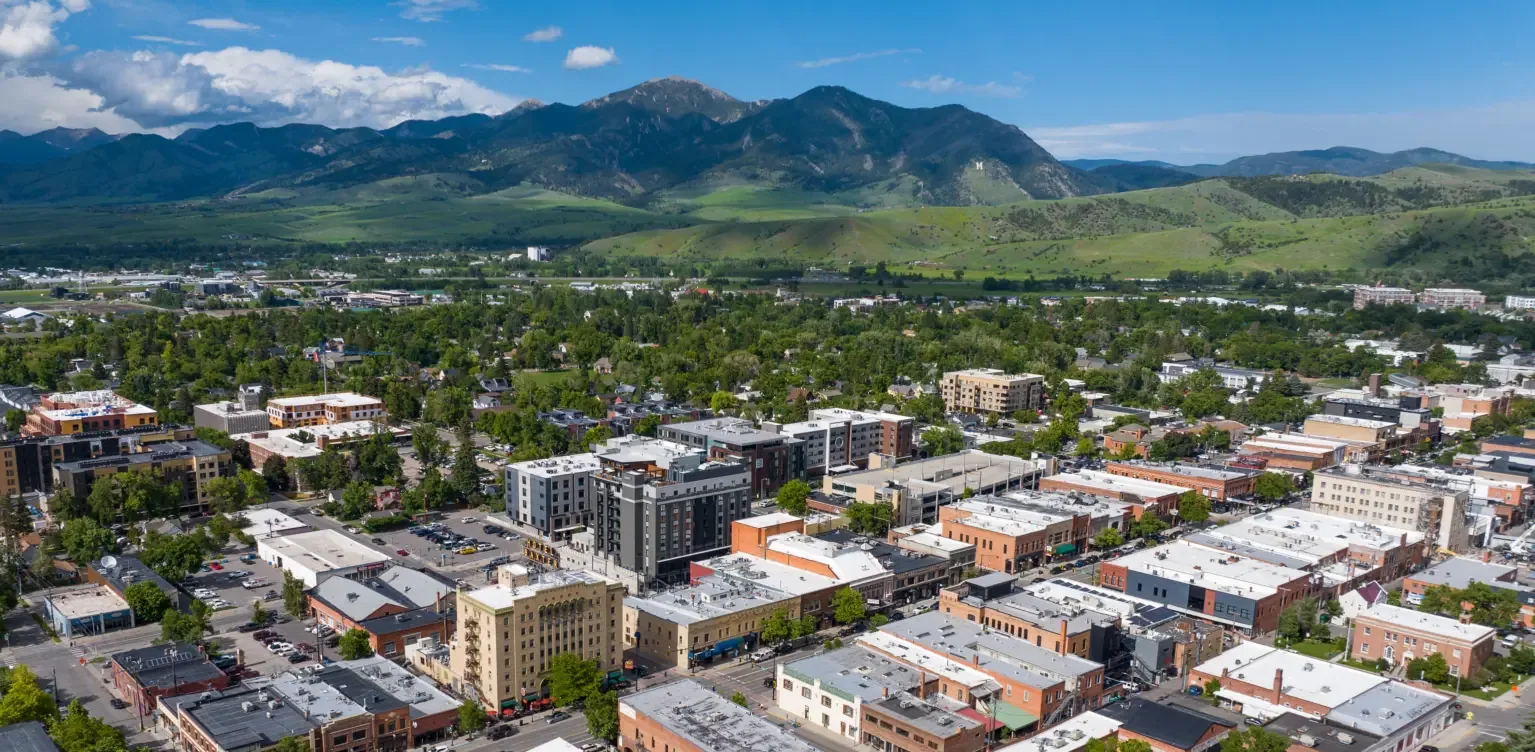
Big Sky Town Center in Bozeman and the Gallatin Valley
Stand on a Town Center Avenue sidewalk in late March and look up at the eaves. Where a three-story mixed-use building meets the walk, the roof edge carries a slab of old snow and a rim of ice, and what the snow does next is the question every owner has to answer. Big Sky Town Center is a 165-acre section of Big Sky and was about 30 percent built out in 2015. Zoning there allows more than 335,000 square feet of retail and commercial space and 491 residential units, and yearly snow in Big Sky runs near 162.7 inches. Where does your snow land?
We inspect, repair and replace commercial roofs in Big Sky Town Center, and the snow path gets planned first.
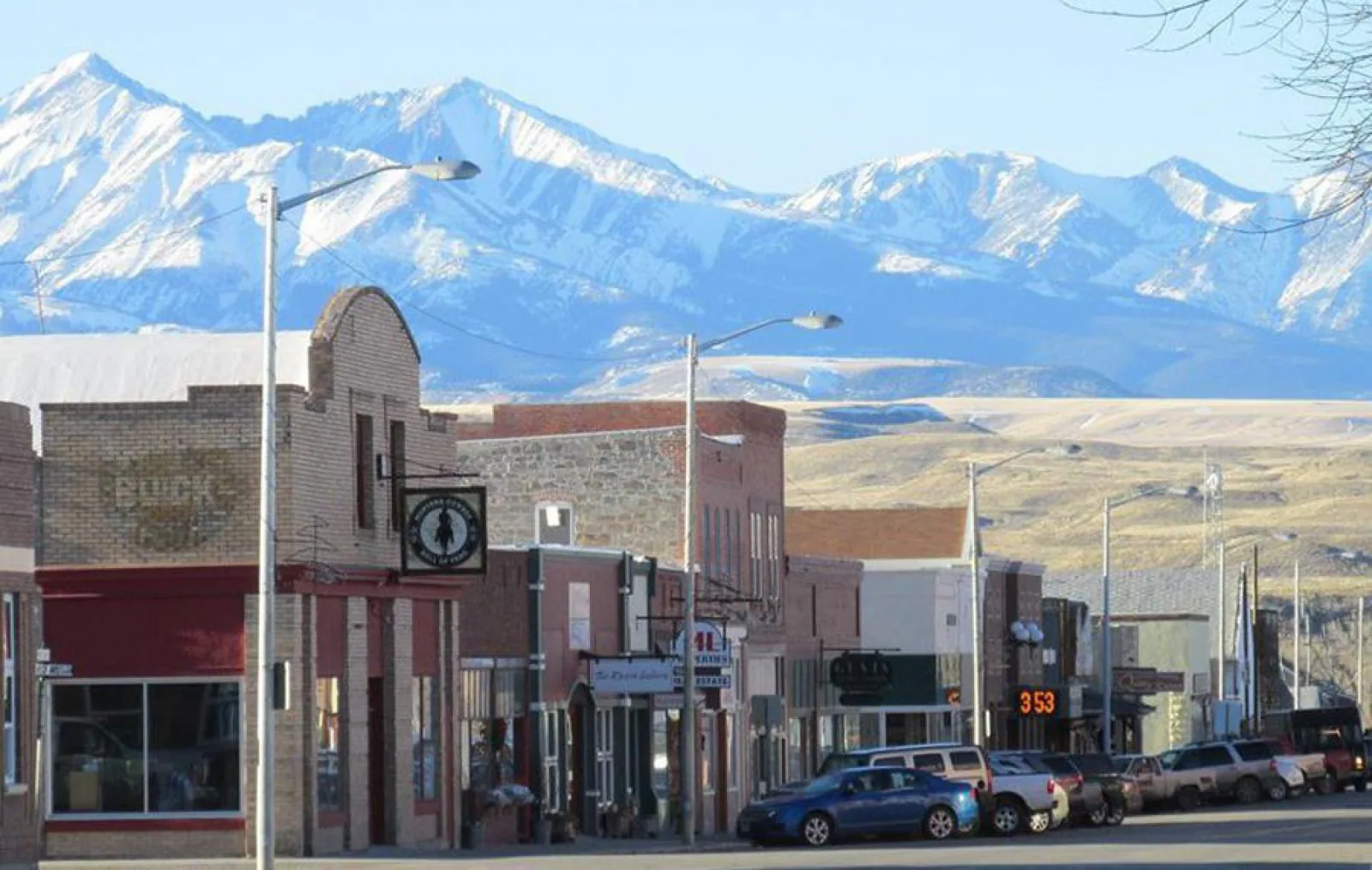
What buildings define the district?
Buildings in Town Center include the Big Sky Medical Center on Lone Mountain Trail, the Peaks Building, and three-story mixed-use buildings on Town Center Avenue. Retail sits at street level, and offices or residences sit above. Each roof gets walked, with its drains, units and edges mapped.
A mixed-use roof often combines several roof types: a low-slope field over one section, a sloped section over another and valleys between. Each junction collects snow and sheds it onto something below. The roof plan names the fall zone for each edge and the drain for each valley, and it is the base for every repair.
New construction continues in a district that was about 30 percent built out in 2015, and each new building changes how snow moves around its neighbors. A tall wall beside an older low roof makes a new drift pocket, and a new valley can send water onto a lower deck. We revisit nearby roofs after a neighbor builds, check the new drift zones and update the plan. A roof file that tracks the surroundings is more useful than one that treats the building as alone.
What does 162.7 inches of snow demand of a roof?
Snow reaches Town Center in all but two months of the year, with the heaviest accumulation from December through March, and the load concentrates behind parapets, in valleys and against taller walls. Designers there work from ARM 24.301.154 snow values, which carry a 30 psf statewide floor and differ from Bozeman's 50 psf. Big Sky's snowfall runs well above Bozeman's yearly 91 inches, so the structure and the roof detail have to be checked against the load for the site.
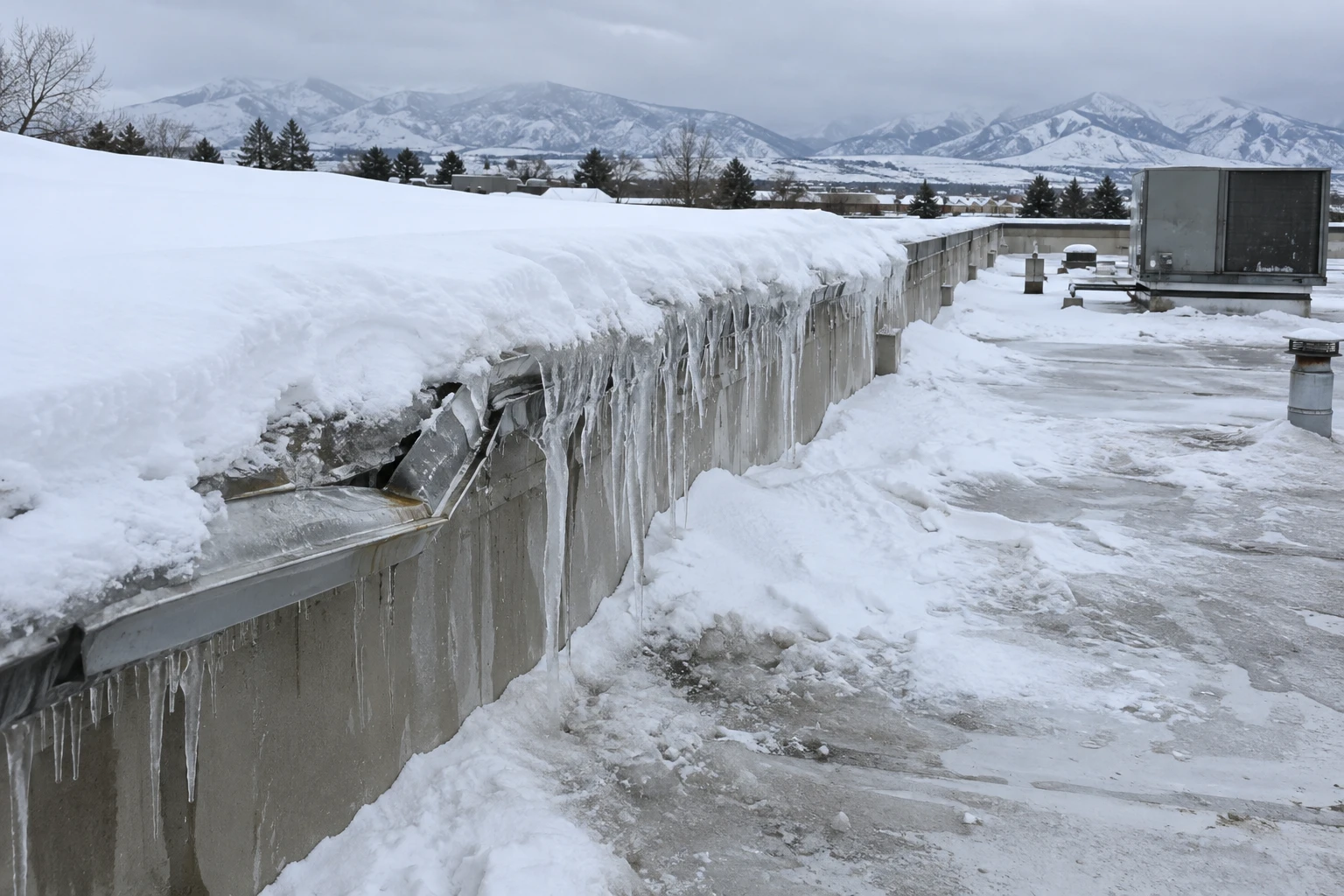
We look at snow and ice damage first: torn gutters, bent snow guards, cracked sealant at the eave and stained ceilings below valleys. Ice dams form where heat leaks through the deck, and the fix begins inside the building with insulation and air sealing. Edge metal and heat cable at a few outlets help, but they treat symptoms.
How do snow guards protect people on the sidewalk?
A smooth roof lets snow go in sheets, and over a sidewalk, a door or a parked car that sheet is a hazard. Guards keep the pack up on the roof, where it melts and sheds a little at a time. The layout depends on the slope, the panel length, the roof material and what lies below.
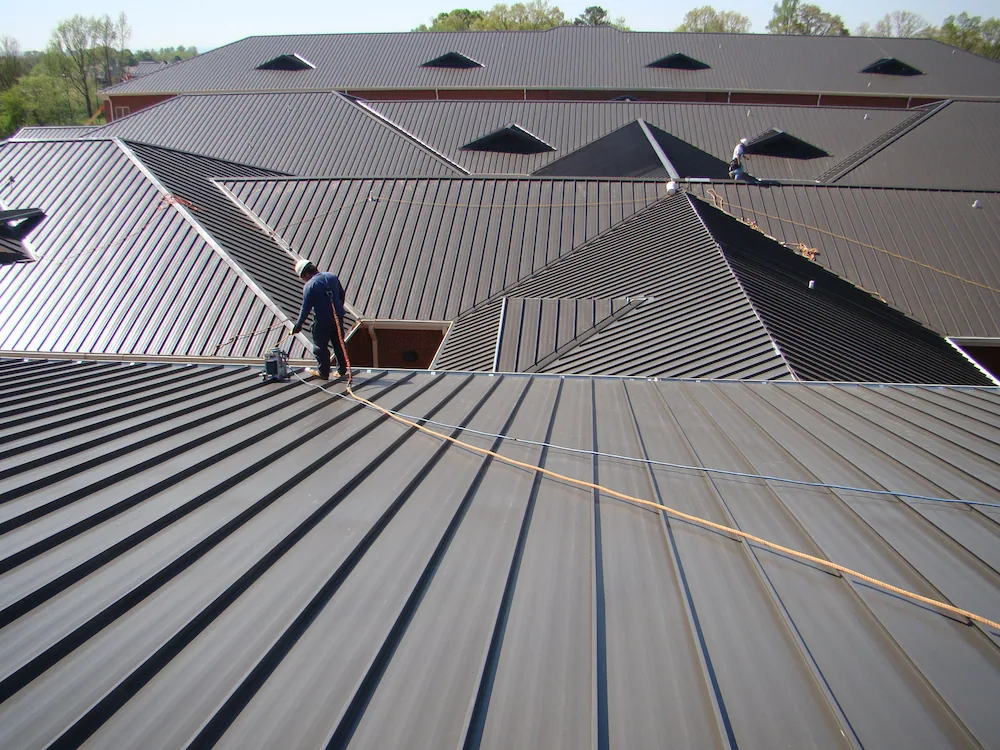
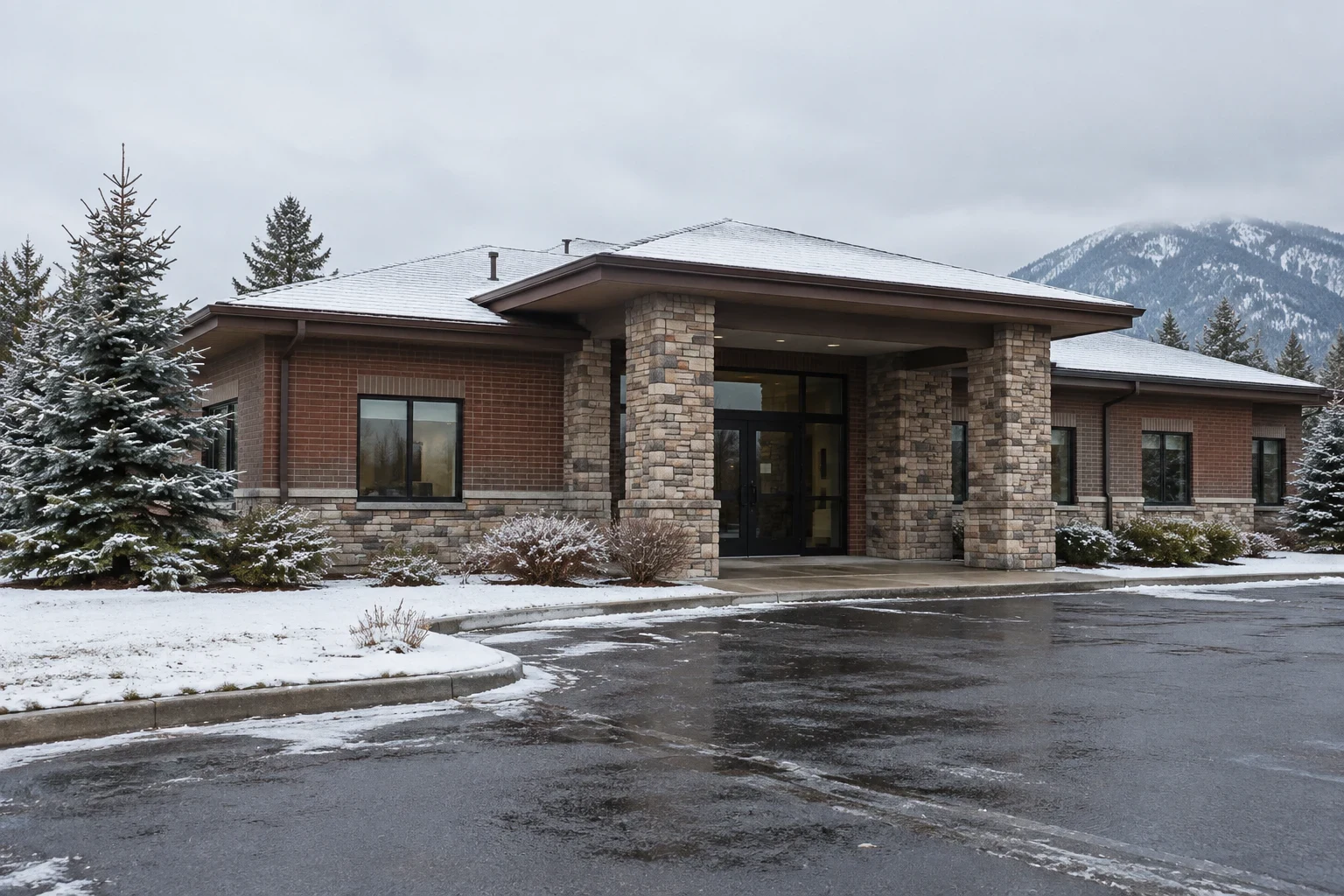
On a standing seam metal roof, guards are clamped to the seams or attached with approved fasteners, and the manufacturer's rules apply. We map the fall zones, mark entries, walks and parking, and set the guard layout to fit. Each fall we check the guards for bent or missing parts. A medical building such as the one on Lone Mountain Trail has patients arriving on foot, so the entry zones get the closest attention.
Valleys and roof-to-wall junctions need their own detail. An ice-and-water style underlayment or a heated section can protect a valley, and a counterflashing that laps the wall properly keeps meltwater out of the building. We photograph each valley and junction before and after any work and keep the images in the roof file.
What about the medical and commercial occupants?
A medical center needs quiet, clean air and clear access, and the roof plan reflects it. Intakes are shielded, noise windows are set and entries are protected. Retail tenants need open doors and clean walks. Medical office roofing and occupied building reroofing set these terms in writing before the crew arrives.
Residences above shops add another group. People sleep, work from home and keep their windows open in summer. Quiet hours, notice and a named contact are part of the scope. The schedule places the loudest work in the middle of the day and keeps early mornings and evenings calm.
Emergency response matters in a place where a heavy storm can drop a lot of snow fast. A blocked drain under deep snow can flood a low roof from below as the melt starts, and a crew has to reach the roof safely. Roof access, hatches and ladders are mapped in advance, and the plan names who holds the keys and who clears the path.
How short is the work season?
Short. Snow lies late and returns early, so adhesives, sealants and coatings have a narrow window, and a roof that is open when a storm arrives is a serious problem. We plan in sections that can be dried in within a day, hold backup dates and keep temporary cover on site. Large scopes are booked for the warm, dry months, with materials ordered months ahead.
Big Sky lies about 45 miles by road from Bozeman, along U.S. 191, and deliveries and crews travel that road. A storm on the canyon road can stop a delivery, so critical materials are staged early. Neighboring districts, Meadow Village and Mountain Village, share the season and the road.
Work at altitude has its own pace. Mornings stay cold, so sealants and adhesives cure slowly. We schedule the temperature-sensitive steps for the warmest hours and stop early when the sun leaves the roof. Material is kept warm until it is used. These habits cost little and prevent the cold-weather failures that appear a winter later.
What does the owner receive?
A roof plan with fall zones, drains, valleys and units marked, a dated photo set, the guard layout and a repair list ranked by urgency. A cover board and insulation review is added where ice dams point to heat loss. At closeout the owner holds the plan, the warranty terms and a maintenance schedule keyed to the season: roof walk before the first snow and again after the thaw.
Questions About Big Sky Town Center
Why does ice build at the eave of a heated building?
Heat escapes through the deck, melts snow high on the roof and the water refreezes at the cold edge. Insulation, air sealing and ventilation fix the cause. Edge metal and heat cable only manage the result.
Do all roofs in Town Center need snow guards?
Not all of them. Guards are for roofs where sliding snow reaches people, vehicles or equipment, and each fall zone is mapped so the layout matches the real risk.
How do you reroof a building with shops and apartments?
In sections, with notice to tenants, quiet hours, protected entries and a named contact. Every open section closes before the crew leaves, and loud work stays out of the busiest retail hours where possible.
What happens to a roof under 162.7 inches of annual snow?
Drifts concentrate load at valleys and walls, and thaw cycles work seams and flashings. We inspect those spots first, clear drains before snowfall and check the structure when loads look high.
How early should a Big Sky job be booked?
Book the walk by early fall and the work for the next warm window. Materials travel the canyon road, and ordering months ahead prevents delays.