
Storm Damage Roof Repair in Bozeman, MT
Storm Damage Roof Repair in Bozeman and the Gallatin Valley
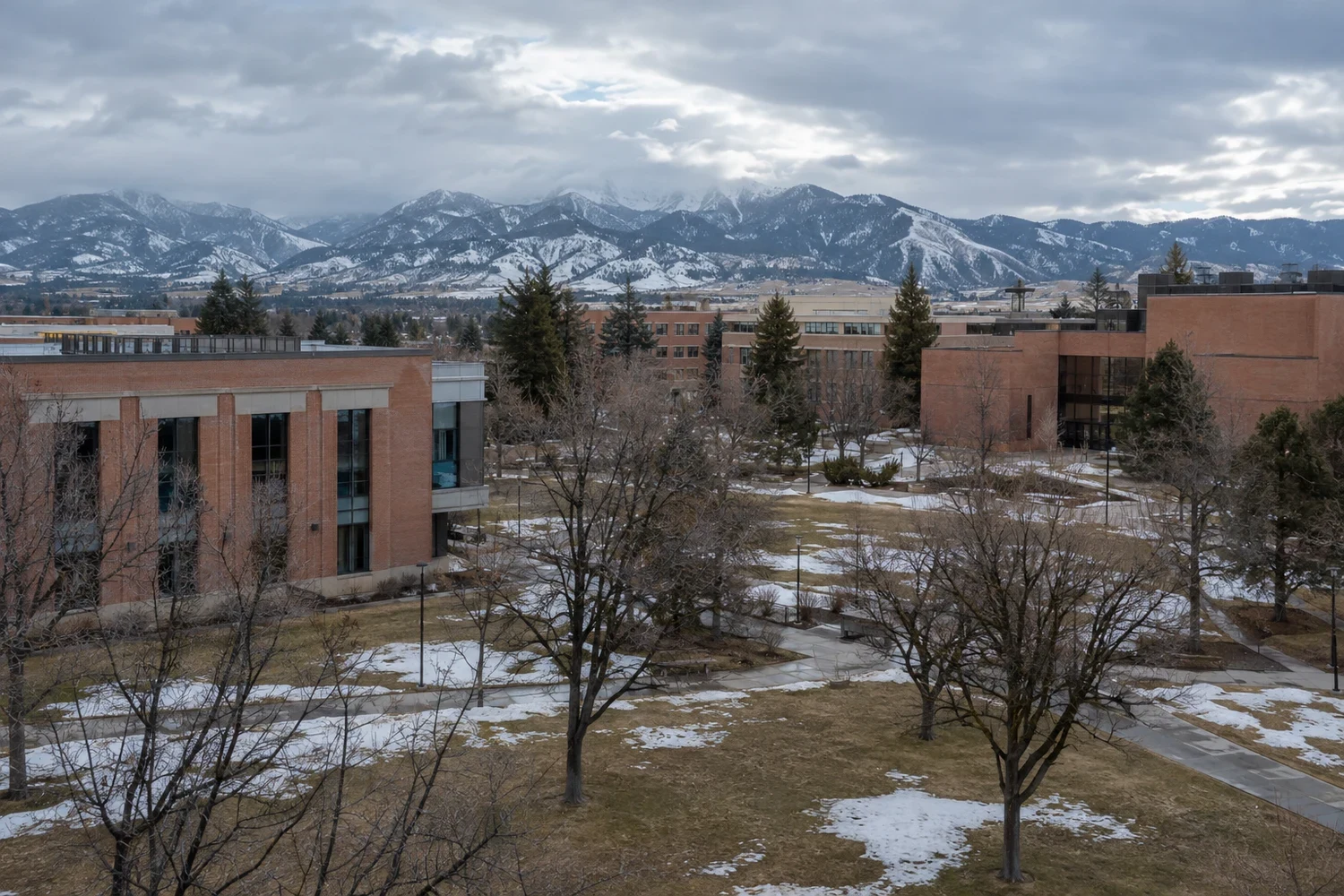
A university building with west- and south-facing walls and a flat roof behind a parapet shows what a Gallatin Valley hailstorm does. On June 30, 2010, a half hour of golf-ball hail over Bozeman broke dozens of windows at Montana State University, mostly on the west and south walls. The roof took the same storm. A building owner walking the site after a storm like that sees the glass first. What did the stones do to the roof you cannot see from the ground?
We start every storm call with that question and answer it in order: stop the water, record the damage, repair what the storm broke and separate it from what age did.
What kinds of storms hit the valley?
Hail is the best known. The 2010 storm dropped baseball-size hail east of Gallatin Field and golf-ball-size hail on Bozeman, and it tore up the Ellen Theatre marquee downtown. In early August 2013, golf-ball-size hail fell across much of Belgrade and north Bozeman while winds gusted to 89 mph. Hail measuring 1.50 inches was reported on May 25, 2023, near the Gallatin River northwest of Bozeman Hot Springs, and it lasted several minutes.
Wind is the second force. An August 29, 2023 report recorded 65 mph gusts at two sensors along Triple Tree Road southeast of Bozeman. Only Guadalupe Pass, Texas, averaged stronger wind than Livingston among U.S. airport weather stations in the 2000 to 2010 record. The design wind speed listed for Bozeman is 110 mph.
Snow is the third. Bozeman averages about 91 inches a year, and slides, drifts and ice dams damage roofs in ways a summer storm does not. Each event leaves a different mark.
What happens in the first day after a storm?
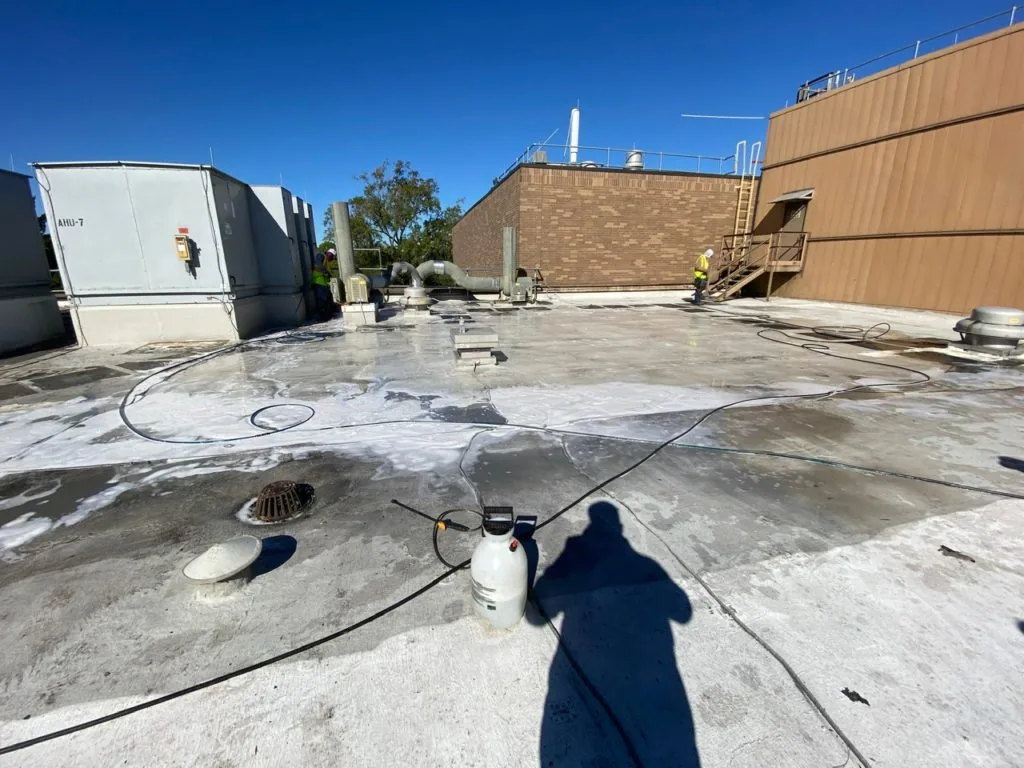
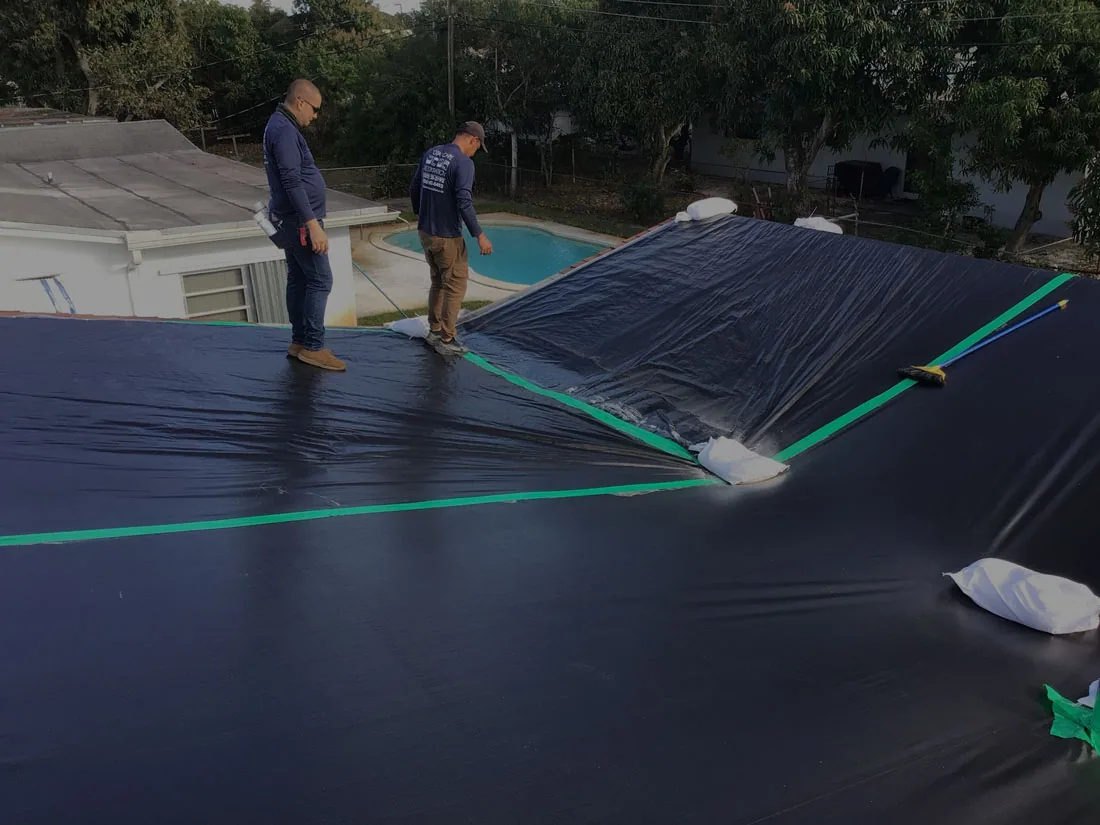
The first visit has three jobs. Make the roof safe. Stop the water. Document what is there before anything moves. We answer at any hour, and our emergency roof repair crews set tarps, seal openings and clear drains to limit further loss. Temporary work is priced as temporary work, so the owner and the insurer can see it separately from the permanent repair.
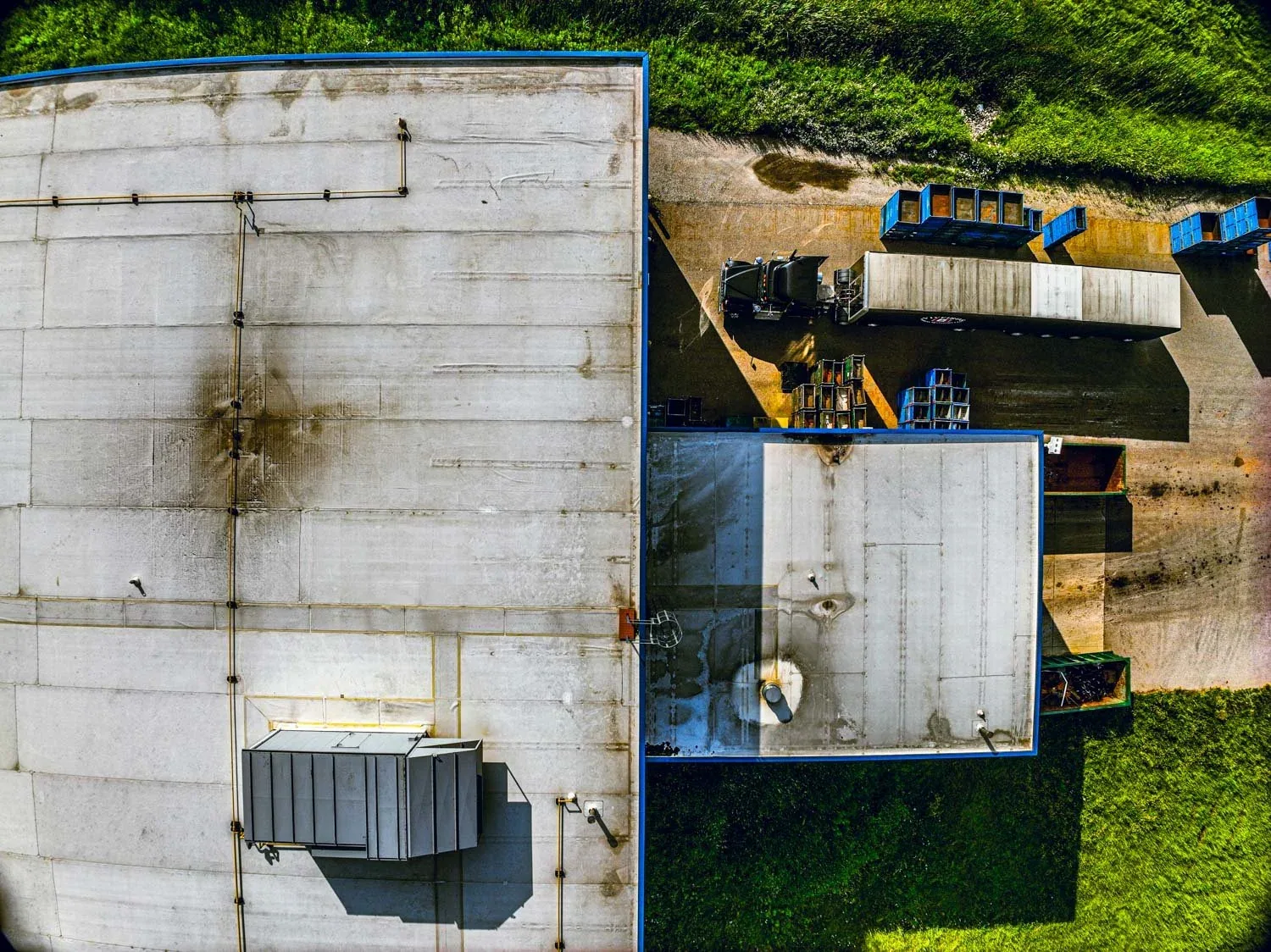
We then walk the roof and photograph every hit, tear and lifted edge. On a large roof, a drone roof inspection shows the pattern first and keeps people off a wet or icy surface. Each finding goes on a plan with a number, a photo and a date. The sheet is the starting point for the scope and the claim.
The roof plan, any past inspection photos and the warranty papers help at this stage. If none exist, the first visit builds them. The point is to leave the first day with a record, a dry building and a list, so the second day starts with decisions and not guesses.
What does hail do to a roof that is still standing?
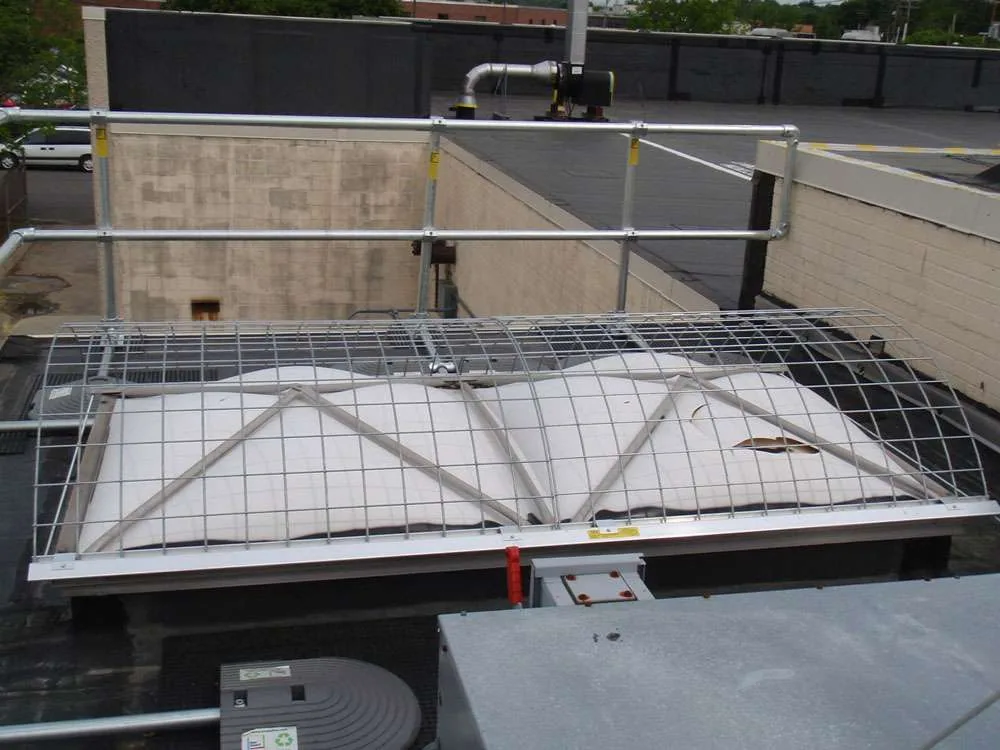
Hail leaves marks that are easy to miss. A bruise on a single-ply sheet is a shallow dimple that can hide a cracked insulation board below. A dent in thin metal may not leak but marks a seal that will fail first. Granules crack on a cap sheet, and a skylight can break. The June 2010 storm damaged a Fire Station 2 skylight on North 19th Avenue, and that is a reminder to check every glazed opening on a roof.
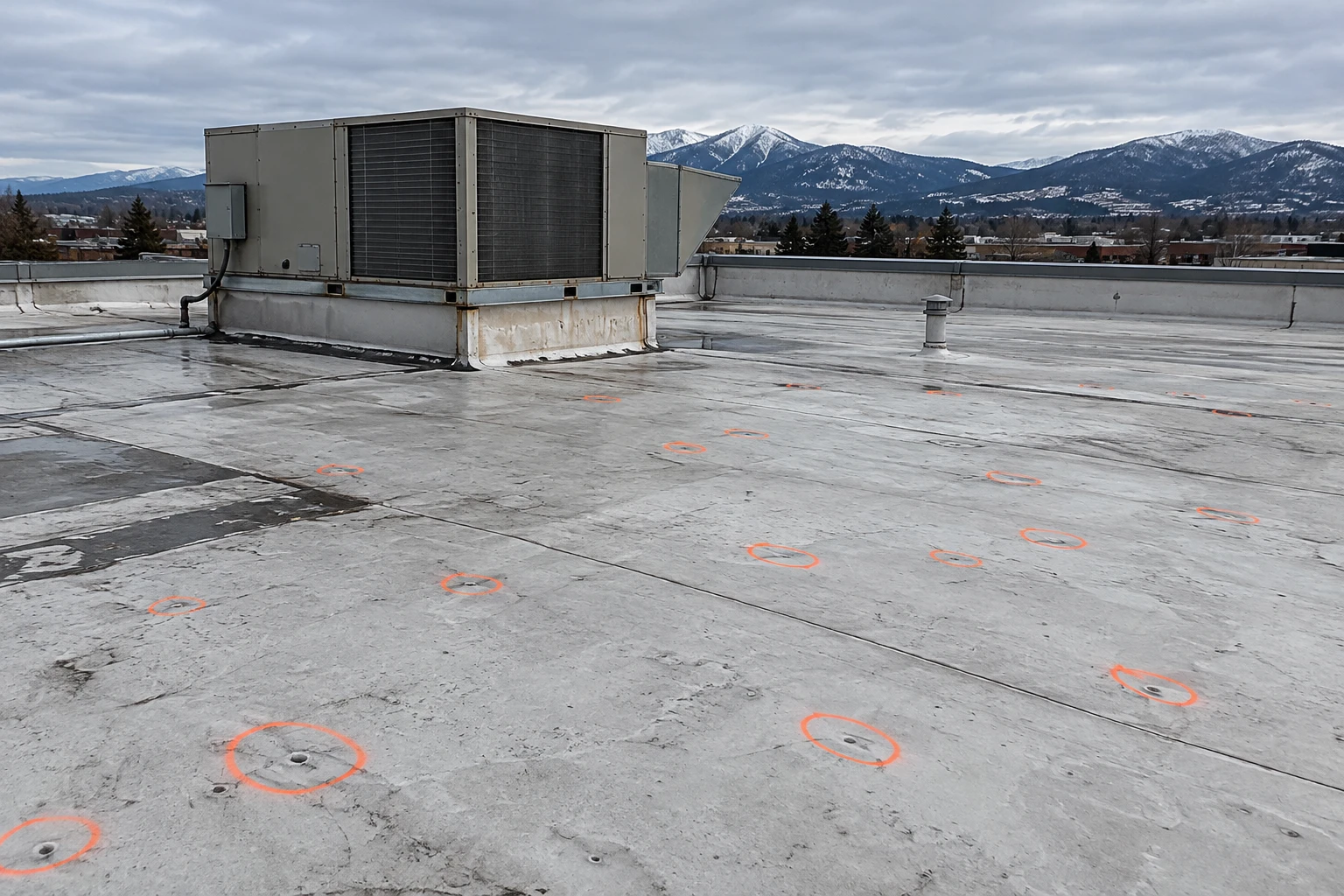
We press on the surface, probe suspect spots and, where allowed, take a core. A test square counts hits per area, and photographs with a scale reference let an adjuster measure. Our hail damage repair work builds on that map. The repair follows the count: patches for a few hits, a section for many.
Metal roofs need their own look. Hail dents panels and ribs, wind lifts caps and ridge pieces, and thin metal can crease at a fastener row. We photograph dents with a straight edge and a scale, check laps and clips, and note any standing seam clip that has shifted. A dent without a break in the coating may be cosmetic. A dent with a cracked finish is a corrosion starter and goes on the repair list.
Where does wind take a roof first?
Wind finds edges and corners. Coping lifts, edge metal bends, the first rows of membrane peel back and loose rooftop covers become projectiles. We check edge metal, coping and gutters first because a secure perimeter protects every repair that follows. A patch in the field is wasted if the next gust lifts the edge.
Then we look at the details. Skylights and curbs, pipe boots and rooftop unit panels all move in a strong wind. Skylight and penetration flashing gets a close look after any gust over 60 mph. Debris from one roof lands on another, so we check for punctures far from where the wind started. Drains packed with debris get cleared the same visit, since the next rain or thaw will test them.
How does the repair change by place?
Where a building sits changes what the storm does to it. Campus buildings in the Montana State University area have west- and south-facing walls, the sides where most of the 2010 window breakage happened. Warehouses and flex buildings near Belgrade sit where the 2013 storm brought 89 mph gusts. A building in Livingston deals with a wind record that few places match.
Big Sky and Bridger Canyon carry far heavier snow. Big Sky averages about 162.7 inches a year, and Bridger Bowl reports about 350 inches a season. A roof there is a snow-load problem first and a storm-damage problem second. We scope the repair for the place, not for the average valley roof.
How is storm damage separated from age?
Carriers pay for sudden events and not for wear. A Bozeman roof has both, since it lives through Januarys that average about 15 degrees F at night, a record low of minus 46, and the thaw cycles that follow. Each finding gets a label, new or old. A fresh hit shows bright metal, a clean break and a crisp edge, while old wear carries grime in the crack, oxidation and rust.
The file that results has a dated photo set, a roof plan, test square counts, a scope with quantities and a separate line for temporary work. Our claim assistance uses the same file. Smaller fixes that follow a storm go on the list as numbered items with a price each.
Questions About Storm Damage Roof Repair
How soon should a roof be inspected after hail?
Within days, before the next storm or snowfall hides the marks. If the surface is wet or icy, a drone pass gives a first look and a ground walk follows when it is safe.
Does every hail hit need a repair?
No. Shallow dents on sound metal and faint marks on sound membrane can be watched. Hits that cracked the surface, the insulation or a seal need repair, and the map separates them.
Can storm damage appear months later?
Yes. A bruise can take in meltwater through a thaw cycle and leak well after the storm. That is why we map hits right away and check the roof again the next spring.
What does an insurer need from the roofer?
Dated photographs, a roof plan with each hit located, test square counts and a priced scope with temporary work on its own line. We deliver it in a form the adjuster can check.
What should be gathered while waiting for the first visit?
Photograph the interior damage, move anything wet, note the time the leak began and keep people off the roof. Send us the building type, its age and where the drips show up.