
Roofing for Multi-Location Retail and Restaurant Brands in Bozeman, MT
Multi-Location Retail and Restaurant Brands in Bozeman and the Gallatin Valley
A retail manager hears about the roof when a customer does. A drip lands on a display, a ceiling tile drops near the registers, a restaurant kitchen smells of wet insulation. The roof story on a chain store in Bozeman starts in the weeks after Christmas, when snow slides off the rooftop units, piles against the parapet and sits there through three or four thaw cycles. By February the membrane at the wall is carrying water it was never meant to hold.
If you manage stores across more than one market, the question to ask is which of your locations has the roof that answers to a Gallatin Valley winter, and which one still has the paperwork from a warmer place? A prototype roof drawn for one climate can behave very differently in another, and the details at drains, curbs and parapets are where the difference shows.
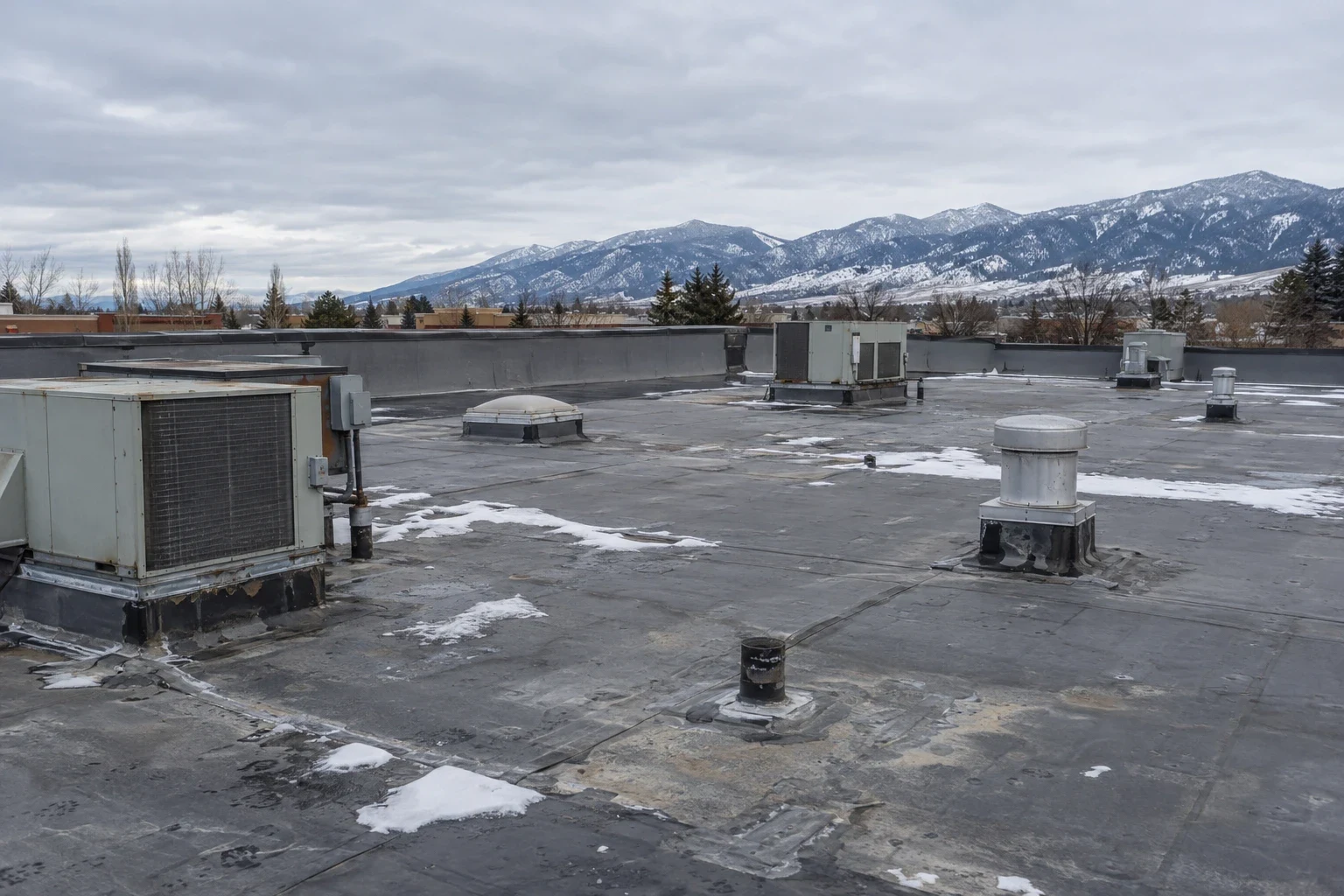
What does a store roof on North 19th Avenue face?
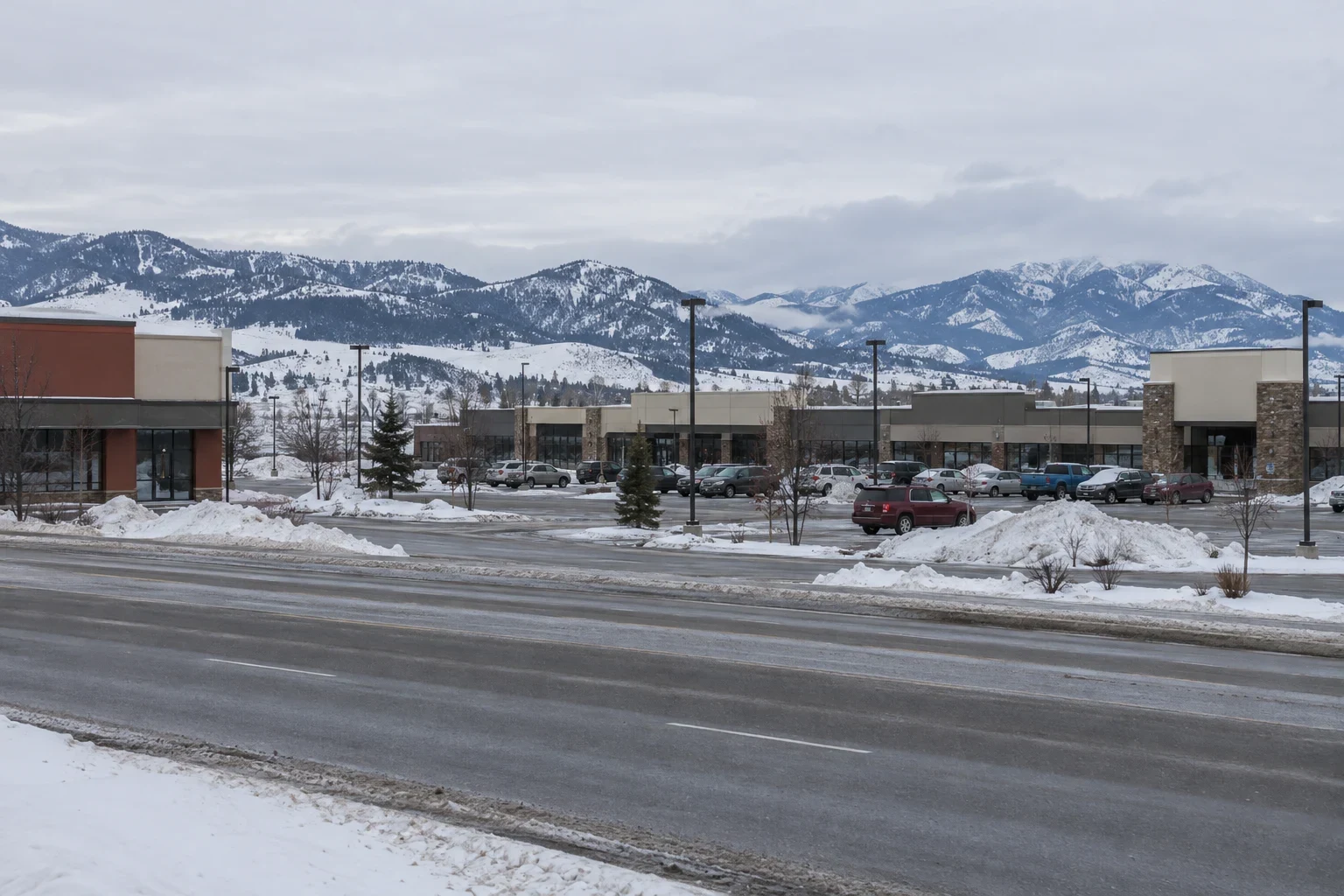
North 19th Avenue is Bozeman's primary retail corridor, with about 37,160 vehicles a day and stores such as Target, Ross, WinCo Foods and Costco in the same stretch. The city planning department says the whole corridor is zoned for commercial business. A large store in that setting typically has a wide low-slope roof with rooftop units, parapet walls and a few interior drains, and that combination gathers drifts behind every obstruction.
The question is where the snow goes. Snow slides off a unit and piles at the wall. Meltwater runs to the nearest drain and, if the drain is iced, backs up under the flashing. I look at the termination bar, the counterflashing and the scupper before I look at the field, because the membrane itself is usually fine. When I find water at a wall, the fix is often a re-termination and a new drain strainer, not a new roof.
Neighboring tenants matter. A strip of stores shares walls and sometimes a single roof, so one tenant's rooftop work can damage the next tenant's section. When a landlord or a property manager runs the roof, we write the findings so each tenant can see its own part. Where a retailer owns its building outright, the roof file sits with the chain's facilities group and follows the owner and investor reporting format when a property is sold or financed.
How do restaurant roofs differ from retail?
Grease and heat. A kitchen exhaust fan throws a fine film of cooking oil onto the roof, and that film attacks some membranes and softens sealants. Curbs for hoods, make-up air units and walk-in coolers add penetrations on a small roof, so the density of details per square foot is higher than on a retail box. A roof drain near a vent stack can clog with grease and debris, and standing water there speeds wear on the sheet.
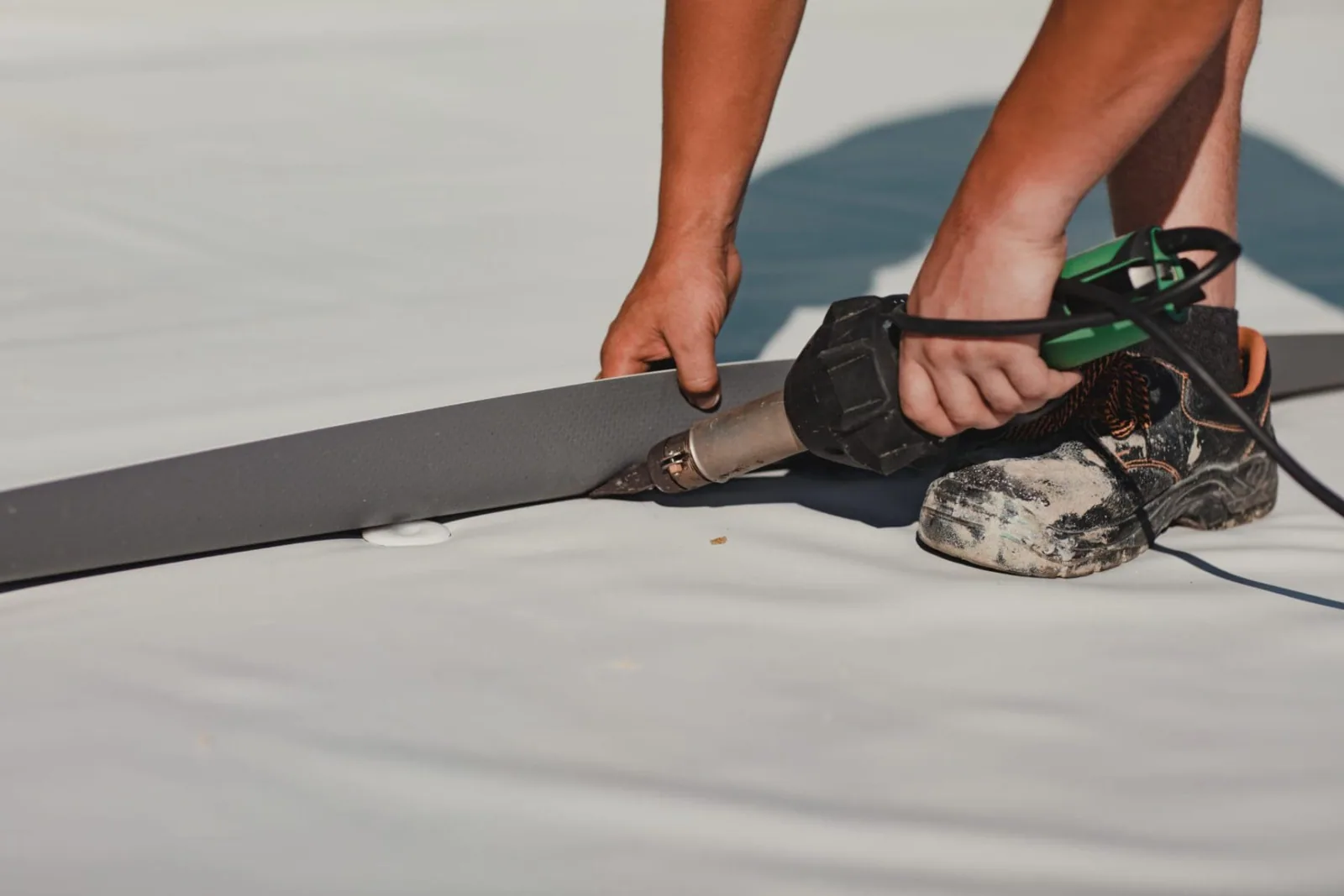
We check for grease damage on every restaurant roof, fit grease containment where the fan discharges, and recommend a membrane that tolerates oil if the roof is due for work. A single-ply with good grease resistance, or a PVC sheet, often suits those spots. A PVC roof system is one option, and the choice depends on the fan layout and the roof's age. For new pads such as those planned at the North 19th and Valley Center Road interchange, where two commercial buildings including a fast-food restaurant are planned, the exhaust and curb details are best settled before the membrane is laid.
How do big single-story roofs hold up?
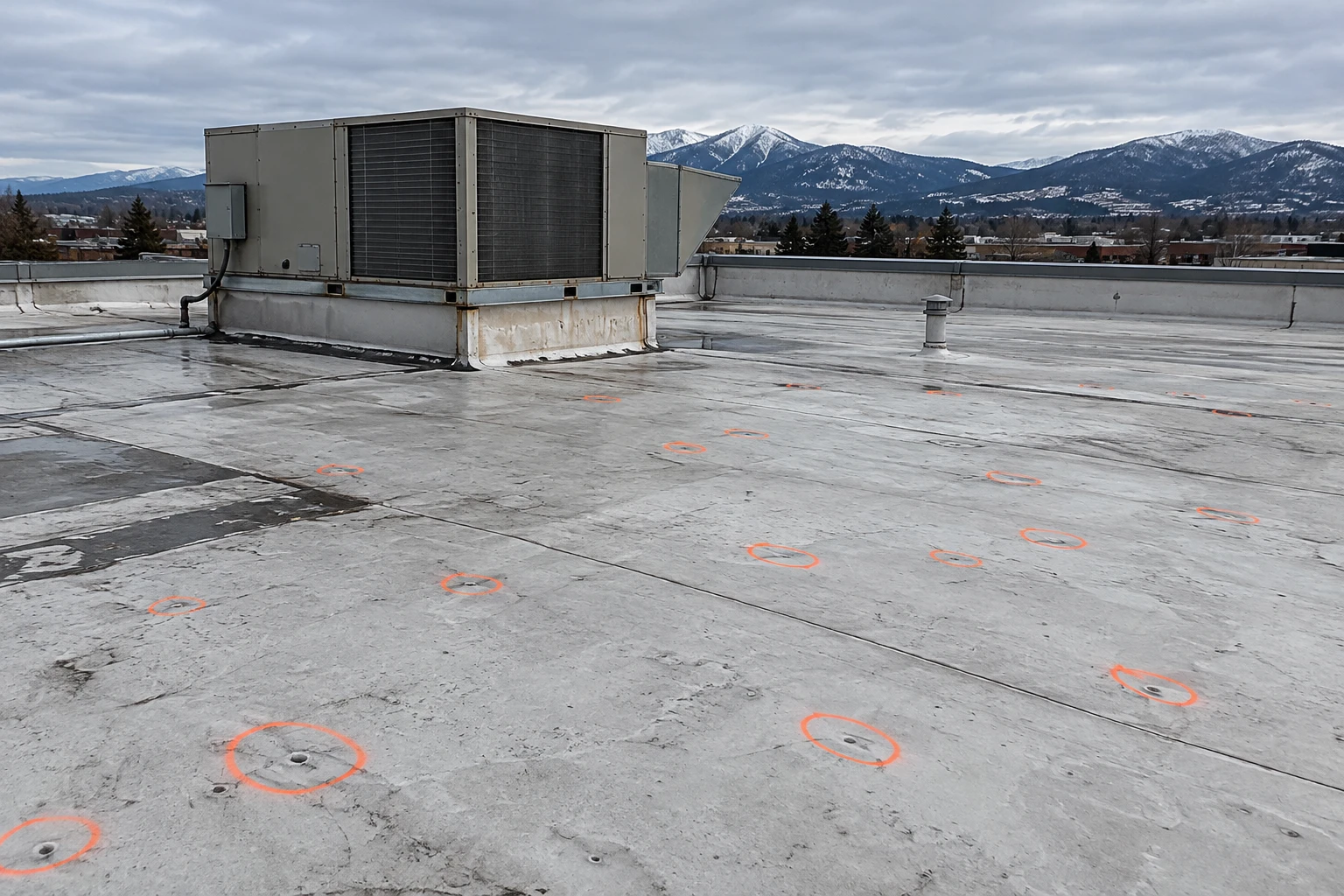
Large single-story retail roofs give water many places to hide: drains, penetrations, laps and repairs layered over the years, and the way those details interact is the real condition. The West Main area, where a single-story mall opened in 1980 as Main Mall, is where those details meet. Foot traffic from service trades wears paths, and a wall flashing patched in one decade may meet a new coating from another.
In the West Main and mall area and other multi-tenant retail, the shared roof is where tenants disagree about responsibility, so the report should state which items are structural, which are tenant equipment and which are common roof, with photographs for each.
How do hail and wind enter a chain's risk plan?
Hail the size of golf balls hit Bozeman on June 30, 2010 and kept falling for about half an hour. It came back across Belgrade and north Bozeman in early August 2013, when gusts reached 89 mph. A May 2023 report of 1.50-inch hail along the Gallatin River shows it is not a once-in-a-lifetime event. Retail roofs with thin single-ply membranes, skylights and rooftop units take the first hits.
After a storm we walk the roof for hail bruises, cracked skylights and damaged coils, then document each one with a photograph and a location. That file serves the store's insurance claim and the chain's regional facilities group at the same time. Hail damage repair findings include a ranking of what needs a dry-in now and what can wait for spring.
How is the work kept off the sales floor?
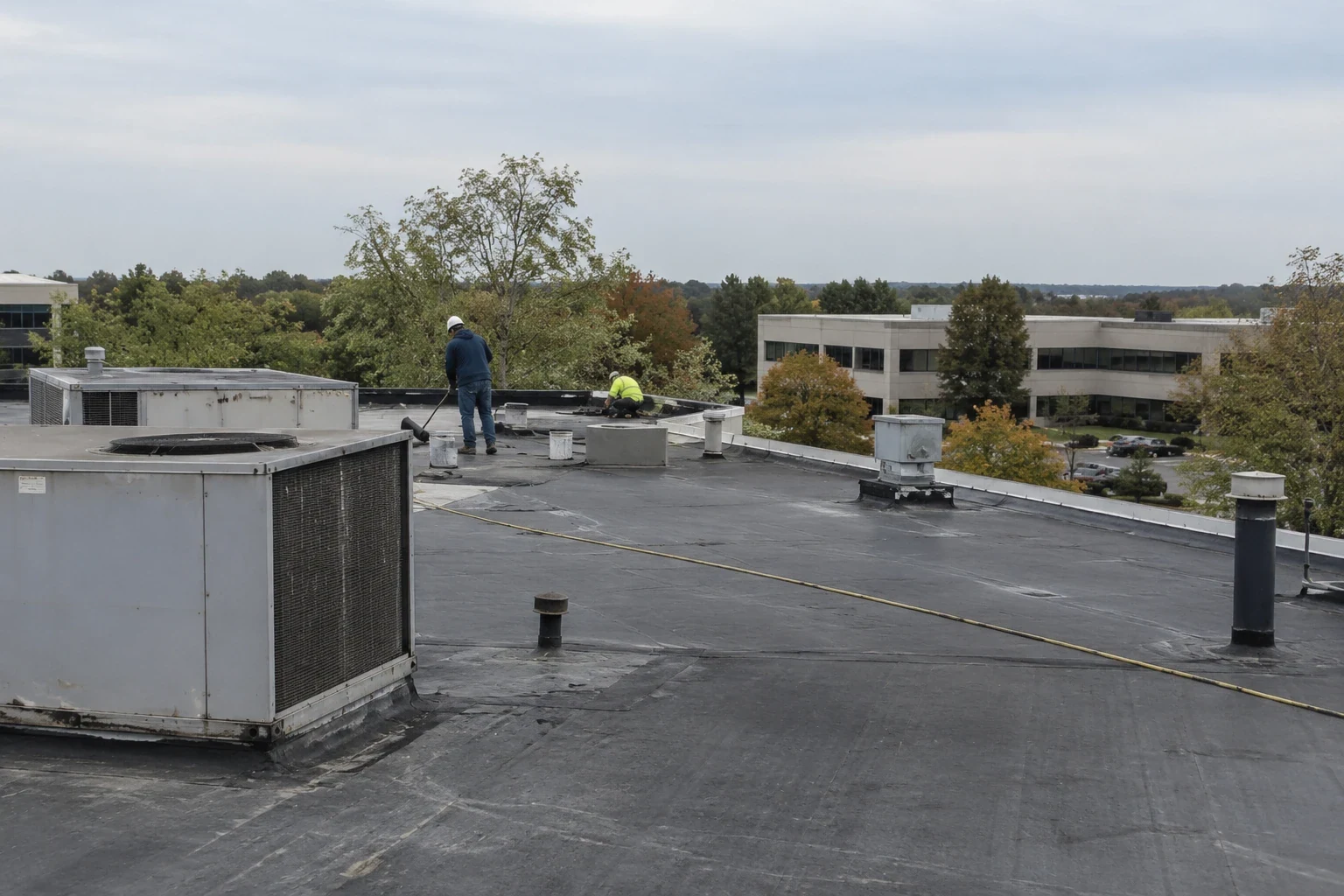
The roof plan follows the store schedule. For most retailers, the busiest season runs from November through the holidays, so a reroof is best done in late spring or summer. Deliveries, entrance traffic and drive-through lanes decide where staging goes and when the crane can lift. We run noisy work such as tear-off during the hours a store designates and keep a point of contact on site to stop work if a customer or employee needs access.
Restaurants add food-safety rules: covering air intakes, keeping debris away from vents and making sure kitchen exhaust can run on schedule. Reroofing an occupied building becomes a daily checklist, and we keep it short and specific.
What does a multi-location roof program look like?
One format, one photograph standard, one warranty file for every store. We inspect each roof against the same list, rate each item and give regional managers a table to compare locations. With that table, roof capital planning lets a chain budget by risk instead of by whichever store called last. Sites in colder markets are scheduled ahead of the first freeze, and sites in warmer markets can wait.
Records make the program work. Each store file holds the roof type, the age of each section, the warranty terms, the drain locations and a photograph of every curb. When a store calls, the dispatcher opens the file before the crew leaves, and when a roof is replaced the file is updated the same week.
Questions About Multi-Location Retail and Restaurant Brands
Our lease says the landlord handles the roof. Why should we care?
A leak inside the store is your inventory and your sales. Even when the landlord pays for the roof, you can document damage, ask for a fix schedule and keep records of every leak. We write findings that the tenant and landlord can both use, with photographs and locations.
Can you repair a roof while the store stays open?
Usually yes, with planning. We protect the interior under the work area, schedule the noisiest tasks for agreed hours and keep entrances clear. For the sales floor, we move displays away from drips when a leak is active. The store manager tells us which hours matter most.
What if the prototype roof from another state is wrong for Montana?
Then the details get adjusted. Extra drain capacity, raised terminations, snow guards over entries and a stronger edge detail can all be added when the roof is replaced. We write the changes up so the chain's standards group can approve them and reuse the notes at other cold-climate stores.
Does cooking grease void a roof warranty?
Many manufacturer warranties exclude grease damage unless the membrane is rated for it. Check the warranty language, and tell us what the kitchen produces. We can propose a grease-resistant membrane and a containment kit at the fan.
How do you handle emergency leaks on weekends?
Call with the address and where the water shows up. We dry in the leak, protect the interior and photograph the roof. The permanent repair is scheduled during store hours or overnight, as the manager prefers.