
Carlisle SynTec Roofing Systems in Bozeman, MT
Carlisle SynTec Roofing Systems in Bozeman and the Gallatin Valley
A single-ply roof is only as good as its seams, and the seams are what a superintendent checks first after a Bozeman, MT winter. Carlisle SynTec supplies single-ply membranes, thermoplastic and rubber, along with insulation and accessories, and those roofs sit on a wide range of commercial buildings. The sheet itself rarely fails. What fails is a lap that opened in the cold, a flashing that pulled from a wall or a fastener that backed out of the deck. So what does your seam look like when you press a screwdriver along it?
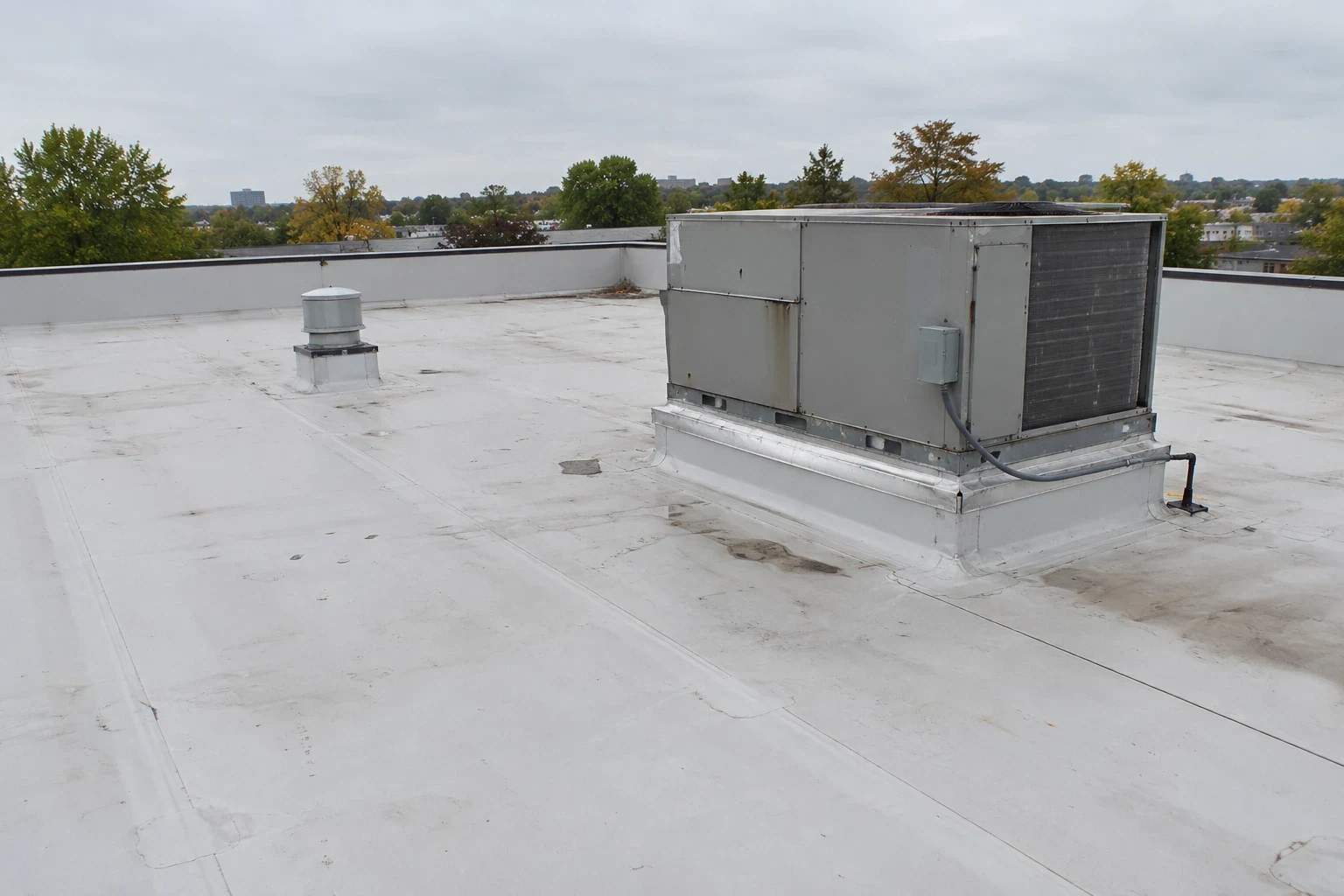
What are the two single-ply families, and how do you tell them apart?
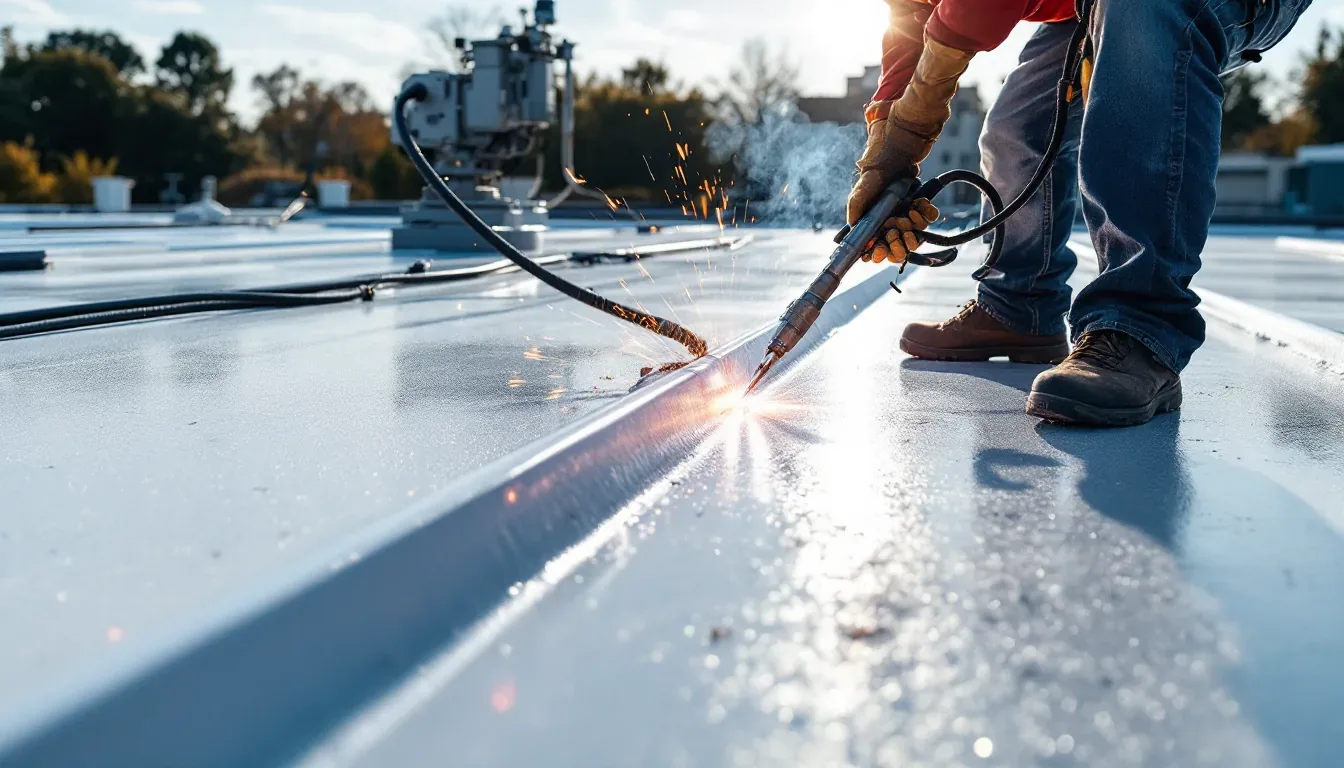
A thermoplastic sheet, such as TPO or PVC, is welded at the seams with hot air, and the weld becomes part of the sheet. A rubber sheet, such as EPDM, is joined with tape or adhesive at the laps. They look similar from the ground, both flat and light in color or black, but they behave differently under repair.
I tell them apart by the seam. A welded seam has a smooth, slightly shiny edge where the sheet was melted together, and a probe will not lift it. A taped seam has a visible line, and a probe may find a gap. A small core confirms the type and shows the insulation below. The distinction decides the repair: a welded patch for thermoplastic, a taped or adhered patch for rubber, and a primer that matches the surface. Dirt matters too: a seam cleaned with the wrong solvent, or not cleaned at all, will weld or bond poorly, so cleaning is a named step in every repair. A TPO roof and an EPDM roof can sit side by side on one campus and need different habits.
How is the sheet attached, and why does it matter in wind?
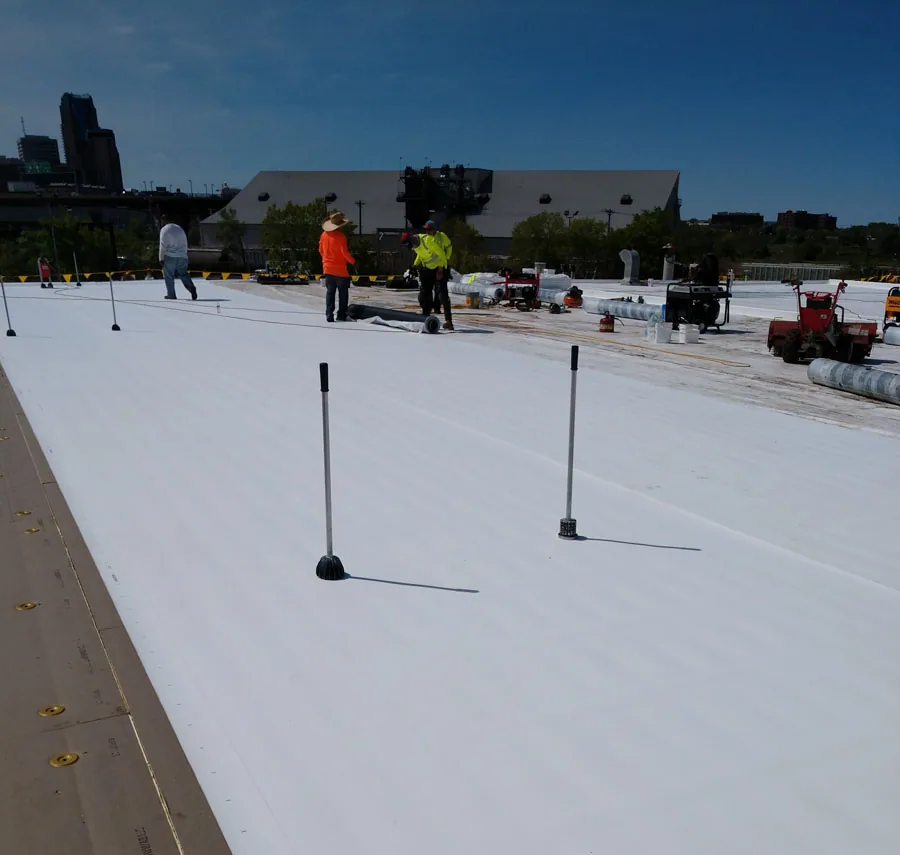
A single-ply sheet is held to the roof in one of three ways. It can be mechanically attached with fasteners and plates along the seams, fully adhered over the whole surface, or ballasted with stone. Each has its own failure. Mechanically attached sheets flutter in wind and pull fasteners. Adhered sheets lose bond at edges. Ballasted sheets shift under high gusts.
The basic wind speed listed for Bozeman under ASCE 7-16 is 110 mph, and gusts of 89 mph crossed Belgrade and north Bozeman in August 2013. On a long, flat roof, wind pulls hardest at corners and edges. I check fastener rows near the perimeter, look for raised bumps where screws have backed out and probe the edge metal for loose cleats. A tighter fastener pattern at corners and edges, with sealed laps, is the usual repair, and a pull test on a few fasteners tells us whether the deck itself is holding. A fastener that spins free in a corroded or damaged deck cannot be re-used, so we move it to sound steel. Edge repairs come first, before the field, because a loose edge can peel a full run of sheet in one gust.
What does the Gallatin Valley cold do to a single-ply seam?
A Bozeman winter has gone as low as minus 46 degrees F. The membrane shrinks in the cold and grows in the sun, and a seam works against that movement all winter. A weak weld or a poorly pressed tape line opens a little each cycle, and meltwater finds the gap.
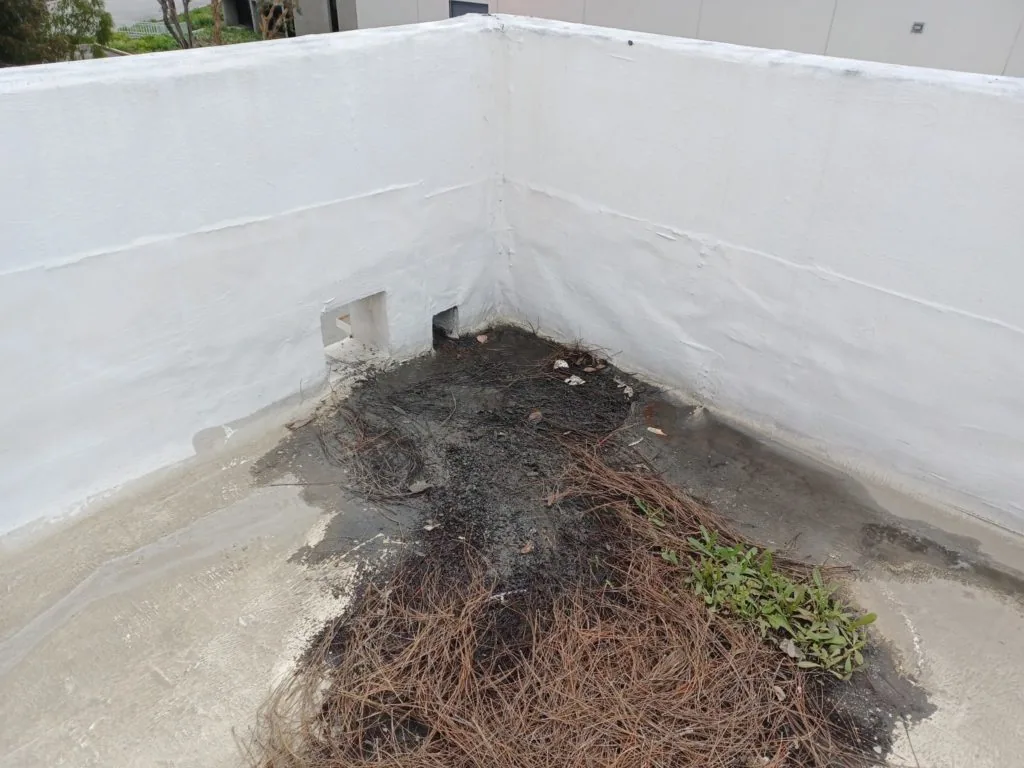
In spring I walk each seam with a probe, press on terminations and look at the base of every curb. Open seams get a fresh weld or tape with primer, flashings get re-seated and failed sealant at terminations gets replaced. The repair window is short, since welding wants dry conditions and adhesives want moderate temperatures. Clear drains matter as much as the seams. Standing water on a seam speeds every kind of aging, so roof drains and scuppers come first in a fall visit.
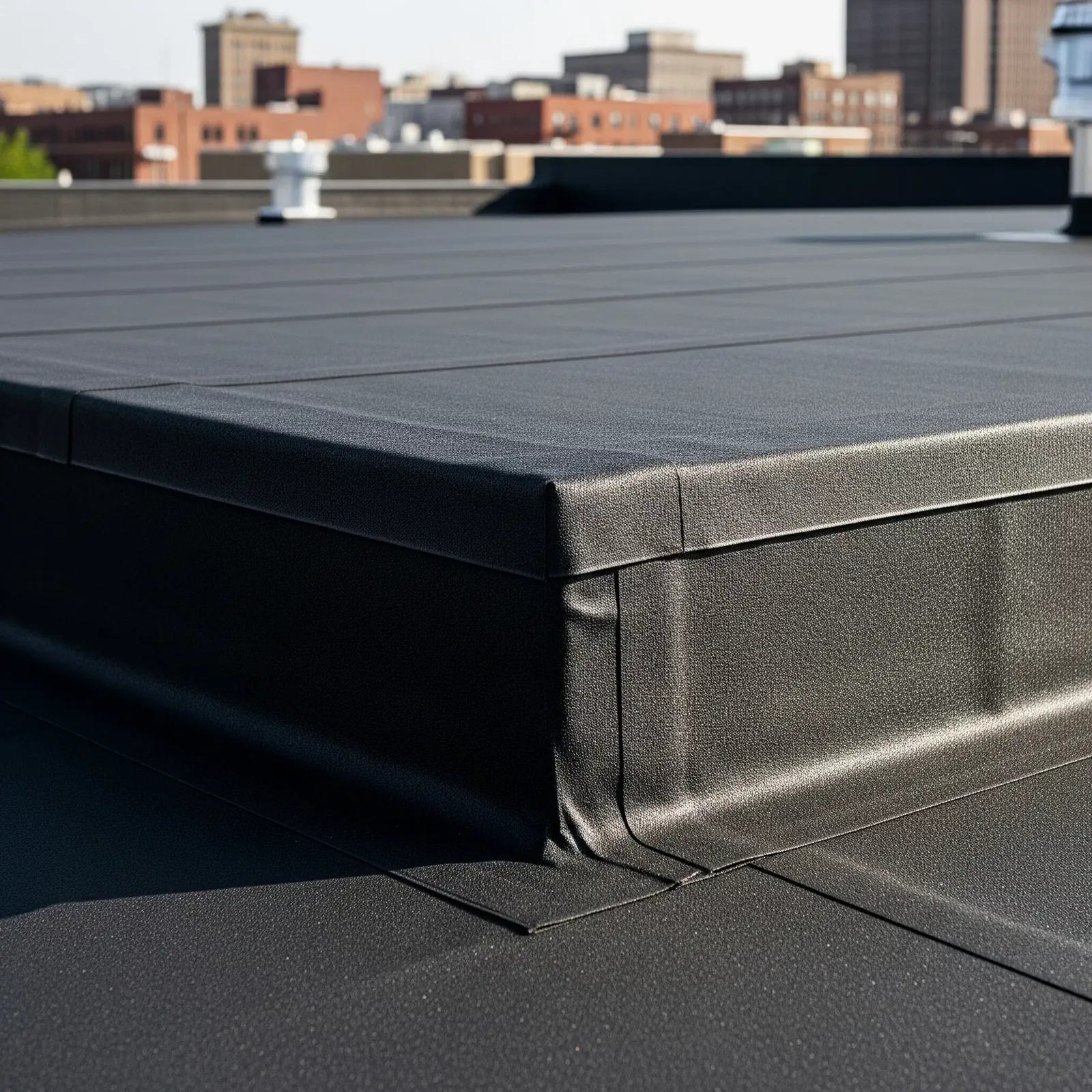
Flashings at walls, curbs and pipes deserve the same attention as the seams. A rubber or thermoplastic flashing is cut, formed and fixed around each penetration, and the corner pieces are the hardest part. A split at an inside corner lets water in through a small opening, so I press every corner by hand and re-form any that have lost their shape.
How do hail and foot traffic show up on a single-ply sheet?
Half an hour of golf-ball hail hit Bozeman in June 2010, and baseball-size stones landed east of Gallatin Field. On a single-ply sheet, hail leaves bruises where the reinforcement cracked, and those soft spots leak months later. Foot traffic leaves its own marks, mainly at the path from the hatch to each rooftop unit.
After a storm, I mark each bruise, photograph it with a scale and test the worst ones for moisture. Walkway pads from the hatch to each unit protect the sheet from daily wear, and a cover board beneath the membrane adds hail resistance on a replacement. The distinction between cosmetic marks and damage that let water in goes in the report, which supports a claim through roof insurance claim assistance.
Which buildings in the valley carry single-ply roofs?
Many large low-slope buildings do. Stores and strips along North 19th Avenue and flex and warehouse buildings near Belgrade are common examples of the building types that use single-ply systems, though the membrane on any given roof has to be identified, not assumed. A roof with few penetrations and long runs suits a welded sheet. A roof with many curbs needs careful flashing at each one.
For retail, deliveries and crane picks are planned around customers. For a warehouse, around dock doors and forklift routes. For both, the field, the parapet and the equipment are separate problems with separate fixes, the way a big-box retail roof is handled.
What should an owner keep on file for a single-ply roof?
A roof diagram that marks drains, curbs and penetrations. The core results. Photographs of seams, flashings and edges after each visit. A list of repairs with dates, and notes on which membrane family and attachment method the roof uses. Manufacturer programs have their own paperwork and requirements, which vary by product, so the owner should confirm the terms in writing with the manufacturer or the installer.
With that file, any later repair starts from facts. For buildings with several roofs, a ranked condition report pulls the findings together. Versico and Sika Sarnafil roofs get the same identification-first approach.

Questions About Carlisle SynTec Roofing Systems
A seam on our flat roof lifts when I press it with a screwdriver. Is that serious?
It can be. A lifting seam is an opening, and meltwater will find it on the next thaw. We clean the seam, test the adjacent seams and make a welded or taped repair, depending on the family. If the lift runs for many feet, the weld temperature or tape was probably wrong at installation, and we recommend re-seaming the whole run.
How do I know whether my roof is mechanically attached or fully adhered?
Mechanically attached sheets show a line of fastener plates under the seams and flutter in wind. Fully adhered sheets lie smooth with no plates visible. A small core cut or a look from inside the deck confirms it, and the attachment method tells us how to repair an edge.
Can a thermoplastic patch go over an old rubber sheet?
Generally no. Welded patches need a thermoplastic surface, and rubber needs its own primer and tape system. Mixing them gives a patch that looks fine and peels. We identify the sheet first and choose a compatible repair.
Should we add insulation at the next reroof?
Often yes, if the roof structure and the energy goals allow. More insulation lowers heating cost and moves the dew point upward, so we check the ceiling space for condensation risk and adjust the assembly.