
Hotel Roofing in Bozeman, MT
Hotel Roofing in Bozeman and the Gallatin Valley
A hotel is a building where the roof sits directly over someone's bed, one night at a time. In Bozeman, MT that changes the order of everything: a stain over a guest room takes the room out of inventory, a drip over the lobby is seen by every arriving guest, and the best weeks for roofing are rarely the quietest weeks for the front desk. So before talking about membranes, the question for a general manager is which floors, which wings and which weeks can lose a room, and which cannot.
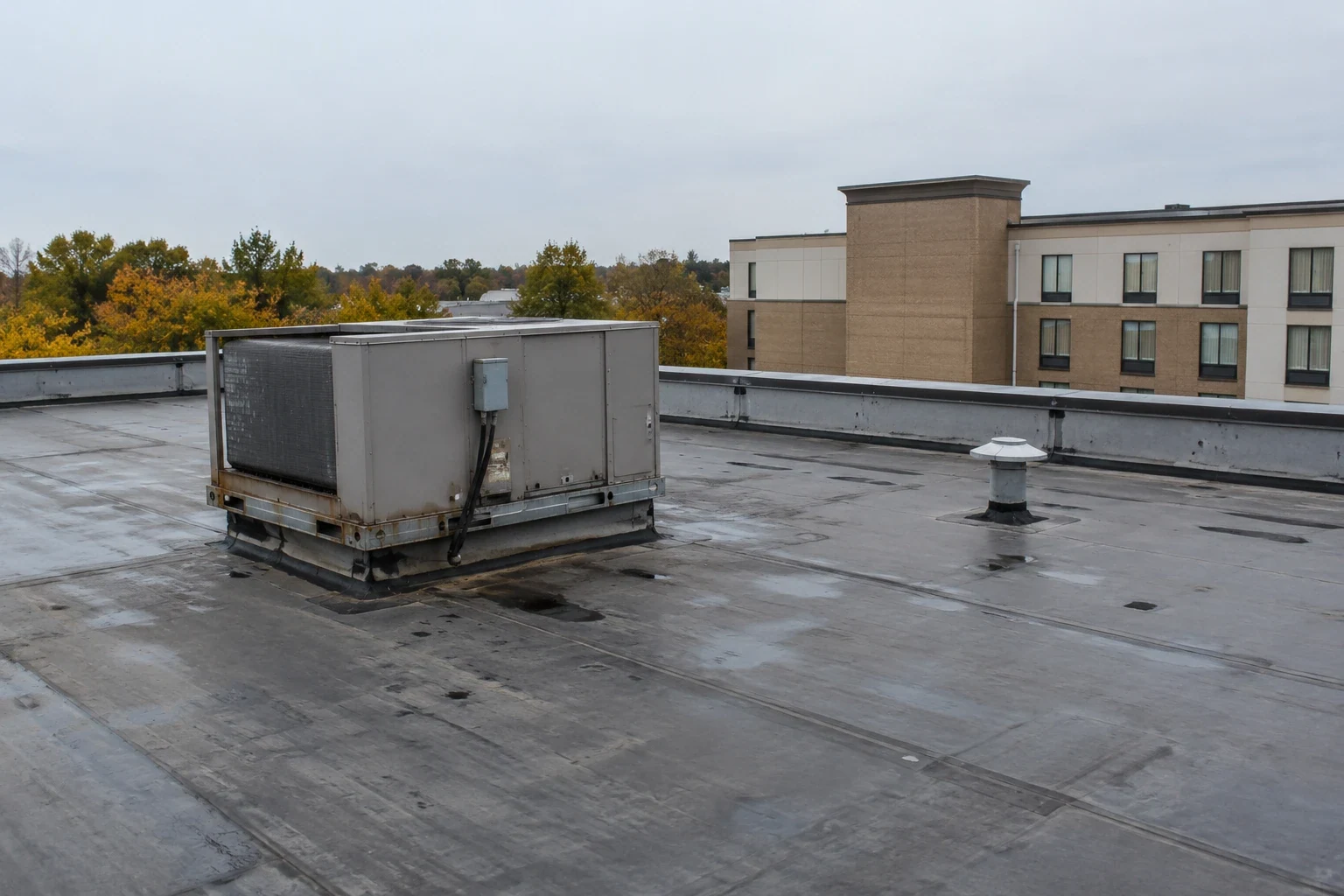
What are the roofs on a hotel, really?
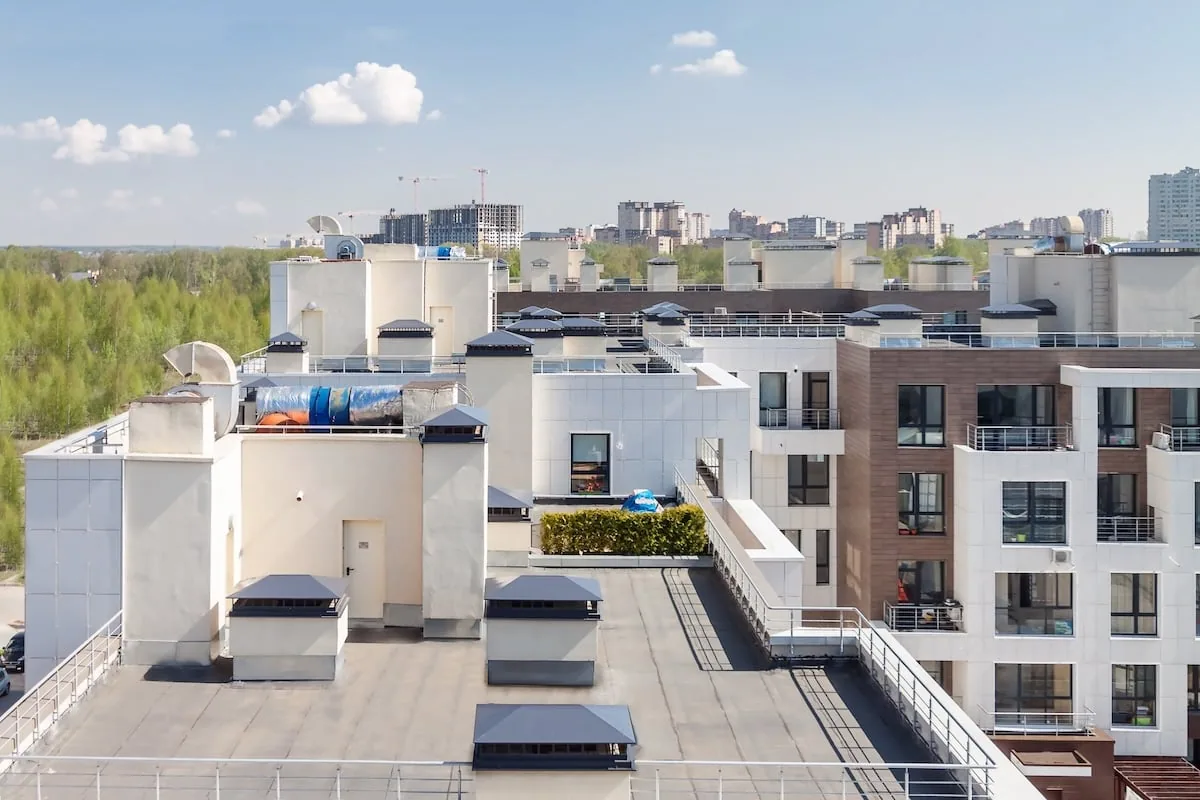
A hotel often has several roofs stacked into one. The main guest wing carries a low-slope or gently pitched field, the lobby and porte-cochere sit lower, the pool enclosure has its own roof with humid air beneath it, and the kitchen and laundry add exhaust penetrations. Each roof sees a different mix of snow, heat and moisture.
I walk each one separately. The pool roof gets a close look for condensation damage and corrosion on fasteners, since the air below it is warm and wet. The lobby canopy gets a look at its edges and its snow-shedding path. The main field gets drains, seams and rooftop units. A hotel roof survey that treats the building as one roof misses most of this.
Skylights and atrium glazing, where a hotel has them, get their own check. The curb flashing, the glazing gaskets and the drain beside the skylight are separate details, and a leak at a skylight often gets blamed on the main roof. I note each one on the diagram and photograph the sealant, so a later repair can go straight to the failed joint.
How does a Gallatin Valley winter treat a hotel?
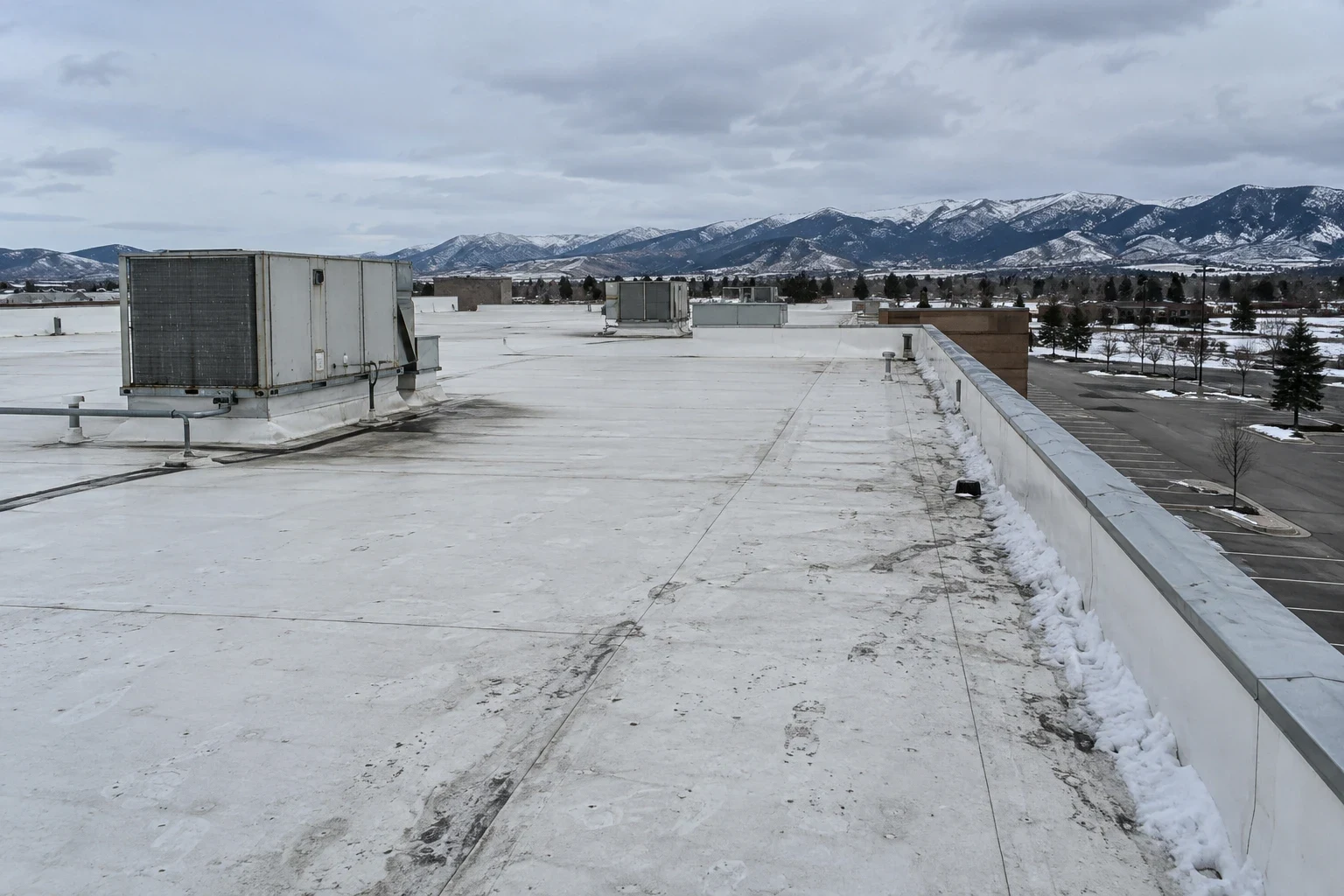
Bozeman's 54 snowy days come with January lows near 15 degrees F, a minus 46 record and a 50 psf design ground snow load. On a hotel, the risk is not only weight. It is snow sliding from an upper roof onto a lower roof, a canopy or an entrance, and ice building at eaves above guest walkways.
Snow guards, heated edges and drainage that discharges away from entrances are the usual tools. I check each entrance for the line of fall and ask the front desk where guests have reported ice or sliding snow. A canopy that sheds onto a pickup lane needs a different answer from one that sheds onto a planting bed, and the plan marks which is which. Properties higher in the region see far more, since Big Sky collects about 162.7 inches a year, and the same questions get sharper there.
Where do hotel leaks start?
They start where a guest-room wall meets the roof, at the base of a rooftop unit that serves a wing, at a drain that the maintenance team cannot reach in winter and at the seam where the lobby roof meets the main building. In a long, narrow guest wing, a single failed drain can send water down through a stack of rooms.
I trace the pattern by floor. A stain on the top floor often looks like a roof leak, but a stain on the third floor with a dry fourth above it points to plumbing or to a wall flashing. A moisture reading and a hose test sort the two out. Our commercial roof leak repair follows that tracing so the fix lands on the cause and not the symptom.
Did the 2010 and 2013 hail matter for hotels?
Yes, for any building with a large roof. The June 2010 storms put golf-ball stones on Bozeman for roughly thirty minutes and tore up the Ellen Theatre marquee downtown. In August 2013, stones that size came down over much of Belgrade and north Bozeman along with gusts up to 89 mph. A hotel roof, with its skylights, canopies and rooftop equipment, offers many targets.
After a storm, the right move is a full walk, with each bruise marked and photographed, skylights and canopies checked for cracks and rooftop units examined for damage. The record separates cosmetic marks from damage that admits water. Our roof insurance claim assistance turns that record into a claim file organized by roof section, so the carrier can follow it.
How do you work over sleeping guests?
Carefully, and in daylight. Tear-off and fastener driving are the loudest phases, and they move to the hours when most guests are out, with the top-floor rooms below the work zone blocked off for the day. Night work is limited to quiet tasks or none. The crane pick is scheduled early, and deliveries use the service side so the front drive stays clear.
Odor and dust matter as much as noise. Adhesive and hot work are kept away from air intakes, and the rooms below get a protective layer or are held vacant during critical phases. The general manager receives a schedule that lists the rooms affected by the week, and housekeeping gets a short list each morning of what is blocked that day. This is the daily practice of occupied building reroofing, tuned to a building that sells sleep.
Repair, recover or replace a hotel roof?
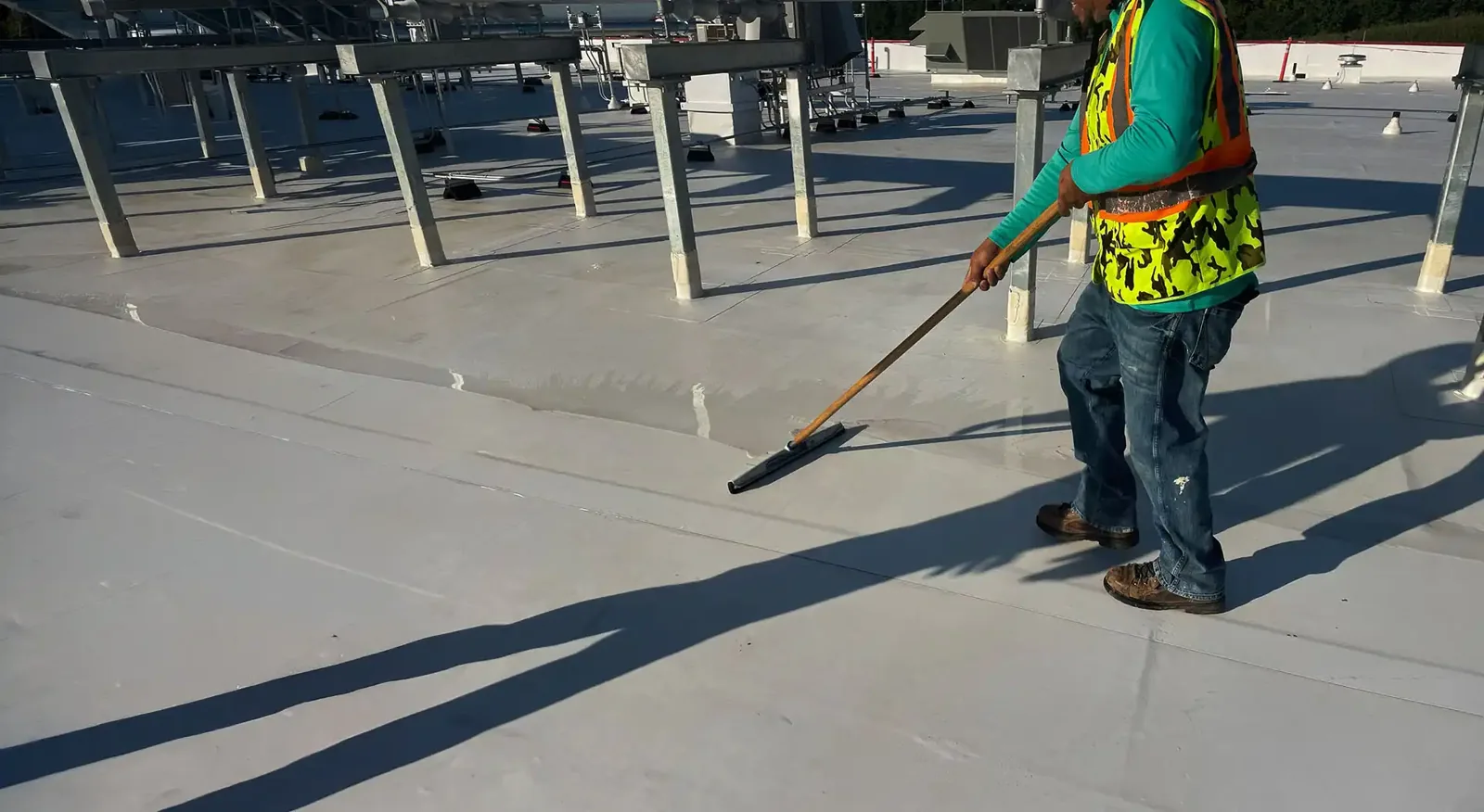
Cores and moisture readings decide it. A dry roof with a worn surface is a candidate for repair or a coating, a sound deck with a tired membrane can take a recover and a roof with wet insulation over several wings needs replacement. Phasing by wing lets the hotel replace one section a year if the budget requires it, with each phase finished and dried in before the next begins. The wing with the most active leaks goes first, and a temporary protection plan covers the others until their turn arrives. Finished phases are photographed and logged, so the owner holds a record for every wing as it is completed.
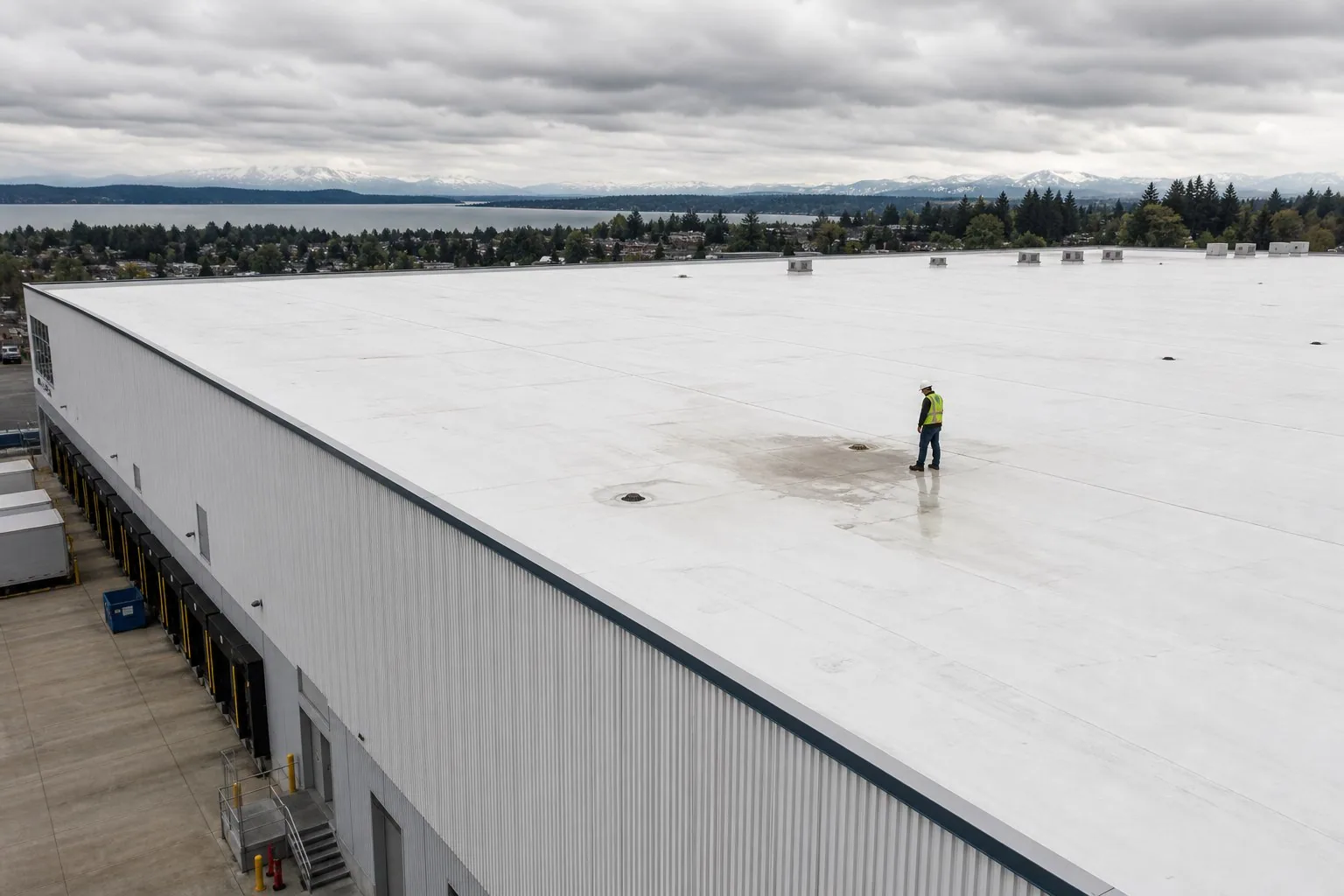
Hotel groups with several properties benefit from a ranked list, which also feeds capital plans. A hotel's main field has the large-roof problem of a big-box store, and its guest wings share the sleeping-occupants problem of an apartment building. A regular preventive roof maintenance visit keeps drains open before the first snow, and properties near Four Corners or in town follow the same schedule.


Questions About Hotel Roofing
We found a stain over a fourth-floor room. How do we know whether it is the roof or the plumbing?
Compare the stain with the floor above. If the fifth floor and the attic are dry, look at wall flashing or plumbing. If the stain follows a thaw, look at the roof. We take a moisture reading, run a hose test at the nearest roof detail and check the plumbing chase before cutting anything.
Can rooms stay in service during a reroof?
Most can. Rooms directly under the work zone are blocked off for the day or the phase, and the schedule lists them in advance. Quiet phases proceed while guests are in the building, and loud phases move to hours when most are out.
How do we prevent sliding snow at the entrance?
Snow guards on the upper roof, a heated edge or a redirected drain at the canopy. The right tool depends on the roof pitch and the path the snow takes, which we check on site and mark on the roof plan.
Does a pool enclosure change the roof system?
Yes. The air under a pool roof is warm and wet, so the insulation and vapor control need to match, and fasteners should resist corrosion. We review the assembly from the inside as well as the top before choosing a system.