
Grocery Store Roofing in Bozeman, MT
Grocery Store Roofing in Bozeman and the Gallatin Valley
The cold in a grocery store lives in the building, and the heat from making it lives on the roof. Condensers, compressor racks and exhaust fans push warm air and moisture up through the roof deck all year, which means a Bozeman, MT grocery roof is working against its own building before the snow arrives. Ask the store manager one thing: where in the ceiling does condensation drip in January, and does it match a leak in July? If it does, the roof is not the only suspect.
What is different about a grocery roof?
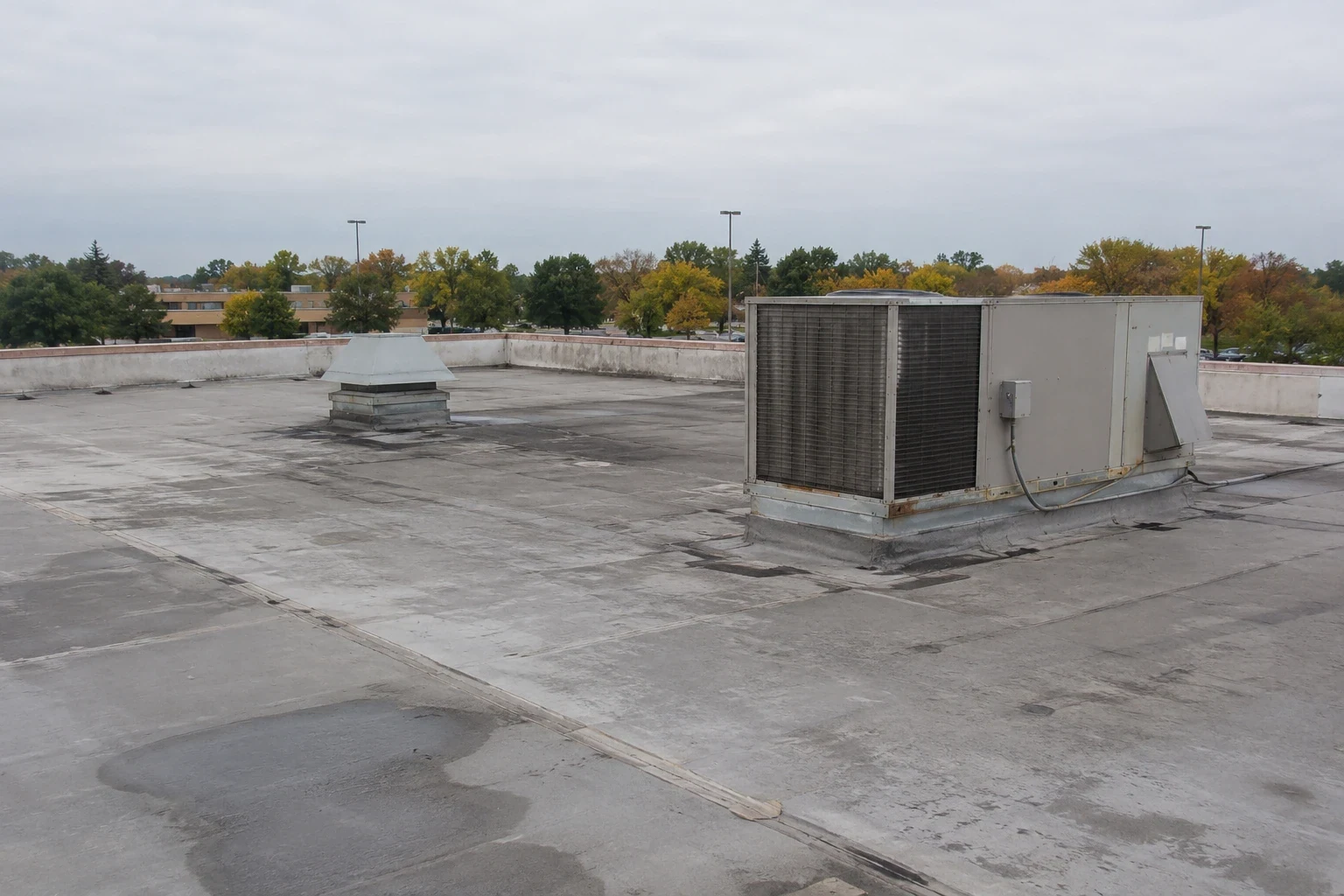
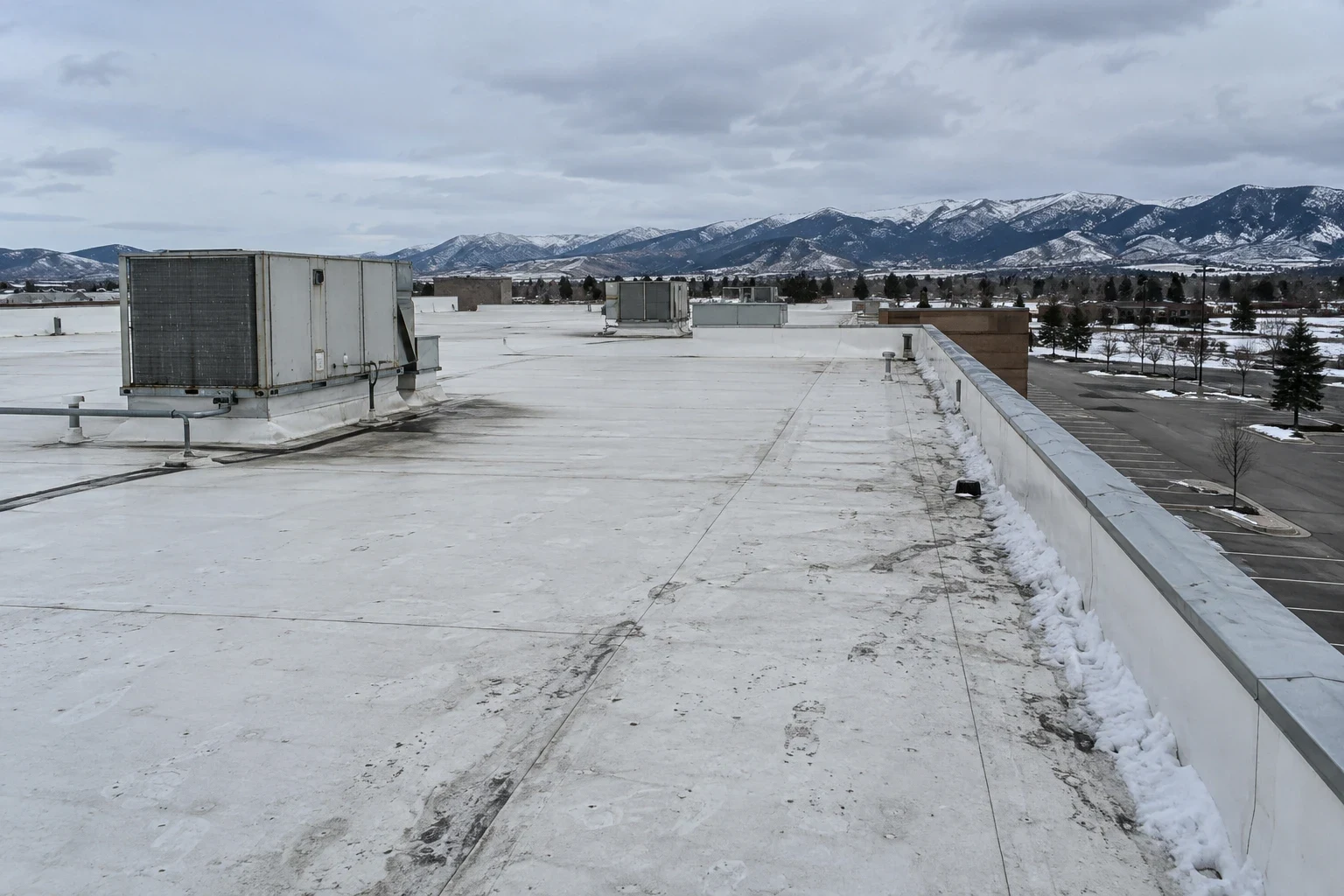
A grocery store carries a lot of mechanical equipment for its roof area. Refrigeration condensers, makeup air units, exhaust fans for the bakery or deli and perhaps a heat reclaim system all sit on curbs or steel supports, with refrigerant lines and electrical conduit running down through the deck. Each line is a penetration, and each penetration is a sealed joint that has to survive thermal movement.
The equipment also vibrates, and a vibrating support can work a flashing loose over time. I start every grocery roof by counting units and penetrations, then checking the flashing and sealant at each one. The roof field itself can be in decent shape. The details around the equipment are where the problems collect.
Refrigerant line sets deserve a close look. They pass through the roof in sleeves or boots, and the insulation wrapped around them cracks in the sun. A split in that wrap lets water run along the line and into the ceiling below. We replace failed boots with prefabricated flashings or custom-welded ones, and we support long runs of line on pads so the weight does not rest on the membrane.
How does a Gallatin Valley winter load a grocery roof?
Bozeman logs about 54 snowy days and 91 inches of snow a year against a listed design load of 50 psf. On a flat roof dotted with equipment, snow drifts behind every unit and curb, and the drifts load the deck unevenly. Where a drift sits against a condenser curb, meltwater can pool and find the flashing.
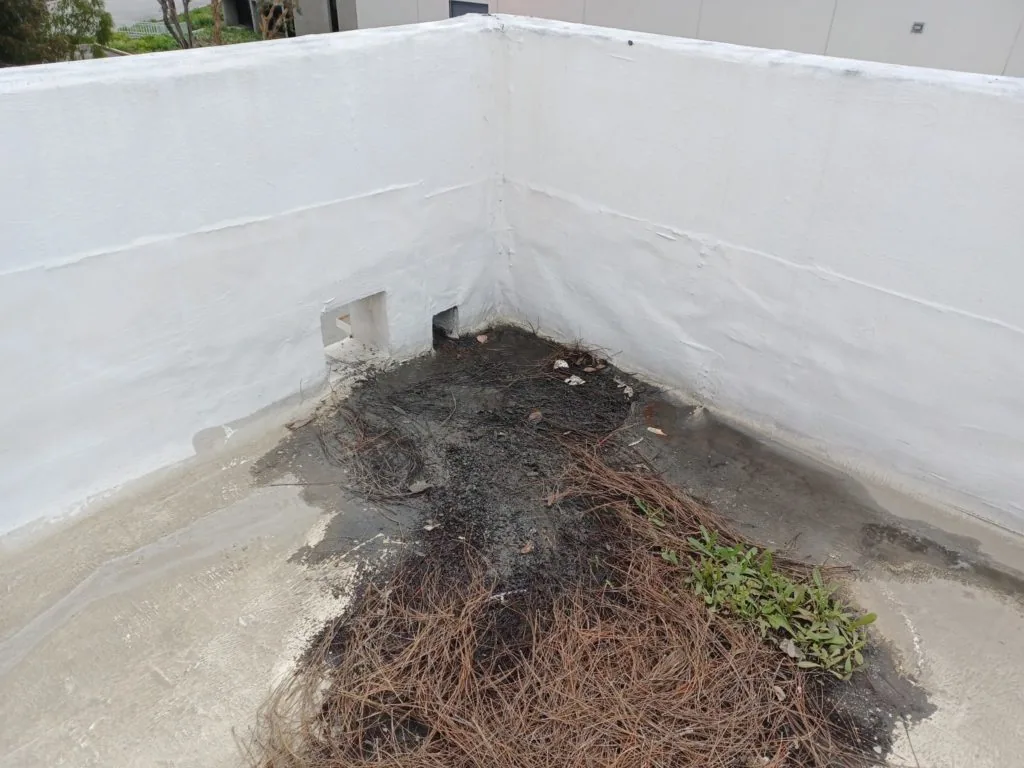
Heat plays a role as well. Exhaust and condenser heat melts snow near the units first, so water runs across the roof toward the drains and refreezes where it meets cold membrane. That freeze-thaw ring around a unit is a pattern I look for, because it points to a drain sump that is not clearing. Clean roof drains and scuppers near the equipment are the cheapest insurance on the roof.
Service technicians add to the load. Anyone who climbs up in winter to reach a unit walks through the same drifts, and a path through snow and ice wears the membrane faster than any weather does. Walkway pads from the access hatch to each unit give them a protected route and keep boots and tools off the seams. We mark the route on the roof plan so the pads land where people actually walk.
Why does condensation look like a leak?
Cold ducts and refrigerant lines sweat when they meet warm, humid air, and a leaking roof and a sweating line can look identical on a ceiling tile. A grocery store has both. The first step is to separate them: a hose test at the suspect curb, a moisture reading in the insulation above the tile and a look at the insulation on the line. Water that appears only on warm days and never after a thaw points to condensation.
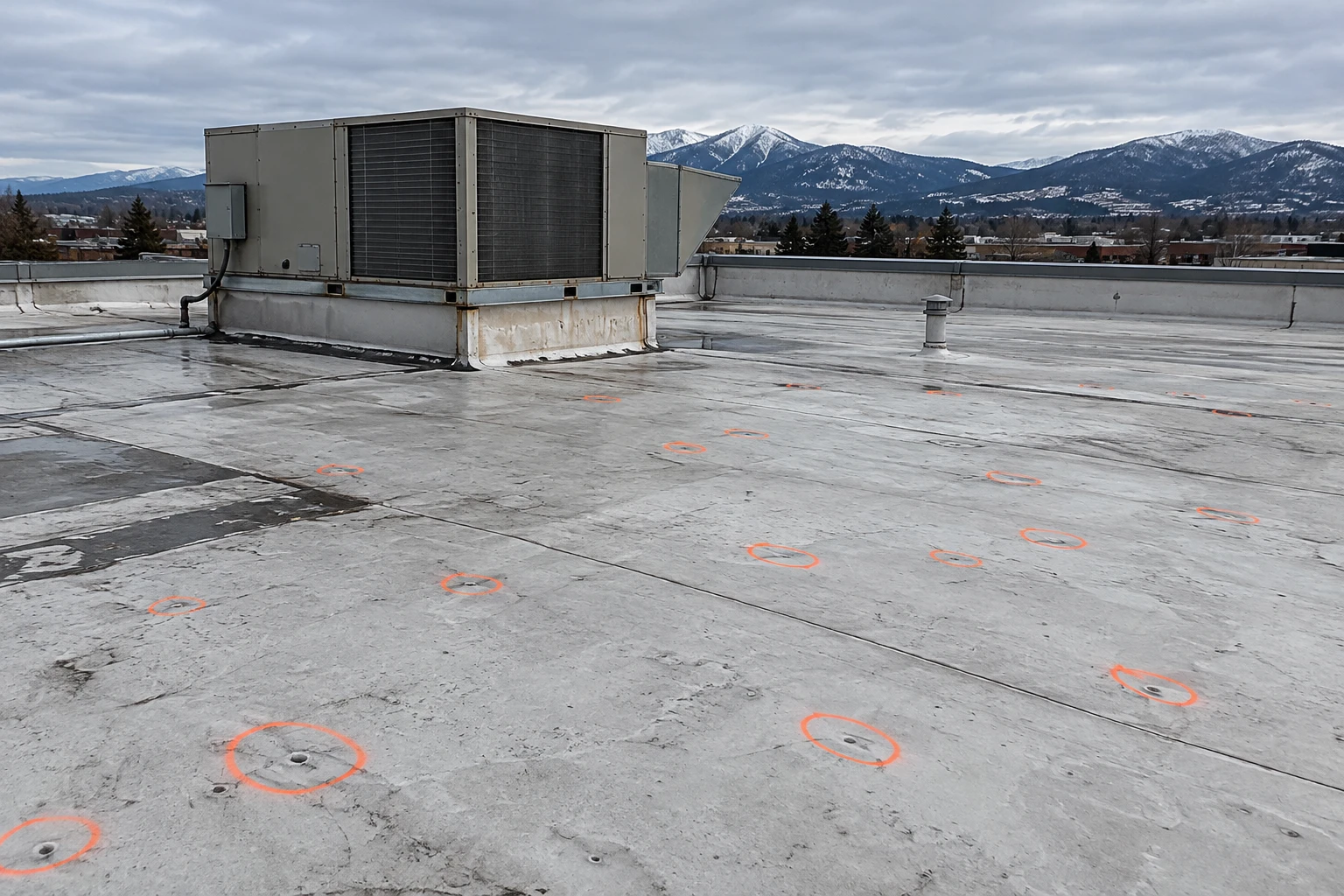
That distinction saves the owner from patching a roof that is not leaking, and from missing a leak that is. When insulation on the roof deck above a cold zone is wet, we find out whether the wetness came from above or from below the deck. The answer sets the repair, and sometimes the repair belongs to the refrigeration contractor and not to us. A wet section of insulation cut out and weighed against a dry one also tells us roughly how long water has been present, which helps separate a recent leak from a slow, chronic one.
What do hail and wind do to the equipment on top?
Hail fell on Bozeman for about half an hour on June 30, 2010, and golf-ball stones fell across much of Belgrade and north Bozeman in August 2013 with gusts up to 89 mph. On a grocery roof, hail bruises the membrane and also crushes condenser fins, which reduces cooling capacity. Wind can lift a loose panel from a unit or peel an exposed edge.
After a storm, I walk the field, mark bruises and look at each unit for damage. A condenser with bent fins goes to the refrigeration contractor, while the membrane report goes to the owner and, if needed, the carrier. The file for hail damage roof repair separates cosmetic marks from damage that lets water in, and it supports a claim for both the roof and the equipment on it.
How do you reroof a store that sells food every day?
The store cannot close, and the cooling cannot stop. So work happens in bays, from the farthest end toward the receiving dock, with the sales floor protected below. Equipment shutdowns are planned with the refrigeration contractor to the hour, and temporary cooling or a short outage window is arranged where a unit has to be lifted.
Dust and debris control matter more here than in most buildings. A sealed deck cover below the work zone and a protected route for delivery trucks keep the food areas clean. Deliveries to the store come first, so roofing trucks and the crane arrive at hours when the dock is quiet. This is what occupied building reroofing looks like when the building is full of perishable goods.
Repair, restore or replace a grocery roof?
Cores decide it. If the insulation is dry and the membrane is sound, targeted repairs at the curbs and drains can add years. If wet insulation sits over the cold zones, replacement saves money, because wet insulation loses its resistance and the refrigeration works harder.
New roofs are also the chance to improve the equipment details: taller curbs, a better flashing sequence and walkway pads between units. Stores in the corridor near North 19th Avenue, which includes WinCo Foods nearby, face the same questions as stores out at Belgrade. A large-format store raises the questions of a big-box retail roof, a grocery inside a plaza shares its roof the way a shopping center does, and a deli kitchen brings grease like a restaurant roof.


Questions About Grocery Store Roofing
We get drips over the frozen aisle on warm days only. Is that the roof?
It may be condensation, not the roof. Water that appears on warm, humid days and never after a thaw usually comes from a sweating duct or line. We run a hose test at the nearest curb and take moisture readings above the tile. If the roof is dry, the repair belongs with the refrigeration contractor.
Will replacing the roof interrupt refrigeration?
Only briefly, and on a schedule. We work with the refrigeration contractor to lift or shut down each unit for a set window, and temporary cooling can cover the gap. Most of the roof is replaced in bays that never touch a running unit.
Should the equipment curbs be raised during a replacement?
Usually yes, when the curb is low. A taller curb lets the membrane and flashing rise above the drift line, which lowers the chance of meltwater reaching the joint. We check the height of each curb against the planned insulation thickness before ordering.
How do we protect food areas from roofing dust?
With a sealed protection layer under the work zone, controlled debris chutes and cleaning at the end of each shift. Deliveries and tear-off are timed to avoid peak receiving hours.