
Commercial Roofing in Four Corners, MT
Four Corners in Bozeman and the Gallatin Valley
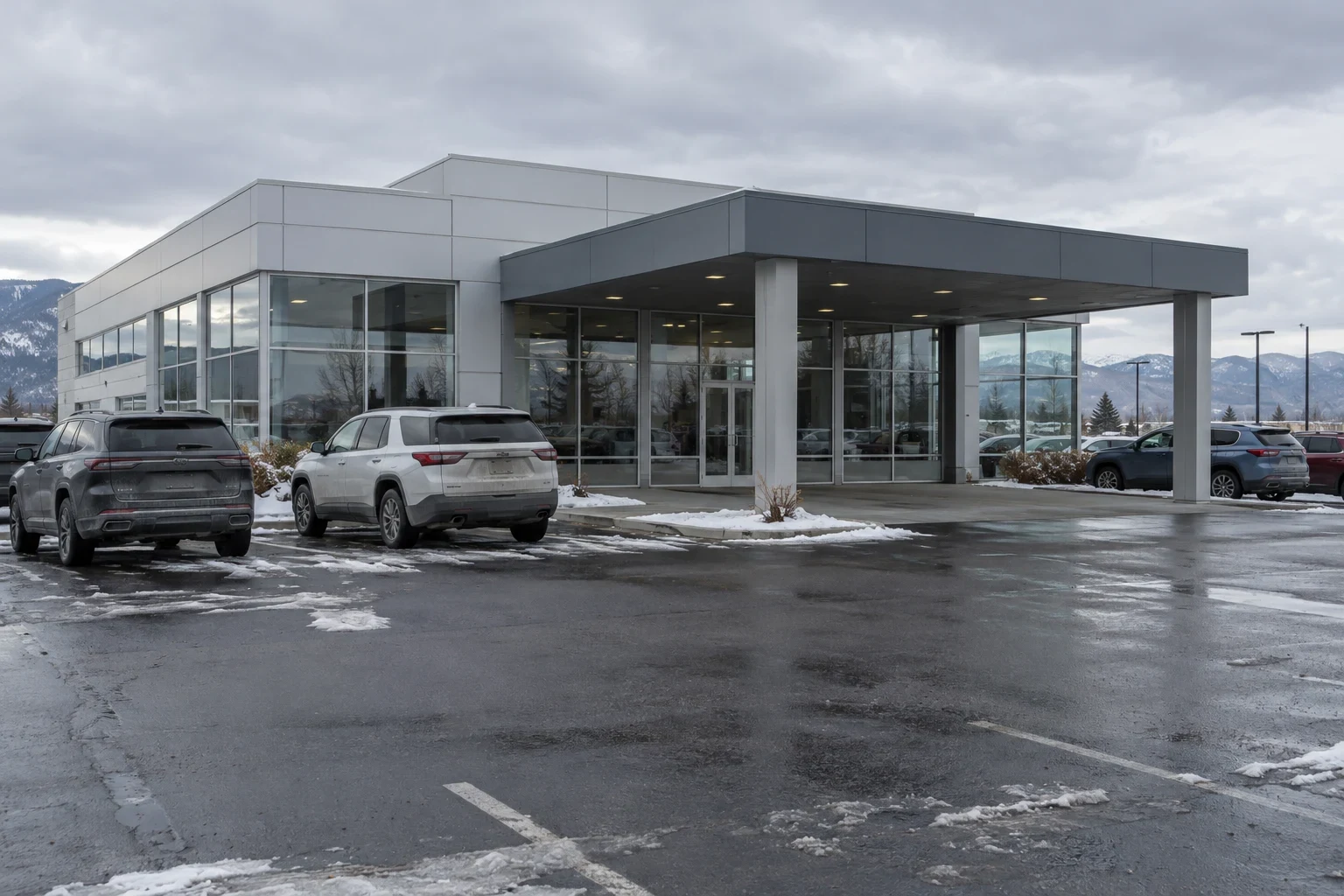
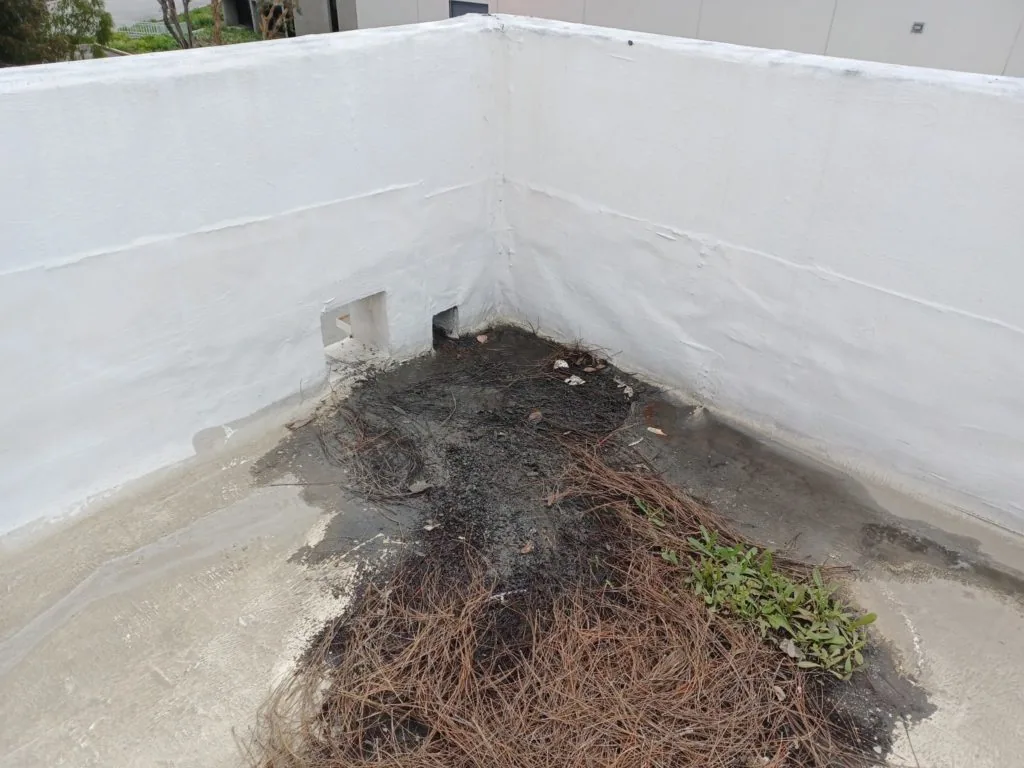
The roofs at a highway crossroads take the wind from every direction and the trucks from three roads. Four Corners sits seven miles or so west of Bozeman, where U.S. 191 crosses Montana 84 and Montana 85, and the last of those runs about 9 miles north to Belgrade and I-90. The commercial buildings there, retail, service shops, small industrial and warehouse space, stand near the Gallatin River on the town's western edge, and after a Gallatin Valley winter their roofs show it. Ice sits at the low eave, grit sits in the scupper and a lifted corner shows where the last gust got a grip. Which corner of your roof gets the wind first?
We inspect, repair and replace commercial roofs in Four Corners, and we describe each one plainly before anyone prices work.
What does a fast-growing crossroads do to roofs?
Residents numbered 5,901 at the 2020 census, nearly twice the 2010 count. Growth like that tends to bring new commercial roofs, built to many specifications by many crews, and defects in young roofs show up in the first few winters.
That makes the turnover walk and the first-year walk valuable. We check seams, flashings, drains, curbs and edges, photograph each detail and list open items while the builder is still responsible. Later, the same photographs give the owner a baseline. A roof with a dated history is easier to insure, finance and sell, and a roof without one is a guess.
New-roof defects follow a pattern. Seams welded on cold or dusty mornings, flashings that were pulled during framing, penetrations cut after the roof was finished and drains set slightly high all appear within the first few winters. Our turnover list names each one and sends it back to the installer with a photograph and a date, so the fix is not left to the owner's budget.
Why does a highway crossroads matter for wind?
Four Corners sits beside the Gallatin River at roughly 4,718 feet. The nearest wind records come from elsewhere in the valley, where gusts reached 89 mph over Belgrade in August 2013 and 65 mph on Triple Tree Road in August 2023. They show what valley gusts can reach.
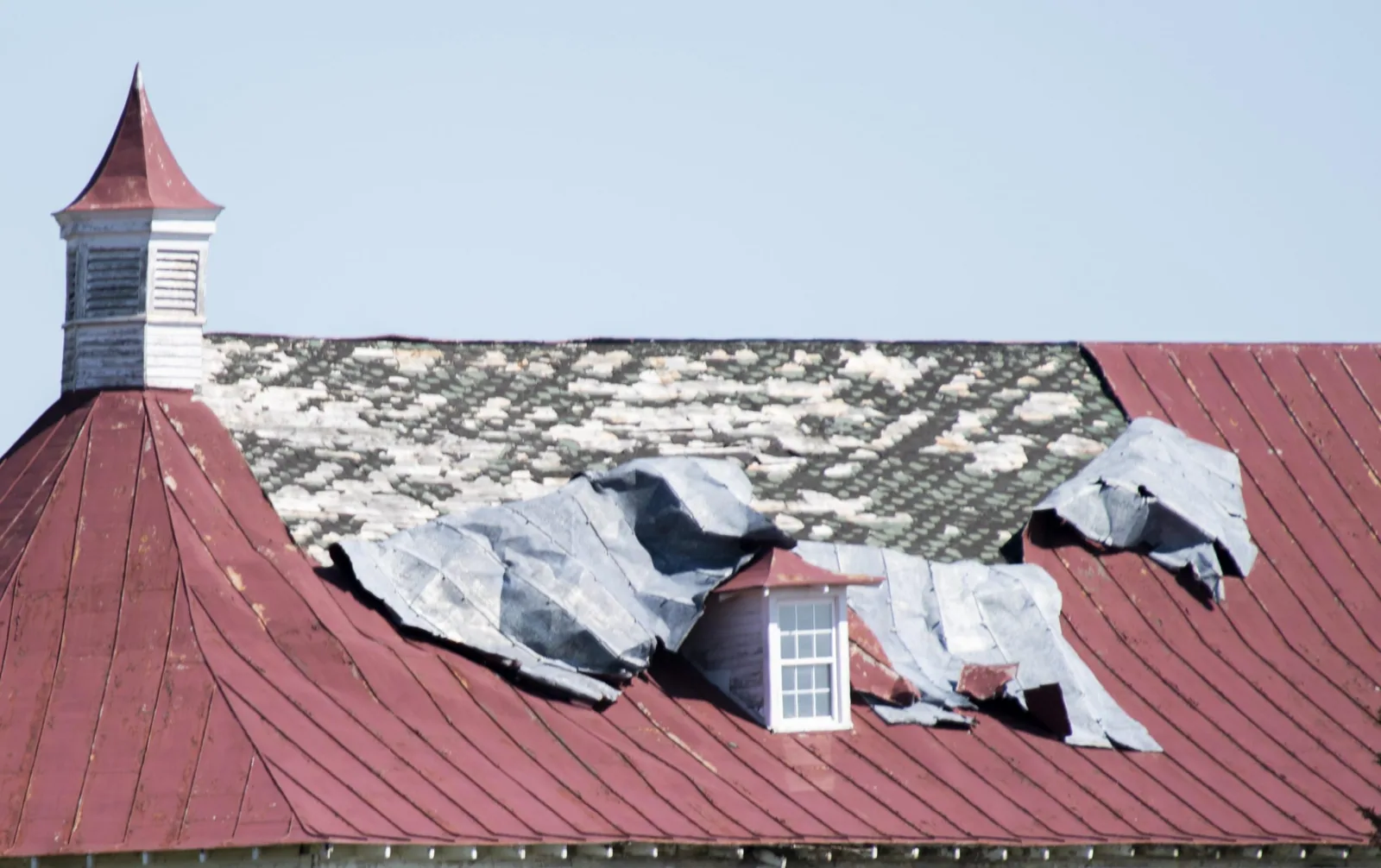
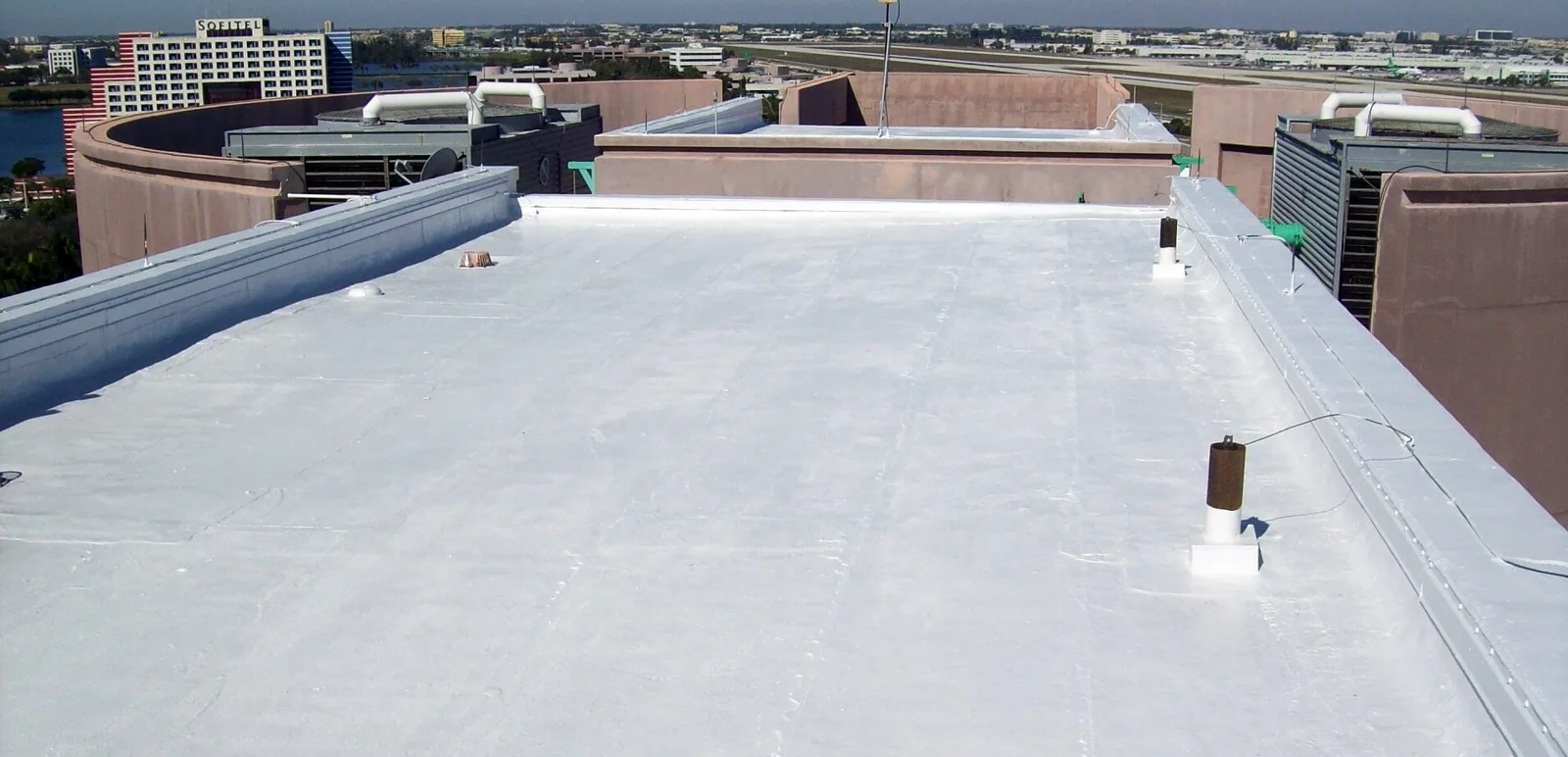
Wind starts at the edge. We check coping, edge metal, flashing at walls and the last row of fasteners on every walk. A loose edge costs little to fix in the fall and a great deal after a gust. Wind damage repair here starts by sealing any lifted edge and then measuring how far the lift ran under the field.
Which buildings need which kind of attention?
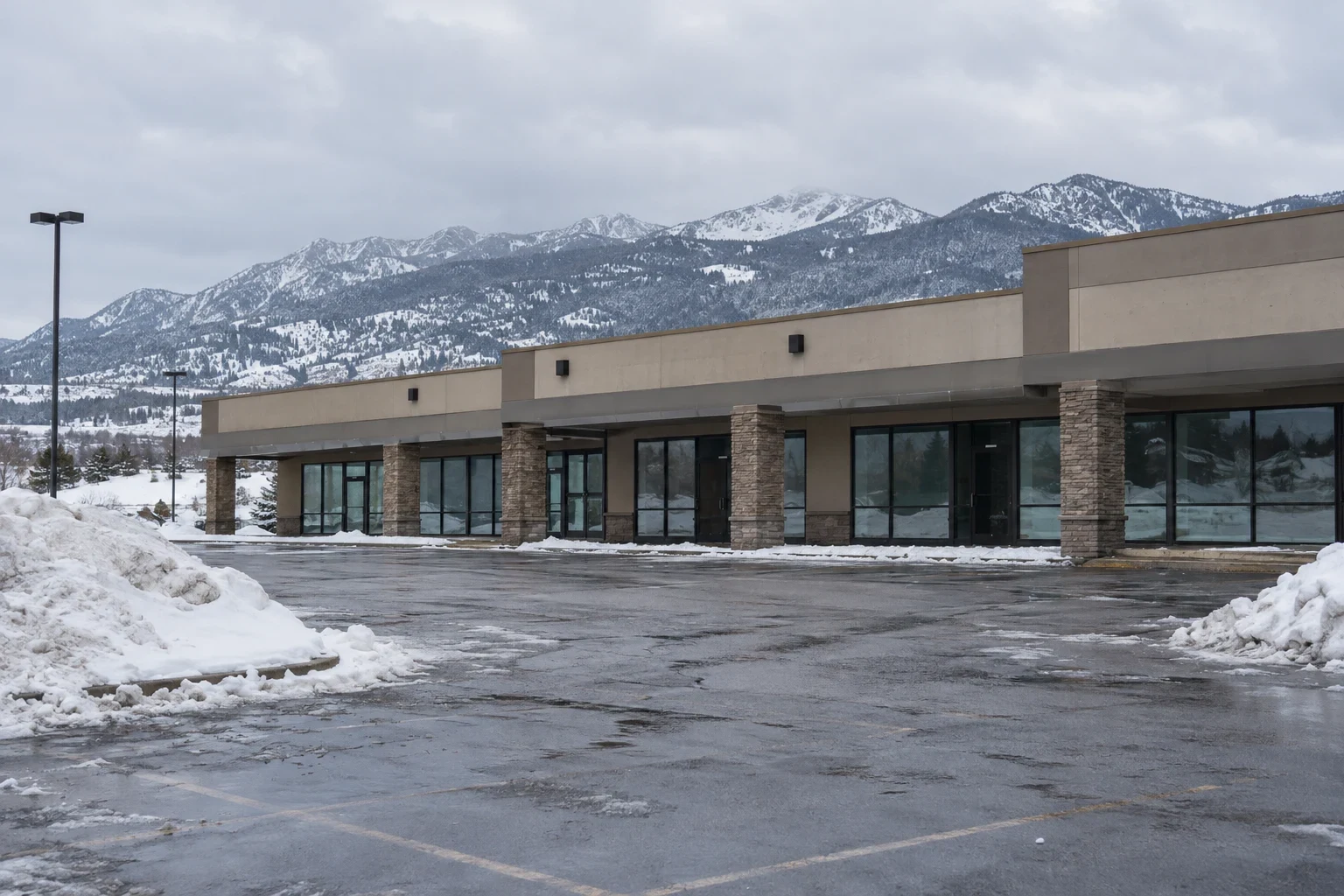
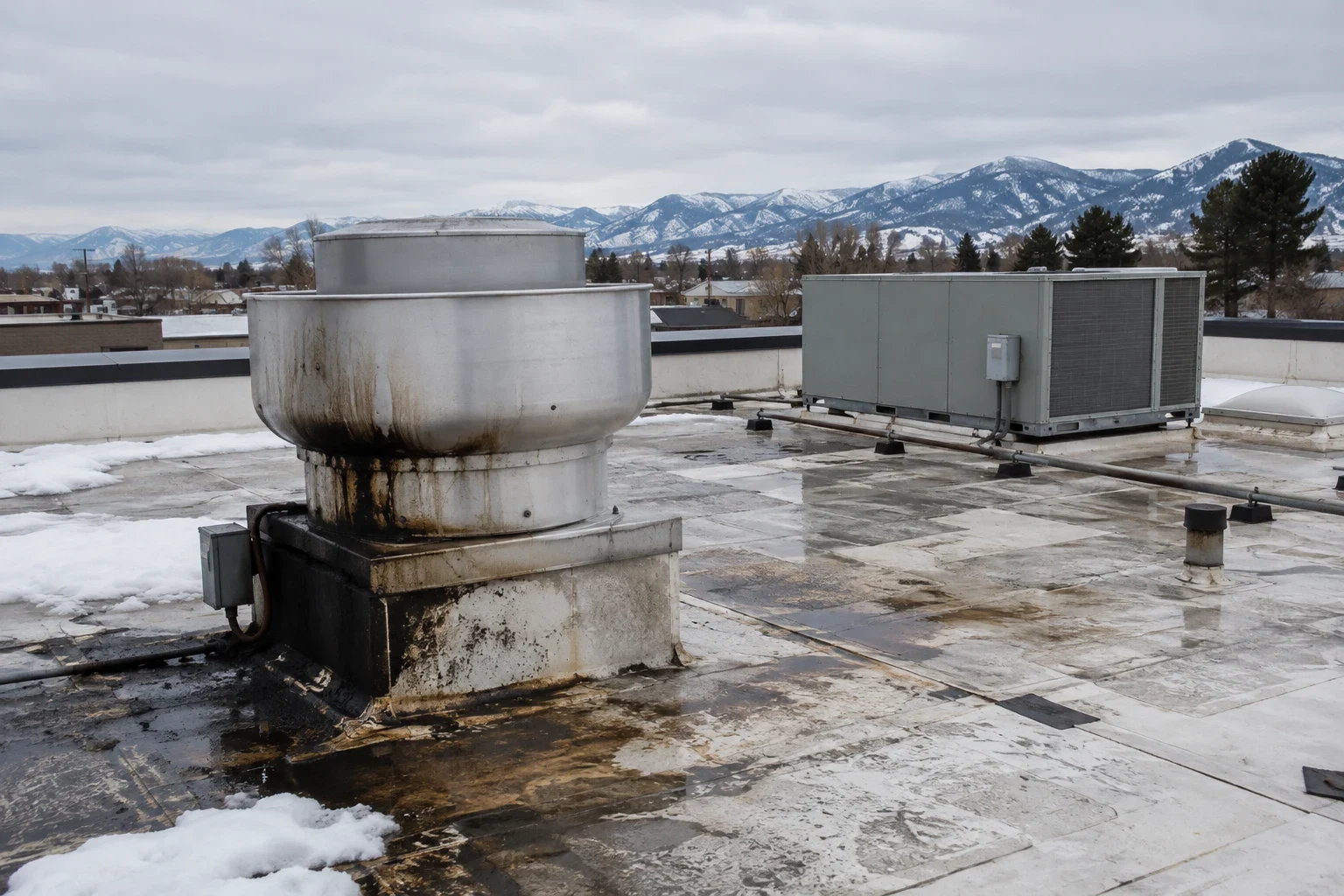
A shopping center roof carries many tenants, and a leak can start over one and drop in another, so we map each space to its roof section. A restaurant roof adds exhaust and grease, and the membrane around the fan needs a sheet that tolerates both. An auto dealership adds a service bay with large doors and heavy ventilation. Small warehouse units, listed in the Four Corners commercial corridor, belong to a different category again.
Each roof gets walked, its seams probed and its contents written down. The findings go on a sheet with photographs and a ranking: repair now, repair this season or watch.
Hours and customers set the pace. A restaurant needs a quiet roof over the dining room at lunch. A dealership needs its service bay clear in the morning. A retail strip needs entries open all day. We read those routines at the first walk and put them into the phasing sheet, because the schedule that fits the business is the schedule that holds.
How does snow behave on a flat commercial roof here?
Bozeman logs about 91 inches of snow a year, and Four Corners shares the valley and the long run of thaw cycles. Bozeman's listed ground snow design is 50 psf. Drifts collect behind parapets and equipment and melt unevenly, and water that reaches an iced or clogged drain ponds.
Drains and scuppers are checked before the first heavy snow and again after the thaw, and each eave's fall zone is mapped for guards or a re-sloped edge. A slab of snow over a customer door is a liability, and a fix is much cheaper than a claim.
What do hail marks tell us after a storm?
Golfball stones hit Bozeman for roughly thirty minutes on June 30, 2010, while baseball-size ones landed east of Gallatin Field. Hail of 1.50 inches was reported near Bozeman Hot Springs in May 2023, along the same Gallatin River that runs past Four Corners.
Once a storm has passed, the roof is walked in a grid, bruises and dents are marked with a scale and a core comes out of the deepest one. Crushed insulation under a bruise means the sheet will crack there in a later freeze. The finding goes to the owner and the insurer together, with dated photographs. A recover is possible only when the insulation is dry.
How do we schedule work around open stores and shops?
Retail and service businesses cannot close for a roof. The roof is divided into sections that can be dried in each day, customer entrances and loading areas stay clear and the laydown yard sits where cars do not cross it. Larger scopes wait for the warm, dry stretch.
The same sequence serves neighbors in the Copper Ranch Road business area and in Belgrade to the north. A commercial roof inspection each spring and fall keeps the file current, and an extra walk after any storm keeps it accurate.
At closeout the owner receives the roof plan, the drain map, dated photographs and warranty terms in one file. The file also records the highway side and the river side of the roof separately, since wind, grit and debris reach them differently, and a repair log by side shows where the next dollar belongs. Staging gets the same care as the roof itself at a highway crossroads. Trucks arrive from three roads, customers pull in off the highway, and a lift or a dumpster in the wrong place blocks a fire lane or a delivery. The crane position, the truck route and the waste container are drawn on the site plan before the date is set, the property manager signs it, and any change goes out as a revised sheet the same day, so nobody works from a stale drawing.
Questions About Four Corners
Should a young roof be walked before it leaks?
Early defects are cheapest to fix and easiest to prove. A turnover walk and a second one near the first anniversary record seams, flashings and drains while the builder may still owe the repair.
What makes a crossroads roof different from one in town?
Traffic and grit from three roads, plus wind that finds edges and corners. Fasteners, edge metal and flashing need closer checks, and storm records matter more.
Can a shared retail roof have one repair plan?
Yes, and it should. A plan that maps each tenant space to its roof section lets the landlord fix the true entry point once, instead of chasing drips unit by unit.
What documents help sell a commercial building?
The roof plan, the last inspection report, the warranty terms, the repair log and photographs. Buyers' lenders want them, and ready copies speed the review.
How soon after hail should the roof be checked?
Within a few weeks and before the next freeze. Early photographs give a clear before and after, and a core from the worst bruise shows whether the insulation was hurt.