
Medical Office Roofing in Bozeman, MT
Medical Office Roofing in Bozeman and the Gallatin Valley
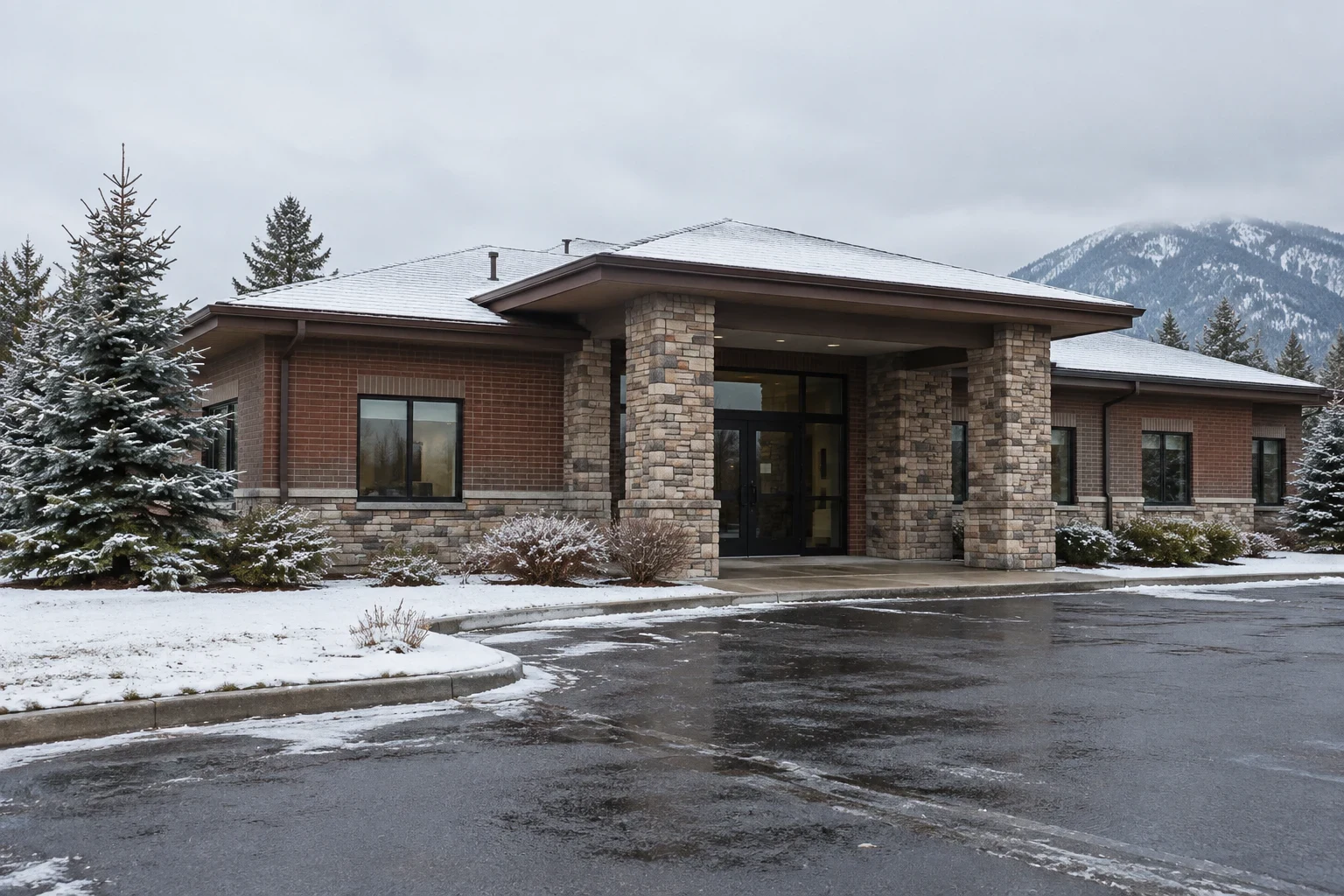
A clinic roof shows its problems at the patient entrance. The canopy edge holds a gray ridge of ice into March, the downspout beside the door is frozen at its outlet and a slab of snow hangs over the walk. Patients arrive with canes, walkers and appointments, and the roof is the first thing that can hurt them. Bozeman, MT sees around 91 inches of snow most years, and Bozeman Health is among the city's largest employers. What hangs over your front door in February?
We inspect, repair and replace roofs on medical offices and clinics across the Gallatin Valley, and we plan the work around patients and staff before we order material.
Why do entries and canopies come first?
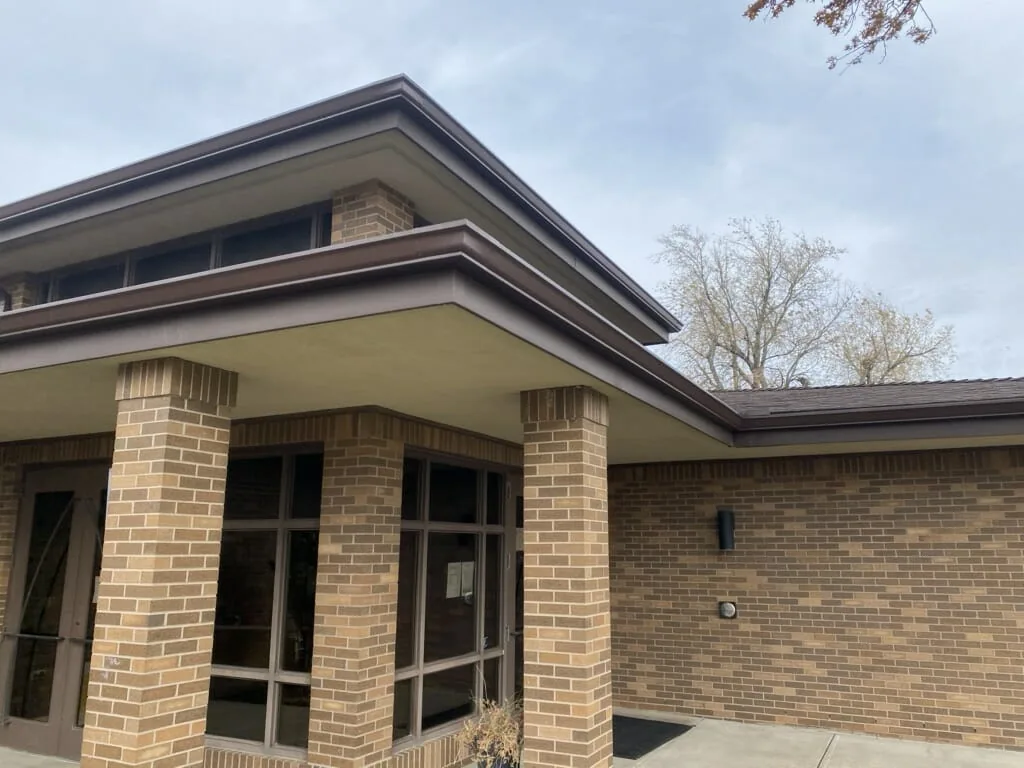
Entries combine three risks: people, snow and water. A canopy or low roof over a door collects drifts, and the meltwater refreezes at the edge. Gutters and downspouts that ice over send water across the walk. We check edge metal and gutters at every entry, map the fall zones and list where snow guards, heat cable at the outlet or a re-sloped edge would help.
Bozeman is designed for 50 psf of ground snow, and a low roof beside a taller wall collects drift. We walk those spots first after every heavy storm. A fix at the entry is the cheapest safety work on the property, and it also cuts the number of ceiling stains below.
Accessibility rules matter at entries too. A ramp or a walk under an iced canopy is a fall risk for someone with limited mobility, so we raise those spots to the top of the repair list. The sheet ranks them above cosmetic items and gives the manager a date for the fix.
What do medical exhaust and equipment do to the roof?
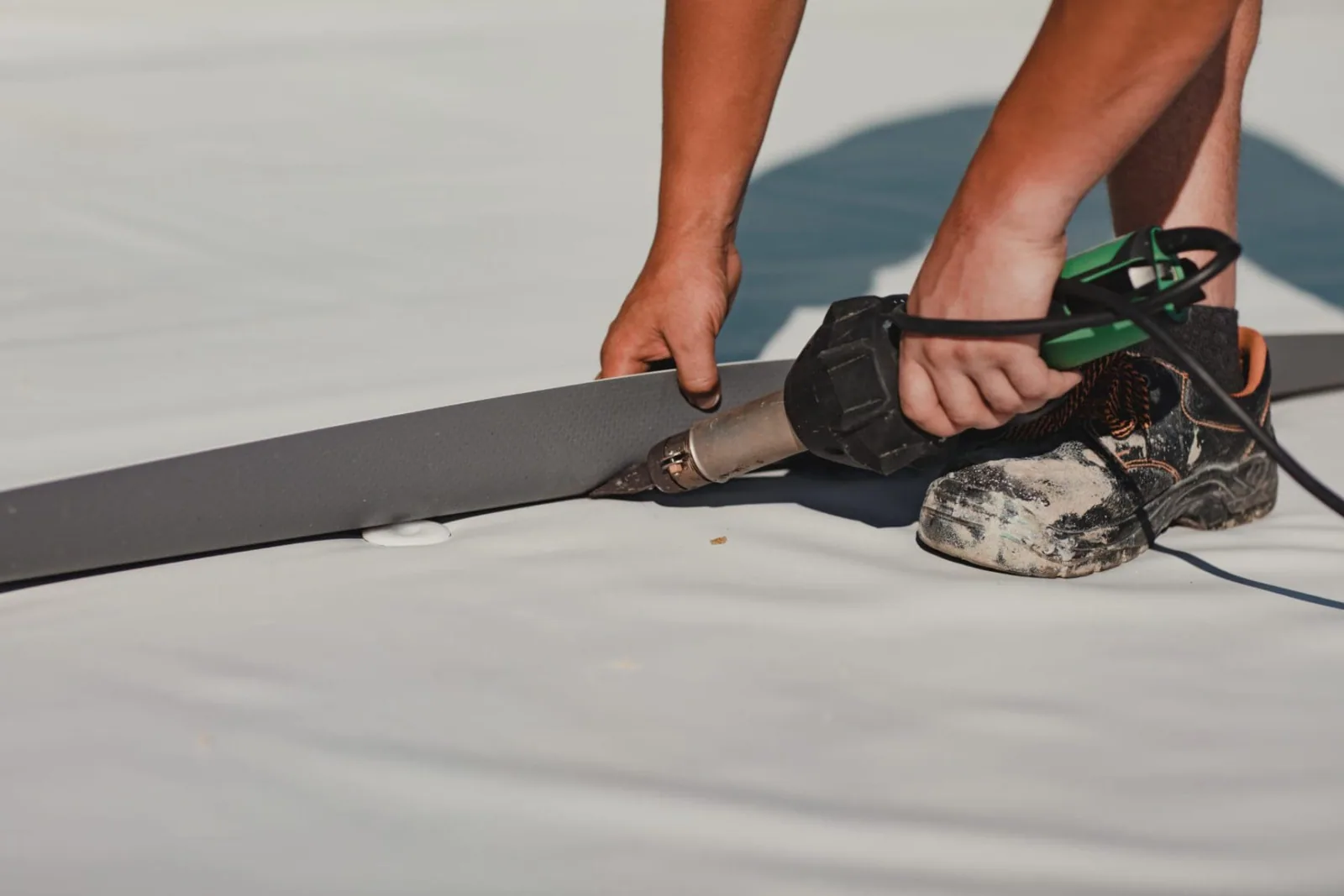
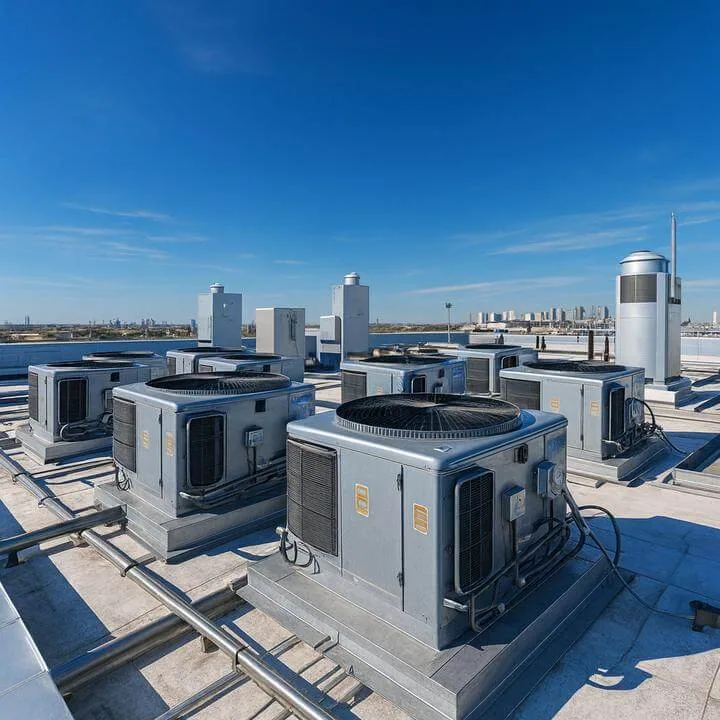
Clinics and offices carry exhaust fans, makeup air units, vent stacks and sometimes lab or imaging equipment. Each is a penetration, and vent stacks may release vapors that soften some membranes. We map every unit and stack, check the sheet around each and recommend a protective pad or a different sheet where exposure is heavy. A PVC sheet near exhaust is a common answer.
Roof-mounted equipment also vibrates and carries weight, so each curb and support is checked for movement and sealant failure. Intake locations matter for roof work, because dust, fumes and odors must not be pulled into treatment rooms. We note every intake on the plan before any work begins.
Medical gas lines, vacuum exhaust and generator stacks add another layer of detail on some buildings. Which of those a given clinic has shows up on the roof, so we trace it, note the clearance around each and keep crews and materials away from anything marked as life-safety. Where a line must be shut for roof work, the facility manager decides when, and the schedule follows.
How do we keep patients and staff comfortable during roof work?
Noise, odor and dust are the three complaints. We schedule loud work for off hours or the start of the day where the practice allows. Low-odor methods and adhesives are chosen where intakes are close. Air intakes get covers or temporary shutoffs agreed in advance with the facility manager. Rooms directly under active work are identified so schedules can be moved around them.
Hot asphalt and torch work are usually poor fits for a clinic, so cold-applied, heat-welded or mechanically attached systems are common. Occupied building reroofing sets these rules in writing, and the sections are small enough to be dried in each day.
Waste and debris handling is part of the plan. Chutes and hoists are placed away from patient entrances and ambulance approaches. Loose material is bagged and moved before the building opens, and the walk and lot are swept at the end of each day. Patients should see a tidy site and never see a roofer's tools.
What do storms do to a medical building roof?
Golfball stones battered Bozeman on June 30, 2010. In early August 2013, 89 mph gusts and stones that size reached Belgrade and north Bozeman, and in May 2023 hail of 1.50 inches fell beside the Gallatin River northwest of town. Hail bruises membranes and dents metal, and a leak over an exam room closes the room.
After a storm we walk the roof, mark bruises and check units and flashings. A hail damage repair record includes photographs, a scale and a core cut at the deepest bruise. The finding goes to the owner within days, so repairs can be booked before the next freeze.
What happens when a leak starts over a patient area?
We stop the water first. A temporary repair or cover goes on, the crew photographs the damage and the facility manager is told which rooms are at risk. Then we trace the leak back to its entry, using the deck slope and a moisture scan, before choosing a permanent repair. A leak repair that treats the stain instead of the entry returns with the next thaw.
Interior finishes are not ours to repair, but we document the roof side so the practice can support a claim and schedule ceiling work. Our emergency response runs around the clock all week, holidays included, and the first call goes to a person who can send a crew.
The follow-up matters as much as the first visit. We check the repair after the next thaw and again after the next storm, and we photograph the area each time so the facility manager can see that it held.
What should a practice keep on file?
The roof plan marking each unit and stack, the drain map, the last condition report, the warranty terms and a dated list of repairs. A practice that leases its space should know whether the roof is the landlord's or the tenant's responsibility, and the file shows what was done and by whom. A clinic in the Montana State University area gets the same file as one downtown.
An office building that houses a clinic suite shares the roof with other tenants, and a hospital campus raises the bar on all of this, and a clinic attached to one inherits some of its rules. We ask early about infection control, and we write the answer into the scope.

Questions About Medical Office Roofing
Can roof work happen while the clinic sees patients?
Usually yes, in sections, with noise and odor controls and shielded intakes. Quiet procedures or sensitive rooms may need a schedule shift. We agree on the plan with the facility manager before the crew arrives.
What should I do about ice over the main entrance?
Keep people clear of the zone, photograph the ice and call for a walk. Short-term, clearing the downspout outlet and the edge reduces risk. Long-term, we trace the heat loss and fix the edge detail.
Do I need a different membrane near exhaust?
Often a sheet that resists vapor and grease holds up better. We check what comes out of each vent and match the sheet at that spot, even if the rest of the field stays the same.
Who is responsible for the roof in a leased clinic space?
The lease decides. The roof file shows the cause of a leak and the repair history, which resolves most disputes between landlord and tenant before they grow.
How fast can a crew respond to a leak over an exam room?
Calls are taken day and night. The first visit stops the water and takes photographs. Travel time from our base depends on where the building sits, and we state it when the call is booked.