
Skylight, Curb and Penetration Flashing in Bozeman, MT
Skylight, Curb and Penetration Flashing in Bozeman and the Gallatin Valley
Walk a school or a fire station roof after a Bozeman, MT winter and count the openings. A row of skylights along the gym. Two vent stacks. A boot around a conduit someone added in a renovation. Each is a hole in the roof that has been sealed with a curb, a collar or a bead of sealant, and each has been through about 91 inches of snow and months of thaw cycles since the last time anyone looked. A Fire Station 2 skylight on North 19th Avenue was among the things damaged when golf-ball hail hit Bozeman on June 30, 2010. Which opening on your roof is the oldest, and who sealed it?
We start there and work outward.
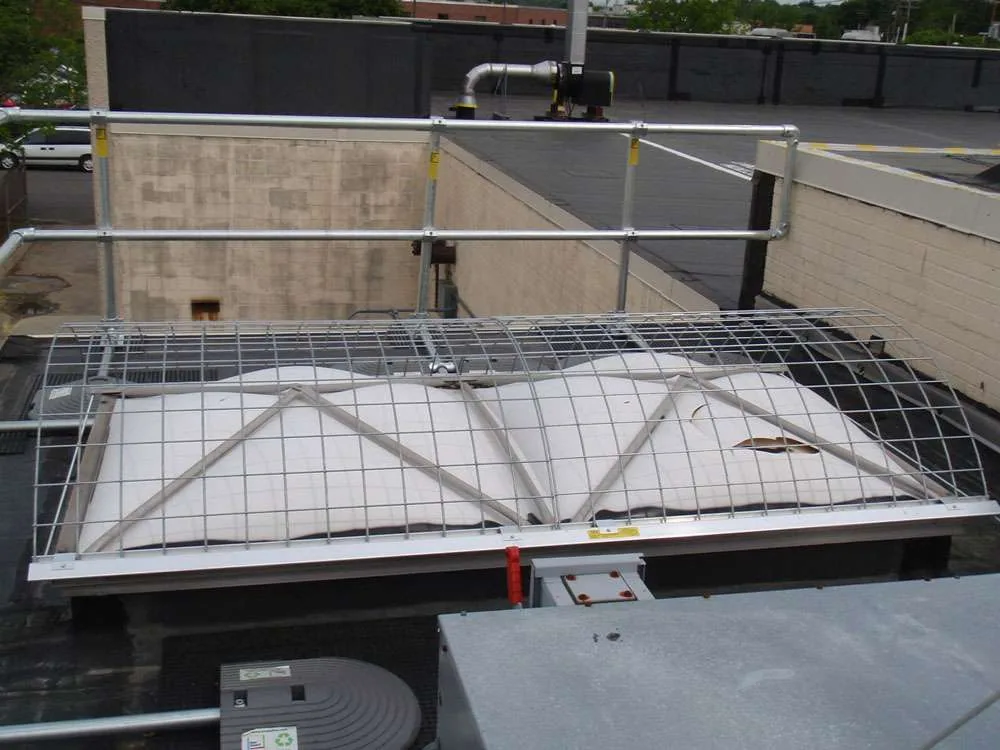
Why do penetrations leak first?
A penetration interrupts the membrane. Water that runs across the roof has to be turned around it, and the seal is the weak point. The materials meet at different rates of movement: metal, plastic, membrane and masonry each expand and contract by a different amount. With a January mean low near 15 degrees, a record low of minus 46 and daily swings through the thaw, each opening moves every day of winter.
Snow adds load. Drifts pile against curbs and push meltwater up behind the flashing. Ice forms at the base of a vent and pries at the collar. Hail cracks plastic domes and dents metal frames. A penetration that was sealed once and never looked at again is a likely source of a leak on a building with a sound field.
What fails on a skylight?
Four things fail. The dome or glazing cracks from hail or age. The curb flashing lets go from the membrane. The frame seal dries and opens. Or the whole unit leaks around the perimeter through a gap nobody sees. Skylights over gyms, atriums and corridors are also a safety item: a cracked dome is a fall hazard for anyone on the roof and a leak path for the room below.
The 2010 storm is a reminder to check every glazed opening after hail. We inspect each skylight from the roof and from below, test the curb with a probe and photograph the seal. A cracked dome is replaced. A failed curb is rebuilt with new flashing, proper height and a termination bar. A unit past its life is removed, and the opening is closed with a roof panel if the owner no longer needs the light.
Daylight panels in metal roofs are their own class. A standing seam roof carries panels at the seams or in cut openings, and each cut is a penetration through a system that is otherwise tight. We check the clips on either side, the closures and the sealant, and we make sure no panel has been cut across a rib without a header. Where a skylight serves a high bay or a gym, access for replacement is planned too: a crane pick on a tight lot is a scheduling problem, not just a roofing one.
What about pipes, vents and conduit?
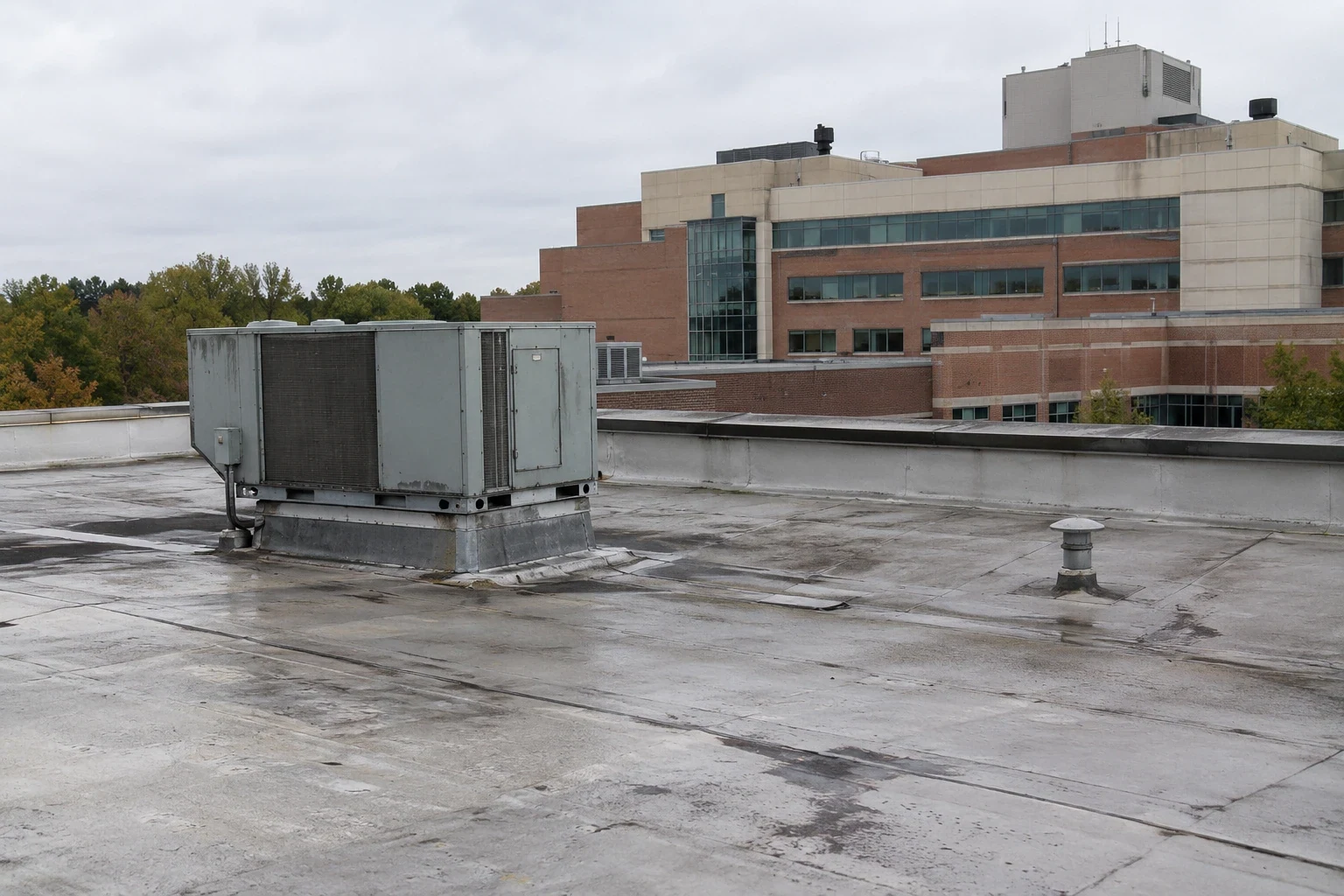
Pipe boots are the cheapest penetration detail and easy to neglect. A rubber boot cracks in cold and sun, and a leak starts at the collar. We replace failed boots with new ones, or with a liquid-applied flashing resin on clusters of pipes where a boot cannot fit. Pitch pockets shrink and open; we rebuild them with proper fill and a cap.
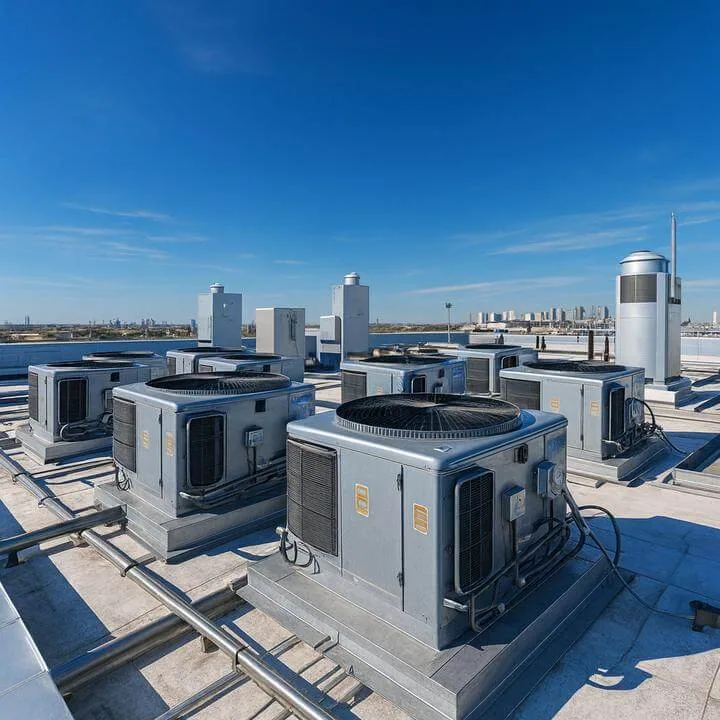
Conduit and cable added after the roof went in are a different case. A technician cuts a hole, runs a line and seals it with whatever was in the truck. We find those, number them on the plan and reflash each properly. Rooftop unit connections get the same check, and rooftop equipment curbs and supports are handled together with the pipes that serve them, since a unit and its lines move as a set.
Each repaired opening gets a number on the roof plan, a before and after photo and a note on the material. The list becomes the baseline for the next visit. An owner who has it can answer the question of what was sealed, when and by whom, and the answer is worth money when a warranty or an insurer asks.
How do drifts and ice change the detail?
Height is the answer. A curb or collar that is a few inches above the membrane works in a dry climate. In a place with a 50 psf ground snow load and months of snow on the roof, flashing has to rise above the expected drift. We estimate where drifts will form against parapets and walls, then set flashing height above that line. A curb set low where drifts form is asking for a spring leak.
Ice at the base of a vent is another problem. Warm air venting through a stack melts snow, and the meltwater refreezes at the base. We add a collar that sheds water away, and we consider a heat break if the stack runs hot. A failed detail is traced and rebuilt as in flashing failure repair, and a leak repair visit starts at the nearest penetration to the stain.
Thaw cycles are what finish a poor seal. A bead of sealant that cracks in January takes in meltwater at noon and freezes at dawn, and the crack widens a little each cycle. We choose materials rated for the cold, and we do the work in the cold-weather adhesive window, which in Bozeman means late spring through early fall.
Which buildings have the most openings?
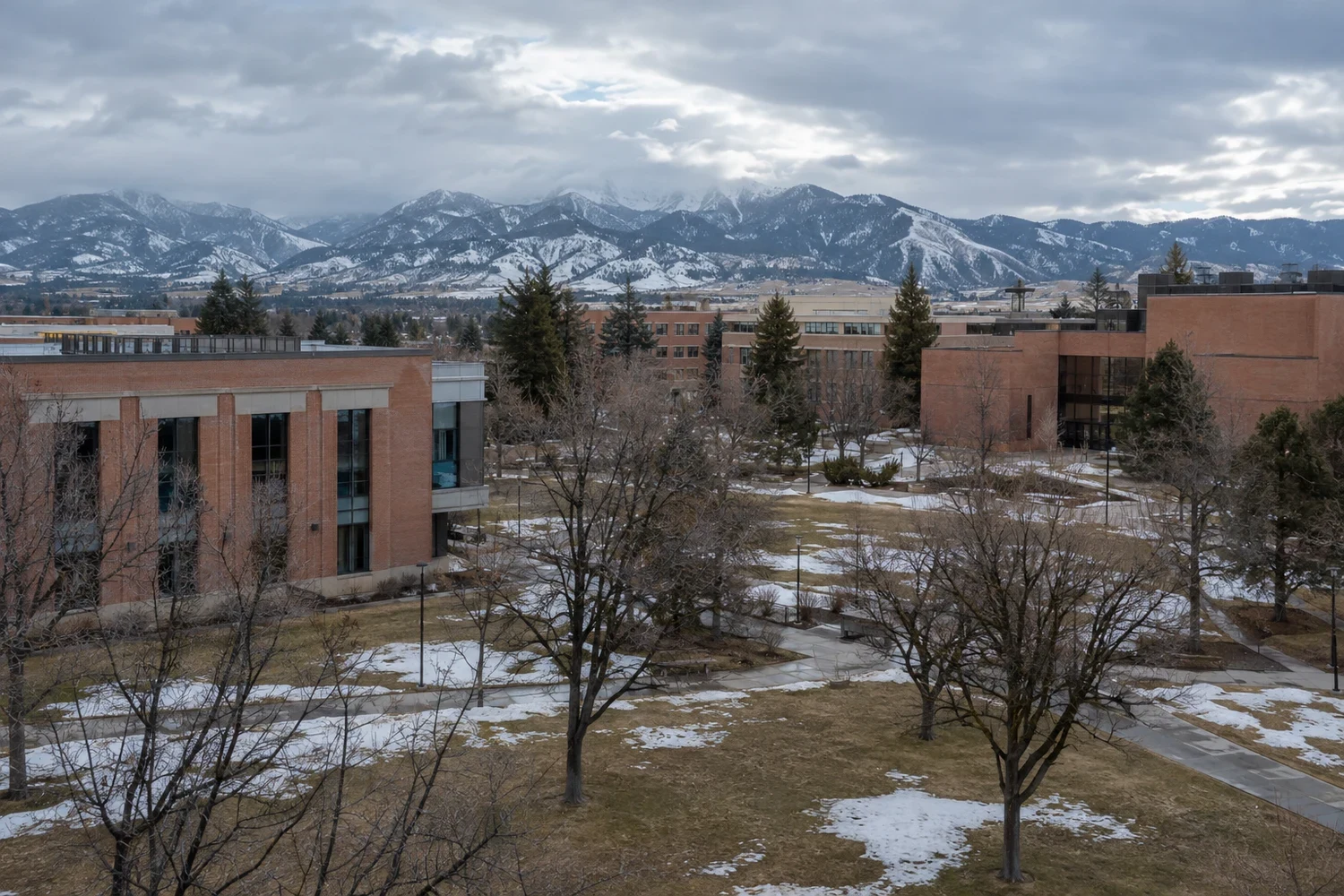
Schools, labs, hospitals and gyms have the most. Montana State University's campus spreads over 1,170 acres on Bozeman's south side, and lab and research buildings are the kind that carry vents and exhaust stacks. In the Montana State University area, the June 2010 storm broke dozens of windows, and the roofs deserved a look too.
Retail on the North 19th Avenue corridor has fewer skylights but plenty of exhaust fans, vents and signs on the roof. Medical buildings add medical gas lines and exhaust, where a leak has a higher cost. A hospital roof gets a penetration-by-penetration inventory because many openings sit above care spaces.
What do storms do to penetrations?
Hail cracks domes and dents frames. Wind lifts light covers and loosens collars. After the early August 2013 storm, with golf-ball-size hail and 89 mph gusts across Belgrade and north Bozeman, a roof walk would have shown which collars had lifted and which domes had cracked. We make that walk after any storm of that size, and we photograph each opening.
The storm damage roof repair process includes a penetration check, and edge pieces around openings are verified with edge metal and coping work when they sit at a roof perimeter. The goal is a roof where every opening has a recorded condition and a date.
Questions About Skylight, Curb and Penetration Flashing
Can a leaking skylight be repaired instead of replaced?
Often. If the glazing is sound and the leak is at the curb or frame seal, we reflash or reseal it. If the dome is cracked or the frame is bent, replacement is the better value. We check from the roof and from below before recommending either.
How often should penetration seals be checked?
Twice a year, in fall and spring, and after any hail event. A dated photo of each opening from visit to visit shows movement before water does.
What is the best material for a pipe boot?
It depends on the roof and the pipe. Preformed boots work on single pipes. Liquid-applied resin works on clusters or odd shapes. We choose by the membrane and by how the pipe moves.
Should unused skylights be removed?
Often yes, if the owner no longer needs the light. Removing a skylight and closing the opening removes a leak path and a fall hazard. We price both options.
Does reflashing affect the roof warranty?
It can help or hurt. Warranties usually ask for approved details and materials. We read the paperwork and use the manufacturer's details so coverage is kept.