
Aircraft Hangar and Aviation Building Roofing in Bozeman, MT
Aircraft Hangar and Aviation Building Roofing in Bozeman and the Gallatin Valley
A hangar roof is a long span with nothing under it. There are no columns to break the clear floor, so the roof carries its own snow across the whole width, and the tall door at one end is a wind sail that can pull on the roof edge every time a gust comes down the valley. After a Gallatin Valley winter, what I find on aviation buildings is ice at the door head, drifts against the end wall and fasteners that have worked up a little in the panel ribs.
The airport beside Belgrade sits at 4,473 feet. If the roof over your aircraft started dripping in March, where on the span did it drip, and was the door open at the time?
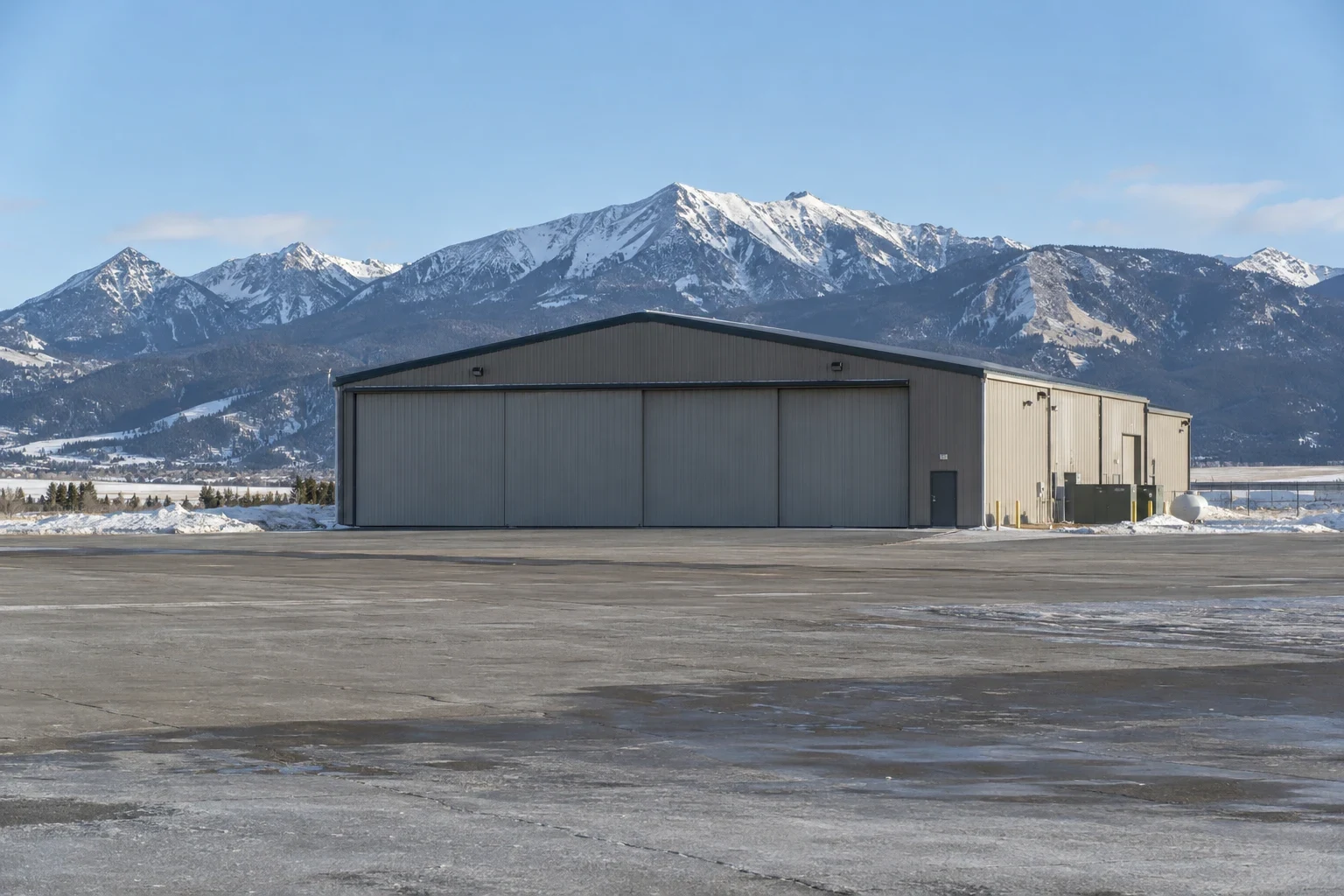
What is different about a clear-span roof?
A conventional commercial roof has columns every thirty feet or so, and the framing is light because the spans are short. A hangar spans sixty feet, a hundred feet or more, with deep trusses or rigid frames carrying a metal deck or standing-seam panels. That deck has to carry snow, wind uplift and the weight of anything hung from it, such as a crane rail, a heater or a fire suppression line. A hangar roof is also the cover over the most expensive thing on the property, so a slow drip that would be a nuisance over a stockroom becomes a claim over a wing or a cowling. I treat every stain on the interior ceiling as a note on the span, mark its position by bay, and compare it to the panel laps and the purlin lines above. A small amount of ponding or a drift that lasts a month adds load where there is the least reserve.
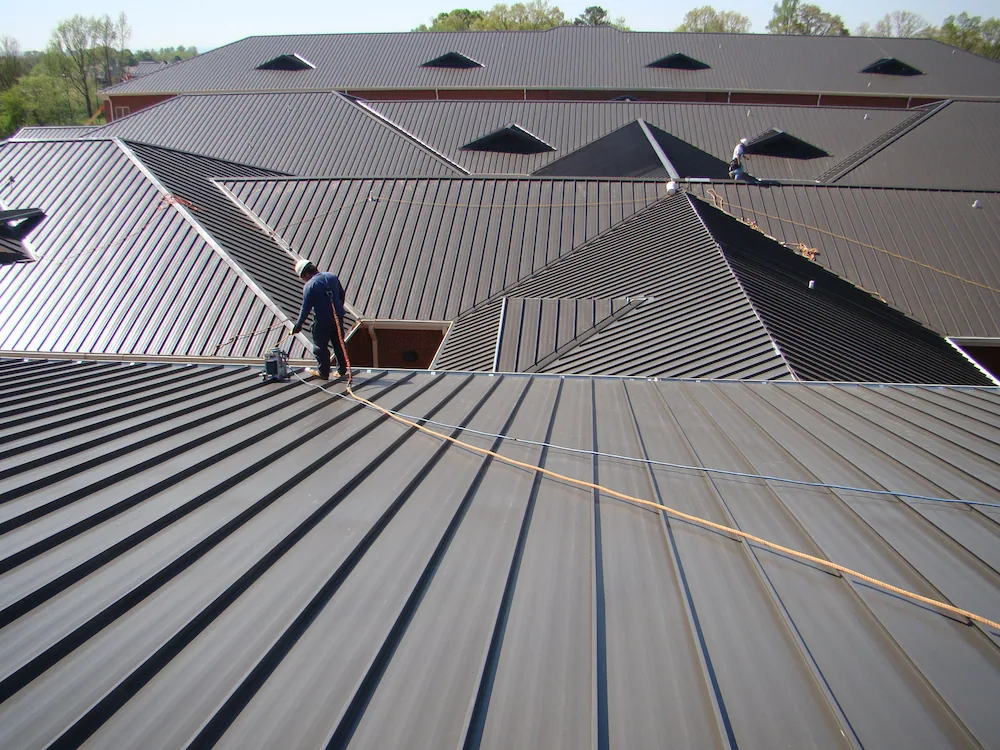
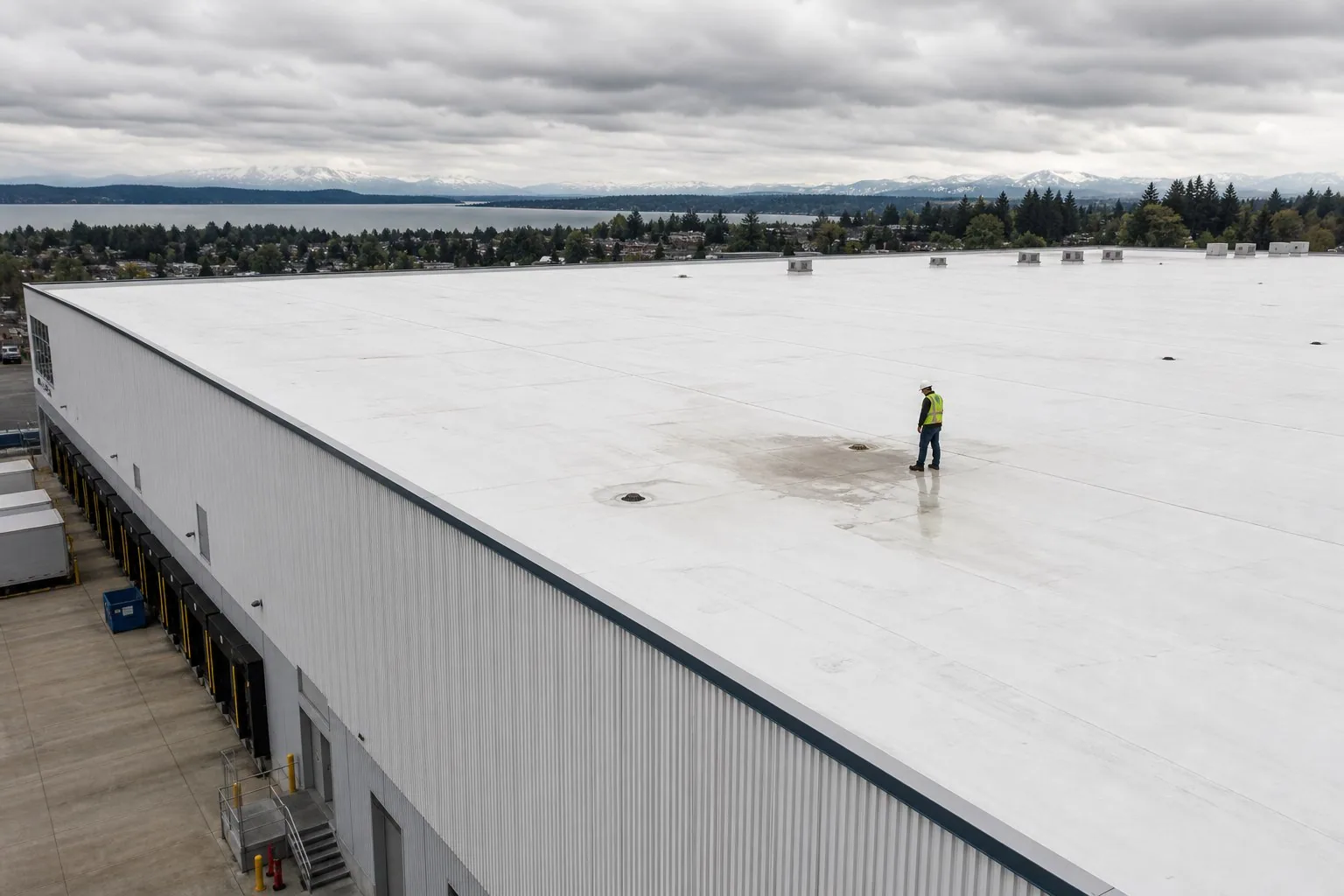
That is why a hangar roof deserves more attention to drainage and snow than its simple shape suggests. A low-slope hangar with a membrane over rigid insulation has the same drain and scupper details as an office roof. A hangar with standing seam metal panels depends on clips that let the panels slide as the temperature swings, and if the clips are set wrong, the panels bind and the seams open.
How does airport wind test the edges and the door head?
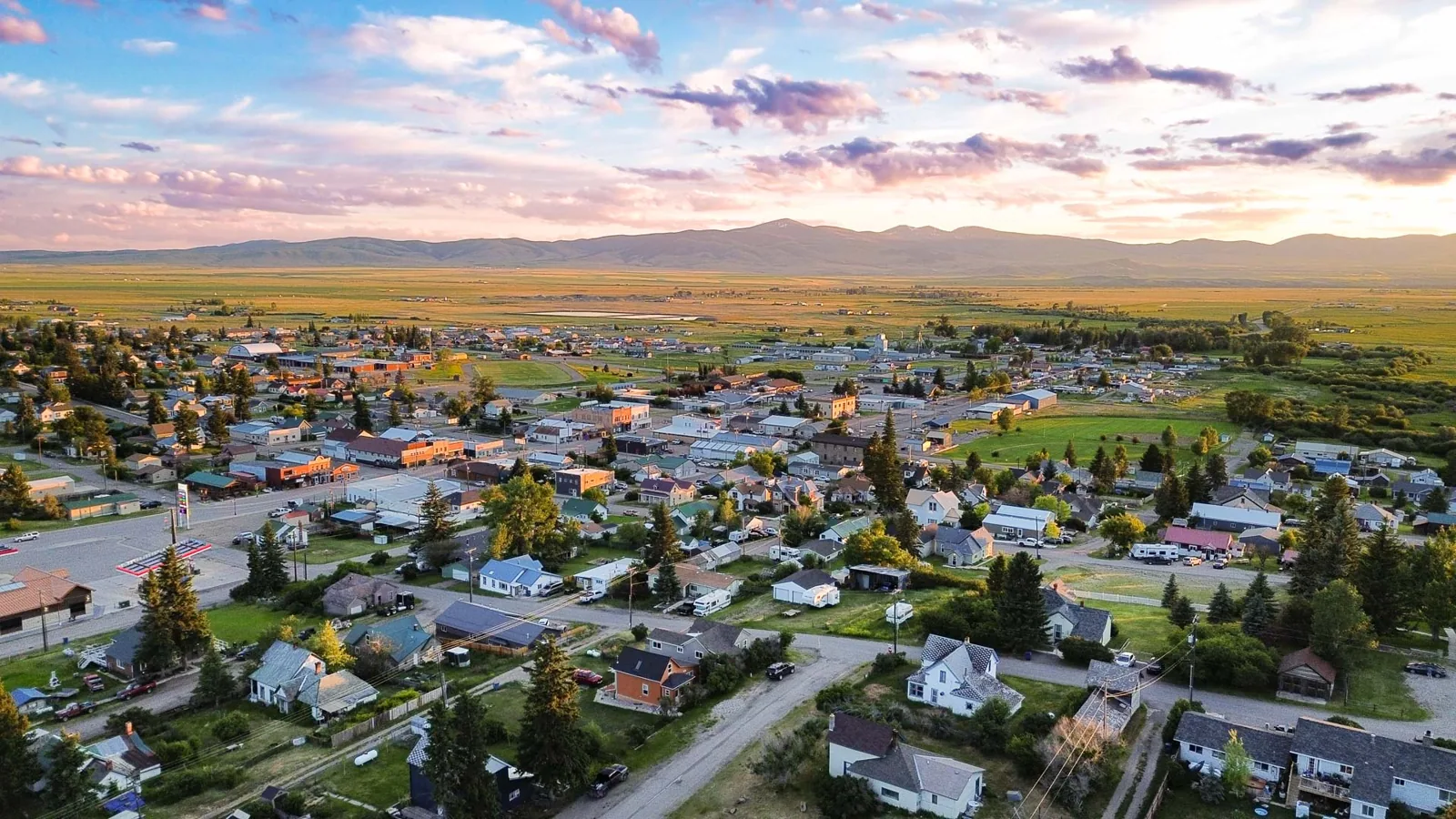
The airport sits in unincorporated Gallatin County next to Belgrade, about 8 miles northwest of Bozeman. Livingston, east of Bozeman Pass, has an airport station with some of the strongest average wind in the country. In August 2013, a hail storm across Belgrade and north Bozeman came with 89 mph gusts, and sensors along Triple Tree Road logged 65 mph in August 2023. Montana criteria for Bozeman list a basic wind speed of 110 mph.
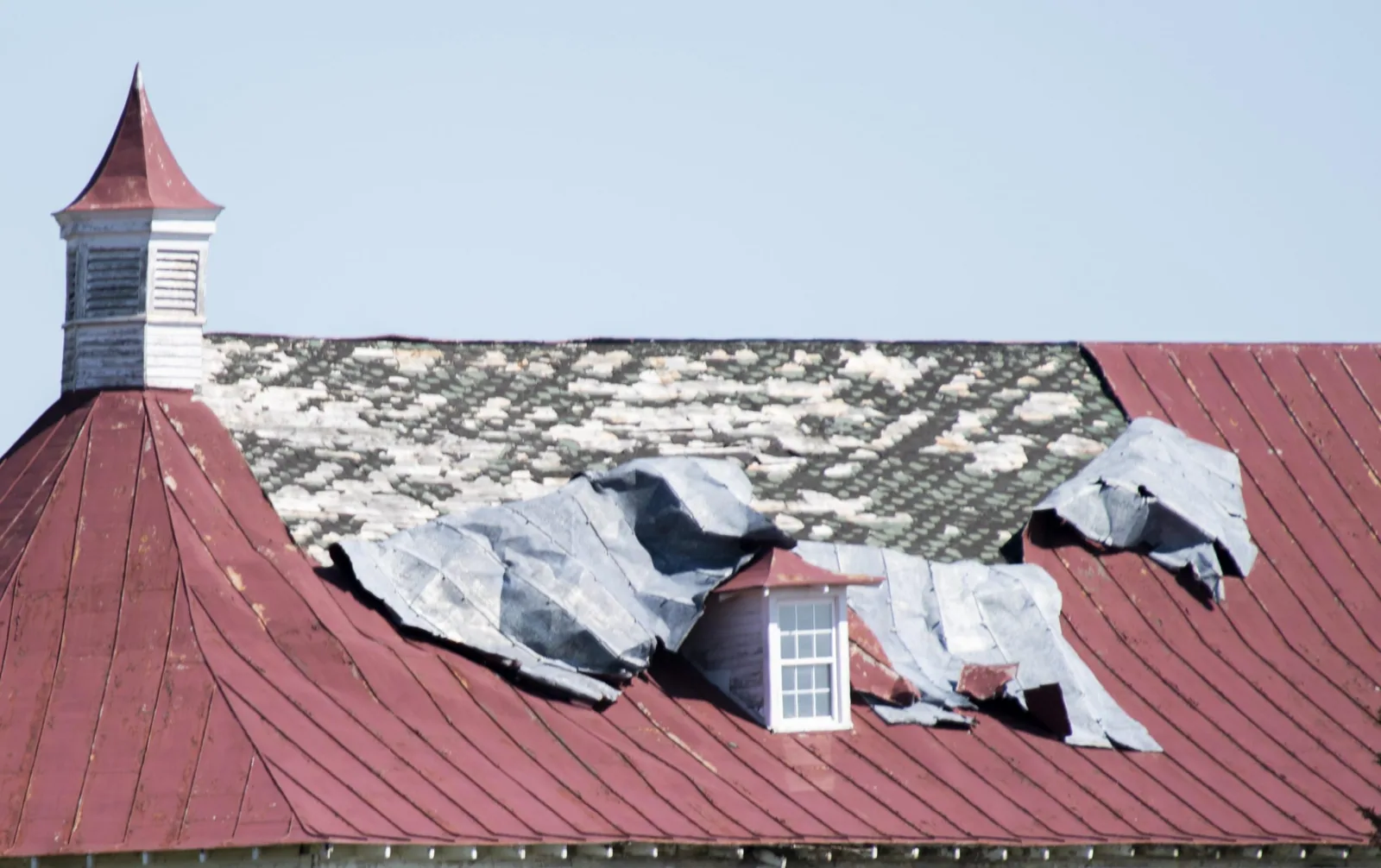
Uplift is highest at corners and eaves. On a hangar, the largest single opening is the door, and when it is open, wind pressure inside the building adds to the pull on the roof from below. I check the eave trim, the rake edge and the panel fasteners nearest the door, and I look at the header flashing above the door, where wind drives rain and snow upward into the seam. A wind damage repair starts with these same points, working inward from the corners.
What does snow do over an aircraft floor?
Bozeman's yearly snow is near 91 inches and its January nights run close to 15 degrees F. A hangar is often heated, at least in part, and the warmth rising to the deck melts snow from below. The meltwater runs down the panels to the eave, where it meets the cold edge and refreezes. That produces ice at the gutter and ridges along the sidewall, and a slide that lands next to the door or on a taxi lane.
Condensation is the quieter issue. Warm, moist air from a heated hangar meets a cold deck and drips onto an aircraft. An owner will call this a leak, and sometimes it is. More often it is the deck sweating, and the cure is insulation and an air barrier, not a sealant. We check which one it is before any work is priced. Where a drip is real, our commercial roof leak repair work begins at the rib, the fastener or the lap, since those are the places panels let go first.
How is roof work done near a working airfield?
Work near an airfield follows rules of its own. Cranes and lifts have height limits, crew vehicles stay out of movement areas, and loose material on a roof can blow onto a taxi lane. The airport authority or the hangar owner sets the terms, and we plan to them: tie-down of materials at the end of each shift, no loose debris, and a clear route for aircraft that must move.
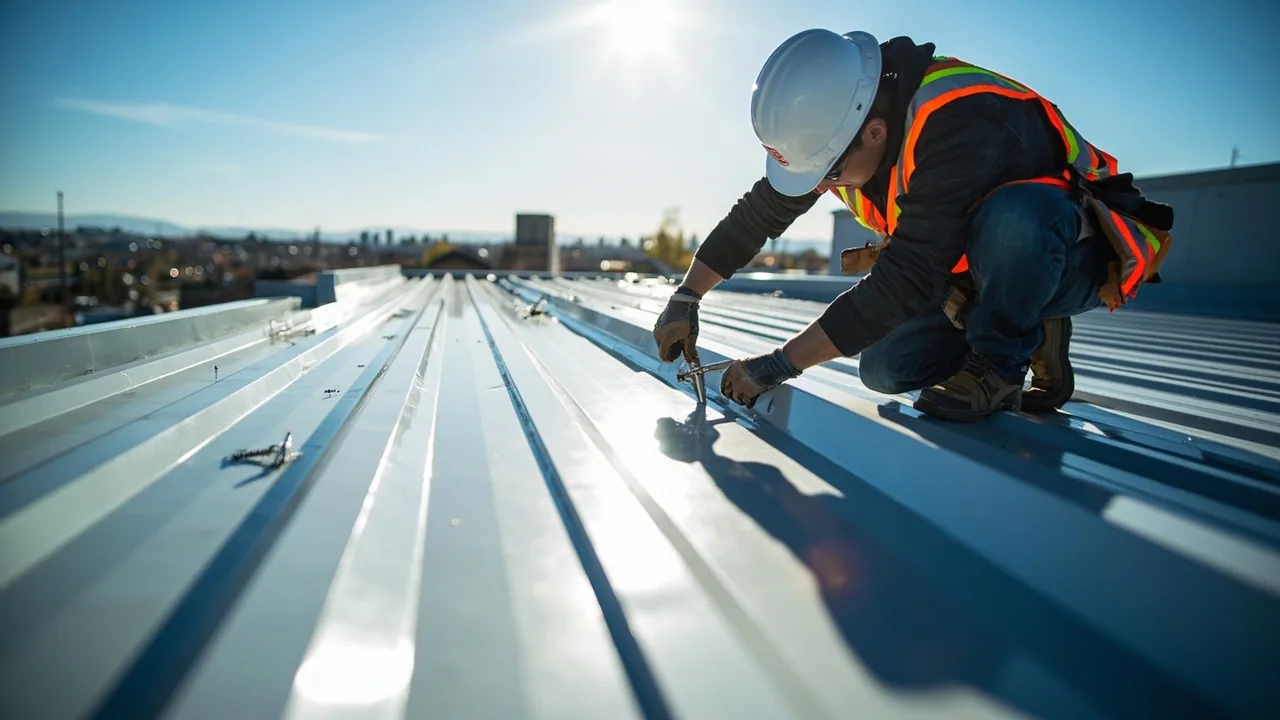
Inside the hangar, the aircraft is the first concern. We cover or move what sits under the work, protect it from falling dust and fasteners, and dry in every section the same day. Tear-off over open floor is done in strips, with a catch system beneath. For owners who cannot move their aircraft, a metal roof retrofit goes over the existing panels and avoids tear-off entirely, which keeps the interior undisturbed and cuts the time the roof is open.
What does airport growth mean for neighboring buildings?
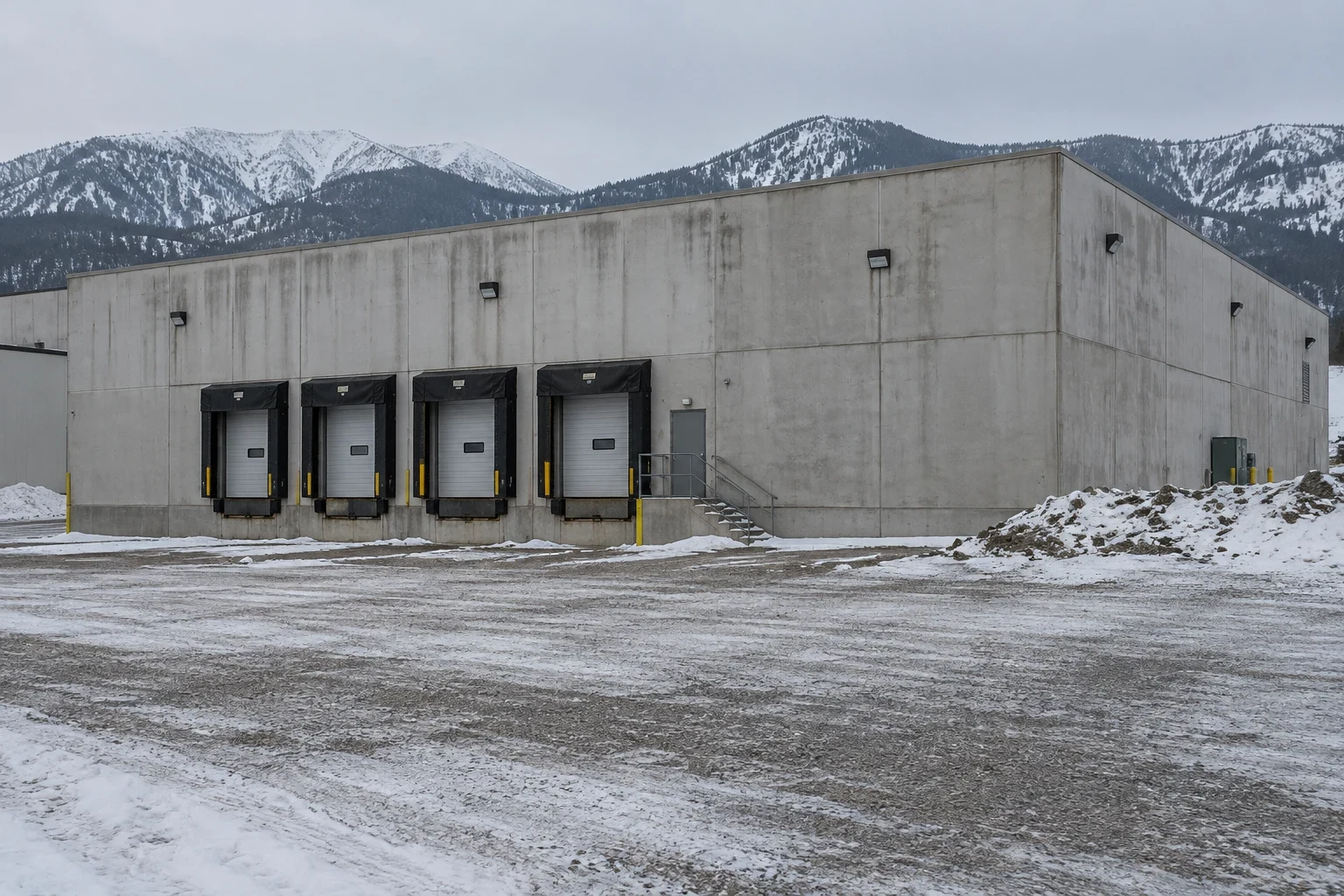
Bozeman Yellowstone International Airport handled about 2.8 million passengers in 2025, up from 2.64 million in 2024, and announced a $180 million expansion with new baggage carousels, a second security checkpoint and room for three more gates. Around it, small warehouse and contractor buildings gather along the Jackrabbit Lane corridor, which has I-90 access and sits near the airfield. Those buildings share a roof profile with hangars: long spans, metal panels, large doors.
On an older hangar, I look at trim, sealant and fasteners for age before I look at anything else. A warehouse shares the roof shape, and flex and light-industrial buildings share the metal panels and big doors. The same checks apply across the airport area.
Questions About Aircraft Hangar and Aviation Building Roofing
Water drips onto an aircraft on cold mornings. Is the roof failing?
Possibly not. A cold deck above a heated, humid hangar collects condensation and drips when the sun warms it. If the drip comes only after rain or melting snow, the roof is leaking at a fastener, lap or door header. We separate the two cases first because the fixes are completely different.
Can a hangar roof be retrofitted without moving the aircraft?
Often yes. A retrofit goes on top of the existing panels, so crews work from the outside and the interior stays undisturbed. The framing must carry the added weight, so we check the structure and fastener pattern before committing. Aircraft under the work still get protective covers as a matter of routine.
Why do the panels near the hangar door loosen first?
Wind pressure is highest there, and the door opening adds uplift from below when it is open. Fasteners back out a little at a time, and the trim along the door head flexes with each gust. A yearly tightening of the nearest fasteners is the least expensive protection.
Do airport rules limit when roof work can happen?
They can. The airport authority or the owner may restrict crane height, vehicle routes or work hours. We ask early and plan the sequence to fit. Quiet periods in the flying schedule are often the best windows for lifts and heavy hoisting. Weather matters just as much, since a gust that would not stop a roof crew on a warehouse can stop a crane lifting a sheet of panel.